Park Costs & Timing
Decision Notes
Xishuangbanna Tropical Rainforest Belt
Xishuangbanna (西双版纳) is China's only intact tropical rainforest belt — where the Tropic of Cancer elsewhere produces deserts, Indian Ocean monsoons push through the Lancang River valley here to create jungle that connects seamlessly with Southeast Asia.
Less than 0.2% of China's landmass, it shelters a quarter of the country's wild species, including roughly 300 wild Asian elephants.
Top experience
Walk 500 meters across the canopy at 36 meters above the forest floor at Wangtian Tree — China's most dramatic rainforest walkway.
Wildlife highlight
Wild Elephant Valley: 60–70% chance of spotting a herd from the observation platform if you arrive before 8:00 AM in dry season.
Main challenge
Three parks spread across 170 km. This guide maps out the sequence, timing, and overnight stops so nothing gets wasted.
0.2%
Of China land area
25%
Of all species
~300
Wild elephants
60 m+
Tallest trees

China's only intact tropical rainforest belt
Forest floor
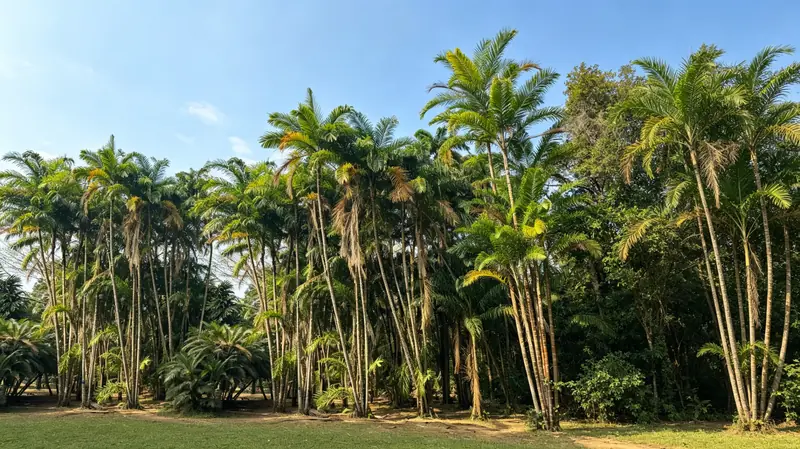
Buttress roots jut two to three meters above the ground like wooden fins. The forest floor sits in permanent half-light — three to four canopy layers filter out 95–98% of sunlight, humidity hovers above 80% year-round, and the air carries the damp scent of soil and decaying leaves.
Cultural shift
Dai bamboo stilted houses dot banana groves, gilded temples follow Theravada Buddhist styles, and the street air mixes grilled chicken with lime. You can experience an entirely different cultural and ecological zone without crossing a border.
Why rainforest exists here
Xishuangbanna sits at the southern tip of Yunnan Province, bordering Laos and Myanmar. The Tropic of Cancer circles the globe through the Sahara, the Arabian Peninsula, and western India — mostly arid. Only this corner of southwest China, where warm Indian Ocean air funnels up the Lancang (Mekong) River valley and the Hengduan Mountains block cold northern fronts, defied the pattern.
What it feels like
This is not a manicured tropical garden. Wangtian trees rise over 60 meters with trunks so straight you crane your neck to find the canopy. Strangler figs spend centuries slowly choking host trees, leaving hollow skeleton frames.
Why it feels different
For foreign visitors, Xishuangbanna feels nothing like "the China you expect." No Great Wall, no Forbidden City, no ink-wash mountain scrolls. This is closer to northern Laos or Thailand.
Wangtian Tree Canopy Walkway
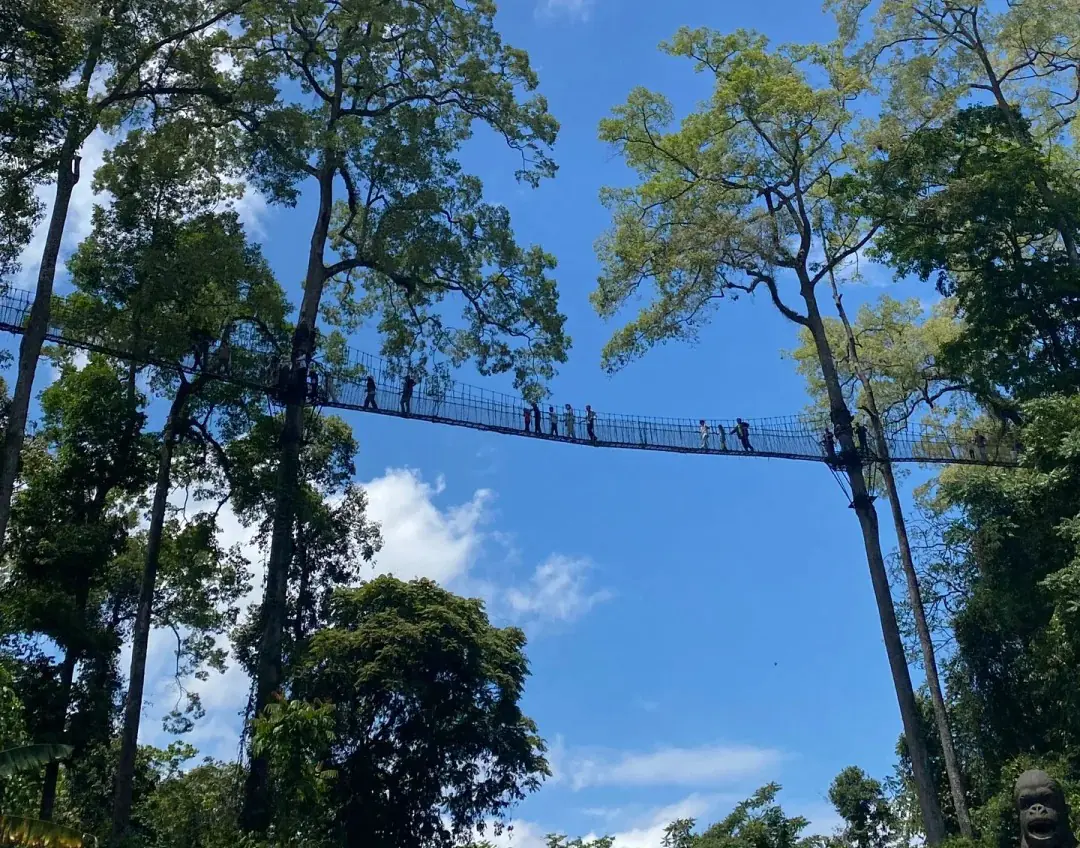
The canopy walkway seen from below
Wangtian Tree Scenic Area (望天树景区) (Google | Amap) sits in Mengla County, about 170 km from Jinghong (roughly 3 hours by road) — the single most dramatic rainforest experience in Xishuangbanna.
Plan the distance
It is far enough from Jinghong that an overnight in Mengla or an early private-car start changes the whole day.
Come for the vertical scale
This is the park where the rainforest rises above you, below you, and around the walkway at the same time.
36 m
Above ground
500 m
Walkway length
3-4 h
Total visit
¥198
Combo ticket
What Is a Wangtian Tree
The tree
The Wangtian tree is China's tallest tropical hardwood, Parashorea chinensis, with mature specimens typically reaching 40–60 meters and the tallest on record exceeding 80 meters.
The discovery
Botanist Cai Xitao first identified a wild stand in Mengla's Bubeng in 1974 — before that, the scientific consensus held that China had no true tropical rainforest. The discovery rewrote the country's plant geography.
The forest layers
The scenic area preserves dense original stands of these 200–500-year-old giants, forming one of Asia's most complete vertical rainforest structures: ground-level mosses, shrub layer, 20-meter sub-canopy, 40-meter main canopy, and emergent Wangtian trees above everything.
Walking the Canopy Walkway
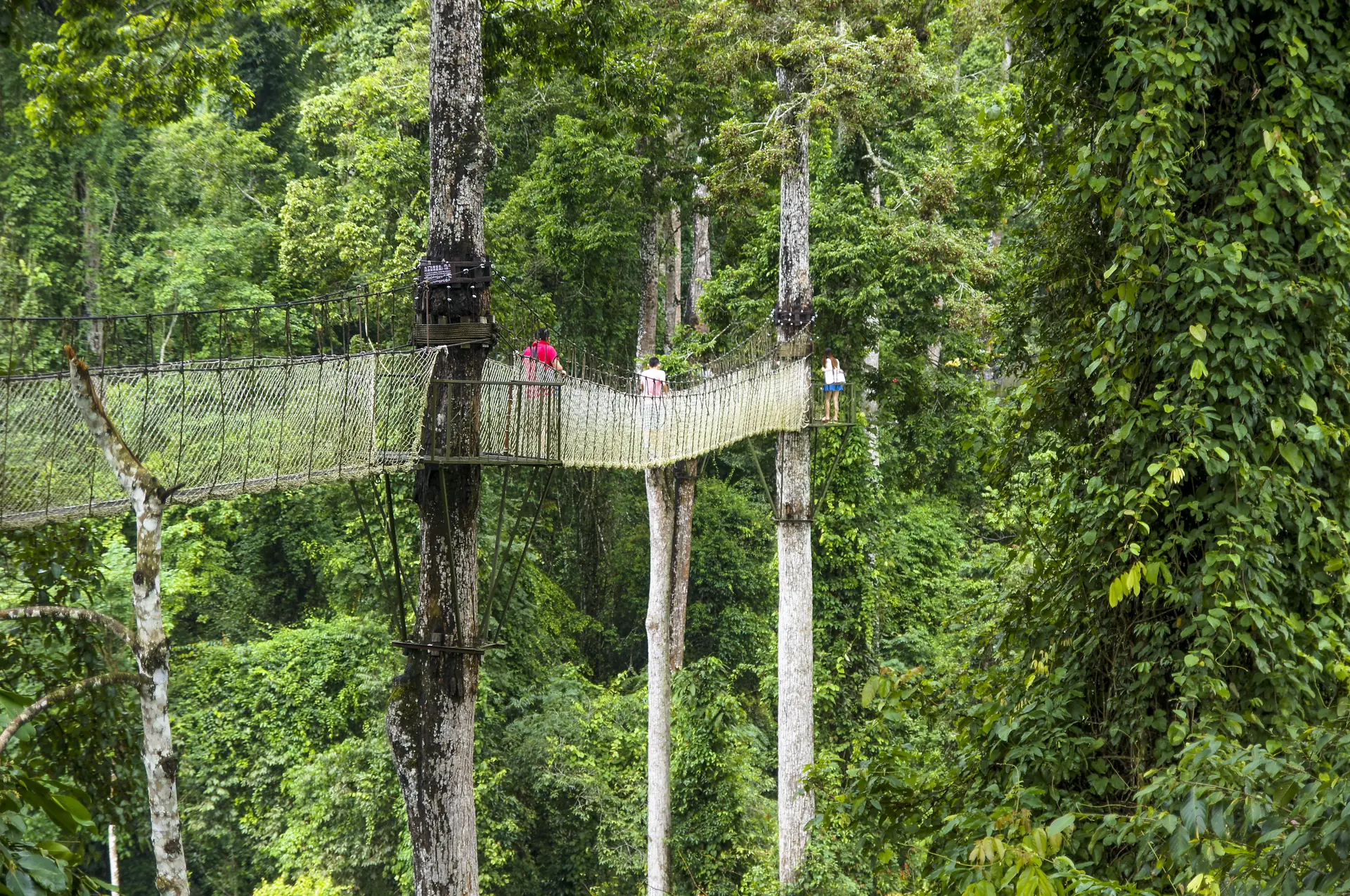
Walking 500 meters across the canopy
Underfoot
Perforated steel panels sit below you, with cable railings on each side.
Height comfort
The walkway demands a basic comfort with heights; it is not for anyone with severe vertigo.
The structure is solid, and platforms between cable spans offer rest stops and photo spots. The full walk takes about 30–45 minutes.
The marquee experience is the canopy walkway: a steel-cable suspension bridge held 36 meters above the forest floor and stretched roughly 500 meters across six Wangtian trees.
36 m
above the forest floor
500 m
across six Wangtian trees
40 cm
wide steel-panel walkway
First 30 seconds
This is the tensest moment: the bridge sways gently with every step, and wind rustles through the canopy overhead.
Once you settle in, the perspective shift is total: beneath your feet, layer upon layer of dark-green canopy rolls like waves; the far horizon traces a ridgeline of unbroken forest; sunlight flickers on leaf surfaces.
With luck, you may spot hornbills or giant squirrels crossing between crowns.
Suggested Route
- Main Gate(景区大门)- Start here at 8:30
- Rainforest Trail- 30 min walk to walkway entrance
- Canopy Walkway(空中走廊)- 500 m across six Wangtian trees
- Nanla River Dock(南腊河码头)- Descend to the riverbank
- Bamboo Raft Back- 20 min river ride with forest views
Best pace
Allow 3–4 hours total. Go in the morning — arrive when the gate opens at 8:30, when the light is soft and the walkway is nearly empty. On weekdays you can have the entire 500 meters to yourself.
Wild Elephants at Their Waterhole
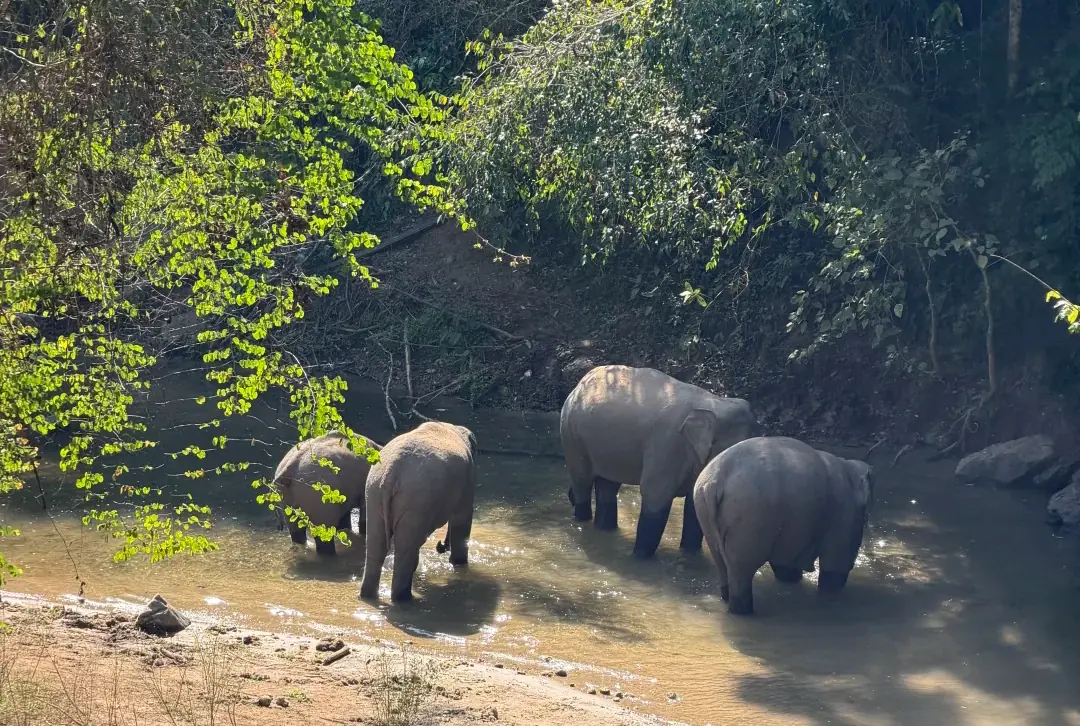
Wild elephants at the waterhole — no fences, no captivity
Wild Elephant Valley (野象谷) (Google | Amap) lies about 36 km north of Jinghong — the only place in China where you can observe wild Asian elephants behaving naturally.
Wild, not staged
This is not a zoo or a show: no fences, no captivity, no training. You see elephants because they chose to come.
Sightings can fail
That also means you may not see them every visit, so the valley itself has to be part of the reason you go.
36 km
From Jinghong
60-70%
Dry-season dawn odds
3-4 h
Visit time
2 km
Boardwalk route
Why Wild Elephant Valley
China's last wild herds
China has roughly 300 wild Asian elephants left, all living in Xishuangbanna and neighboring Pu'er.
Why herds pass through
The valley sits within the Mengyang Nature Reserve, a traditional migration zone — rangers maintain salt licks and water sources that draw herds on a regular cycle.
Your Odds of Seeing Elephants
Best odds: Nov–Feb, before 8:00 AM
Arriving before 8:00 AM during the dry season gives you a roughly 60–70% chance of spotting a herd from the observation platform. Rangers estimate elephants visit the water sources 3–4 days per week in this period. In the wet season, odds drop to 20–30%.
If the elephants do not appear
Even without an elephant sighting, the valley is worth the trip — well-preserved tropical valley rainforest, elevated boardwalks through the canopy, and a cable car that sweeps across the full green expanse.
How to Visit
Use the cable car and boardwalk as a quiet wildlife route, not as a theme-park circuit.
- Cable car up- 20 min over the valley forest
- Boardwalk to the platform- About 2 km; keep phones silent
- Wait quietly- 30-60 min near the waterhole if rangers report activity
- Walk down through side exhibits- Butterfly garden, aviary, and rescue-center context
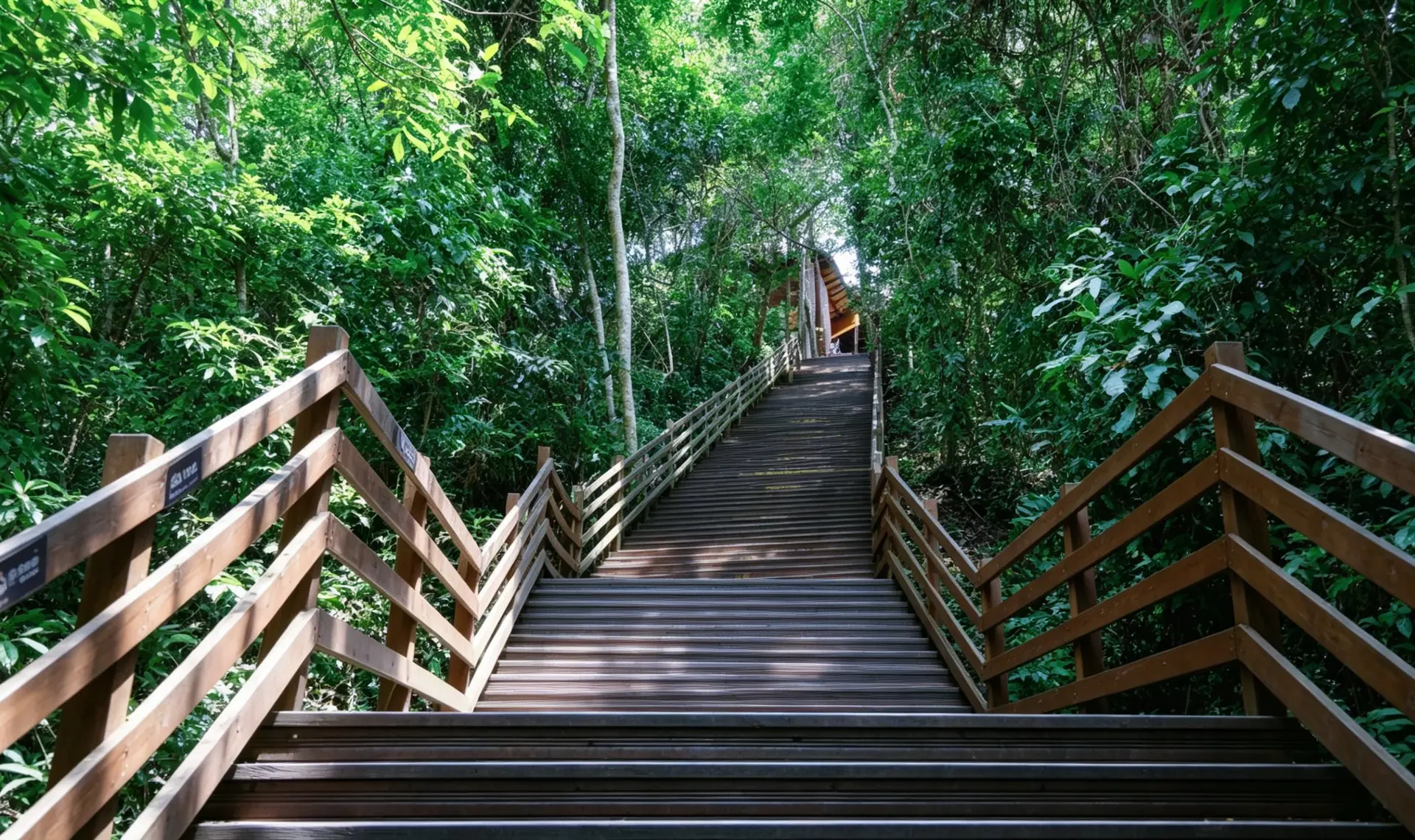
Elevated boardwalk through the valley rainforest
Rescue-center context
The Asian Elephant Breeding and Rescue Center inside the park is China's only dedicated facility — it has rescued over 20 injured elephants and bred several calves to date. Even if you miss wild elephants, the center lets you see rehabilitated elephants up close and learn about ongoing conservation.
Elephant Safety Rules
Stay silent on observation platforms and boardwalks — elephants have excellent hearing and will avoid the area if they detect noise. No flash photography.
If you encounter an elephant on a trail, do not run — back away slowly and maintain at least 30 meters of distance. Follow the park's posted safety guidelines at all times.
Primitive Forest Park Close-Up
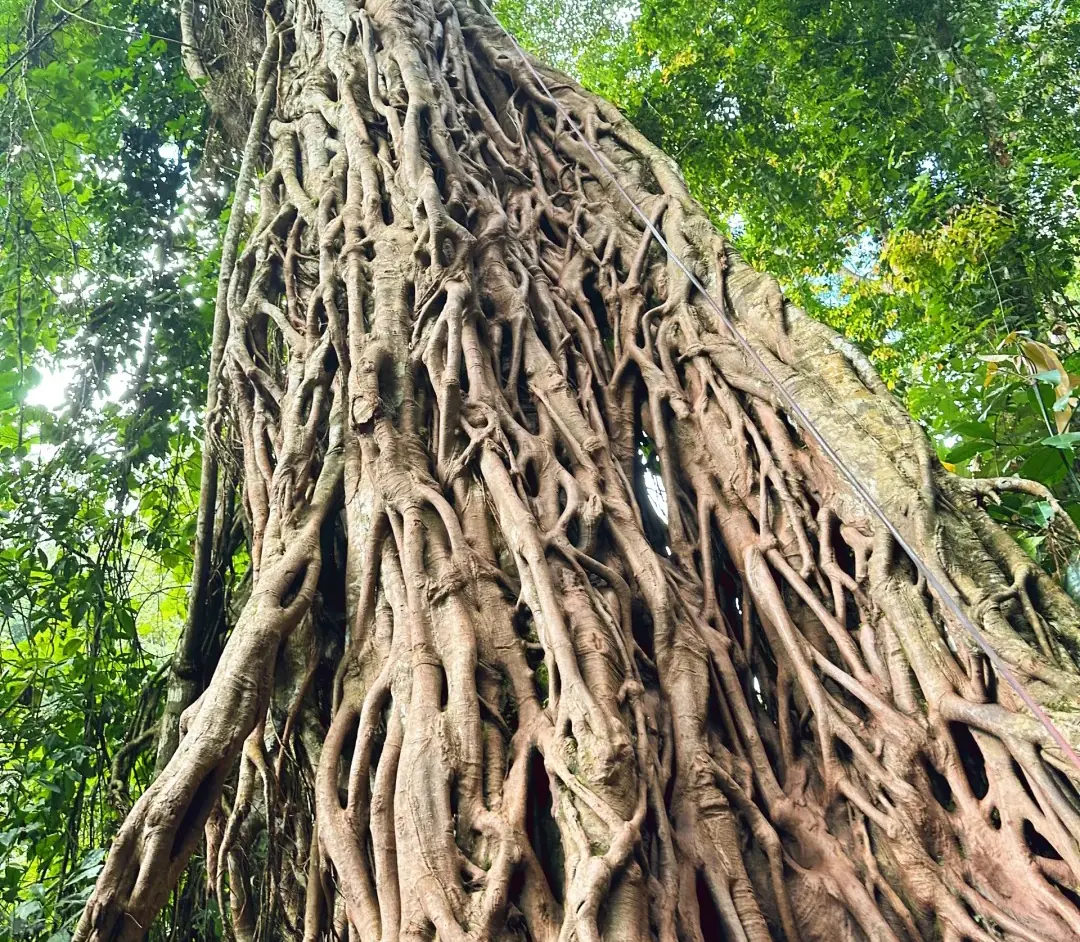
The Strangler Fig King — centuries of slow-motion predation
If you are short on time or prefer not to make the long trip to Mengla, Xishuangbanna Primitive Forest Park (原始森林公园) (Google | Amap) offers the closest rainforest experience to Jinghong — just 8 km away, about 15 minutes by car.
Best for a short stay
Choose it when you want rainforest texture without spending half the day on the road.
Trade-off
It is smaller than Wangtian Tree or Wild Elephant Valley, but it concentrates the signature rainforest highlights.
Half a Day Is Enough
The park is smaller than Wangtian Tree or Wild Elephant Valley but packs in the signature rainforest highlights:
🌳Strangler Fig King
A vine that spent centuries slowly engulfing its host tree, leaving a hollow lattice-frame skeleton. An information board explains the full strangling process — the rainforest's slow-motion predator.
🌿Tree Ferns (桫椤)
A nationally protected "living fossil" dating back 200 million years to the Jurassic period. Trunks reach 8 meters; fronds unfurl like giant green umbrellas.
🦚Peacock Flight
Dozens of peafowl released from a hillside glide down to a lakefront. Showtimes typically 10:00 and 14:00. Not a cage display — birds launch from a slope and glide freely.
🏠Dai Cultural Village
A section of the park with traditional water-splashing festival demonstrations and Dai dance performances.
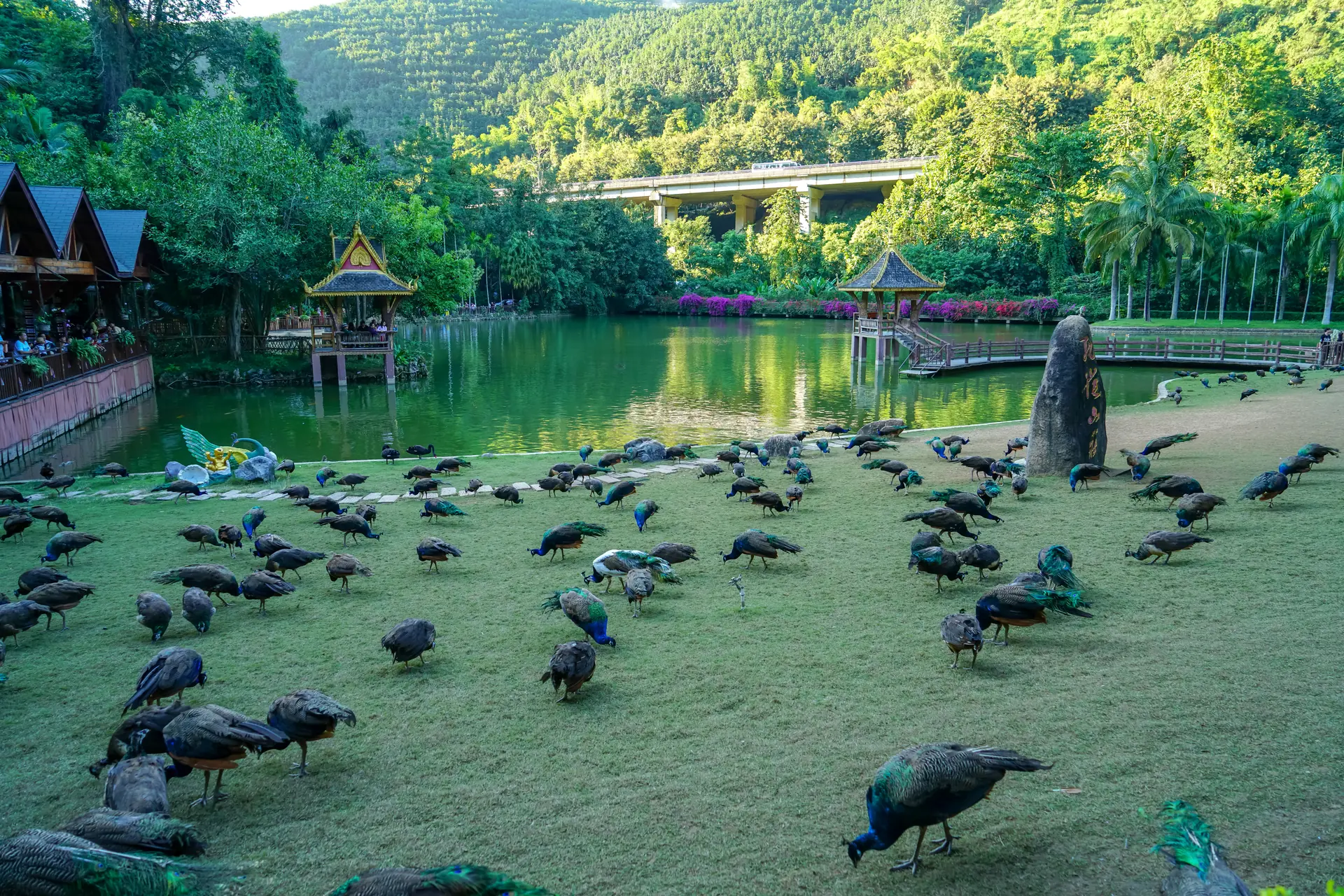
Peacock flight — birds launch and glide freely
Half-day rhythm
Plan a half day (about 3 hours). Morning visits catch the 10:00 peacock flight.
Mobility note
An electric shuttle runs through the park — useful if you have children or limited mobility.
Night Walk in the Jungle
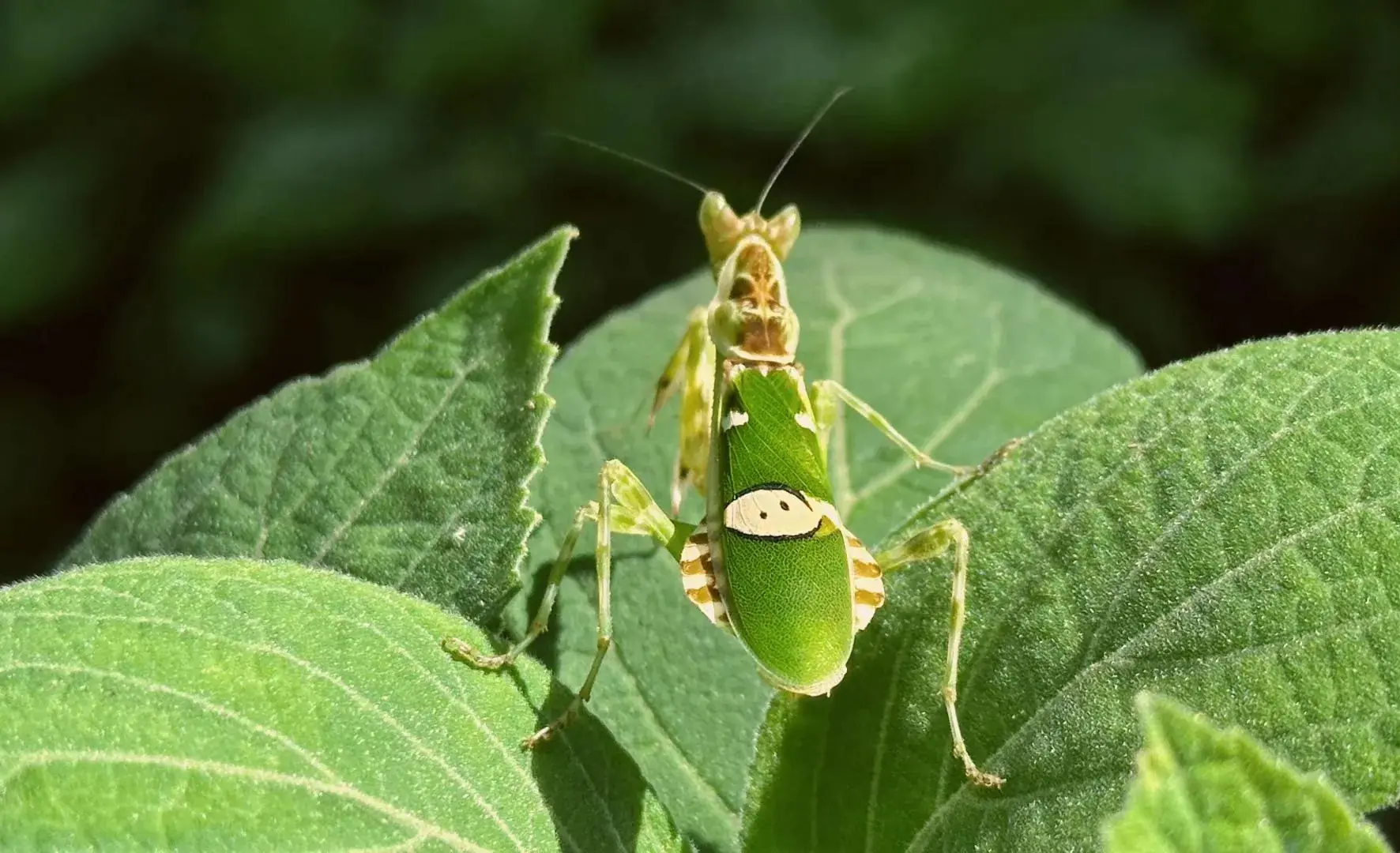
The jungle comes alive after dark
After-dark shift
The tropical rainforest is busier after dark than during the day — creatures that hide in daylight emerge en masse once the sun drops.
Why travelers book it
Night walks have become one of Xishuangbanna's most popular eco-tourism activities because the forest changes personality after sunset.
What You Will See
A competent night-walk guide will point out:
🪵Stick Insects
Some 30 cm long, perfectly mimicking bamboo joints or twigs — invisible until the guide singles them out.
🐸Tree Frogs
Dozens of species, including jade-green foam-nest frogs and semi-translucent glass frogs whose internal organs are visible.
✨Fireflies
On dry-season nights, certain stretches of trail light up with dense clouds of fireflies, like a starfield reflected onto the ground.
🕷️Fluorescent Webs
Shine a UV flashlight and many spider webs fluoresce — a phenomenon completely invisible during the day.
🐍Snakes
Occasionally a bamboo pit viper or green tree snake coils on a branch. Guides keep a safe distance — no need to panic.
How to Join
What tours include
Outdoor clubs in Jinghong offer guided night-walk tours, typically including round-trip transport, a professional naturalist guide, headlamps, and insect repellent.
Typical timing
Prices run about ¥150–300 per person for 2–3 hours, usually 19:30–22:00.
Guide choice
Choose a tour led by a guide with a natural history background over one marketed purely for social-media photos — the experience is worlds apart when someone can explain each creature's ecology and behavior.
Best season for night walks
November through April — fewer leeches, dry trails, and active firefly and frog populations. Wet-season walks are possible but muddier, and leech encounters are much more likely.
Best Time and Weather to Go
Xishuangbanna is accessible year-round, but the dry and wet seasons deliver very different experiences.
← swipe to compare all options →
Dry Season (Nov–Apr)
Recommended
22–30°C days, 15–20°C nights. Minimal rainfall and comfortable humidity.
Peak season for elephant sightings, with 60–70% odds at dawn. Trails are dry and leeches are virtually absent.
January–February are the golden window: warm and balmy while most of China shivers.
Wet Season (May–Oct)
25–35°C, humidity above 85%. Lushest canopy and most dramatic waterfalls.
Daily rain probability is 60–70%, mostly afternoon downpours from 14:00–17:00.
Leeches are highly active — leech socks are essential. Elephant sighting odds drop to 20–30%.
Month-by-Month Overview
- Temp (°C)
- 15–28
- Rain
- Very low
- Leech Risk
- Almost none
- Elephant Odds
- 60–70%
- Rating
- ★★★★★
- Temp (°C)
- 20–33
- Rain
- Low
- Leech Risk
- Low
- Elephant Odds
- 40–50%
- Rating
- ★★★★
- Temp (°C)
- 23–35
- Rain
- Moderate
- Leech Risk
- Moderate
- Elephant Odds
- 30–40%
- Rating
- ★★★
- Temp (°C)
- 24–35
- Rain
- Heavy
- Leech Risk
- High
- Elephant Odds
- 20–30%
- Rating
- ★★
- Temp (°C)
- 20–32
- Rain
- Moderate
- Leech Risk
- Moderate
- Elephant Odds
- 30–40%
- Rating
- ★★★
What to Pack for the Rainforest
The tropical rainforest is not a flip-flops-and-phone kind of outing. Here is what to bring, ranked by importance.
Essentials
- Leech socks (¥15–30 at Jinghong outdoor shops) — more effective than any spray
- Hiking shoes with deep-tread grip — trails are permanently damp
- Quick-dry clothing — cotton soaks through in 30 min at 80%+ humidity
- DEET insect repellent (30%+) — mosquitoes are year-round
- Rain jacket — lightweight, more practical than an umbrella
- Sunscreen (SPF50+) and hat — tropical UV is intense
Nice to Have
- Sandals/flip-flops — change out of wet hiking shoes for the ride back
- Small flashlight or headlamp — forest floor is dim even in daytime
- Zip-lock bags — keep phone and camera dry
- Water and snacks — limited supply inside parks
Getting to Xishuangbanna
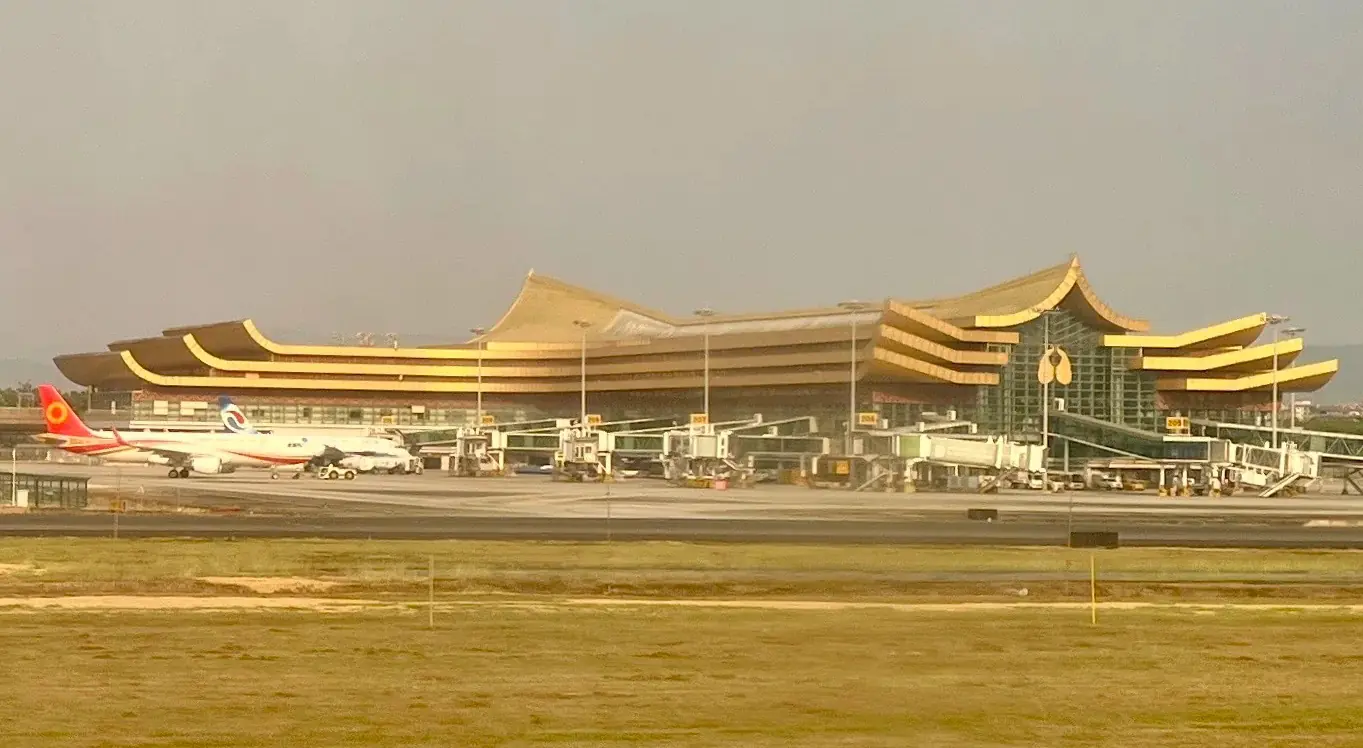
Jinghong Gasa Airport (嘎洒机场)
Jinghong is reachable by air and rail. The airport is 5 km from downtown; the railway station (China–Laos Railway) is 10 km out.
Important transfer reality
Neither Wild Elephant Valley nor Wangtian Tree has direct public transit — chartering a car or joining a day tour is simplest.
Airport arrival
Fastest if you are flying in from another Chinese city and want to reach central Jinghong quickly.
Train arrival
Best value from Kunming, with mountain tunnels, bridges, and valley views along the China–Laos Railway.
By Air
Jinghong Gasa International Airport (嘎洒机场, JHG) (Google | Amap)
By Train
Jinghong Station (西双版纳站) (Google | Amap)
Getting to Each Attraction
Remote-attraction transfer note
There is no metro or direct public bus to Wild Elephant Valley or Wangtian Tree. If you prefer not to deal with bus transfers, chartering a car or joining a day tour is far simpler. Wangtian Tree is remote enough that many visitors stay overnight in Mengla town and head to the park first thing in the morning.
Taxi / Didi notes for foreign visitors
Use these with the Chinese phrases below
Primitive Forest Park
Taxi or Didi is the easiest option from Jinghong. Save the Chinese name and map pin before you leave your hotel.
Wild Elephant Valley
Getting there is manageable by taxi, Didi, bus, or charter car. For the return, agree on pickup timing or keep a ride-hailing fallback before entering the park.
Wangtian Tree
Do not treat this as a normal taxi errand from Jinghong. Use a charter car, stay in Mengla, or take the bus to Mengla and transfer locally.
| English | Chinese | Pinyin | Say It Like… |
|---|---|---|---|
| Please go to the Primitive Forest Park | 请到原始森林公园 | qǐng dào yuán shǐ sēn lín gōng yuán | ching dao ywen shih sen lin gong ywen |
| Please go to Wild Elephant Valley | 请到野象谷 | qǐng dào yě xiàng gǔ | ching dao yeh shiang goo |
| Please go to Wangtian Tree Scenic Area | 请到望天树景区 | qǐng dào wàng tiān shù jǐng qū | ching dao wahng tee-en shoo jing chew |
Tickets, Hours and Costs
Discount policies (apply at all three):
- Children under 6 or shorter than 1.2 m: free
- Ages 6–18 and full-time students: half price (with valid ID)
- Seniors 60–69: half price (with ID card)
- Seniors 70+: free
- Active military and persons with disabilities: free (with valid certificate)
Buy the Wangtian Tree Combo
The combo ticket at ¥198 includes the gate, canopy walkway, and a one-way river boat. Buying the walkway separately costs ¥120 on top of the ¥55 gate ticket — ¥175 total without the boat. The combo saves money and includes the most scenic exit route. Book on Ctrip or Meituan for an additional 10–20% off gate prices.
What Guides Won't Post Online
These tips come from visiting these parks dozens of times:
📅Wangtian Tree: Weekday, Low Season
Peak-season weekends turn the canopy walkway into a single-file queue. Go on an off-season weekday and you may walk 500 meters in the sky completely alone.
🌅Wild Elephant Valley: Early and Silent
Stay overnight in Mengyang town (5 km away), enter at dawn, and head straight for the observation platform. Herds visit the waterhole between 6:00–8:00 AM. After 8:30, visitor noise keeps them away.
🧦Leech Socks Beat Everything
A ¥15 physical barrier outperforms any spray or oil. See the packing section above for details.
🩴Bring Sandals for the Ride Home
Your hiking shoes and socks will be soaked when you leave the rainforest. Light sandals in your daypack make the trip back much more comfortable.
🌺Combine with the Botanical Garden
Day 1 at Menglun Tropical Botanical Garden (half day), overnight in Menglun or Mengla. Day 2 at Wangtian Tree first thing in the morning. See our Botanical Garden guide.
🍍Tropical Fruit Heaven After the Jungle
Gaozhuang Night Market (告庄夜市) and Manting Road Night Market (曼听路夜市) overflow with tropical fruit at half the inland price. Reward yourself after a day in the rainforest.
Frequently Asked Questions
The three main parks (Wangtian Tree, Wild Elephant Valley, Primitive Forest Park) all have well-marked trails and signage — you can visit independently without a guide. However, if you want to explore un-touristy primary forest or join a night walk, a licensed guide with natural-history knowledge is strongly recommended.
Sources checked for this guide
- Wangtian Tree operator and official forestry references checked for scenic-area identity, canopy walkway framing, visitor-service entry points, and official scenic-area context: Wangtian Tree official operator site and Yunnan Forestry Wangtian Tree page
- Wild Elephant Valley official-context sources checked for reserve relationship, Asian elephant conservation framing, location, and ecological-tourism management context: Yunnan Natural Resources Wild Elephant Valley case and Yunnan Forestry Asian elephant conservation report
- Primitive Forest Park official tourism overview checked for 4A status, distance from Jinghong, forest-area framing, and park identity: Xishuangbanna Culture and Tourism Primitive Forest Park overview
- Live traveler-facing listings cross-checked for current ticket, hours, add-on, and booking presentation before the June 2026 layout update: Ctrip Wangtian Tree listing, Trip.com Wild Elephant Valley listing and Trip.com Primitive Forest Park listing
Beyond This Guide
Before you keep planning:
- China city transport: subway, taxi and Didi — plan airport, station, charter-car, taxi and ride-hailing fallback paths before you leave Jinghong
- Dai Show and Mekong Night — an easy evening after a rainforest day
- China mobile payments: Alipay & WeChat Pay — set up QR payments before you reach smaller towns
- Best time to visit China — compare Xishuangbanna's dry-season warmth with the rest of the country
Xishuangbanna's rainforest parks each reward a full day — and stringing them together with the right overnight stops, bus timings, and seasonal strategy makes the difference between a smooth trip and a logistical headache. Our planners can design the sequence around your dates, pace, interests, and comfort level with long road transfers.
© gochinafreely.com — Original guide by Go China Freely.