Hours & Base Ticket
Essential Rules
A Canal Neighborhood Still Lived In
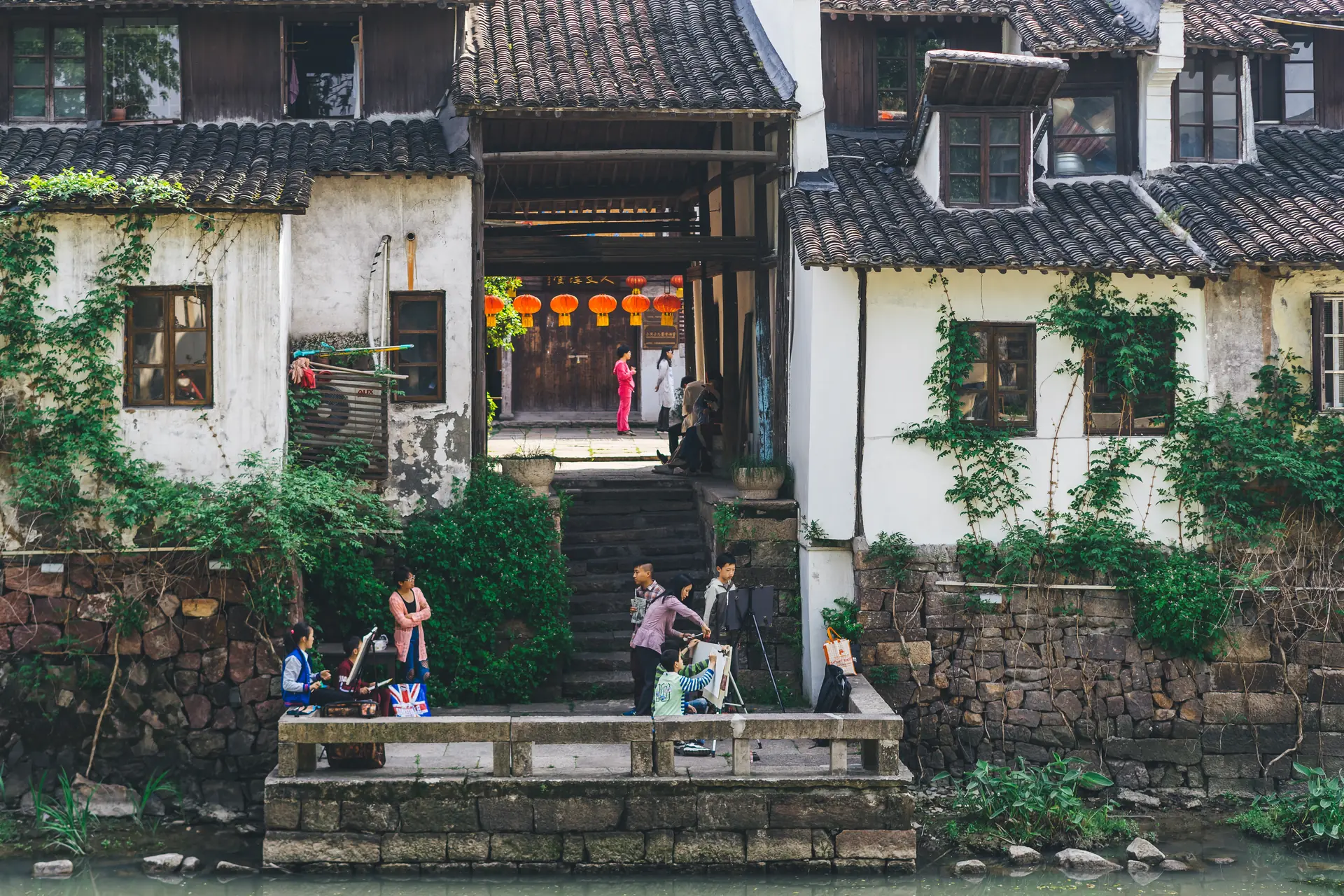
Xiaohe is the quiet canal walk to choose when Hangzhou's everyday scale matters more than another landmark.
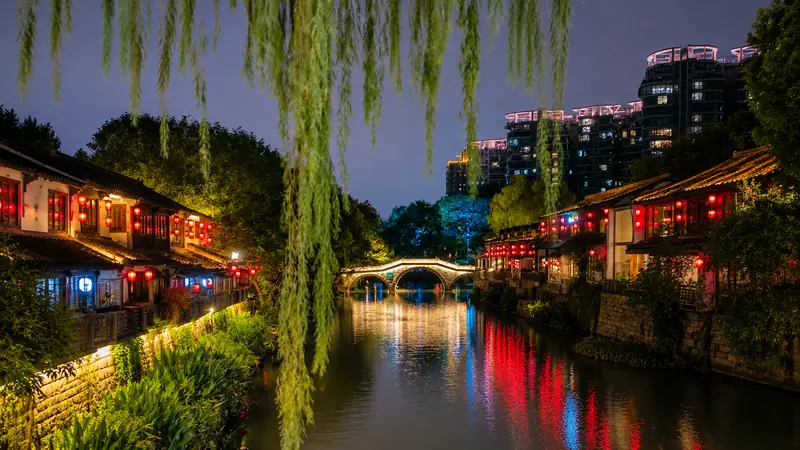
Xiaohe Straight Street (小河直街) sits near the meeting of the Beijing–Hangzhou Grand Canal (京杭大运河), Xiaohe River (小河) and Yuhangtang River (余杭塘河). Its narrow lane, waterside steps, small bridges and late-Qing to early-Republic homes preserve the proportions of a working canal neighbourhood.
Use this guide for a peaceful 60- to 90-minute stroll, or slow it down with tea, coffee and a nearby canal add-on. The aim is not to complete a long route; it is to notice how homes, shops, landing steps and water once shared the same tight space.
Stone paving, shop-houses and domestic doorways keep the route human in scale.
Small landings and bridge points explain the old canal economy better than decorative signs.
Residents, studios, cafes and small shops now share the preserved fabric.
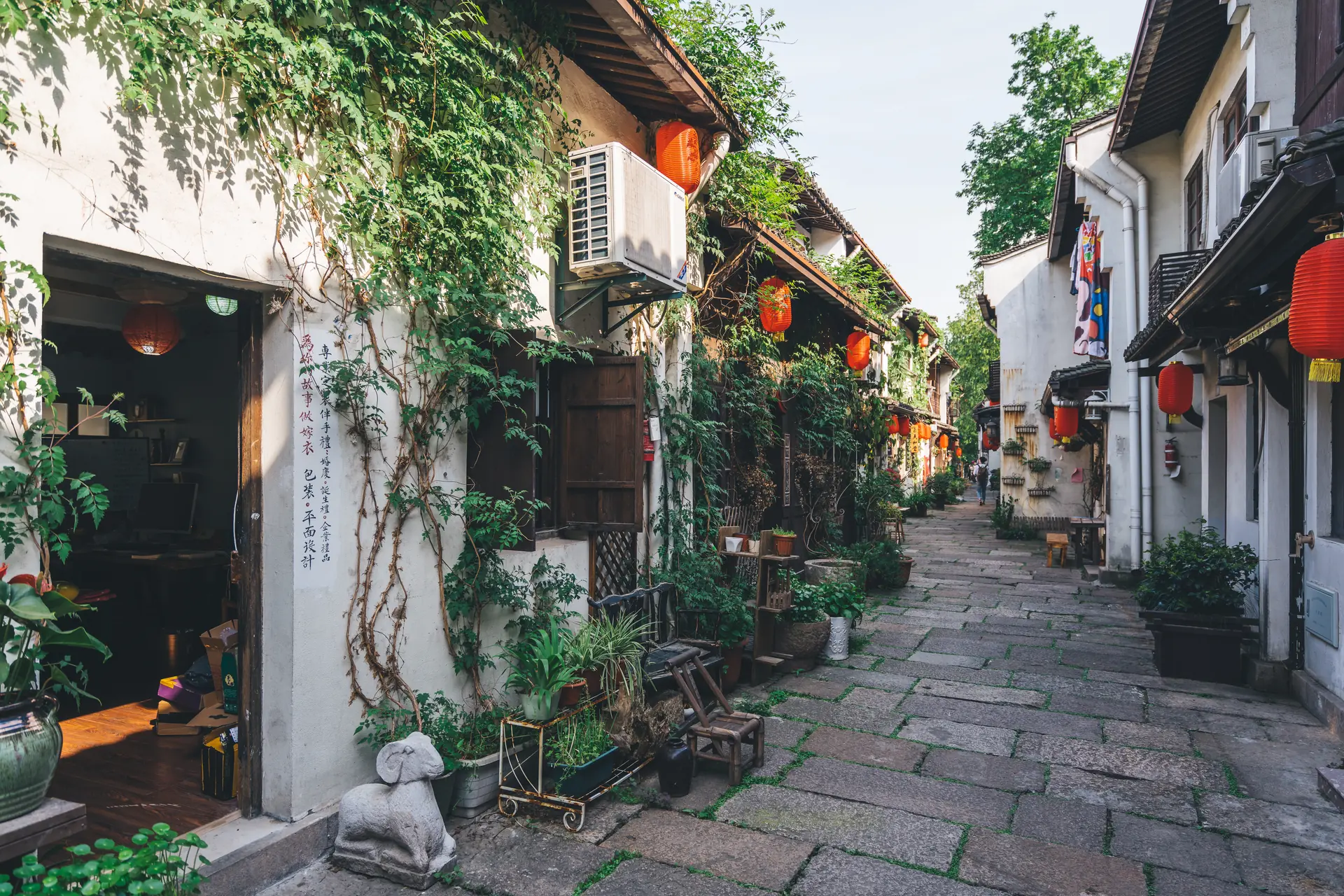
A late-Qing and early-Republic civilian canal landscape, not an imperial showpiece.
Gongshu District describes Xiaohe as one of Hangzhou's more complete traditional historic blocks. Residences, shipping facilities, lane form and canal traces still read as a group, and the official definition keeps residential, commercial and leisure uses together.
That is the reason to come: a smaller, slower Hangzhou of water edges, old windows, bicycles, plants and current residents—not a full-day old town.
Official Gongshu heritage profile ↗Set the expectation: Xiaohe is a short lived-in neighbourhood walk with strong atmosphere and easy add-ons. It will feel too small only if you arrive expecting a major ticketed attraction.
Best Xiaohe Straight Street Route
For a first visit, keep the route simple: enter from the Xiaohe Road side, walk the main lane, pause at the waterside steps and small bridges, turn into one or two side lanes, then choose whether the day still needs a larger canal sight.
- Xiaohe Road Entrance(小河路入口)- Start slowly instead of rushing into photos
- Main Stone Lane(小河直街主街)- Follow the old shop-house and canal pattern
- Waterside Steps(河埠头)- Best place to notice the working-water history
- Side Lanes(支巷)- Look for doorways, old windows, bicycles, and residents
- Canal Add-On(运河加线)- Choose Gongchen Bridge, Dadou Road, or Xiaohe Park
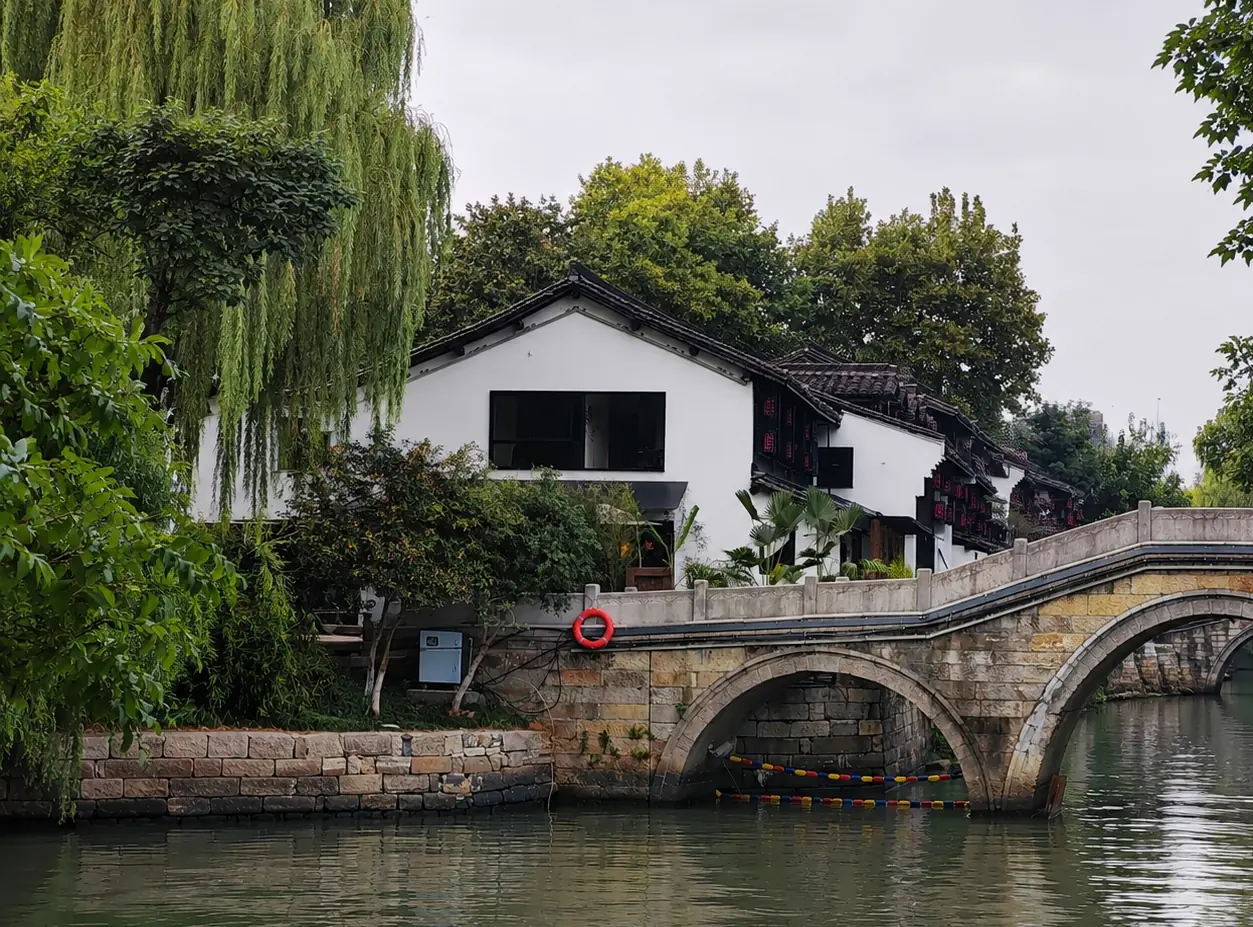
Main lane, bridge pause, side lane, small shop, water edge—then decide what the day still needs.
The route is flat and easy, but the useful moments are small. If the main street feels busy, step about 30 metres into a side lane. If you have only one hour, stay inside Xiaohe and do not convert the walk into a transfer exercise.
With half a day, use Xiaohe as the quiet middle of a wider Grand Canal route.
Best for a 60–90 minute pause.
Add the landmark and big-canal history.
Use for dinner and a broader evening canal scene.
What to Notice Beside the Water
The most useful way to read Xiaohe is to look for how land and water once worked together. Homes, shops, workshops, landing steps and transport activity shared the same compact environment.
Steps and small landings show where daily life met the canal directly. They explain the street better than a decorative sign.
The value lies in the pattern: two-storey homes, wooden windows, white walls, dark tiles, lane, bridge and water read together.
Bicycles, plants, residents, studios and independent stores keep the block from reading like a purpose-built shopping lane.
Read without intruding: keep cameras outside thresholds and courtyards, move off bridge centers, and let residents pass before framing a shot.
Tea, Coffee, and Quiet Stops
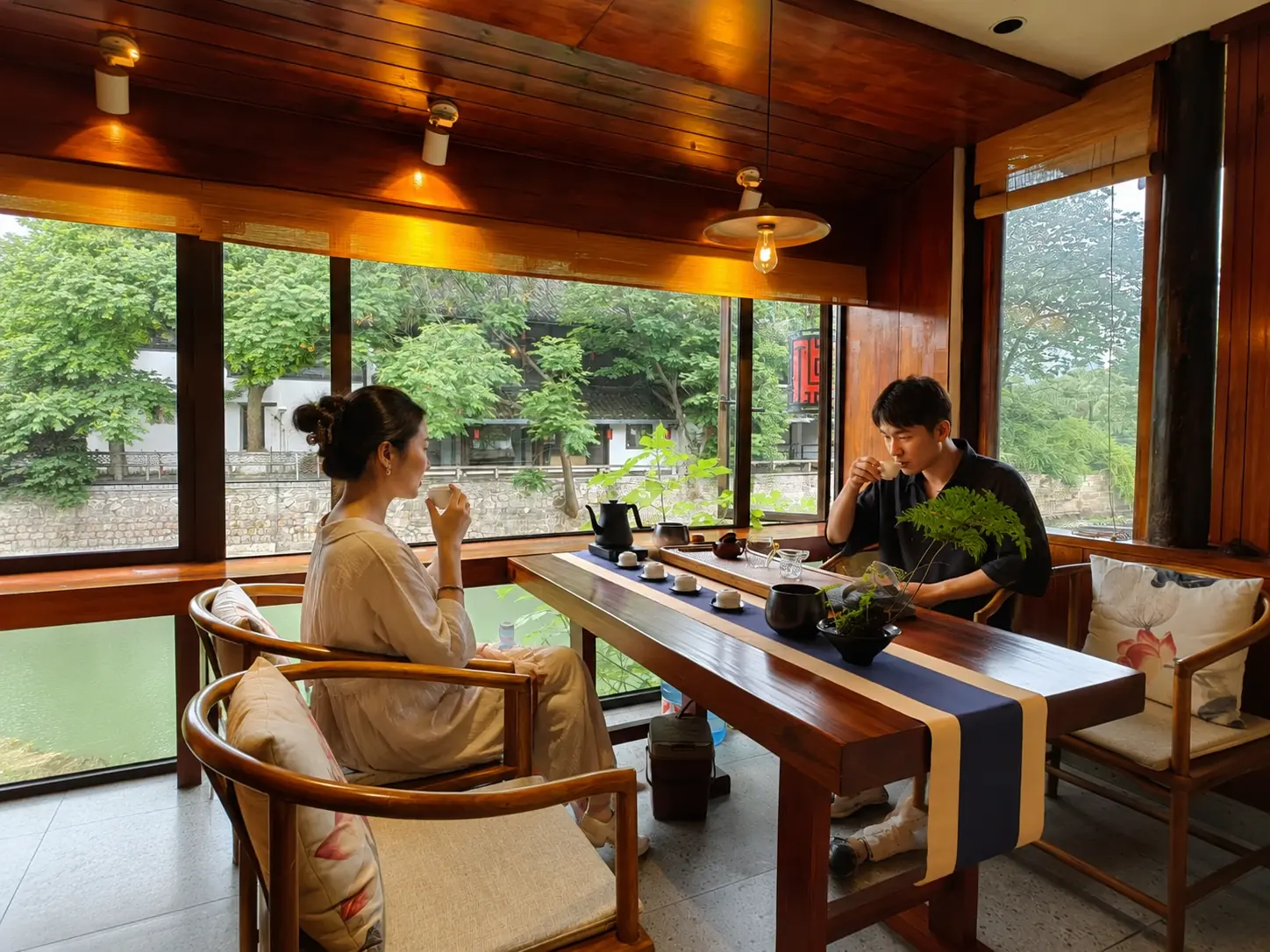
Xiaohe is better for a relaxed drink or simple snack than a full food crawl.
Cafes, teahouses, studios and small shops now sit inside the older residential-commercial fabric. Daytime is strongest for architecture and daily-life detail; late afternoon is strongest for softer light and a slower seat beside the lane.
Even when the street remains accessible, do not assume every business stays open late. Current merchant hours vary and should be checked independently.
Best for houses, residents and small material details.
Warmer walls, reflections and a gentler pace.
Street access is not a promise that shops are open.
Do not overschedule the stop: pick one comfortable-looking place instead of comparing every storefront. The point is the slow pause, not a cafe checklist.
Gongchen Bridge and Xiaohe Park Add-Ons
Xiaohe is strongest when paired with one other canal sight. The add-ons below perform different jobs, so choose by the missing piece in your day.
Choose the most recognizable stone bridge when you want a stronger sense of the Grand Canal's scale.
Use it before or after Xiaohe when you want the waterway's longer history, not just a photogenic lane.
Choose this after Xiaohe for canal-side restaurants and a more open dinner or evening-walk setting.
Choose the former oil-site landscape for industrial heritage, contemporary public space and a visual break from the old lane.
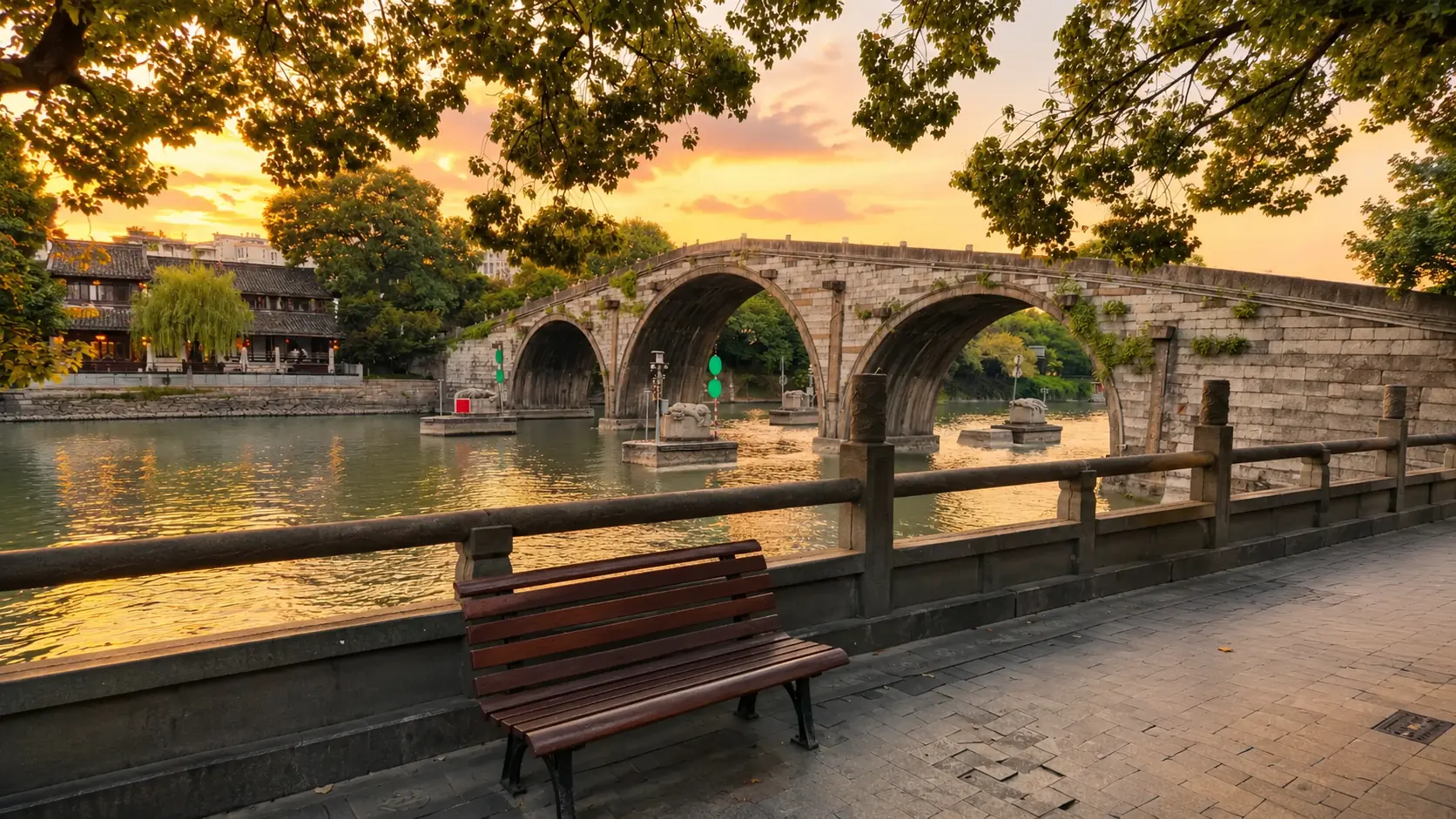
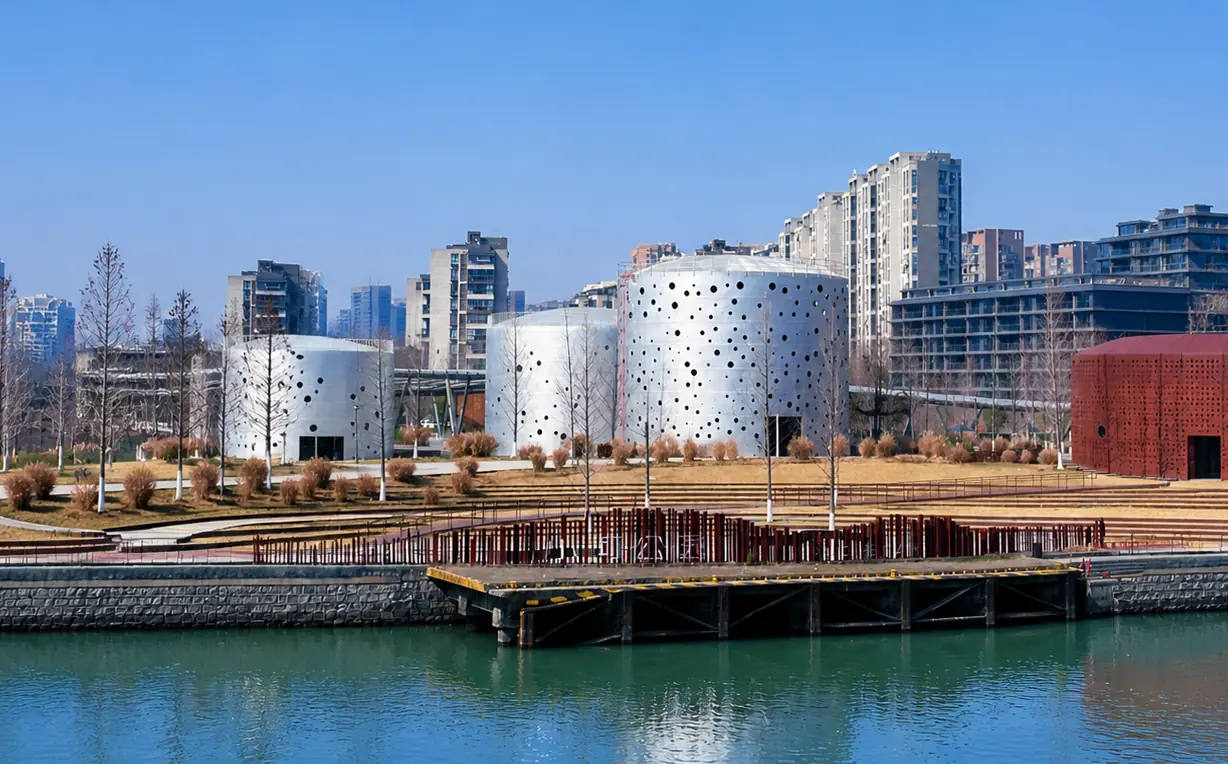
Read the contrast: Gongchen Bridge is the landmark; the museum is structured context; Xiaohe is residential texture; Dadou Road is the dinner/evening option; Xiaohe Park is modern reuse.
Hangzhou official Xiaohe Park profile ↗Best Times and Photo Etiquette
Best for quieter lanes, daily-life texture and less pressure on bridges.
Best for warmer walls, softer reflections and a more comfortable summer walk.
The strongest photographs are details: a landing step, an old window, a bicycle, a quiet bend or warm light on a white wall. Long staged shoots weaken the street for everyone else.
Weekend afternoons and public holidays can turn moderate crowds into a bottleneck.
Bridge centers, doorways and the tight main lane feel dense quickly. Arrive earlier, keep moving through photo pinch points and step into a side lane only where it remains clearly public.
Respect the lived-in street: free access does not make every doorway public. Stay out of thresholds and courtyards, do not block bridges, and let residents pass before taking a frame.
Getting There and Practical Details
There is no single metro exit that drops you inside Xiaohe Straight Street. Choose the station by the rest of your canal route, then use current navigation for the final walk, bike or short taxi.
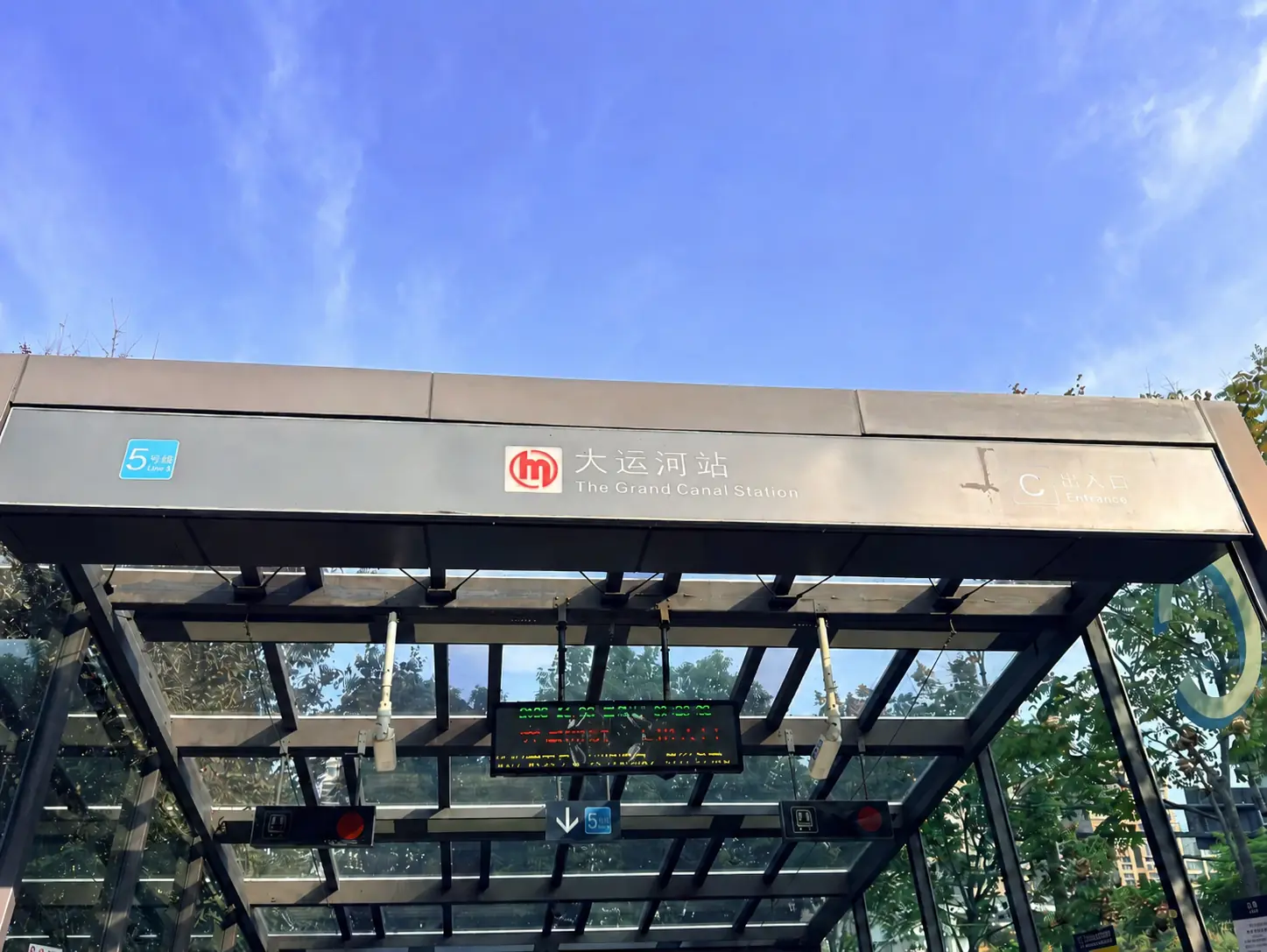
Use Line 5 for the big-canal pairing, Line 10 for the west-side approach, or a taxi when the final walk is the wrong trade-off.
Most logical when pairing Gongchen Bridge and the canal museum.
Useful from the west side; still expect a final surface leg.
Use only when the day also includes Dadou Road or Xiangji Temple.
Taxi or Didi to “小河直街历史文化街区” is the easiest navigation choice for Xiaohe only.
Prefer a short taxi in rain, heat, or when traveling with children, older travelers or limited mobility.
Access and hours: a current Ctrip listing describes the street as free and open year-round, all day. Treat that as a visitor-listing baseline, not an official promise for every studio, cafe, shop or nearby venue; businesses set their own hours.
Where to Stay Near Xiaohe Straight Street & Hangzhou
Decide whether you want quiet Grand Canal mornings right outside your door or a classic West Lake base with one easy ride north to Xiaohe.
Affiliate disclosure: the Trip.com hotel links below are affiliate links; we may earn a commission at no extra cost to you. Check exact canal-lane access, recent foreign-guest reviews, and cancellation rules before booking.
Stay Near the Grand Canal & Xiaohe
Best for slow morning light & canal walks
Walk Xiaohe Straight Street, Gongchen Bridge, and Xiaohe Park early before afternoon cafe crowds gather, with calmer nightly rates than prime lakeside avenues.
Booking tip: Check proximity to The Grand Canal (Line 5) or Beida Bridge (Line 10) stations, or budget a short taxi for luggage arrivals.
Stay Near Hubin & West Lake
Best for 1–2 night first visits
Anchor yourself beside West Lake's eastern shore and Longxiangqiao Station (Line 1) for direct Hangzhou East rail access, then take a 20-minute taxi or metro north for your Xiaohe half-day.
Booking tip: Book early around spring blossom season and public weekends, when Hubin lakeside rooms sell out fastest.
For more neighborhood comparisons around West Lake, Lingyin, and the Grand Canal, see our Hangzhou travel guide.
Frequently Asked Questions
A current visitor listing describes the street itself as free and generally accessible all day. Treat that as a street-access baseline, not a promise for cafes, restaurants, shops, studios, museums or nearby venues, which set their own hours and prices.
Sources checked for this guide
- Current three-river setting and the continuing residential and commercial role of the neighbourhood: Gongshu District Xiaohe subdistrict profile (2026)
- Historic-district boundary, preserved late-Qing and early-Republic residential fabric, shipping traces and traditional use: Gongshu District Xiaohe heritage profile
- Current mix of preserved workshops, shops, wharfs, cafes, teahouses and small studios: Gongshu District current-street feature
- Former oil-site identity, public-space reuse and 2023 completion of Xiaohe Park: Hangzhou municipal Xiaohe Park profile
- Line 5 confirmation and current station context for The Grand Canal Station: Hangzhou Metro: The Grand Canal Station
- Line 10 confirmation and current station context for Beida Bridge Station: Hangzhou Metro: Beida Bridge Station
- Current station and exit details for Xiangji Temple Station: Hangzhou Metro: Xiangji Temple Station
- Qualified visitor-listing cross-check for free, year-round and all-day street access; merchant and venue hours remain separate: Ctrip Xiaohe Straight Street visitor listing
Beyond This Guide
Xiaohe Straight Street is best used as the slow piece of a Hangzhou day. It gives you the Grand Canal's everyday side: old residences, small water edges, narrow bridges, and a neighbourhood pace that contrasts with West Lake's big-view tourism.
For a richer route, pair it with the Grand Canal guide, West Lake, Lingyin Temple, or the Hangzhou day trip itinerary.
© gochinafreely.com — Original guide by Go China Freely.