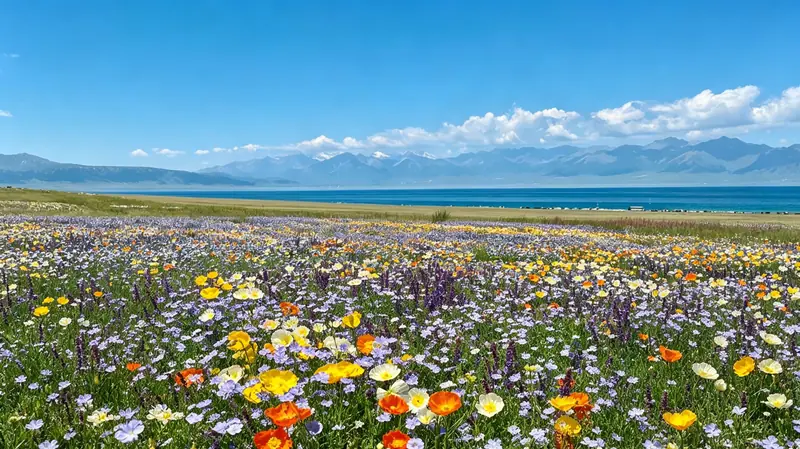
Visit Basics
Since August 20, 2026, self-drive fees are charged per vehicle (¥120 for ≤5 seats, ¥180 for 6–7 seats) on top of per-person admission; reserve peak self-drive vehicle slots ahead online, while personal passport admission and shuttle tickets are available at the East Gate window.
Decision Notes
The Last Tear of the Atlantic
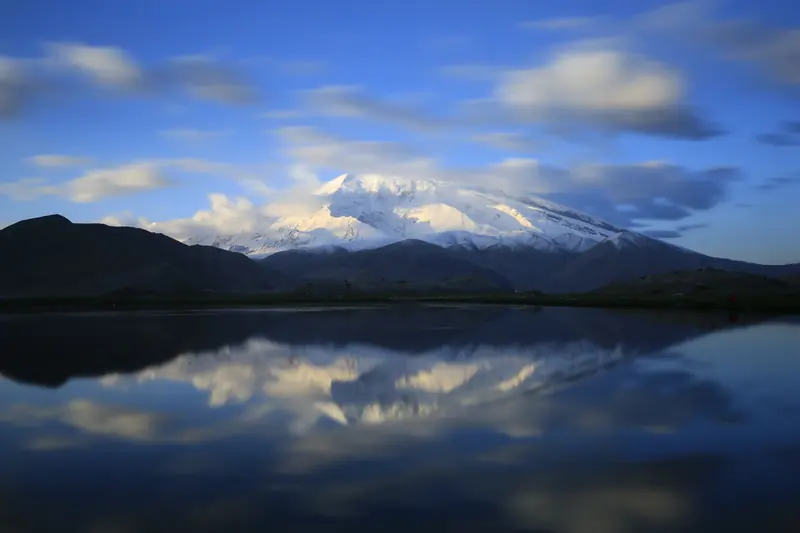
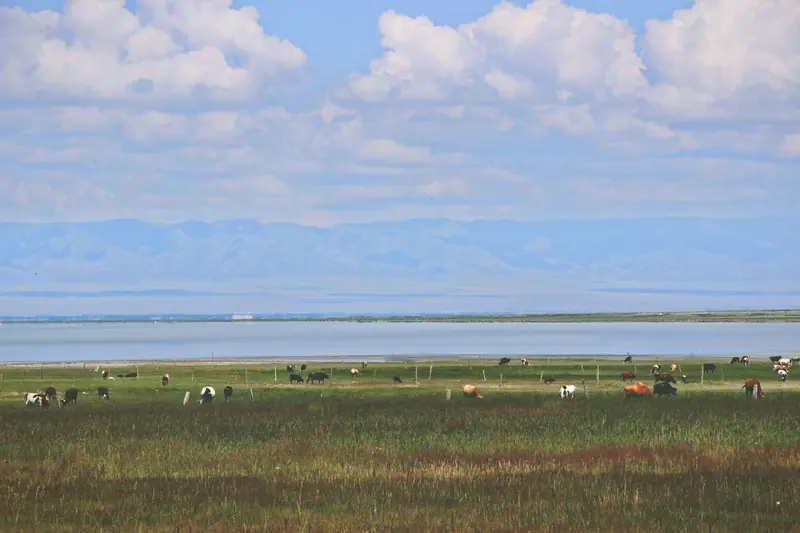
Sayram Lake (赛里木湖) sits at 2,073 meters in a cradle of the western Tianshan Mountains — 458 square kilometers of water so blue it looks digitally enhanced, framed by snowcapped ridges year-round.
458 km²
Xinjiang alpine lake
2,073 m
Tianshan elevation
90 km
clockwise loop road
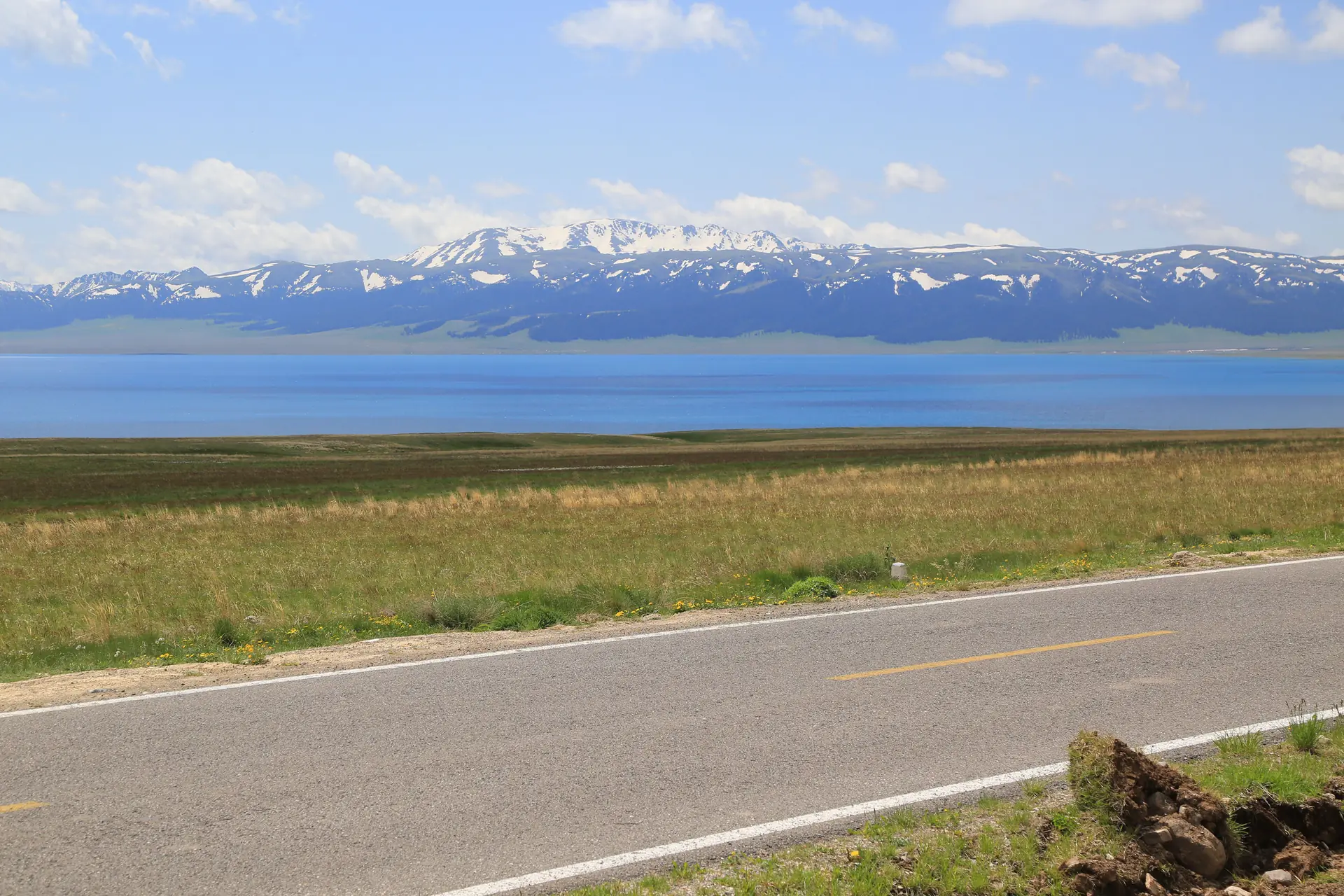
458 square kilometers of alpine lake at 2,073 meters — the 'last tear of the Atlantic' where Eurasian moisture hits the Tianshan wall
Tianshan alpine lake
A high-altitude lake where the road does the hard work
Sayram Lake (赛里木湖)
From late May through June, wildflowers carpet the lakeshore while the peaks stay white — and the loop road lets you drive or ride a shuttle through the whole scene in one day.
Why the nickname fits
The poetic nickname "the last tear of the Atlantic" comes from a meteorological fact: Sayram Lake marks the easternmost point where moisture from the Atlantic Ocean can still condense after crossing Eurasia. The Tianshan range blocks the airflow here, turning it into rain and snow that feeds the lake; east of the mountains, the Chinese interior turns dry.
What created the basin
Sayram is a tectonic fault lake. The Tianshan uplift during the Himalayan orogeny created a massive basin that glacial meltwater and underground springs gradually filled. Maximum depth reaches about 92 meters, and the water is clear enough to see the gravel bed from shore.
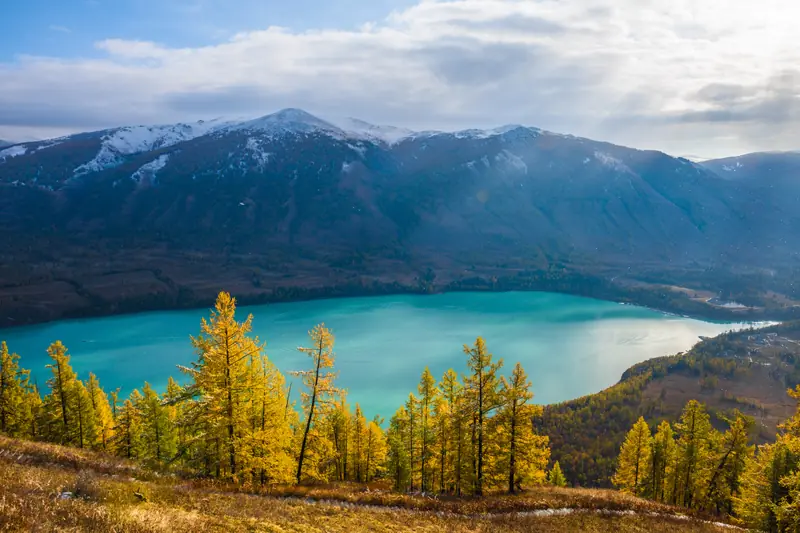
Compared to northern Xinjiang's other star, Kanas Lake (喀纳斯湖): Kanas wins with its autumn golds and Tuva log-cabin villages, while Sayram wins on pure color — the water shifts between emerald green and sapphire blue depending on weather and angle, always against a backdrop of the Tianshan snowline. The two are about 900 km apart by road (10+ hours), so you cannot combine them in one trip: pick Kanas for September-October autumn, Sayram for the late May-June wildflower season.
The Lake Loop — Where to Stop
The loop road runs about 90 km around the lake, one-way clockwise (enter at the East Gate, exit at the South Gate — or return to the East Gate). Self-driving without rushing takes 4–5 hours; if you stop at every viewpoint for photos and short walks, plan on a full day. The shuttle bus covers the same route in about 2 hours without stops.
Loop rhythm
Treat the 90 km road as a full-day scenic loop, not a quick viewpoint stop.
Direction
Clockwise from East Gate
Self-drive
4-5 hours without rushing
Photo day
Plan a full day
Shuttle
About 2 hours without stops
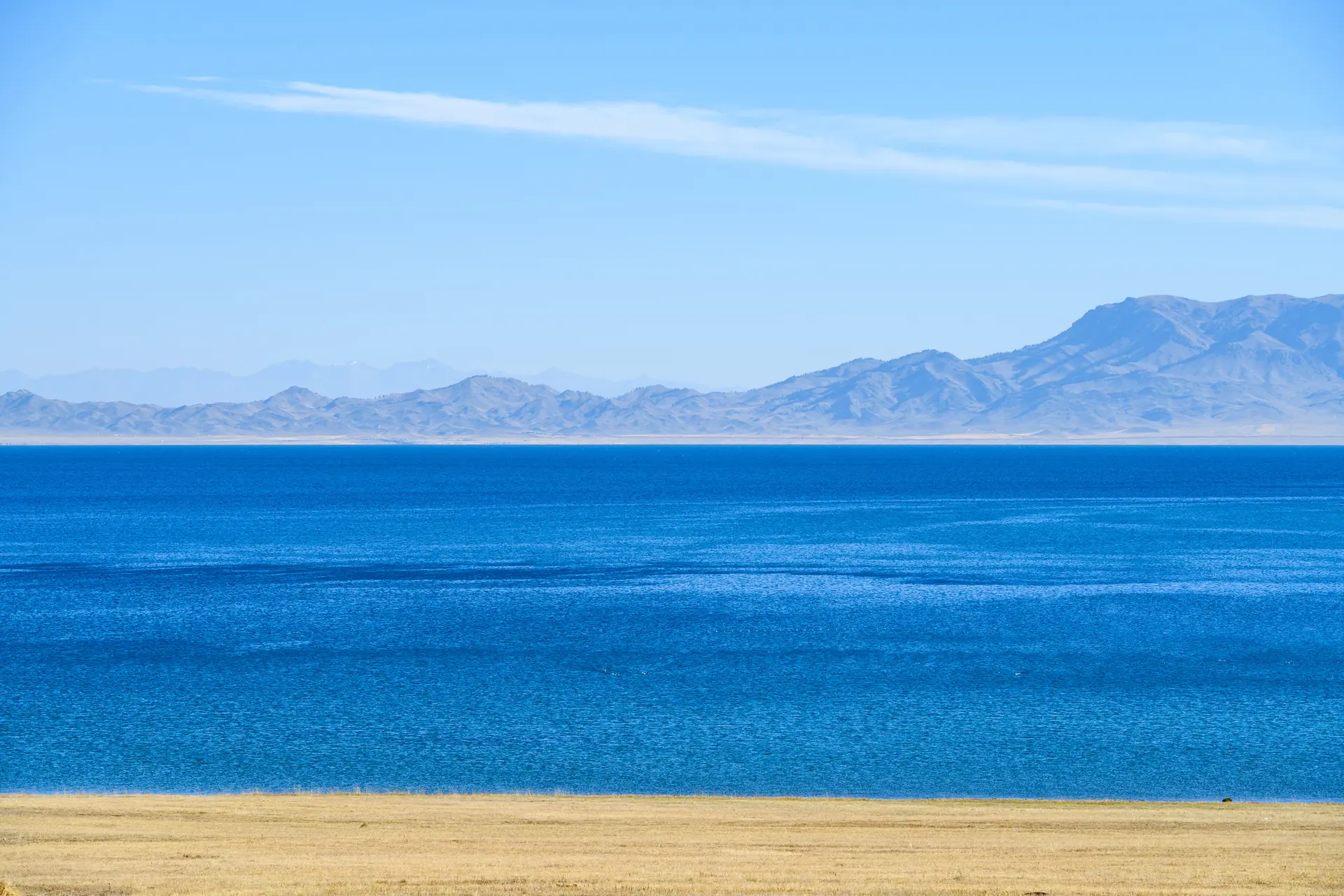
Water so clear you can count the pebbles — Sayram's color shifts between emerald green and sapphire blue with weather and angle
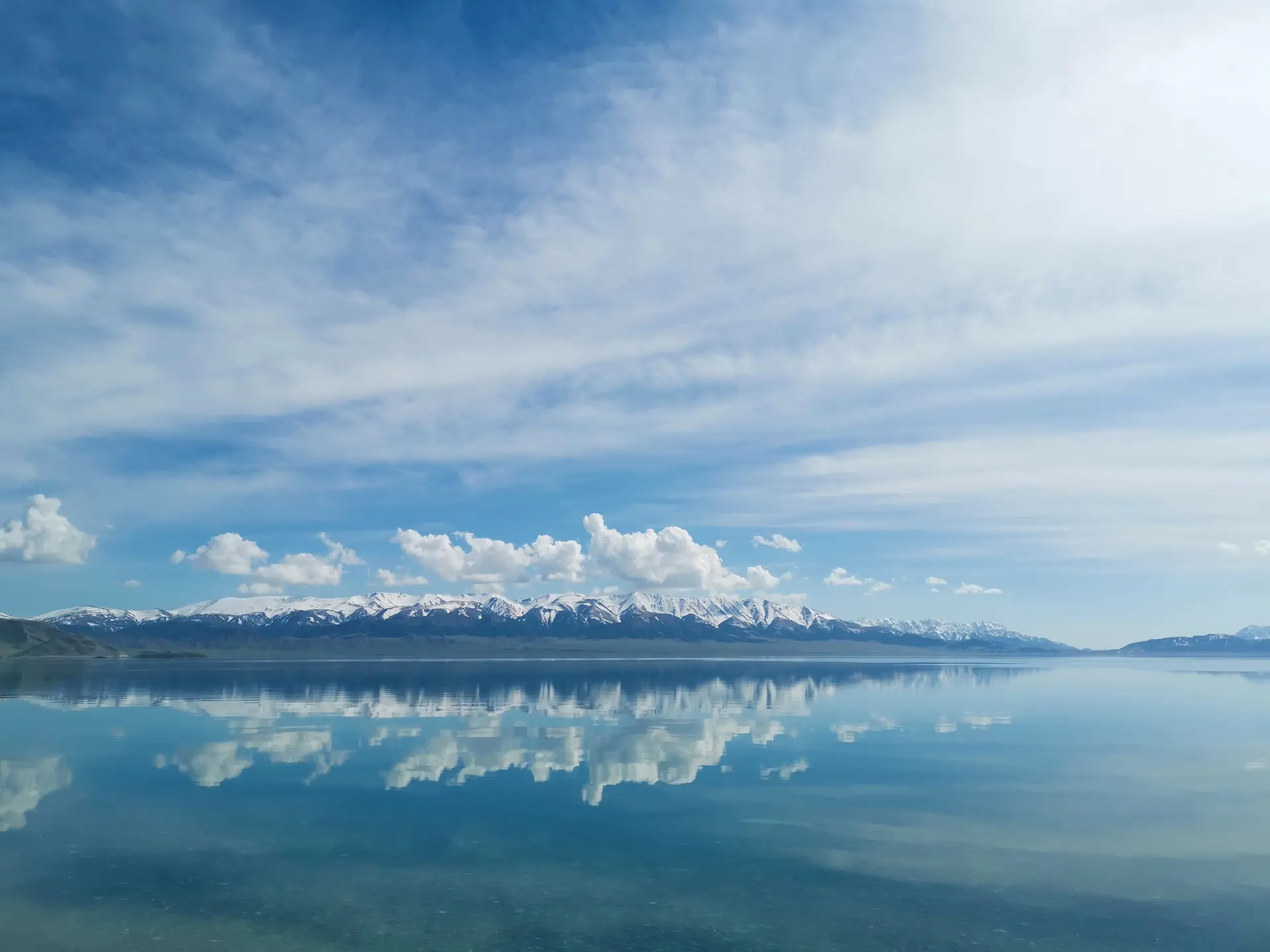
Jinghai Qicai at low-angle light — the surface displays shades that make it look digitally enhanced (it's not)
East-side color stop
Jinghai Qicai (七彩净海)
Jinghai Qicai (Google | Amap) sits on the eastern stretch of the loop, where the water is clearest. On calm days, the surface displays shades of green, blue, teal, and violet — like a giant paint palette.
Colors are richest at low-angle sunrise light, which is why photographers often spend the night near the East Gate.
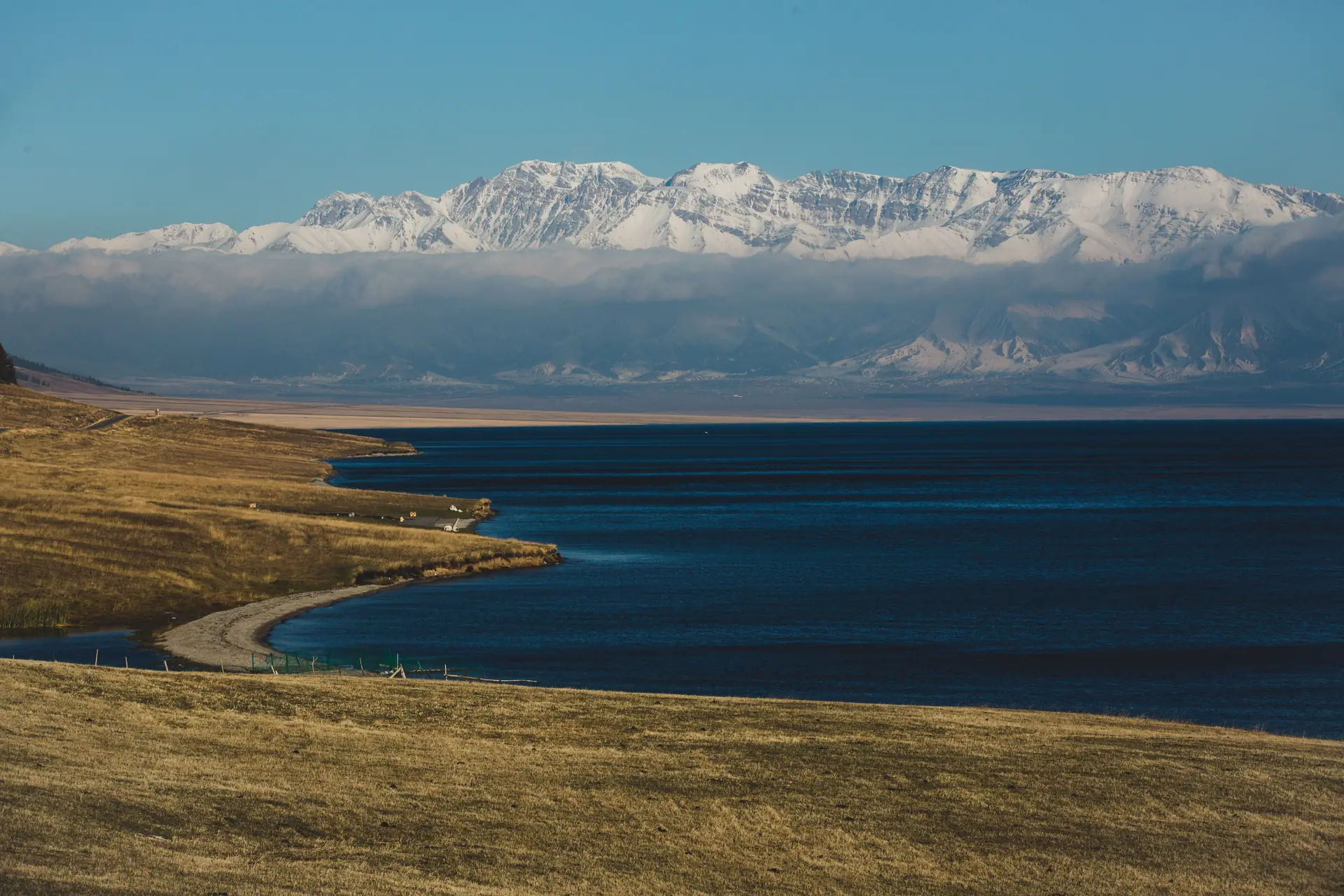
Moon Bay — a rare sandy beach on this rocky alpine lake, though the water stays bracingly cold even in midsummer
South-shore beach stop
Moon Bay (月亮湾)
Moon Bay (Google | Amap) is a crescent-shaped stretch of sandy beach on the south shore. It is good for a short walk and getting close to the water — though even in midsummer, the alpine lake stays bracingly cold.
Use it as a shore-access pause
This is the place to step down to the water and reset the drive rhythm, not a warm beach-swim stop.
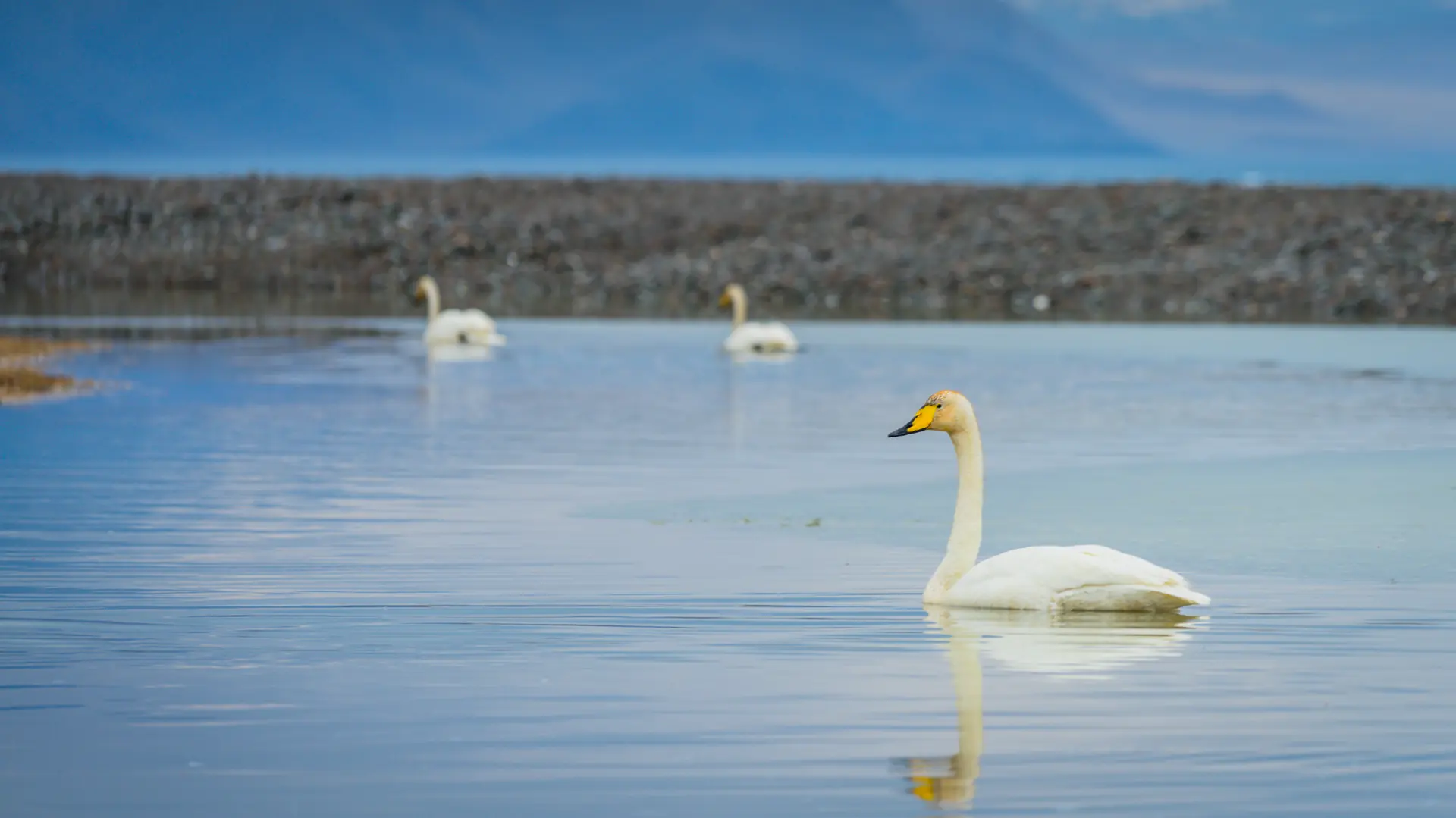
Flowers, snow peaks, lake, and swans in one frame — the West Sea Grassland is the single best stop on the entire loop
Why this stop gets the most time
Swans often wade in the shallows along this stretch. It is the single best stop on the entire loop: flowers, snow peaks, lake, and swans in one frame — you will not find that combination anywhere else around Sayram.
Smaller stops worth knowing
Saihu Yuejin / Golden Waves (赛湖跃进)
A viewing platform near the East Gate entrance and the classic sunrise spot. As the sun rises over the lake, light bounces off the waves in golden flashes. The name means "leaping waves" in Chinese.
Kele Yongzhu (克勒涌珠)
A spring-fed inlet on the western shore, often shrouded in low mist. The surrounding meadow also blooms in May-June. Quieter than Jinghai Qicai or the West Sea Grassland — a good place to escape the crowd.
Songshu Tou (松树头)
Technically not lakeside — it sits where the loop road meets the G30 expressway on a ridgeline. This is the best vantage point for viewing the Guozigou Bridge (果子沟大桥) from a distance: a sweeping arc of highway suspended over a valley of Tianshan spruce and snow peaks.
When to Go
Sayram Lake looks completely different in each season — timing matters a lot:

Late May through mid-June — wildflowers erupt while the peaks stay white, the narrow window that defines Sayram's magic
Best window
Late May to mid-June is the easiest recommendation for most independent travelers.
The flower sea is out, the peaks still hold snow, and peak-summer crowds have not fully arrived. Winter can be spectacular for blue ice, but it is a different kind of trip with serious cold, icy roads, and much less margin for improvising.
Late May - Mid-June
Snow still caps the peaks while wildflowers erupt across the lakeshore and meadows. Tourist numbers have not hit summer peak yet, and temperatures are comfortable at 15-22°C daytime. Occasional rain showers are the only downside.
Verdict: Best window
July-August
The grasslands are fully green and the weather is warm at 22-26°C daytime, but this is Xinjiang's busiest tourism window. Self-drive passes may sell out a day in advance, and lakeside yurt and camp prices double. Nights still drop to 10-12°C.
Verdict: Beautiful but busy
September
Meadows turn golden and lake water deepens in hue. Crowds thin out, accommodation returns to normal prices, and the weather is dry and windy. Nighttime temperatures can approach 0°C.
Verdict: Strong autumn choice
November-March
The lake freezes completely, and in some years the ice develops blue bubbles and crack patterns — similar to Lake Baikal but smaller. Temperatures can drop to -30°C, and you will need serious cold-weather gear. It is increasingly popular with photographers.
Verdict: Specialist winter trip
Sunset timing note
Xinjiang uses Beijing time (UTC+8) but sits geographically closer to UTC+6. In summer, sunset does not happen until 21:00-22:00 and sunrise is around 07:00-08:00. Plan your day around actual daylight, not clock time.
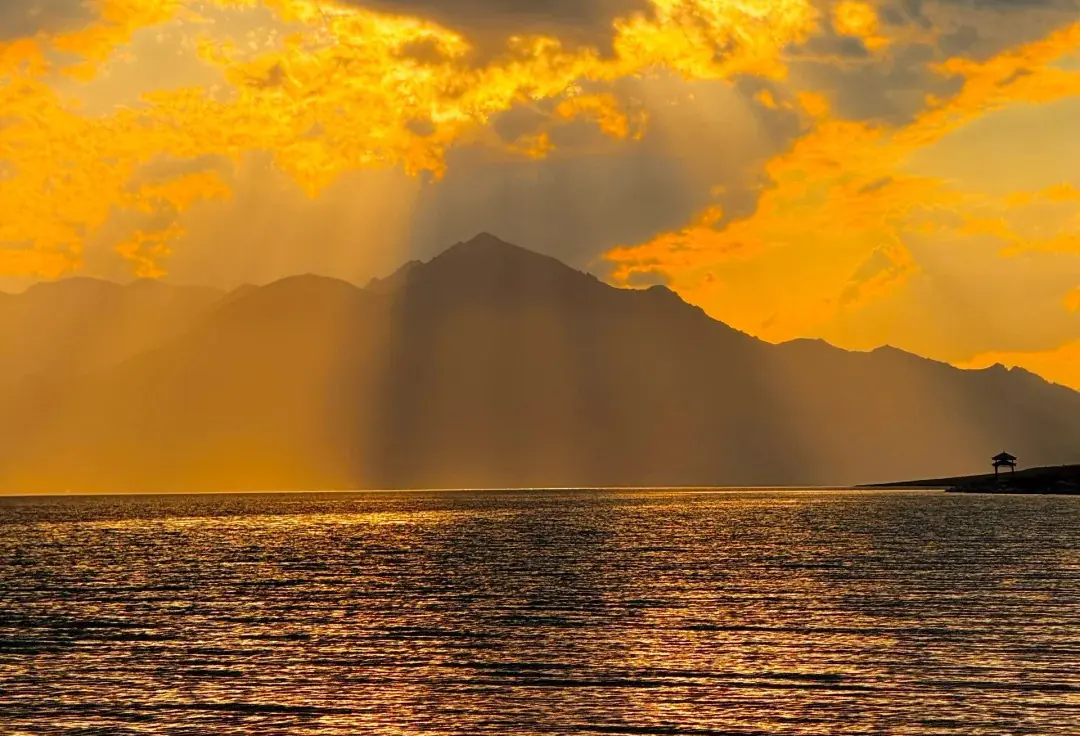
Xinjiang sunset doesn't arrive until 21:00-22:00 in summer — plan by real daylight
Tickets & Access
Ticket types to compare
Admission ticket
¥70 peak / ¥35 off-season
Per-person entry (¥70 peak season; ¥35 winter/off-season half-price window — check the current year's seasonal cutoff dates).
Self-drive vehicle fee
¥120 / ≤5-seat car
Updated Aug 20, 2026 to per-vehicle pricing (¥180 for 6–7 seats, ¥300 for 8–19 seats); subject to daily scenic vehicle capacity.
Shuttle bus package
¥130 peak (¥70 + ¥60)
Admission + ¥60 sightseeing bus around the loop with hop-on/hop-off stops.
Concessions
Half-price / free entry
Applies to base admission with valid student/age ID; shuttle and vehicle fees remain separate.
Main entrance with the most facilities: ticket office, restrooms, and small shops. Most visitors enter here. This is the starting point for the clockwise loop.
Closer when coming from the G30 expressway direction. Some drivers enter here and loop counter-clockwise, but the official recommendation is clockwise from the East Gate.
Hours: The scenic area is technically open 24 hours because the lake has no fences, but ticket sales and shuttle buses operate 09:00-20:00 in summer, with shorter hours in winter. To catch sunrise, enter the afternoon before and spend the night inside.
Separate vehicle-slot booking from passport admission
Self-drive vehicle capacity is capped in peak season and can fill 1–3 days ahead on the official WeChat mini-programs (赛里木湖旅游 / 一部手机游赛湖) and Chinese OTAs. If foreign passport verification blocks online vehicle checkout, ask your rental agency or Bole/Yining hotel to help reserve the car slot ahead; for personal admission and the ¥60 scenic shuttle, foreign passport holders can purchase directly at the East Gate Visitor Center manual window.
Getting There
Sayram Lake sits in the Bortala Mongol Autonomous Prefecture (博尔塔拉蒙古自治州) — a genuinely remote destination with no train to the lakeside and the nearest airport 100 km away. That remoteness is precisely why it still feels so untouched.
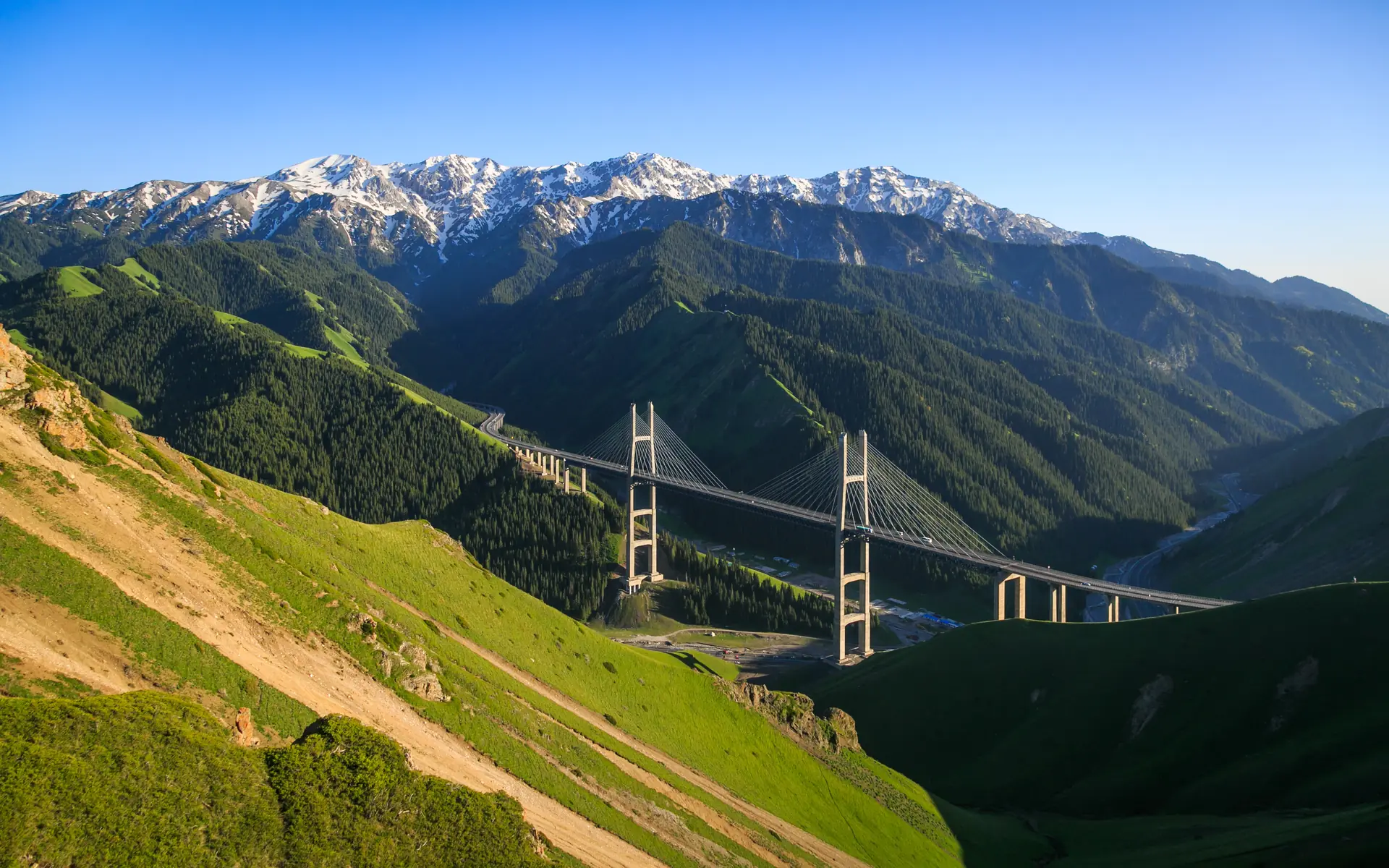
The road to Sayram Lake is half the adventure — the Guozigou Bridge threads through one of Xinjiang's most dramatic gorges
Gateway logic
Choose the gateway first, then choose the vehicle plan.
Bole is closer to the lake, Yining gives you the dramatic Guozigou Bridge approach, and Urumqi is the long-distance hub for flights, trains, and road trips.
From Urumqi
Fly to Bole (博乐)
Bole Airport, ~1 hour flight. From there, taxi or shared ride to the East Gate: ~100 km / 1.5 hours.
Fly to Yining (伊宁)
Yining Airport, ~1.5 hour flight. Drive via G30 expressway through the Guozigou Bridge to the lake: ~165 km / 2.5 hours — the road itself is one of the most scenic highway stretches in China.
Train to Bole
Overnight sleeper from Urumqi (~12 hours, hard sleeper ~¥150-200). Arrive early morning, then shared ride to the lake.
Self-drive
~600 km / 6-7 hours via G30, with good road conditions.
From Yining
Take the G30 expressway west; after crossing the Guozigou Bridge you are almost at the lake — 165 km / 2-2.5 hours. Options: hire a car (¥400-500 one way) or ask at the Yining bus station about through-buses. Schedules vary, so confirm whether the bus stops at Sayram Lake.
From Bole
Bole to the East Gate is 100 km via G30, about 1.5 hours. The Bole bus station runs tourist buses in peak season (¥30-50), or negotiate a shared ride at the train station entrance (~¥50/person, departs when 4 seats fill).
Show one of these to your taxi, shared-ride, or charter driver:
East Gate 东门 · Show this to your driver · 出示给司机看
请带我去赛里木湖东门
Please take me to Sayram Lake East Gate.
Best default for the ticket office, most facilities, and the recommended clockwise lake loop.
South Gate 南门 · Show this to your driver · 出示给司机看
请带我去赛里木湖南门
Please take me to Sayram Lake South Gate.
Useful if your driver is approaching from the G30 expressway side; confirm your loop direction before entering.
Fill your tank
There are zero gas stations inside the scenic area. Top up in Bole or Yining before entering — the 90 km loop plus the access road can easily eat 150+ km of range.
Beyond the Loop
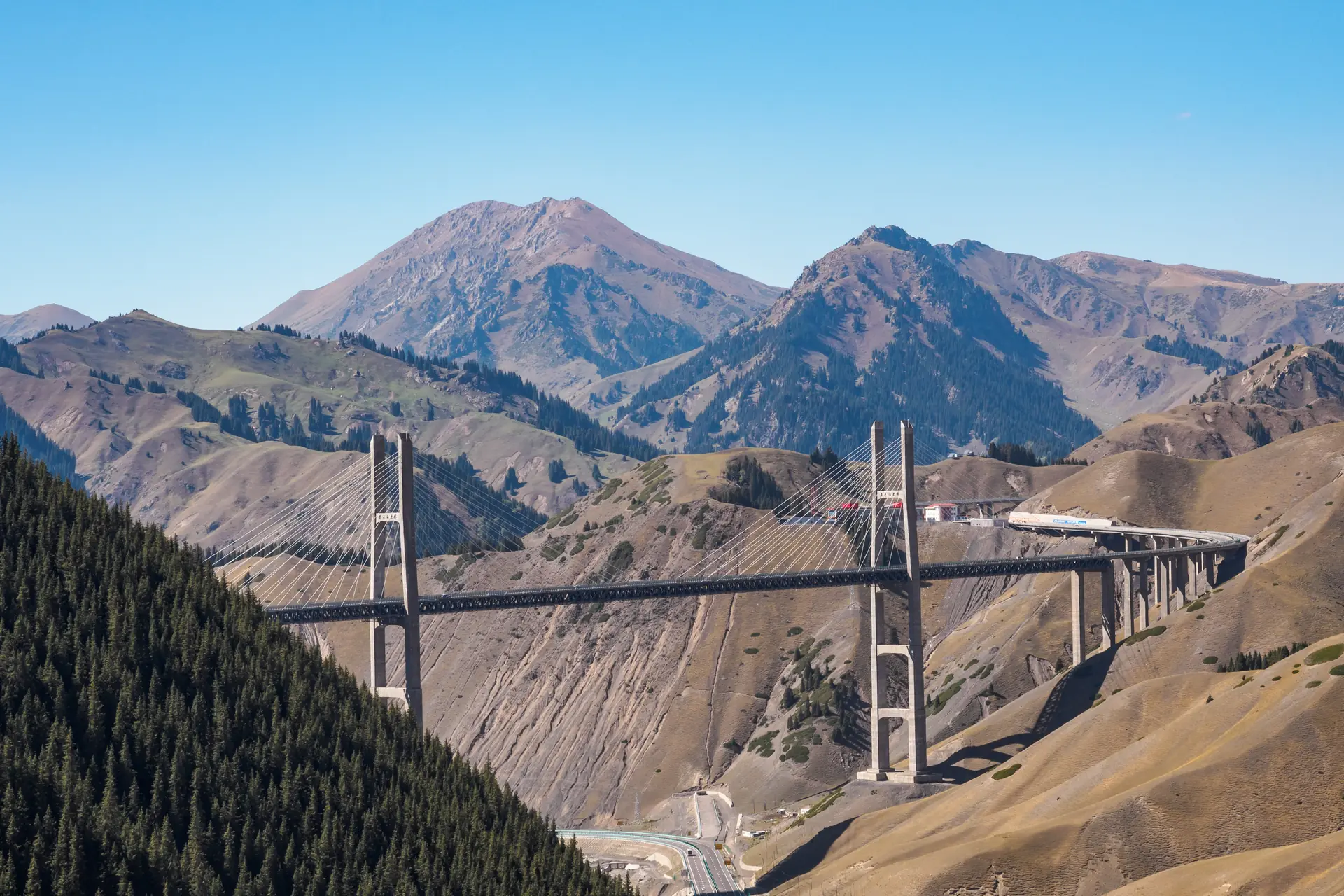
700 meters of highway suspended 200 meters above the valley — the Guozigou Bridge is an engineering icon of western China
Road approach
Guozigou Bridge (果子沟大桥)
If you are driving from Yining, you will cross this on the way in. The G30 expressway threads through the Guozi Valley (果子沟) — a deep gorge carpeted with Tianshan spruce.
The Guozigou Bridge (Google | Amap) is the signature structure: its deck sits about 200 meters above the valley floor, spanning 700 meters in a sweeping curve. Pull over at the viewing areas on either end of the bridge for photos.
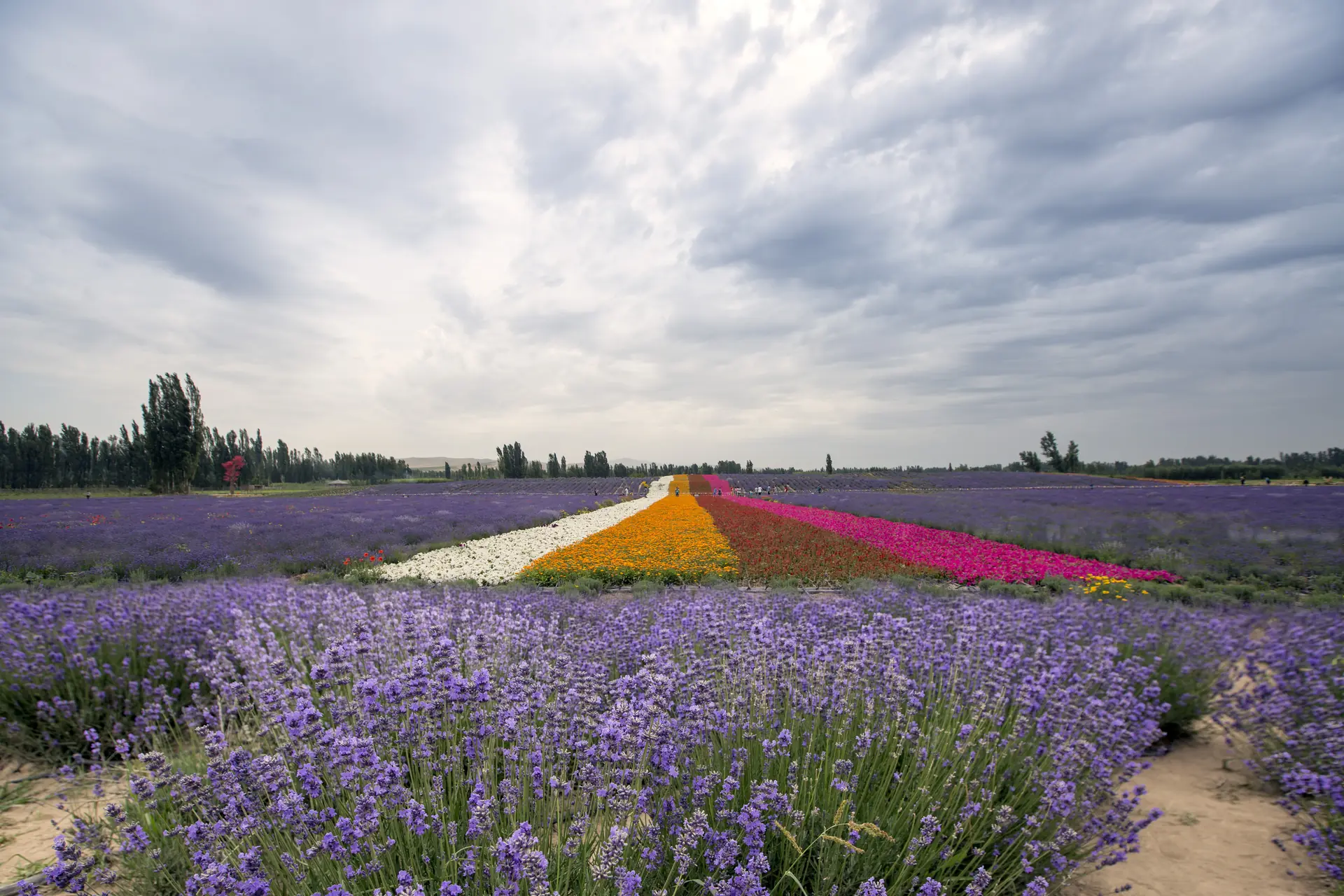
Late June through mid-July — Huocheng erupts in purple, producing 95% of China's lavender alongside Provence and Hokkaido
Seasonal add-on
Huocheng Lavender (霍城薰衣草)
From late June through mid-July, the Ili River Valley town of Huocheng County (霍城县) erupts in purple. The vast majority of China's lavender comes from this area, which ranks alongside Provence, France and Hokkaido, Japan as a global lavender hub.
It is about 1.5-2 hours from Sayram Lake — easy to combine on the same trip. The main lavender base is the Princess Jieyou Lavender Garden (解忧公主薰衣草园) (Google | Amap).
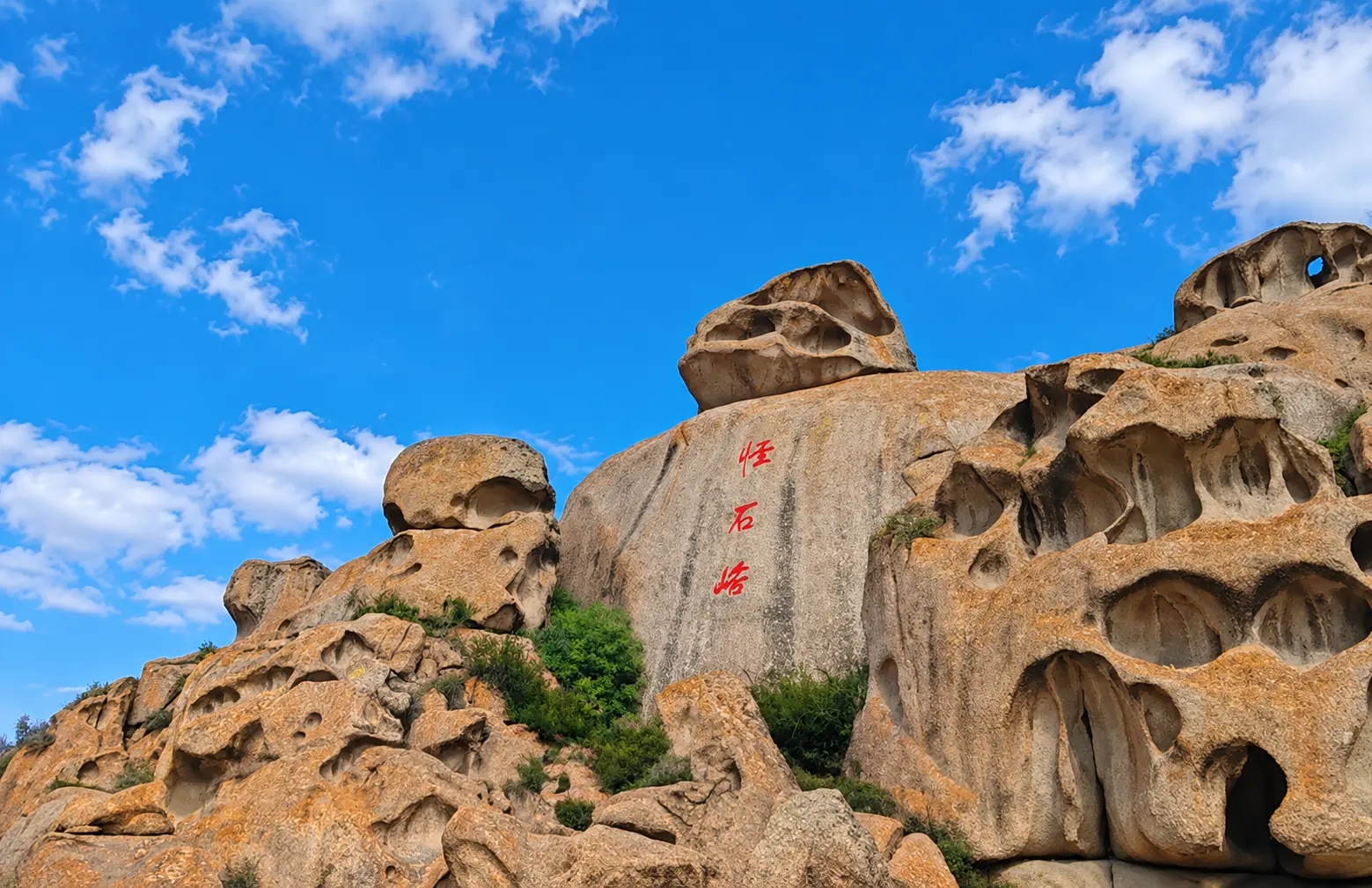
Monster Rock Valley — wind-eroded granite formations that feel like the opposite landscape from Sayram Lake's alpine blues
Bole-side half-day detour
Monster Rock Valley (怪石峪)
Monster Rock Valley (Google | Amap) is about 1.5 hours toward Bole. This is a landscape of wind-eroded granite — bizarre rock formations scattered across a semi-desert. It is a complete visual contrast to the blues and greens of Sayram Lake, and worth a half-day if you are heading back through Bole.
Connecting to the Northern Xinjiang Loop
Sayram Lake sits on the western leg of northern Xinjiang. A common itinerary: Urumqi → Sayram Lake → Yining → Nalati Grassland (那拉提草原) → Bayanbulak (巴音布鲁克) → Duku Highway (独库公路) → Urumqi. This loop typically takes 7-10 days. If time is tight, Sayram Lake + Yining + Huocheng Lavender can be compressed into 3-4 days.
What Most Visitors Get Wrong
1. Only budgeting half a day
The lake loop is 90 km. Between photo stops, walks along the lakeshore, and soaking in the meadows, you need at least one full day. Ideally, spend a night to catch sunrise or sunset.
2. Skipping warm layers
2,073 m + Tianshan wind corridor = day-to-night swings of 15-20°C. Even in peak July, you will want fleece or a light down jacket after sundown. Wind chill can make it feel 5-8°C colder.
3. Not booking ahead in summer
July-August self-drive quotas are limited. Show up on the day and you might be told "sold out." Book online at least 1-2 days in advance.
4. Running out of fuel
No refueling inside the park. The 90 km loop plus access roads can drain 150+ km of range — fill up before entering.
5. Expecting a proper restaurant inside
The lakeshore has scattered vendors and yurt-shops selling barbecued lamb, milk tea, and naan (馕), but options are limited and prices are high. Eat a real meal in Bole or Yining before entering, and bring snacks and water.
Where to Stay
Sunrise choice
Inside the Park
Best if sunrise or wildflower dawn matters more than comfort.
Lakeside yurts and camping: Kazakh yurts (毡房) dot the shore near West Sea Grassland and Moon Bay. Peak-season prices are about ¥200-500/night including simple meals. Facilities are basic — no private bathroom, communal pit toilet — but opening your door to the lake and wildflowers at dawn is hard to replicate. Camping is allowed in designated areas; summer nights drop to 5°C. Pack out all trash.
Closest city base
Bole City
100 km / 1.5 h from the lake. Bole is the nearest city with a real hotel selection at reasonable prices, usually around ¥150-300/night. It works well for travelers who want a proper bed and shower. The trade-off: no lakeside sunrise.
Ili route base
Yining City
165 km / 2.5 h from the lake. The Ili Valley capital has more hotels and restaurants. It works well if Sayram Lake is part of a broader Ili itinerary: drive out from Yining, loop the lake, then return and continue to Nalati or other stops.
Practical Tips
Sun protection
High altitude + lake surface reflection = intense UV. Sunscreen (SPF 50+), sunglasses, and a wide-brimmed hat are the three essentials. You will burn even on overcast days.
Cell signal
China Mobile and China Unicom cover the main loop road (4G, intermittent), but signal can cut out on remote stretches. Download offline maps before entering.
Drones
The scenic area currently permits drone flight, but policies can change — confirm at the East Gate ticket office on the day. Keep your drone well clear of swans and other wildlife.
Altitude
At 2,073 meters, most people will not notice significant effects. If you have flown in from sea level, you may feel mild headache or shortness of breath on day one. Drink plenty of water and take it slow.
Language
Virtually no English signage around Sayram Lake. Signs are in Chinese and Mongolian. Pre-translate key phrases: 东门 (East Gate), 区间车 (shuttle bus), 加油站 (gas station).
Frequently Asked Questions
One full day covers the 90 km loop with photo stops. Two days lets you catch both sunrise and sunset — stay overnight in a lakeside yurt or at a camping spot. If you're combining with Huocheng Lavender or the Guozigou Bridge, budget 2–3 days total for the Bortala/Ili side of the trip.
Sources checked for this guide
- August 20, 2026 reform shifting Sayram Lake self-drive service fees from ¥75/person to per-vehicle tiers (¥120 for ≤5 seats, ¥180 for 6–7 seats, ¥300 for 8–19 seats): Xinhua News — Sayram Lake self-drive fee adjustment (Aug 2026)
- Off-season half-price base admission of ¥35/person (half of the standard ¥70 peak tariff) during winter/early-spring operations: People's Government of Xinjiang Uygur Autonomous Region — Sayram Lake winter half-price notice (Feb 2026)
- Scenic-area office confirmation of standard ¥70/person peak-season base admission and entry gate management: The Beijing News — Sayram Lake official admission & road response (Jul 2026)
- Official price-adjustment notice reducing the Sayram Lake internal shuttle-bus fare from ¥75 to ¥60 per person: Xinjiang Development and Reform Commission — Sayram Lake shuttle-bus fare notice
Plan Your Northern Xinjiang Route
Before you lock the route:
- China high-speed rail guide — useful if you are pairing Xinjiang flights with rail elsewhere in China
- China mobile payments: Alipay & WeChat Pay — set up QR payments before remote scenic-area ticket windows and food vendors become a problem
- China visa requirements — check your entry basics before building a long Xinjiang road trip
Sayram Lake works best as part of a broader Xinjiang adventure — whether that's a focused 3–4 day Ili Valley trip or a full northern loop through Kanas and the Duku Highway. Check seasonal road openings, self-drive vehicle fees, and overnight towns along the route before booking flights or car rentals.
- Kanas Lake & Altay Guide — extend a northern Xinjiang loop into autumn larch forests and Tuva wooden villages
© gochinafreely.com — Original guide by Go China Freely.