Visit Basics
Since June 1, 2026, a single ¥80 Jin-Shan Joint Pass covers admission to both Shanxi and Shaanxi banks within 2 days; round-trip shuttles (¥16 per bank) and Dragon Cave (¥20, water-dependent) are paid per side.
Decision Notes
The River Pours Into a Stone Kettle
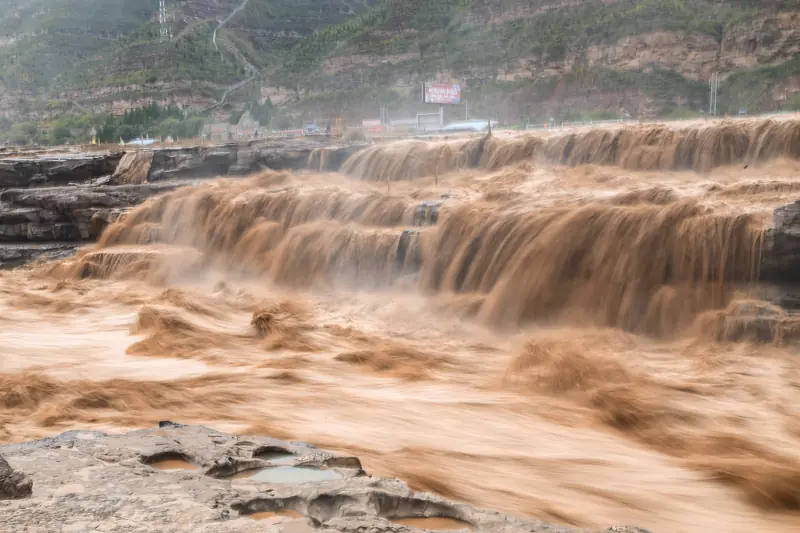
The Yellow River squeezes from 300 meters wide into a 20-meter stone trough and drops over 30 meters — muddy-yellow columns of water slam into the gorge, sending thunder and mist hundreds of meters out.
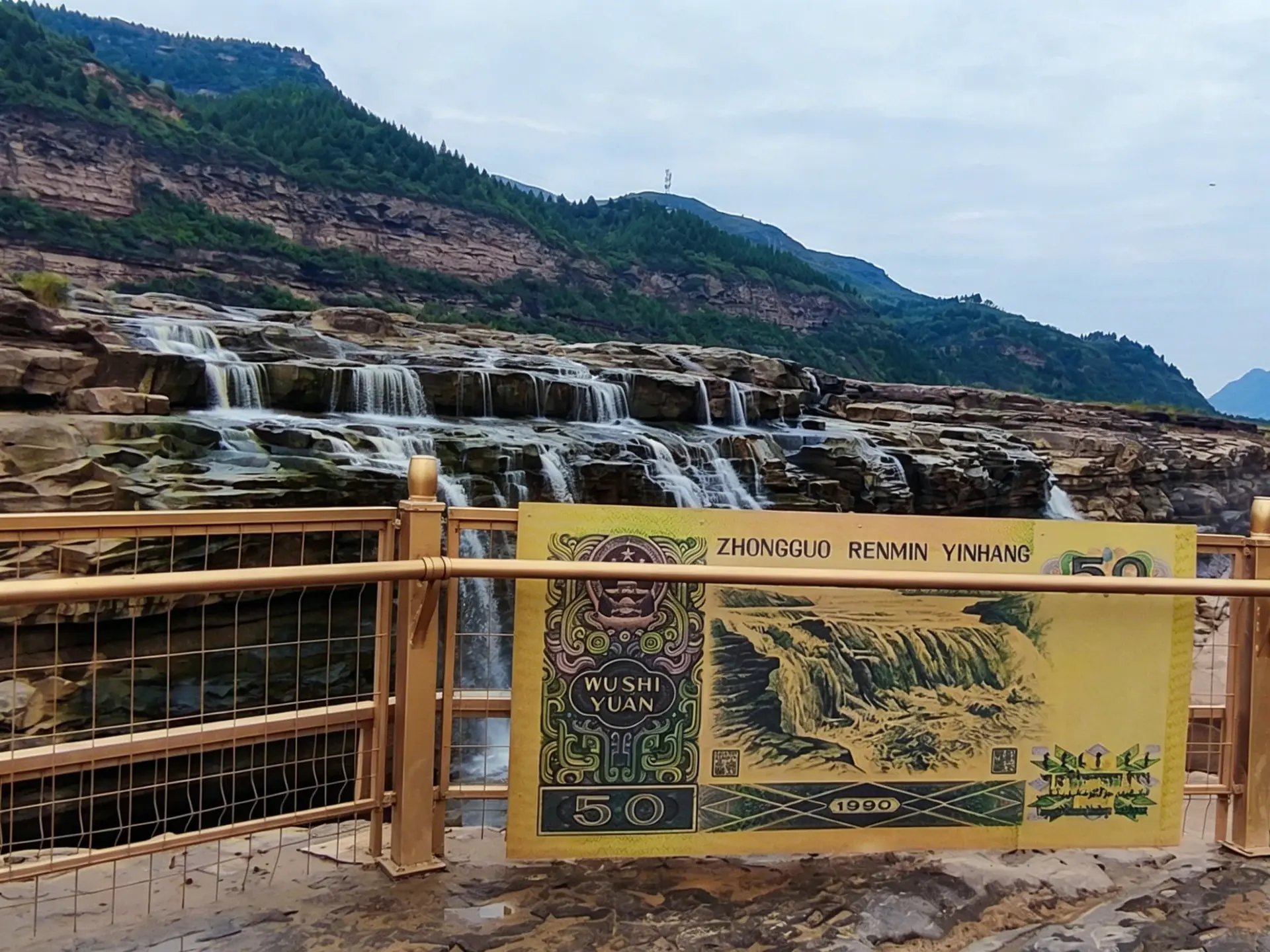
This is Hukou Waterfall (壶口瀑布), the image on China's old 50-yuan note and the only major yellow waterfall on Earth.

Yellow River gorge
The Yellow River forced through a 20-meter stone mouth
Hukou Waterfall (壶口瀑布) sits where the Yellow River crosses the Shanxi-Shaanxi border: the largest waterfall on the Yellow River and China's second-largest after Huangguoshu Waterfall (黄果树瀑布) in Guizhou.
Shanxi vs Shaanxi side
Seasonal water peaks
Xi'an, Linfen, Yan'an transport
Dragon Cave + Dragon Trough
300m -> 20m
river squeeze
45 m
highest drop
~1,000 m³/s
peak flow
Why the name fits
The name means "kettle spout." The visible drop ranges from 15-20 m in dry season to 45 m when summer floods raise the upstream level.
When the spray shoots dozens of meters into the air, locals call it "smoke rising from the riverbed" (水底冒烟).
Symbol, geology, song
A moving waterfall with national-symbol weight
Geology still in motion
The Yellow River — the world's most sediment-laden — has spent millions of years grinding through Loess Plateau sandstone and carving the Qinjin Grand Canyon (秦晋大峡谷).
The falls still creep upstream at roughly 20 centimeters per year; a few thousand years ago, Hukou was further downstream.
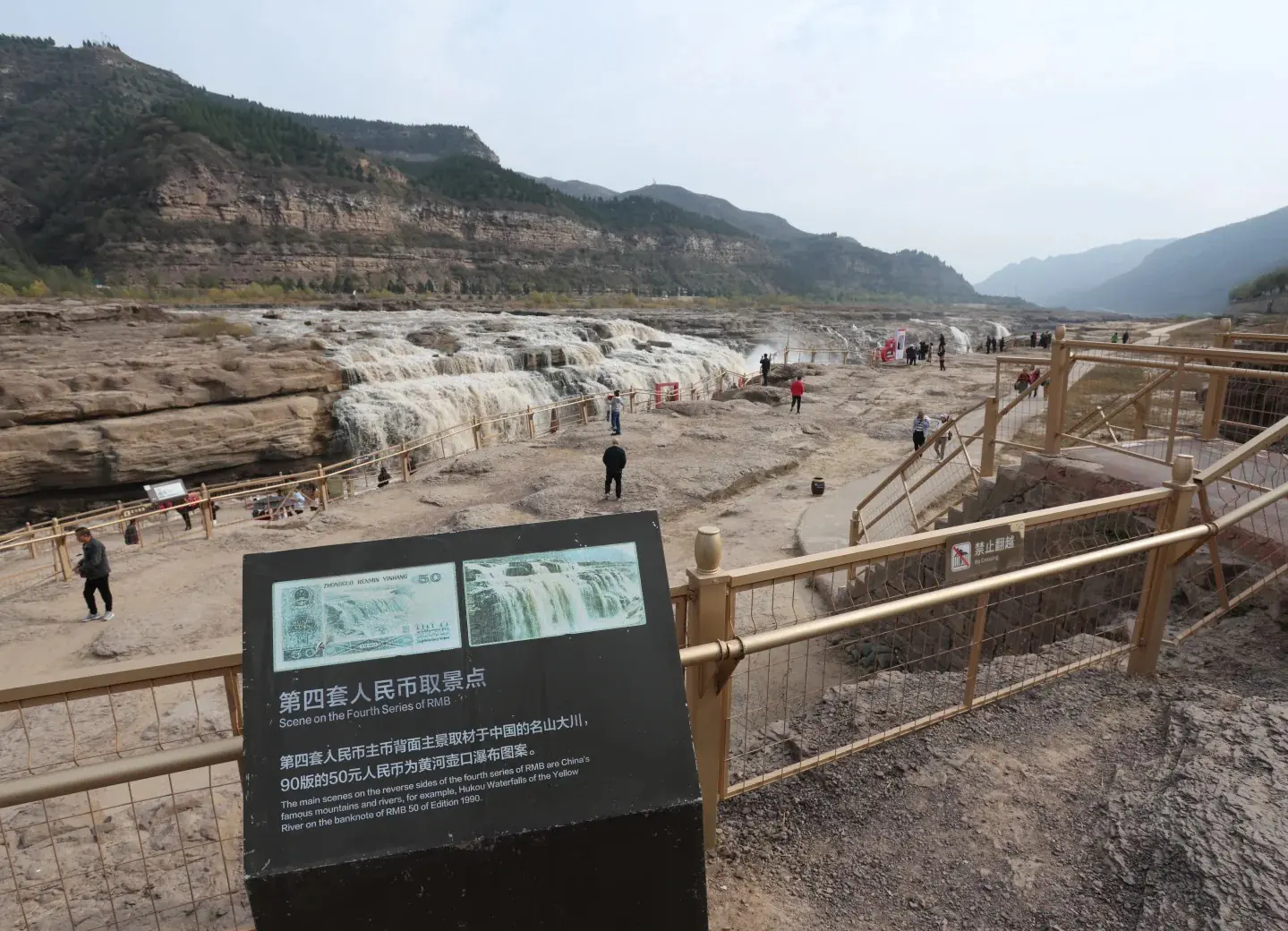
Banknote view: the fourth-series 50-yuan image is why many Chinese travelers recognize Hukou before they ever visit.
The 50-yuan memory
Hukou appeared on the back of the fourth-series 50-yuan banknote. The current fifth series features the Potala Palace, but many Chinese travelers still recognize Hukou as "the scenery on the 50."
The Yellow River Cantata
In 1938, poet Guang Weiran (光未然) crossed near Hukou with an anti-Japanese theater troupe. The torrent and boatmen's work chants directly inspired the fiercest movements of the Yellow River Cantata (黄河大合唱).
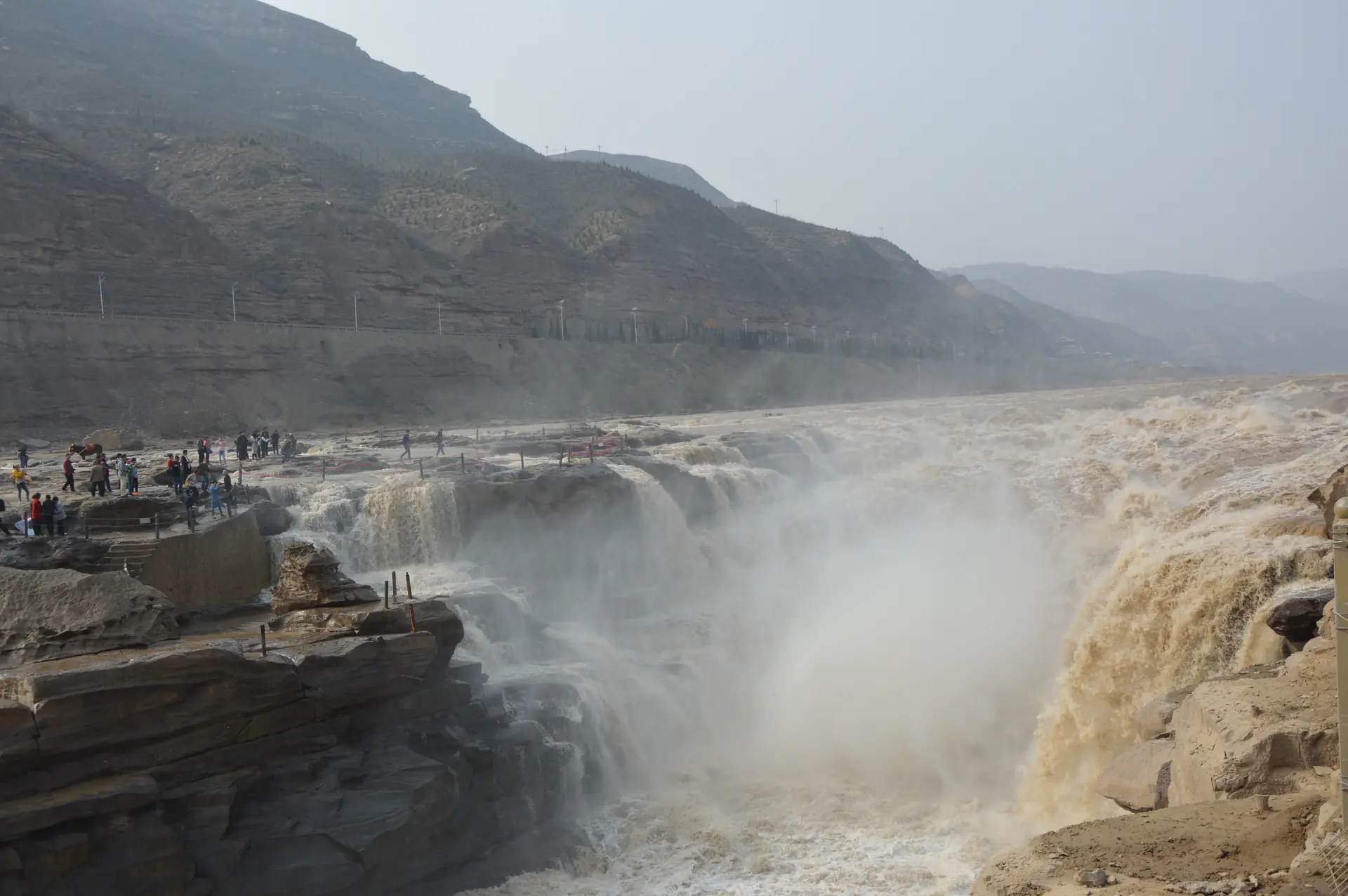
Mist and loess: the yellow spray is part of the experience, not a bad-weather accident.
On-site feeling
Raw, not pretty
Unlike China's other famous waterfalls, Hukou is not "pretty." It is raw, violent, deafening: muddy-yellow water everywhere, the smell of loess in the air, rocks trembling underfoot.
If you have seen Niagara's blue-green curtain, Hukou is its polar opposite — unpolished and brutal.
Four Seasons, Four Waterfalls
Hukou is open year-round, but the volume, color, and shape of the falls change completely with each season.
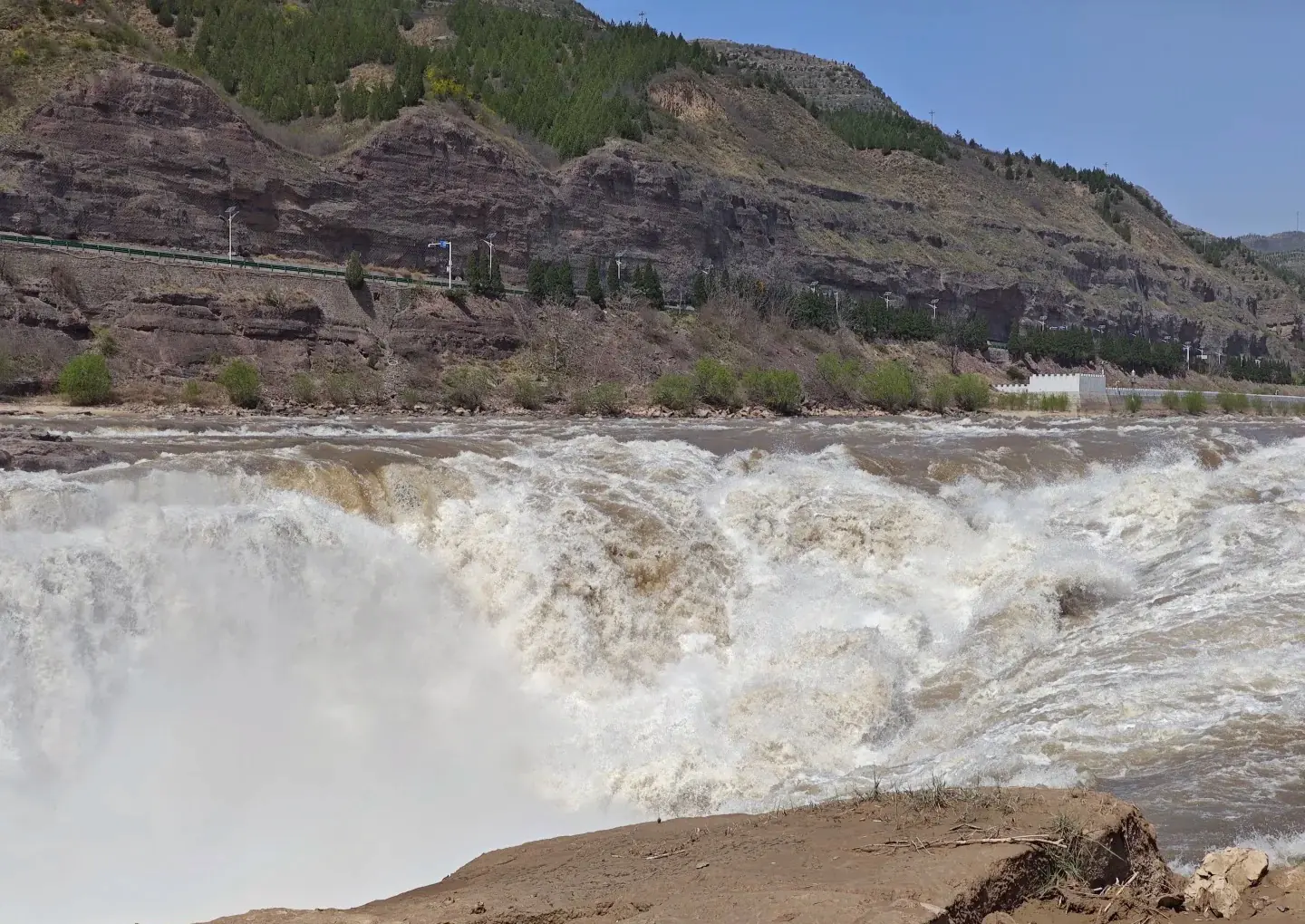
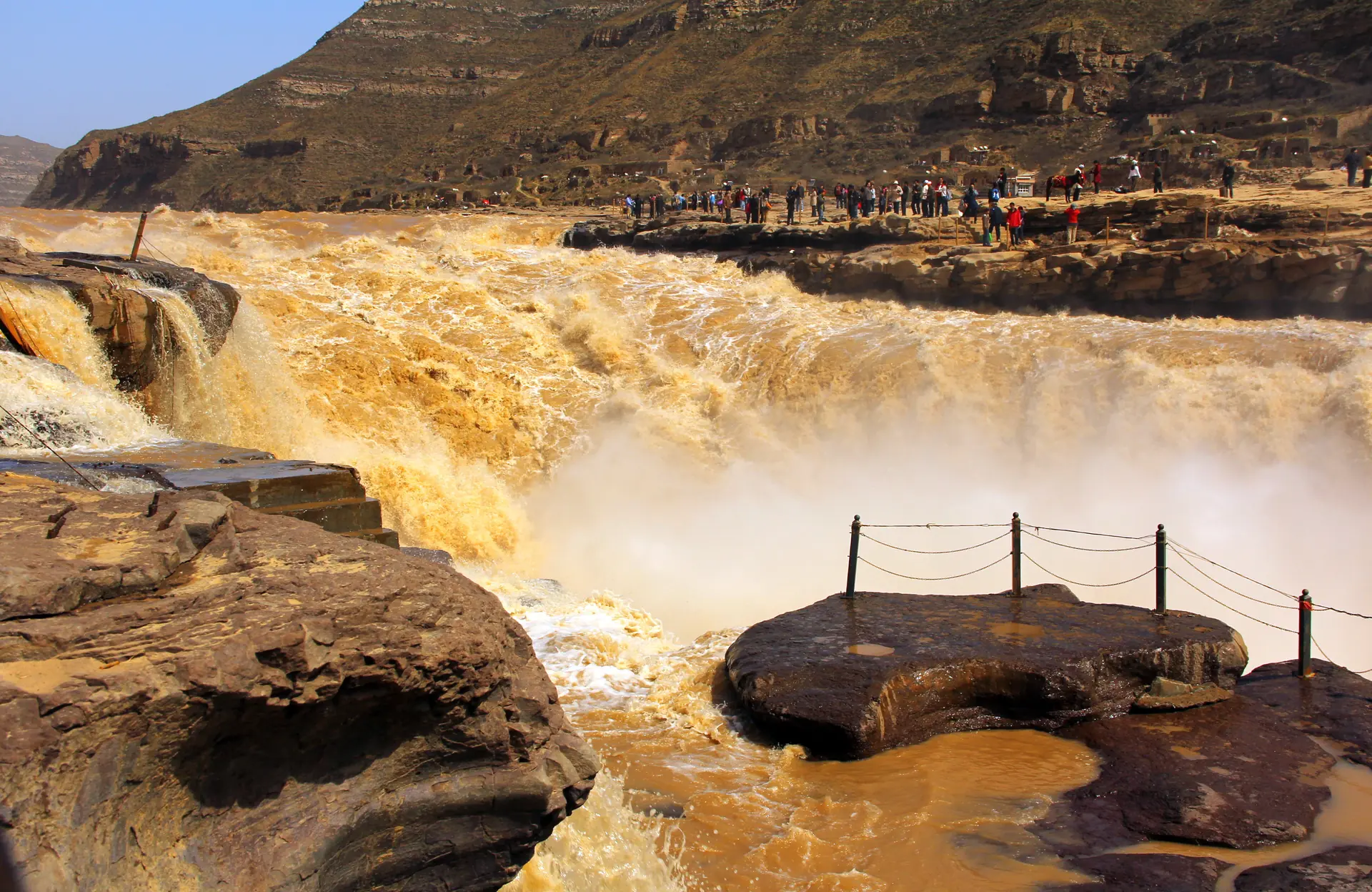
April-May
Spring Flood: Peach Blossom Flood (桃花汛)
Upstream ice melts, spring rains arrive, and peach blossoms line both banks as floodwaters surge.
The "smoke from the riverbed" effect peaks; on clear days the mist is visible from 5 km away. The water is murky yellow and the river widens noticeably.
Peak mist effect
Murky yellow water
Strong spring flow
June-August
Summer Peak: maximum power, lower visibility
Annual maximum flow brings secondary cascades around the main drop and makes the entire river surface churn.
Sediment also peaks, making the water its thickest yellow. Heavy rain can close the scenic area, and mist can become so dense you cannot see the falls clearly.
Most powerful flow
Temporary closures possible
Mist may block views
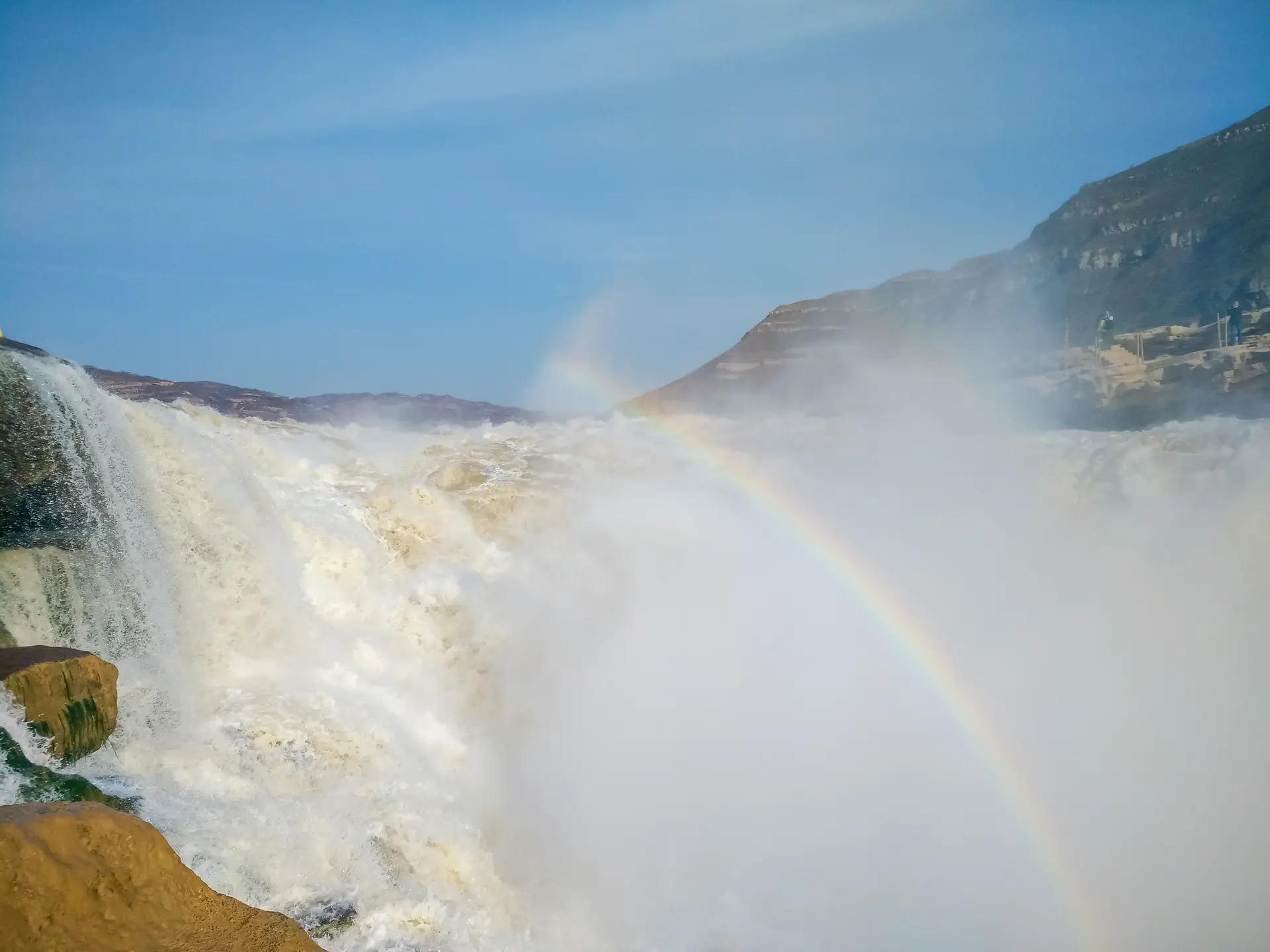
September-November
Autumn Surge: the best overall season
Autumn floods bring strong flow with lower sediment than summer, producing the clearest and most dramatic falls.
On sunny mornings, rainbows appear almost without fail — locals call it rainbow crossing (彩虹飞渡). Double rainbows are common, temperatures are comfortable, and this is the busiest season.
Best overall pick
Clearer water
Busiest season
Chasing rainbows
Pick a clear autumn day, arrive by 9-11 AM, and stand on the Shanxi side (east bank) facing west. After noon, the angle shifts and the rainbow fades.
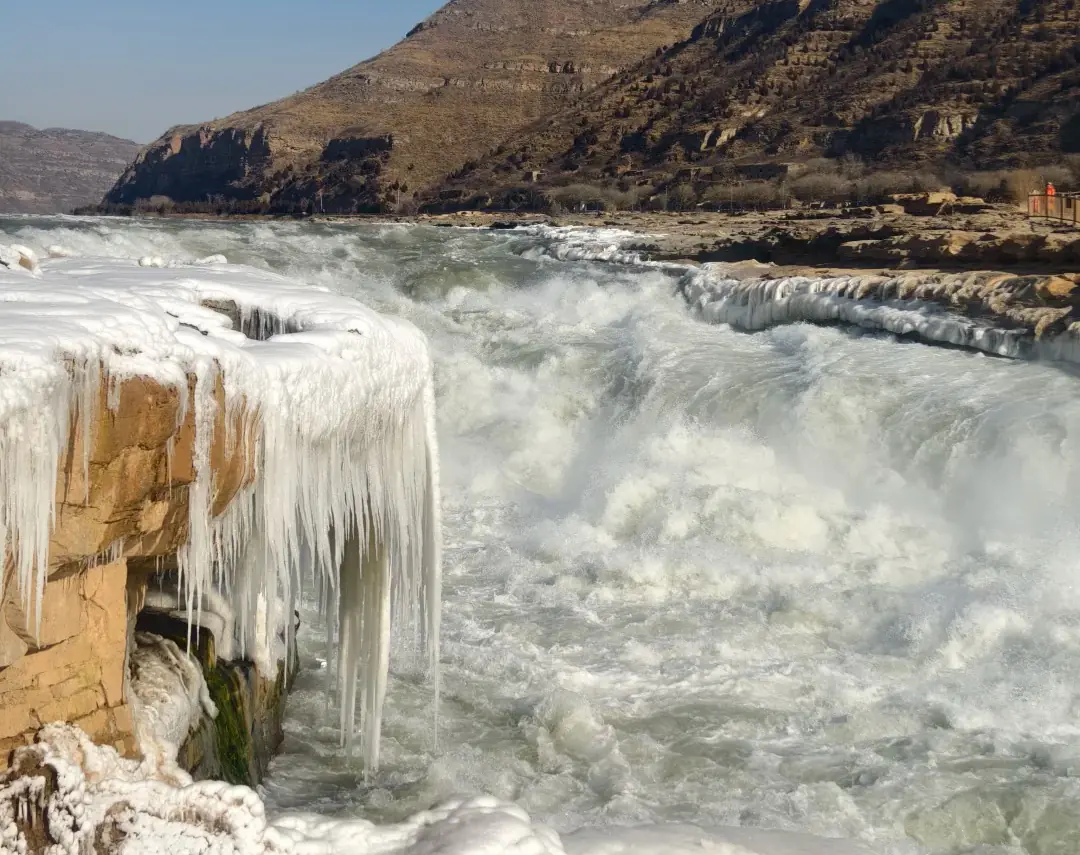
December-February
Winter Ice Falls: low flow, spectacular edges
Flow drops to its annual low, but spray and seepage freeze on the cliff walls, forming the Ice Cascade Jade Kettle (冰瀑玉壶).
The main drop never freezes solid, edge ice is spectacular, crowds are minimal, and both sides waive admission each winter; see the Tickets section below for dates and booking details.
Ice Cascade Jade Kettle
Minimal crowds
Winter admission waived
Shanxi Side or Shaanxi Side?
Hukou Waterfall straddles Shanxi and Shaanxi provinces. Each bank has its own visitor center and internal shuttle bus, while since June 1, 2026 a single ¥80 2-day Jin-Shan Joint Pass (晋陕通票) covers gate admission to both banks.
The two sides connect via the Yellow River Bridge (七狼窝大桥) — about a 30-minute walk across — though each bank's ¥16 round-trip shuttle bus is purchased separately. Most half-day visitors still focus on one side.
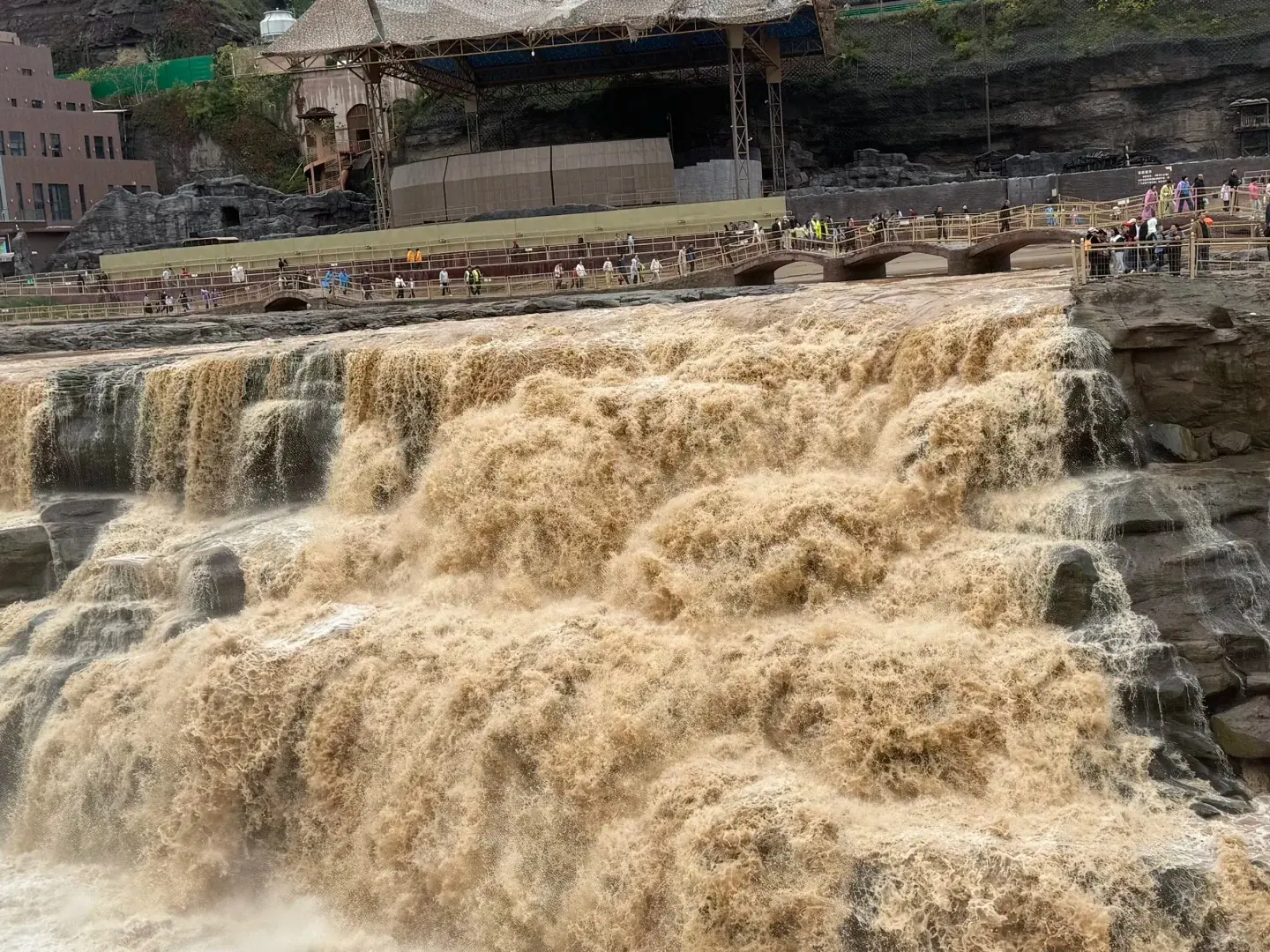
Recommended for the main drop
Shanxi Side (Ji County, Linfen)
Choose this side for the head-on main drop, the Dragon Cave, and the open Dragon Trough walkway.
View: head-on, most dramatic
Cost: ¥80 joint pass + ¥16 shuttle + ¥20 cave
Shuttle: ¥16 round trip, 3 km
Senior free: 60+
Unique feature: Dragon Cave (¥20 add-on, view from below).
Dragon Trough trail: open, roughly 1 km walkway.
Hours: 6:30-19:30 peak; 8:00-17:00 off-season.
Best if coming from Yan'an
Shaanxi Side (Yichuan, Yan'an)
Choose this side when your route already comes through Yan'an and you want the shorter road approach.
View: side angle, limited in low flow
Cost: ¥80 joint pass + ¥16 shuttle
Shuttle: ¥16 round trip, 10 km
Senior free: 65+
Unique feature: dry-land boat hauling ruins.
Dragon Trough trail: not accessible.
Hours: 7:00-18:30 peak; 8:00-17:00 off-season.
Recommendation: Shanxi side.
The head-on view is dramatically more powerful than the side angle, the Dragon Cave is a Shanxi-only experience, and base + shuttle cost is identical (¥96 on either side before the optional ¥20 cave).
The only reason to start on the Shaanxi side is if you are coming from Yan'an and want to skip the detour.
Visiting both banks on one pass
With a full day or two days, walk across the Yellow River Bridge (七狼窝大桥, ~30 minutes) and use the same ¥80 2-day Jin-Shan Joint Pass for gate entry on the other bank — you only pay separately for the second bank's ¥16 shuttle bus.
Inside the Dragon Cave
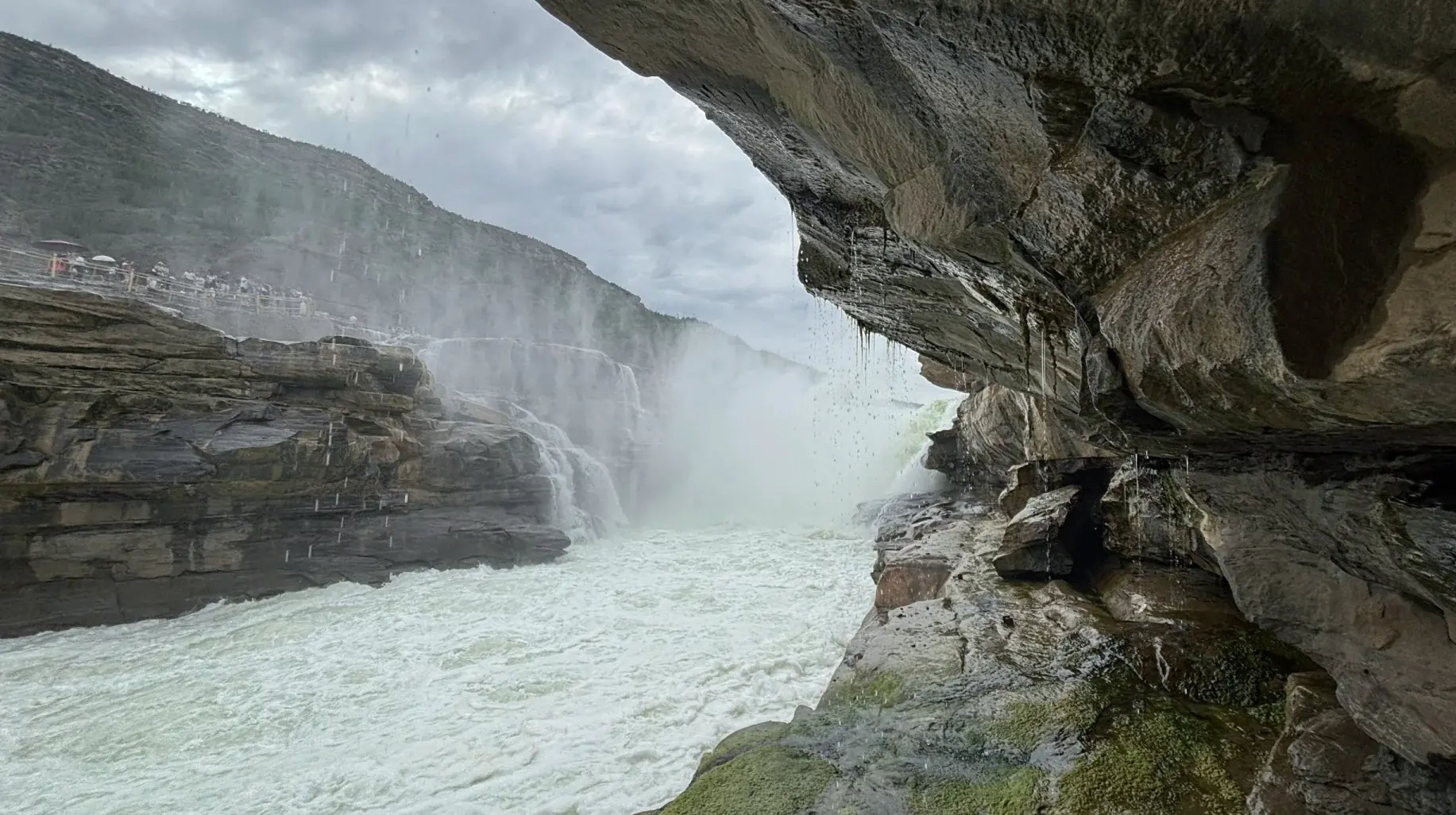
The roar amplifies inside the chamber, and the rock vibrates underfoot.
Shanxi-side add-on · ¥20
Descend below the Yellow River's main drop
The Dragon Cave (龙洞) is a Shanxi-side exclusive and the best ¥20 you will spend at Hukou.
Descent
Stone steps descend about 14 meters from the main viewing platform into a gallery cut through the cliff.
Bottom platform
A 118-square-meter open-air platform sits directly below the falls, with Yellow River water crashing down from above and exploding in front of you.
You will get soaked
Spray and mist pour through the opening, so an umbrella is no match. Most people stay 10-15 minutes, not because they have seen enough, but because they are drenched.
Those 10 minutes are Hukou's most memorable experience: above ground you watch the waterfall; inside the Dragon Cave you are inside it.
Before you descend
Rain poncho: works better than an umbrella (¥10-15 at the entrance).
Phone: put it in a waterproof pouch before taking photos.
Stairs: slippery — grip the railings and wear non-slip shoes.
Clothes: do not wear white; yellow mud stains are nearly permanent.
Ten-Mile Dragon Trough and Mengmen
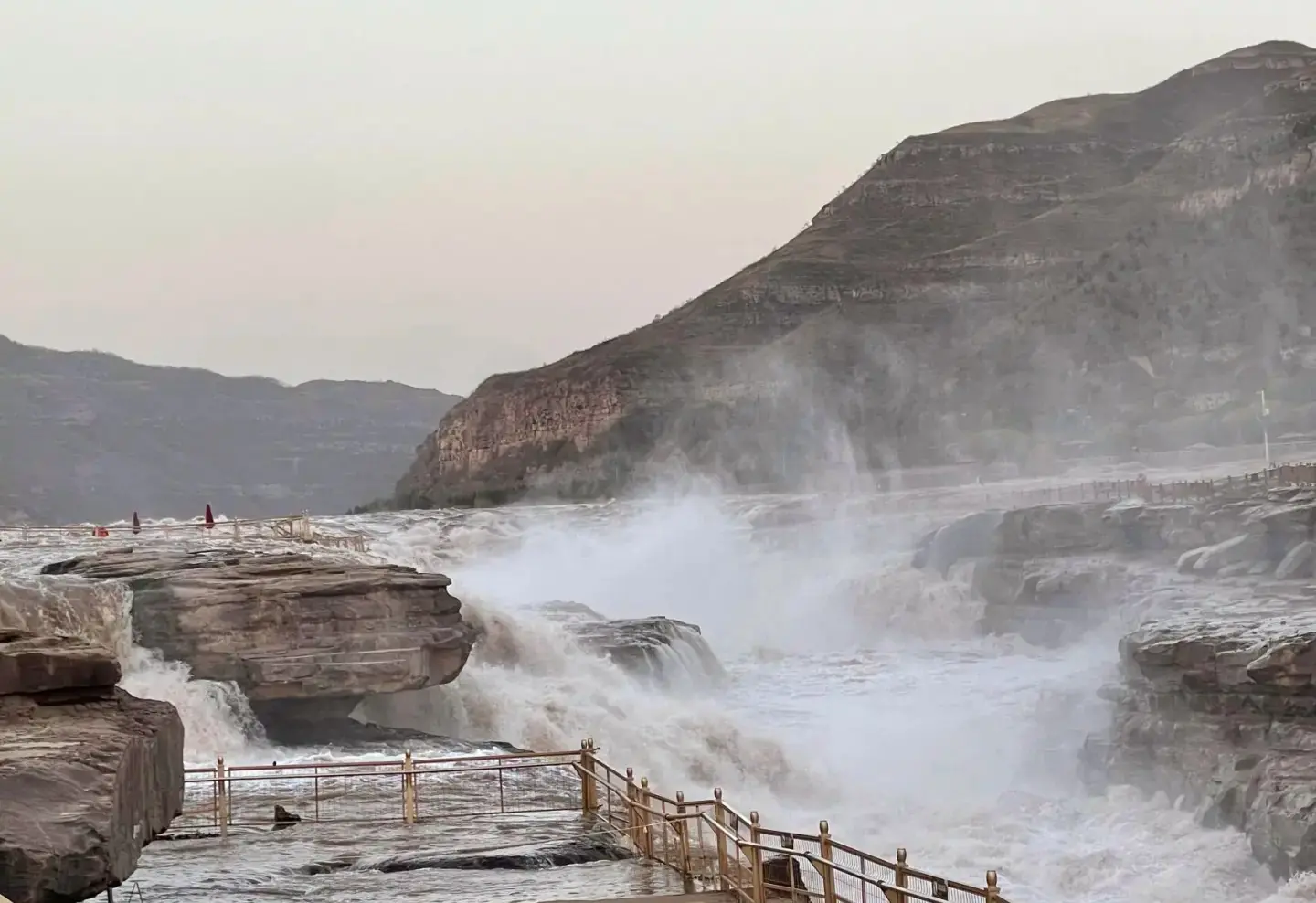
4.2 km gorge
30-50 m wide
about 30 m deep
Gorge scale
The old channel below the falls
Downstream from the falls, the Yellow River keeps cutting through stone to form the Ten-Mile Dragon Trough (十里龙槽): a 4.2-kilometer gorge, 30-50 meters wide and about 30 meters deep.
Legend says Emperor Yu (大禹) tamed the floods here and a dragon carved the channel. In reality, millennia of waterfall retreat left behind an old riverbed that kept deepening through erosion.
Why it still feels dramatic: downstream, the Yellow River keeps cutting through stone instead of immediately widening into a calm channel.
Walk the quiet side
The Shanxi side has a roughly 1-kilometer walkway overlooking the trough, about 20 minutes downstream from the main falls area. Most visitors leave after seeing the main drop, so the path is nearly deserted.
Mengmen extension
At the far end of the trough stands Mengmen (孟门), two massive boulders that split the current. Reaching them requires a longer trail outside the main scenic area, best suited for hikers with extra time.
Tickets, Hours, and Free-Entry Windows
Ticket cost by side
Opening windows
Booking tip
Buy tickets online through the official WeChat account to skip the queue. During peak-season weekends and National Day week (early October), book 1-2 days ahead.
Discount and free-entry rules
Free admission
Active military, disabled persons, press, and fire and rescue personnel enter free with valid ID. Children under 6 or shorter than 1.2 m also enter free.
Senior free-entry rules differ by side: Shanxi side from age 60, Shaanxi side from age 65.
Half price
Full-time students at undergraduate level or below can usually buy half-price tickets with student ID. Children aged 6-18 also qualify for half price.
Winter free window
Both sides waive admission each winter, typically late December to early February.
For 2025-2026: December 20, 2025 to February 10, 2026. Only the shuttle fee applies. Book in advance via the scenic area's official WeChat account.
Getting There from Xi'an, Linfen, and Yan'an
Hukou looks close on a map but behaves like a road-trip attraction. The easiest route depends less on distance and more on which side you want to see.
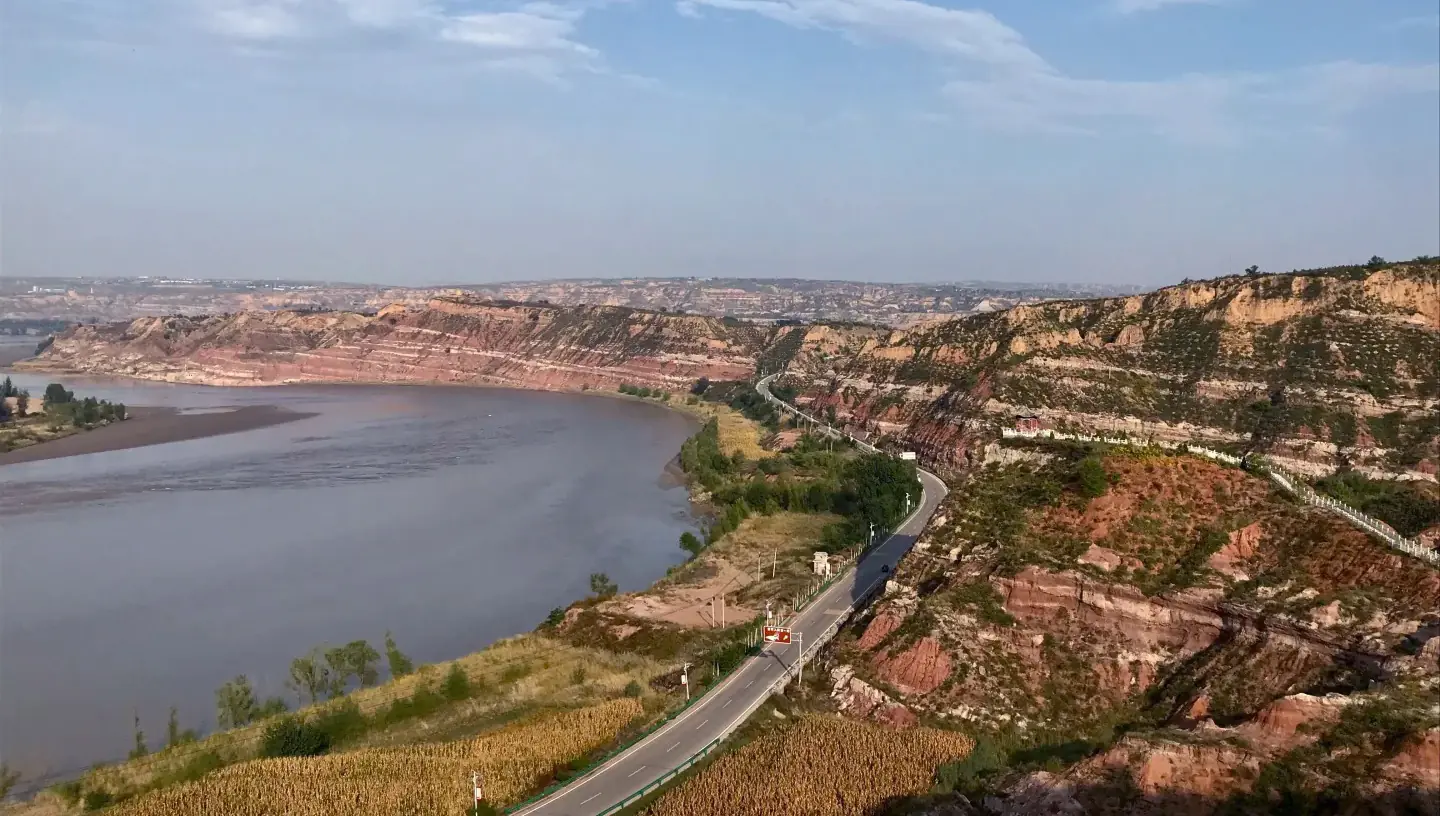
Transport reality
A road leg decides which side works
From Xi'an, the fastest public-transit-assisted route is a G-train from Xi'an North (西安北站) to Yan'an North (延安北站), about 1 hour 50 minutes, ¥100-120, with 30+ daily departures.
From Yan'an North, hire a car or use Didi to the Shaanxi side in roughly 1 hour 45 minutes. For the stronger Shanxi-side view, the car leg takes about 2.5 hours and costs slightly more.
Xi'an to Yan'an North: ~1h50
Yan'an to Shaanxi side: ~1h45
Yan'an to Shanxi side: ~2.5h
Xi'an direct bus
Easiest to Shaanxi side
From Linfen
Best for Shanxi side
From Yan'an
Fastest to Shaanxi side
Drive: Yan'an (延安) to Yichuan County and the Shaanxi entrance takes about 1 hour 45 minutes by car.
Pairing: Pagoda Hill, Yangjialing, and other Yan'an revolutionary-history sites fit naturally with Hukou for a 2-day trip.
Confirm the side before you leave
If you are hiring a car or using Didi, confirm the side before you leave. The Shanxi and Shaanxi entrances are not the same drop-off.
Show this to your driver · 给司机看
师傅您好,请带我去山西侧壶口瀑布景区游客中心,谢谢。
Hello, please take me to the Shanxi-side Hukou Waterfall Scenic Area Visitor Center, thank you.
Use this for the strongest main waterfall view and Dragon Cave.
Show this to your driver · 给司机看
师傅您好,请带我去陕西侧壶口瀑布景区游客中心,谢谢。
Hello, please take me to the Shaanxi-side Hukou Waterfall Scenic Area Visitor Center, thank you.
Use this if arriving from Yan'an or taking the Xi'an direct bus.
Best approach for the Shanxi side: stay one night in Linfen, leave early, and return by afternoon.
What to Wear and Bring
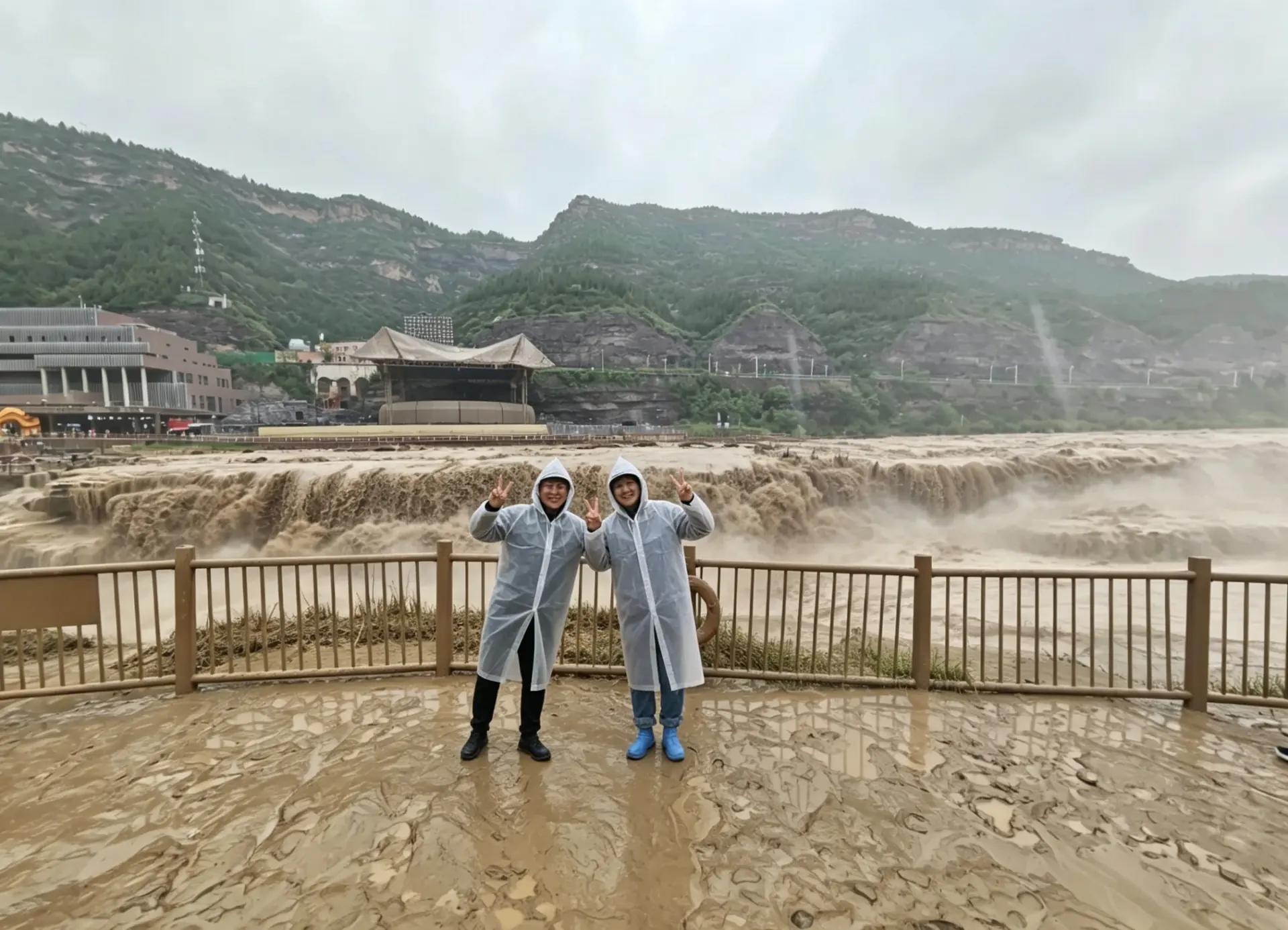
Wet-weather packing
Prepare for yellow mist, slippery stone, and valley wind
The mist at Hukou is heavier than you expect. A rain poncho beats an umbrella because the spray comes from every direction (¥10-15 at the entrance).
A phone waterproof pouch is mandatory. Wrap a non-waterproof camera in a clear plastic bag with just the lens exposed.
Poncho over umbrella
Waterproof phone pouch
Dark clothes only
Shoes and clothes
Wear non-slip sneakers or hiking shoes. Stone paths and Dragon Cave stairs are permanently wet; avoid sandals and leather shoes. Skip white or light clothes because yellow mud stains are almost impossible to wash out.
Season extras
In spring and autumn, river valley wind makes it feel 3-5°C cooler than the city. In winter, wear a heavy down jacket, hat, gloves, and shoes with grip; valley wind plus freezing spray makes the ground extremely slippery.
Food and water: in-park food costs 2-3x normal prices. Bring water and snacks you can keep zipped away from mist.
Scams, Safety, and Timing Tips
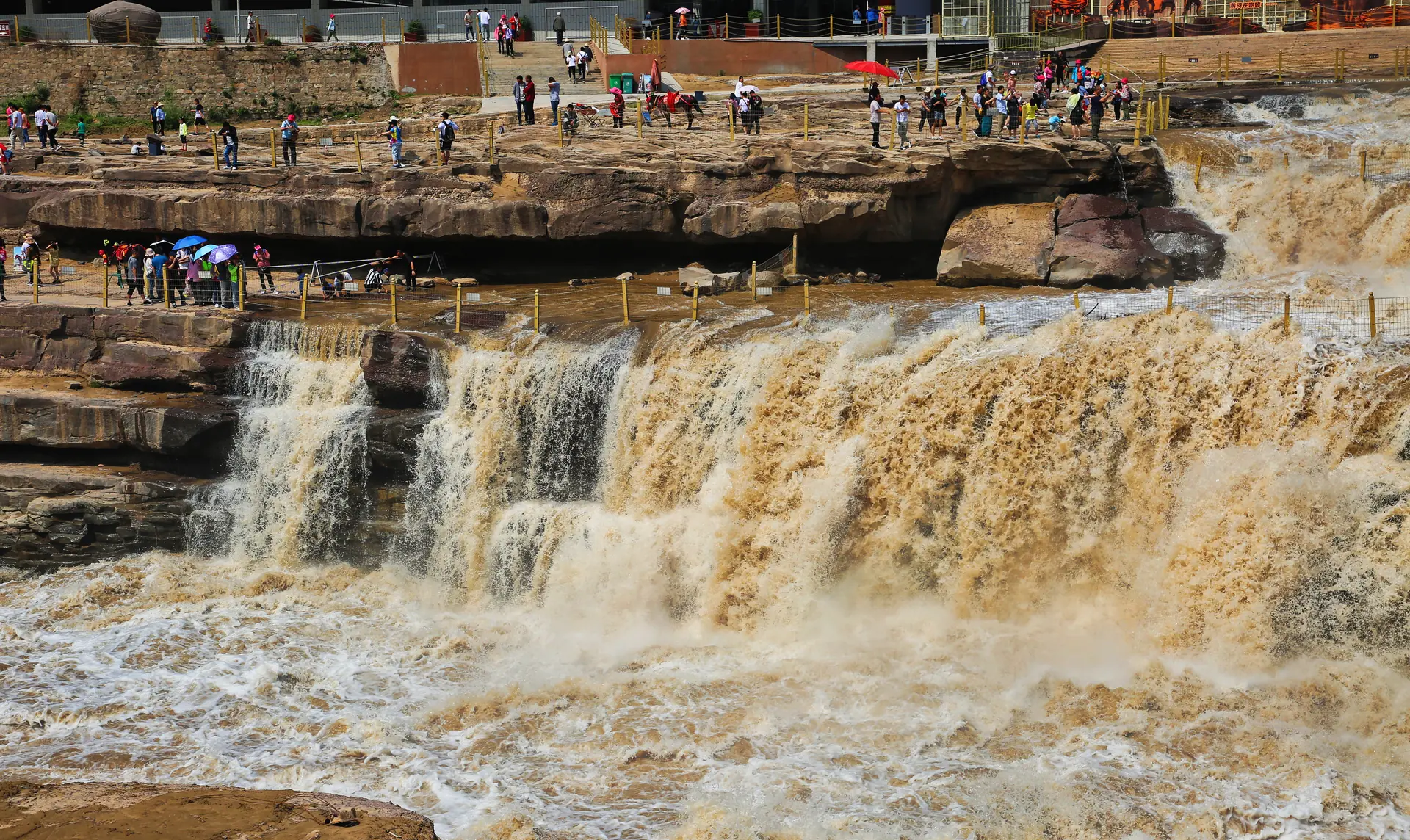
Best arrival: before 9 AM. Plan 2-3 hours for the core area, or 3-4 hours with the Dragon Trough.
Rules that can ruin the day
Ignore shortcut offers. Shaanxi-side parking-lot touts may offer a back trail. It follows an undeveloped riverbank with no railings or maintained paths; visitors have been injured.
Stay inside railings. Viewing platforms have railings, but the rock area beyond them is off-limits and wet loess is extremely slippery.
Keep river water away from your mouth and nose. The Yellow River carries heavy sediment and upstream agricultural/industrial runoff.
Do not step on winter ice. Many surfaces are thin ice over flowing water.
After heavy rain: 1-2 days later can bring dramatic flow, but paths are also at their slipperiest — weigh the trade-off.
Rainbow light: morning is best; the Shanxi side gives the right angle on clear autumn days.
Restrooms: available inside the scenic area, but lines are long during peak season.
No boat rides: there are no helicopter tours or boat rides; the rapids make those impossible.
Patchy signal: Wi-Fi coverage is patchy. Download offline maps and ticket screenshots before you enter.
Pairing Hukou with Other Stops
Hukou itself takes 2–3 hours. It works best as one stop on a longer route, not a multi-day destination on its own.
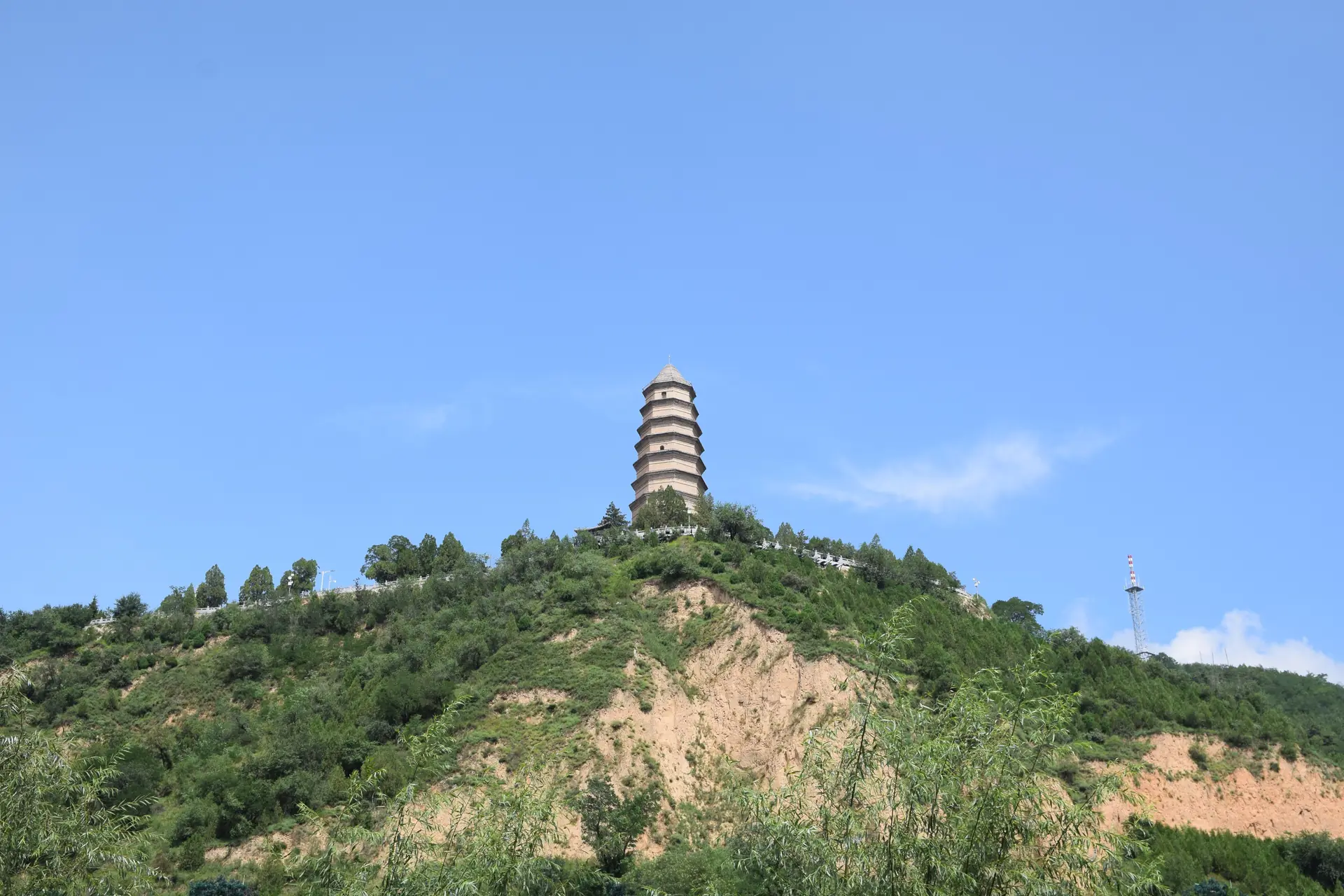
Shaanxi side routes
Use Yan'an or Huangdi Mausoleum to make the drive worthwhile
Hukou + Yan'an (2 days)
Day 1: Xi'an to Yan'an, then visit Pagoda Hill (宝塔山), Yangjialing Revolutionary Site, and other red-tourism landmarks.
Day 2: morning drive to Hukou (Shaanxi side), then return to Yan'an or go directly back to Xi'an in the afternoon.
Hukou + Huangdi Mausoleum (1–2 days)
Huangdi Mausoleum (黄帝陵), the legendary tomb of the Yellow Emperor, ancestor of the Chinese nation, sits right along the drive from Xi'an.
A 1.5-hour stop is enough. Both sites can fit into one long day with an early departure and late return, or an overnight in Yan'an.
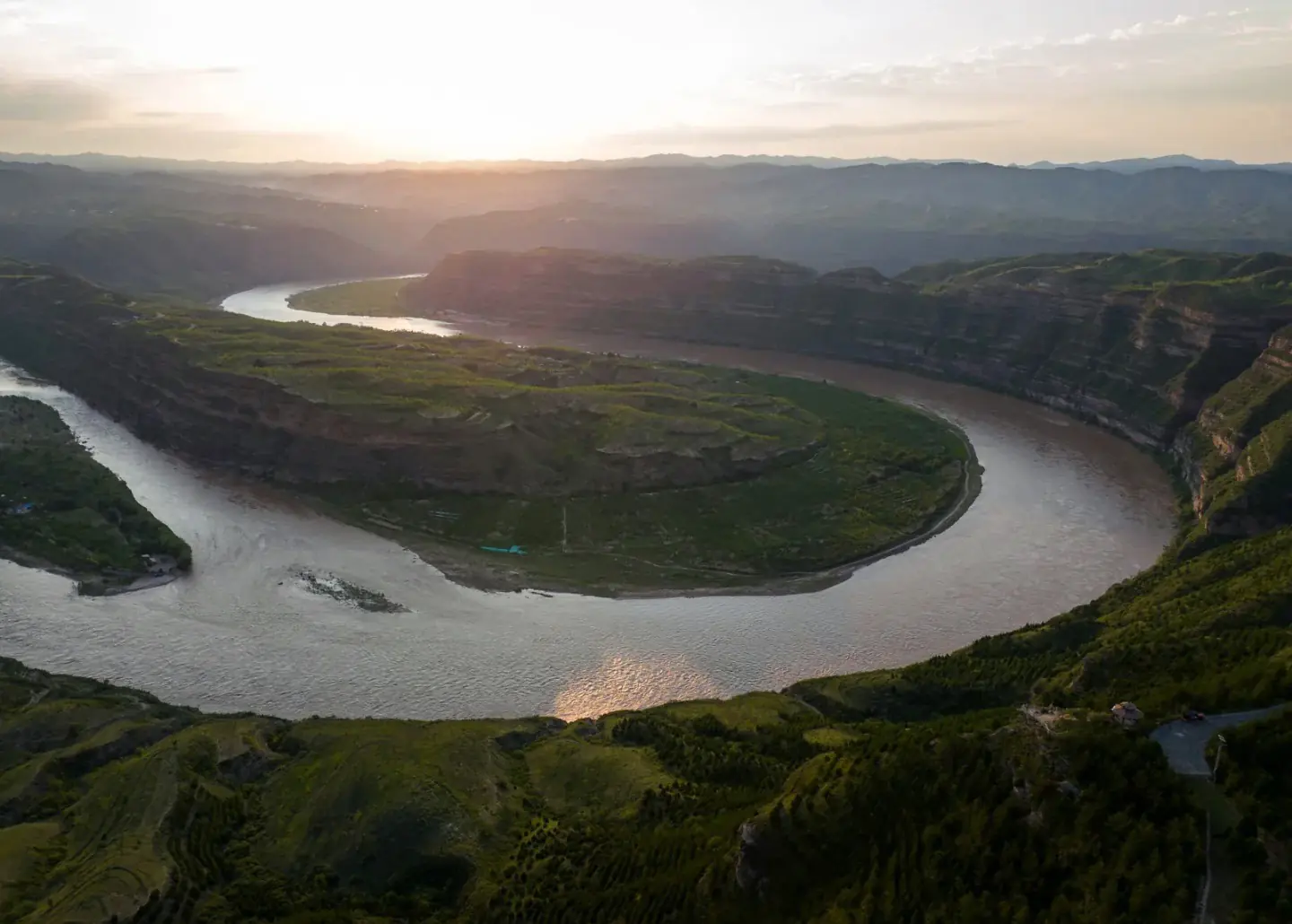
Shanxi side routes
Build it into a Shanxi or Yellow River loop
Hukou + Pingyao + Wang Family Courtyard (3–4 days)
From Taiyuan or Xi'an, start with Pingyao Ancient City (平遥古城) for 1–2 days.
Then head south to Hukou (Shanxi side), stopping at Wang Family Courtyard (王家大院) en route. This is Shanxi's classic loop.
Hukou + Qiankun Bend (2 days)
Qiankun Bend (乾坤湾) is about 70 km from Hukou, a dramatic S-curve meander of the Yellow River best seen from above.
Combined with Hukou, it makes a Yellow River–themed 2-day trip.
Frequently Asked Questions
Yes — since June 1, 2026, a single ¥80 Jin-Shan Joint Pass (晋陕通票) bought on either side covers admission to both provinces within 2 days, and the two sides connect via the Yellow River Bridge (七狼窝大桥, ~30-minute walk). Shuttle buses remain separate on each side. If you only have half a day, pick one side — we recommend Shanxi.
Sources checked for this guide
- June 1, 2026 launch of the ¥80 2-day Jin-Shan cross-province joint admission pass and standardized ¥16 per-bank round-trip shuttle fare: China Tourism News — June 2026 Hukou Waterfall Jin-Shan Joint Pass & shuttle notice
- Cross-province Jin-Shan Joint Pass implementation details and separate per-bank shuttle/add-on structure: Huashang News — June 2026 Hukou Waterfall Jin-Shan Joint Pass report
- Seasonal winter free-admission campaign context (Dec 2025 – Feb 2026) for ice-cascade viewing: Guangming Daily — Hukou Waterfall winter admission notice
- Standard concession categories, child/student rules and scenic visitor information: Yellow River Hukou Waterfall official visitor notice
Beyond This Guide
Hukou rewards those who time it right — autumn rainbows, spring floods, and winter ice each offer a completely different waterfall.
Pair it with Yan'an's revolutionary sites, Pingyao's ancient streets, or the Yellow River's dramatic Qiankun Bend for a route that makes the journey as memorable as the destination.
© gochinafreely.com — Original guide by Go China Freely.