Hours & Base Ticket
Essential Rules
Yangshuo Rock Climbing: Karst Sport Capital
This guide helps you choose the right climbing day, guide setup, season, gear, and safety margin without pretending to replace a local topo.
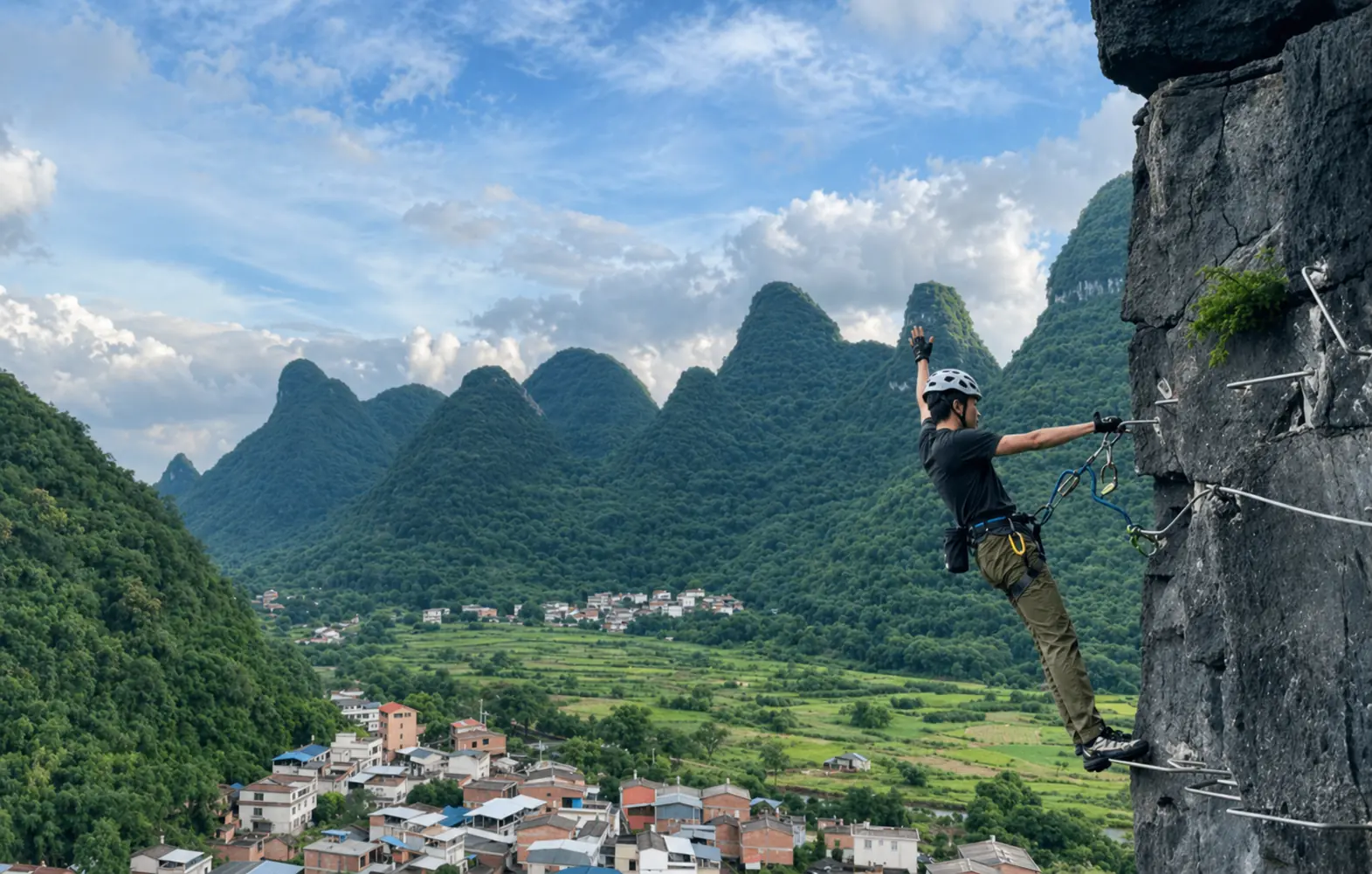
Yangshuo's climbing appeal is the mix of developed limestone routes, village roads, and classic karst scenery.
70+
Karst Crags
3-4h
Half-Day Session
5.6+
Beginner Grades
Late Fall
Prime Window
Why Yangshuo works
Limestone, access, and a climbing community in one compact base
The landscape
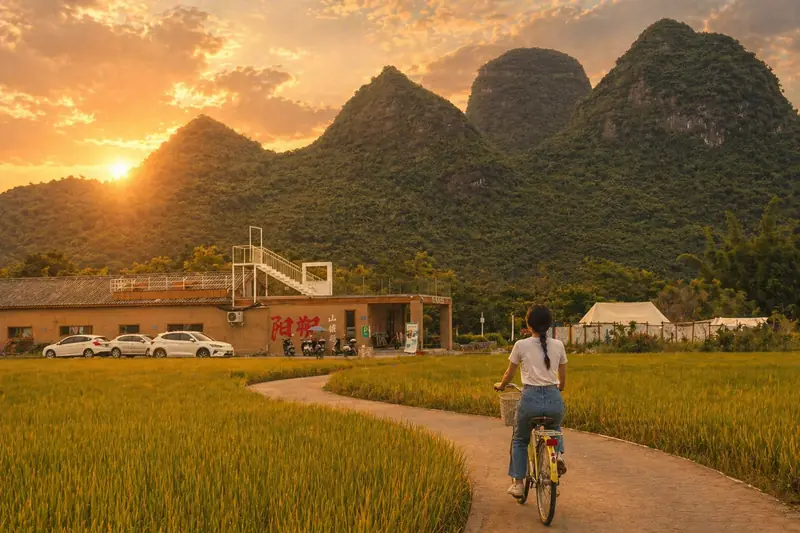
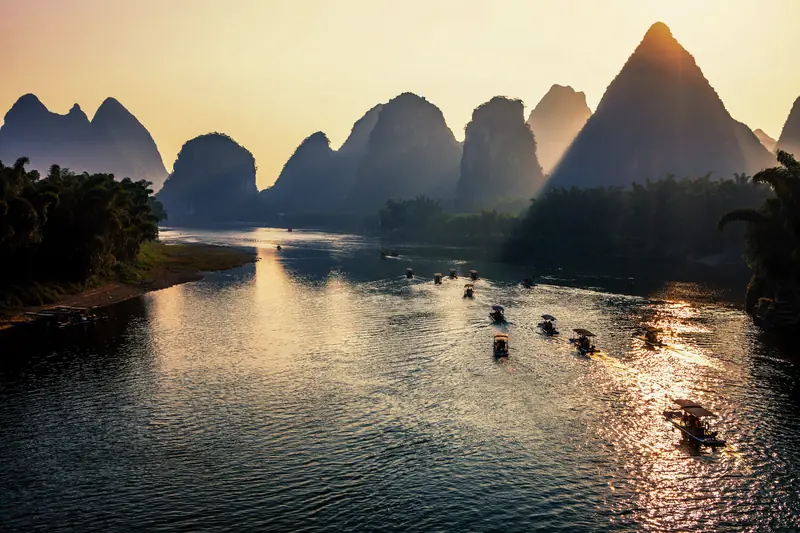
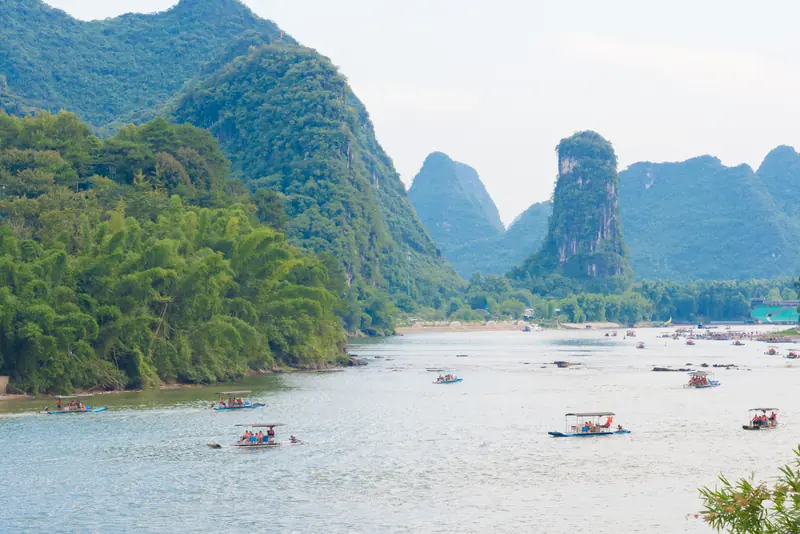
Yangshuo (阳朔) is where many travelers discover that China's karst scenery is not just for boats and photographs. More than 1,000 developed limestone routes sit among rice fields, river bends, village roads, and steep towers: gentle enough for a first top-rope morning, serious enough for strong climbers chasing pumpy tufa lines.
Why a first day is realistic
Yangshuo's climbing identity comes from three things: limestone, access, and community. The rock is full of pockets, tufas, crimps, and steep walls. The crags are close enough to town that you can climb in the morning and still bike the Yulong River (遇龙河) before dinner. And the town has enough climbing schools, rental gear, and visiting climbers to make a first outdoor day realistic for travelers.
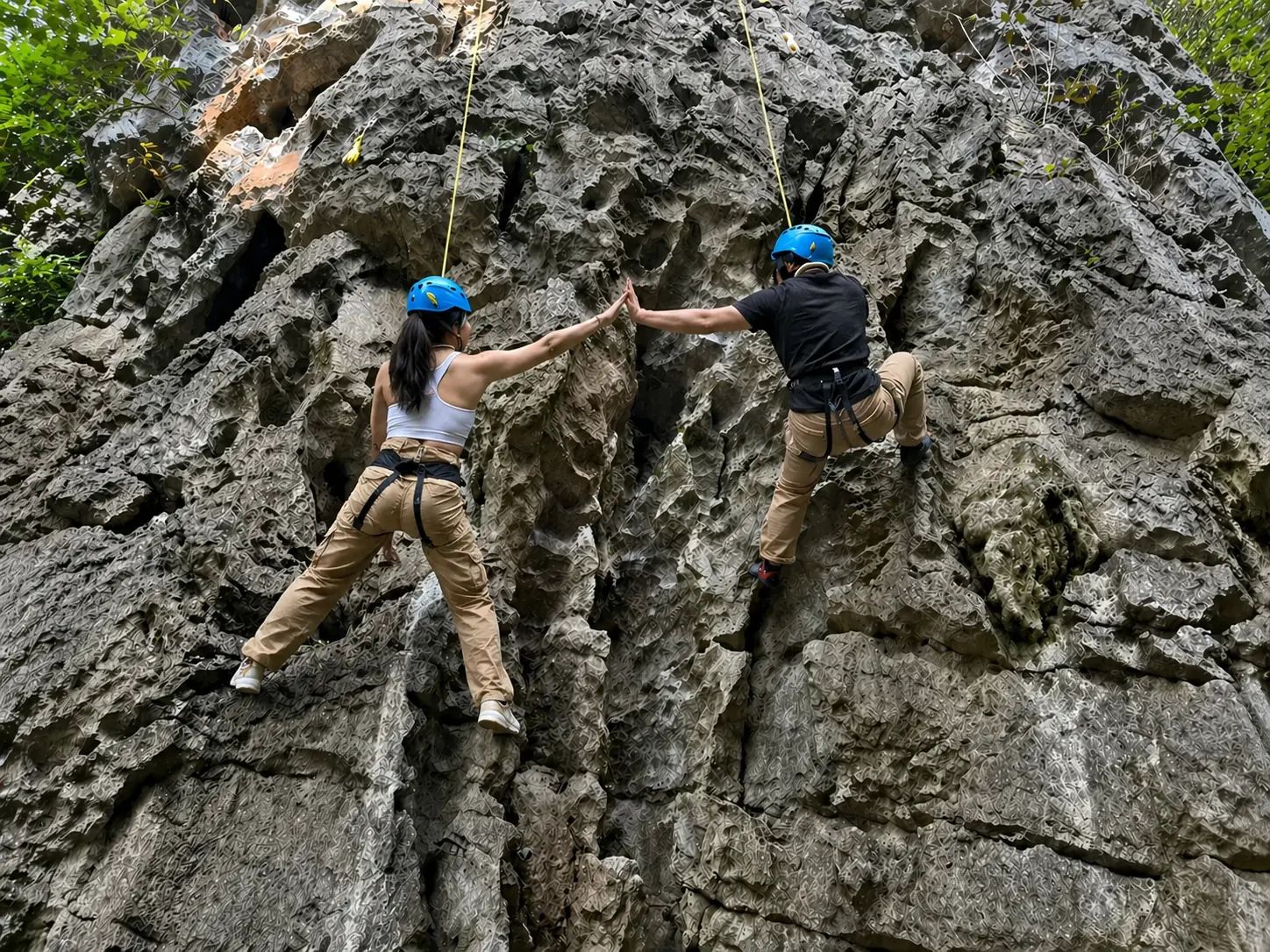
Most first-timers should start on top rope with a guide controlling route choice and rope setup.
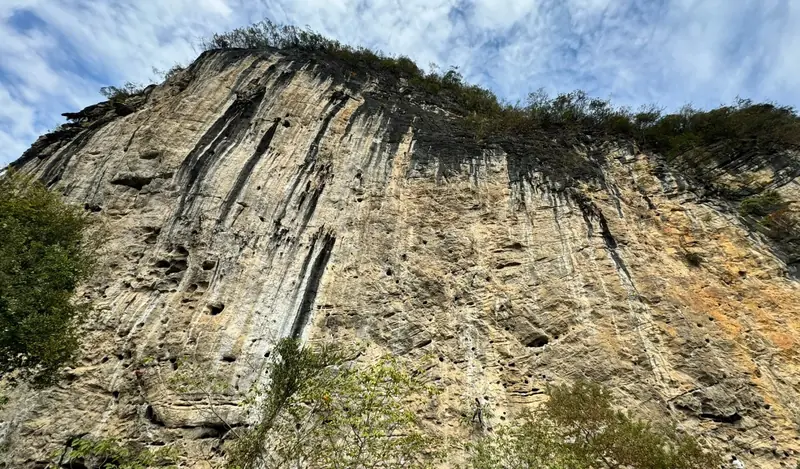
The common style is bolted sport climbing. Beginners usually start on top-rope routes set by a guide. Experienced gym climbers may be comfortable leading indoors, but outdoor limestone adds variables that a gym wall does not: polished footholds, rope drag, route finding, loose rock, wet streaks, shared anchors, and village access.
Think Activity, Not Attraction
Yangshuo climbing is not a fixed-ticket scenic area. A good day depends on weather, access, guide judgment, equipment, and your actual climbing level. Treat online crag lists as orientation, then confirm the day's plan locally.
Choose the Right Yangshuo Climbing Day
Start by choosing the format, not the crag. For most travelers, the right question is not "Which route is famous?" but "What level of responsibility am I ready to take at an outdoor limestone cliff?"
Choose your responsibility level
Three formats, from a fully guided first taste to an independent sport day
← swipe to compare all options →
First Outdoor Climb
Best for total beginners
- ✓Guide sets ropes and chooses routes
- ✓All gear usually included
- —Expect tired forearms after a few climbs
Guided half day
Top-rope routes, safety checks, basic movement
Gym-to-Rock Day
Best for indoor climbers
- ✓Good bridge from plastic to limestone
- —Leading outdoors depends on guide approval
- ✗Do not assume gym grades feel the same
Guide recommended
Outdoor footwork, belay checks, route reading
Independent Sport Climbing
Best for experienced teams
- ✓More freedom across crags and grades
- —Access and anchor status must be current
- ✗Bad plan for first-time outdoor leaders
Topo + local check
Bring judgment, not just strength
Grades and crag choices shift by guide, access, and conditions. Use this as a planning filter, not a topo.
What the day looks like
Once you choose the format, the on-the-ground rhythm is simple and deliberately conservative.
- Meet guide or partner- Check weather, level, gear, and crag choice
- Travel to the crag- Usually 10-30 minutes from Yangshuo town
- Safety briefing- Harness, helmet, knot, belay, lowering commands
- Warm-up routes- Start easier than your gym ego wants
- Second round or wrap-up- Add routes if skin, arms, and conditions still feel good
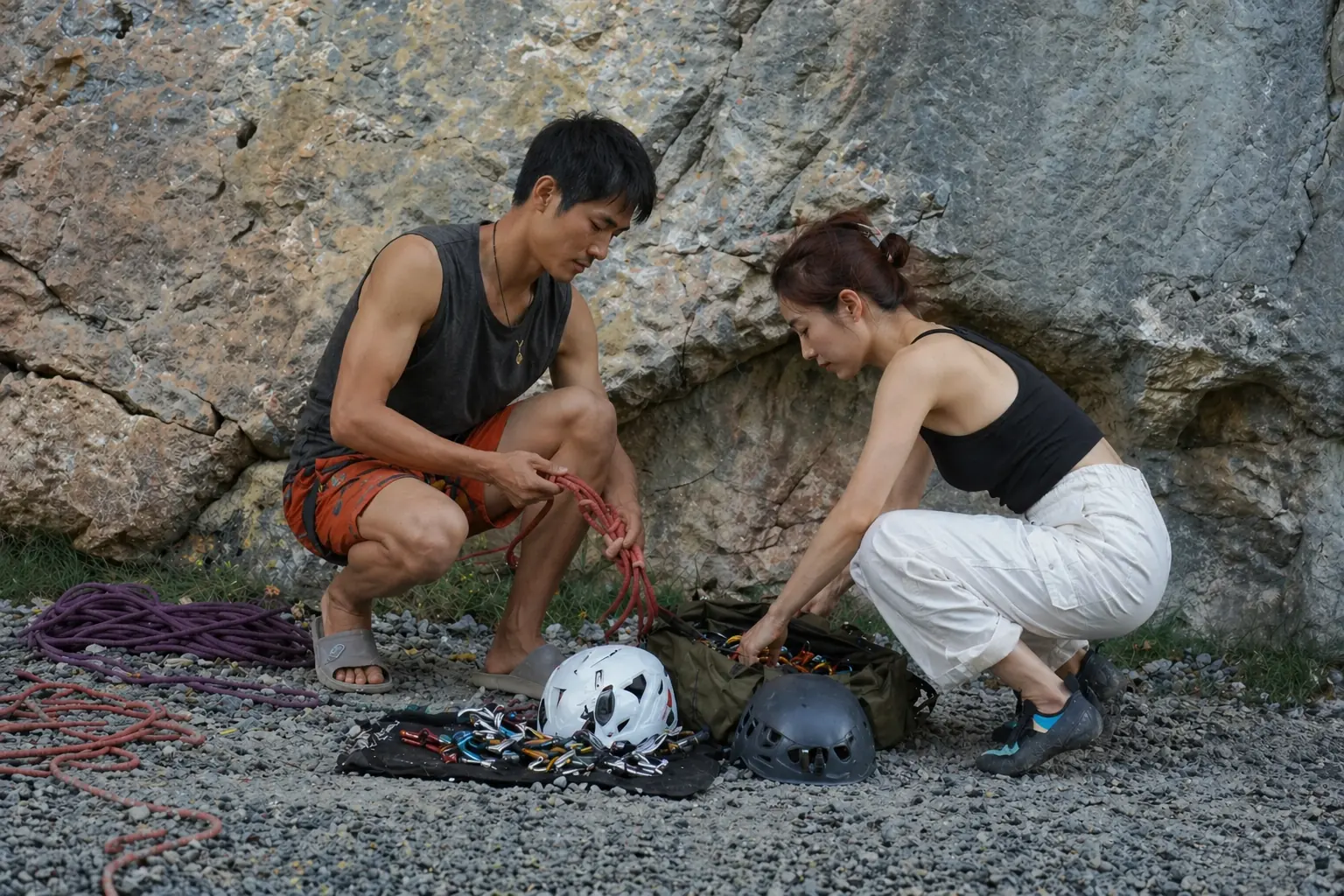
A good guide handles the quiet logistics: rope systems, gear checks, pacing, and the day's crag choice.
For a first day, go shorter than you think. A half-day session gives you the rock experience without turning the rest of your Yangshuo stay into sore fingers and sunburn. If you love it, add a second climbing morning later in the trip.
Best Yangshuo Crags by Skill Level
Yangshuo has too many crags for one travel article to list responsibly. The useful way to think about them is as a ladder: beginner training, skill progression, and advanced sport climbing. Exact route names, access, and grades belong in the latest local guidebook or a current topo app.
First-Day Crags
Prioritize short approaches, guide-managed ropes, shade, and routes that leave room to learn outdoor movement.
Gold Cat Cave
Beginner top-rope context
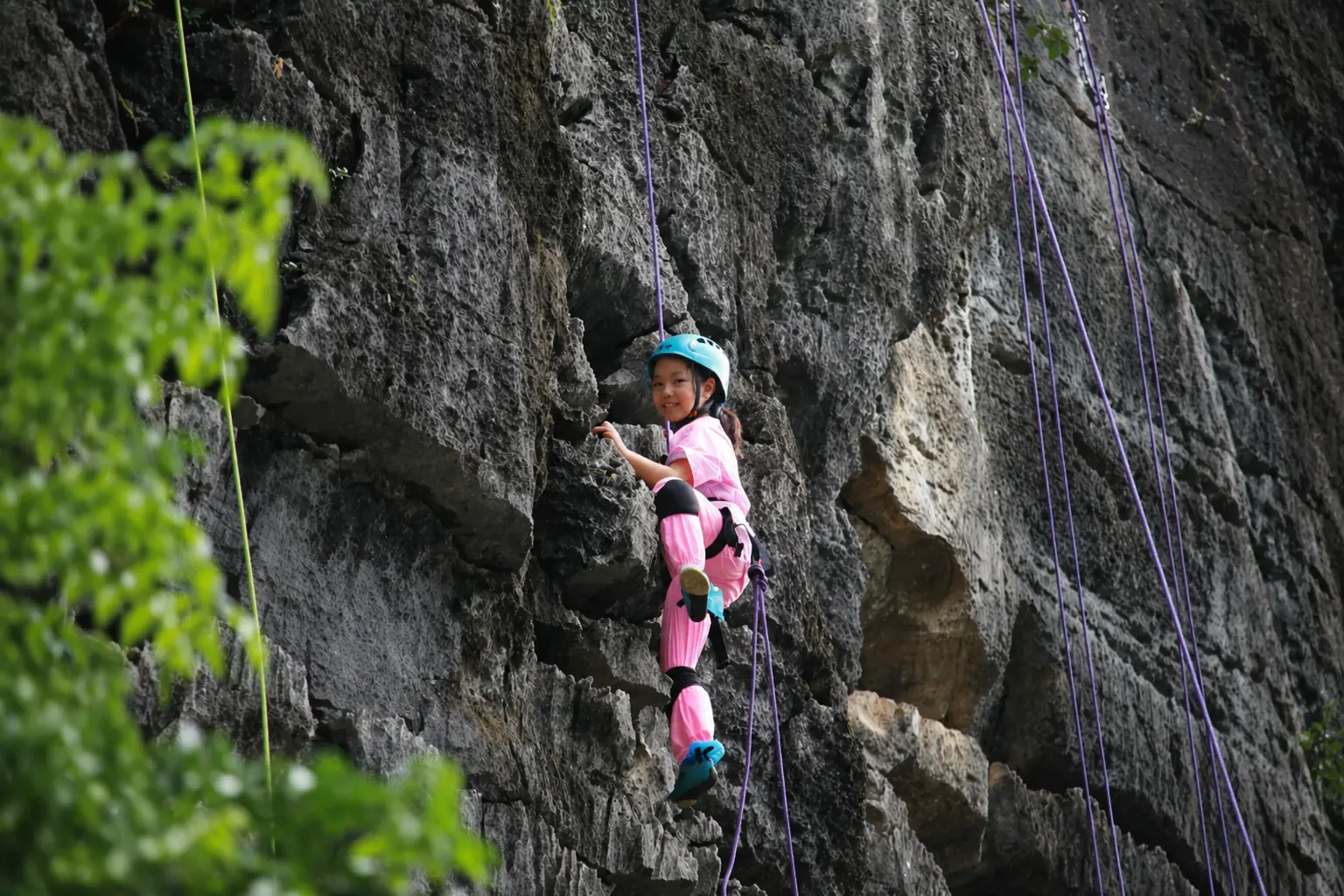
Often described as a small beginner-friendly area, with short routes suitable for first outdoor movement and basic rope systems. Good for a guided first taste, not a self-guided mission.
Wine Bottle
Classic progression, verify access
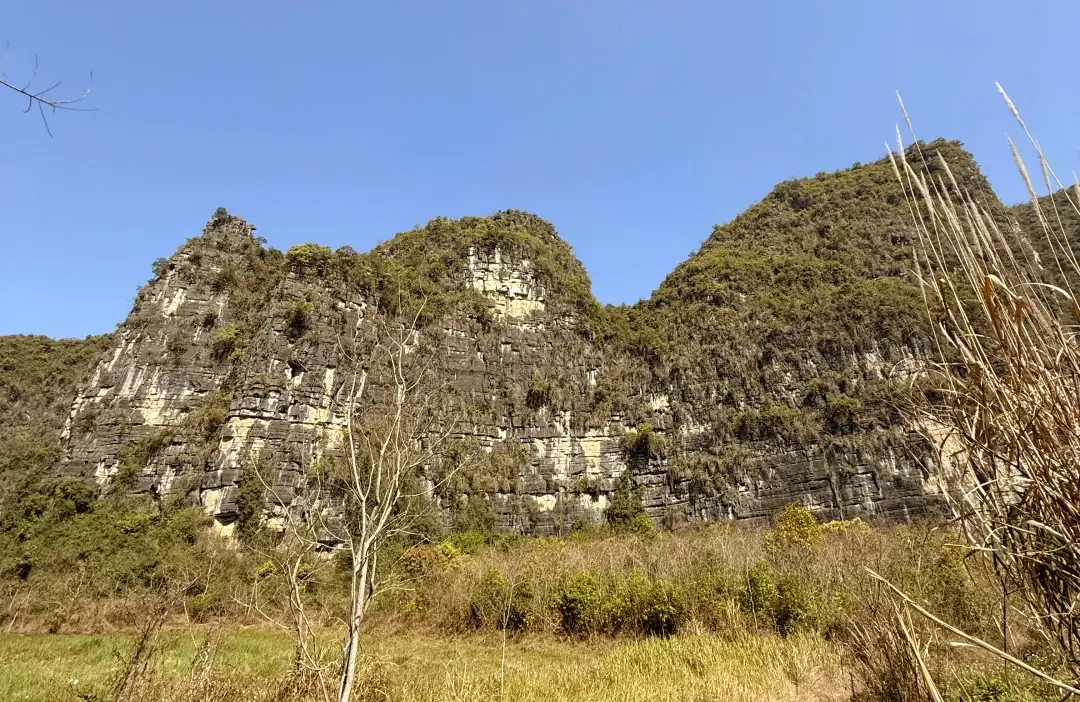
A common training ground near the Ten-Mile Gallery (十里画廊) corridor, with lower-grade warm-ups and routes that let new climbers progress beyond the first easy line. Access and local fee expectations have changed before, so ask locally before building your day around it.
Swiss Cheese
Pockets and shade
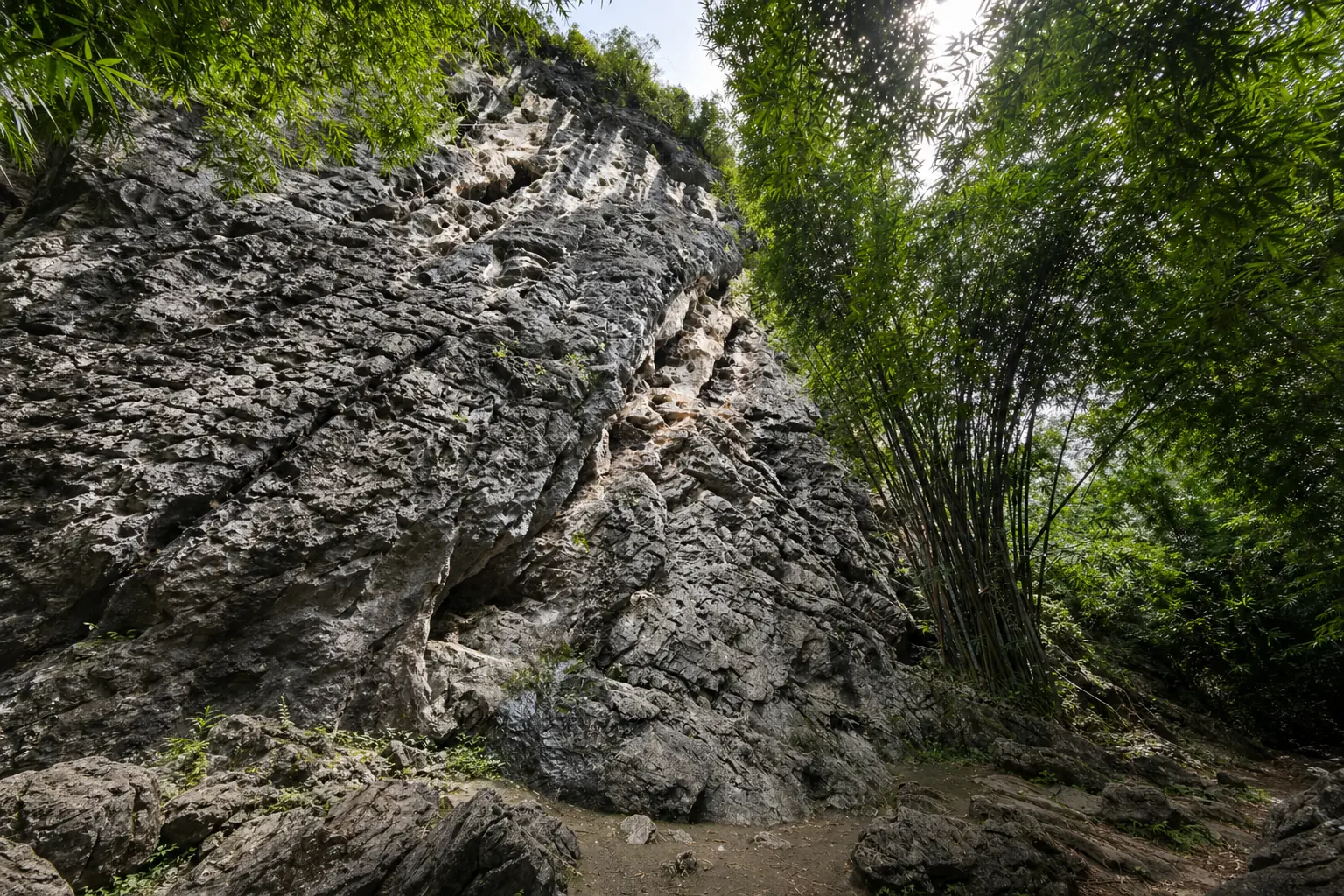
Known for pocketed limestone and a shady base. Access notes online are inconsistent, so ask a local guide or climbing shop whether it is currently appropriate before planning around it.
Bamboo Cave
Useful in heat or light rain
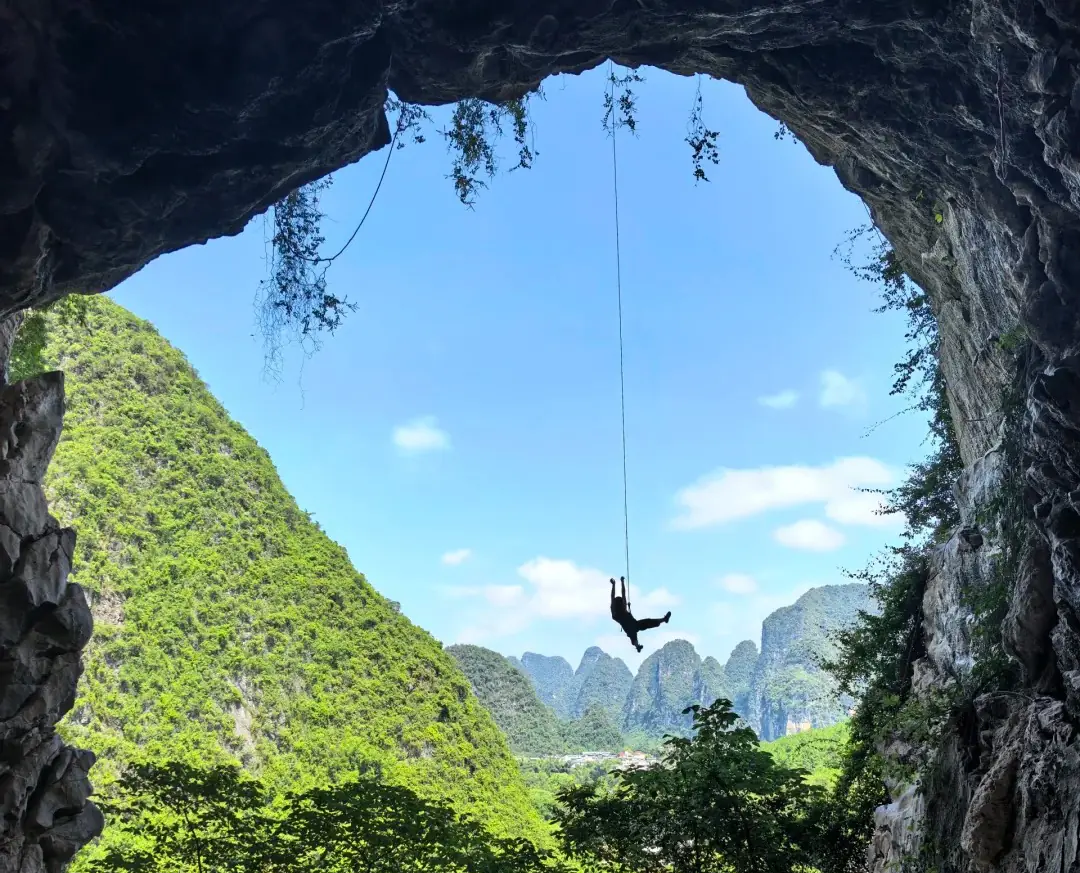
Cave-like sections can offer shade and some rain protection, but wet-season suitability is still route-specific. Treat it as a guided fallback option, not a guarantee that rainy-day climbing will be safe.
Intermediate and Advanced Crags
Choose these for route quality and progression only after current access, grades, rope length, and conditions are confirmed.
White Mountain
Steep progression and elite lines

White Mountain is one of the area's reference points for stronger sport climbers: steep limestone, pockets, tufas, and pumpy sequences that can feel demanding even when the grade looks familiar. ClimbingAway records routes from moderate French grades into elite difficulty.
Moon Hill
Iconic, harder, and access-sensitive
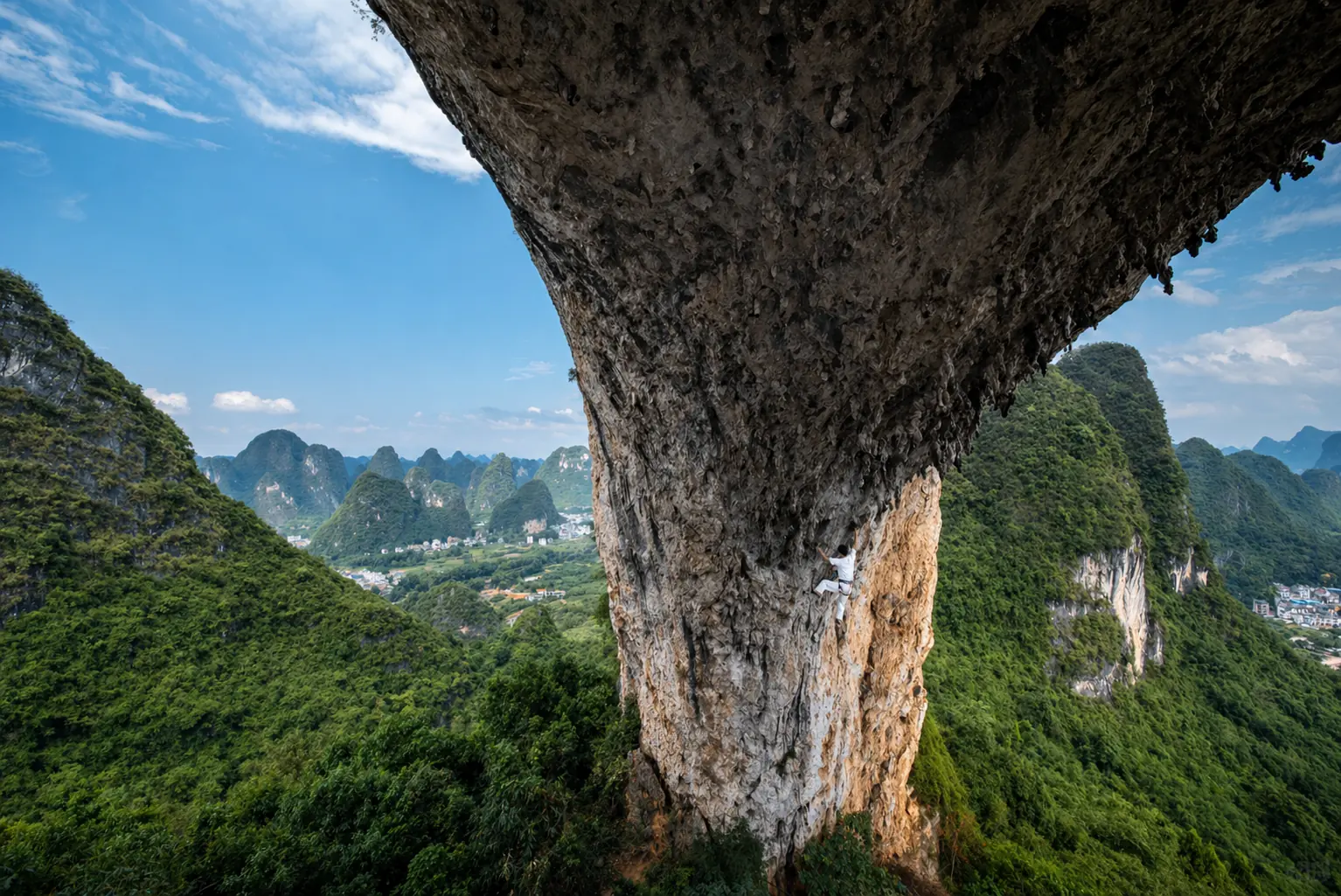
Moon Hill (月亮山) (Google | Amap) is the natural arch tourists photograph from the road and climbers know for harder lines. It is also where caution matters most: rock quality, falling-rock risk, scenic-area rules, and access status need current local confirmation. If climbing is not allowed, keep it to an exterior view unless current local guidance also confirms visitor-path access.
Do Not Navigate Blindly to Crags
Some Yangshuo crags sit beside farms, village tracks, or scenic-area land where access can change. If you are not climbing with a guide, buy or borrow the current Yangshuo guidebook, ask a local climbing shop, and respect any closure or farmer request immediately.
Guided Yangshuo Climbing, Gear, and Prices
Guide, gear, and cost in one decision
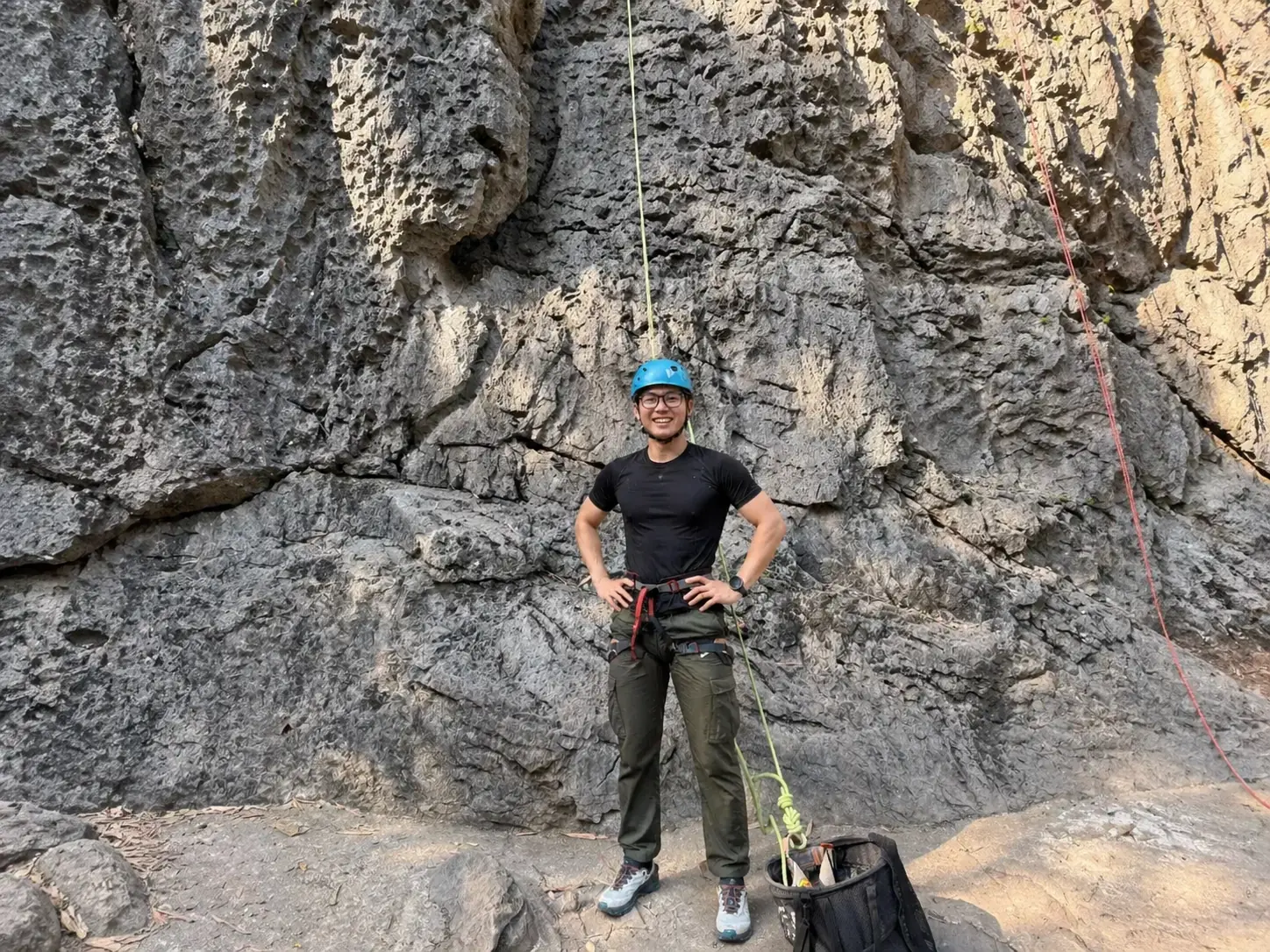
Renting works for a one-off session, but bring your own shoes if fit matters to you.
If you are new to outdoor climbing, hire a guide. That is not a judgment on your fitness. It is a recognition that a good Yangshuo day requires local calls on weather, access, route choice, rope length, group pacing, gear condition, and transport.
¥400-700
Guided Half-Day
3-4h
Typical Crag Time
¥60-100
Basic Gear Package
Typical guided half-day climbing is often quoted in the ¥400-700 range, depending on group size, language support, season, transport, and whether it is a basic experience or a skills course. Most beginner sessions include transport, harness, helmet, shoes, rope systems, route setup, and instruction for about 3-4 hours at the crag. Treat every figure as a planning range and confirm the current inclusions before paying.
Ask these before paying:
- Guide ratio: How many climbers per instructor?
- Helmet policy: Does everyone at the cliff wear one, including belayers?
- Weather plan: What happens if the rock is wet or the crag closes?
- Route choice: Are beginners top-roping, or will anyone be asked to lead?
- Gear fit: Are there shoes in your size and a helmet that sits correctly?
- Insurance and waiver: Understand what is covered and what is your own risk.
Gear rental is widely available through climbing schools and shops. As a planning range, shoes often sit around ¥20-40 per day, harnesses around ¥20-30, helmets around ¥10-20, and a full basic package around ¥60-100. If you own well-fitting climbing shoes, bring them. If you are only climbing once, renting the rest usually makes more sense than flying with a rack.
Best Yangshuo Seasons and Rock Conditions
Late autumn, especially late October through November, is the most reliable Yangshuo climbing window. Cool winter and early-spring days can also work, but treat the wider mid-October-to-March period as a flexible planning season rather than one uniformly prime block: early October is busy, winter shade can be cold, and spring rain becomes more frequent toward May.
| Season | Climbing Quality | Watch For |
|---|---|---|
| Spring | Good in March, wetter later | Rain, seepage, muddy approaches |
| Summer | Possible in shade or caves | Heat, humidity, storms, mosquitoes |
| Autumn | Late Oct-Nov peak conditions | National Day crowds, guide availability |
| Winter | Often dry, especially useful for strong climbers | Cold shade, shorter days |
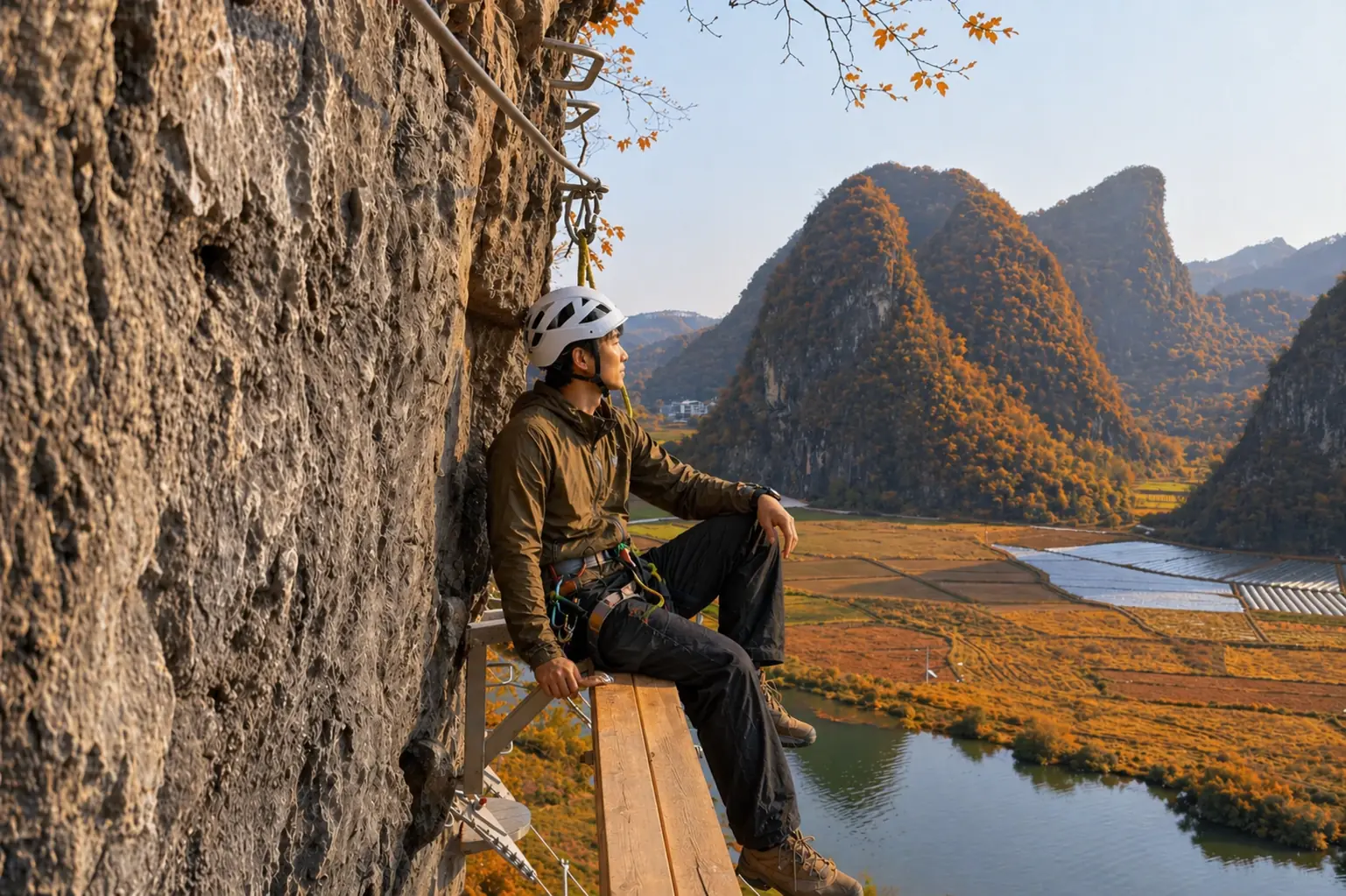
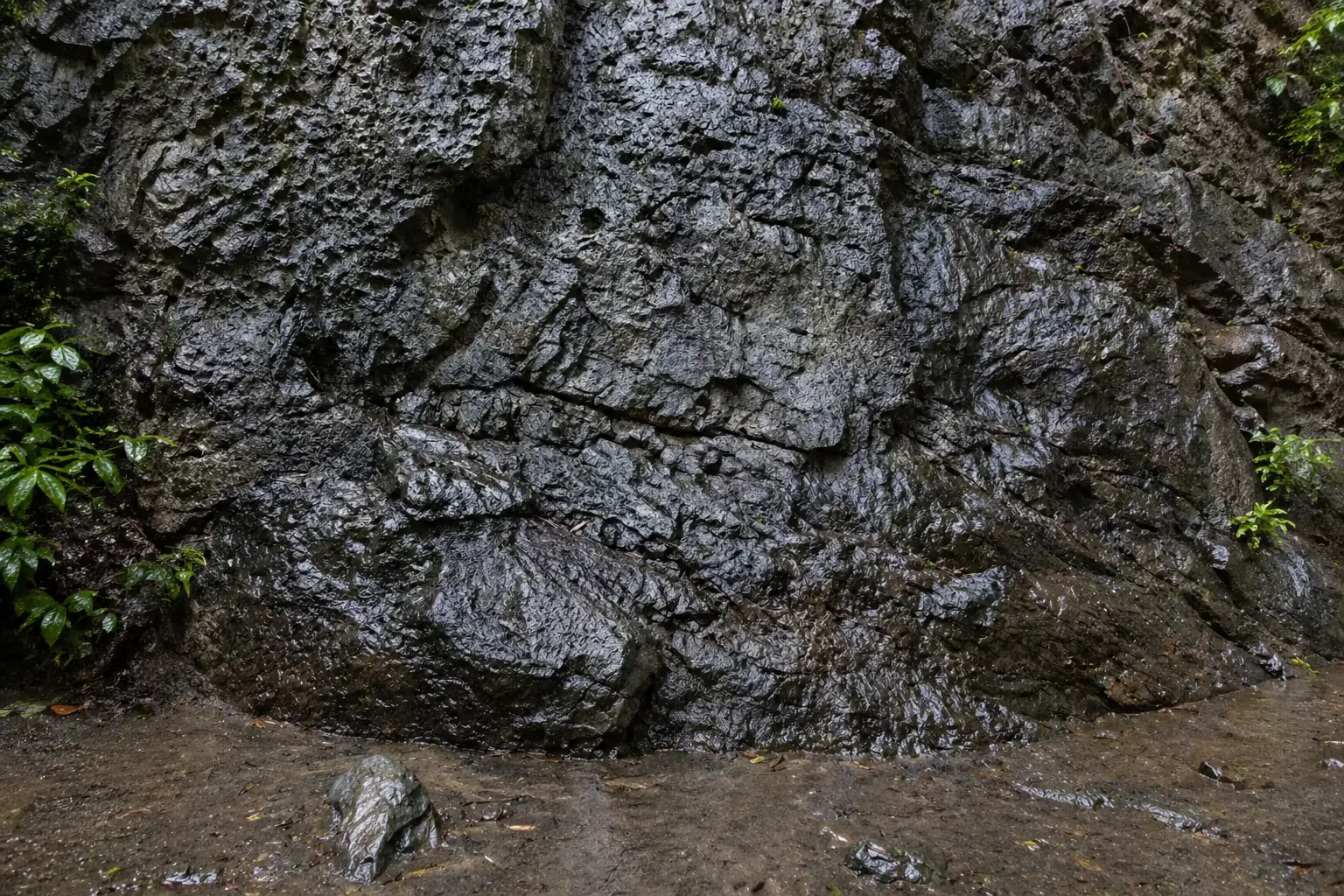
Spring and winter
Spring is beautiful but gets wetter as it moves toward May. Plan with flexibility: a misty river morning may look perfect in photos while the rock still feels damp. Winter can be surprisingly good for serious climbing because the air is cooler and the rock is often dry, though shaded crags can feel cold.
Summer reality
Summer is the hardest season: hot, humid, buggy, and storm-prone. If you climb in summer, start early, choose shade, carry more water than you think, and accept that a cave or overhang may be the only comfortable option.
Wet Rock Changes the Day
After heavy rain, shorten the plan or switch activities. Limestone, approach paths, and the base of the wall can stay slick even after the sky clears. A reputable guide will change crags or cancel rather than force a dangerous day.
Yangshuo Safety Rules and Crag Etiquette
The checks that own the climbing day
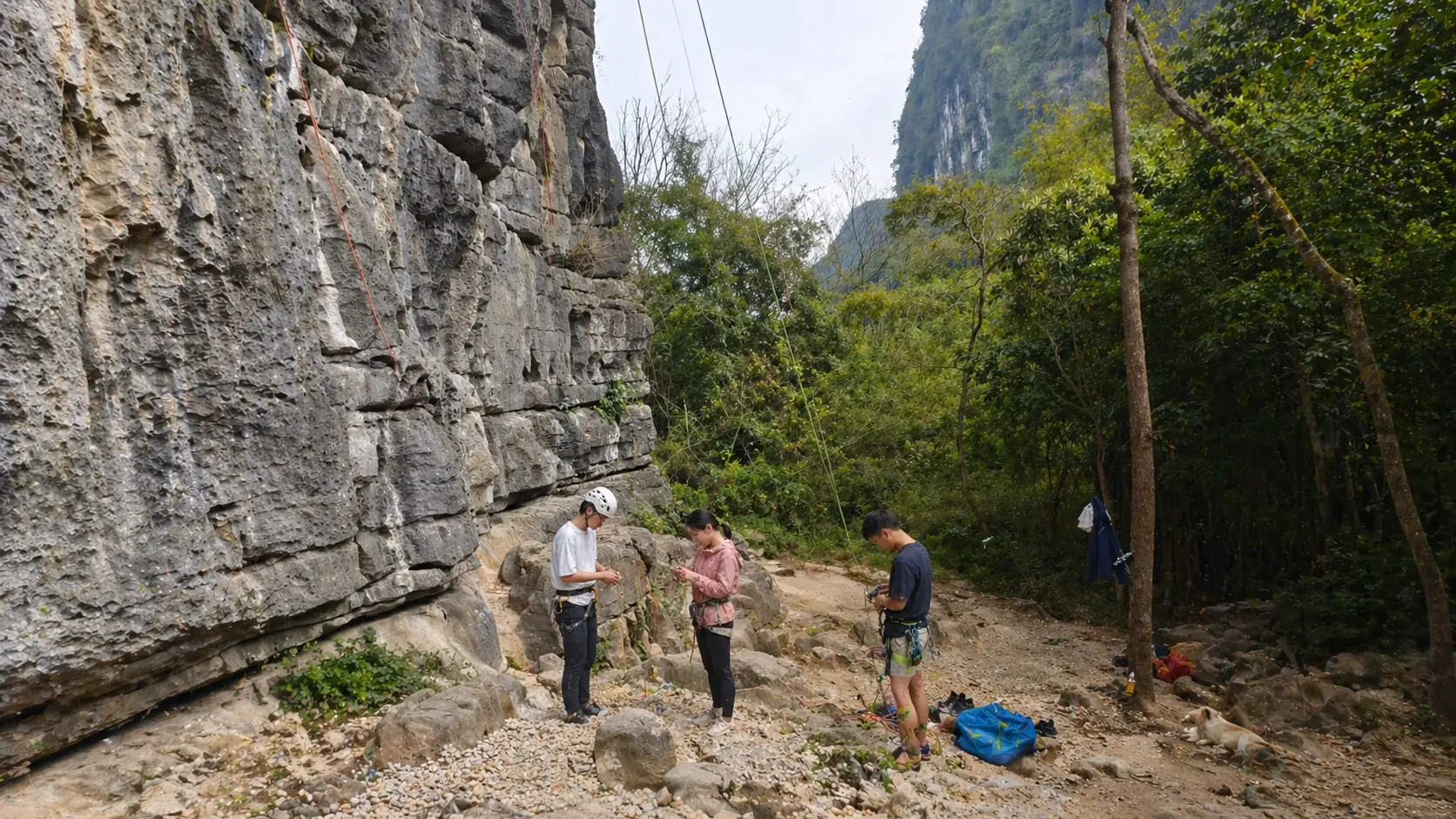
Partner checks are not optional outdoors: knot, harness, belay device, rope length, and helmet.
Yangshuo's easiest mistake is treating a scenic sport climb like a travel photo prop. Do the boring safety things every time: helmet on, knot checked, belay device checked, rope length confirmed, lowering command understood, and bags kept away from the fall zone.
- Warm up below your gym grade: outdoor limestone can be polished, sharp, and harder to read.
- Confirm the whole rope system: knot, harness, belay device, rope length, lowering command, and helmet.
- Control the base area: keep bags and waiting climbers away from the fall zone.
- Top rope is still outdoor climbing: do not swing around or pull on fixed gear like playground equipment.
Helmet Means Helmet
Wear a helmet at the base as well as on the wall. Moon Hill and other broken limestone areas have real falling-rock risk, and a dropped quickdraw or phone hurts just as much as a stone.
Respect the Crag Access
Many crags sit close to farmland, village lanes, and scenic-area boundaries. Do not trample crops, block narrow roads, leave chalky trash, play loud music, or argue with residents or staff. If a crag is closed, leave and ask a local guide for another option.
Plan Your Yangshuo Climbing Trip Itinerary
If you only have two nights in Yangshuo, put climbing on your first full morning. That leaves a backup window if weather interferes. Spend the afternoon gently: Ten-Mile Gallery (十里画廊) (Google | Amap), a Yulong River walk, or an easy dinner around West Street (西街) (Google | Amap). Do not add a long hike unless your group genuinely wants a big physical day.
For three or four days, the cleanest rhythm is:
- Arrive and confirm conditions- Check guide, weather, shoe sizes, and crag access
- Climbing morning- Guided top rope or first outdoor sport day
- River and countryside reset- Bike, raft, cafe, or Moon Hill exterior view
- Second climbing day- Only if skin, energy, and conditions still feel good
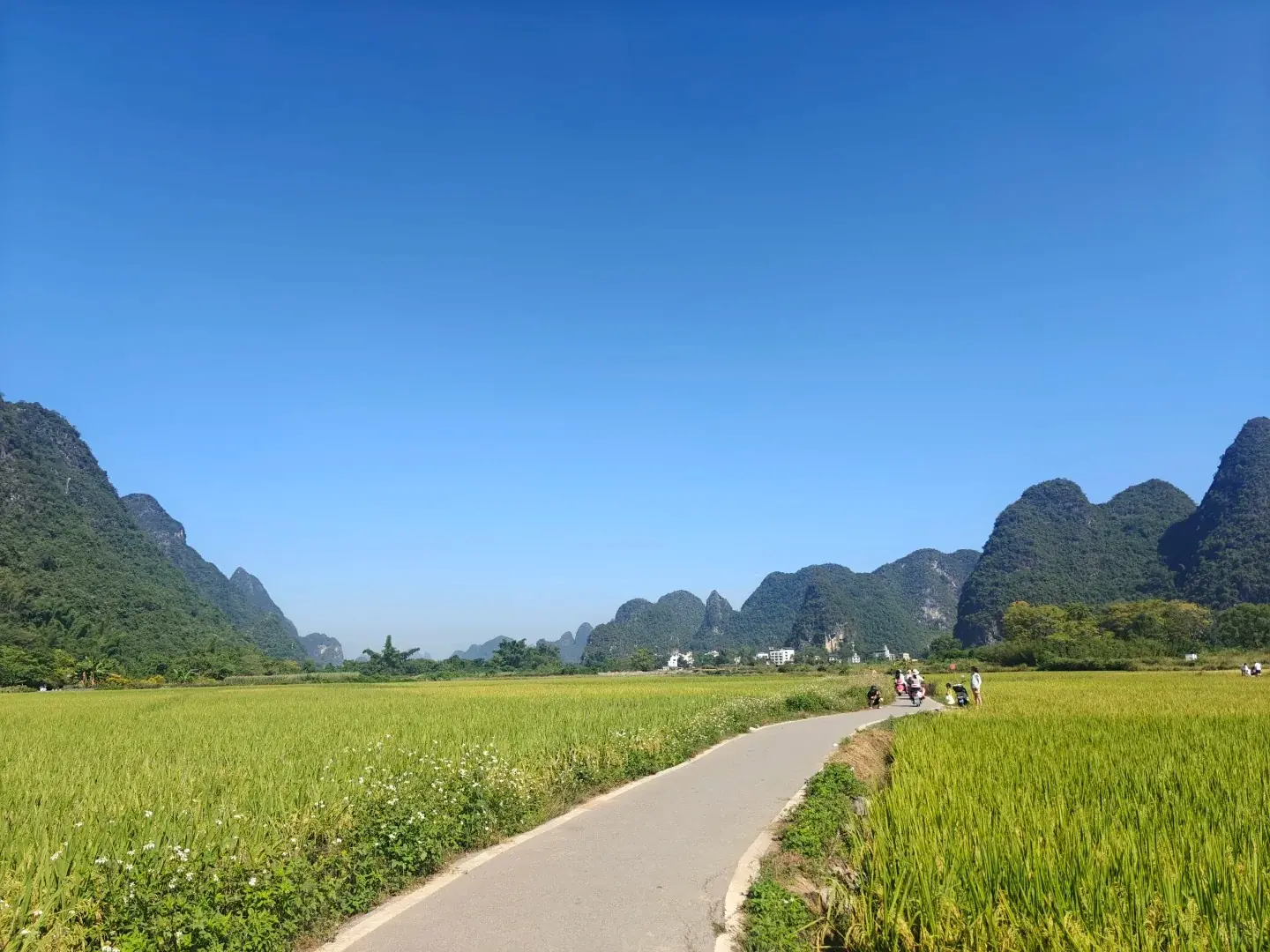
A gentle Yulong River ride makes a better post-climb afternoon than adding another hard objective.
Most guided sessions include transport. Independent climbers often use e-bikes, taxis, or Didi, but do not rely on a map pin alone for the final approach. Many crags are close to village paths where the legal parking spot, farmer agreement, or access trail matters more than the GPS point.
Frequently Asked Questions
Yes, if you go with a qualified guide and start on top-rope routes. Yangshuo has beginner-friendly limestone, but it is still outdoor climbing with real risks, so do not treat it like a theme-park activity.
Sources checked for this guide
- Crag names, grade ranges, and seasonal orientation: TravelChinaGuide Yangshuo climbing guide
- 70+ crags and 1,200+ route context: China Daily Hong Kong report
- 1,000+ route context, crag areas, and cool-season orientation: theCrag Yangshuo database
- Crag-count context and named crags: UKClimbing guidebook listing
- White Mountain style and moderate-to-elite grade context: ClimbingAway White Mountain record
- Current activity scope, late-fall preference, and guide-service context: Karst Climber Yangshuo location page
- Beginner-crag framing, guided half-day format, inclusions, and planning-price ranges: Yangshuo Mountain Retreat 2026 beginner guide
- Access sensitivity and local-etiquette cautions: Mountain Project 2025 access discussion
Beyond This Guide
Yangshuo works best when climbing is one carefully placed piece of the trip, not a squeezed-in stunt between every river and bike route. Before or after your climbing day, these guides help shape the rest of the stay:
- Biking through Yangshuo's karst countryside
- Cormorant fishing in Yangshuo
- Li River Guilin guide
- China travel safety and scams guide
If you want to combine climbing with the Li River, Yulong River, Longji Rice Terraces, and Guilin transport, the right sequence depends on weather, fitness, and where you sleep.
© gochinafreely.com — Original guide by Go China Freely.