Hours & Base Ticket
Essential Rules
A 1,300-Year Street Under Stone Pagodas
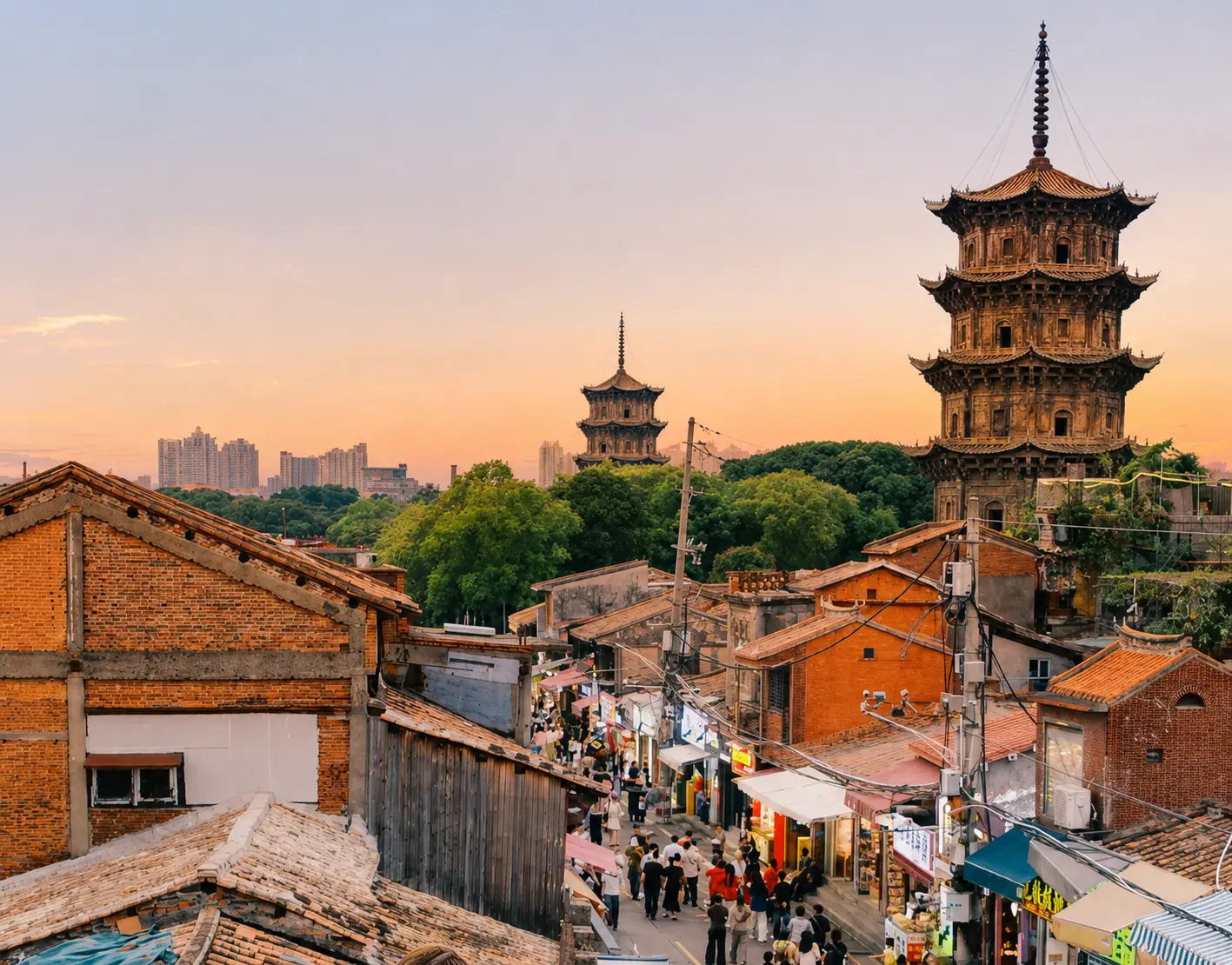
The signature West Street view is the relationship between ordinary shopfronts and the twin stone pagodas.
Quanzhou West Street (西街) (Google | Amap)
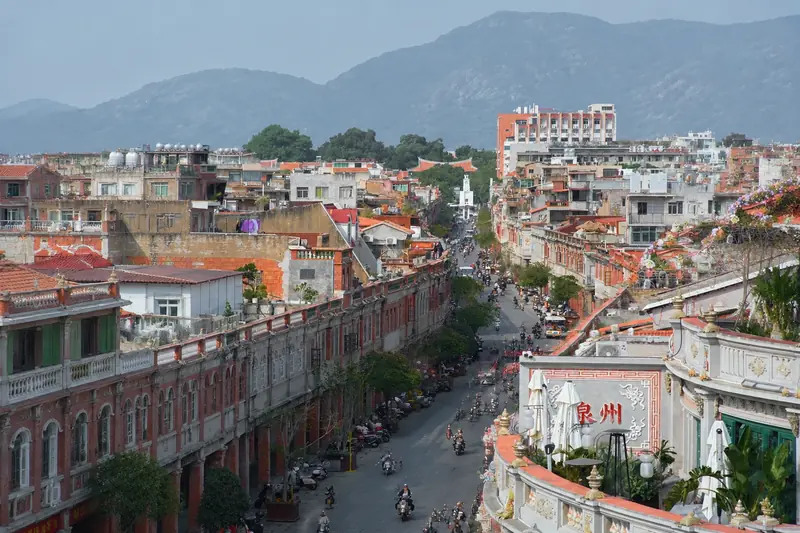
West Street is the old-town scene most visitors remember first: red-brick houses, snack windows, side lanes, and Kaiyuan Temple's twin stone pagodas rising above the roofs. Give it 1.5 to 3 hours at the right time of day and it becomes the easiest doorway into Quanzhou's maritime-trade old city.
The strongest view is the relationship between ordinary storefronts, red-brick roofs, and the East and West Pagodas—not any single shop or food stall.
Use it as a gateway: first-timers get twin pagodas, snacks, old buildings, and side lanes in a compact route. Go early for architecture, late afternoon for softer light, or evening for street energy; weekend afternoons and dining hours feel much tighter than the map suggests.
West Street is not just Quanzhou's popular snack street. A Fujian provincial government article traces it back more than 1,300 years to the Tang Dynasty, when houses formed a street, and says it was once a political, economic, and cultural center of Tang-Song Quanzhou. Quanzhou's official tourism page calls it one of the city's earliest developed streets and one of the best-preserved old districts in the center.
That long timeline matters because West Street still layers many versions of Quanzhou at once: Kaiyuan Temple (开元寺), the East and West Pagodas (东西塔), old red-brick houses, former residences, wooden buildings, modern storefronts, snacks, residents, and visitors. It is busy, but not empty spectacle. The street still works because it is both a heritage corridor and an everyday commercial street.
Look beyond the main signboards for what makes the street local: old house walls, doorframes, stone thresholds, shop shutters, and side lanes carry more character than the loudest storefronts. Then keep the map in perspective. West Street is the right first stop, but Quanzhou's fuller story continues south to Zhongshan Road, Qingjing Mosque, Guanyue Temple, Tianhou Temple, and Deji Gate.
West Street: Red Bricks and Living Lanes
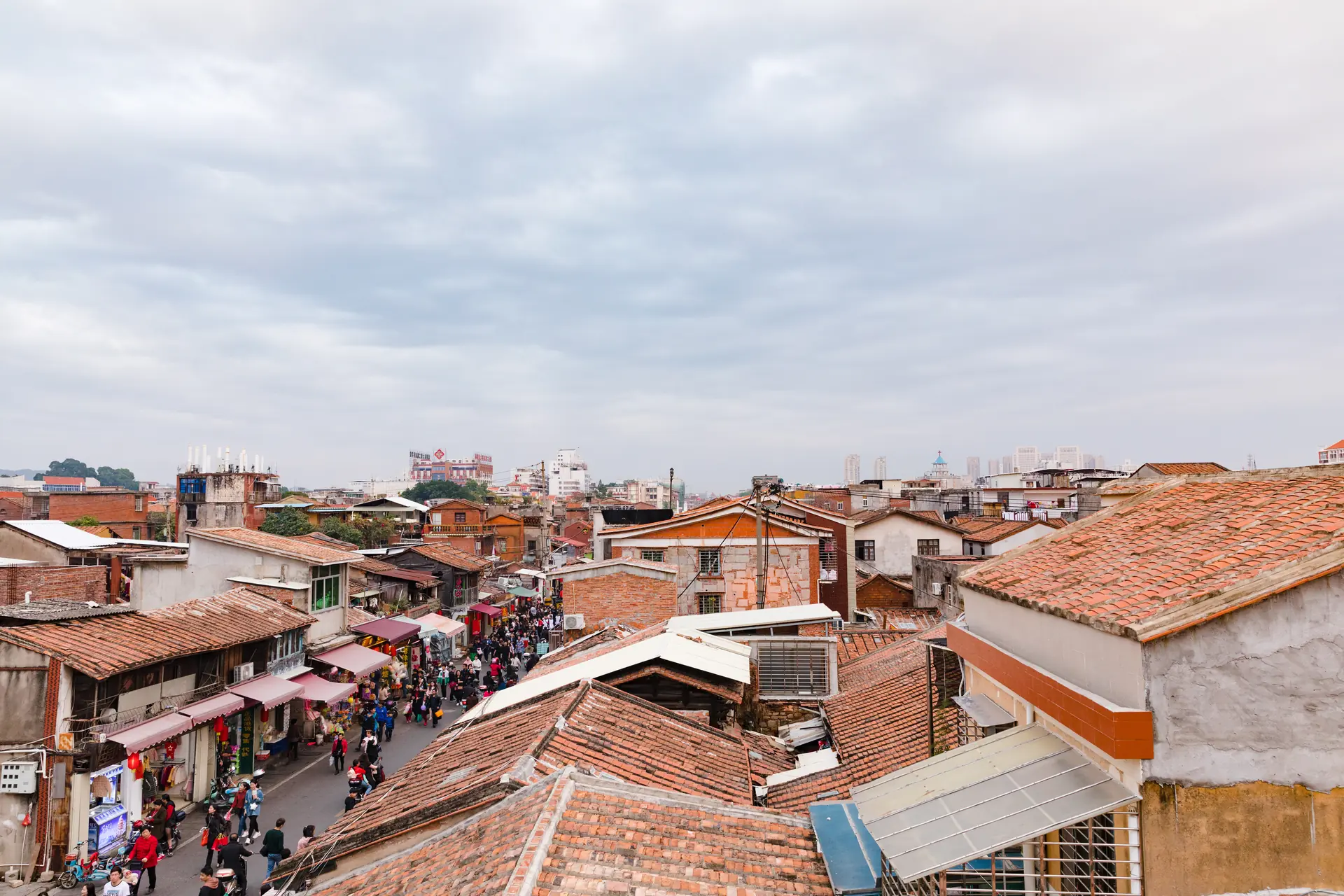
West Street's main axis mixes red-brick houses, arcade edges, shopfronts, and daily movement.
The most useful way to read West Street is slowly and sideways. Quanzhou's official tourism page says the street still preserves Kaiyuan Temple, the twin pagodas, Chengxin Pagoda, former residences, modern Western-style buildings, and many distinctive old houses. A 2024 npj Heritage Science study describes the main street's sides as rich in the southern Fujian red-brick dacuo house style.
That is the "red bricks" part of this guide. Do not hunt for one perfect wall and leave. Step into side lanes when they are open and respectful to enter; look for red brick against pale stone, pitched roofs, carved doors, old residential scale, and small temple or clan-hall details. The street is more interesting when you stop measuring it by queue length.
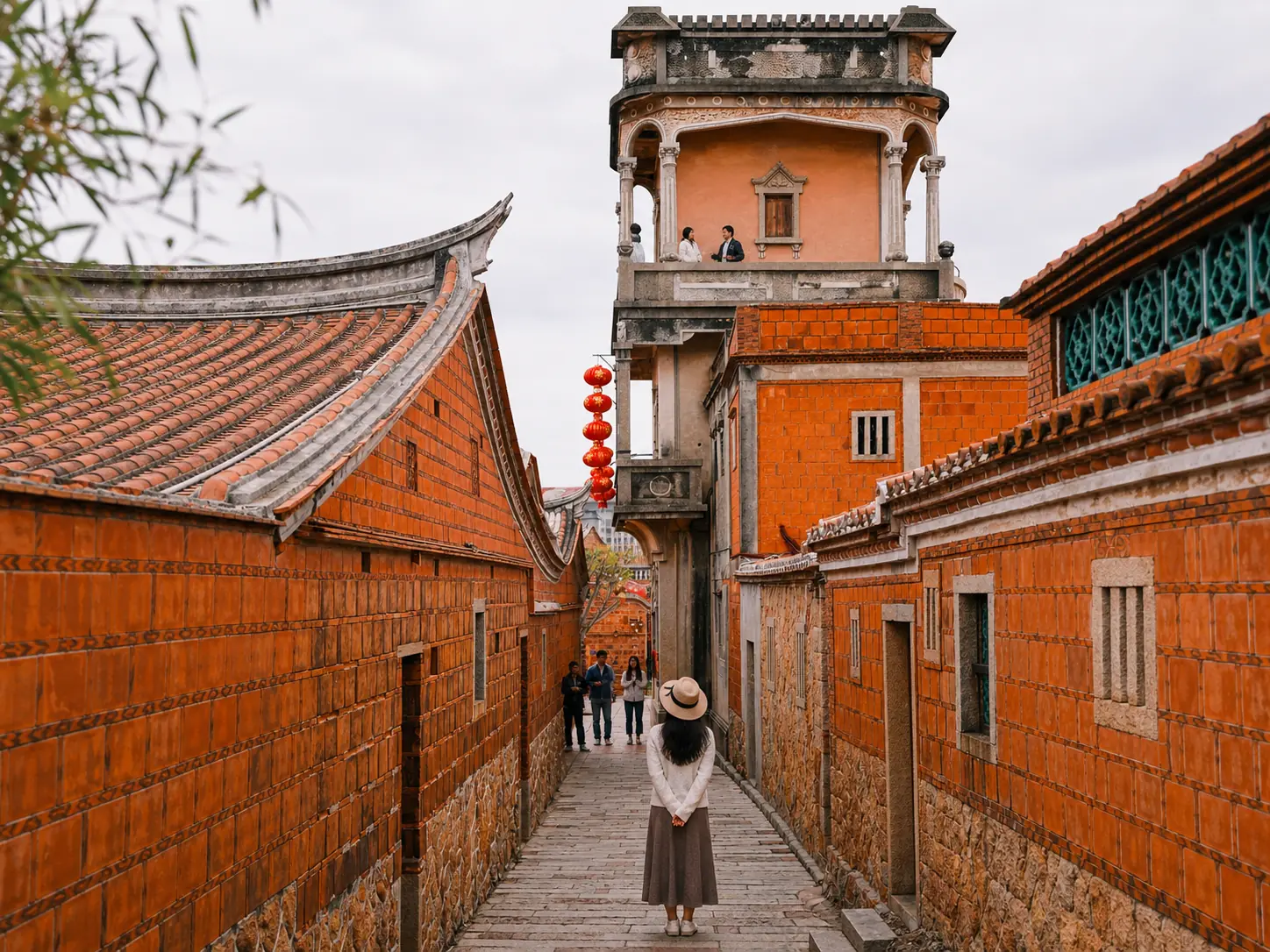
Side lanes reveal the red-brick house textures that are easy to miss on the main snack street.
West Street also changes by section. The eastern end near the Bell Tower is more obviously commercial and crowded. The areas around Kaiyuan Temple and the small lanes feel more layered. The farther you move from the loudest food frontage, the more the street begins to feel like a living neighborhood again.
Best red-brick rhythm
Walk the main street first, then leave it for one or two short side-lane detours, then return to the main axis. This keeps you oriented without reducing West Street to a straight snack crawl.
Twin Stone Pagodas Inside Kaiyuan Temple
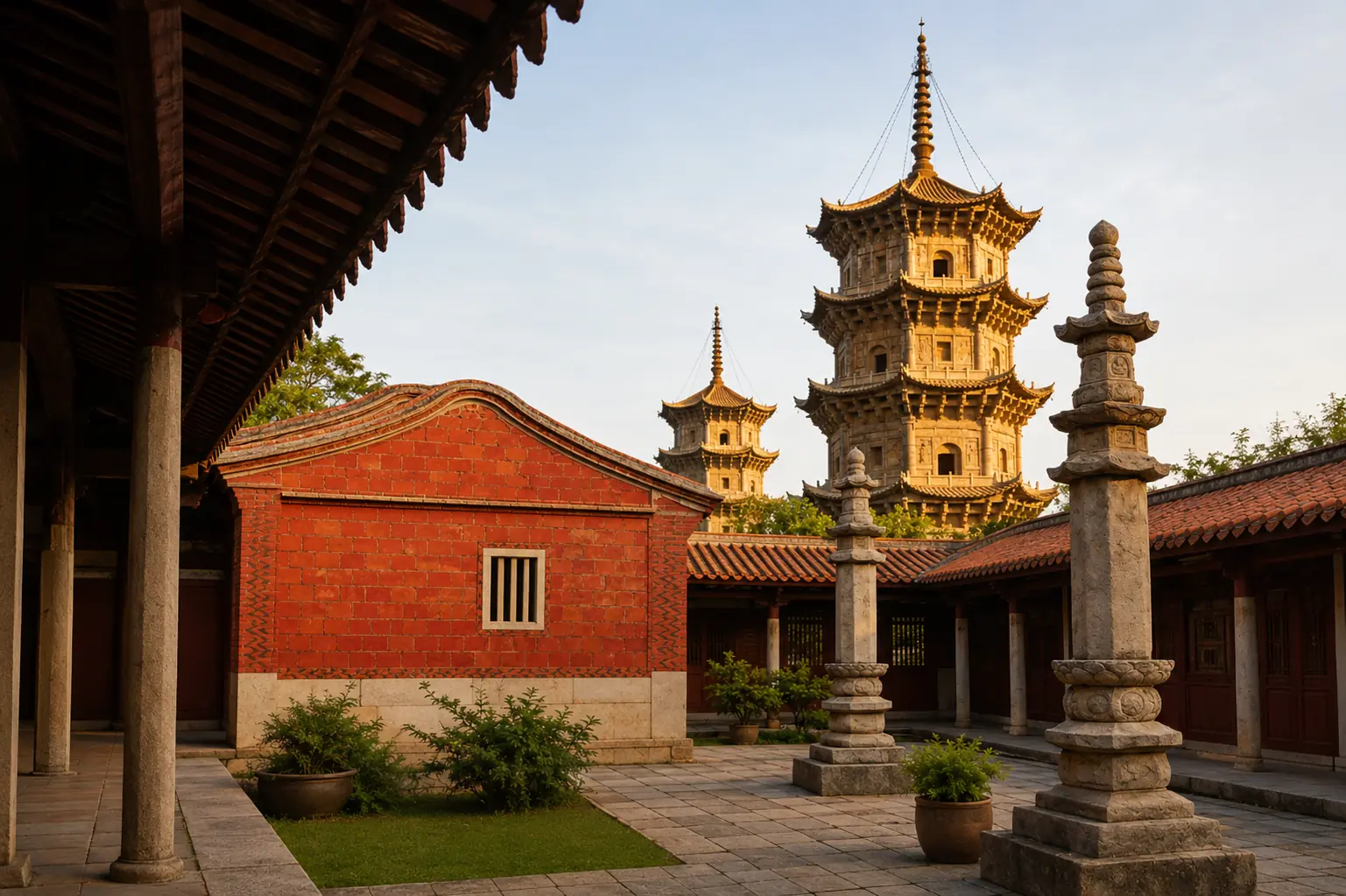
Inside Kaiyuan Temple, the twin pagodas read as architecture rather than just West Street's skyline.
The anchor behind the skyline
Kaiyuan Temple (开元寺) (Google | Amap)
Kaiyuan Temple is the anchor that makes West Street more than a pretty old lane. The official Quanzhou heritage page says the temple was founded in 686 and covers about 70,000 square meters, and describes it as the largest extant Buddhist temple complex in Fujian Province.
Those towers are why West Street photos work. From the street, they behave like a skyline: old shopfronts below, stone pagodas above, tourists and residents moving between them. Inside the temple, they become architecture.
686
Temple founded
48 m
East Pagoda
45 m
West Pagoda
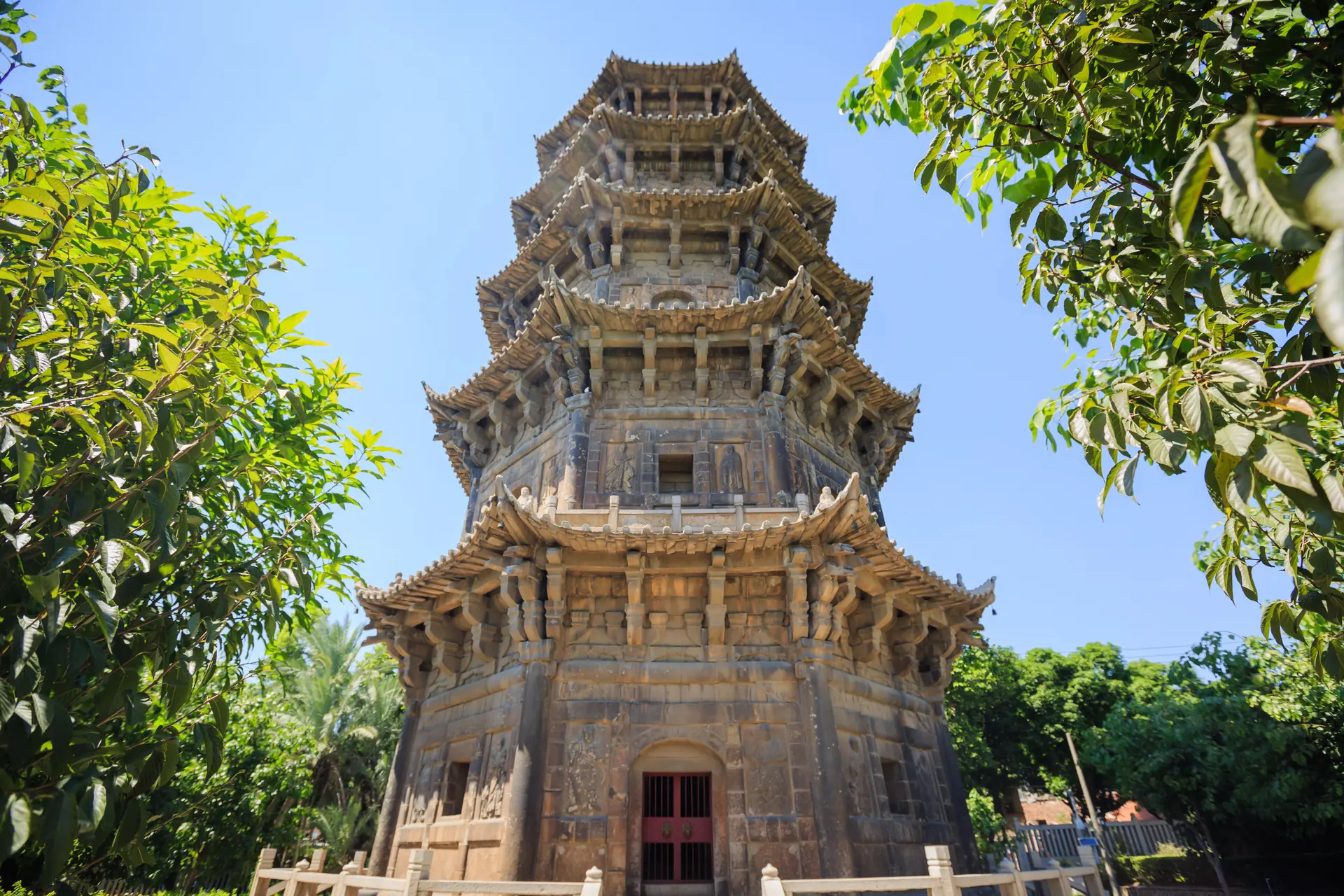
The East Pagoda rewards a closer look: granite, Buddhist reliefs, and carving details beyond the skyline view.
Read the stone up close
Look at the five-storey octagonal granite form, the carved doors and niches, and the Buddhist reliefs around the pagoda bodies. Do not treat Kaiyuan Temple as a two-minute backdrop. The same official page connects the complex to Song-Yuan Quanzhou's multi-cultural communities and maritime-trade prosperity. Hindu reliefs, Buddhist halls, precept altar details, and the temple's scale make more sense when you remember that UNESCO describes Quanzhou as a maritime emporium active from the 10th to 14th centuries.
Plan access flexibly: West Street views are free; Kaiyuan Temple follows its own current entry and site rules. Check the official heritage information and signs on arrival rather than relying on a frozen schedule.
Short on time: walk West Street and photograph the pagodas from the street, then continue to Zhongshan Road or dinner.
First visit: enter Kaiyuan Temple; the courtyard scale and carvings explain why West Street matters.
Photography: shoot the street-pagoda relationship outside first, then use the temple visit for cleaner details.
Best Photo Angles on West Street
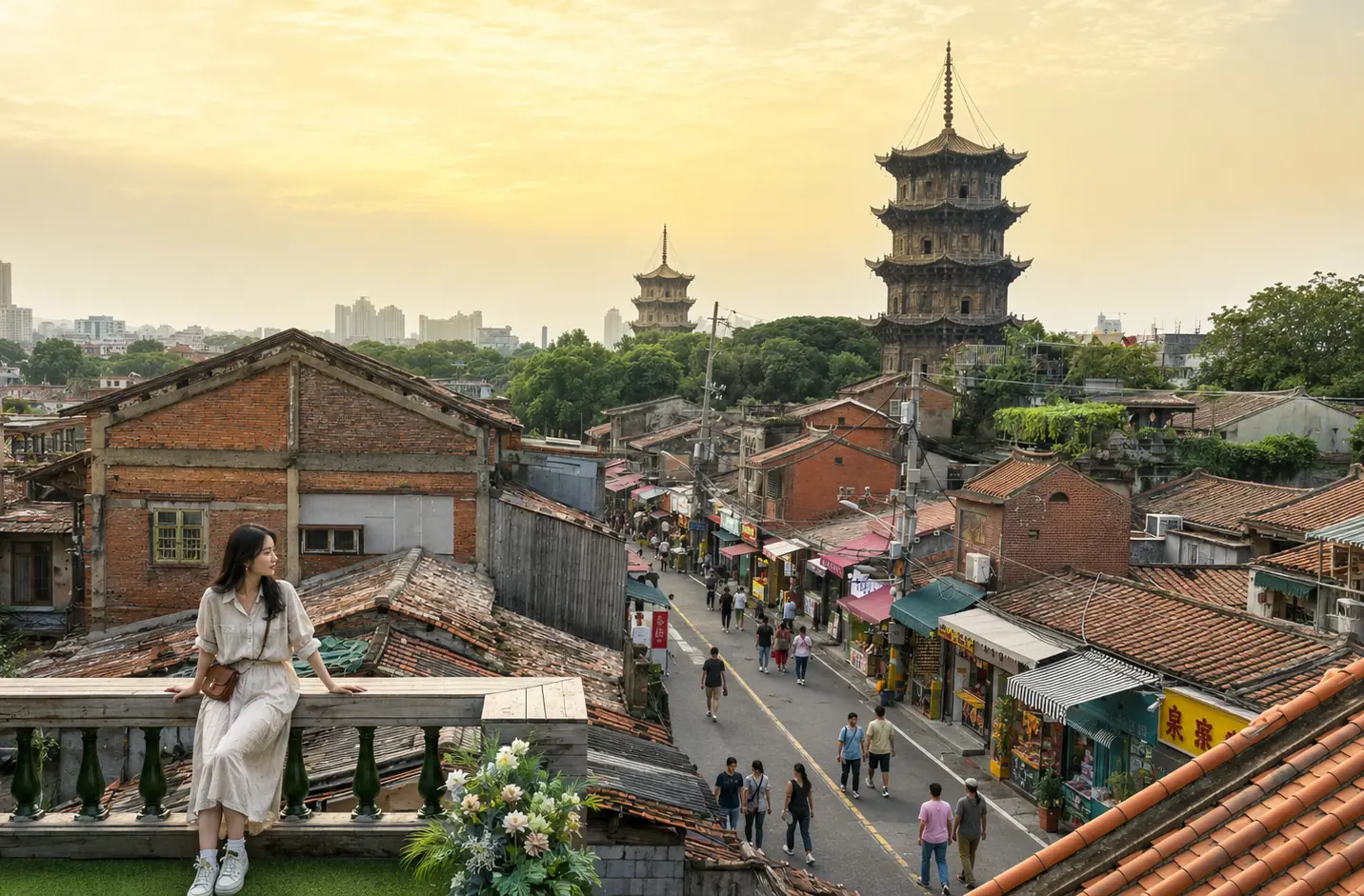
Higher viewpoints help frame the twin pagodas with West Street's red-brick roofs.
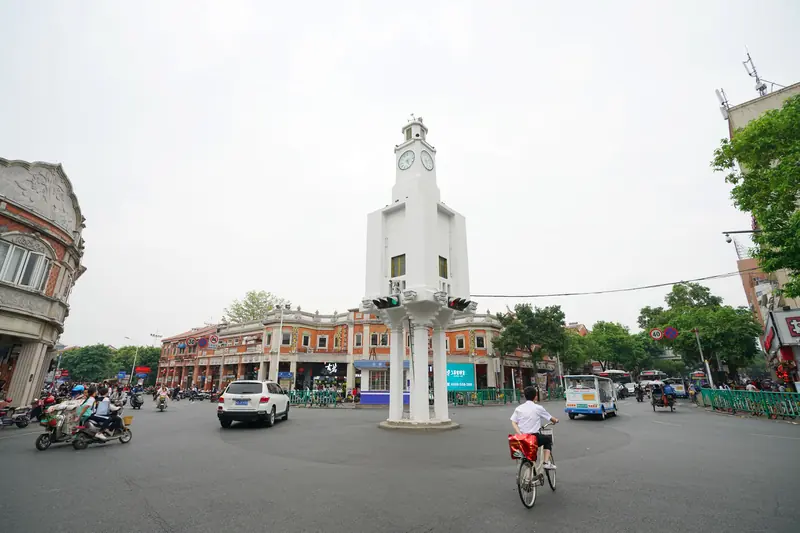
Bell Tower orientation
West Street's best photos usually combine two layers: street life in the foreground and the twin pagodas in the background. A plain close-up of one tower is useful, but the most Quanzhou image is messier: snack signs, red brick, tiled roofs, people walking, and stone towers above it all.
Classic start
Bell Tower entrance
Use the Bell Tower as your orientation point, then shoot into West Street as the old-town axis begins.
Signature frame
Street to pagodas
Stand far enough back to include shops and rooflines below the towers. This avoids the flat postcard look and keeps the street in the story.
Quiet detail
Red-brick side lanes
Doorways, small shrines, wall textures, and old thresholds work better before crowds arrive. Be careful not to photograph private interiors.
If open that day
Rooftop or upper floor
Some public-facing venues or cafes may offer higher views toward the pagodas. Treat these as optional; access and crowd rules can change.
Rooftop access is conditional: Quanzhou government reporting documents the West Street visitor-center rooftop view, but that does not mean every rooftop is always available. Check current access, buy a drink if you use a cafe viewpoint, and do not block narrow stairs for one photo.
A Short West Street Walking Route
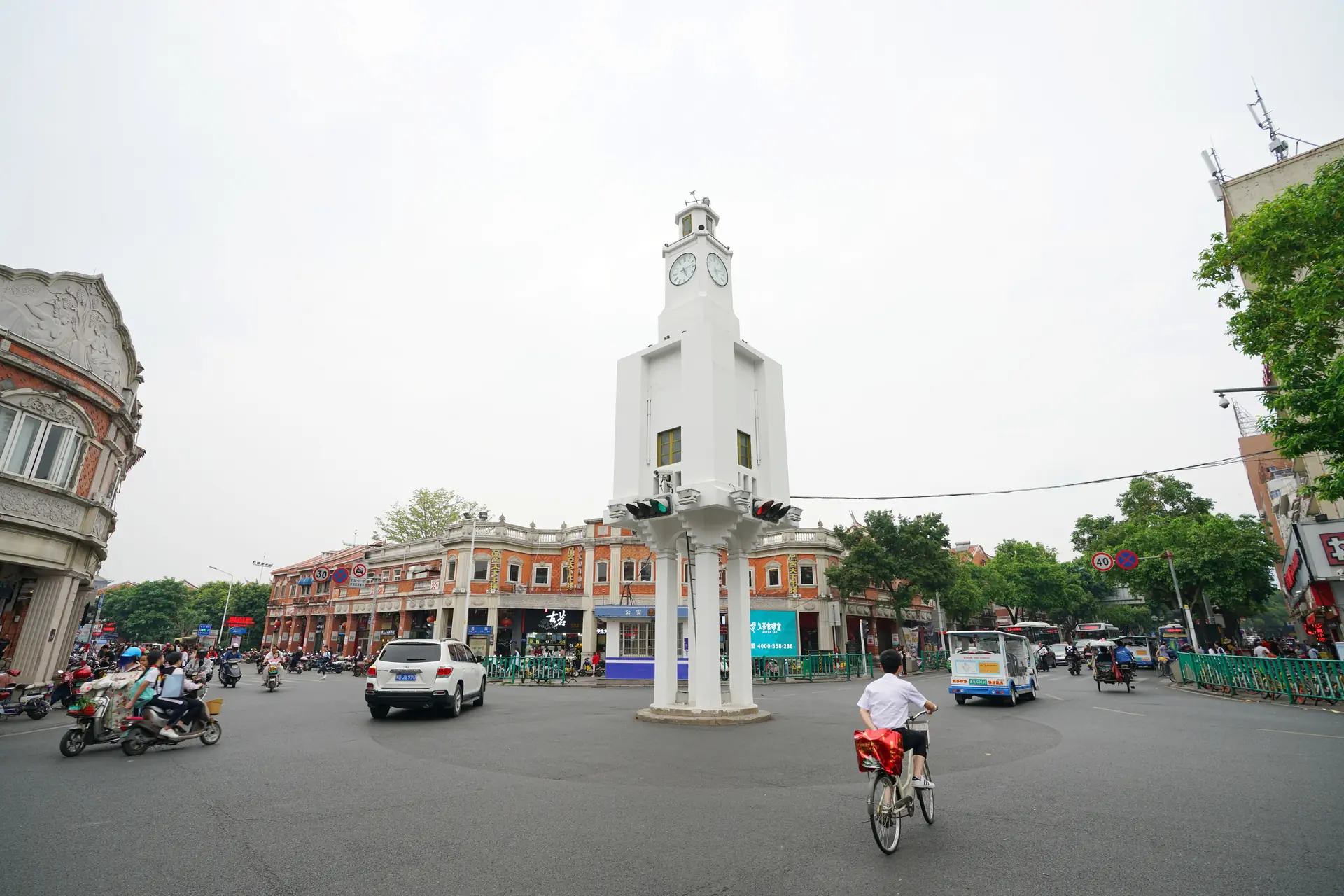
The Bell Tower gives the clearest starting point for a short West Street route.
West Street core only
Start at Bell Tower; keep the longer UNESCO corridor separate
This route is deliberately short. The existing Quanzhou Ancient City Walk covers the longer UNESCO old-town corridor. This guide is for the West Street core.
- Quanzhou Bell Tower(泉州钟楼)- Use it as the easiest meeting point and east-end entrance to West Street.
- West Street main axis(西街)- Walk slowly enough to notice shopfronts, red-brick details, and first views of the twin pagodas.
- Xiaoxicheng detour(小西埕)- Optional creative-lane pause for a drink, quick photo, or crowd break.
- Kaiyuan Temple South Gate(开元寺)- Enter for the twin stone pagodas, temple courtyards, and carvings.
- Red-brick side lanes- Return to West Street and take one or two short side-lane loops if open and respectful.
- Snack stop or Zhongshan Road- Finish with one small snack, or continue south toward Zhongshan Road for the broader old-city route.
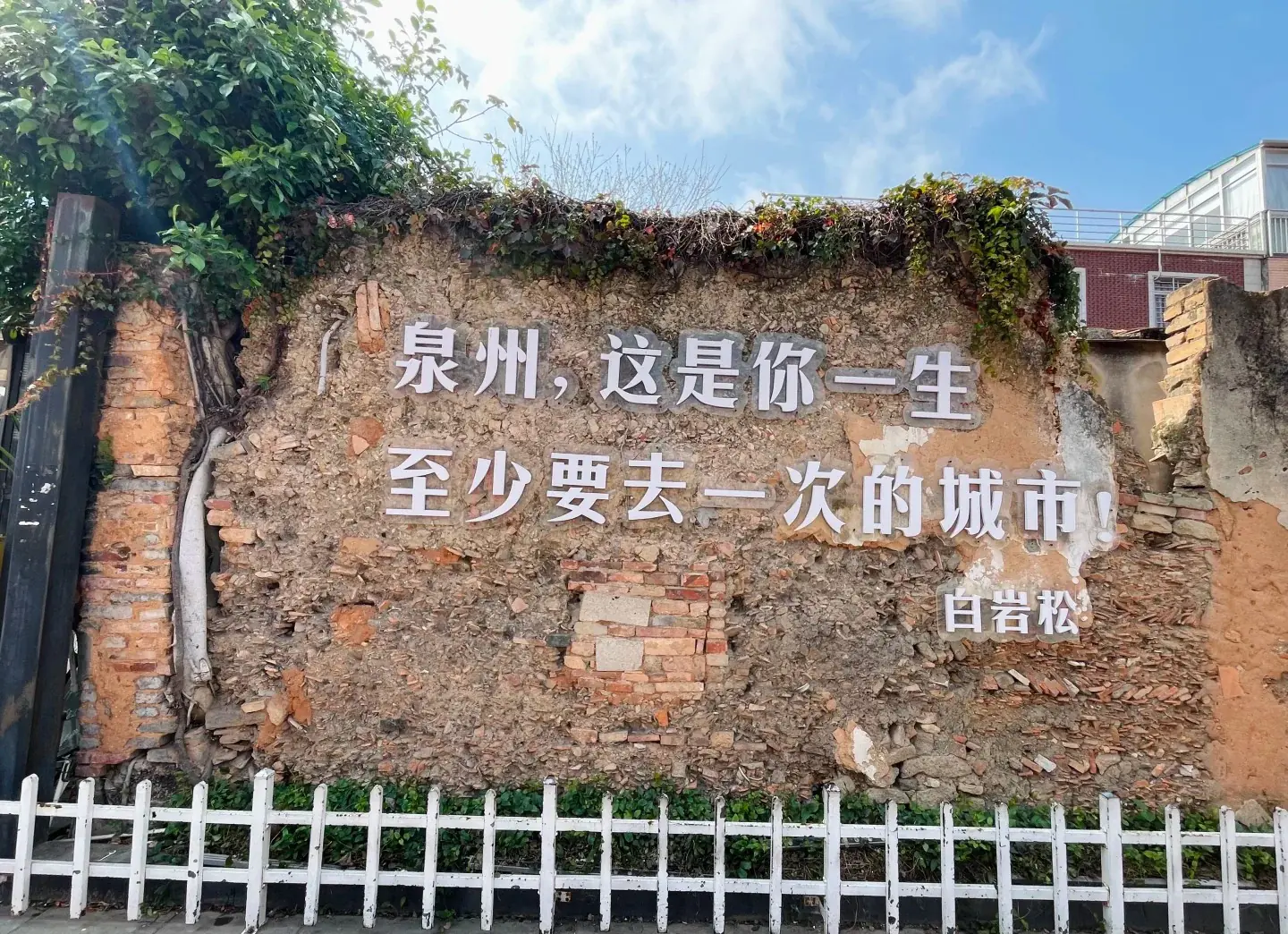
Xiaoxicheng works best as a short side-lane pause, not a replacement for Kaiyuan Temple.
Street Food Without Losing the Walk
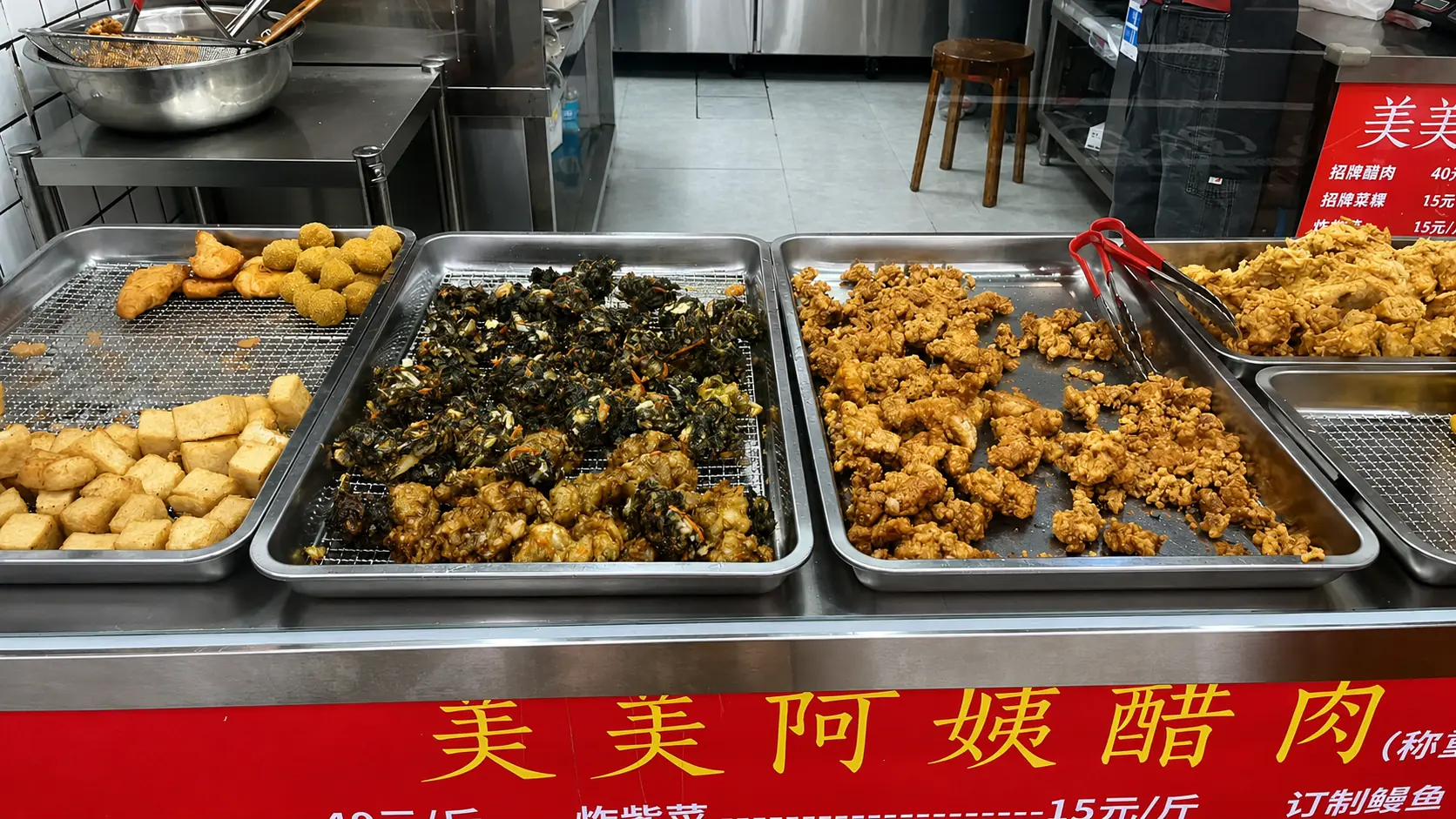
West Street food works best as pacing: one savory snack, one cooling break, then keep walking.
West Street is food-dense, but a good West Street visit is not the same as eating every famous Quanzhou snack in one pass. Quanzhou government reporting lists local snacks such as runbing, misua soup, mochi, fried vinegar pork, fried vegetable cakes, oyster omelettes, sea worm jelly, and other old-town bites along West Street. Use that variety as pacing.

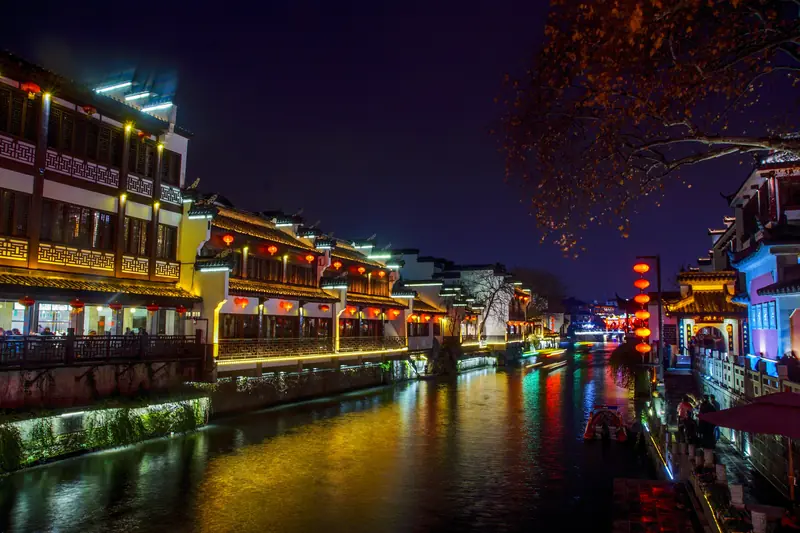
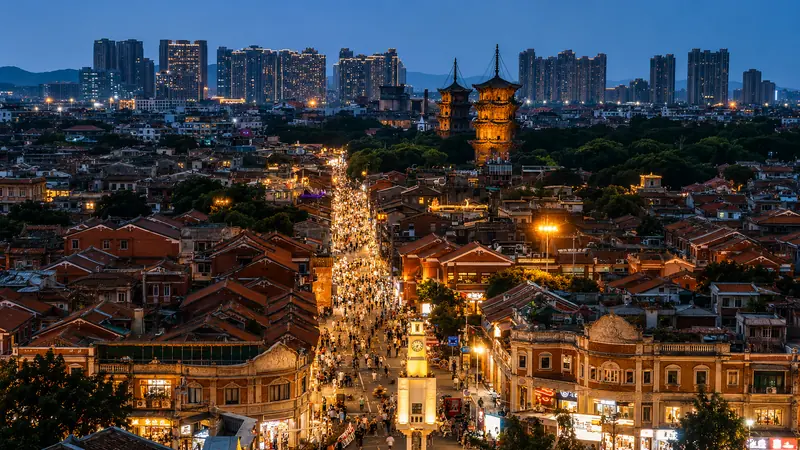
West Street is most atmospheric at night, but the same energy also brings the heaviest crowds.
The best rule is one savory and one cooling snack, then keep walking. If you want a full food plan, use the Quanzhou Food Guide; it separates breakfast bowls, West Street snacks, Zhongshan Road stops, and ginger duck dinner more cleanly.
Do not let one queue own your route
West Street has famous shops and long lines, but most travelers are better served by the category than the exact storefront. If one runbing or vinegar-pork line is too long, move on and eat the same type of snack elsewhere.
Best Times, Crowds, and Weather
West Street changes fast across the day. The best time depends on whether you care more about architecture, food, or atmosphere.
08:00-09:30
Quietest architecture window
Best for red bricks, closed or just-opening shopfronts, street-pagoda photos, and families who dislike crowds.
16:30-18:00
Soft light plus temple pairing
Good for walking from Kaiyuan Temple back into West Street as the day cools and snack stalls become more active.
Evening: the street feels most alive, and the pagodas become a night marker, but queues and slow walking are part of the deal.
Light rain: red brick and stone look beautiful in damp weather. Wear grippy shoes and avoid rushing through temple courtyards.
Family pacing: weekends, school holidays, and public holidays can turn the main stretch into a slow shuffle. With children or older relatives, use the quick loop: Bell Tower, a short West Street section, Kaiyuan Temple, one snack, then exit before the densest evening crowd.
How West Street Fits Quanzhou
Use West Street as Quanzhou's old-town hinge rather than the whole itinerary. UNESCO describes Quanzhou as a Song-Yuan maritime emporium active in the 10th to 14th centuries, with component parts including religious buildings, docks, production sites, transport networks, bridges, pagodas, and inscriptions. West Street gives you one compact doorway into that system.
Best default
First hour in Quanzhou
Use Bell Tower, West Street, a quick pagoda view, and one snack as your easy old-town arrival sequence.
Half-day old town
Pair West Street and Kaiyuan Temple with Zhongshan Road, Fu Confucian Temple, and Qingjing Mosque.
Food-focused evening
Use West Street snacks first, then move toward a more deliberate meal from the Quanzhou Food Guide.
Culture day
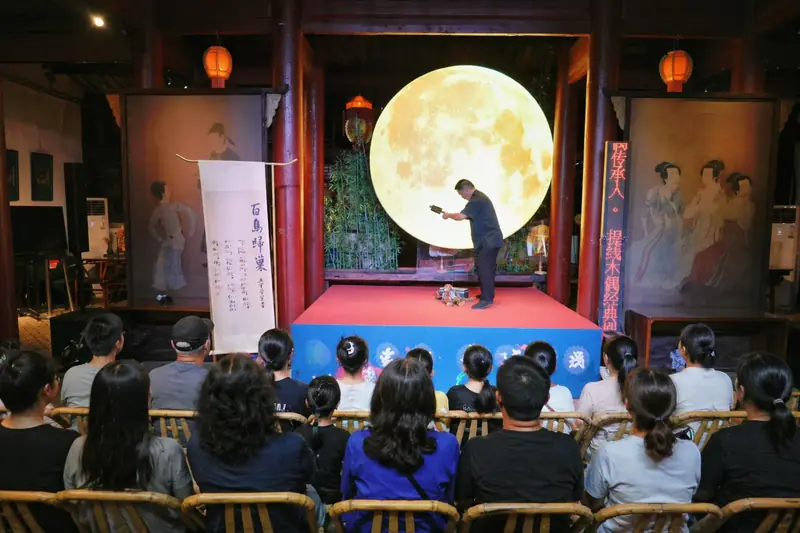
Do West Street and Kaiyuan Temple in the morning, then add a Quanzhou marionette show when afternoon heat or rain makes an indoor stop attractive.
The fair expectation: West Street is popular because it is genuinely useful: photogenic, snack-heavy, central, and easy to understand. It is not a secret lane. Go with that expectation and you can enjoy it without feeling disappointed by the crowds.
Frequently Asked Questions
Yes, especially on a first visit. It gives you red-brick old houses, food, Kaiyuan Temple's twin pagoda views, and an easy entry into Quanzhou old town. Just do not treat it as the whole city.
Sources checked for this guide
- West Street’s 1,300-plus-year history and Tang-Song old-city role: Fujian provincial government
- West Street’s early development, preserved old-district fabric, Kaiyuan Temple, pagodas and historic buildings: Quanzhou official tourism page
- Research context for the southern Fujian red-brick dacuo house style along the main street: Heritage Science study
- Kaiyuan Temple’s heritage context and the East/West Pagoda heights and architecture: Official Quanzhou heritage page
- West Street visitor-center rooftop and old-city/pagoda viewpoint context; current access still needs checking: Quanzhou government reporting
- World Heritage inscription and the integrated Song–Yuan maritime-emporium system: UNESCO World Heritage Centre
Beyond This West Street Guide
West Street gives you the quick, sensory version of Quanzhou: red bricks, twin pagodas, snacks, and old-city movement. To turn it into a stronger day, connect it with the Quanzhou Ancient City Walk for the UNESCO corridor, use the Quanzhou Food Guide for meal timing, or add a Quanzhou marionette performance when the afternoon heat or rain makes an indoor cultural stop attractive.
© gochinafreely.com — Original guide by Go China Freely.