Current show picture
These are dated July 2026 schedules, listing snapshots, and planning examples—not a single citywide tariff. Verify the selected venue, session, inclusions, and refund terms before you book and pay directly. Compare the three formats
Choose with confidence
2,000 Years of Theater on Strings
What can a set of strings carry? In Quanzhou, it carries roughly two millennia of stage memory. Quanzhou string puppetry (泉州提线木偶戏) can turn a carved figure into a courteous host, a comic drunk, a fighter, or an acrobat—and it remains a living performance tradition rather than a museum-only craft.
~2,000 yrs
Lineage
700+
Preserved Plays
2012
UNESCO Safeguarding
Nearly 70
Countries and Regions
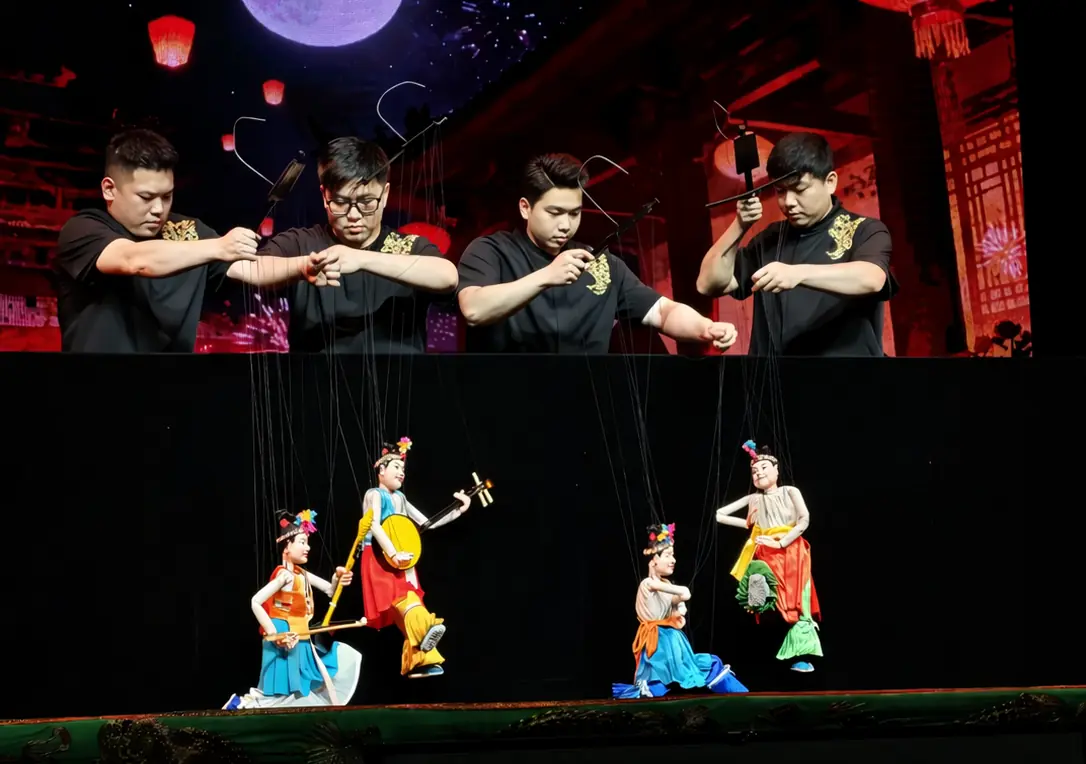
The older name is suspended-string puppetry (悬丝傀儡). The Quanzhou heritage center traces its roots to the Qin and Han periods and says it was already circulating around Quanzhou by the late Tang and Five Dynasties.
Centuries of continuous transmission produced more than 700 preserved traditional plays and a distinct musical system. That depth is why a short visitor performance can move from ritual gesture to comedy or martial action without feeling like a novelty act.
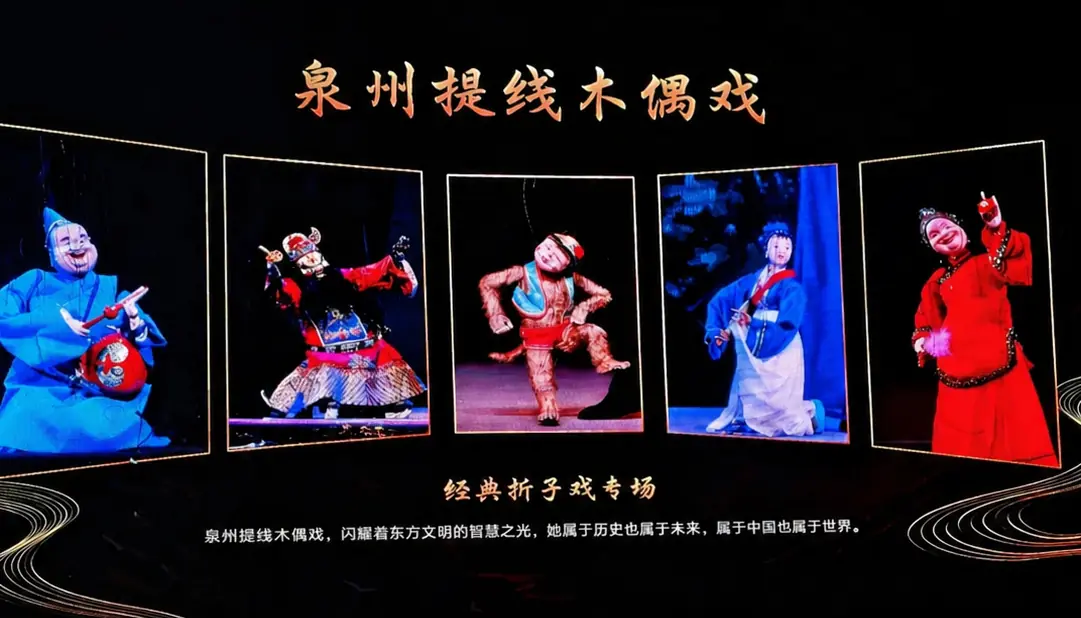
Safeguarding, not a popularity badge
Quanzhou string puppetry entered China’s first national intangible cultural heritage list in 2006. In 2012, UNESCO placed Fujian puppetry’s training strategy on the Register of Good Safeguarding Practices. The recognition belongs to the training and safeguarding system; it is not the same as listing the art on UNESCO’s Representative List.
Why Quanzhou matters: the form has kept a deep repertoire, its own musical language, and formal transmission between generations. A current Fujian government account says the troupe has taken representative work to nearly 70 countries and regions, while the craft remains rooted in local performance life.
What You'll See on Stage
The plot changes by program, but the viewing skill is consistent: watch how a small shift of the control board becomes a glance, a stagger, a turn, or a precisely timed gesture.
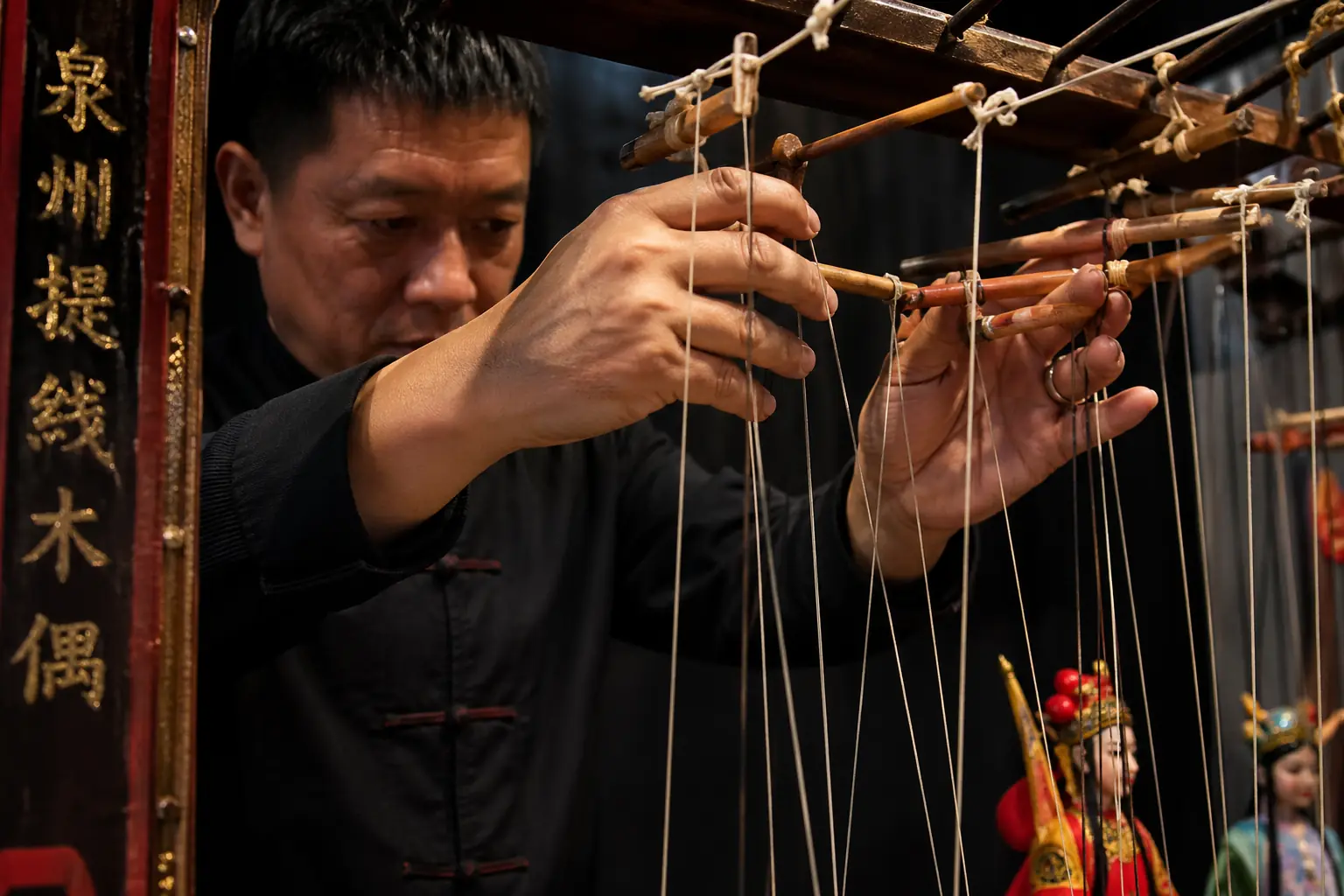
The strings are the choreography. Many Quanzhou figures use around 16 lines, while complex technique can reach 36. The performer works above and behind the puppet, coordinating several points of movement at once.
Look for the transition between poses: a weight shift before a step, a controlled stumble, or the pause before a cup reaches the mouth. Those small joins reveal more of the craft than the biggest stunt.
The Little Novice Monk Goes Downhill (小沙弥下山)
Acrobatic comedy
A playful novice slips away from the temple and moves through comic, athletic business. It is an easy first piece to follow through posture, rhythm, and reaction.
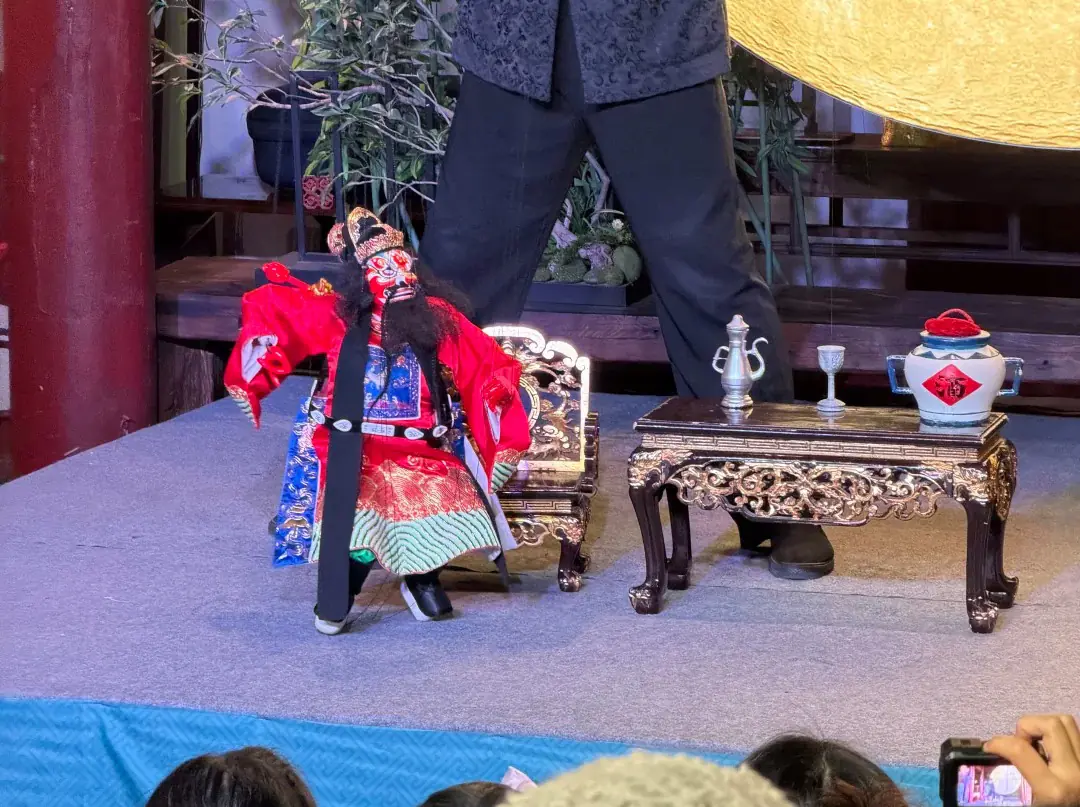
Zhong Kui Drunk (钟馗醉酒)
Controlled imbalance
The legendary demon-slayer drinks, sways, and returns to his mission. Watch how the performer makes every near-fall look spontaneous while keeping the figure precisely balanced.
Dream of Youth (青春梦)
Contemporary movement
This newer piece uses modern dance vocabulary to show how the same string-control system can carry movement beyond historical and ritual subjects.
Flaming Mountain (火焰山)
Journey to the West spectacle
The larger fantasy story gives the troupe room for martial action, sudden changes, and ensemble staging. The work appears in the heritage center’s current repertoire catalogue.
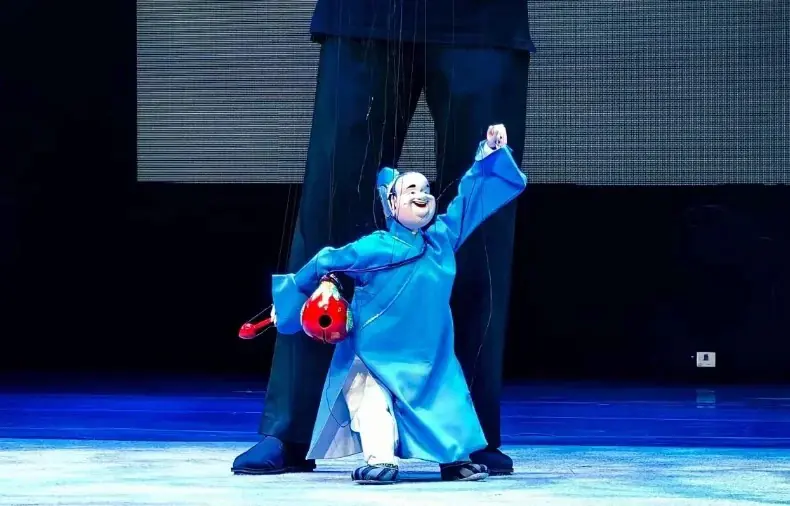
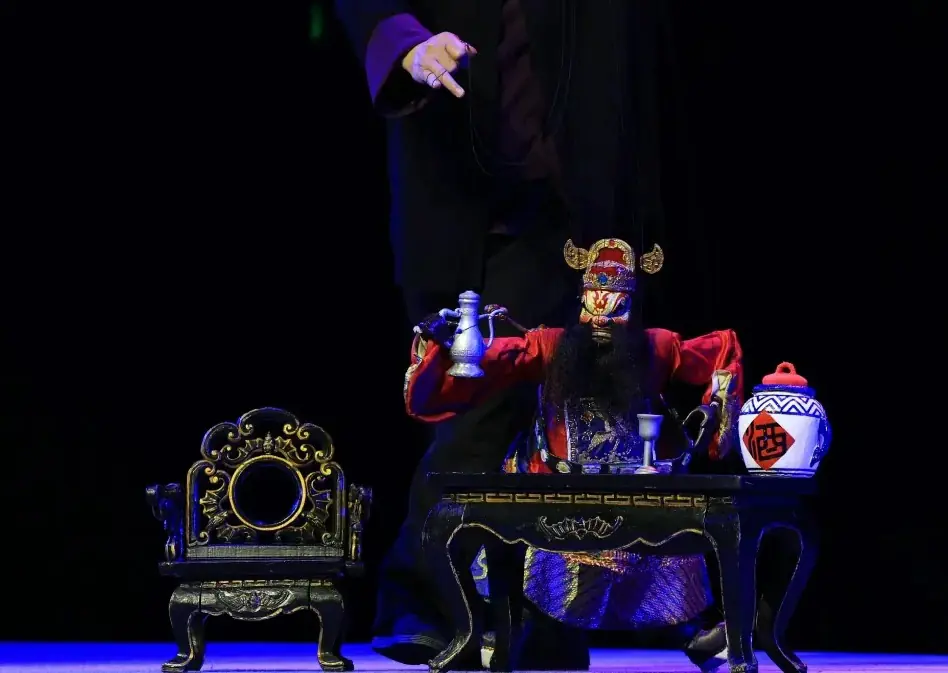
🎼Puppet Melody (傀儡调)
Quanzhou preserves a distinct vocal and instrumental system with hundreds of named tunes. The foot-operated drum (压脚鼓) and bronze gong (钲锣) help shape the fine rhythmic detail.
🪵Carved Faces
Head carving, costume, and silhouette establish character before the figure moves. Read the face and headdress first, then notice how gesture changes that fixed expression.
👀Visual Storytelling
Dialogue and singing carry cultural detail, but posture, rhythm, and comic timing provide a strong visual route through the scene. You may miss lyrics or jokes without Chinese, not the central movement.
Where to Watch in Quanzhou
Quanzhou’s current choices are not interchangeable. Start with the performance format: the Heritage Center’s repertory stage, an old-house culture program, or a commercial multi-segment experience. Then verify the exact date.
Official Heritage Center Program
Quanzhou Puppet Theater · repertory stage
July 2026 notice: Wednesday–Saturday at 18:00 and 19:30; Sunday at 15:30 and 17:00. The published run time was 60 minutes and seats were ¥30, ¥50, or ¥80.
Choose it for: the professional troupe and the clearest heritage-center context. The current theater is at 355 Quanshan Road (泉山路355号), outside the old-town walking loop below.
Su Tingyu Residence (苏廷玉故居)
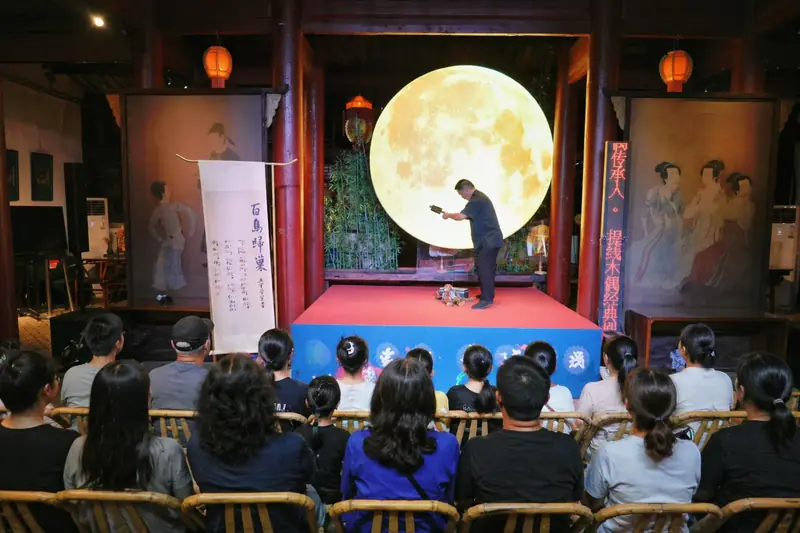
Old-house atmosphere · puppetry and music
Listing snapshot: ¥108+; Tuesday, Thursday, and Saturday at 19:15; about 60 minutes. The product combines an old-house setting with string puppetry, Southern Music (南音), and tea.
Choose it for: atmosphere and a compact evening culture program. The current listing says seating is not assigned and each attendee needs a ticket; check the live product again.
Kaiyuan Shengshi (开元盛世)
Frequent commercial format · interaction
Current listing: 14:00, 15:30, 17:00, 19:00, and 20:30, with holiday additions. Allow about 40 minutes for the show plus the advertised interaction.
Choose it for: schedule flexibility and a mixed program. A non-official planning example is about ¥100+; the listing describes one string-puppet and two glove-puppet (掌中木偶) segments, with package details subject to change.

Old-town map handoff
Two additional names require care:
- Current status
- Verified as a Heritage Center venue
- Planning implication
- Check for a Jiali-specific notice; do not assume the Quanshan Road timetable applies
- Current status
- A current regular puppet program was not confirmed in July 2026
- Planning implication
- Do not build the day around it unless a current dated listing appears
Tickets and Practical Tips
Use the channel that belongs to the venue you chose. The official theater publishes dated notices; the two commercial old-town options rely on their current product listings.
🎫How to Buy Tickets
For the official program, start with the Quanzhou Marionette Theater Heritage Center’s dated show notice and ticket channel. For Su Tingyu Residence or Kaiyuan Shengshi, use the current venue product page. You choose, book, and pay the venue or seller directly.
📱Booking Interface
A Chinese booking interface may request a local account or phone number, but that is an interface condition rather than a general passport rule. If a form blocks you, ask the venue which current channel accepts your details before assuming walk-up entry.
👀Where to Sit
Front-center makes the small gestures and string control easier to read. At Su Tingyu Residence, the current listing says seats are not assigned and children have a front viewing area, so arrive with enough time to follow the on-site arrangement.
📅Season and Demand
Indoor programs can run in any season, while Chinese New Year, Lantern Festival, and National Day periods can bring special programs and heavier demand. Treat any extra holiday show as date-specific until it appears in a current notice.
Each Venue Keeps Its Own Weekly Pattern
The official July 2026 program ran Wednesday through Sunday, while the Su Tingyu listing used Tuesday, Thursday, and Saturday and Kaiyuan Shengshi listed daily sessions. Check your exact date; “Monday closed” is not a reliable citywide rule.
Fitting Puppets into Your Quanzhou Visit
This route is for an old-town venue choice such as Su Tingyu Residence or Kaiyuan Shengshi. The current official Heritage Center program is at Quanzhou Puppet Theater on Quanshan Road, so plan a separate bus or taxi connection if that is your show.
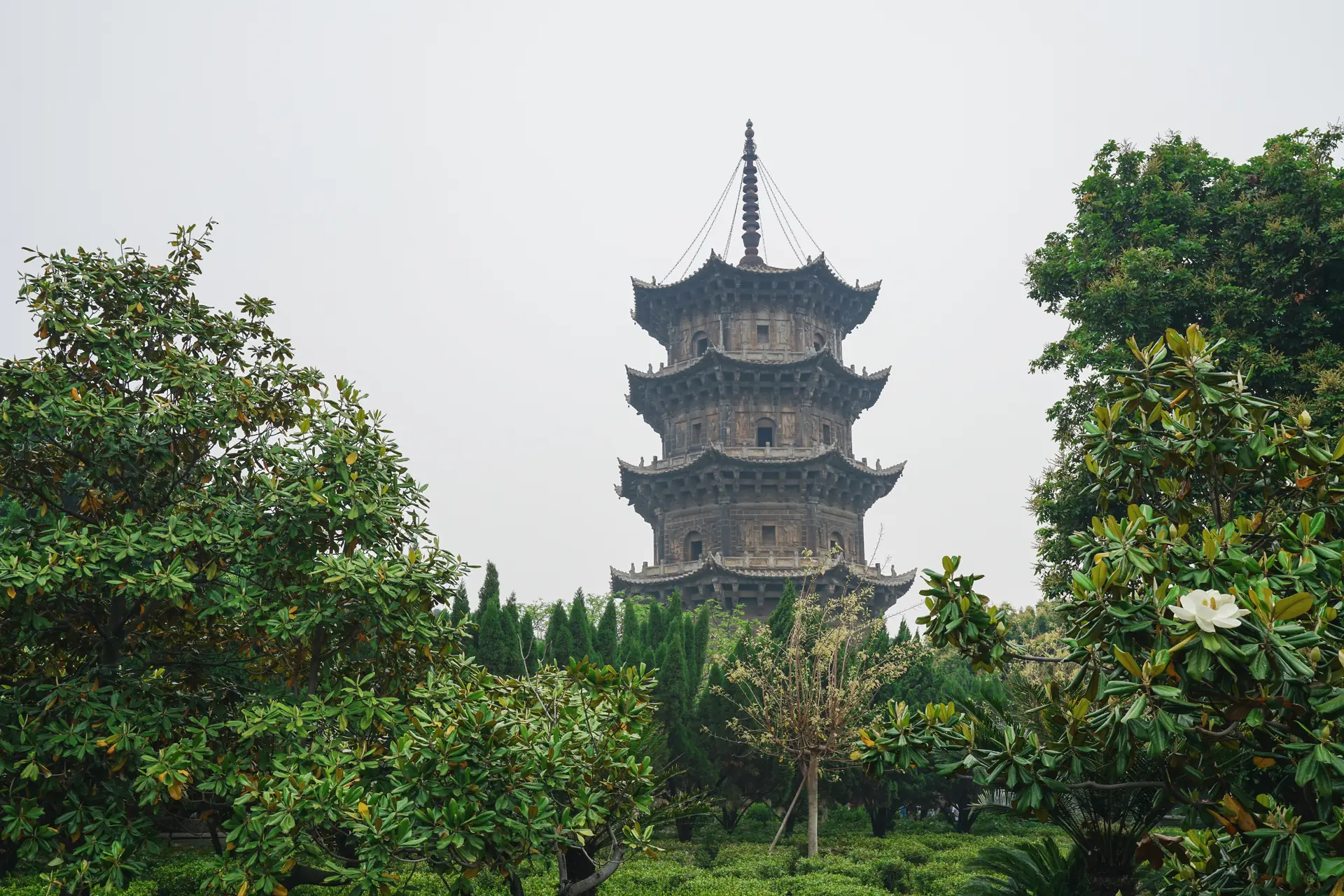
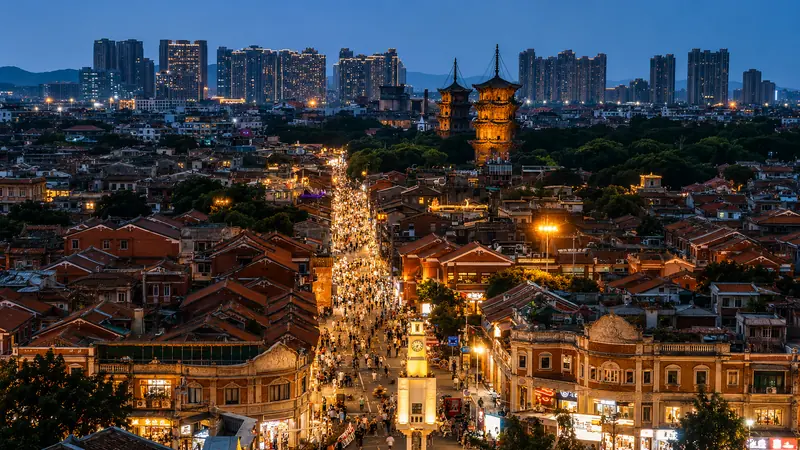
Treat the sequence as a flexible half-day loop, not a chain of five adjacent doors. Start around West Street and Kaiyuan Temple (开元寺), move east through the old town, and use the performance as the indoor anchor.
The final return to West Street retraces part of the route. Walk only if your energy and weather allow; a short local ride can make the evening finish easier.
- Kaiyuan Temple(开元寺)- See the twin pagodas and the west end of the old town first
- Tongzheng Alley(通政巷)- Use the Jiali map point for context or attend Su Tingyu Residence only when your date is confirmed
- Qingjing Mosque(清净寺)- Continue east for a different layer of Quanzhou’s maritime history
- Guandi Temple(关帝庙)- Add the busy worship space if opening conditions and your pace allow
- West Street Dinner(西街)- Return west for noodle paste, oyster omelette, or spring rolls; a local ride may be easier
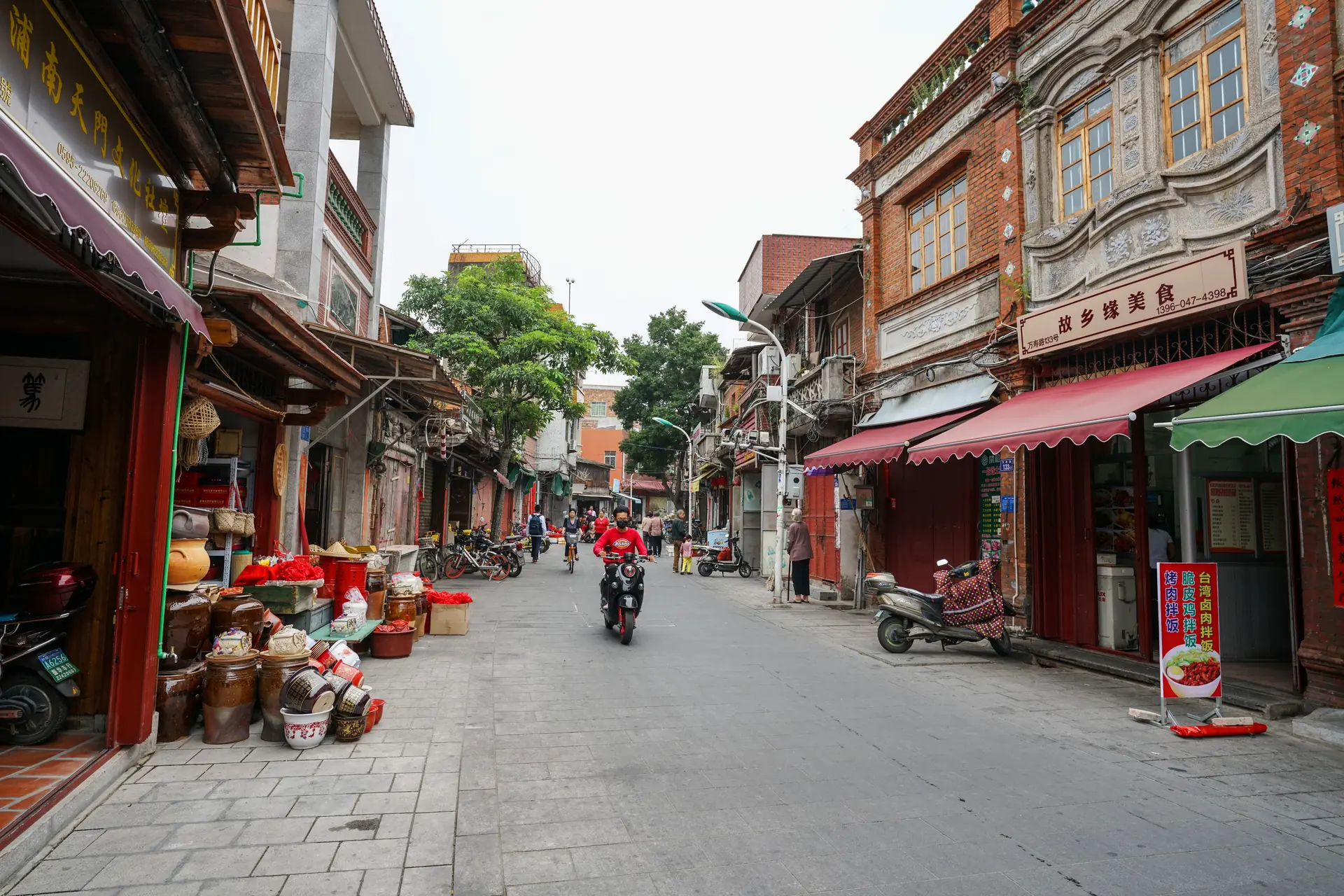
Tongzheng Alley is a route hinge, not the center of every show plan. It links the Jiali and Su Tingyu map points to the wider old town, but the Quanshan Road official theater sits outside this walking sequence.
For a two-day stay, keep Day 1 focused on the old town and puppetry. On Day 2, add Luoyang Bridge (洛阳桥) or Xunpu Fishing Village (蟳埔村) instead of forcing both into the same heritage walk.
What Most Visitors Get Wrong
These are better treated as viewing corrections than warnings. The art becomes easier to appreciate once you stop measuring it against a toy show or a fixed tourist timetable.
🎭It Is Only for Children
The acrobatic and comic scenes are family-friendly, but the form has more than 700 preserved traditional plays, formal training, national heritage status, and UNESCO recognition for its safeguarding strategy.
🧵All Marionettes Work the Same Way
Quanzhou’s system combines dense string control, a preserved musical language, carved character types, and repertory training. Watch it on those terms rather than using another marionette tradition as the benchmark.
🌍Chinese Is Required
You may miss lyrics, jokes, and some cultural references, but posture, rhythm, and comic timing still carry the central movement. “Language-light” is more accurate than “no Chinese needed.”
📅It Only Happens at Festivals
Festivals can add atmosphere and sessions, but current indoor programs also run on published weekly patterns. Choose the venue first and confirm the exact date instead of relying on a citywide rule.
Frequently Asked Questions
The visual comedy and acrobatic movement can work well for families, especially from a close seat, but there is no universal 3+ rule across venues. Check the selected product’s child and ticket policy; the current Su Tingyu listing requires one ticket per attendee.
Sources checked for this guide
- UNESCO Intangible Cultural Heritage: 2012 Register of Good Safeguarding Practices entry and the scope of the recognized training strategy
- Ministry of Culture of China: 2006 first national intangible cultural heritage list
- Quanzhou Marionette Theater Heritage Center: official history, preserved repertoire, music system and current institution
- Quanzhou Culture, Radio, Television and Tourism Bureau: July 2026 official theater schedule, duration and ¥30/50/80 seat prices
- Fujian Provincial Government: current national/UNESCO status wording and nearly-70-country touring reach
- Current Su Tingyu Residence listing: dated commercial price, schedule, duration, seating and ticket snapshot
- Current Kaiyuan Shengshi listing: current address, session pattern, approximate duration and interaction format
Beyond This Guide
Quanzhou layers temple streets, maritime history, Southern Music, puppetry, bridges, and coastal village traditions into a compact trip.
Explore more shows and performances:
- Suzhou Pingtan & Kunqu: China's Most Refined Stage Arts — two UNESCO art forms in one city, from teahouse storytelling to garden opera
- Tianmen Fox Fairy: Zhangjiajie's Canyon Musical — a five-act musical in a real canyon with a 60m flying bridge
- Princess Wencheng: Lhasa's Epic at 3,700 Meters — an 800-performer historical epic at the world's highest stage
- Impression Lijiang: The Snow Mountain Show at 3,100 Meters — Zhang Yimou's open-air show with Jade Dragon Snow Mountain as the backdrop
© gochinafreely.com — Original guide by Go China Freely.