Walk basics
The latest official notices we could confirm list Kaiyuan entry to 17:40 and Qingjing Mosque at ¥3; check same-day venue notices before setting out. See current planning notes
Route decisions
Zayton's Old City in One Walk
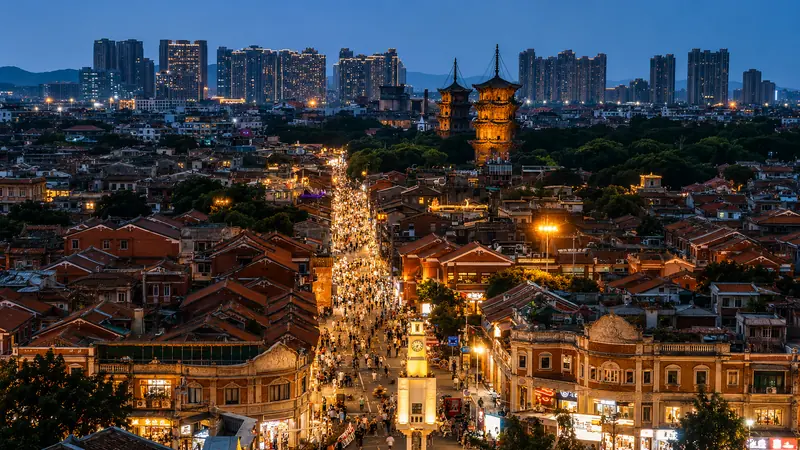
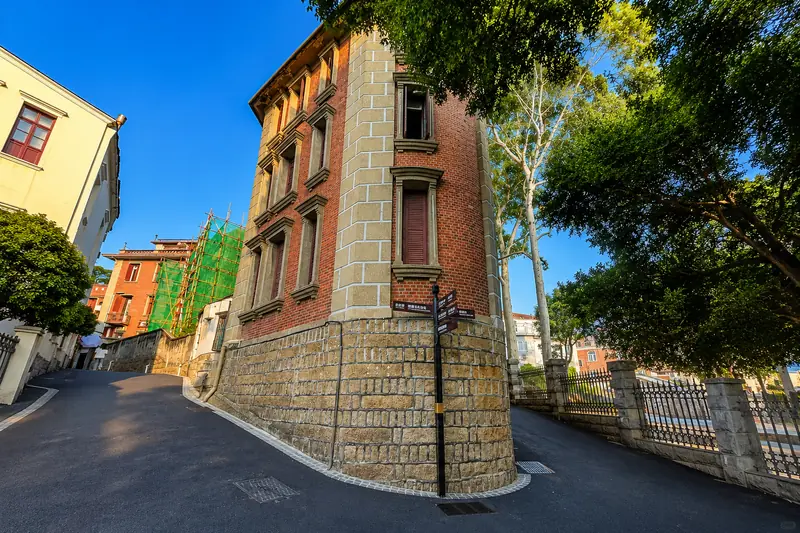
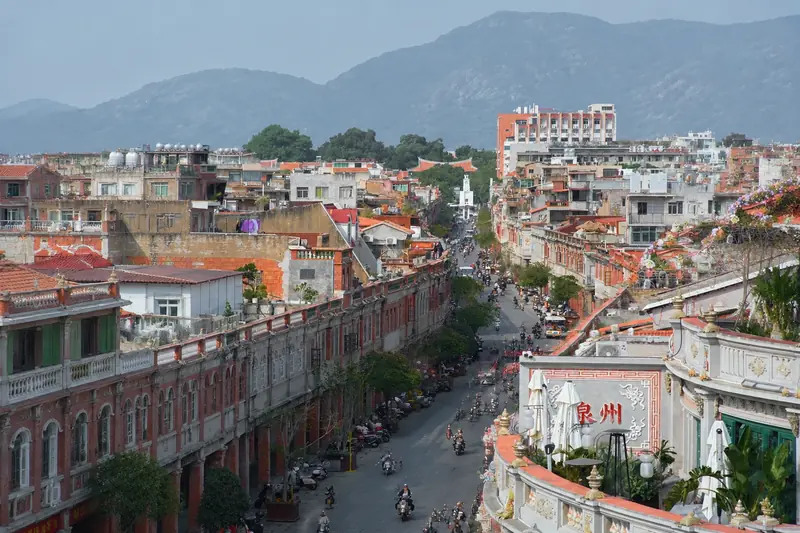
Quanzhou Ancient City is not a theme street pretending to be old. In one half-day walk, you move from an arcade spine of about 2.4 km to twin Buddhist pagodas, an early Islamic mosque, a smoky local shrine, and a sea-goddess temple facing the old harbor direction. Use this route when you want the practical walk first and the UNESCO story to make sense as you go.
10th-14th c.
Maritime Peak
22
UNESCO Components
~2.4 km
Arcade Spine
UNESCO describes Quanzhou as a Song-Yuan maritime trade hub active from the 10th to 14th centuries. The property is not one monument: Quanzhou's official protection rules identify 22 representative component sites across religious buildings, administrative remains, bridges, docks, production sites, pagodas, inscriptions, and transport links.
For a first visit, stay in the old-town core rather than chasing all 22 representative historic sites across the wider city. Kaiyuan Temple (开元寺), West Street (西街), Zhongshan Road (中山路), Fu Confucian Temple (府文庙), Qingjing Mosque (清净寺), Tonghuai Guanyue Temple (通淮关岳庙), Tianhou Temple (天后宫), and the Site of Deji Gate (德济门遗址) already show the city's range.
That mix is what makes Quanzhou different from many Chinese old towns. The route is not just pretty paving and snacks. It lets you read a port city in layers: Buddhist institutions, overseas trade, Islamic community history, Confucian education, local temple life, sea-goddess worship, and a commercial street shaped by rain, heat, and Southeast Asian connections.
1Trade City
Quanzhou's old core was tied to sea trade, inland production, religious communities, and official maritime administration.
2Faith Mix
Buddhist, Islamic, Confucian, Taoist, folk, and sea-goddess sites sit close enough to connect on foot.
3Living Streets
Zhongshan Road and West Street still carry shops, residents, food, shade, and everyday old-city movement.
Quanzhou Ancient City Half-Day Route
For a first visit, use this as the authoritative walking order. It starts with a short northern loop through West Street and Kaiyuan Temple, then follows the old-city spine south toward the harbor-facing temples.
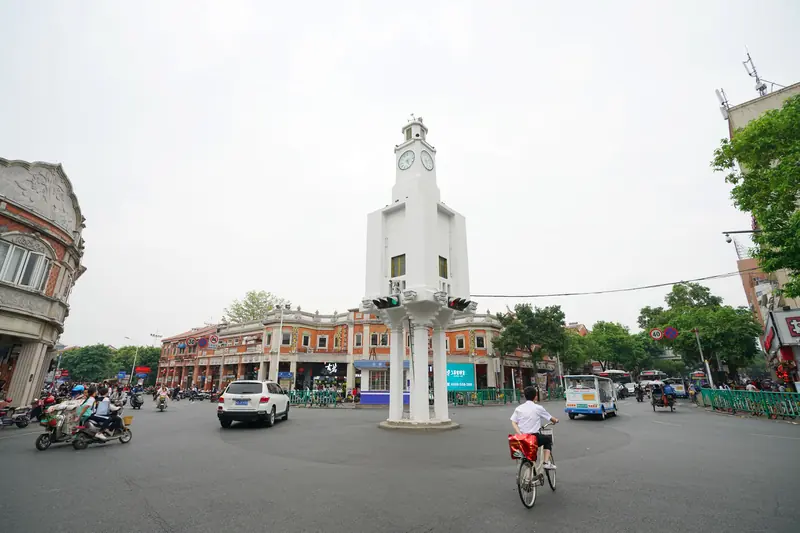
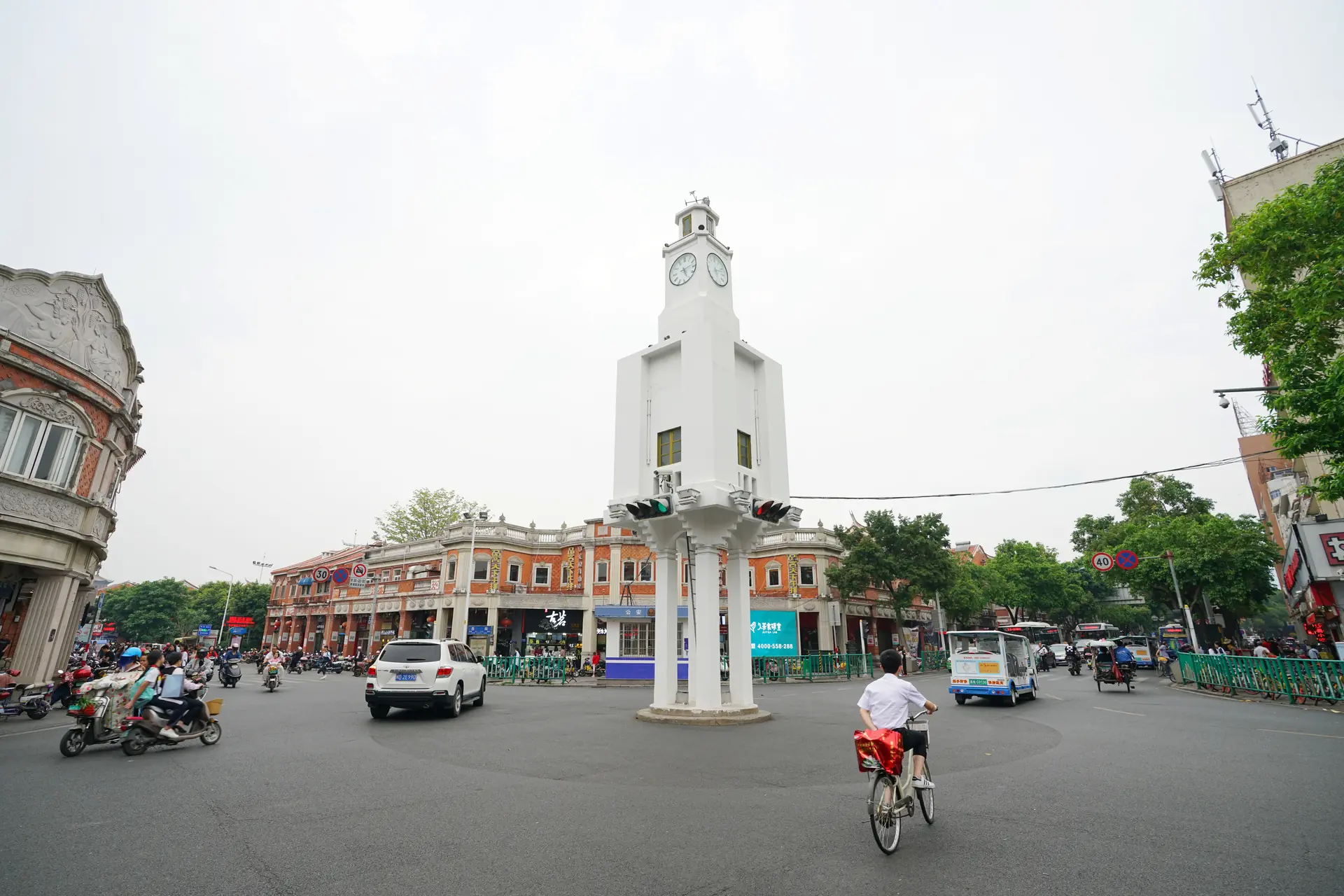
- Bell Tower(钟楼)- Simple old-city meeting point near West Street
- West Street(西街)- Street food, old shops, and twin pagoda views
- Kaiyuan Temple(开元寺)- Largest extant Buddhist temple complex in Fujian
- Xiaoxicheng(小西埕)- Short creative-lane detour, optional
- Zhongshan Road(中山路)- About 2.4 km of continuous arcade street
- Fu Confucian Temple(府文庙)- Quiet courtyard and Confucian education history
- Qingjing Mosque(清净寺)- Founded in 1009, a key UNESCO component
- Tonghuai Guanyue Temple(通淮关岳庙)- Local incense, roof details, and daily worship
- Tianhou Temple and Site of Deji Gate(天后宫 / 德济门遗址)- Sea-goddess worship and the old south-gate harbor memory
3.5-5h
Route Time
4-5 km
Walking
North-south
Main Direction
9
Core Stops
Start marker: Bell Tower (钟楼)
Use it as the meeting point before turning west for Kaiyuan Temple.
Quanzhou Bell Tower (Google | Amap)The straight version takes about 3.5 hours. The better version takes closer to 5 hours, because Kaiyuan Temple, Zhongshan Road, Qingjing Mosque, and Tianhou Temple all deserve pauses. The ground is mostly flat, but summer humidity and holiday crowds make the route feel longer than the map suggests.
Start around 08:30-09:00 if you want quieter West Street and Kaiyuan Temple photos. If you are staying near West Street, the reverse route also works in late afternoon: begin around Tianhou Temple and Deji Gate, walk north through Zhongshan Road as lights come on, then finish with West Street snacks.
Use the small white shuttle only as a helper
Quanzhou's small white electric shuttles (小白) are useful when someone in your group gets tired around West Street, Zhongshan Road, or Tumen Street. A 2026 district report still describes the public sightseeing fare as RMB 2. Treat the vehicles as short-hop support rather than a strict schedule tool, and confirm live service in the “多彩泉行” mini-program.
West Street and Kaiyuan Temple Towers
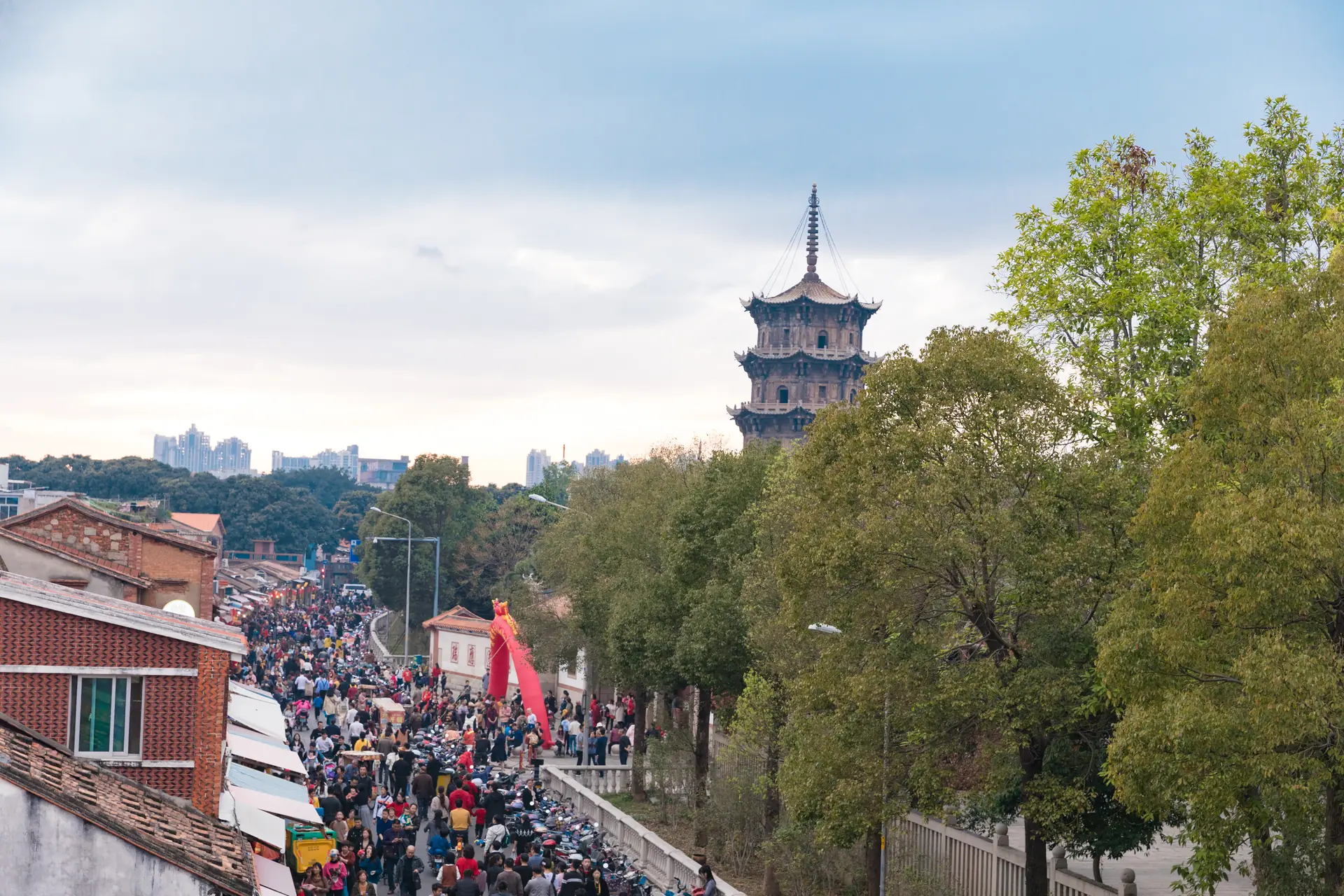
West Street: the route entrance
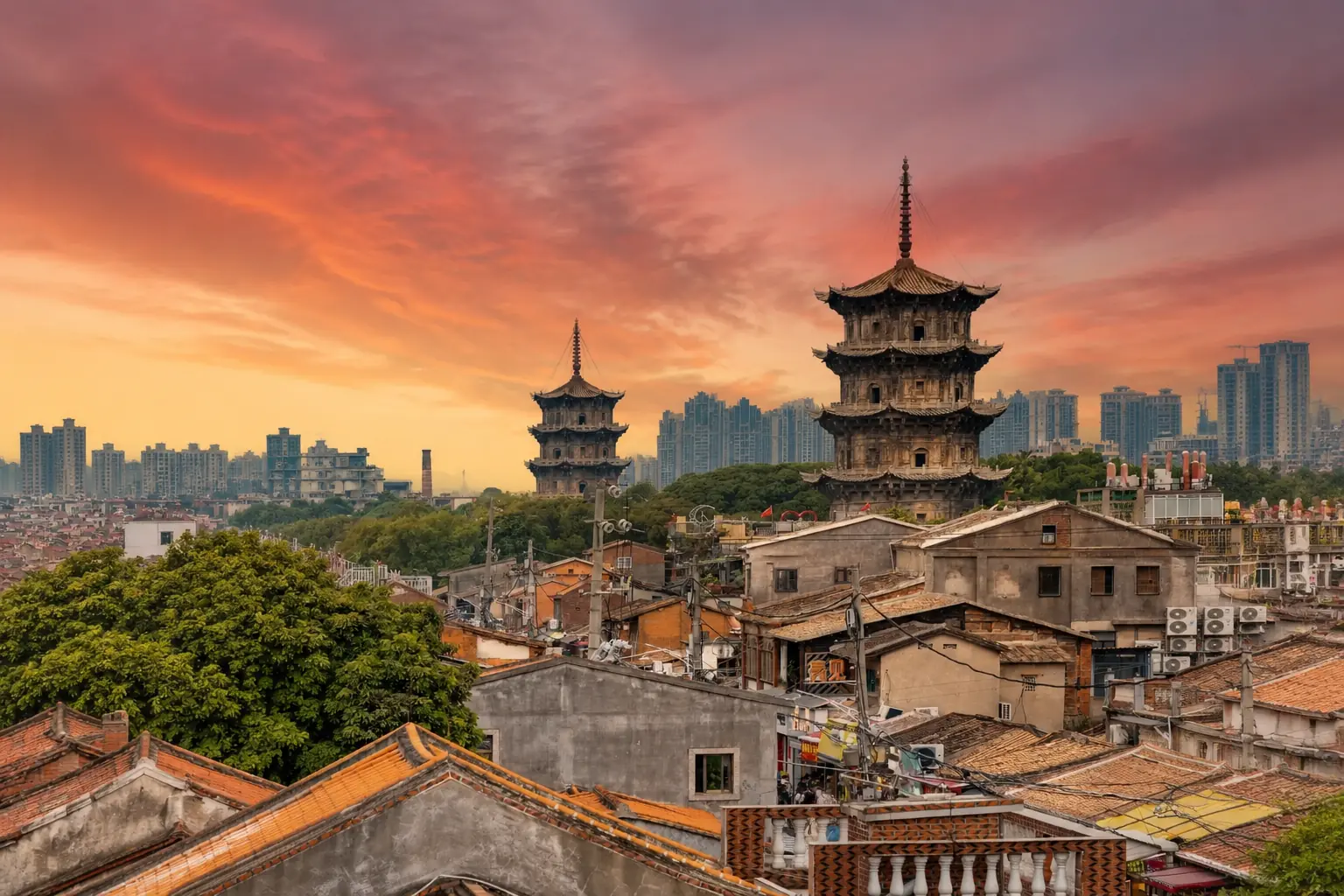
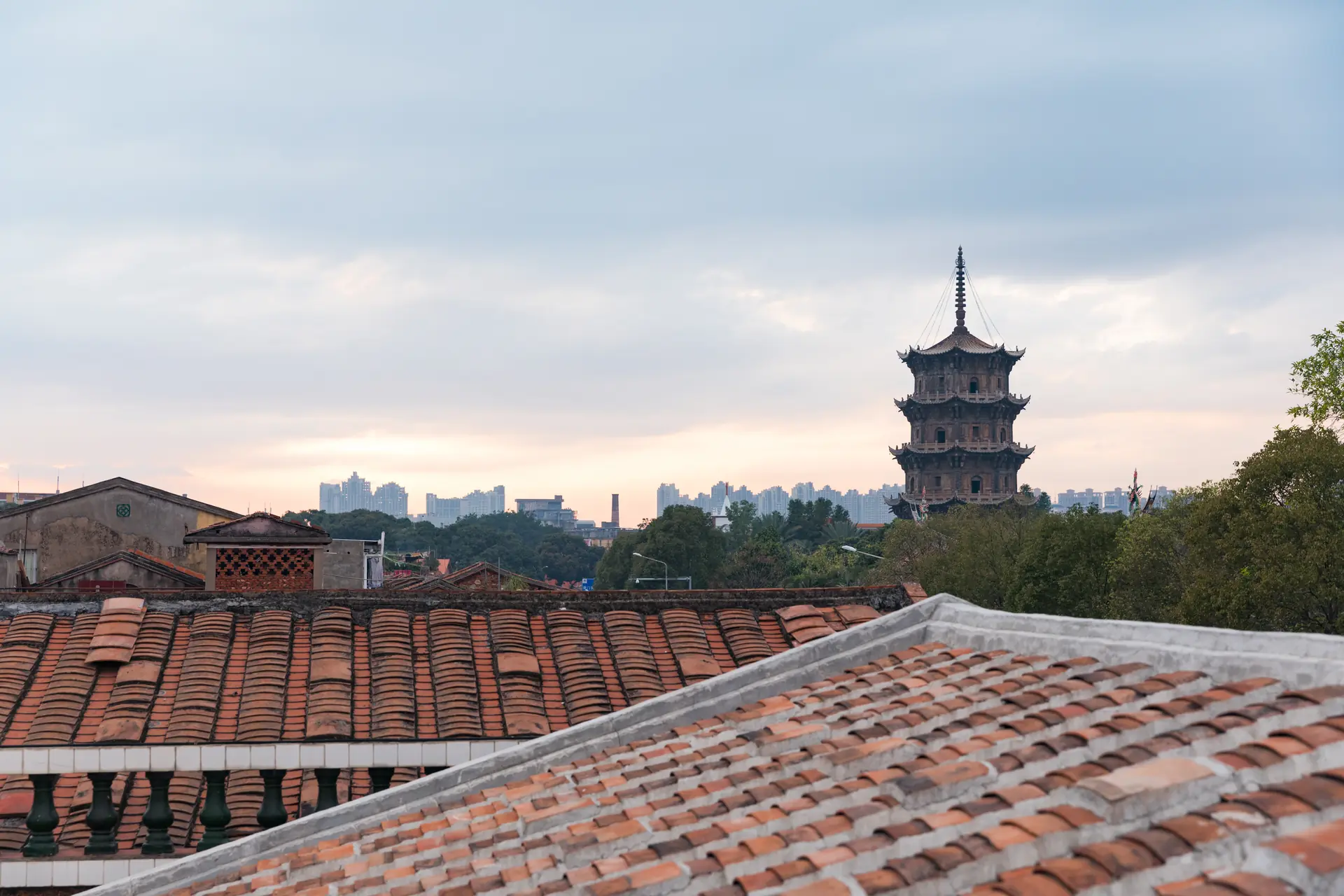
It is the classic first scene of Quanzhou: old storefronts, snack windows, side lanes, rooftops, and the twin stone pagodas rising over the street.
It is also commercial and sometimes crowded. That is not a reason to skip it. Walk early, keep your camera low enough to include the street, and use the pagodas as orientation rather than as the only photo you chase.
Kaiyuan Temple: the main heritage anchor
The official heritage page says Kaiyuan Temple was founded in 686, covers about 70,000 square meters, and is the largest extant Buddhist temple complex in Fujian Province.
Do not rush straight to the pagodas and leave. Look for Buddhist halls, Hindu reliefs, stone pagoda carvings, and architectural details that only make sense in a trade city. This is the quickest way to understand that Quanzhou's UNESCO story is about exchange, not a single dynasty style.
Kaiyuan Temple (Google | Amap)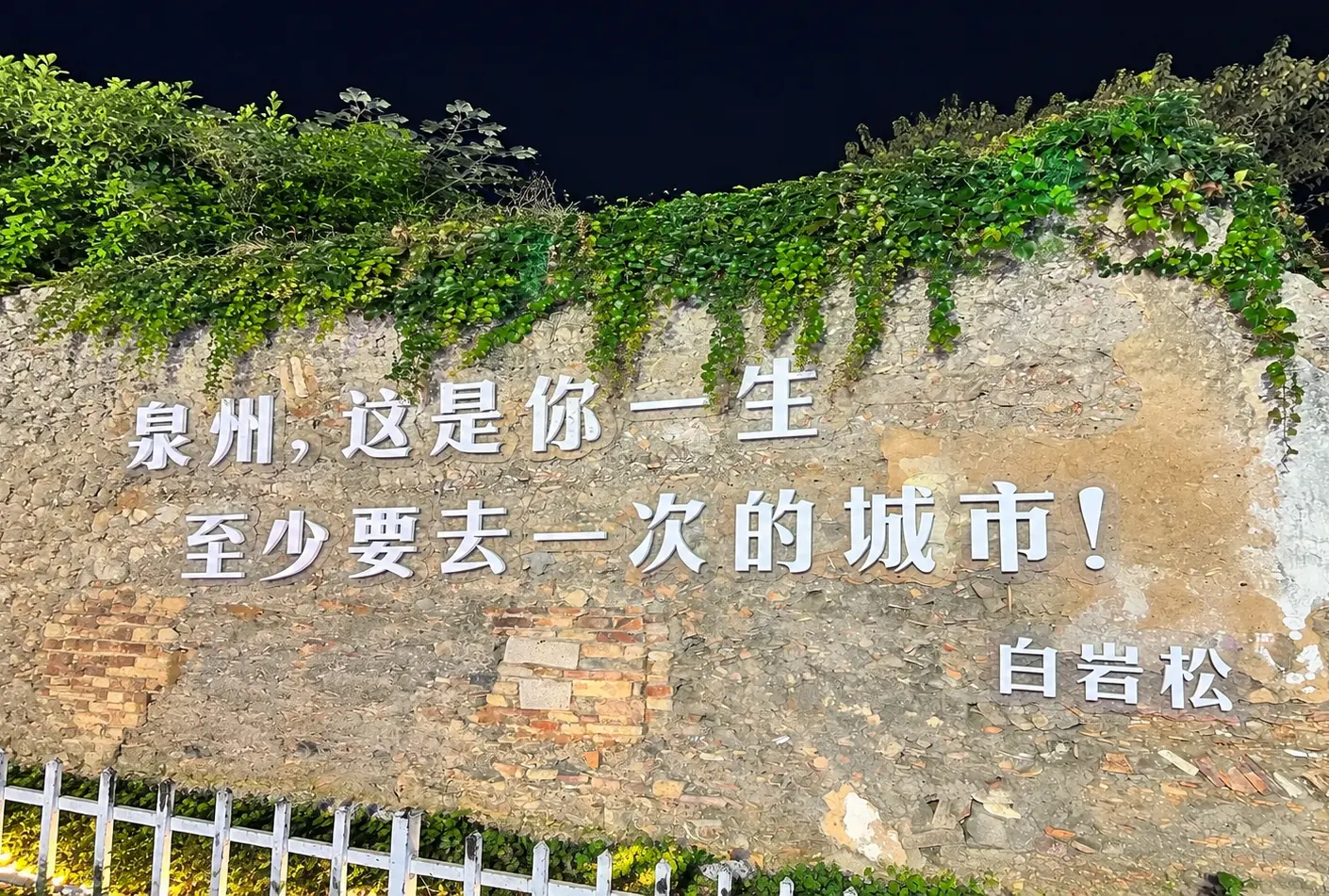
Optional pause: Xiaoxicheng (小西埕)
It is useful for a drink, a photo, or a short pause between the temple and Zhongshan Road.
Keep it short if this is your only Quanzhou day. The lane is a rhythm change, not the reason to steal time from Kaiyuan Temple or the southern heritage corridor.
Xiaoxicheng (Google | Amap)Zhongshan Road's 2.4 km Arcade Walk
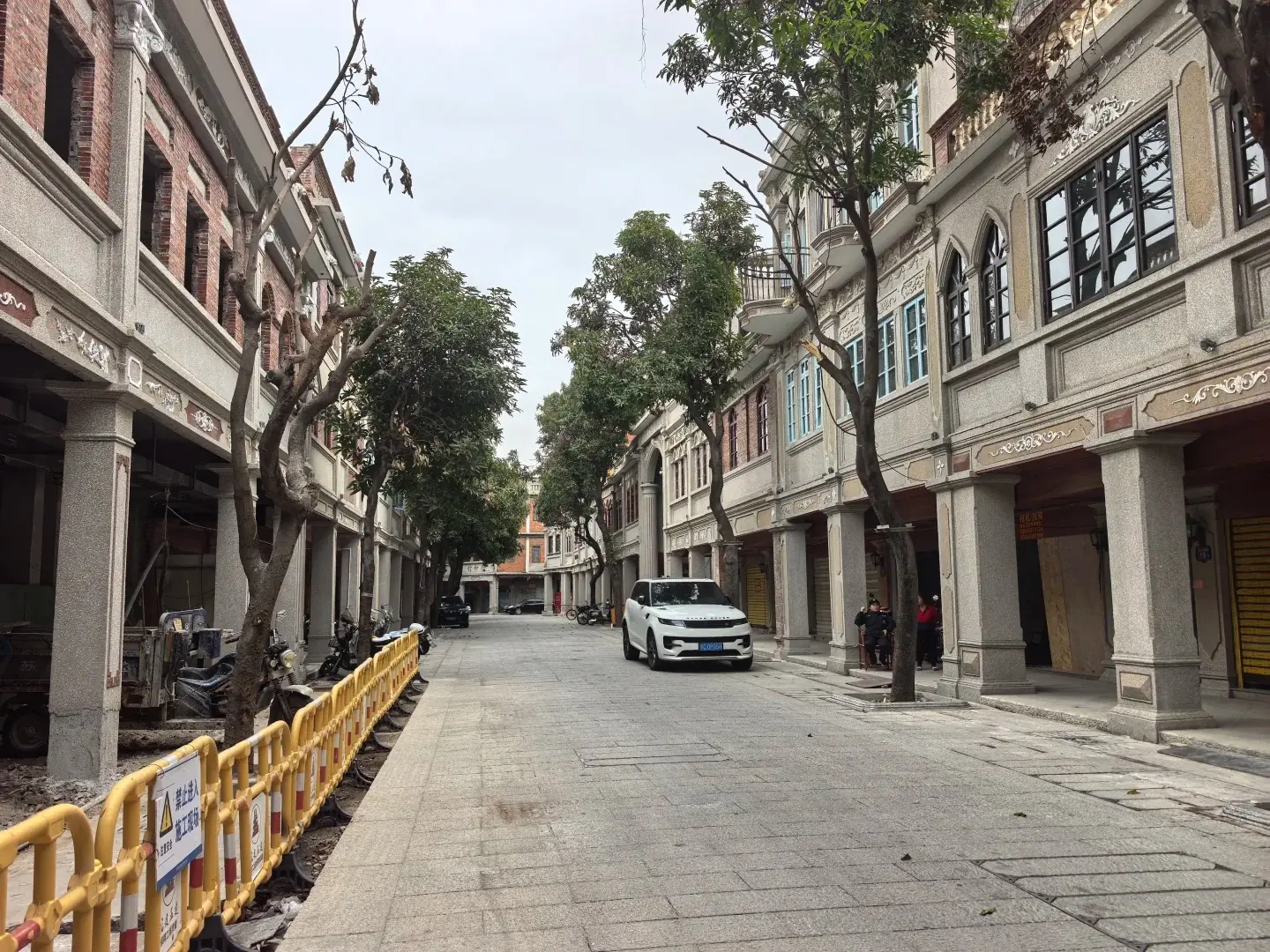
Zhongshan Road is the article's main street and the part many first-time visitors underrate. A 2024 Quanzhou government overview gives the arcade district's length as 2,392 meters, so this guide rounds it to about 2.4 km. Earlier official protection reports describe the continuous commercial arcade as China's only and best-preserved example, or as its longest and best preserved; treat those as attributed municipal descriptions rather than a universal ranking.
Read the arcade as infrastructure
The recessed ground floor creates a connected covered walkway, so the street works in heat and rain. Shops sit below, living or storage space often sits above, and the colonnade ties separate buildings into one walking experience.
Walk slowly enough to notice the differences between facades. Some sections feel polished, others still feel local. That unevenness is part of the appeal.
Zhongshan Road (Google | Amap)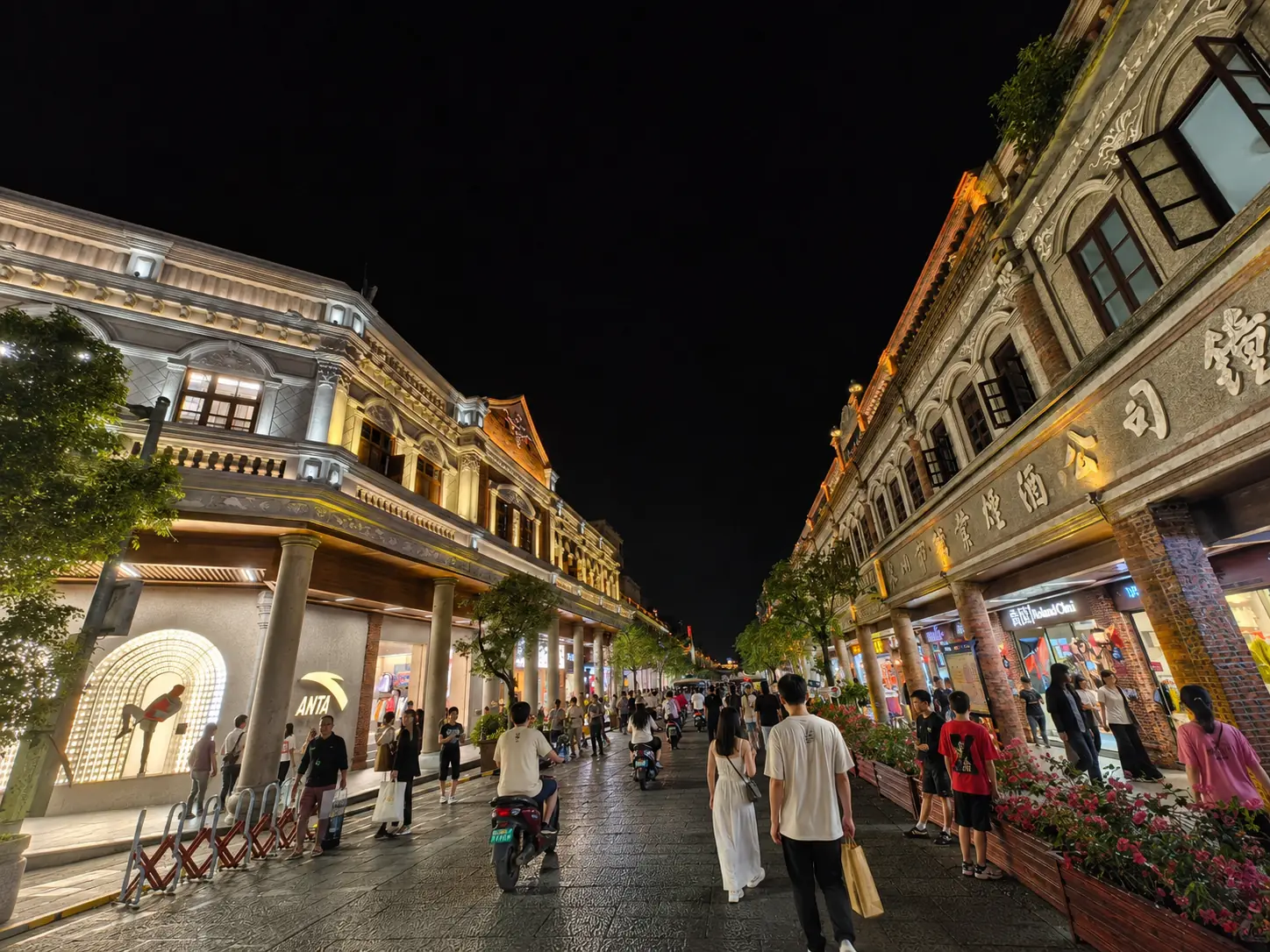
Choose your photo window
Early morning gives quieter shopfronts and cleaner geometry. Early evening gives lights, busier street life, and a stronger sense of the 2.4 km arcade line.
Midday is better for detail shots and snack breaks than big street views. The covered walkway helps, but humid weather still makes the route feel longer.
Rain Is Not a Bad Day Here
Light rain can make Zhongshan Road more interesting, not less. The arcades keep the walk manageable, and the street suddenly explains itself: shade, shelter, commerce, and daily life under one continuous roofline.
Tumen Street's Faith Corridor Walk
Turn from Zhongshan Road toward Tumen Street (涂门街) and Quanzhou's religious layering becomes very direct. Qingjing Mosque and Tonghuai Guanyue Temple sit close together, but they feel like different worlds: stone Islamic remains on one side, dense incense and local devotion on the other.
This chapter groups the two neighboring faith sites so you can compare them. It does not replace the numbered route: on the actual southbound walk, Fu Confucian Temple comes before Qingjing Mosque and Guanyue Temple.
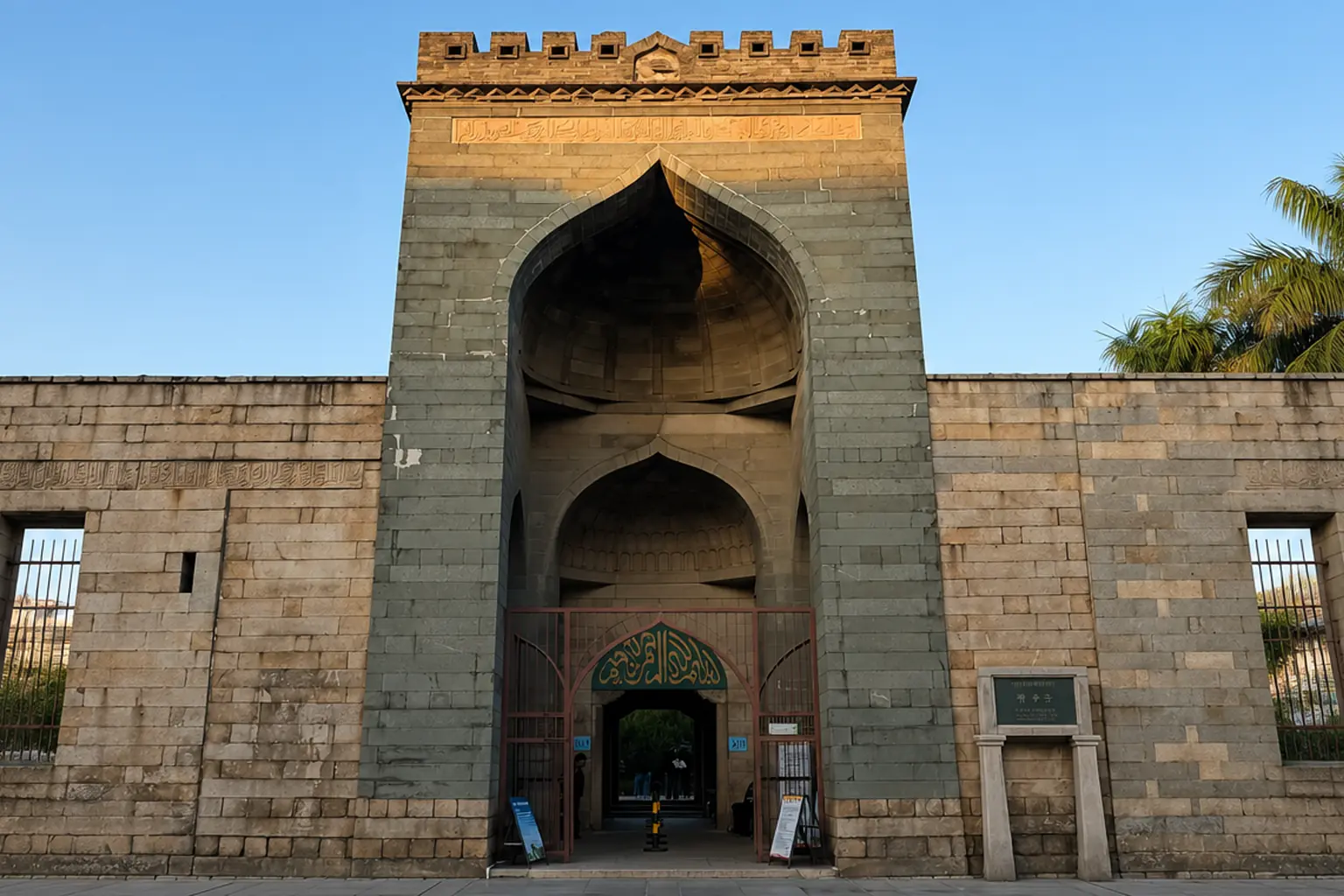
The official Qingjing Mosque heritage page says the mosque, originally Masjid al-Ashab, reflects the foreign communities active in Song-Yuan Quanzhou. Go for the stone gate tower, prayer-hall remains, steles, and the sense of an Islamic quarter inside a Chinese port city.
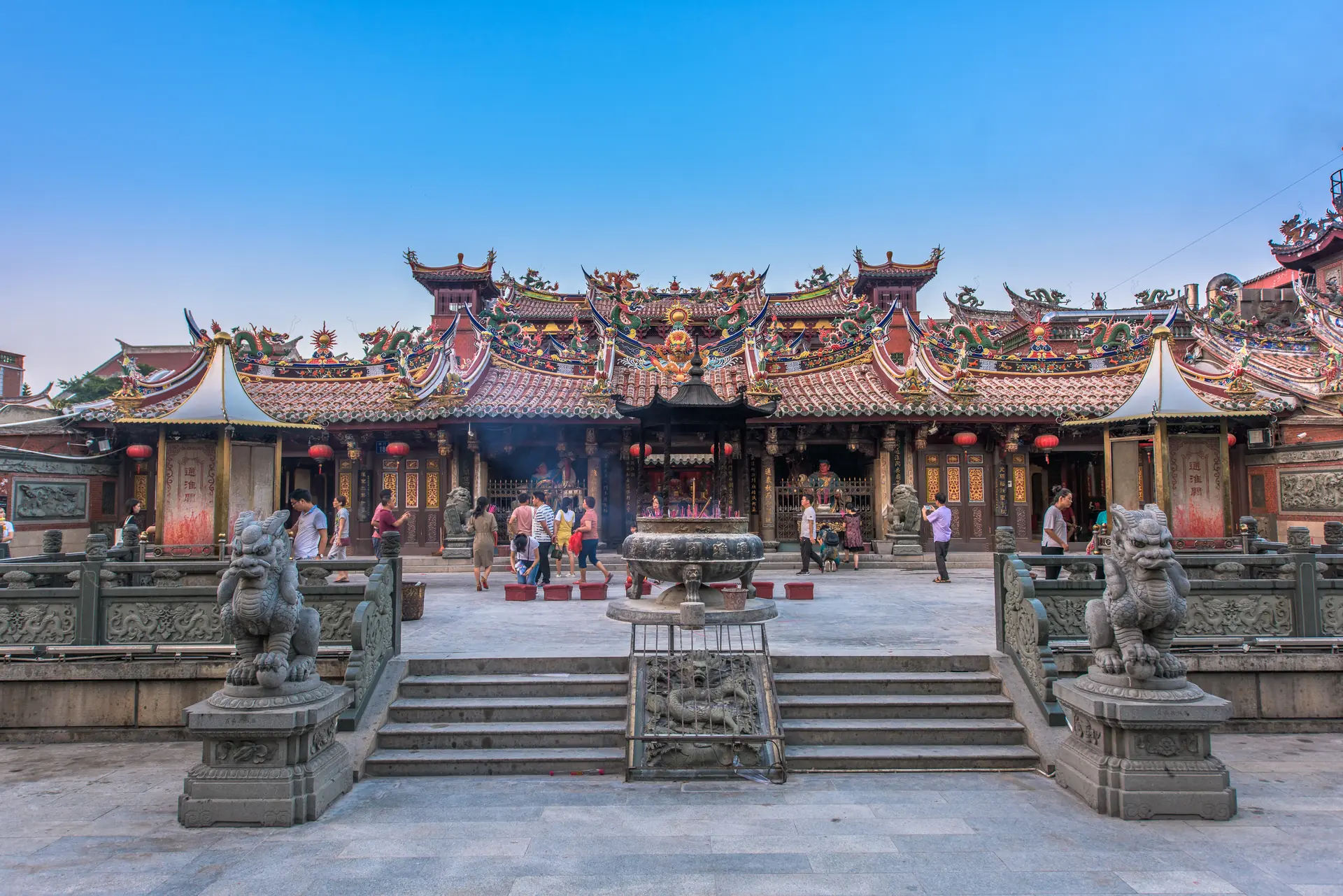
This is where the walk turns from heritage label to living practice. Expect smoke, roofline detail, local worship, and a much busier emotional atmosphere than the mosque. Keep photos respectful and avoid blocking worshippers.
Planning scan: an official Licheng heritage route lists Qingjing Mosque at RMB 3 and 08:00-17:30. Treat both as planning references and confirm at the gate. Tonghuai Guanyue Temple is generally free, but arrangements can shift with holidays, maintenance, or religious activity. Detailed operating notes are grouped below under “Best Times, Tickets, and Transport.”
Confucian Temple to Tianhou Palace
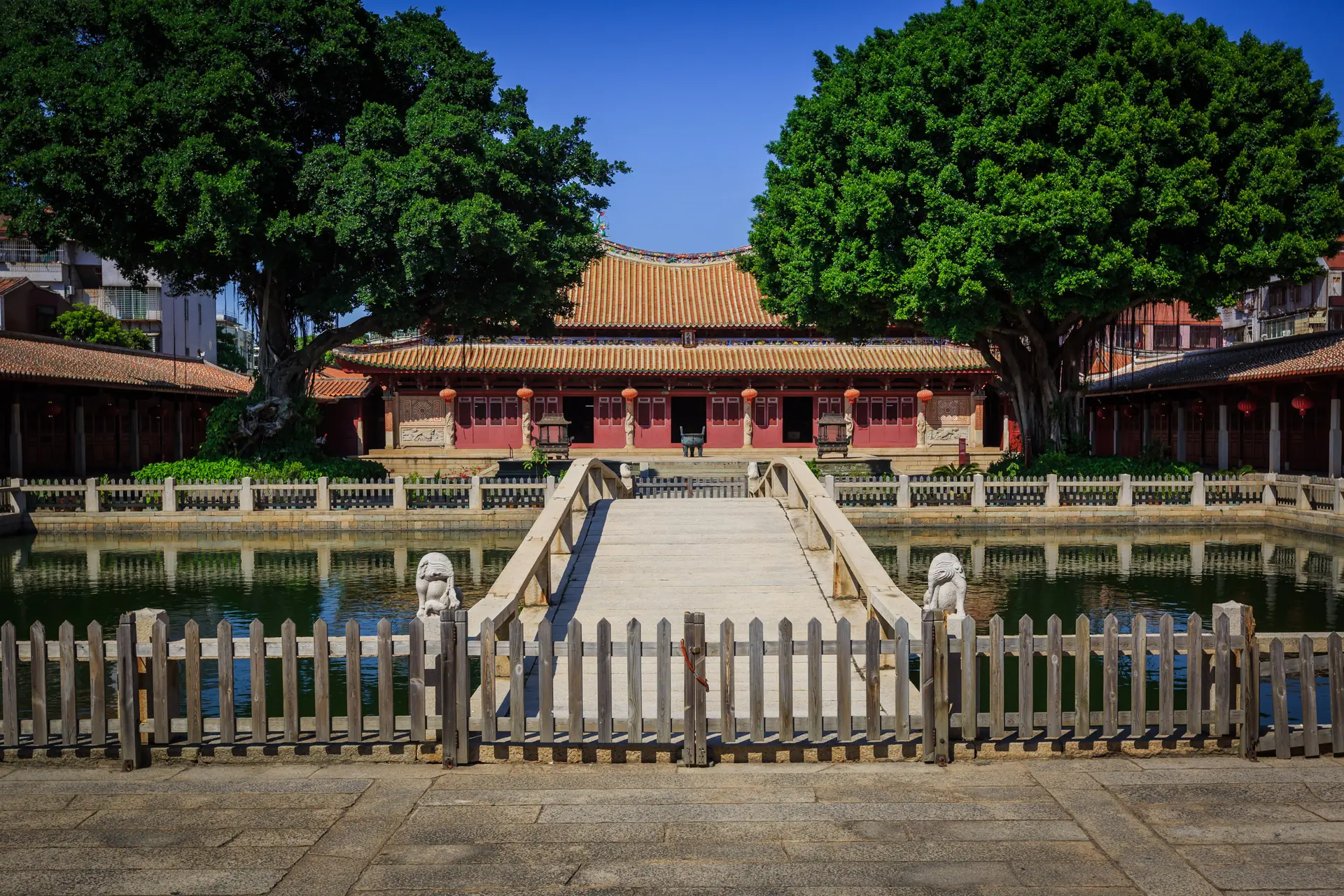
Fu Confucian Temple: the education layer
The official heritage page says Quanzhou Fu Confucian Temple (泉州府文庙) began in 976, with its main layout formed in 1137.
The formal space feels very different from West Street and Tumen Street. Use it as a reset: quieter courtyards, ceremonial architecture, and the education layer of a city better known abroad for maritime trade.
Quanzhou Fu Confucian Temple (Google | Amap)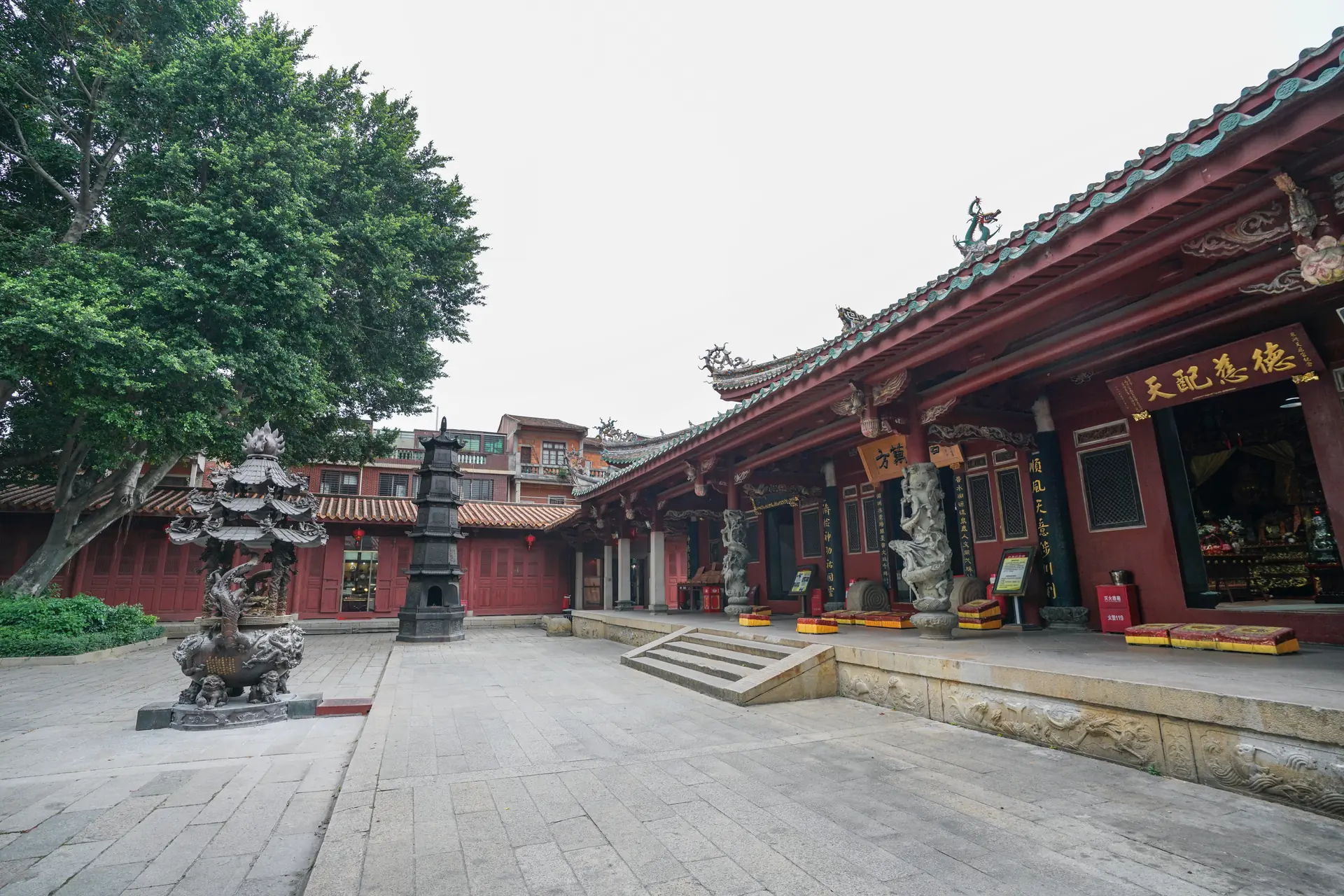
Tianhou Temple and Deji Gate: back to the harbor
The official heritage page says Tianhou Temple was first built in 1196 and is dedicated to the sea goddess (妈祖) linked with maritime trade and coastal communities.
The nearby Site of Deji Gate matters because it makes the old city feel less inland. South gate, temple, river, docks, and trade routes belonged to the same urban logic.
Tianhou Temple (Google | Amap)Site of Deji Gate (Google | Amap)If you still have energy, walk toward the river afterward and let the route end with water rather than another shopfront.
Quanzhou Food Breaks on the Route
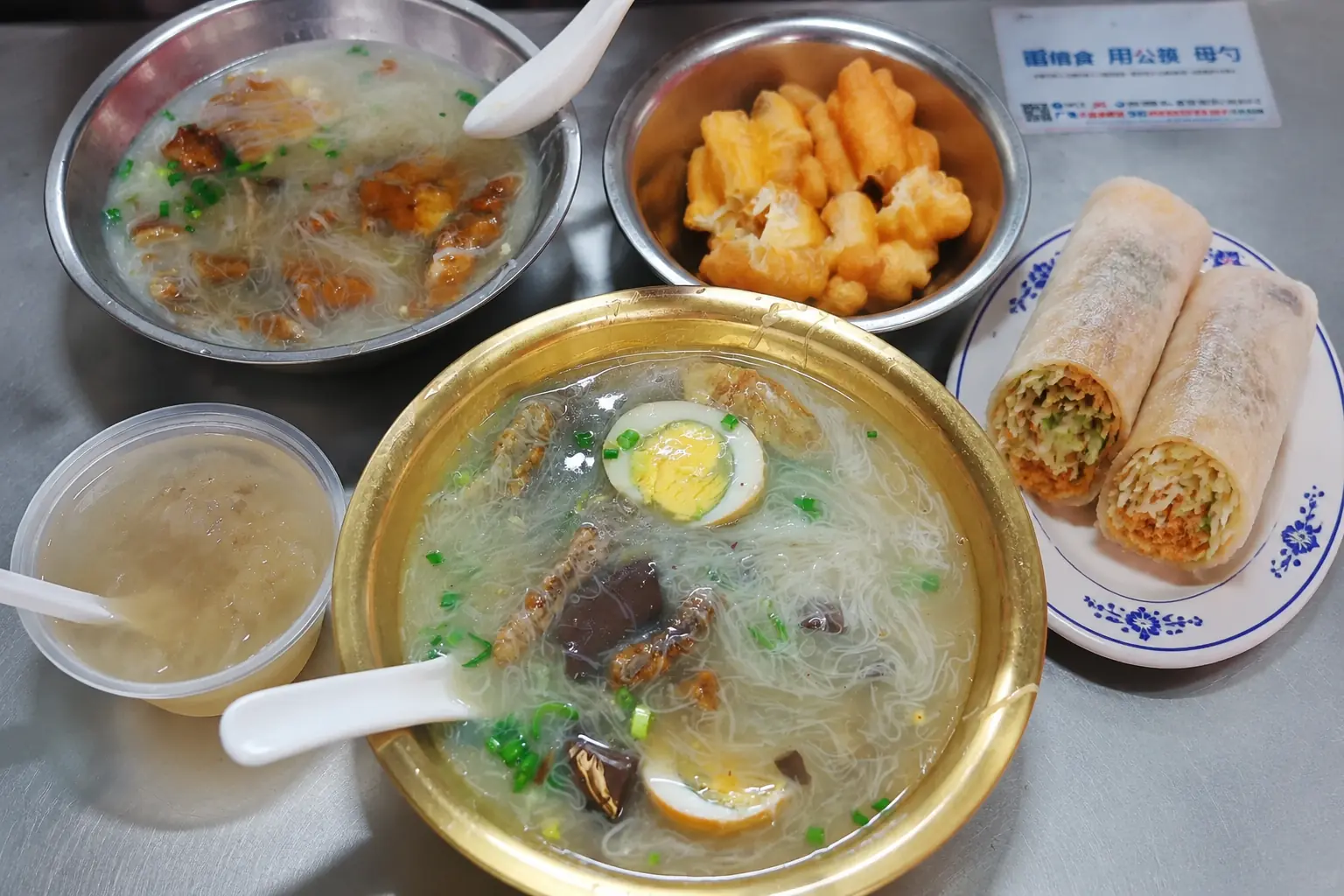
Let food support the route
Quanzhou is snack-dense, but this walk works better when you eat by category instead of chasing one viral shop.
If a line is long, keep moving and eat the same kind of snack elsewhere. The old city has enough options that one queue should not break your walking rhythm.
1Morning Bowl
Try silky wheat-noodle soup (面线糊) near West Street before the day turns hot and crowded.
2Walking Snack
Soft spring-roll wrap (润饼) is easier between stops than a heavy sit-down meal.
3Heat Break
Stone-flower jelly (石花膏) or four-fruit sweet soup (四果汤) makes sense when the afternoon humidity starts to win.
Save ginger duck (姜母鸭) for dinner if you can. It is rich, heavy, and better after the walk than halfway through it. A full duck meal before Qingjing Mosque and Tianhou Temple is a small act of self-sabotage.
Best Times, Tickets, and Transport
AMWeekday Morning
Best for West Street, Kaiyuan Temple, and arcade details. Start around 08:30-09:00 if photos matter.
PMLate Afternoon
Best for Zhongshan Road lights, Tianhou Temple colors, and a slower dinner finish.
Zhongshan Road and West Street
Free street access; shops keep individual hours.
Kaiyuan Temple
Free. A 2024 city answer says no reservation; the later district notice lists entry from 06:30 to 17:40 and closure at 18:30. Confirm the current notice before visiting.
Qingjing Mosque
An official district heritage route lists RMB 3 and 08:00-17:30. Confirm at the gate.
Guanyue Temple / Tianhou Temple
Generally free temple access; respect worship activity and live venue arrangements.
Small white shuttle (小白)
A 2026 district report still gives the sightseeing fare as RMB 2. Use it as a fatigue helper and check live service.
- Wear grippy shoes. Stone lanes and temple courtyards can be slippery after rain.
- Carry small cash. Most payment is digital, but tiny tickets or older snack stalls may still be easier with cash.
- Do not over-schedule. Four or five meaningful stops are better than sprinting through every heritage name.
- Use taxis at the edge. Old-city streets can jam, so walking plus short shuttle hops often beats door-to-door rides.
Frequently Asked Questions
Yes. It is one of the easiest walks in China for seeing religious diversity, maritime trade history, arcade architecture, snacks, and daily old-city life in one compact route.
Sources checked for this guide
- World Heritage listing checked for the Song-Yuan maritime-emporium period, serial-property identity and component types: UNESCO — Quanzhou: Emporium of the World in Song-Yuan China
- Municipal protection rules checked for the 22 representative component sites and their associated settings: Quanzhou Municipal Government — World Heritage protection rules
- Current municipal overview checked for the 2,392-meter Zhongshan Road district length: Quanzhou Municipal Government — Quanzhou old-city overview
- Official protection reporting checked for the attributed only / best-preserved arcade description: Quanzhou Municipal Government — Zhongshan Road arcade protection
- Official heritage page checked for Kaiyuan Temple: 686 foundation, area and Fujian scale claim: Quanzhou Municipal Government — Kaiyuan Temple heritage page
- Municipal visitor answer checked for the no-reservation guidance: Quanzhou Municipal Government — Kaiyuan reservation answer
- Later district notice checked for the 06:30-17:40 entry / 18:30 closure schedule: Licheng District Government — Kaiyuan opening-hours notice
- Official heritage page checked for Qingjing Mosque: 1009 foundation and foreign-community context: Quanzhou Municipal Government — Qingjing Mosque heritage page
- Official district heritage route checked for the RMB 3 reference ticket and 08:00-17:30 planning window: Licheng District Government — heritage day route
- Official heritage page checked for Tianhou Temple: 1196 foundation and harbor-facing Mazu role: Quanzhou Municipal Government — Tianhou Temple heritage page
- Current district report checked for the ancient-city sightseeing shuttle: RMB 2 public fare: Licheng District Government — 2026 small-white shuttle report
Beyond This Guide
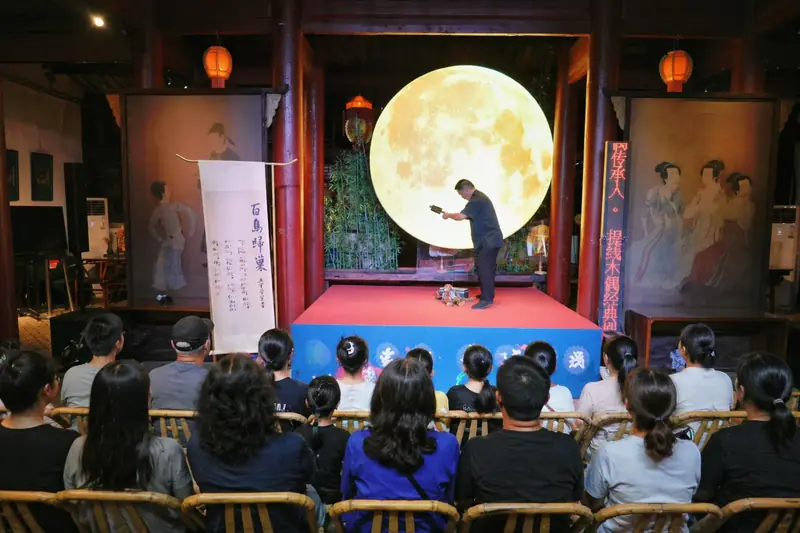
This route covers Quanzhou's old-city core: Zhongshan Road arcades, Kaiyuan Temple, Qingjing Mosque, Guanyue Temple, Fu Confucian Temple, Tianhou Temple, and Deji Gate. If you have two days, add Quanzhou marionettes, local music, the Maritime Museum, Qingyuan Mountain, Luoyang Bridge (洛阳桥), or Xunpu Village (蟳埔村) instead of forcing every layer into one afternoon.
More Fujian and Quanzhou ideas: Quanzhou Marionette Puppet Show / Gulangyu Island Guide / Xiamen Day Trip: Gulangyu and Coastal City / Fujian Tulou: Nanjing Guide
© gochinafreely.com — Original guide by Go China Freely.