Hours & Base Ticket
Essential Rules
A Car-Free Island of Music and Villas
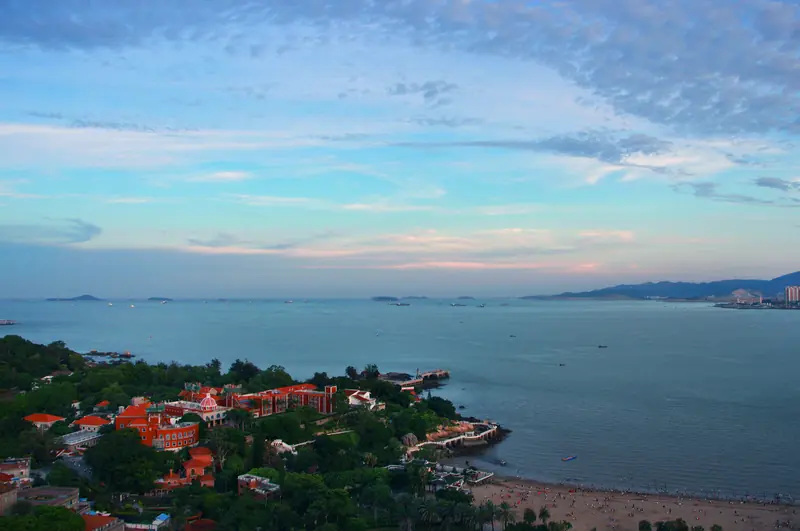
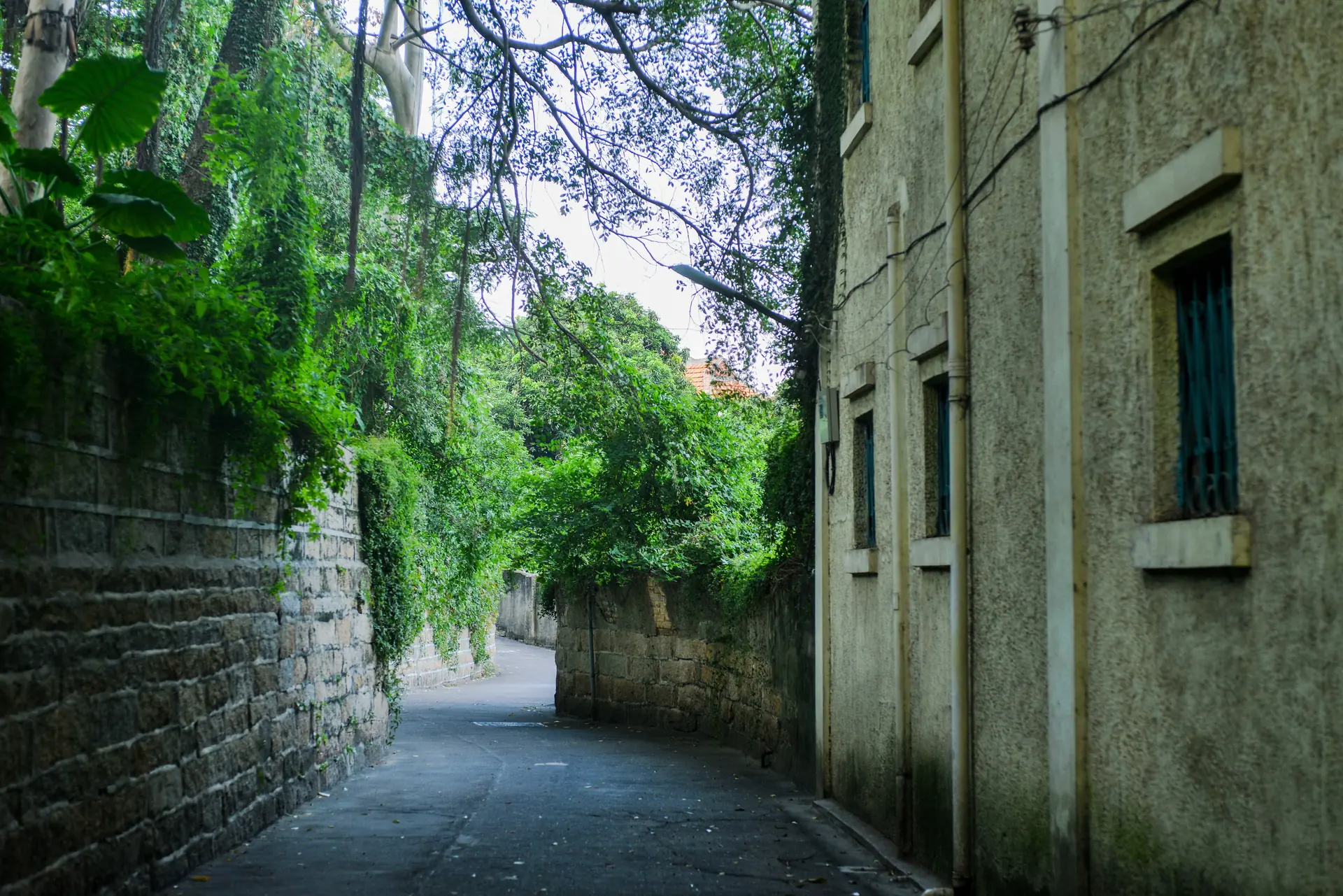
Gulangyu Island (鼓浪屿) is only about 600 meters from Xiamen Island, but it does not work best as a rushed attraction loop. Its real strength is slower: stone slopes without private cars, villa walls half-covered by trees, church towers above tiled roofs, and a piano culture that still shapes how the island imagines itself. Use this guide when you want to understand the pedestrian-only streets and music heritage behind the famous day-trip photos.
600 m
From Xiamen
2017
UNESCO
2-4h
Slow Walk
No Cars
Visitor Mode
The existing Xiamen day-trip route is the right place for an hour-by-hour plan: ferry timing, Sunlight Rock, Shuzhuang Garden, lunch, and mainland Xiamen in the afternoon. This guide has a narrower job. It treats Gulangyu as a walking heritage district, not as the morning block of a bigger itinerary.
1Lanes as the sight
UNESCO inscribed Kulangsu: a Historic International Settlement in 2017 for its road network, urban fabric, architecture, and cultural exchange. In traveler terms, the lanes between the sights are part of the sight.
2Not a checklist
If you already know you are going to Gulangyu, use this page to decide how to walk, what to notice, and how to avoid reducing the island to a summit photo and a snack street.
3Music and villas
The piano story, church spaces, villa walls, and side lanes make more sense when you treat Gulangyu as a lived-in heritage district rather than a set of paid stops.
Why Foot Traffic Changes the Island
Gulangyu is often called car-free or pedestrian-only. More precisely, ordinary visitors cannot bring private cars, motorcycles, scooters, or bicycles onto the island. You may still see public-service vehicles, cargo carts, sanitation vehicles, emergency access, and limited official electric sightseeing carts, but the visitor experience is overwhelmingly on foot.
The slow pace also makes the architecture easier to read: a corner wall, a second-floor balcony, a church roofline, a shaded staircase.
Do not start with Longtou Road
Longtou Road is useful for snacks and souvenirs, but it is the least subtle version of Gulangyu. Start from the side lanes near Sanqiutian Pier, then use the commercial street only when you need food, water, or an easy exit.
Walk Sanqiutian to the Villa Lanes
For this article's angle, Sanqiutian Pier (三丘田码头) is the easiest starting point. It puts you close to quieter northern lanes before the island funnels you toward the busier food streets. You do not need to follow every turn exactly; the point is to build a walk around texture rather than attractions.
- Sanqiutian Pier(三丘田码头)- Start in the quieter northern lanes before the island funnels toward snack streets
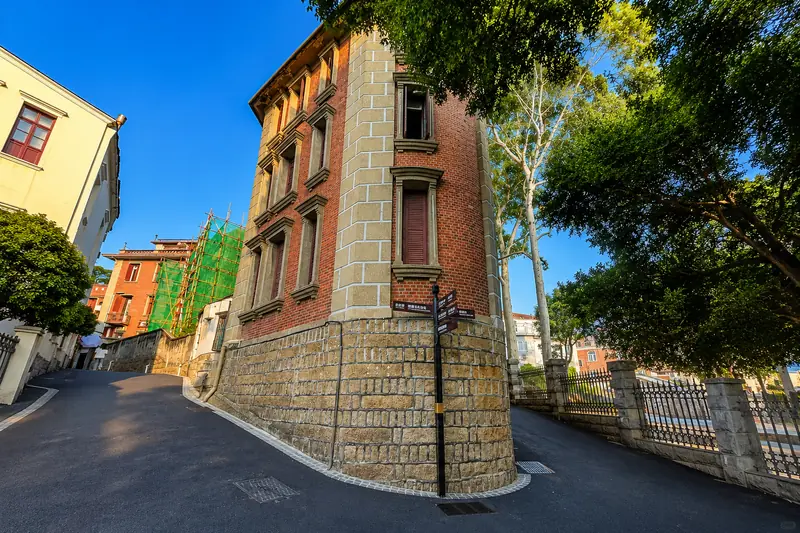
- Guxin Road ‘most beautiful corner’ area(鼓新路转角)- Use the familiar photo corner as an orientation point rather than a queue obligation
- Bagua Building / Organ Museum(八卦楼 / 风琴博物馆)- Continue south to the red dome, music history and overseas Chinese architecture
- Trinity Church(三一堂)- Pause outside to see how church space sits inside the lane network
- Fujian Road and Fuxing Road villas(福建路 / 复兴路)- Finish this linear sequence among gates, balconies and quieter residential turns

This version of the walk deliberately makes Sunlight Rock optional. If the summit is your priority, go early and use the day-trip article for timing. If your priority is the island's pedestrian identity, give that time to side streets, upper floors, old gates, and quiet corners where the sea suddenly appears between walls.
Piano Heritage Beyond the Museum Walls
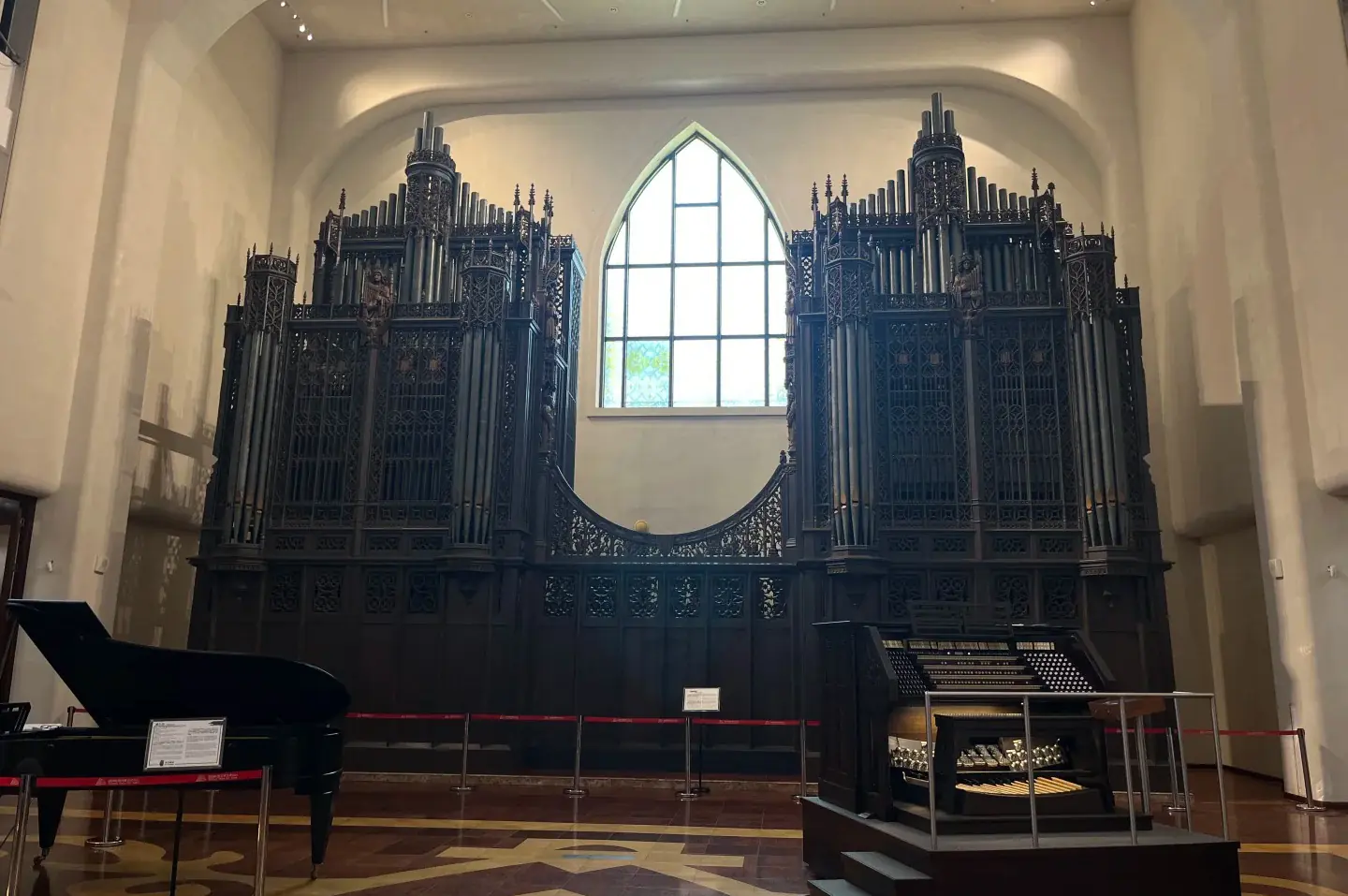
The organ display is a bridge into Gulangyu's wider keyboard-music heritage; the Piano Museum is a separate collection inside Shuzhuang Garden.
"Piano Island" is not just a tourist slogan. Gulangyu's music culture grew from overseas Chinese families, church education, school training, and modern island life. Many old villas once had music rooms, and the island still uses music as part of its public identity.
The most direct entry point is the Piano Museum inside Shuzhuang Garden (菽庄花园) (Google | Amap). It gives first-time visitors a visible version of the story: antique instruments, a seaside garden setting, and a link between private villas, education, and performance culture.
1Museum layer
The Piano Museum shows instruments and gives the clearest entry point if you only have time for one paid music stop.
2Church and school layer
Churches, choirs, and school training explain how music education took root in daily island life.
3Community layer
The strongest moments are often informal: a practice sound from a window, or a building where music is not performed for tourists at all.
If you care about instruments and architecture, pair the Piano Museum with the Organ Museum exterior or interior, then let the walk between them do some of the explaining.
Organs, Churches, and the Bagua Dome
The Organ Museum widens the island's music story. Gulangyu is branded through pianos, but its soundscape also grew through churches, choirs, organs, schools, and families who treated music as education as much as entertainment.
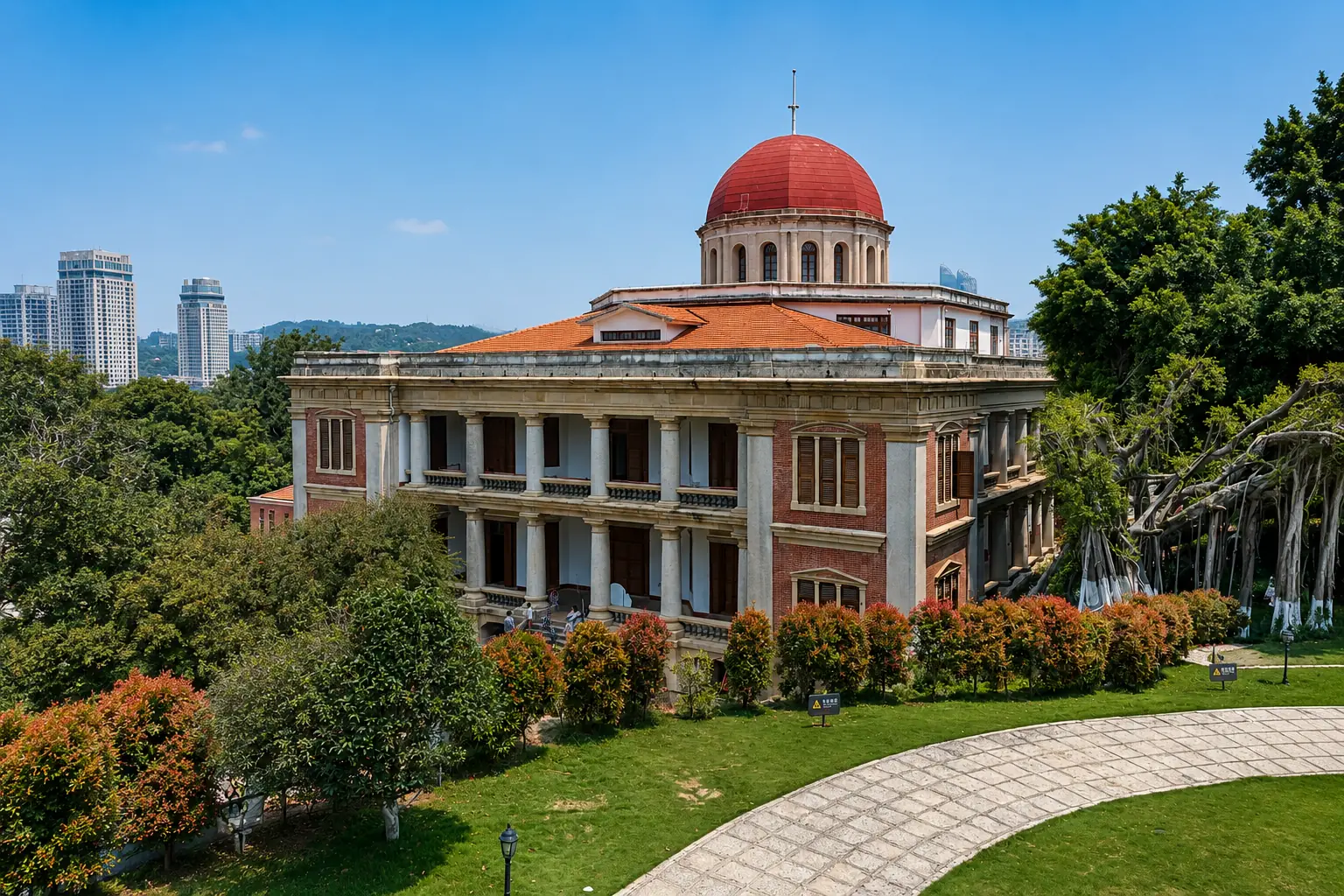
The Bagua Building's red dome and hybrid form make it one of the island's easiest landmarks to recognize. The building connects the music collection to overseas Chinese wealth, imported styles, and local reinvention.
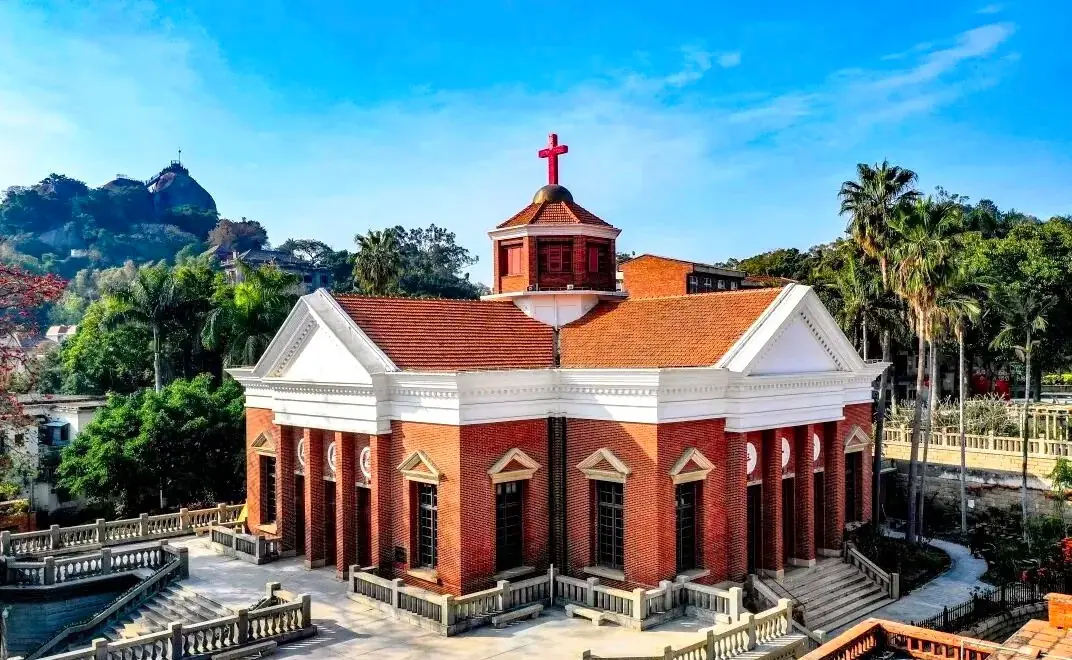
Trinity Church is not just a photo stop. Read it as cultural infrastructure: religious life, education, foreign presence, and local community overlapping inside a lane network rather than on a grand boulevard.
How to Read Amoy Deco Villas
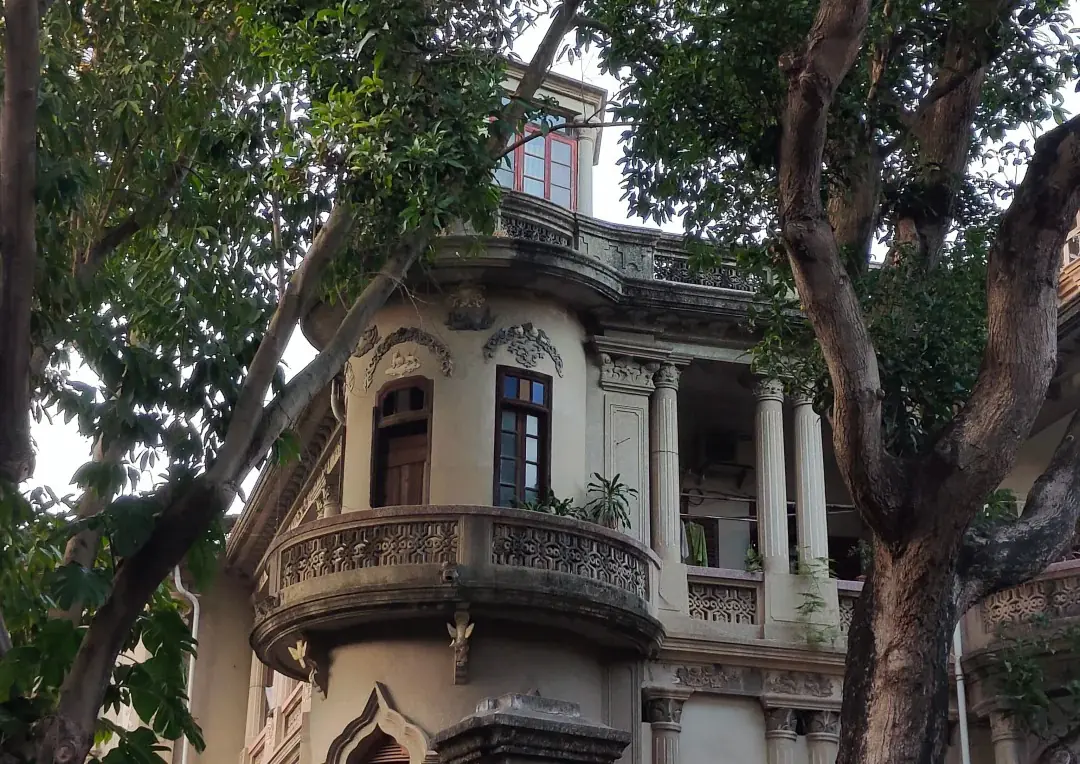
Gulangyu's architecture is often summarized as "colonial," but that is too flat. UNESCO highlights a mix of Southern Fujian traditions, Western Classical Revival, Veranda Colonial influences, and a local hybrid style often called Amoy Deco.
The best part is not that the island looks European. It is that many buildings combine Fujian, Southeast Asian, Western, and early modern Chinese details in one small district.
AVerandas and shade
Look for verandas built for humid weather, columns that frame shade, and upper-floor balconies that survived shopfront changes below.
BWalls and gates
Red brick, grey walls, tiled rooflines, boundary walls, and gate towers often tell more than the signboard outside.
CLook upward
Ground floors are often altered by shops, cafes, or guesthouses, while second floors and rooflines preserve older proportions more clearly.
Good free-walking zones include Guxin Road (鼓新路), Fujian Road (福建路), Fuxing Road (复兴路), Lujiao Road (鹿礁路), and Bishan Road (笔山路).
Look above the shopfronts
If you remember one architecture trick, make it this one. On Gulangyu, the second floor often tells a truer story than the first.
Quiet Lanes Are Still Residential Streets
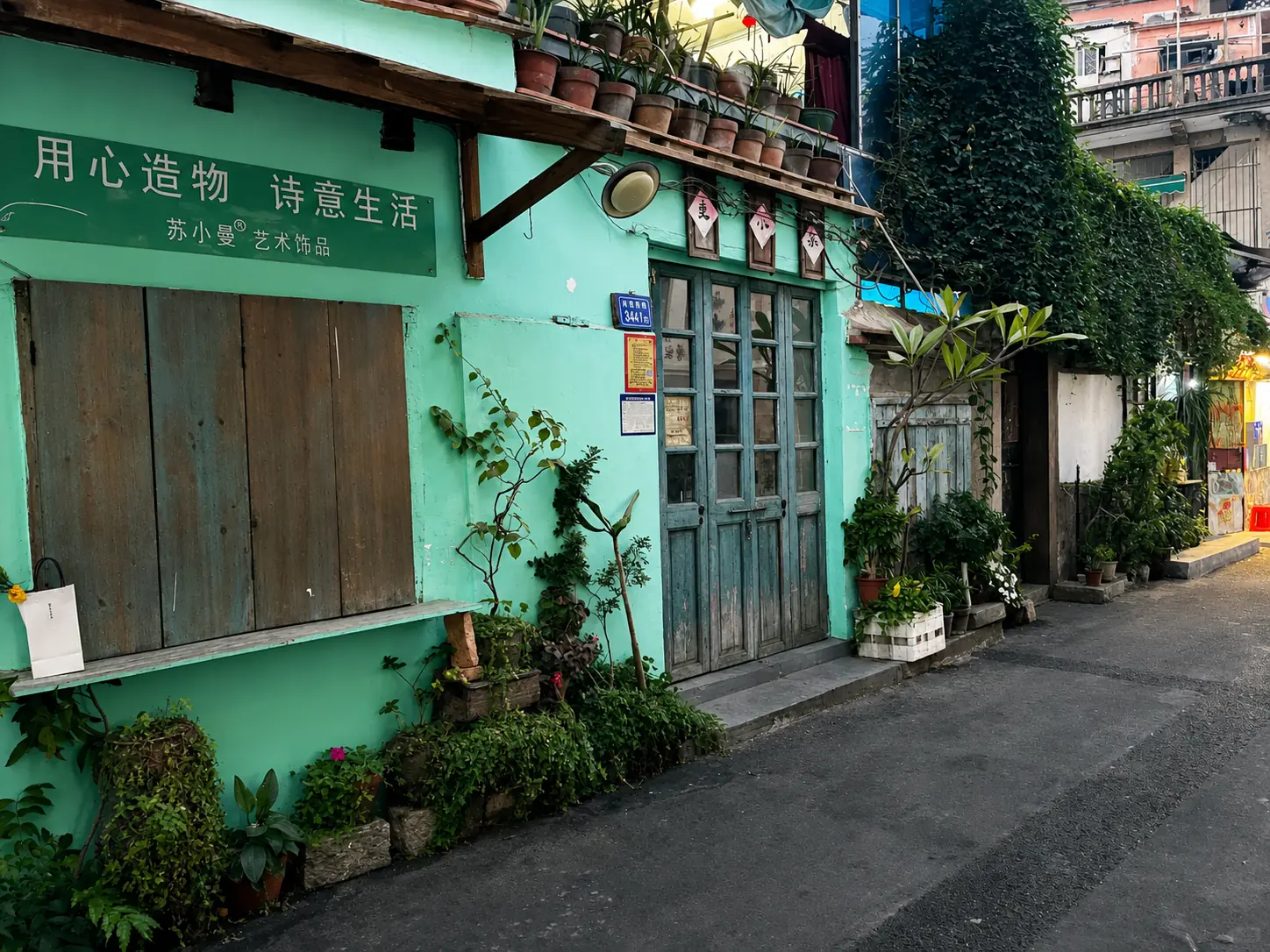
One reason Gulangyu can feel different from a theme park is that it is still a lived-in community. That also means the best-looking courtyard is not automatically a public space. Some old houses are museums, hotels, cafes, or official sites; others are homes, schools, offices, or private compounds.
Before 9:30, side lanes still feel like an island neighborhood. After 10:00, tour groups and day visitors build quickly, especially near Longtou Road, Sunlight Rock approaches, and the main routes between paid sights.
- Photograph buildings from the street.
- Do not push open gates or aim your camera into windows.
- Lower your voice when a lane feels residential.
- Keep moving if a doorway, courtyard, or stair looks private.
The island's atmosphere depends on visitors treating the quiet as something to protect, not something to consume.
Ferry Basics for a Slow Gulangyu Walk
For this daytime Sanqiutian start, use Dongdu Ferry Terminal / Xiamen International Cruise Center (东渡客运码头 / 厦门邮轮中心厦鼓码头) (Google | Amap) on the mainland.
~20 min
Crossing
¥35/¥80
Fare Bands
Passport
Boarding ID
Dongdu
Day Pier
Check ferry notices before you go
Bring the original passport used for your real-name ferry booking; a copy or phone photo is not the boarding document. Wear flat, grippy shoes because the island has stone lanes, slopes, and steps. Avoid dragging large luggage unless you sleep on the island. In summer, carry water and sun protection, and monitor official typhoon or ferry-suspension notices.
For a full Xiamen day plan that combines Gulangyu with Nanputuo Temple, Xiamen University, food stops, and mainland transport, use the linked itinerary below. This page is intentionally not trying to repeat that route.
Frequently Asked Questions
Yes. The itinerary is for scheduling a whole Xiamen day. This guide is for understanding Gulangyu itself: pedestrian lanes, music heritage, architecture, quiet routes, and how to walk the island without turning it into a checklist.
Sources checked for this guide
- 2017 inscription, 600-metre strait, 931 historic buildings, road network and Amoy Deco significance: UNESCO World Heritage Centre
- Current Dongdu-Sanqiutian operating window, sailing duration, fare categories and same-day notice caveat: Xiamen Ferry official route page
- Individual-passenger real-name ticket rules, accepted passport and original-document requirement: Xiamen Ferry official passenger rules
- Current route and fare publication hub for Sanqiutian Pier: Xiamen Ferry official Sanqiutian page
- Weather-related suspension and official-notice procedure illustrated by the July 2026 typhoon interruption: Xiamen Ferry official service notice
- Current music-island programming and continued operation of the Bagua Building and Piano Museum: Gulangyu Administrative Committee
- Piano Museum location inside Shuzhuang Garden and collection context: Gulangyu official attraction guide
- Motor-vehicle prohibition and emergency, sanitation and medical-service exceptions documented for the World Heritage property: ICOMOS 2017 evaluation
Beyond This Guide
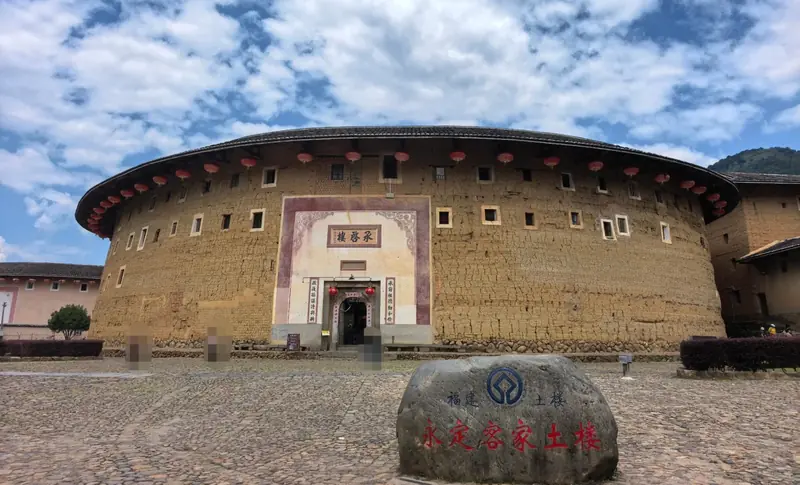
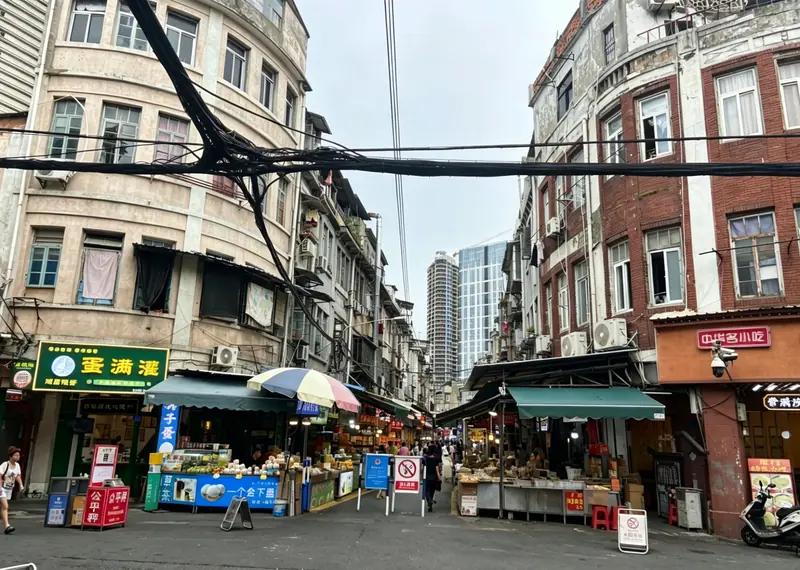
Gulangyu is the best doorway into Xiamen, but it is not the whole city. Back on the main island, you still have Eighth Market seafood, Zhongshan Road arcades, Nanputuo Temple, coastal walks, and Fujian side trips like tulou villages or Quanzhou. Use this article for the island's slow heritage layer, then use the Xiamen itinerary when you need the larger day to fit together.
More from Xiamen & Fujian:
© gochinafreely.com — Original guide by Go China Freely.