Walk basics
Temple, exhibition, studio, restaurant and event schedules vary; check any specific interior on the day. See access notes
Village decisions
A 900-Year Village in Modern Guangzhou
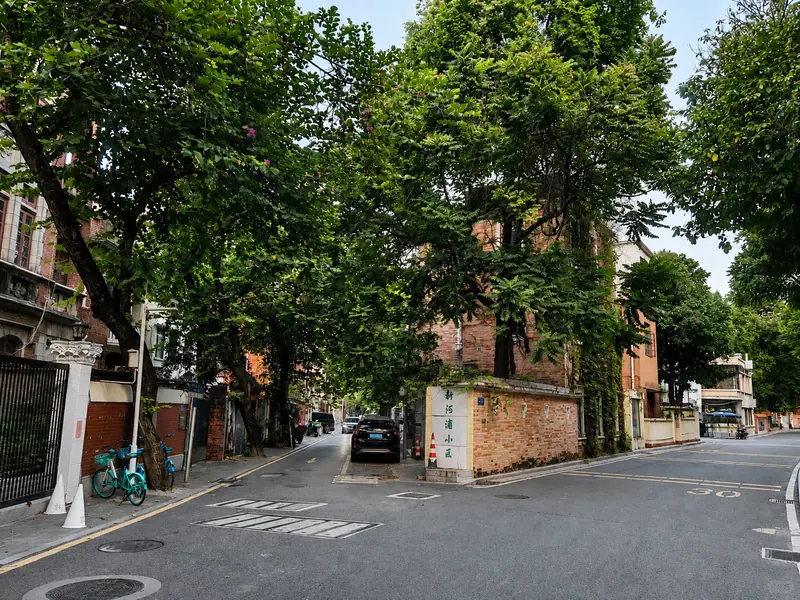
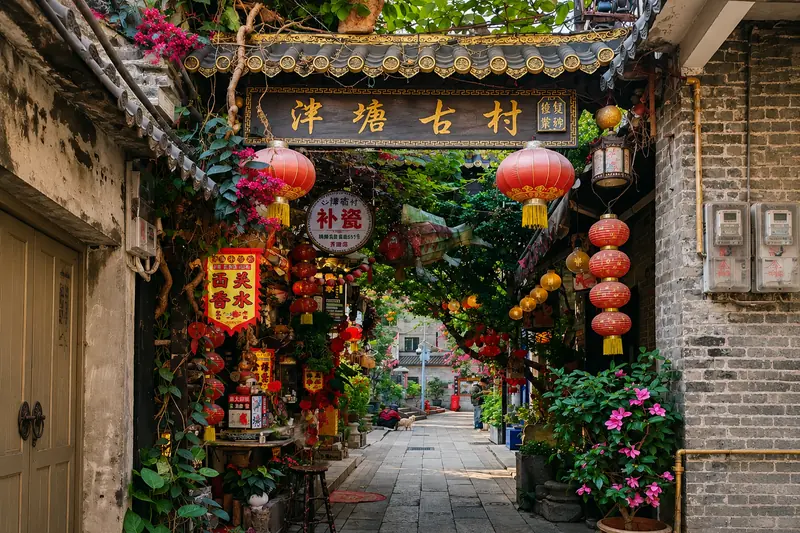
Pantang Wuyue sits between Liwan Lake Park (荔湾湖公园) and Renwei Temple (仁威庙), close to apartment blocks, restaurants and metro traffic. Its blue-brick houses, black-tile roofs, granite lanes, clan halls and courtyards still move at a different speed from modern Guangzhou.
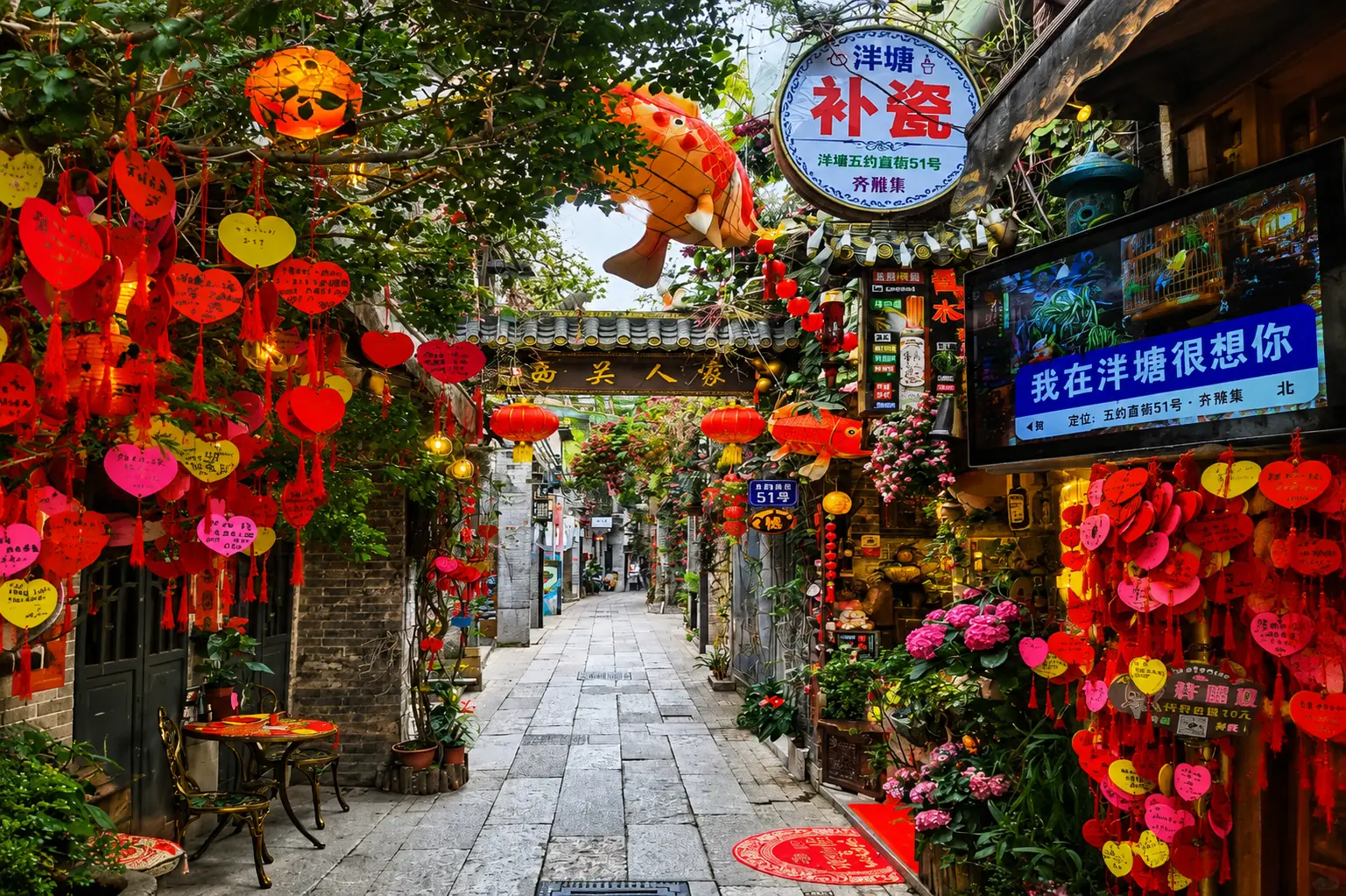
Do not come expecting a sealed, ticketed ancient town. Pantang works because it is smaller, messier and more lived in: part historic village, part Xiguan neighborhood, part micro-renewal case and part lakeside food memory. Give it 2-3 hours, walk slowly, and connect it with Renwei Temple, Liwan Lake, Lychee Bay or a Cantonese meal.
900+
Years of History
2-3h
Core Walk
Free
Public Lanes

A historic entrance, not a sealed attraction
A current Liwan District government renewal page places Pantang beside Liwan Lake and Renwei Temple, while district cultural material describes the surviving village as having more than 900 years of history. The value is not one famous building; it is an old settlement pattern still visible inside modern Guangzhou.
Choose Pantang for village scale
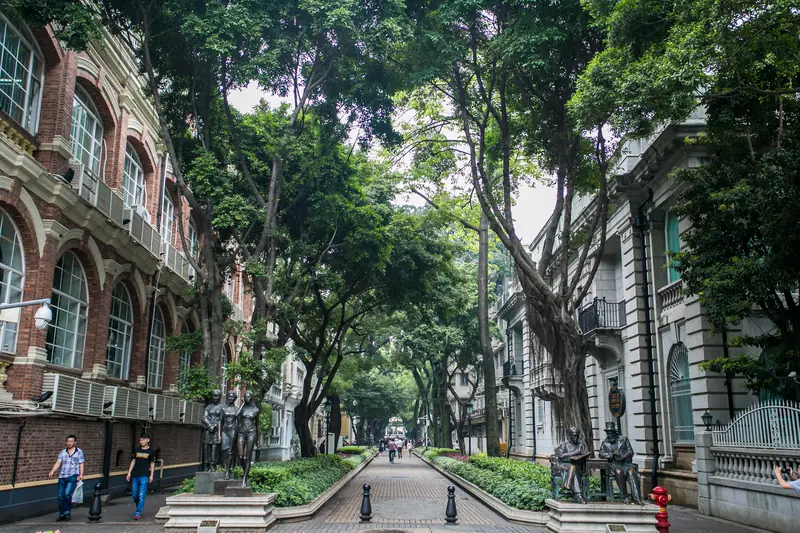
Shamian shows treaty-port facades, Dongshankou red-brick villas and early modern expansion, and Yongqingfang a shinier commercial renewal. Pantang is quieter: small lanes, ancestral halls, temple culture, residents, stone paving, plants, repair marks and creative spaces pressed against daily life.
Let details become the landmark
A granite lane under wet leaves, an old door latch, a tiled roof edge, resident plants, a temple wall, a studio inside a former village house and Liwan Lake beyond the lanes matter more than one dramatic monument.
Living fabric, carefully renewed
Residents and community spaces remain. The micro-renewal retained village lanes and historic elements while repairing buildings, improving facilities and adding cultural spaces. Respect private thresholds.
Water-town memory in Xiguan context
Lake edges, folk worship, dragon boats, piers and the Pantang Five Delicacies preserve the water-linked story. Liwan Lake, Lychee Bay, Panxi Restaurant and old Xiguan make the village feel complete.
Five Yue and Lingnan Water-Town Roots
Five community units, not five scenic spots
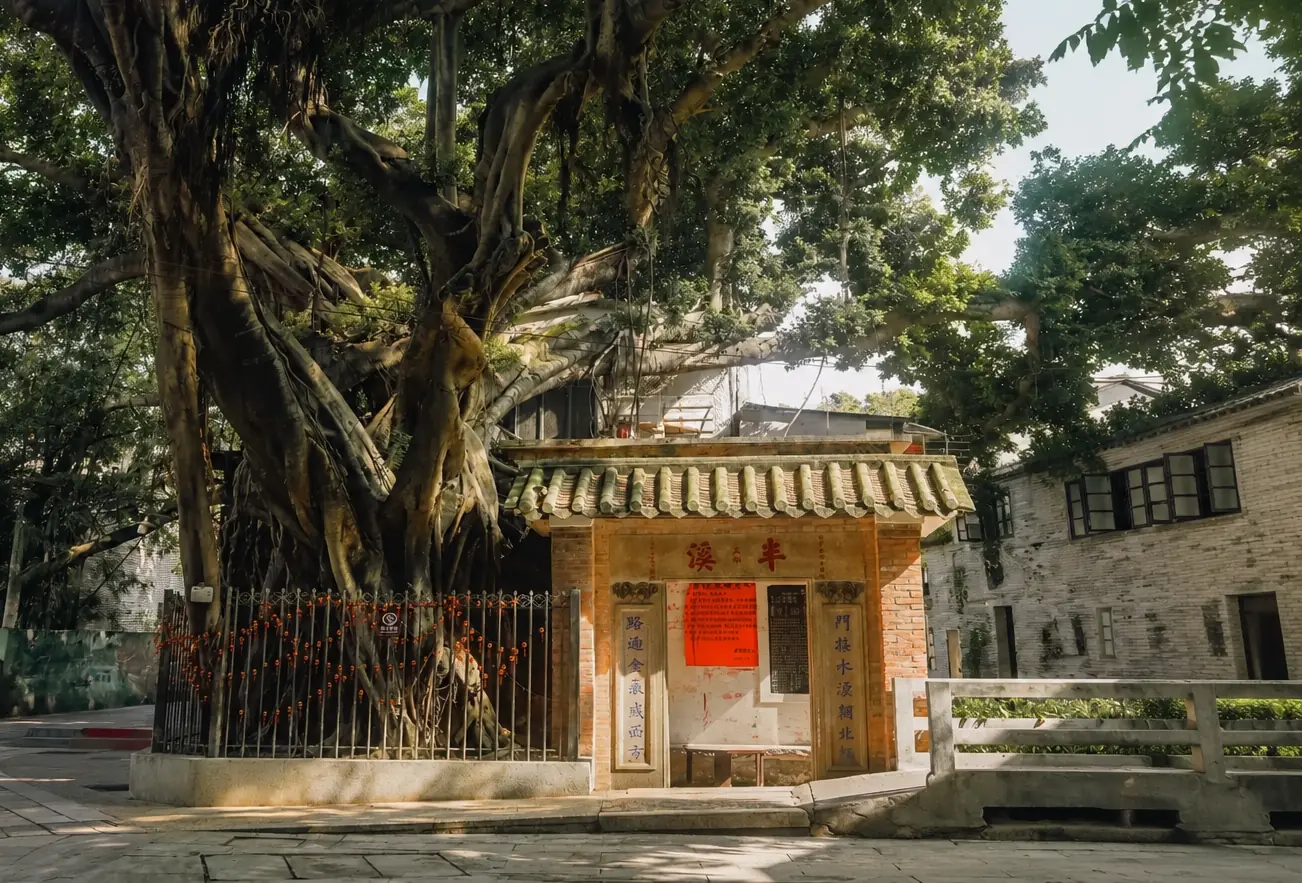
The "Wuyue" in Pantang Wuyue does not mean "five scenic spots." Liwan's cultural-tourism material explains that yue (约) refers to a village organization based on local pacts and community rules. Historically, Pantang had five such settlement units: First Yue, Second Yue, Third Yue, Fourth Yue, and Fifth Yue.
The older water landscape matters just as much. Official Liwan material notes that the Pantang area once had crisscrossing waterways, lychee trees, orchards, fisheries, and a clear Lingnan water-village character. Water shaped work, food, belief, and festivals: boats, rice, fishing, dragon boats, water deities, Renwei Temple, Sanguan Temple (三官庙), old piers, plank bridges, and ponds all belong to the larger story.
Today, do not expect a broad canal network at every turn. The water-town feeling is quieter: Liwan Lake beside the lanes, old place names, traces of piers and water worship, and the way the renovated village now opens toward the park. A better English phrase is "water-linked historic village," not "a Jiangnan water town in Guangzhou."
Read the water clues, not just the signs
Pantang's water-town layer is partly visible and partly historical. Look for lake edges, shrine culture, stone lanes, shaded courtyards and food references instead of expecting a single postcard canal.
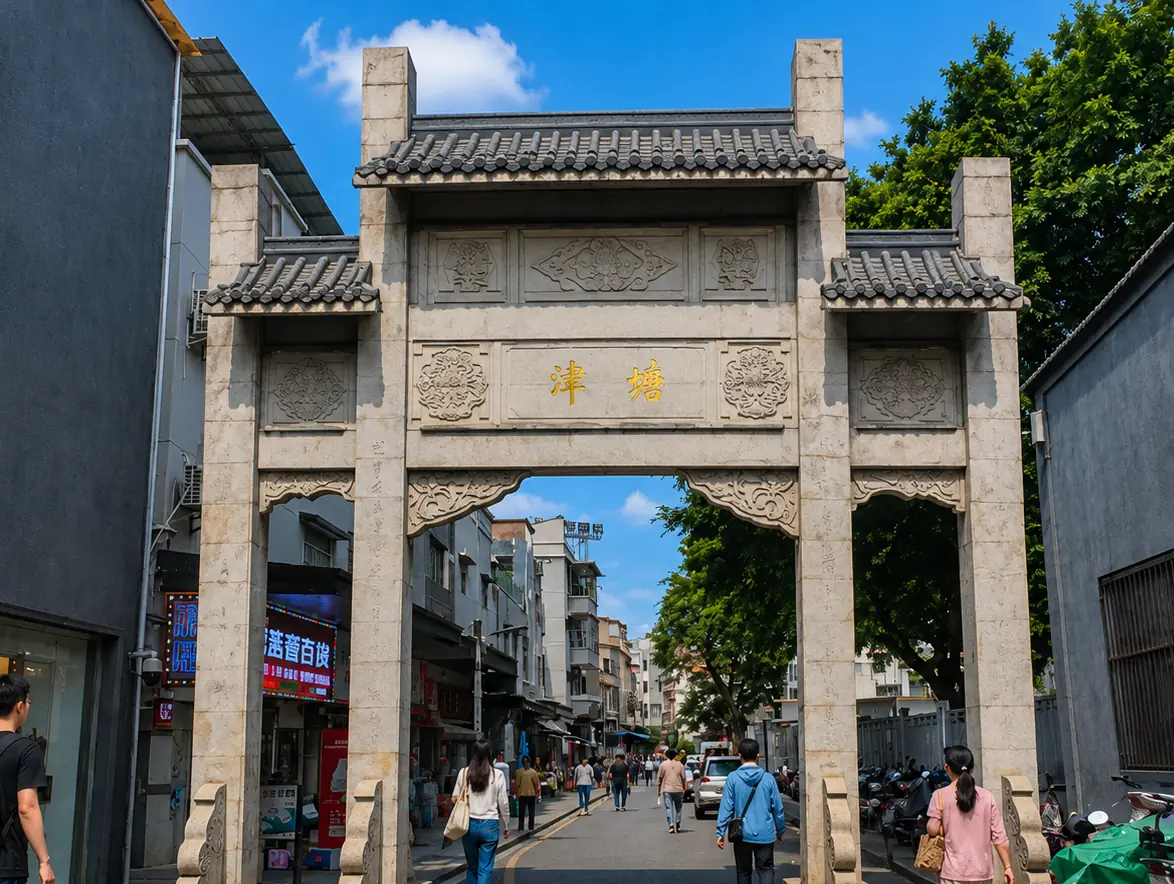
A Two-Hour Pantang Wuyue Walking Route
- Zhongshanba Station(中山八站)- Closest practical metro start; follow signs toward Liwan Lake and Pantang
- Pantang Road(泮塘路)- Shift from modern road edge into old Xiguan texture
- Renwei Temple(仁威庙)- Spiritual anchor of the route and easiest meeting point
- Pantang Wuyue Lanes(泮塘五约街巷)- Slow walk through granite lanes, old houses, and courtyards
- Clan Halls and Wuyue Pavilion(宗祠 / 五约亭)- Look for Lingnan details; many spaces are exterior-first
- Liwan Lake Park(荔湾湖公园)- Use the lake edge to understand the water-town setting
- Panxi Restaurant or Lychee Bay(泮溪酒家 / 荔枝湾涌)- Stop at Panxi Restaurant for food or continue to Lychee Bay; neither branch is mandatory
The route is short, but do not walk it like a checklist. Every few minutes, stop and read one detail: a door frame, a roofline, a granite lane, an old wall base, a planted courtyard, a temple-side corner, or the way a new studio uses an old village house. Pantang rewards looking sideways.
Short version
60-90 minutes
Renwei Temple, the core Wuyue lanes and Liwan Lake's north side.
Core walk
2-3 hours
All seven markers at a slow, detail-first neighborhood pace.
Half day
Add old Liwan
Continue to Lychee Bay, Yongqingfang, the Cantonese Opera Art Museum or a slow Cantonese meal.
Renwei Temple and Pantang Village Halls
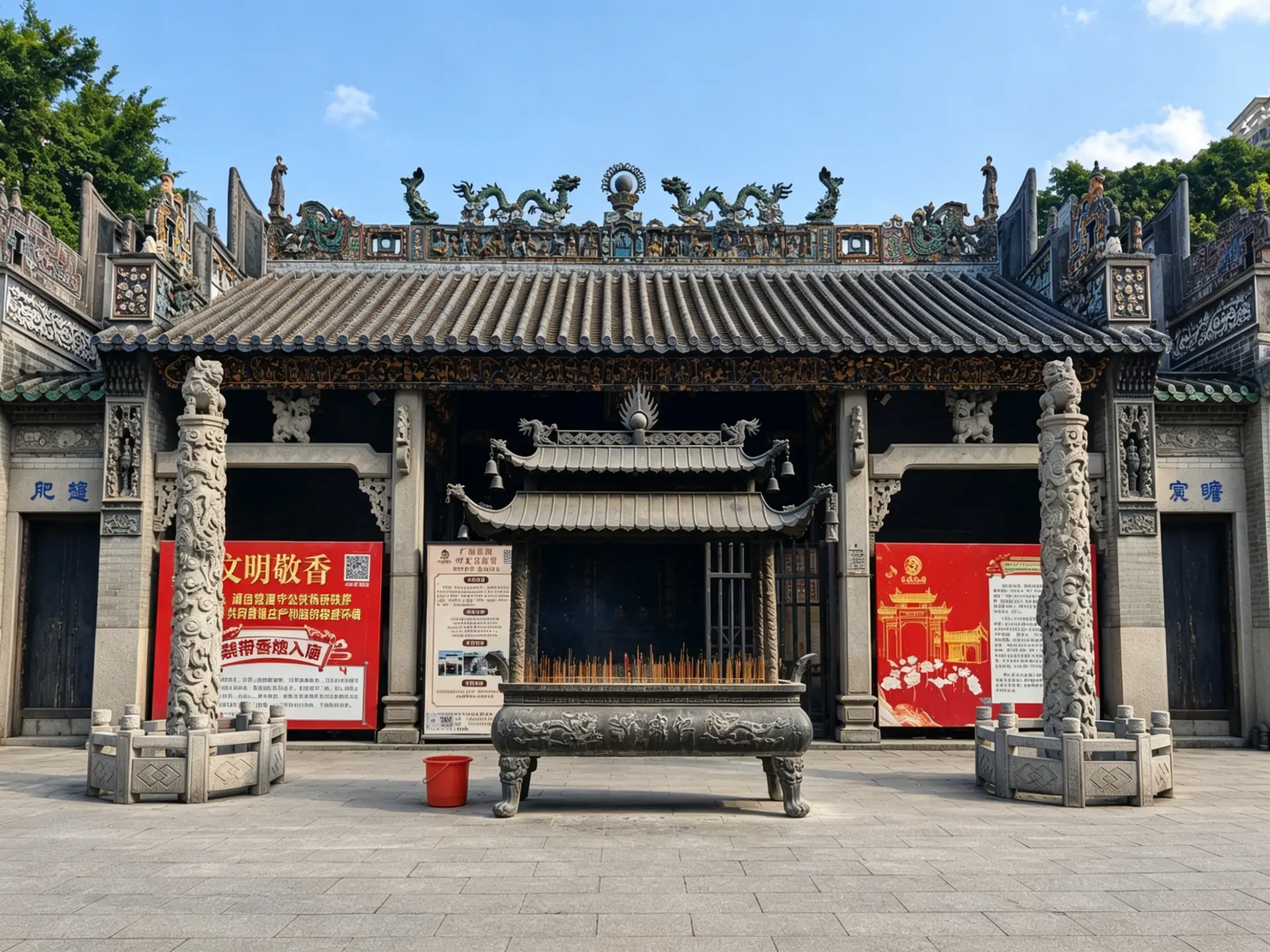
Renwei Temple: the spiritual anchor (Google | Amap)
Renwei Temple is the easiest anchor for Pantang Wuyue. Official Liwan material describes Renwei Ancestral Temple as a Taoist temple dedicated to the Perfected Warrior Emperor (真武帝), also called the Northern Emperor (北帝), and as one of the oldest major temples of the old Pantang-Enzhou (泮塘恩洲) area. In a district shaped by waterways, boats, rice, fishing, and lake life, the temple gives visitors a clear spiritual starting point before entering the smaller lanes.
Treat the temple as an active religious and neighborhood space, not a decorative gate. If it is open and calm, go in quietly. If there are services, incense crowds, or posted photo limits, enjoy the exterior and continue into the lanes.
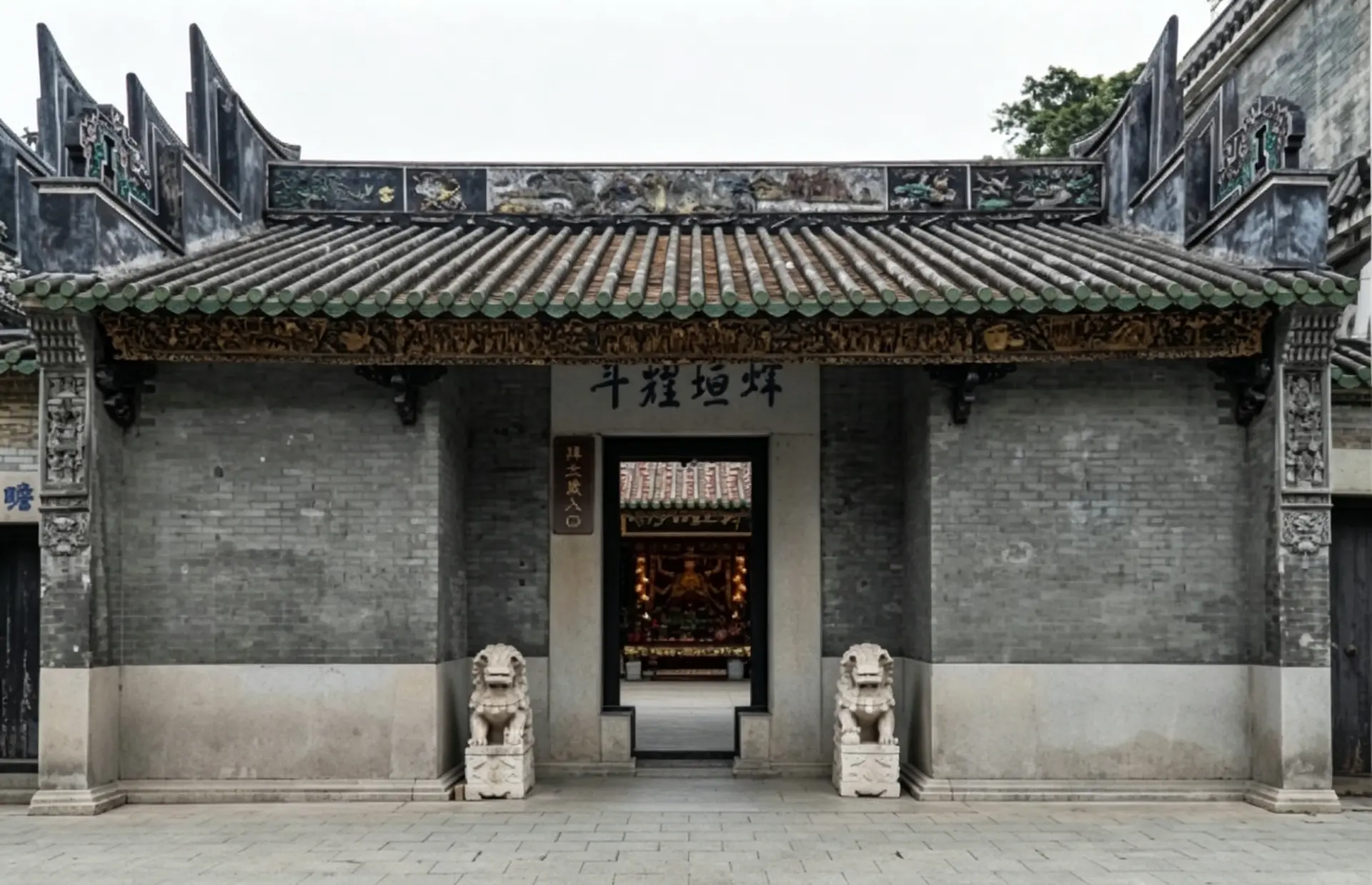
Clan halls, Wuyue Pavilion and Sanguan Temple
Liwan government material highlights the Li clan hall complex, Wuyue Pavilion, Sanguan Temple, old inscriptions, and other markers as part of Pantang's village memory. It specifically points to Lingnan building elements such as wok-ear gable walls, blue-brick facades, granite stone bases, traditional doors, and old locks.
Not every space works like a museum. Some doors may be closed, some rooms may be used by the community, and some buildings are better read from the lane. That is fine. Pantang Wuyue is strongest as a street-reading walk: look at material, proportion, use, and boundary.
Liwan Lake and Pantang Five Delicacies
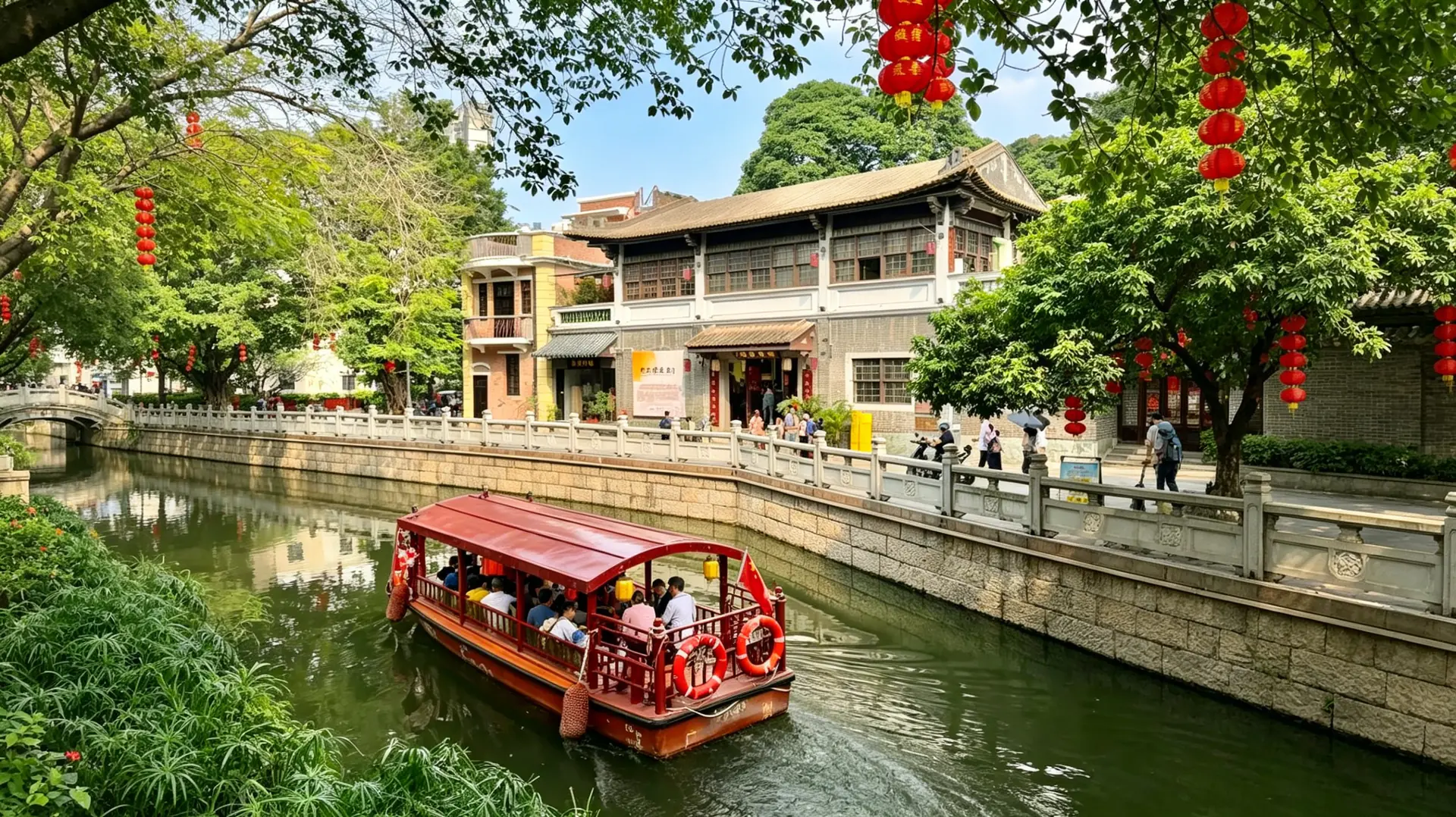
Liwan Lake Park (Google | Amap)
Pantang Wuyue makes more sense with Liwan Lake Park (荔湾湖公园). Guangzhou government material describes lakes, bridges, pavilions and corridors in a strongly Lingnan water-town landscape. The park sits on the old Pantang-Lychee Bay setting, where waterways, ponds, fruit trees and water crops shaped local life.
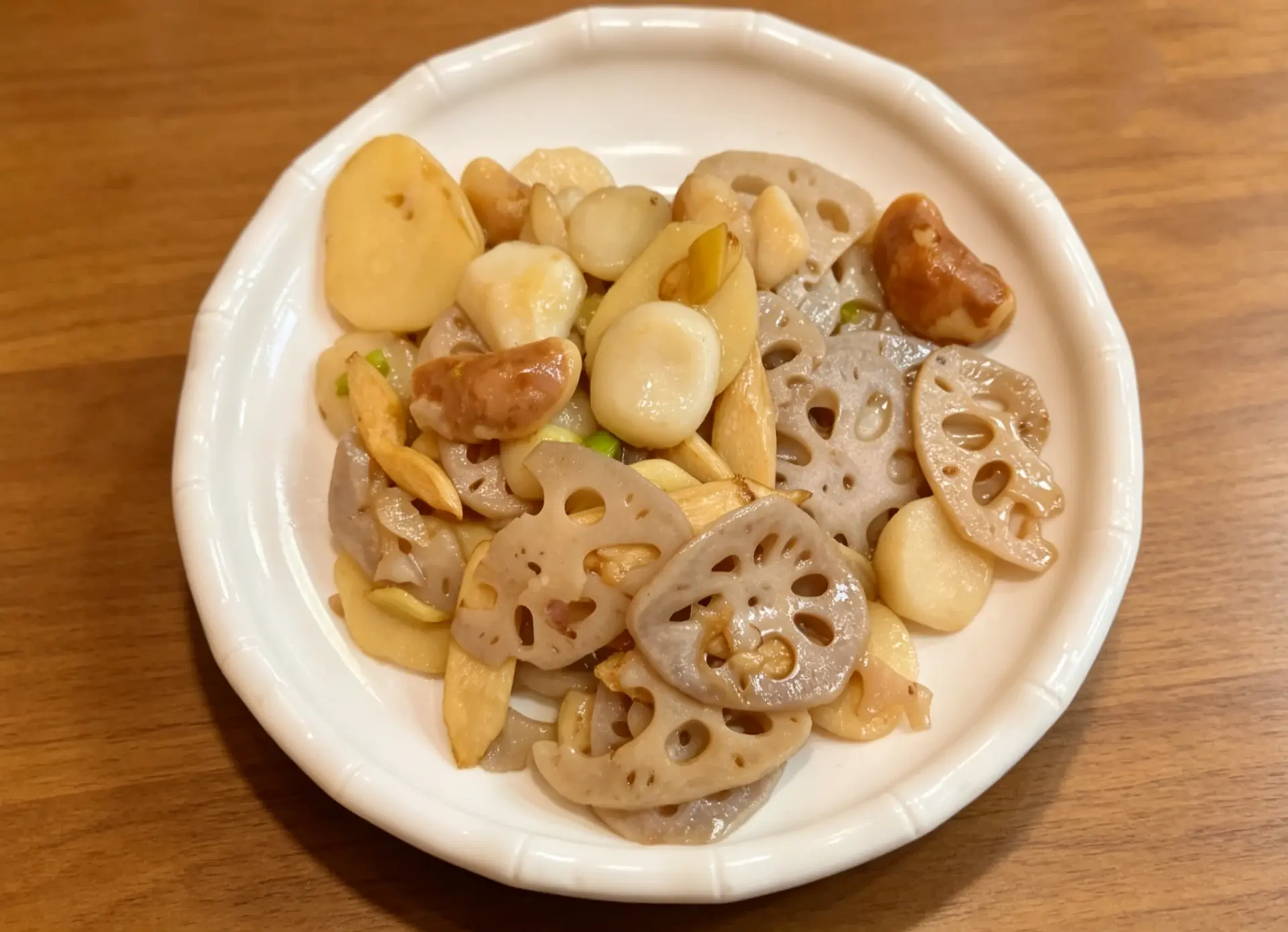
Pantang Five Delicacies and Panxi Restaurant (Google | Amap)
Food is another way to read that geography. The Pantang Five Delicacies (泮塘五秀) are lotus root (莲藕), water chestnut (马蹄), water caltrop (菱角), wild rice stem (茭笋) and arrowhead (茨菇). Guangzhou government and Guangdong commerce-standard material tie all five water plants to old Pantang and Xiguan food memory.
You may not see old water fields today; the city has swallowed that landscape. But when you eat water chestnut cake, pass Panxi Restaurant (泮溪酒家), or walk beside Liwan Lake, the old water economy becomes easier to imagine. Pantang is not just architecture. It is also a taste memory.
Use food as context
If the lanes feel small, add food. Pantang's old water plants, Xiguan dim sum, Liwan snacks and Panxi Restaurant connect the village walk to something you can actually taste.
Studios, Shops and Everyday Pantang Life
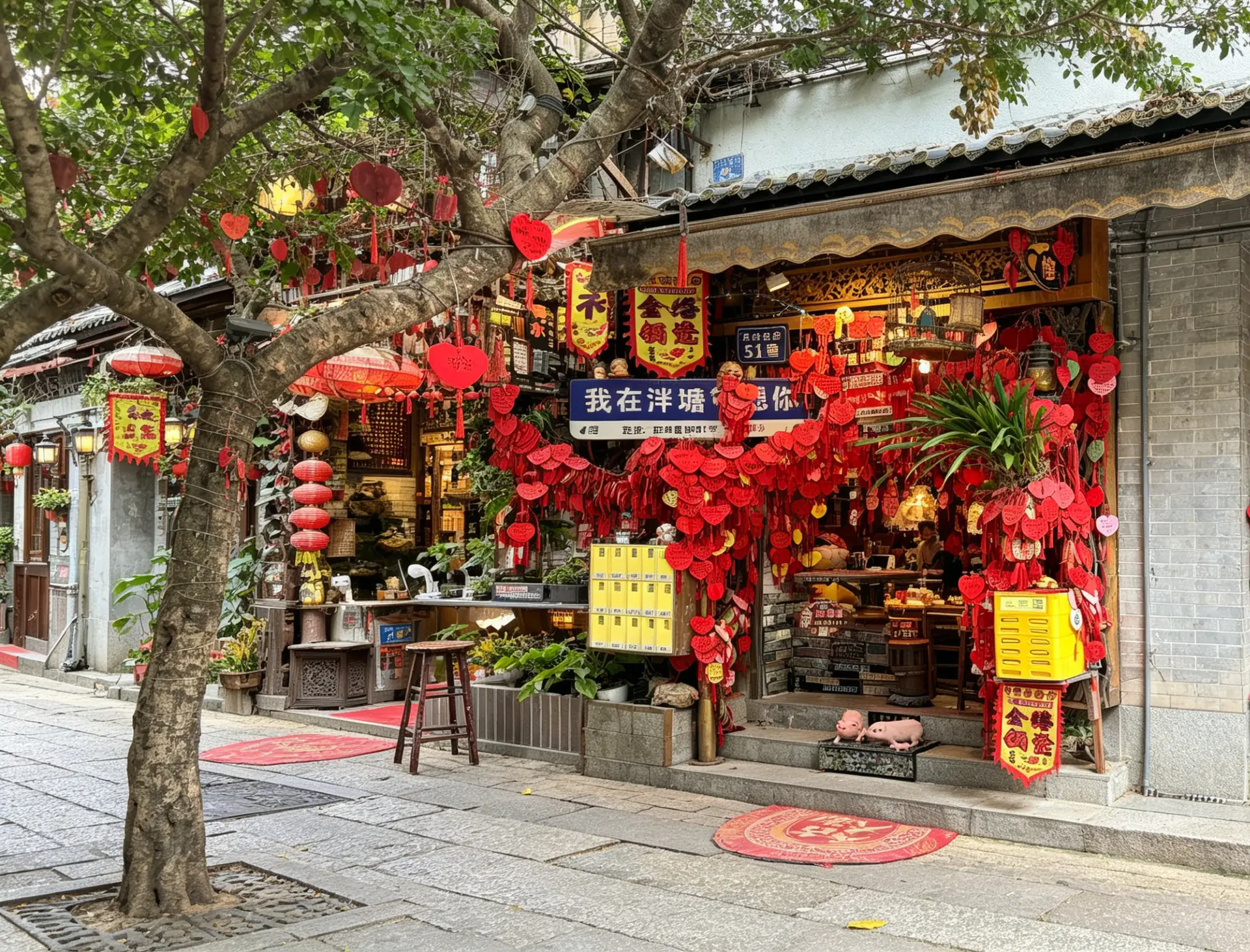
Creative spaces inside a living neighborhood
Pantang Wuyue's recent attention comes partly from cultural spaces: independent bookstores, studios, tea rooms, creative markets, small guesthouses, cafes, craft shops, and music or art spaces. Guangzhou housing-and-urban-rural development material describes the area's cultural-business renewal as intentionally smaller and more distinctive than a generic commercial strip.
Keep 30-45 minutes flexible
Small venues change hours, pop-ups come and go, and some courtyards are quieter than social media suggests. Enter what is open and calm, skip what is crowded, and let the old lanes remain the main attraction.
The best Pantang moments often sit between commerce and daily life. A plant-filled doorway. A resident stepping out for groceries. A studio sign on an old wall. A workshop behind a repaired facade. A tourist taking a photo while an older neighbor carries on with the day. That overlap is the reason to keep your pace gentle.
Photo Etiquette and Best Times in Pantang
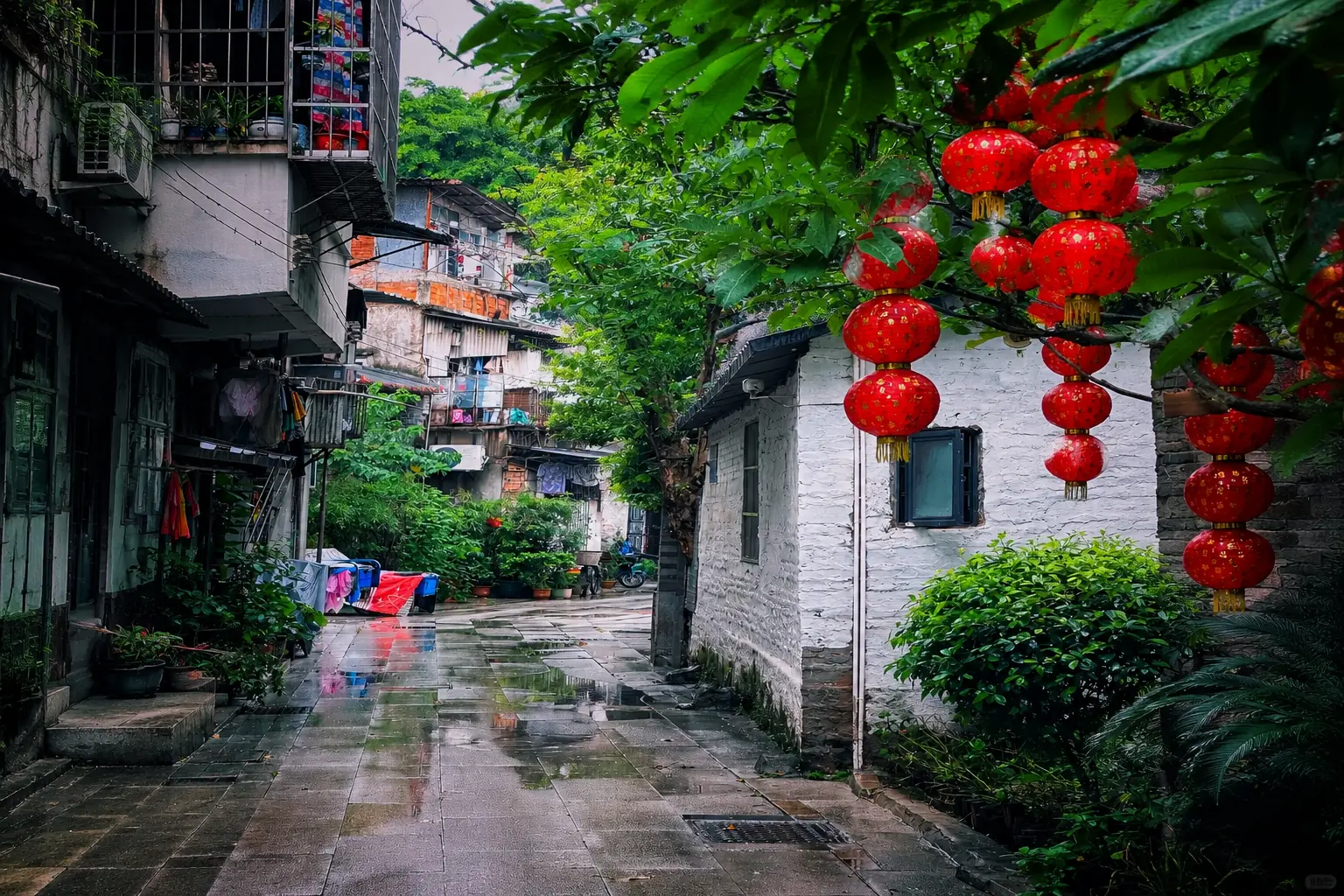
Choose light before choosing a lens
The best times are weekday mornings or late afternoon from about 16:00 until sunset. Morning gives cleaner lanes and quieter doorways. Late afternoon gives warmer light, lake reflections, and a more relaxed food-and-walk rhythm. Summer midday is the hardest version: Guangzhou heat and humidity make even short lanes feel heavy.
Weekday morning
Best for lanes, doors and quiet village texture before cafes and visitors build up.
Late afternoon
Best for atmosphere if you plan Liwan Lake, Panxi Restaurant or Xiguan snacks into dinner.
Challenging conditions
Summer noon, heavy rain and holiday crowds make the short lanes feel harder. Light rain can photograph well; strong rain makes older paving and drainage edges too slippery.
Residents and passages come first
Do not push a lens through residential gates, windows, courtyards, shrine activity or private stairways. Do not block narrow lanes, temple entrances or shop doors. If a resident, guard, monk, staff member or shopkeeper says no photos, let it go.
Rain can make the village beautiful. Blue brick, black tile, leaves, and stone paving deepen in color. But older paving, steps, and drainage edges can be slippery, so wear shoes with grip and carry a small umbrella in spring and summer.
Transport Costs and Guangzhou Route Pairings
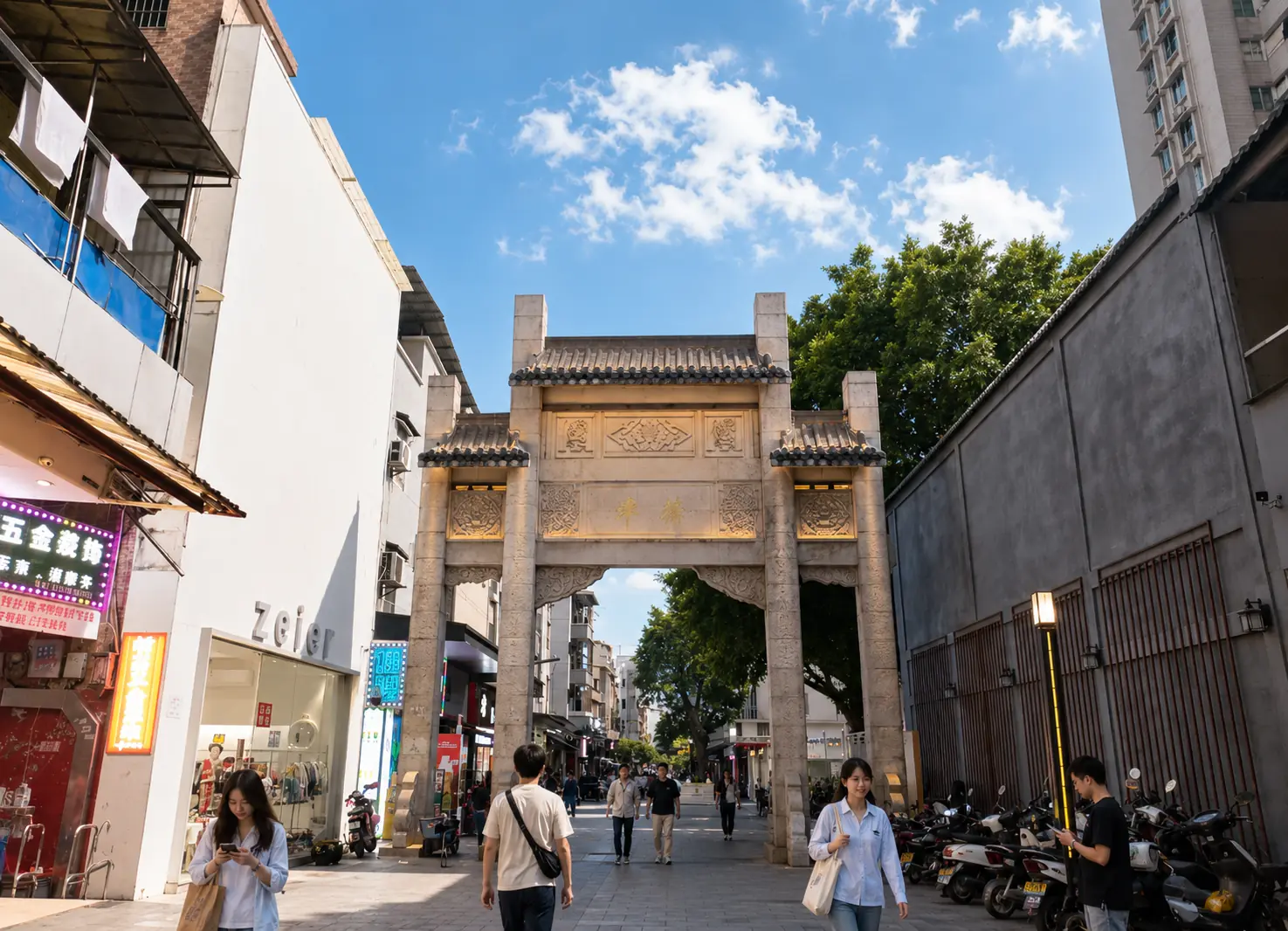
Arrive at the edge and continue on foot
Pantang Wuyue's public lanes are free to walk. Individual restaurants, shops, exhibitions, religious spaces, and events follow their own rules, so avoid planning around one interior unless you check the same day.
Current access and cost scan
Public lanes
Free to walk; individual interiors, events and food cost extra or keep separate schedules.
Metro approach
Use Zhongshanba Station on Line 5, then follow current station signs or the Guangzhou Metro app toward Liwan Lake and Pantang Road.
Taxi or ride-hailing
Get close to Renwei Temple or Panxi Restaurant, then walk. Do not ask a driver to force a car into the narrow resident lanes.
Time budget
Allow 2-3 hours for the core or a half day when you add a meal, Lychee Bay or Yongqingfang.
Good pairings depend on your travel style:
A · Best gentle first visit
Slow Xiguan Half-Day
Pantang, Renwei Temple, Liwan Lake
- Free public lanes and water-side park time
- Easy to add dim sum, dessert or Panxi Restaurant
- Less dramatic if you need big-ticket attractions
B · Deeper Liwan context
Old Guangzhou Route
Pantang, Lychee Bay, Yongqingfang
- Connects village lanes, canal-side renewal, opera culture and food
- Works best with a clear route and meal timing
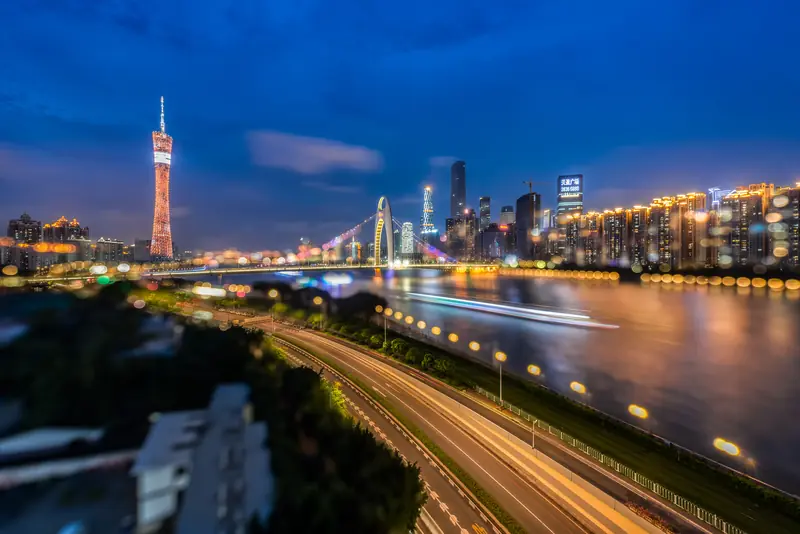
- Do not cram it with Canton Tower before dinner
C · Old-city comparison
Architecture Contrast
Pantang and Shamian
- Pantang shows village-water-town Xiguan texture
- Shamian adds treaty-port island architecture
- Leave time for transit, coffee, shade and photos
For a first Guangzhou day, a comfortable rhythm is morning tea, one museum or ancestral hall, Pantang Wuyue and Liwan Lake in the afternoon, then a Pearl River or old-Liwan evening. Pantang should soften the day, not turn it into another transfer sprint.
Frequently Asked Questions About Pantang Wuyue
Yes, if you like old lanes, Lingnan architecture, water-town history, quiet neighborhoods, and Xiguan food culture. It is small, so it works best as part of a Liwan half day rather than a stand-alone major attraction.
Sources checked for this guide
- Current district renewal page checked for the location beside Liwan Lake and Renwei Temple, retained village fabric, community use and the micro-renewal timeline: Liwan District Government — Pantang Wuyue renewal
- District cultural route checked for the 900-plus-year framing, the meaning of yue, the five settlement units and the walkable cluster through Panxi, Renwei, village halls and Liwan Lake: Liwan District culture-tourism route
- District heritage page checked for the Renwei Ancestral Temple dedication to the Perfected Warrior Emperor / Northern Emperor and its Pantang-Enzhou context: Liwan District — Renwei Ancestral Temple
- District planning report checked for restored heritage elements, festivals and community co-governance in the Fengyuan Street–Liwan Lake Historic Cultural District: Liwan District planning-resource report
- Municipal housing article checked for the village settlement explanation, micro-renewal background, cultural-business use and anti-generic-commercial positioning: Guangzhou Housing and Urban-Rural Development Bureau
- Municipal culture page checked for Liwan Lake, old Pantang water-landscape context and the five aquatic delicacies: Guangzhou Municipal Government — Pantang history and food
- Provincial commerce-standard PDF checked for the five ingredients: lotus root, water chestnut, water caltrop, wild rice stem and arrowhead: Guangdong commerce standard — Xiguan food culture
- Secondary route reference retained for Line 5 and Zhongshanba context; use current Guangzhou Metro signs or app for the live exit: MetroMan Guangzhou Line 5 — secondary access reference
- Current municipal environment page checked for Liwan Lake as a four-lake urban park, its restored water system and continuing public cultural use: Guangzhou Ecology and Environment Bureau — Liwan Lake
Beyond This Guide
Pantang Wuyue works best as the quiet village layer inside a wider Guangzhou day: old Xiguan food, lake paths, temple culture, trade history, and a river or Shamian finish.
- Guangzhou Food Guide - for dim sum, roast meats, desserts, and where to eat before or after old-Liwan walks
- Guangzhou Day Trip - for a first-timer route that connects food, heritage, and modern skyline time
- Shamian Island - for a calm architectural contrast after Pantang's village-water-town texture
- Dongshankou - for another Guangzhou neighborhood walk, this time through red-brick villas and early modern layers
© gochinafreely.com — Original guide by Go China Freely.