Hours & Base Ticket
Essential Rules
Red-Brick Villas and Living Street Life
Dongshankou (东山口) is not one photo street; it is a living Guangzhou district where red-brick villas sit beside schools, churches, memorials, cafes, and residents' gates. This guide shows you how to read the Xinhepu lanes as a 2-3 hour walk without treating private homes or religious spaces like a theme set.
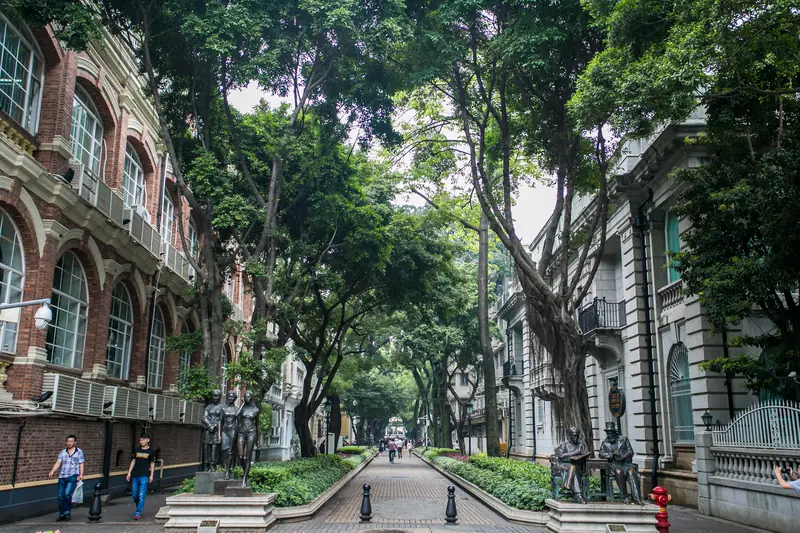
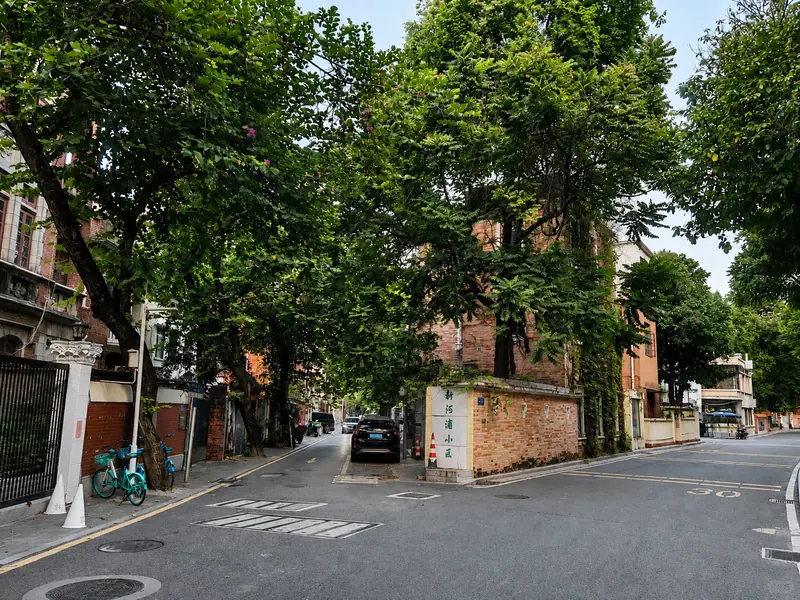
A representative Dongshankou street view, with red brick, greenery, and low-rise villa texture.
For a first visit, start from Dongshankou Station, drift south into Miaoqian West Street (庙前西街), Xuguyuan Road (恤孤院路), Xinhepu Road (新河浦路), and Sibei Tongjin (寺贝通津), then decide whether to finish at Dongshan Lake Park (东山湖公园) or loop back for the metro. The reward is not a single grand attraction. It is the way Guangzhou's modern history still sits inside ordinary street life.
2-3h
Core Walk
Free
Street Access
400+
Red-Brick Villas
Lines 1/6
Metro Access
Guangzhou has several famous old districts, but Dongshankou has its own texture. Xiguan is tied to Cantonese merchant houses and arcade streets. Shamian feels like a compact island of treaty-port architecture. Dongshankou, especially the Xinhepu Historic Cultural District (新河浦历史文化街区) (Google | Amap), is more mixed: overseas Chinese villas, church and school networks, early revolutionary sites, residential lanes, and recent creative reuse.

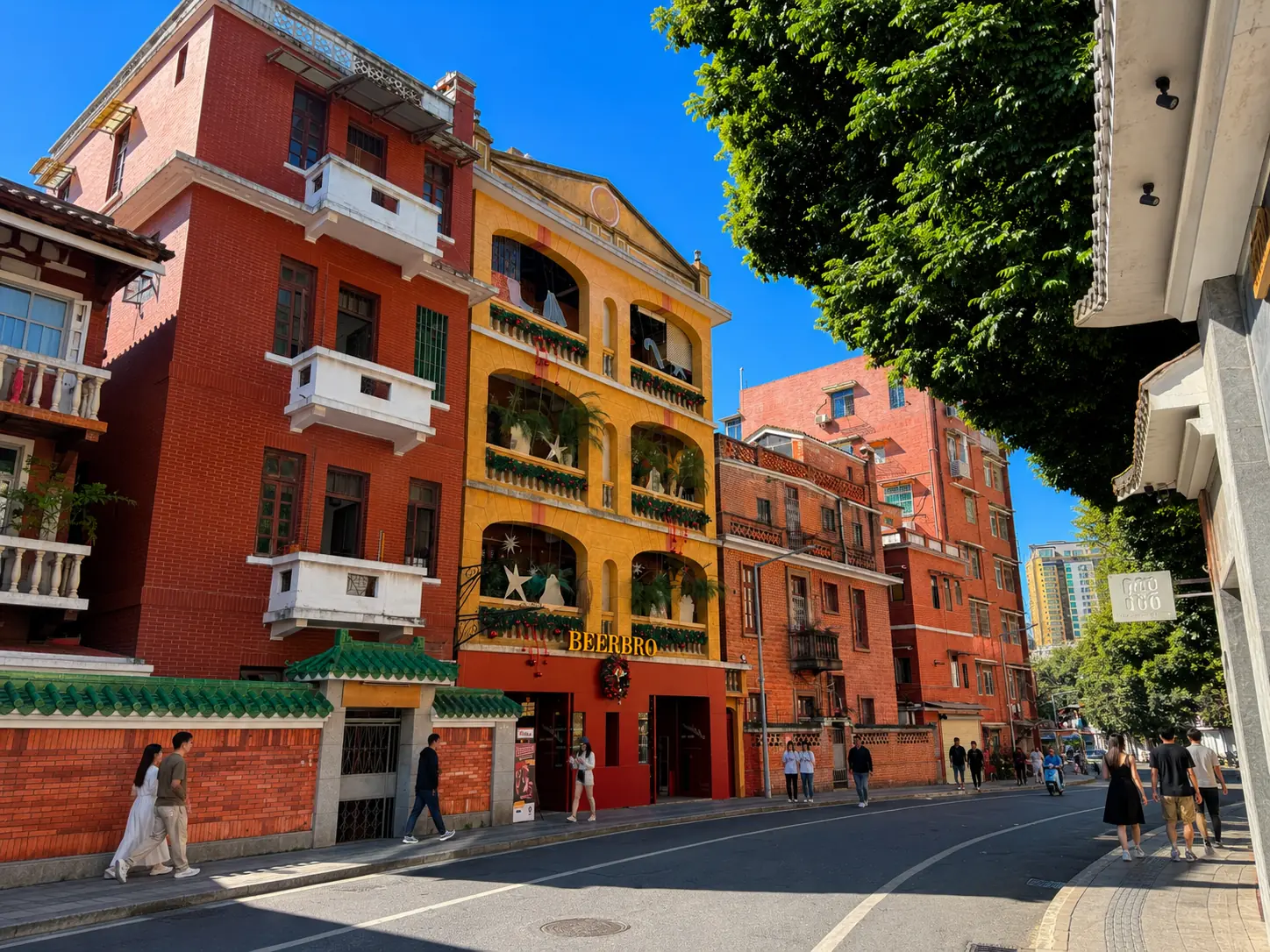
Xinhepu's low-rise red-brick villas are the architectural core of the Dongshankou walk.
Yuexiu District describes Xinhepu as Guangzhou's largest surviving cluster of low-rise, courtyard-style modern buildings combining Chinese and Western elements, with more than 400 red-brick villas in the area. That number matters, but the better travel question is simpler: can you read the district without treating it like a museum set?
Read the Scale
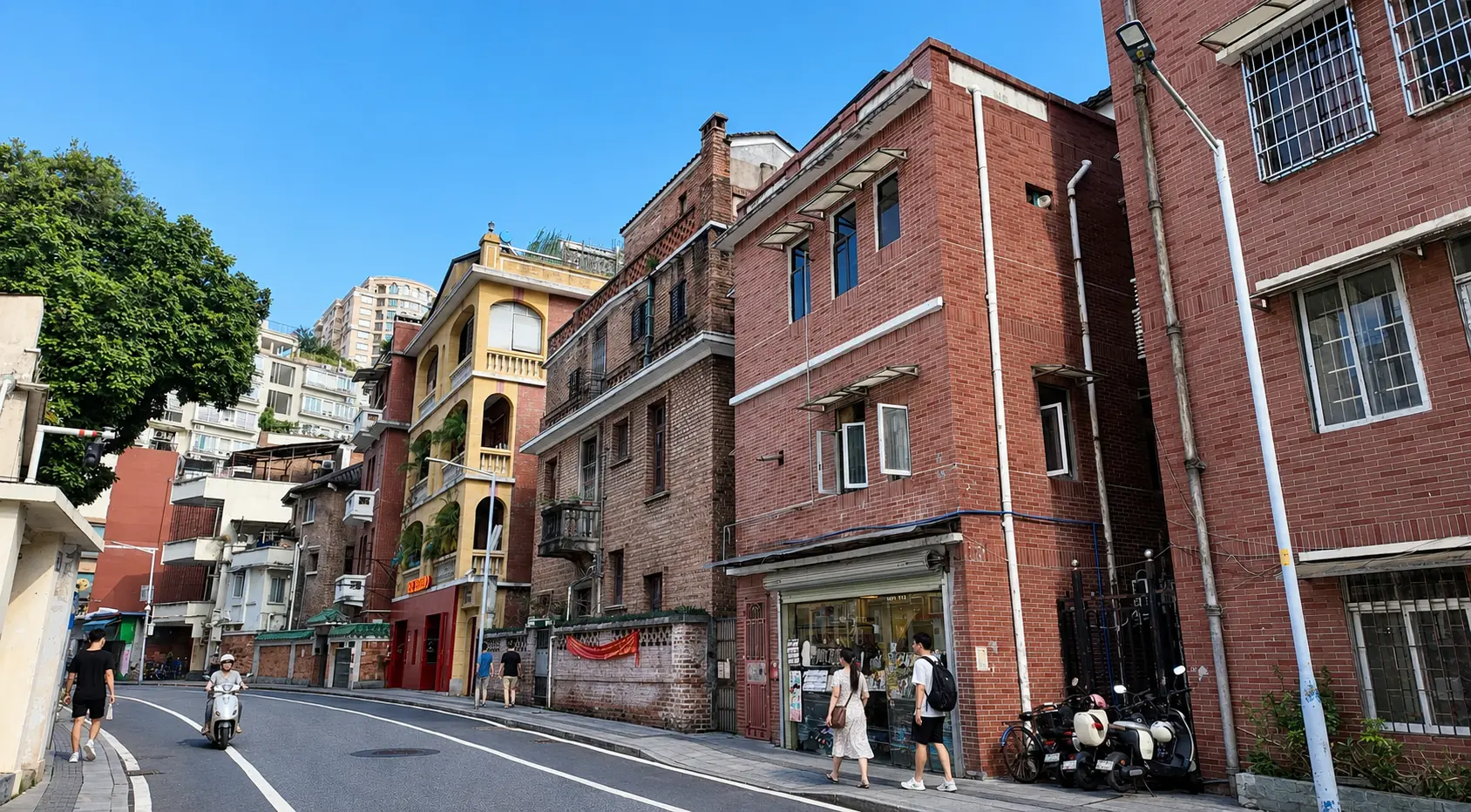
Look for low-rise massing, enclosed gardens, red-brick walls, and the way old gates sit close to schools, homes, and small businesses.
Read the Use
Many villas are not visitor attractions. Some are private homes, offices, schools, churches, or memorial spaces, so the street view is often the main experience.
Read the Overlap
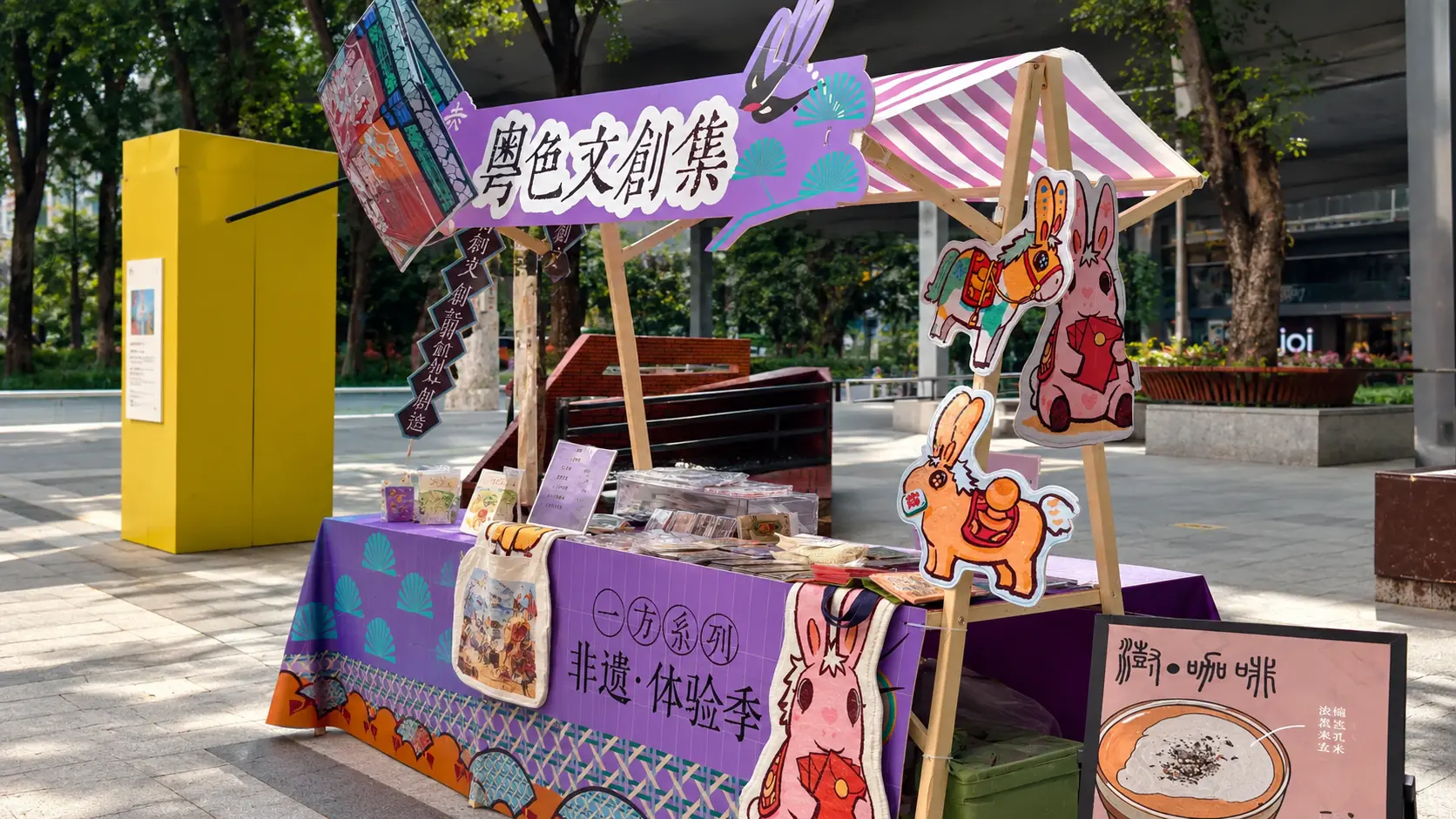
Dongshankou works when you notice old and new together: a cafe sign on an old facade, a balcony under banyan shade, or a residential gate beside a historic wall.
Three Layers of Dongshankou Street Life
The easiest way to walk Dongshankou is to read it in three layers: villa architecture, early 20th-century political history, and today's creative street life. None of the layers fully replaces the others.
Villa Layer
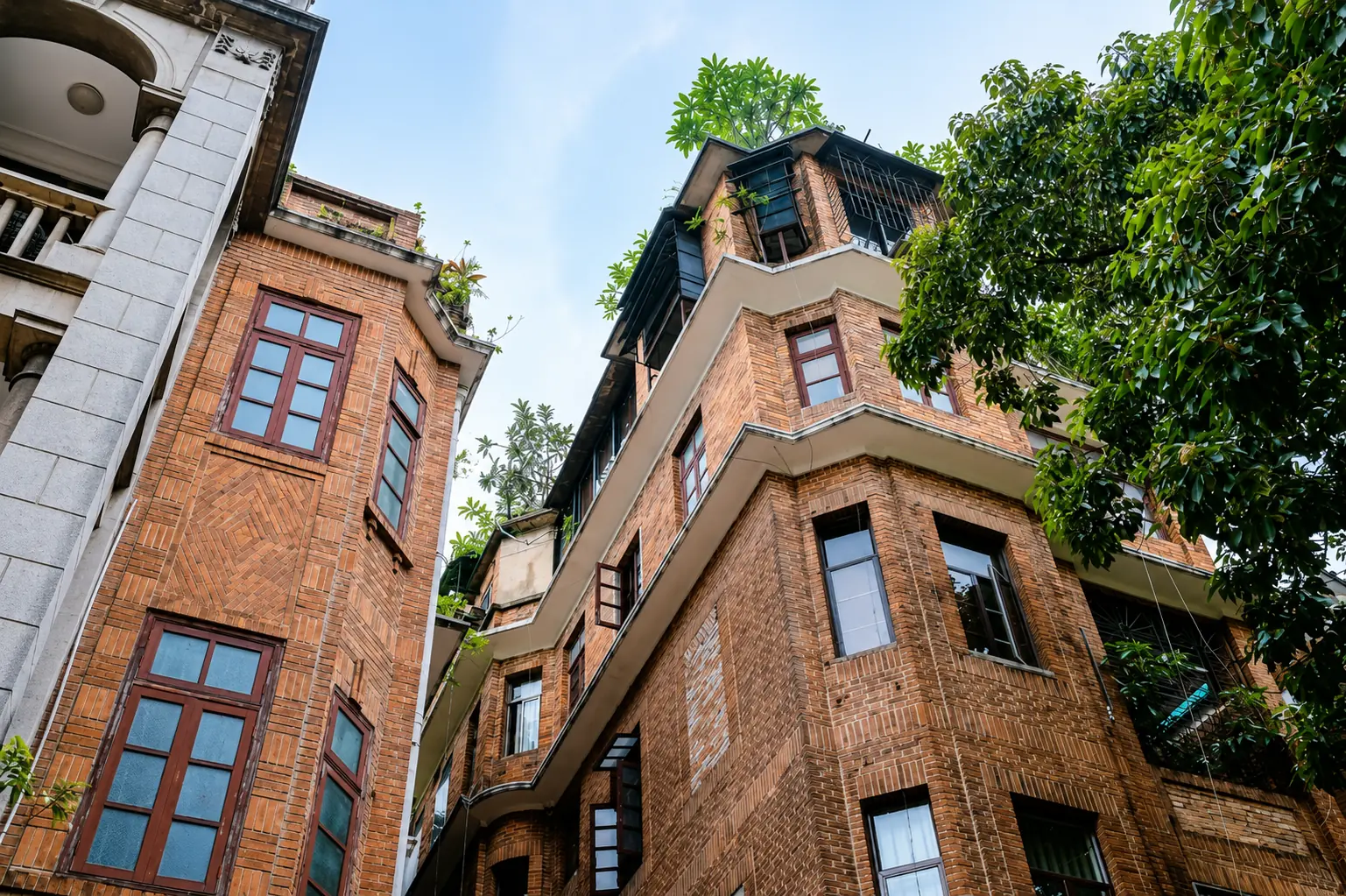
Around Xinhepu Road, Xuguyuan Road, Peizheng Road (培正路), and nearby lanes, red brick, balconies, arched details, and low courtyard walls show Dongshan's overseas Chinese and Western-influenced building language.
A Two-Hour Dongshankou Route From Metro
For a first visit, start at Dongshankou Station (东山口站) (Google | Amap). Coming out from the metro gives you the correct transition: busy Zhongshan Road first, then smaller streets, then the villa district.
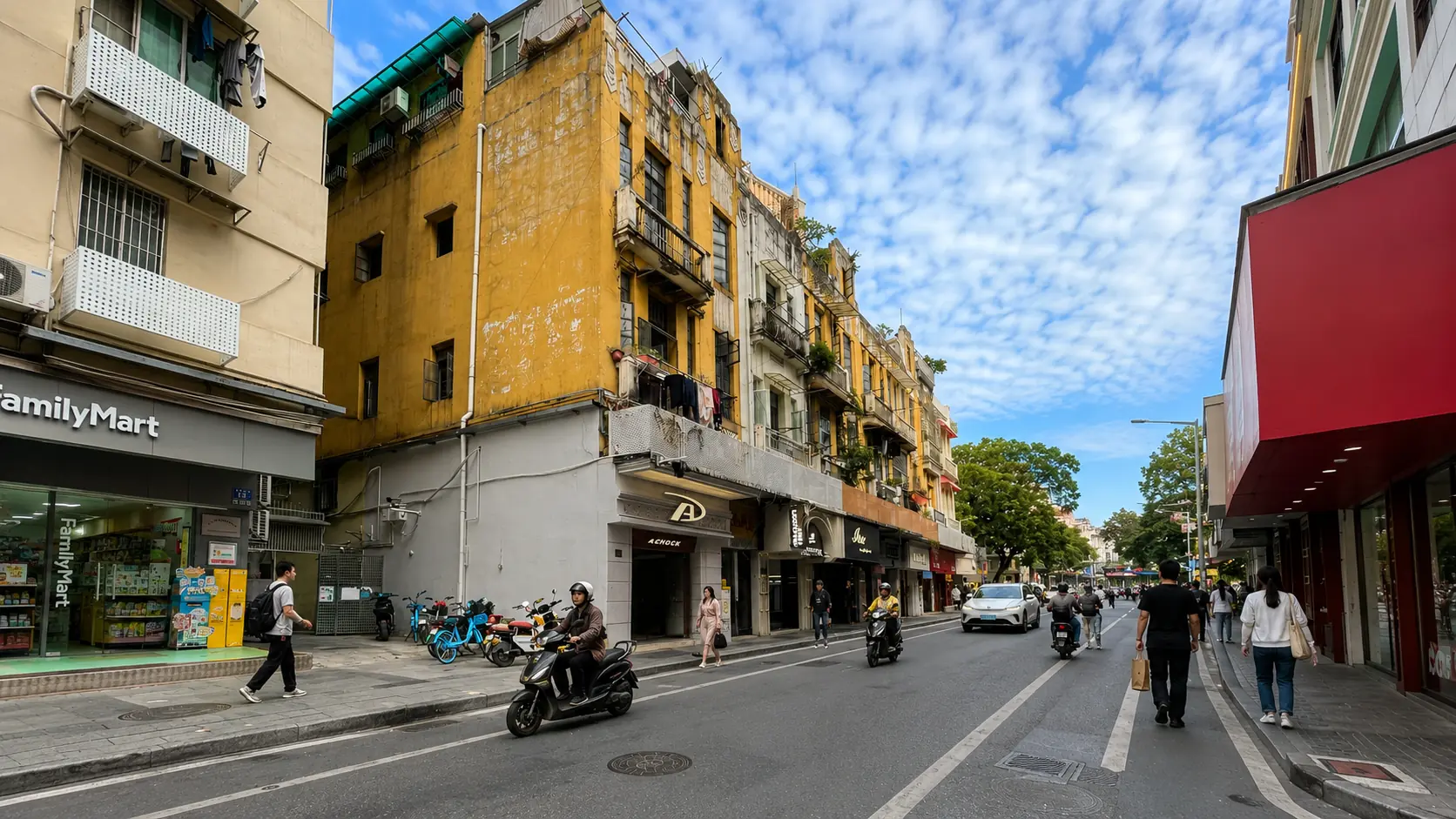
The first stretch from the station helps you orient before the quieter historic streets begin.
Weekday mornings and late afternoons are usually calmer than weekend afternoons. In summer, avoid a hard midday start; heat, traffic lights, and repeated backtracking can make a compact neighborhood feel much larger than it looks on a map.
Suggested first-visit route
- Dongshankou Station(东山口站)- Lines 1 and 6; use this as your orientation point
- Miaoqian West Street and Yifang Dongshan(庙前西街 / 一方东山)- Creative park, cafes, shops, and the easiest first rest stop
- Dongshan Church and Sibei Tongjin(东山堂 / 寺贝通津)- Pass the active church respectfully, then enter the quieter side streets
- Xuguyuan Road(恤孤院路)- Move south into denser heritage streets and red-brick villa views
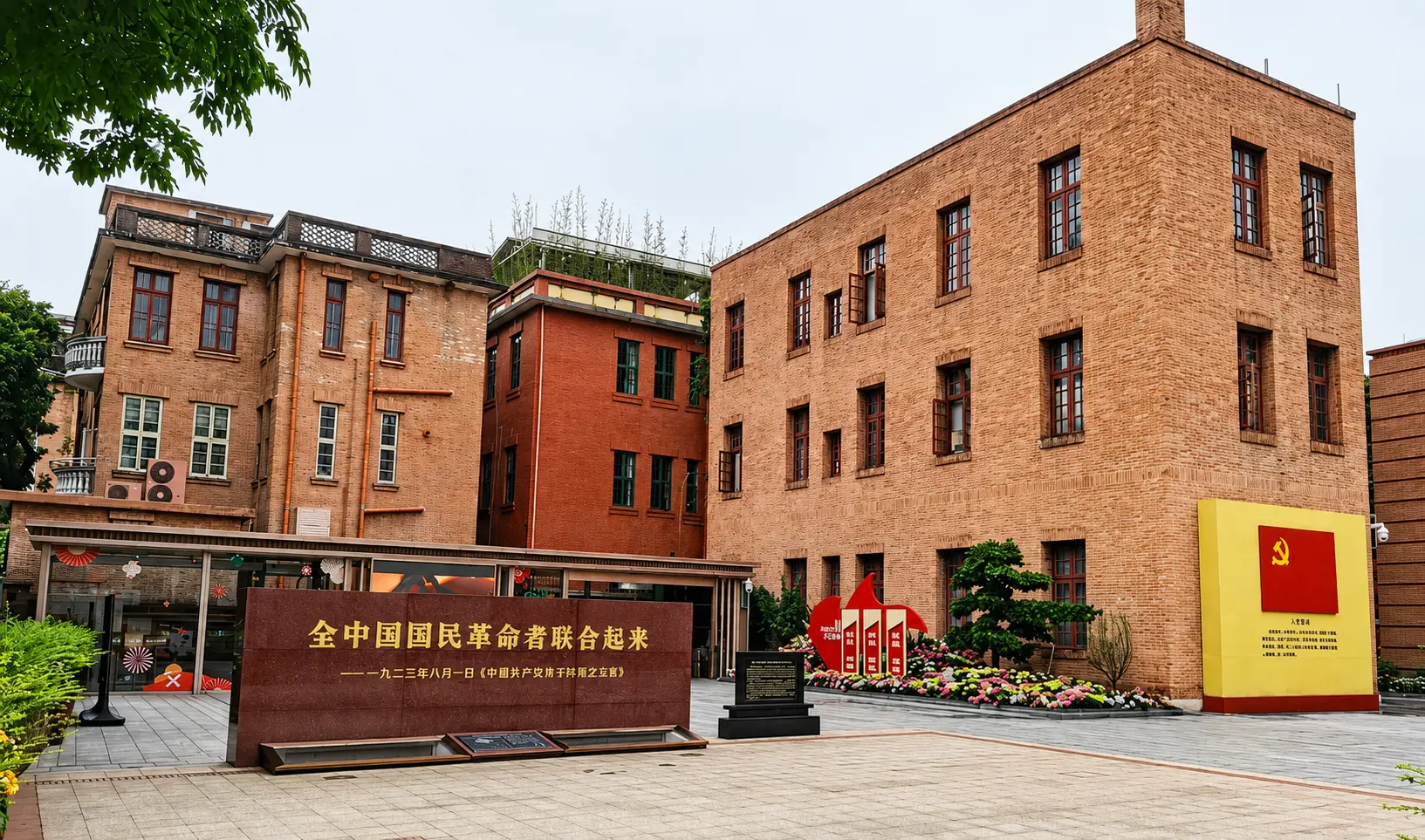
- Third Congress Memorial and Chunyuan(中共三大会址纪念馆 / 春园)- Add 45-60 minutes if you want the indoor history layer
- Kuiyuan and Xinhepu Road(逵园 / 新河浦路)- Slow down for villa facades, walls, and street corners
- Dongshan Lake Park or metro return(东山湖公园 / 返回地铁)- Continue south-west for lake shade, or loop back if you are short on time
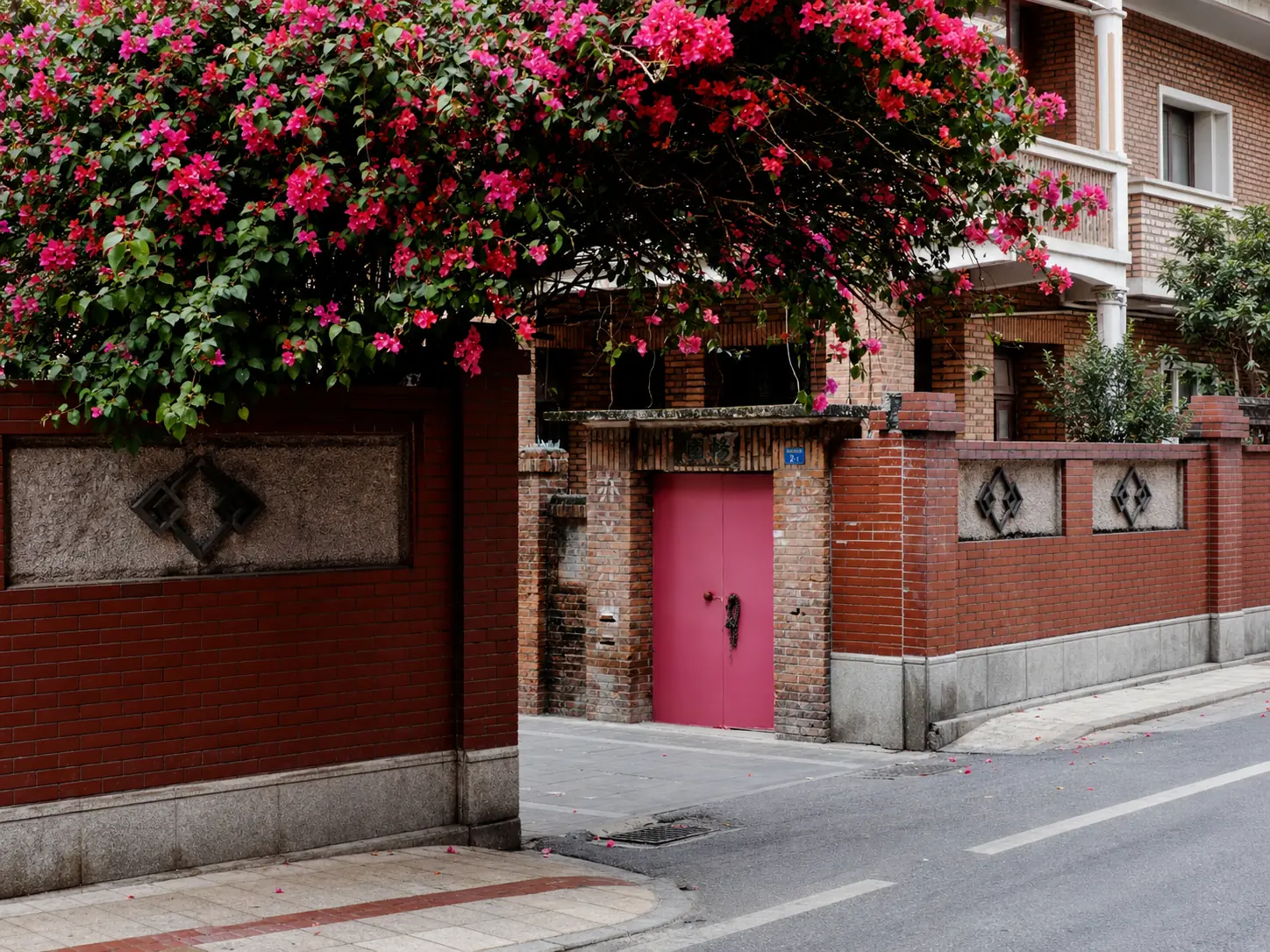
Xuguyuan Road is where the walk starts to feel denser, slower, and more residential.
Do not walk this route like a checklist. Every 5-8 minutes, pause and look at one building properly: material, gate, wall height, current use, and how much of it remains public. Dongshankou is most rewarding when you accept that some of its best buildings are not for entering.
Four Dongshankou Stops Worth Slowing Down For
These stops are useful because they explain different sides of Dongshan. Check same-day opening details before planning any indoor visit; even when a venue is closed, the street relationship can still be worth seeing from outside.
Chunyuan is one of the most useful indoor stops if you want historical context. Yuexiu's official introduction describes the site as three adjacent buildings at Xinhepu Road 22, 24, and 26, built by overseas Chinese in the 1920s; in 1923, No. 24 served as the main office site of the Central Committee from April to September.
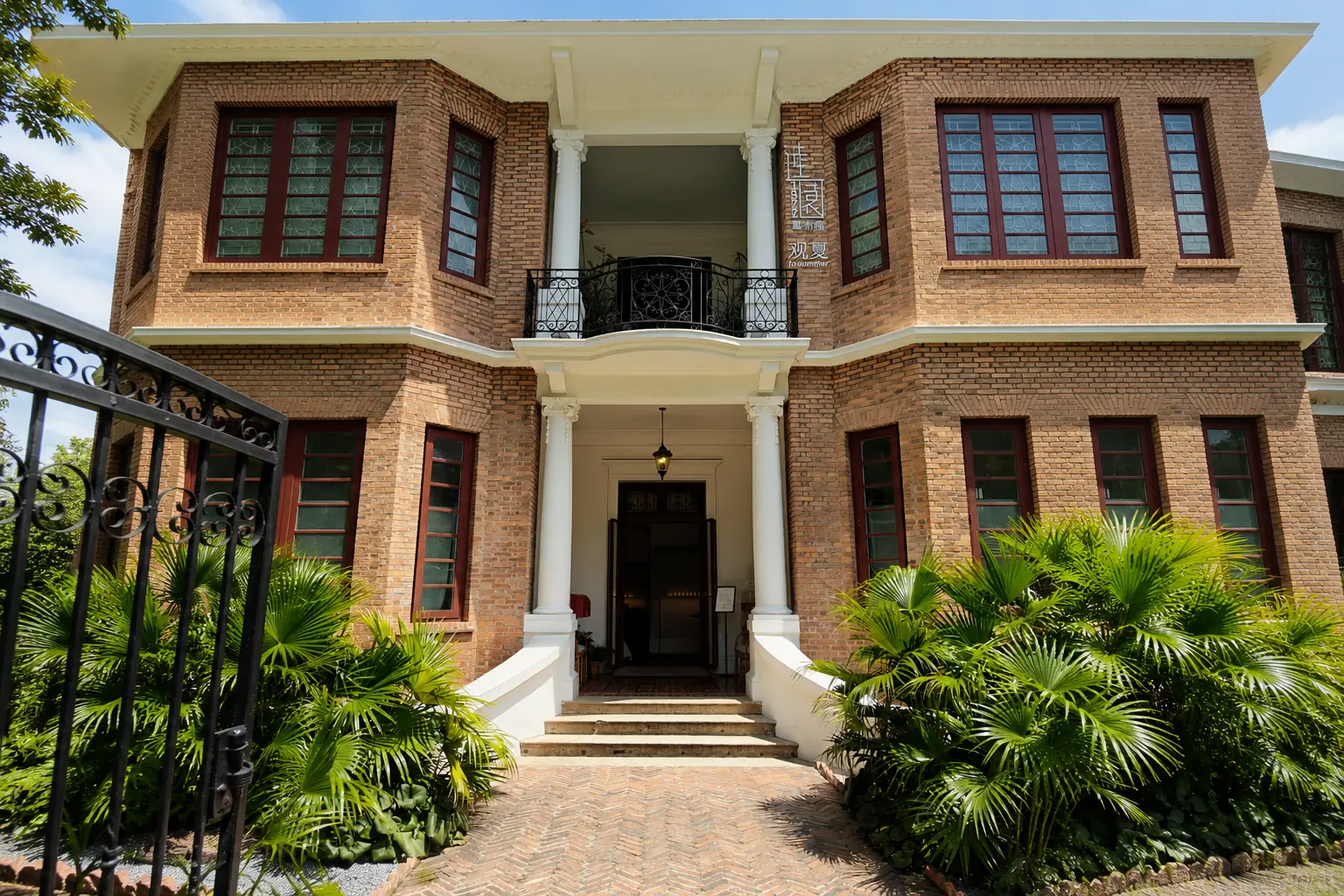
Kuiyuan is one of Dongshan's well-known old villa gardens. When exhibitions are open, it can be worth entering; when they are not, the exterior still helps you understand the scale of old Dongshan gardens from the street.
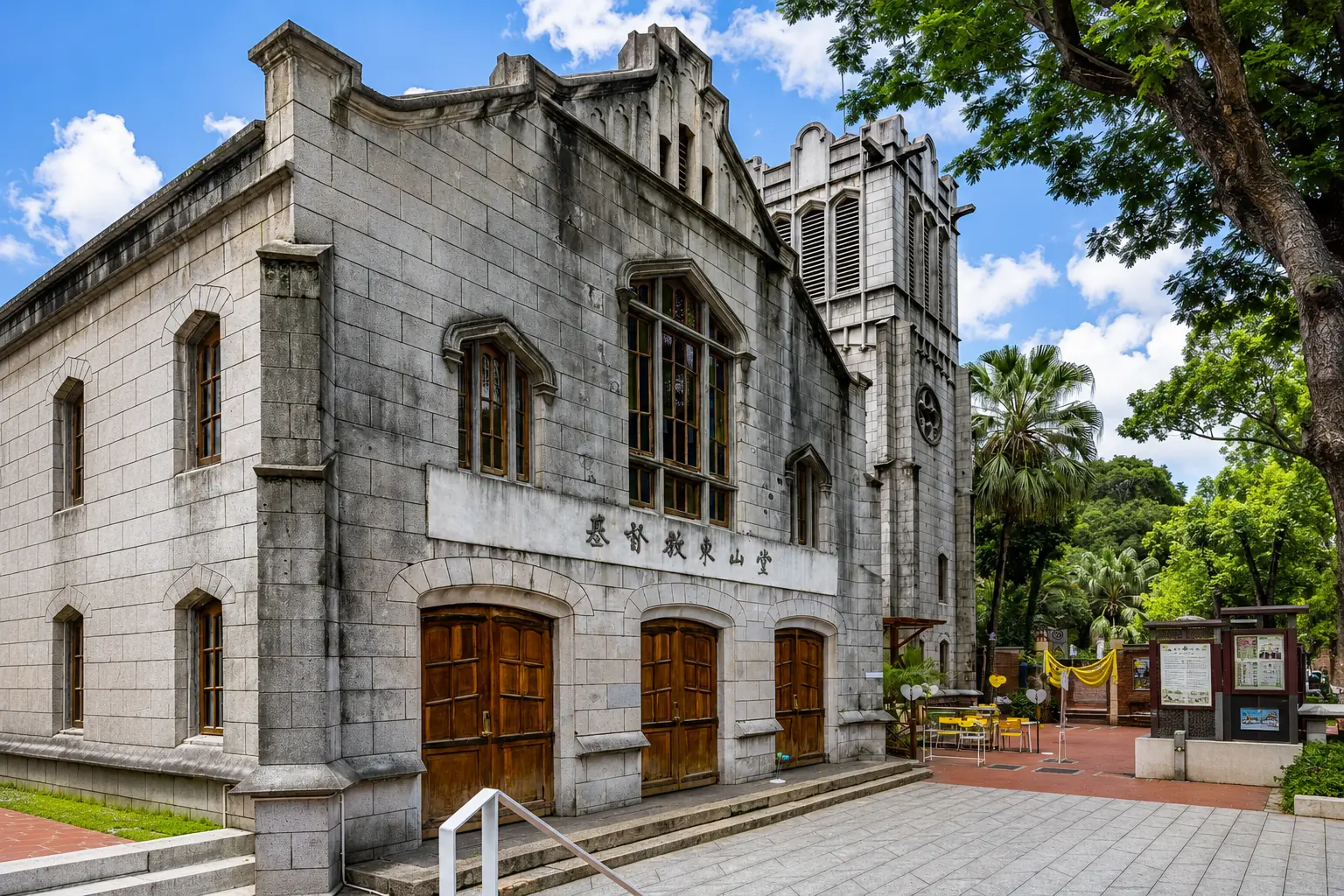
Dongshan Church adds the religious and missionary layer to the neighborhood. It is still a religious space, so treat it as more than a backdrop: keep photography discreet and avoid close shots of worshippers or services.
Yifang Dongshan is the easiest contemporary rest stop, with cafes, events, retail, and public space. Use it to begin or pause the walk, then keep moving into the surrounding lanes where the older Dongshankou texture is clearer.
Cafes, Shops, and Everyday Street Life
Dongshankou's recent popularity comes partly from cafes, design shops, vinyl corners, pop-ups, and young local brands. That layer is real, but it is also the layer most likely to change. A cafe that dominates short videos this year may be replaced, crowded, or simply less useful by the time you visit.
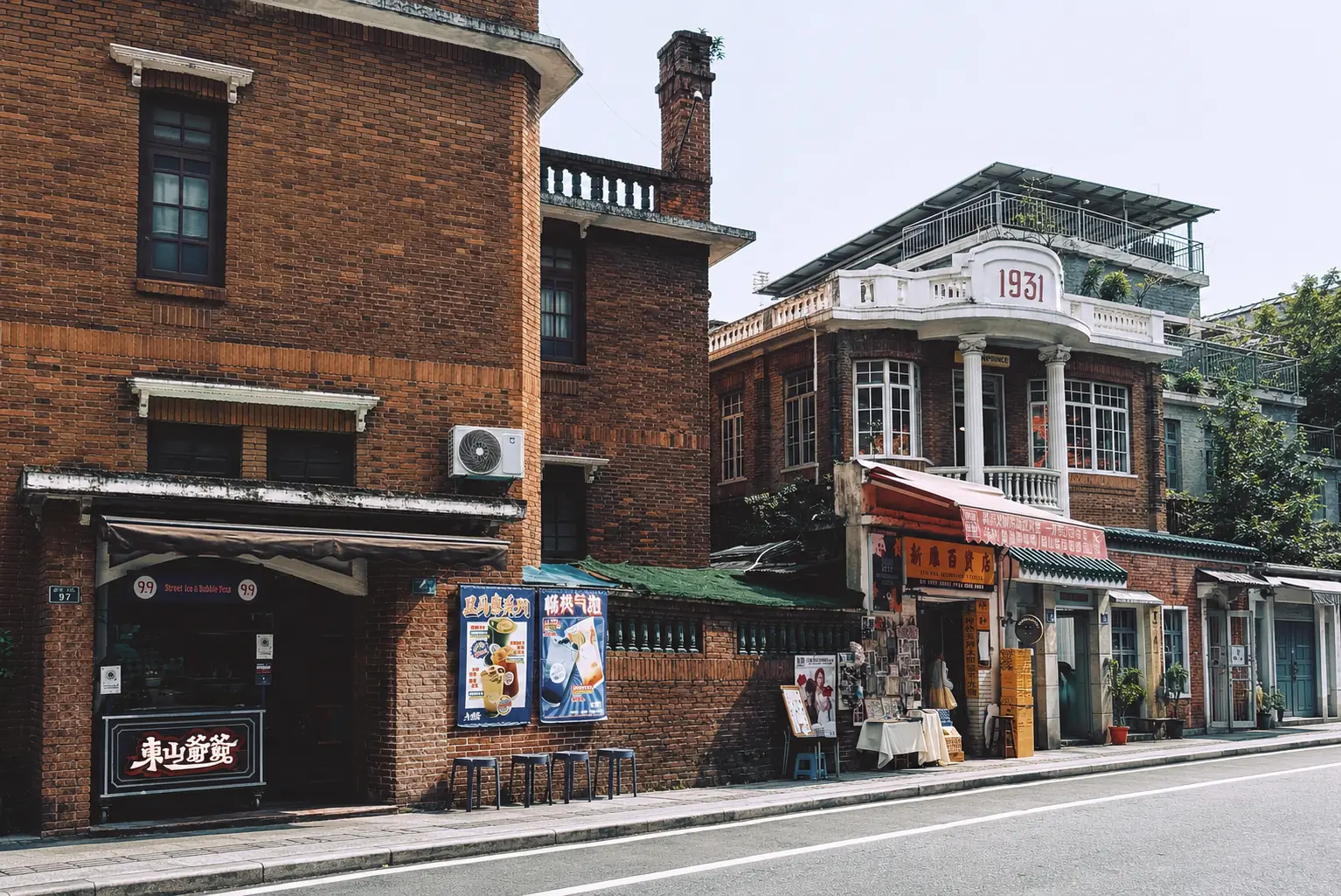
Cafes and small shops are useful rest stops, but they change faster than the streets around them.
The better strategy is to build in 30-45 minutes of flexible wandering. If a shop looks calm, go in. If a queue is long, keep walking. The district is compact, but repeated backtracking in Guangzhou heat can drain the fun quickly.
Photo Etiquette and Best Timing Windows
Dongshankou is photogenic because it is lived in. That also means it needs restraint. Do not push lenses through gates, block residential entrances, photograph worshippers, or use school gates and home doors as private portrait sets. If a guard, resident, or staff member says no photos, let it go.
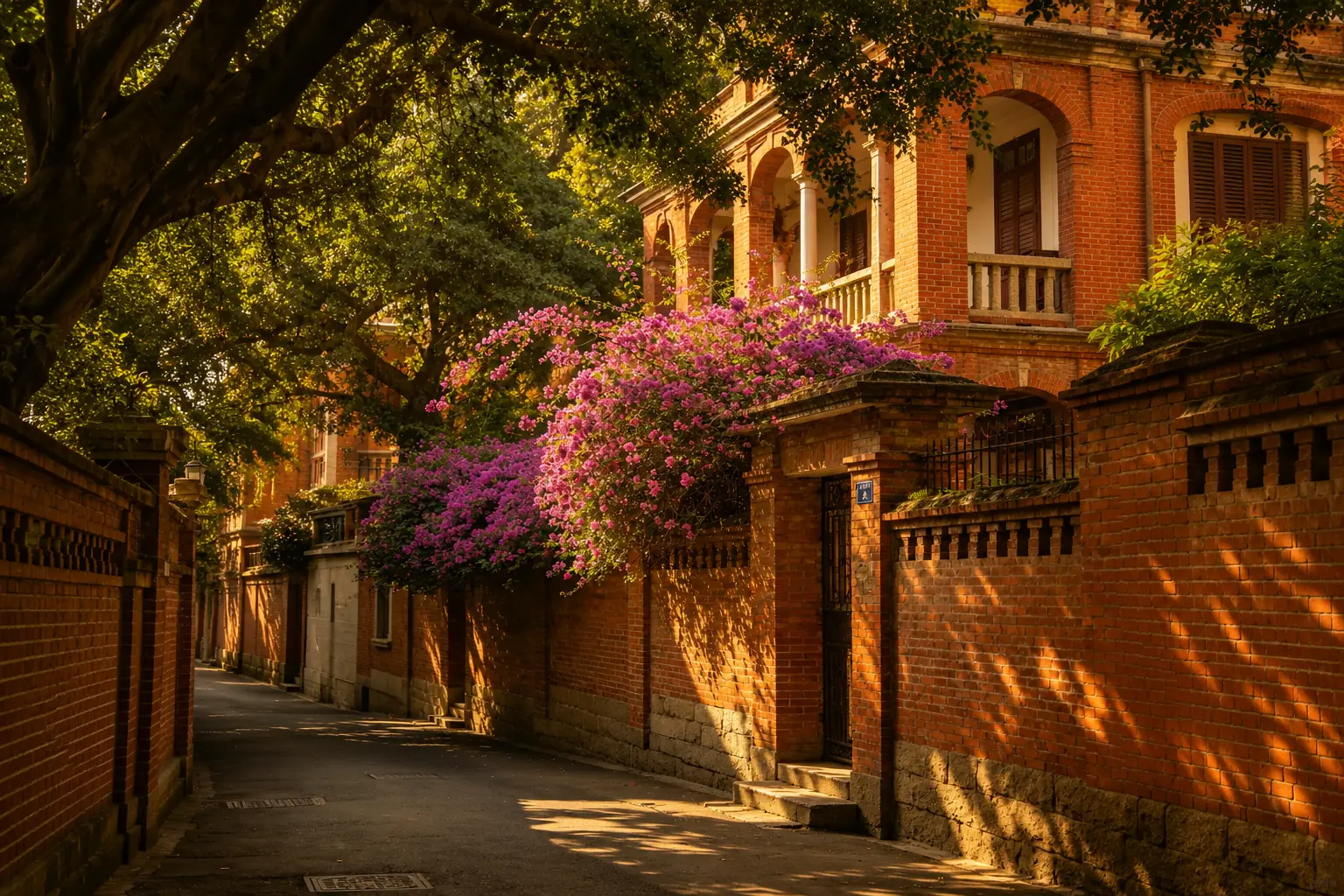
Dongshankou is photogenic because it is still lived in, which is why restraint matters.
The best photography windows are usually weekday mornings and late afternoon. Morning gives you quieter streets and cleaner building details. Late afternoon gives warmer light, cafe glow, and a better street-life rhythm. Midday is harsh and humid, especially in summer.
- Shoot public exteriors. Facades, wall texture, rooflines, balconies and gates are safer subjects than private courtyards.
- Respect active spaces. Churches, schools, memorials and homes are not styling sets; keep entrances clear and accept a no-photo request immediately.
- Watch wet surfaces. Red brick looks richer after rain, but older steps and stone edges can be slippery; wear shoes with grip.
How to Reach Dongshankou by Metro
Use the metro. Dongshankou Station is served by Guangzhou Metro Lines 1 and 6, and the district's official tourism pages point visitors to Dongshankou for Xinhepu and Yifang Dongshan. From the station, walk south into the smaller streets rather than calling a car into the inner lanes.
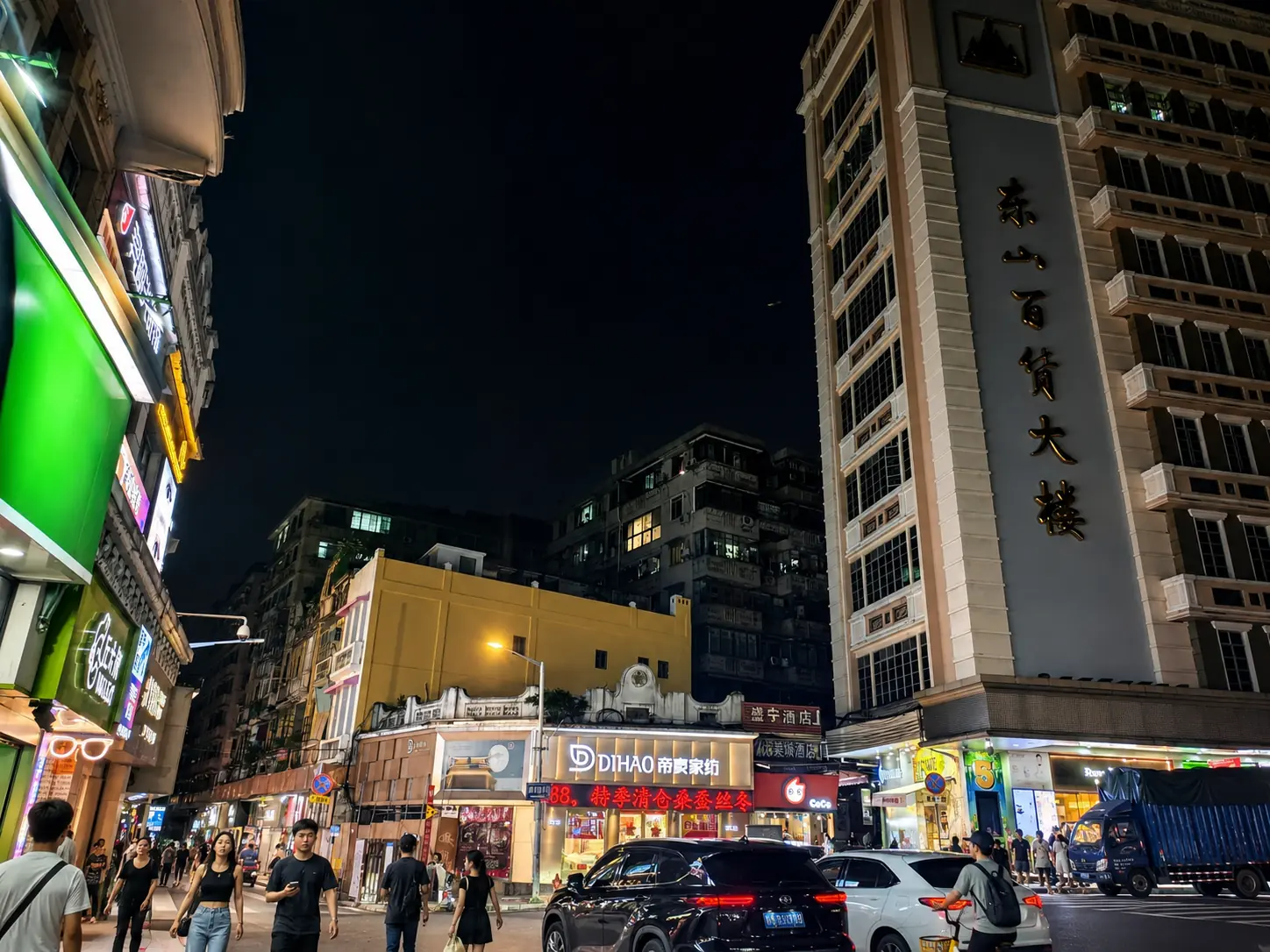
The metro is the simplest way to reach Dongshankou before walking into the smaller lanes.
Taxis and ride-hailing are better for getting close to the station than for driving inside the district. Streets are narrow, drop-off points can be awkward, and parking pressure changes the mood quickly. If you are coming from Guangzhou East Railway Station, Line 1 is the simplest public-transport connection.
Best arrival
Orient near Zhongshan Road, then walk toward Miaoqian West Street and Xuguyuan Road.
Best half-day pairing
Walk Dongshankou in the morning, then choose lunch around Beijing Road, Wenming Road or Xihua Road.
Nearby Pairings for a Guangzhou Half Day
Architecture lovers can pair Dongshankou with Shamian Island (沙面岛): Dongshankou shows Guangzhou's villa-and-lane layer; Shamian shows a more island-like European streetscape.
Dongshan Lake Park (东山湖公园) (Google | Amap) is a gentle ending after the dense streets. Yuexiu materials describe it as one of Guangzhou's major artificial-lake parks, free to enter, with bridges, islands, water, and shade. It is not the core of the villa district, but it makes the walk feel less compressed.
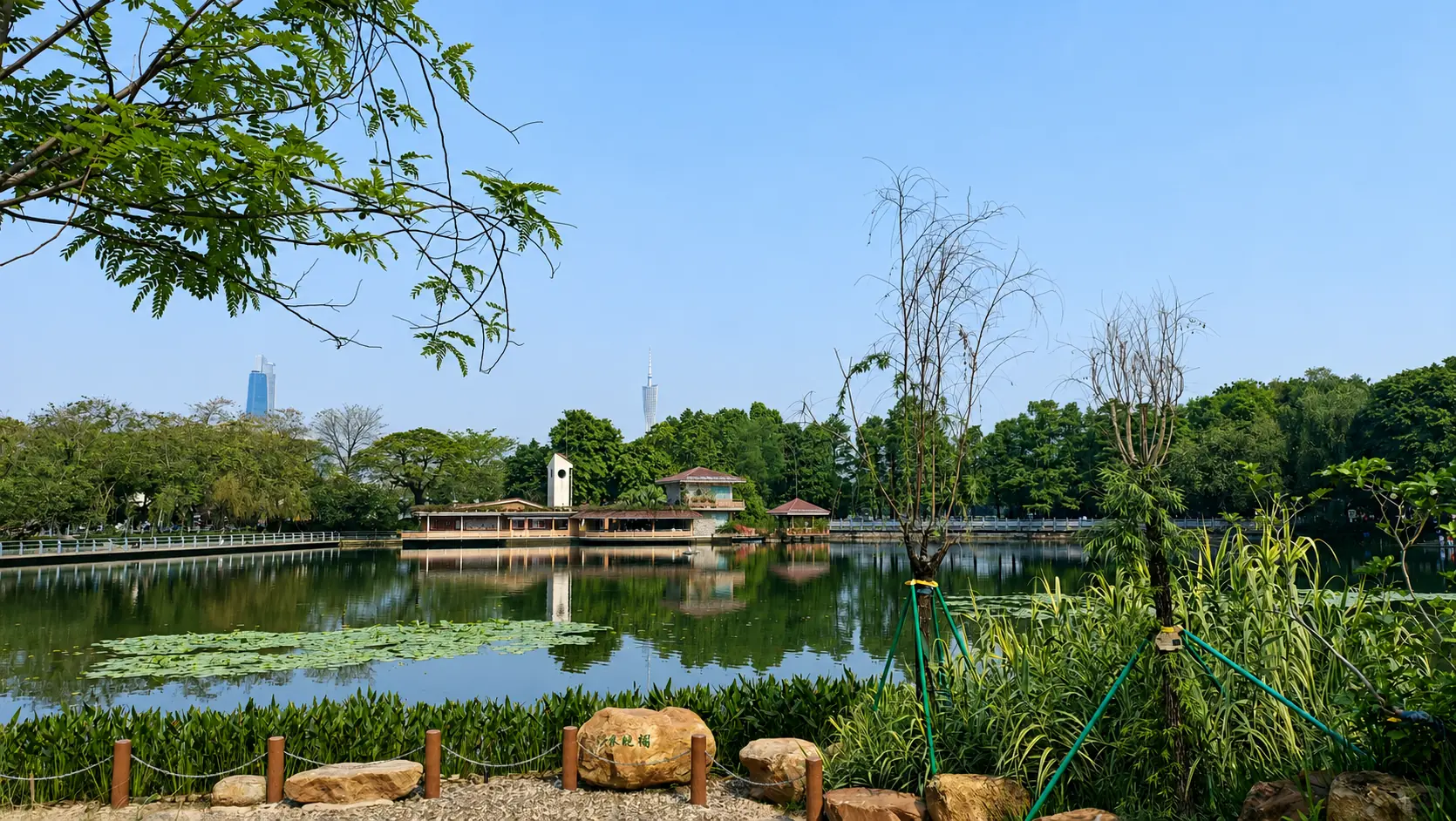
Dongshan Lake Park gives the villa walk a softer, greener ending.
If you want more Guangzhou history, continue on another day with the Museum of the Nanyue King (南越王博物院), Chen Clan Ancestral Hall (陈家祠), or Shamian Island. If you want food, connect the walk to Cantonese dim sum, roast meats, wonton noodles, or dessert streets instead of trying to make Dongshankou itself a full food tour.
Where to Stay Near Dongshankou
Dongshankou's Metro Lines 1 and 6 interchange makes it a calm, well-connected base for independent travelers who prefer leafy villa lanes and morning cafes over high-rise malls.
Affiliate disclosure: the Trip.com hotel links below are affiliate links; we may earn a commission at no extra cost to you. Always check the exact map pin, recent foreign-guest reviews, and cancellation terms before booking.
Stay Near Dongshankou Station
Best for slow mornings & cafes
Step straight into Xinhepu's quieter lanes before midday crowds arrive, with direct Line 1 and Line 6 rides to Beijing Road and Shamian Island (Huangsha Station), plus a quick transfer to Line 3 for Canton Tower.
Booking tip: Prioritize licensed hotels along Zhongshan Road or near Dongshankou exits rather than tucked-away villa guesthouses that can be harder to reach with heavy luggage.
Stay Near Beijing Road
Best for first-time food & transit
If you want classic Cantonese snack streets, Dafo Temple, and a larger pool of mid-range chain hotels right outside your door, base yourself around Beijing Road (北京路) and ride Line 6 three stops east to Dongshankou.
Booking tip: Check proximity to Gongyuanqian or Beijing Road metro exits to keep airport and high-speed rail transfers straightforward.
For full neighborhood comparisons across Liwan, Yuexiu, and Zhujiang New Town, see our Guangzhou travel guide.
Frequently Asked Questions About Dongshankou
Not exactly. Dongshankou is the commonly used neighborhood and metro-area name; Xinhepu Historic Cultural District is the more specific protected historic district concept. For a traveler, they overlap enough to plan one walking route.
Sources checked for this guide
- Xinhepu identity, 400-plus red-brick villas, nearby sights and Dongshankou metro access: Yuexiu District official Xinhepu guide
- Current official walking sequence from Dongshankou Station through Xinhepu to Dongshan Lake Park: Yuexiu District 2025 walking guide
- Yifang Dongshan cultural and commercial reuse context: Yuexiu District official Yifang guide
- Third Congress Memorial, Chunyuan identity and the three-building address: Guangzhou official memorial guide
- Dongshan Church address, heritage status and active Sunday worship context: Yuexiu District official church guide
- Dongshan Lake Park listing and free-admission status: Guangzhou municipal park catalogue
Beyond This Guide
Dongshankou works best when it is part of a Guangzhou day with contrast: old villas, Cantonese food, one museum or river view, and enough time not to rush. For a first Guangzhou trip, use this walk as the quiet middle layer between the big-ticket sights and the city's everyday food culture.
- Pantang Wuyue Historic Village Walk — wander Liwan's 900-year-old water-town pocket beside Lychee Bay
© gochinafreely.com — Original guide by Go China Freely.