Hours & Base Ticket
Essential Rules
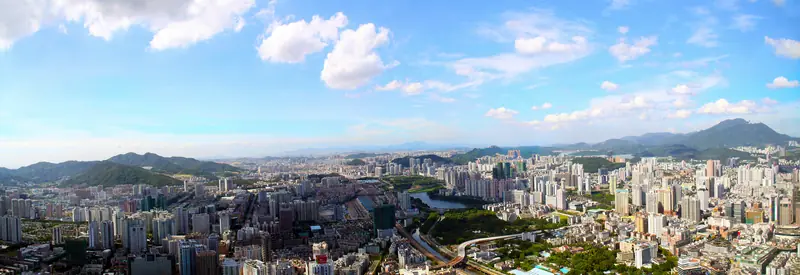
Nantou Ancient City: Shenzhen Before 1980
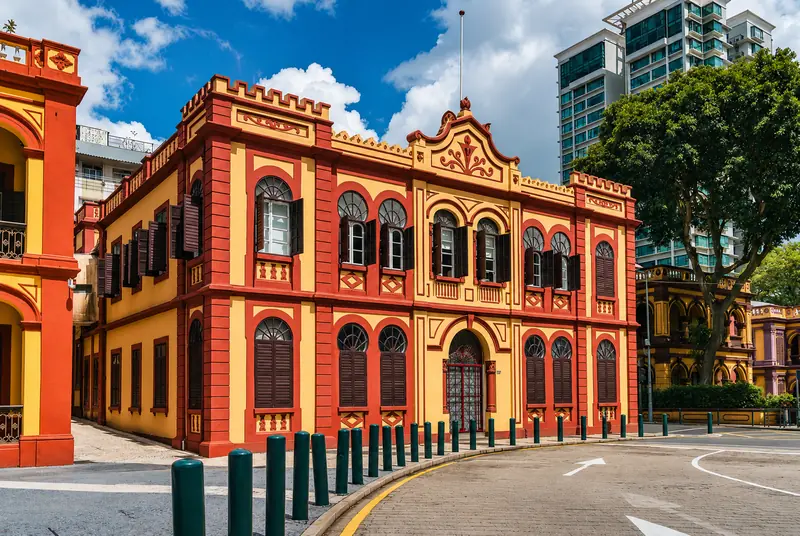
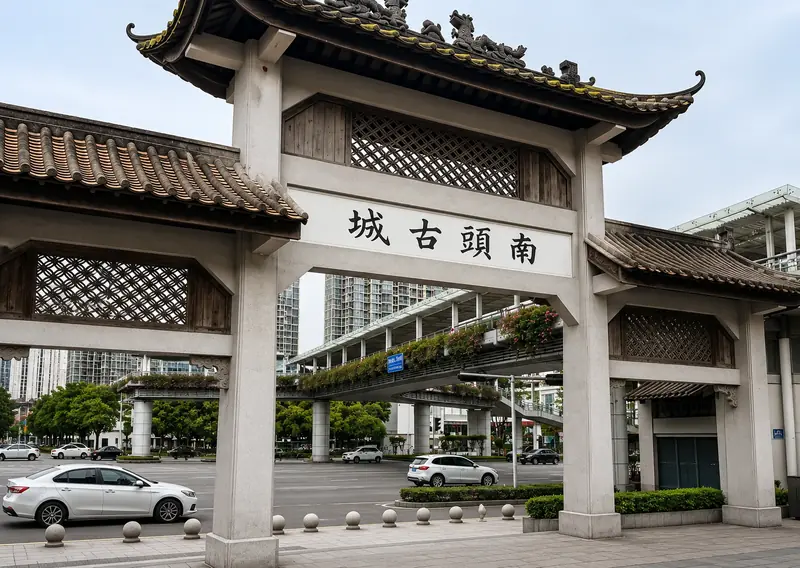
Nantou Ancient City (南头古城) is where Shenzhen's "new city" story starts to look much older. Walk in from Shennan Avenue and, within a few minutes, you move from a Ming-era gate to county-office traces, narrow urban-village lanes, creative shops, exhibition rooms, and everyday residential edges.
This 2-3 hour walk is not about finding a perfectly preserved ancient town; it is about seeing how Shenzhen's 1,700-year history, migrant-era density, and current design-led renewal sit on top of one another.
Shenzhen's history does not begin with the Special Economic Zone. Nanshan's official English introduction traces Nantou's early urban history to AD 331, when Dongguan Commandery and Bao'an County seats were established around today's Nantou area.
The Special Economic Zone explains the city's speed, but not its deeper geography. Read the walk as overlapping layers: ancient administration, migrant-era density, residential life and current design-led renewal—not as a sealed historical attraction.
For a traveler, you do not need to memorize every dynasty. Hold onto three dates:
- AD 331: the early administrative root of Shenzhen's urban history.
- 1394: the Ming-period construction phase tied to the existing old-town pattern and South Gate.
- 1979 onward: Shenzhen's boom years, when Nantou was gradually absorbed into dense urban-village growth.
That is why Nantou works better as a layered neighborhood walk than as a simple historical-site checklist. It has official heritage buildings, but it also has rental housing, small food shops, design offices, old walls, exhibition rooms, residents' entrances, and people who are not there to perform "old Shenzhen" for visitors.
1Ancient County Root
Nantou was a county and commandery center long before modern Shenzhen became a global city.
2Urban Village Layer
Rapid urbanization left dense housing, small businesses, and migrant-era street life inside the old fabric.
3Creative Renewal
Recent renewal added exhibitions, shops, pocket spaces, and cultural programming without turning the whole area into one clean museum.
Two Walks in One Neighborhood
There are two ways to walk Nantou, and the best visit combines them.
1Heritage Route
South Gate, Nantou Ancient City Museum, Xin'an County Office, Dongguan Guild Hall, Xinguo Gong Wen Family Shrine, Baode Shrine, old plaques, and side exhibits make the "Shenzhen has deep history" route.
2Neighborhood Route
Main streets, side alleys, old residential blocks, updated facades, creative retail, cafes, food counters, pocket gardens, and resident edges make the "Shenzhen was built by movement" route.
Do only the first and Nantou may feel thinner than you expected. Do only the second and it can look like a stylish commercial street with some old walls attached. The point is the tension between them: a county-seat past, a migrant-city present, and a curated renewal layer all sharing the same walkable grid.
Use the Main Street, Then Leave It
Nantou's main streets help you orient yourself, but the neighborhood makes more sense when you step into side lanes for a few minutes, then return to the renewed public spaces.
Nantou Walking Route
For a first visit, follow this 2-3 hour route.
- Nantou Ancient City Station or Zhongshan Park Station(南头古城站 / 中山公园站)- Line 12 gives the simplest access
- Nantou Archway and South Gate(南头古城牌坊 / 南城门)- Start with the old-city threshold
- Nantou Ancient City Museum(南头古城博物馆)- Use the museum to frame the 1,700-year story
- Zhongshan South Street and Shuyuan Square(中山南街 / 书院广场)- Main-street axis, shops, exhibitions, and public space
- Xinan County Office and Dongguan Guild Hall(新安县衙 / 东莞会馆)- Administrative and migrant-association history
- Shrines and Side Lanes(信国公文氏祠 / 支巷)- Read the smaller historical and residential layers
- Chunjing Street and Creative Stops(春景街)- End with the renewal layer, food, and evening energy
This is not a route where every stop needs equal time. Spend more time where your interest is strongest: the museum if you want the historical frame, side alleys if you like street photography and urban form, or the creative streets if you want food and a more relaxed finish.
If you only have one hour, do South Gate, the museum, the main street, and one or two side lanes. If you care about architecture, urban villages, or Shenzhen's growth story, give yourself three hours and do not rush the middle.
South Gate and Museum Start

1 · Cross the South Gate threshold
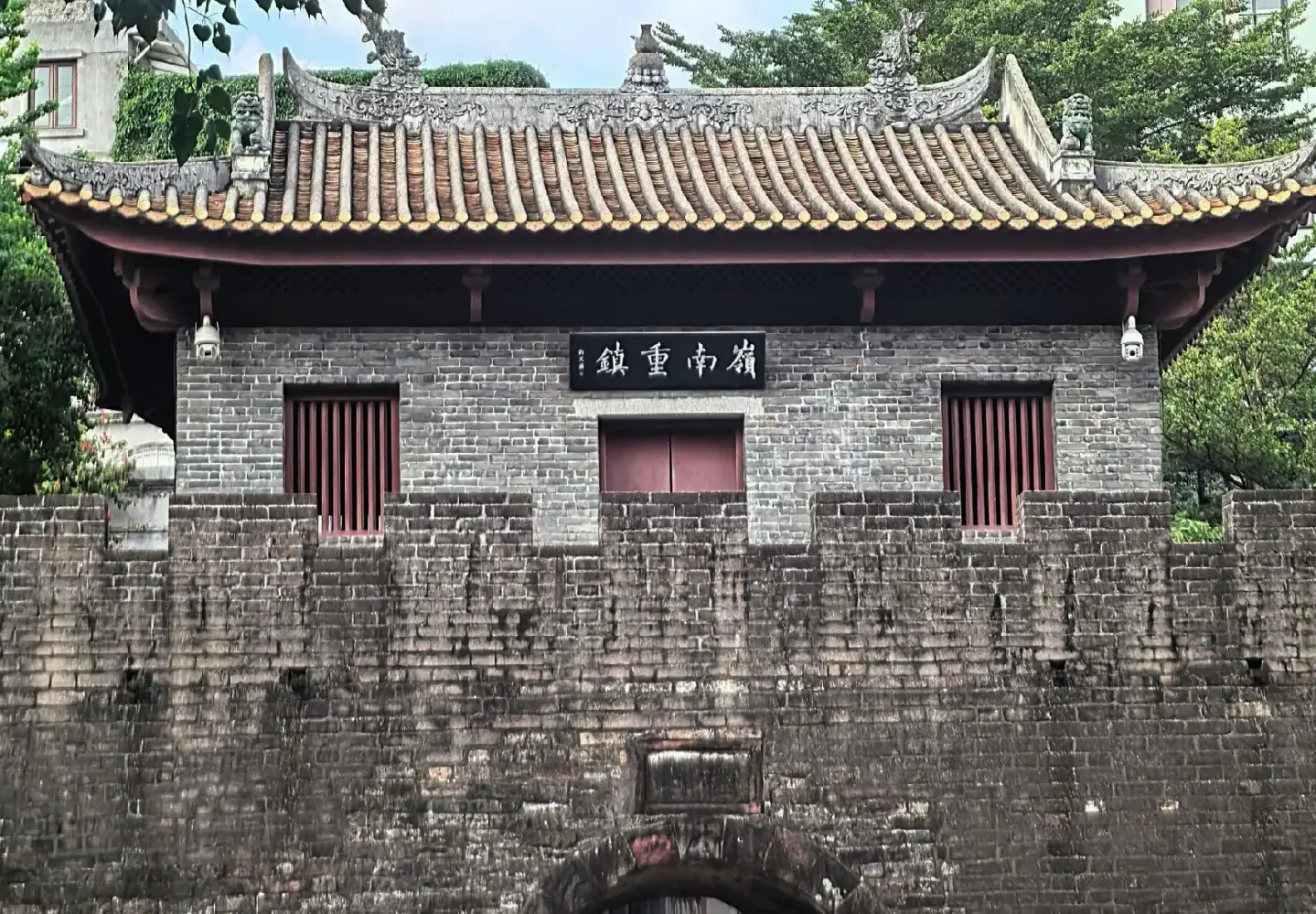
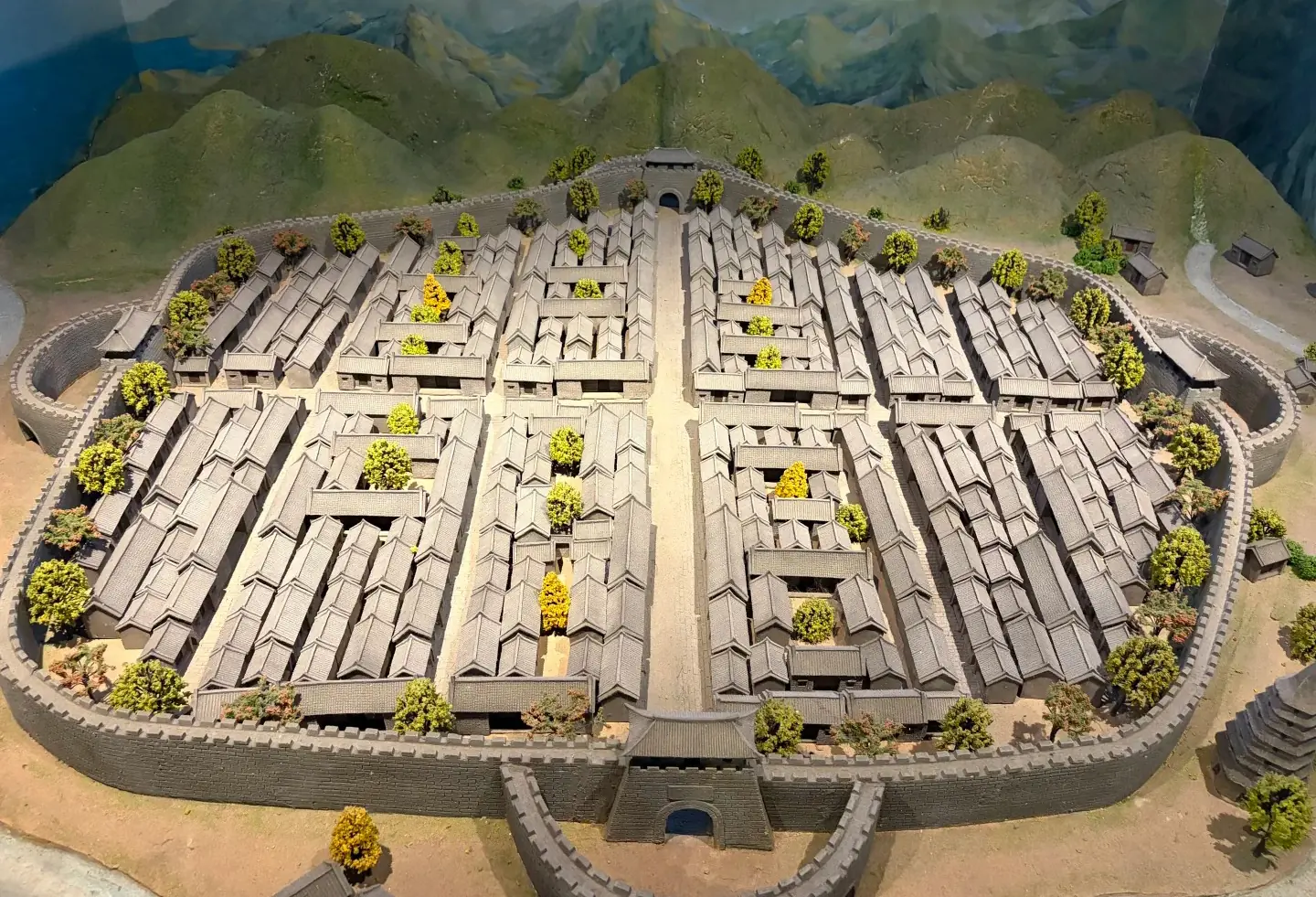
The clearest entrance is South Gate (南城门) (Google | Amap). Nanshan's official introduction says the existing Nantou town was first constructed in the 27th year of Hongwu in the Ming dynasty, AD 1394, and that ruins of the north wall and South Gate remain. The gate still has the "Ning Nan" (宁南) stone inscription above the arch.
Stand outside for a moment before entering. Shennan Avenue traffic is behind you; the gate and old-town lane are ahead. That contrast is the whole article in one frame.
2 · Build the historical frame at the museum
Nantou Ancient City Museum (南头古城博物馆) (Google | Amap) sits outside the old town on the southwest side beside Shennan Avenue. It is small, but it gives the walk a backbone: AD 331, the Shenzhen-Hong Kong historical root, coastal defense, Ming-Qing city layout, and Nantou's county-seat role.
See it early so the later county office, guild hall, and side alleys do not feel like disconnected details.
Open
Tuesday-Sunday · 10:00-17:00
Last entry
16:30
Closed
Monday, except major statutory holidays
Special changes are announced separately.
County Office, Guild Hall and Shrines
From the museum and South Gate area, move into the old-town streets and look for the buildings that explain what Nantou used to do.
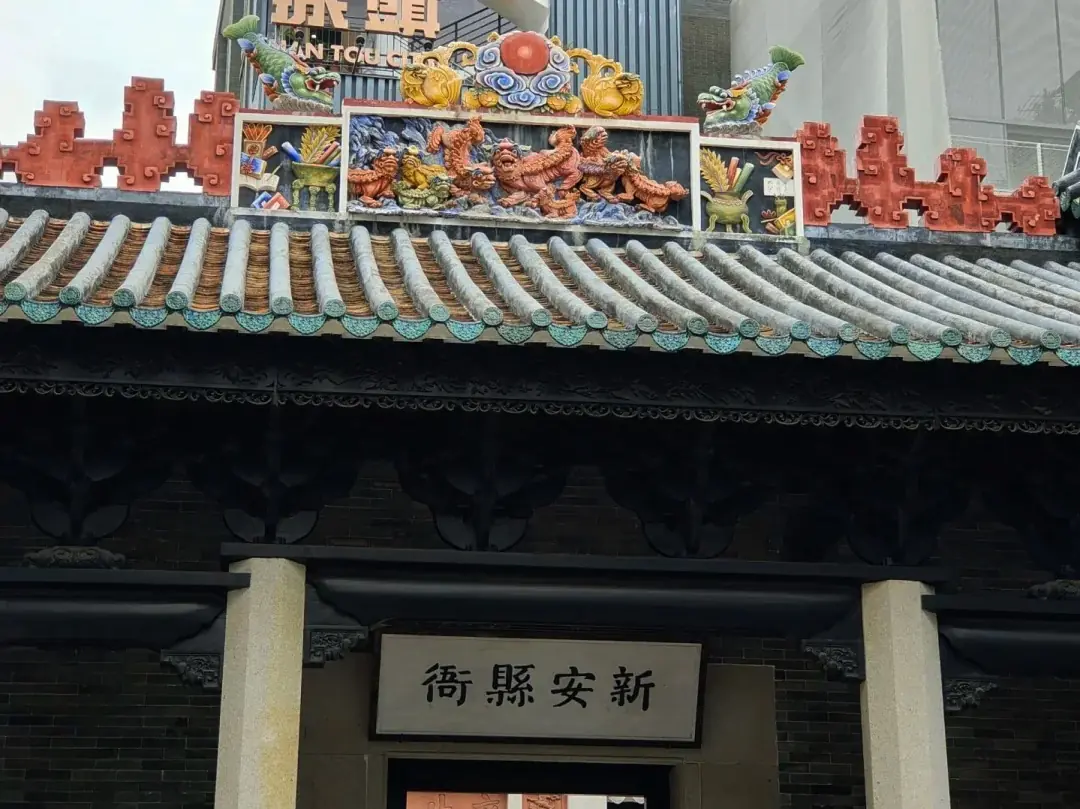
Role: the administrative center that explains why Nantou matters beyond its gate.
Key history: in 1573, the Ming court created Xin'an County from part of Dongguan County and placed its seat here. Hong Kong Island, Kowloon, and the New Territories were later ceded from Xin'an County territory between 1842 and 1898, which is why Nantou is described as a root of Shenzhen-Hong Kong history.
Role: social infrastructure for people living and trading away from home.
Key history: Nantou's official architecture page describes this preserved guild-hall building, also called Bao'an Public Office (宝安公所), as first built in 1868 and rebuilt in 1907.
Role: lineage, commemoration, and local religious life inside the same old-town grid.
Why it matters: Xinguo Gong Wen Family Shrine and Baode Shrine show that Nantou held administration, defense, trade, migration, clan memory, and neighborhood life together.
If a hall or exhibition is closed, keep walking. Nantou's information is not only indoors. Gate shapes, wall bases, old facades, lane width, roof edges, apartment entrances, and the friction between old and new are part of the reading.
Urban Village Texture, Not a Theme Park
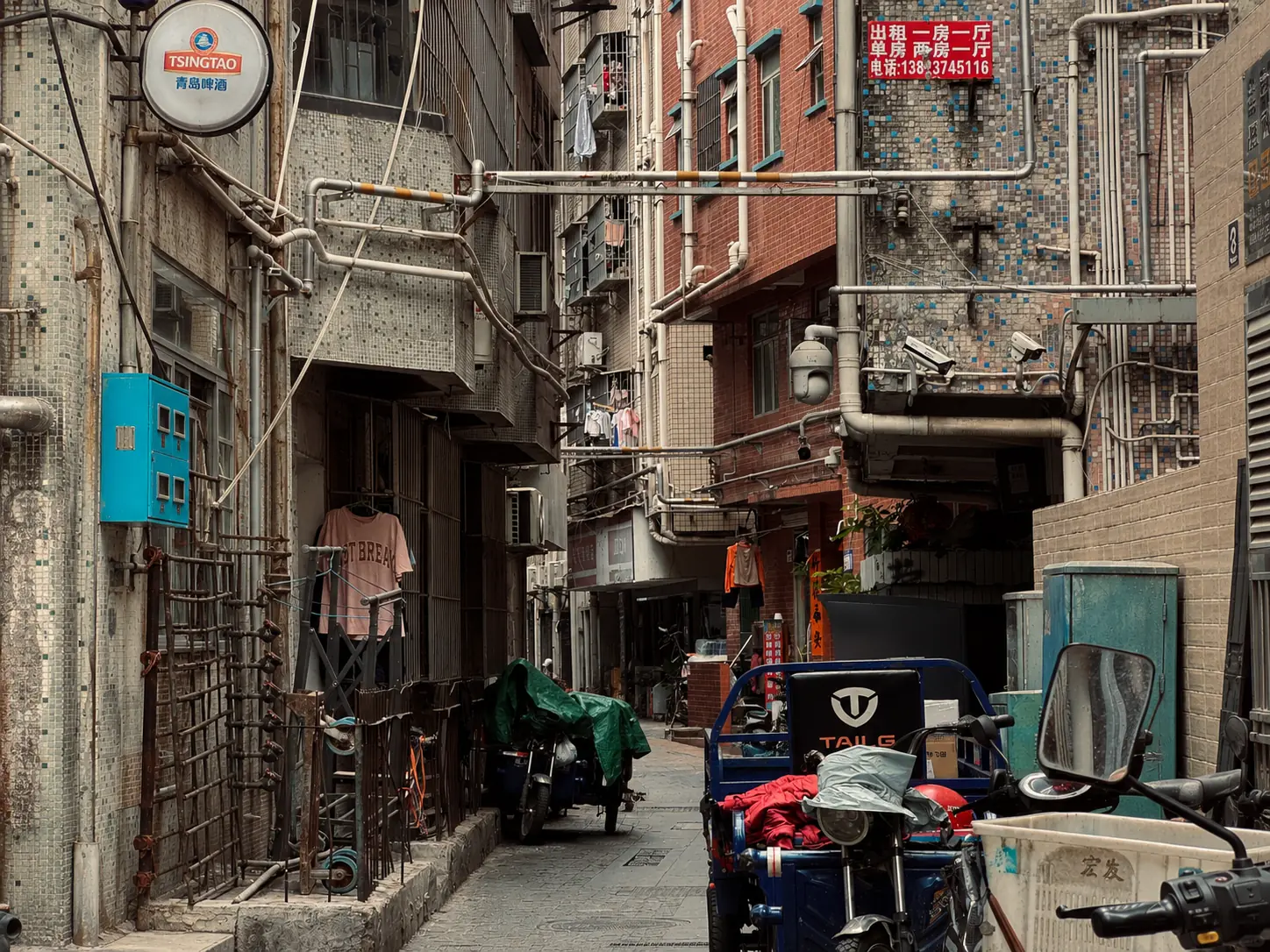
This is the section where tone matters most. Nantou has gritty urban-village textures, but it should not be treated as poverty scenery. A better way to understand it is as one of Shenzhen's compact records of migration, housing pressure, entrepreneurship, and adaptive reuse.
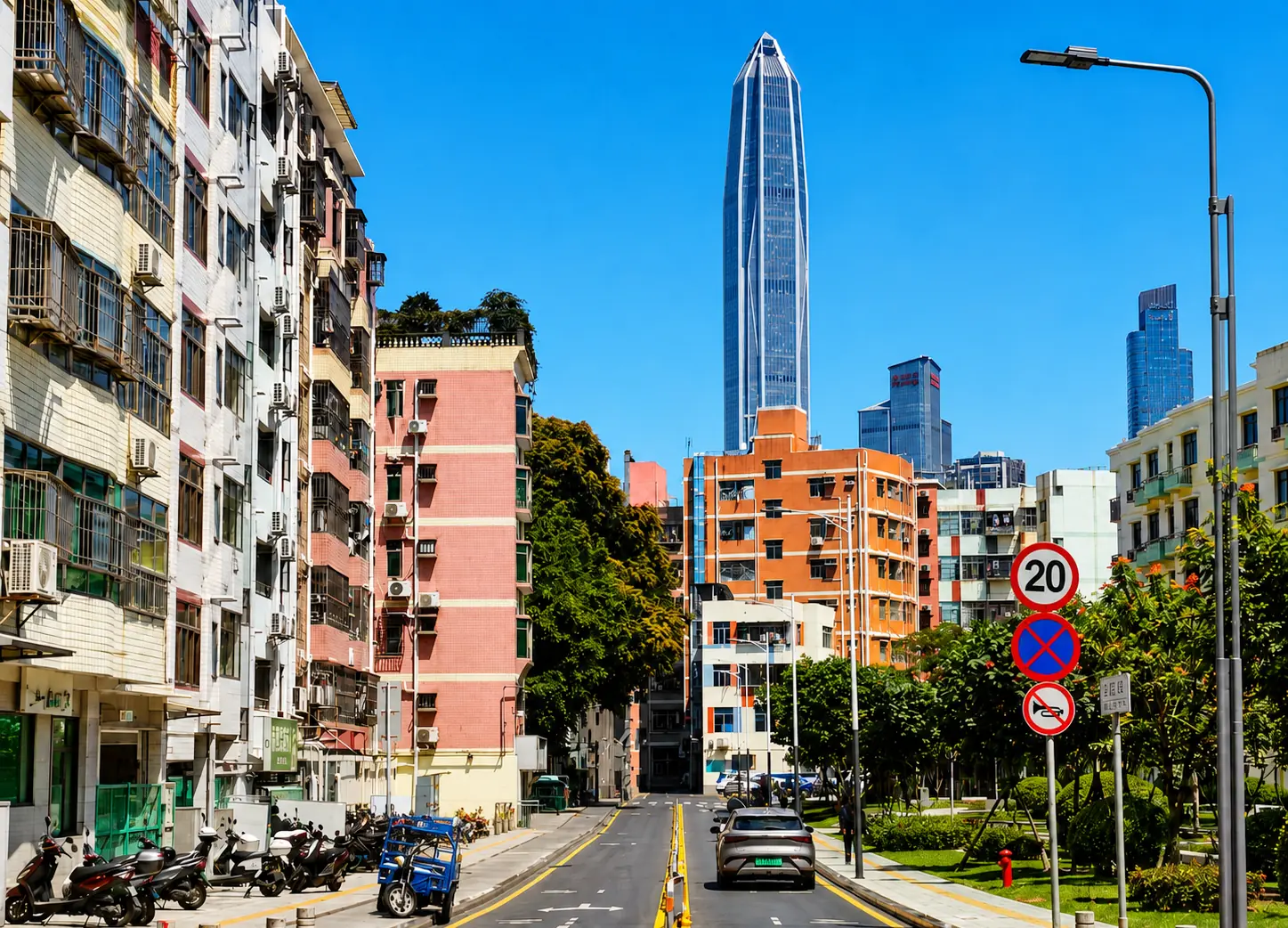
After 1979, Shenzhen drew workers, builders, service staff, small traders, designers, factory hands, and young strivers from across China. Urban villages across the city offered lower-cost rooms and flexible ground-floor commerce. Nantou is unusual because this urban-village layer grew inside an old county-seat footprint.
In the side lanes, look for four things:
ADensity
Narrow gaps, tall residential blocks, and small rooms show how space was stretched for low-cost rental life.
BMixed Use
Food counters, studios, apartments, storage, and residents' entrances often share the same lane.
CPartial Renewal
Polished facades and signage sit near rougher walls, pipes, staircases, and everyday repairs.
DBoundaries
These are still homes and workplaces. Photograph street scenes, not private interiors or residents at close range.
Urban Land Institute's profile describes Nantou as an attempt to regenerate a historic urban village while preserving community fabric. Shenzhen government reporting likewise says the project did not follow a large-demolition model and that many original residents could remain.
Whether you love the result or find it too curated, Nantou raises a useful question: how can a dense lived-in district become more usable without erasing the life that made it valuable?
Do Not Hunt for 'Grit'
Side lanes are for reading the city, not treating residents as atmosphere. Keep cameras out of doorways, windows, laundry areas, and private stairwells.
Creative Streets and Evening Energy
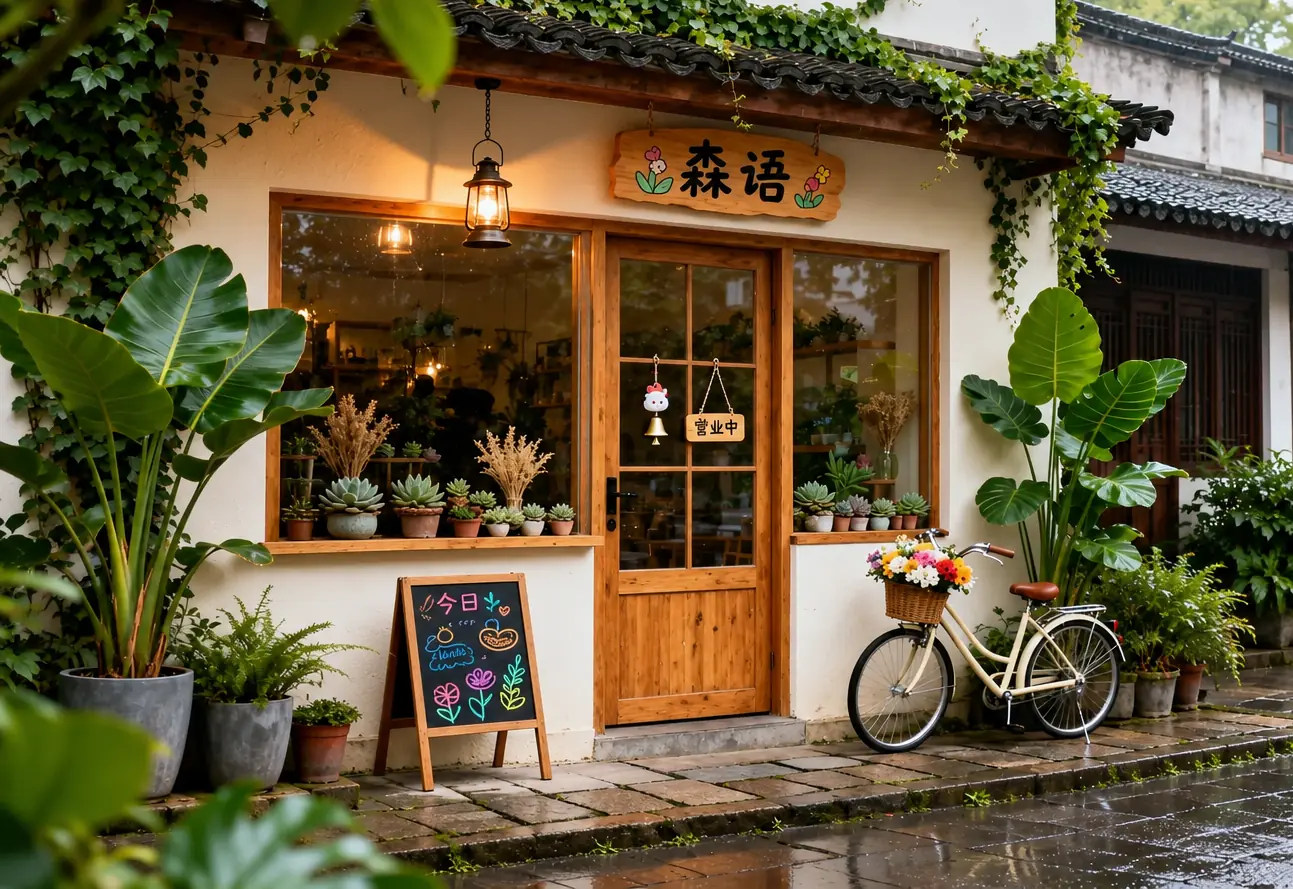
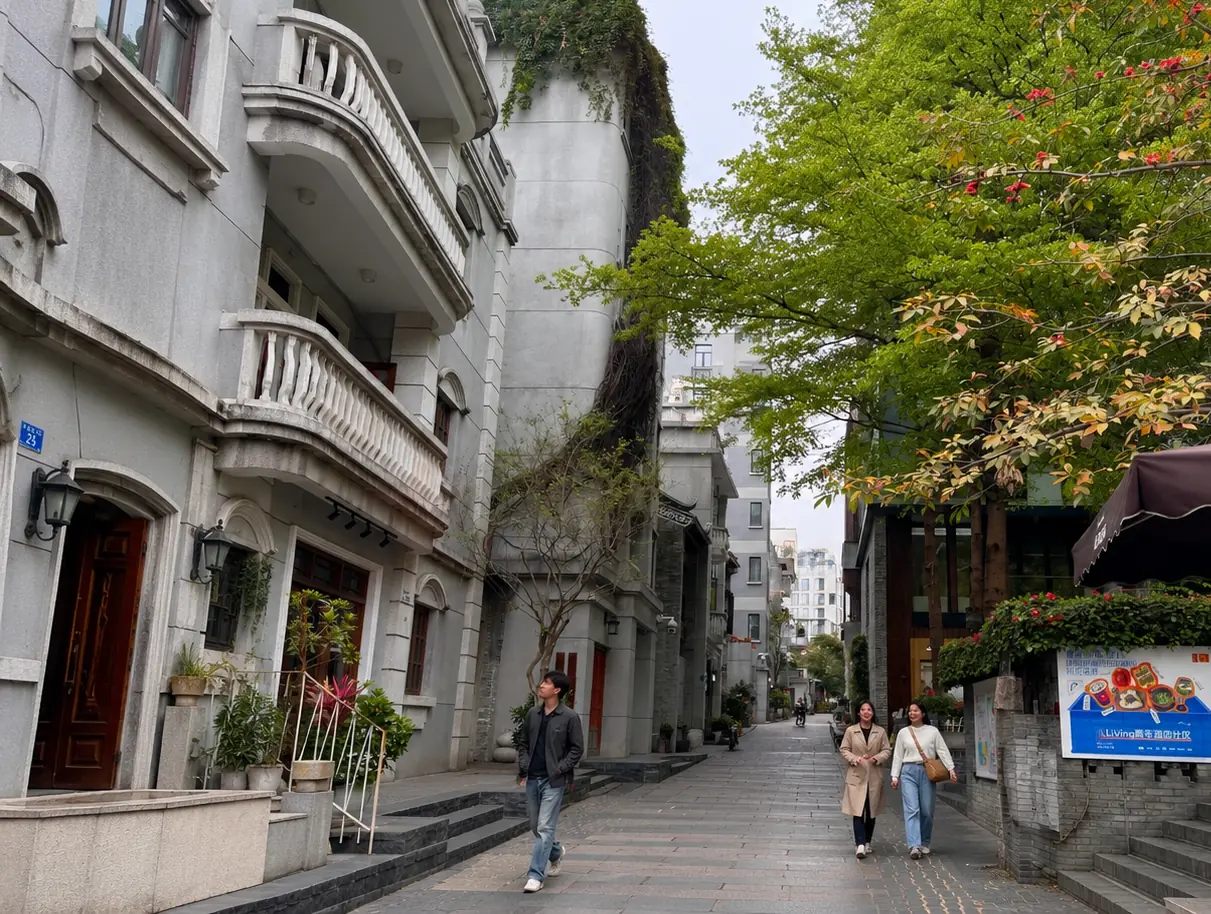
The renewal layer becomes clearer as you move toward creative streets, small exhibition spaces, and food-and-drink clusters. Nantou's official site describes the current district as a city creative neighborhood built on history, with culture, art, commerce, residence, and community life mixed together.
Chunjing Street (春景街) (Google | Amap) is a good place to slow down near the end of the walk. Depending on the season, you may find pop-ups, design shops, small food counters, craft displays, or temporary exhibitions. Permanent exhibition spaces in the wider district can include Nantou 1820 Digital Exhibition Hall, plaque displays, cultural shows, and museum-linked rooms, but hours and reservation rules change, so check the official WeChat account or on-site notices before planning around one specific venue.
Use the food and coffee scene as a break, not the whole point. Nantou has Guangdong, Hong Kong, Macau, Chaozhou-Shantou, cafe, bar, dessert, and creative retail energy, but this is not a pure food guide. If you want a serious dinner, Nantou can be your late-afternoon walk before heading to Nanshan, Shekou, OCT, or your hotel area.
Evening is atmospheric. Lights come on, shops feel livelier, and the old gate photographs well. But if you want to understand the history and residential fabric, arrive before dark and let the neighborhood shift around you.
Best Times, Transport and Costs
Nantou Ancient City itself is best treated as a free public street walk. Individual shops, restaurants, exhibitions, and events have their own hours, reservation rules, and costs. The museum follows its official Tuesday-Sunday 10:00-17:00 schedule, with last entry at 16:30 and Monday closure except major statutory holidays; other exhibition-style stops adjust individually, so check current notices.
Quiet history window
Weekday 10:00-12:00
Best for
Museum, exhibitions, and quieter streets.
Trade-off
Harder light and less evening atmosphere.
Best first visit
16:00-19:00
Best for
Photos, dinner lead-in, and the day-to-night transition.
Trade-off
Busier on weekends.
Evening only
After 19:00
Best for
Lights, drinks, and casual food.
Trade-off
Less visible history and a more commercial feel.
The easiest public transport is Shenzhen Metro Line 12 to Nantou Ancient City Station or Zhongshan Park Station. Nantou's official guide also lists Line 1 Taoyuan and Daxin stations, plus bus stops including Nantou Ancient City, Nantou 1, Nantou 2, and Nanshan Public Security Sub-bureau.
Show this screen to your driver · 出示给司机看
请到南头古城南城门附近,谢谢。
Please take me to the South Gate of Nantou Ancient City.
Useful if you are coming from Shenzhen Bay Port, Shekou, OCT, or a Nanshan hotel.
From Shenzhen Bay Port, a taxi or ride-hailing trip is usually convenient when traffic is kind. From Futian, Luohu, or the airport, compare metro time before assuming a car will be faster.
How to Combine Nantou in Shenzhen
Nantou works best as the historical-neighborhood layer in a Shenzhen half day. It is not a place to sprint through between too many major stops.
Good pairings:
1Nantou + OCT Loft
Best for design, cafes, galleries, adaptive reuse, and urban-renewal themes.
2Nantou + Shenzhen Bay Park
Best for an afternoon street walk followed by a coastal sunset.
3Nantou + Shekou
Best if you are staying in Nanshan, entering from Hong Kong, or want dinner near Sea World.
4Nantou + Zhongshan Park
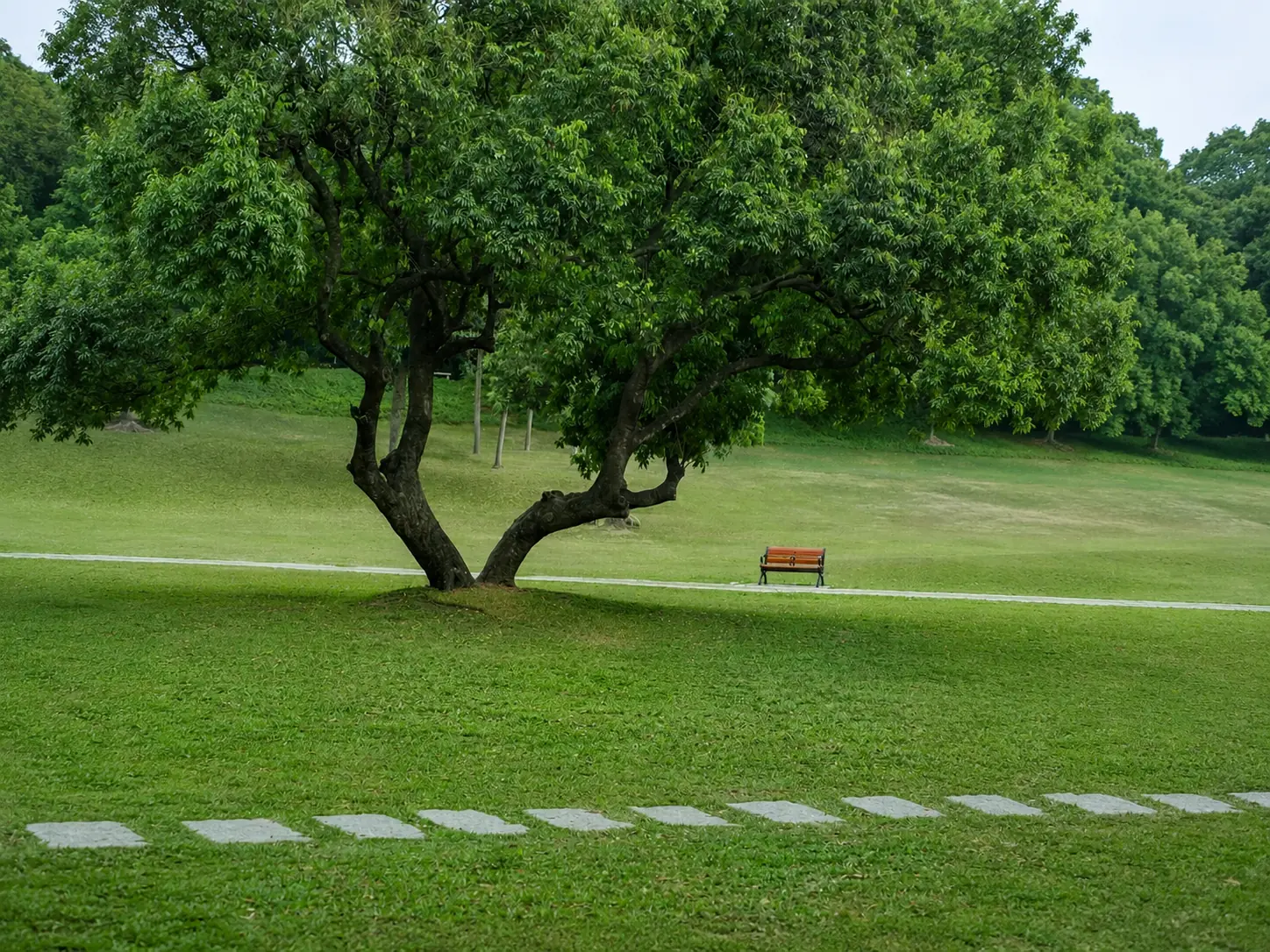
Best for a lighter walk with greenery after the old-town lanes.
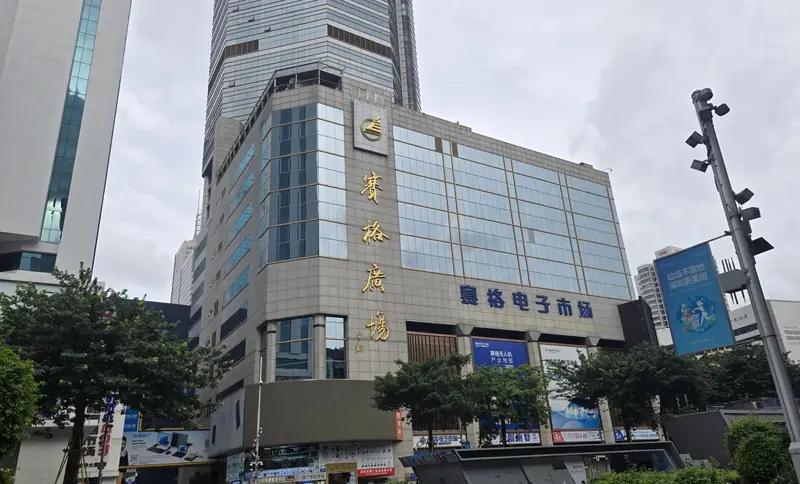
Zhongshan Park (中山公园) (Google | Amap) is the easiest soft landing if you want shade and space after the narrow streets. Huaqiangbei is possible on the same day, but both places are information-heavy. Do it only if you have stamina and a very clear route.
Nantou's value is explanatory. In one compact area, it shows why Shenzhen can be young as a boom city and old as a place of trade, defense, county government, and migration.
Etiquette and Small Pitfalls
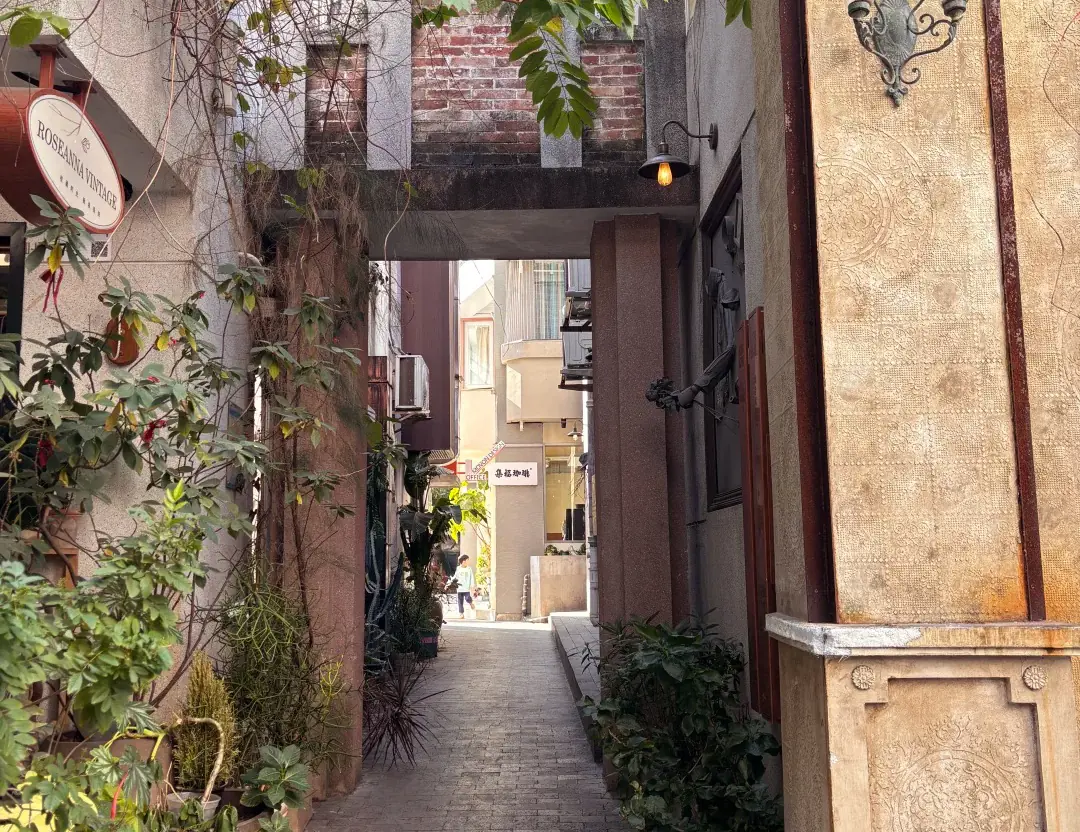
Nantou is not a closed scenic area and not a fully sanitized shopping street. It still contains residents, tenants, staff, offices, event spaces, restaurants, visitors, and delivery traffic.
Do not enter private spaces: residential stairwells, courtyards, doorways, rooftops, and work areas are not part of the attraction.
Keep photography respectful: shoot lanes, walls, signs, and street scenes. Avoid close-ups of residents, laundry, windows, or family life.
Check exhibitions the same day: digital halls, pop-ups, and special shows can change hours, require reservations, or close for installation.
Prepare for Shenzhen weather: summer is hot, humid, and rainy. Bring water, light shoes, and an umbrella; skip the walk during typhoon or heavy-rain alerts.
Do not expect a water-town fantasy: Nantou is more interesting than polished. Come for layers, not for a postcard-perfect ancient town.
Frequently Asked Questions
No ticket is needed to walk the public street area. Restaurants, shops, events, and some exhibitions may charge separately or require reservations, so check the specific venue if it matters to your plan.
Sources checked for this guide
- AD 331 administrative root, 1394 construction phase, South Gate and Ning Nan inscription: Nanshan Government Online
- Nantou historical timeline from early administration through urban-village growth and renewal: Nantou Ancient City official history
- County office, Dongguan Guild Hall and heritage-building context: Nantou Ancient City official architecture
- Current Line 12, Line 1 and bus access plus walking-guide geography: Nantou Ancient City official guide
- Official exhibition identities and program context; current details remain notice-dependent: Nantou Ancient City official exhibitions
- Museum hours, 16:30 last entry, Monday closure exception, address and three-hall collection: Shenzhen Government museum page
- National tourism-leisure-street designation and cultural-tourism context: Shenzhen Culture and Tourism Bureau
- Nantou renovation practice and community-preservation approach: Shenzhen Government
- International city-culture case study of the Nantou neighborhood renovation: World Cities Culture Forum
- Urban-village regeneration and community-fabric analysis: Urban Land Institute
Beyond This Guide
Nantou Ancient City makes the most sense when it sits inside a wider Shenzhen day instead of being a quick pin on a map.
© gochinafreely.com — Original guide by Go China Freely.