Walk and access
The district has no public-lane ticket gate. Check same-day notices if a special event or temporary crowd control matters to your visit.
Decision notes
Kuanzhai Alley: Courtyard Streets
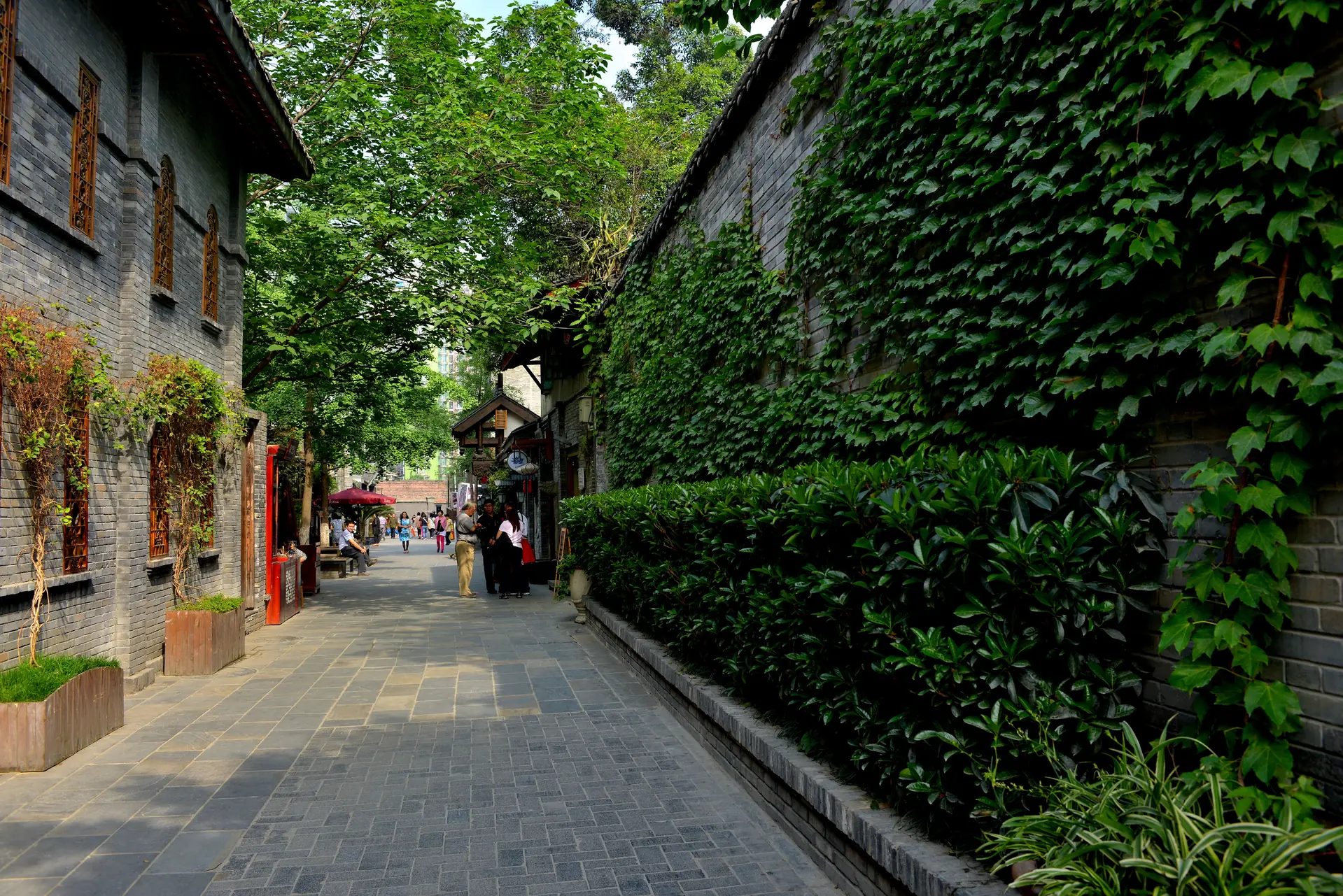
Three lanes, one compact city story
Courtyard history, Chengdu leisure and modern tourism share the same block
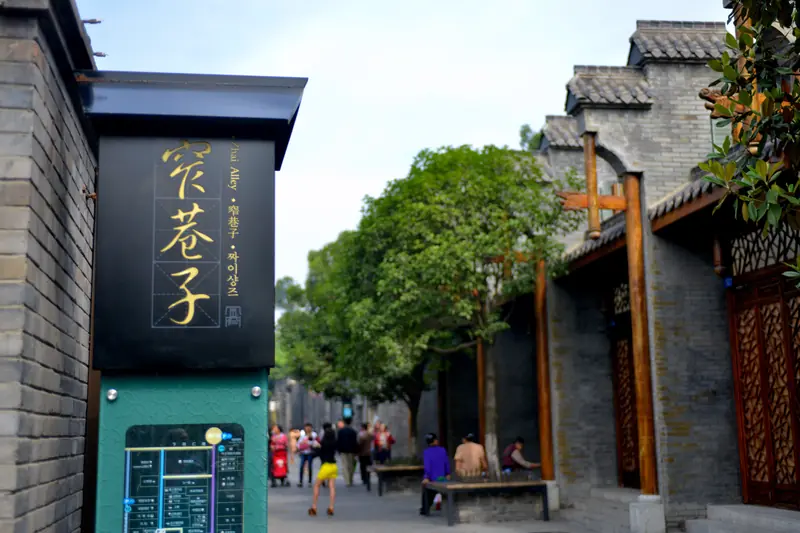
Kuanzhai Alley (宽窄巷子) is one of Chengdu's easiest old streets to misunderstand. It is commercial, crowded and full of tourist snacks, but it is also one of the clearest places to see Qing-era courtyard lanes, grey-brick gatehouses and Sichuan leisure culture compressed into a walkable district.
Treat it as a 1.5-3 hour courtyard walk: read the gates and lane rhythm, pause for tea or night lights, then connect to People's Park (人民公园), Shufeng Yayun (蜀风雅韵), Jinli (锦里), Wuhou Shrine (武侯祠) or Wenshu Monastery (文殊院).
1.5-3h
Core Walk
Free
Public Lanes
Line 4
Best Metro
Open-air
Street District
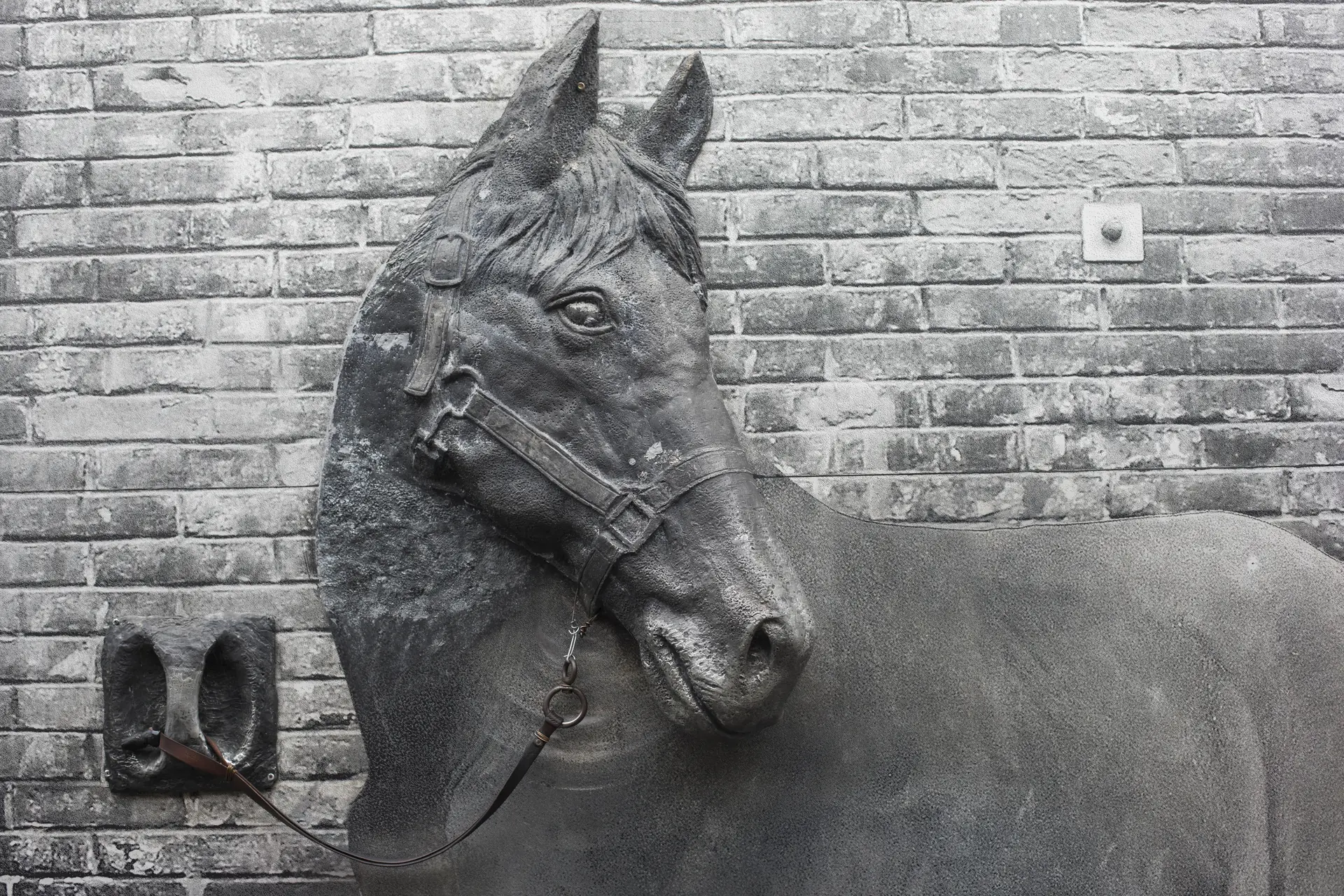
Three parallel lanes in old Shaocheng
Kuanzhai Alley is not one alley. It is Wide Alley (宽巷子), Narrow Alley (窄巷子) and Well Alley (井巷子), set parallel in Qingyang District's old Shaocheng (少城) area. In the Kangxi 57th year of the Qing dynasty, around 1718, the court built a Manchu garrison quarter in west Chengdu; today's lanes preserve part of that street fabric.
Its value is not that it feels untouched. The restored district reopened on June 14, 2008, and today's block is full of teahouses, restaurants, creative shops, photo studios, bars and snack stalls.
Its value is that you can read three Chengdu stories at once:
1 · Historic lanes
Grey-brick walls, courtyard gates, door stones, wooden windows and a scale that still hints at the old residential block.
2 · Leisure culture
Tea, conversation, ear cleaning, snacks, slow sitting and the Chengdu habit of turning small pauses into a lifestyle.
3 · Tourist Chengdu
Souvenirs, photo shoots, night lights, bars, queues and the polished postcard version of old Chengdu.
If you only see the third layer, the area can feel too commercial. If you watch how all three layers sit together, Kuanzhai Alley becomes more useful: a compact lesson in how Chengdu packages history, courtyards, food, leisure, and visitor energy into one central neighborhood.
Kuanzhai Alley Walking Route
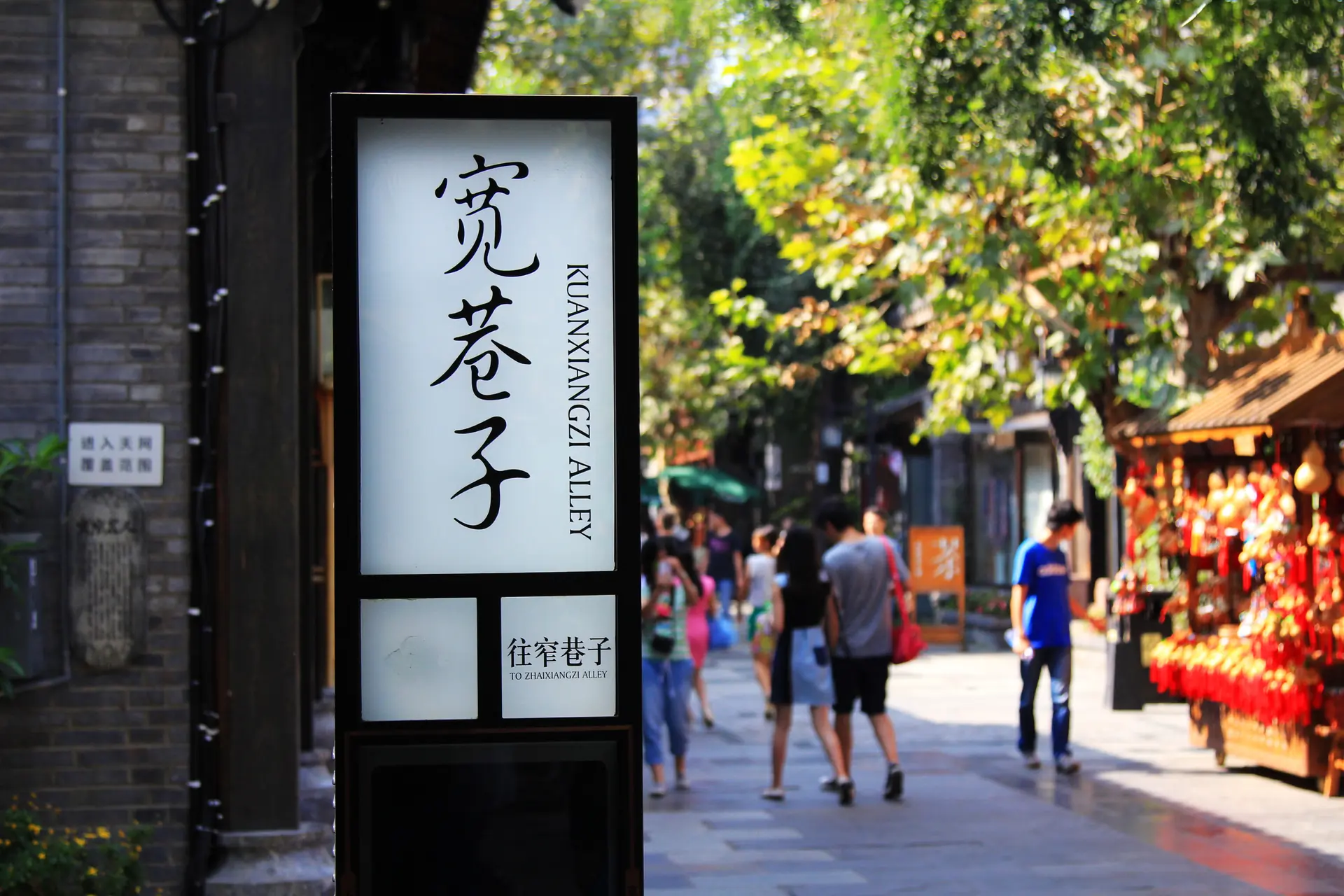
Core walking route (Google | Amap)
For a first visit, keep the route simple: Kuanzhai Alley Station -> Wide Alley -> Narrow Alley -> Well Alley -> exit toward Jinhe Road (金河路) or Changshun Upper Street (长顺上街).
The four numbered markers below are the editorial core route. They keep the lane order easy to follow without pretending that every courtyard or shop is a required stop.
- Kuanzhai Alley Station(宽窄巷子站)- Metro Line 4; follow signs for the lanes
- Wide Alley(宽巷子)- Best first stop for courtyard gates and grey-brick scale
- Narrow Alley(窄巷子)- Tea, restaurants, bars, and evening lights
- Well Alley(井巷子)- Brick walls, service areas, and an easy exit toward Jinhe Road
Choose your pace
1.5 hours or 2-3 hours
A quick visitor can see the four markers in 1.5 hours. Allow 2-3 hours for tea, architecture photos, night lights or a small performance stop.
Optional People's Park branch
Coming from People's Park (人民公园) or Heming Teahouse (鹤鸣茶社)? Reverse the walk: Jinhe Road -> Well Alley -> Narrow Alley -> Wide Alley -> Kuanzhai Alley Station. Check your map app because the exact walk depends on which park gate you use.
Do not make Kuanzhai Alley carry an entire half-day unless you also add People's Park, Qintai Road (琴台路), Shufeng Yayun or Du Fu Thatched Cottage (杜甫草堂).
Wide Alley: Courtyard Details

Start with the architecture, not the stalls
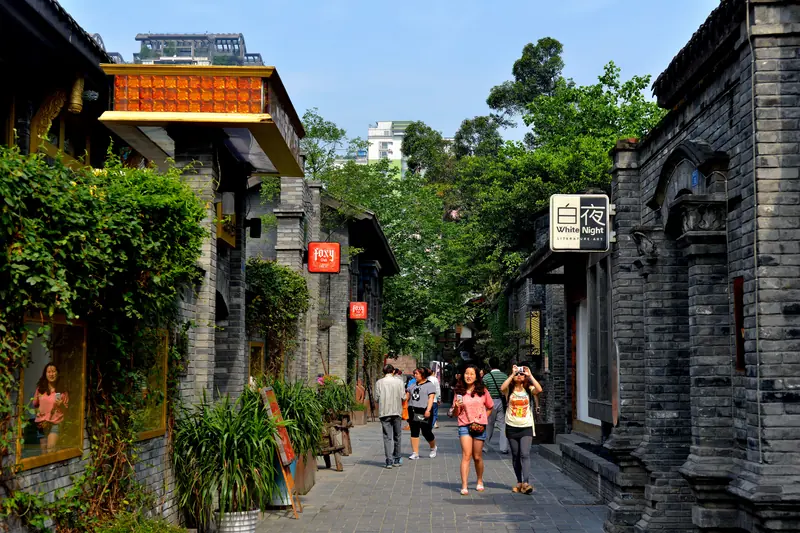
Wide Alley is usually the best first impression. The lane feels more open, and the grey-brick gatehouses, old-style windows, courtyard entrances and shopfront lines are easier to read before the crowds pull your attention toward snacks.
Use the three observations below as a slow-looking exercise rather than a checklist.
门 · Read the gates
Brick gatehouses, timber doors, lattice windows, plaques and doorway height recall a residential courtyard block before tourism.
院 · Notice depth
Open shop courtyards reveal how buildings wrap around an interior. Enter slowly and keep out of private or staff-only spaces.
形 · Compare forms
Northern-style lane and courtyard scale meets western Sichuan residential texture: grey-brick order outside, soft Chengdu leisure inside.
Best photo window
Morning gives quieter gates and walls. Early evening adds shop lights, shadows and atmosphere. Weekend afternoon gives you many, many shoulders.
Narrow Alley: Tea and Night Lights
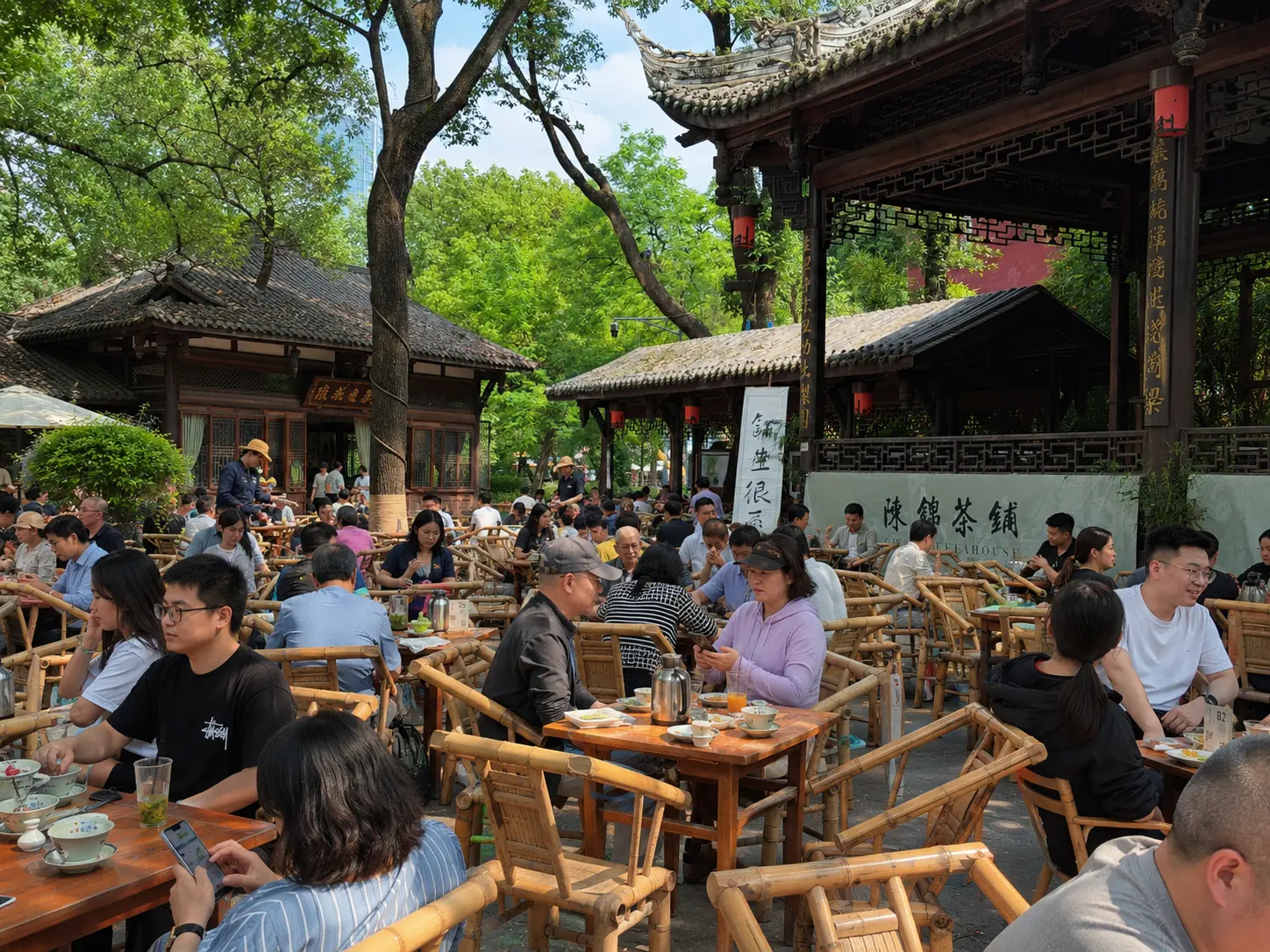
Tea by day
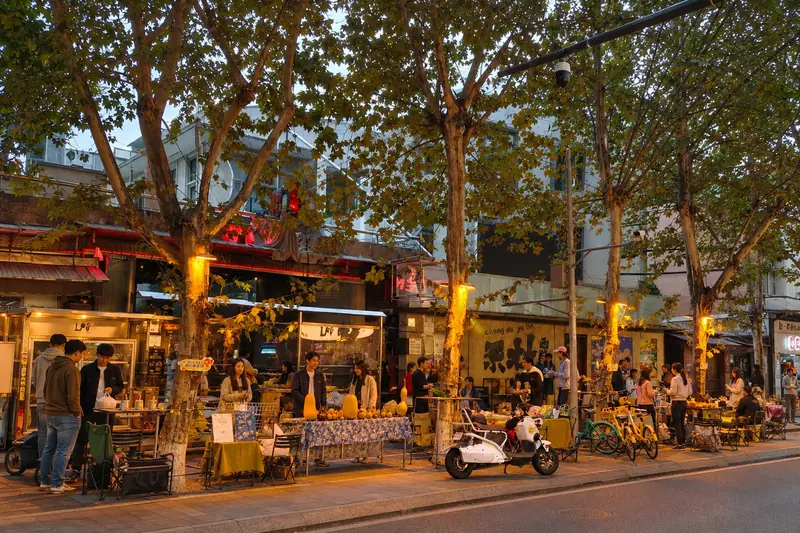
Narrow Alley is livelier and more commercial. Teahouses, restaurants, bars, snack counters, creative shops and photo studios sit closer together here. It may not be Chengdu's most local dining district, but it is useful if you want to see how the city turns "slow life" into a visitor experience.
Use it for a cup of tea, a small snack or a short sit-down break. The detailed dinner decision comes later in the food chapter.
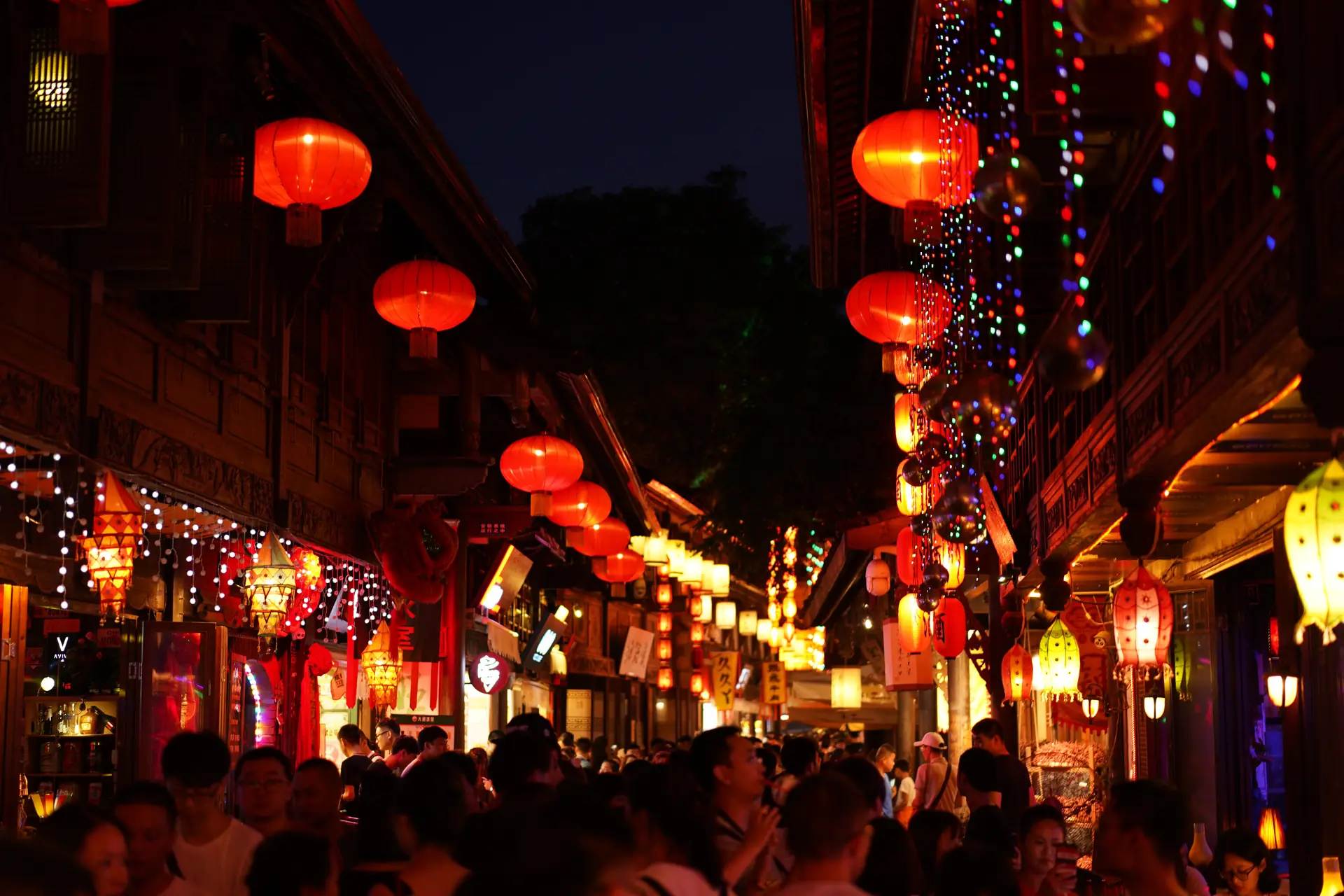
Lanterns after dusk
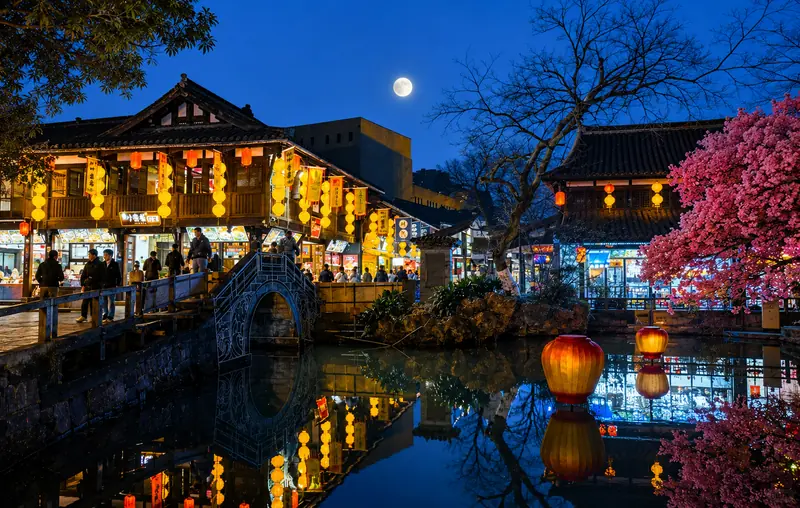
Narrow Alley is where the performance layer becomes obvious: bamboo chairs, lidded tea bowls, ear-cleaning services, hotpot smells, bar signs and costume photo shoots can all appear within a few doors.
It is staged, but it is also real to today's Kuanzhai Alley. You do not have to fully believe the "old Chengdu" branding, and you do not have to dismiss the whole place because it is commercial.
Evening is pretty, not quiet
Come after dusk for lanterns, shop lights and street energy; come in the morning for architecture. Kuanzhai Alley rarely gives you silence and atmosphere at the same time.
Well Alley: Exit and Edges
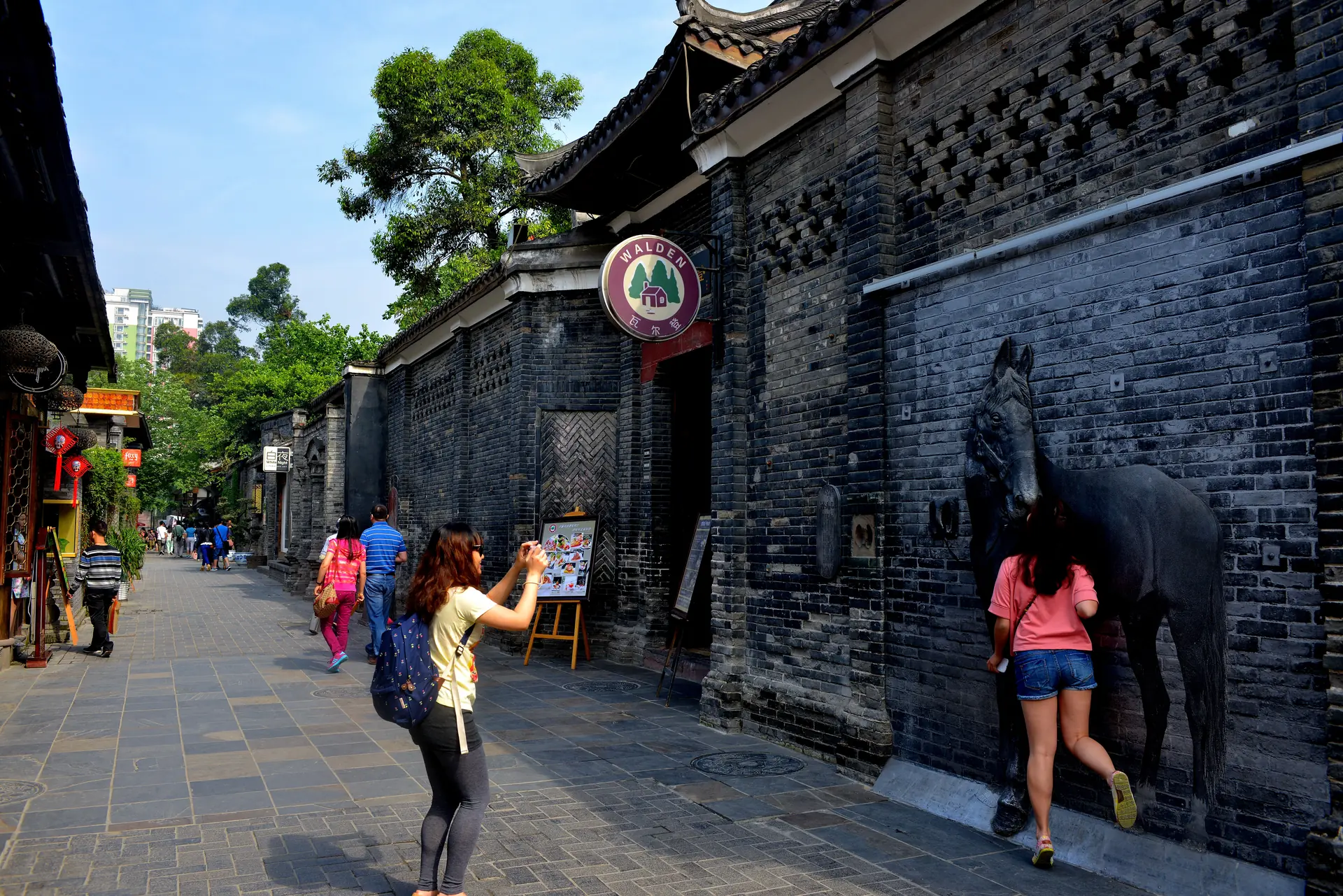
A quieter transition lane
Well Alley is easy to skip, but it makes a useful ending. It works more like a transition: brick walls, visitor services, edge streets and exits toward Jinhe Road (金河路), Changshun Upper Street (长顺上街) or the People's Park direction.
If Wide Alley gives you courtyard atmosphere and Narrow Alley gives you tourist energy, Well Alley gives you breathing room. It reveals the block as historic lane, leisure street, commercial attraction and urban connector at once.
Next stop: photos, a side street or the exit
Look for wall texture, doorways, guide signs, side entrances and the way people leave the block. If the core lanes feel packed, cut out through Well Alley and walk a short stretch along Jinhe Road or Changshun Upper Street before choosing People's Park, Qintai Road or the metro.
Best Time for Kuanzhai Alley
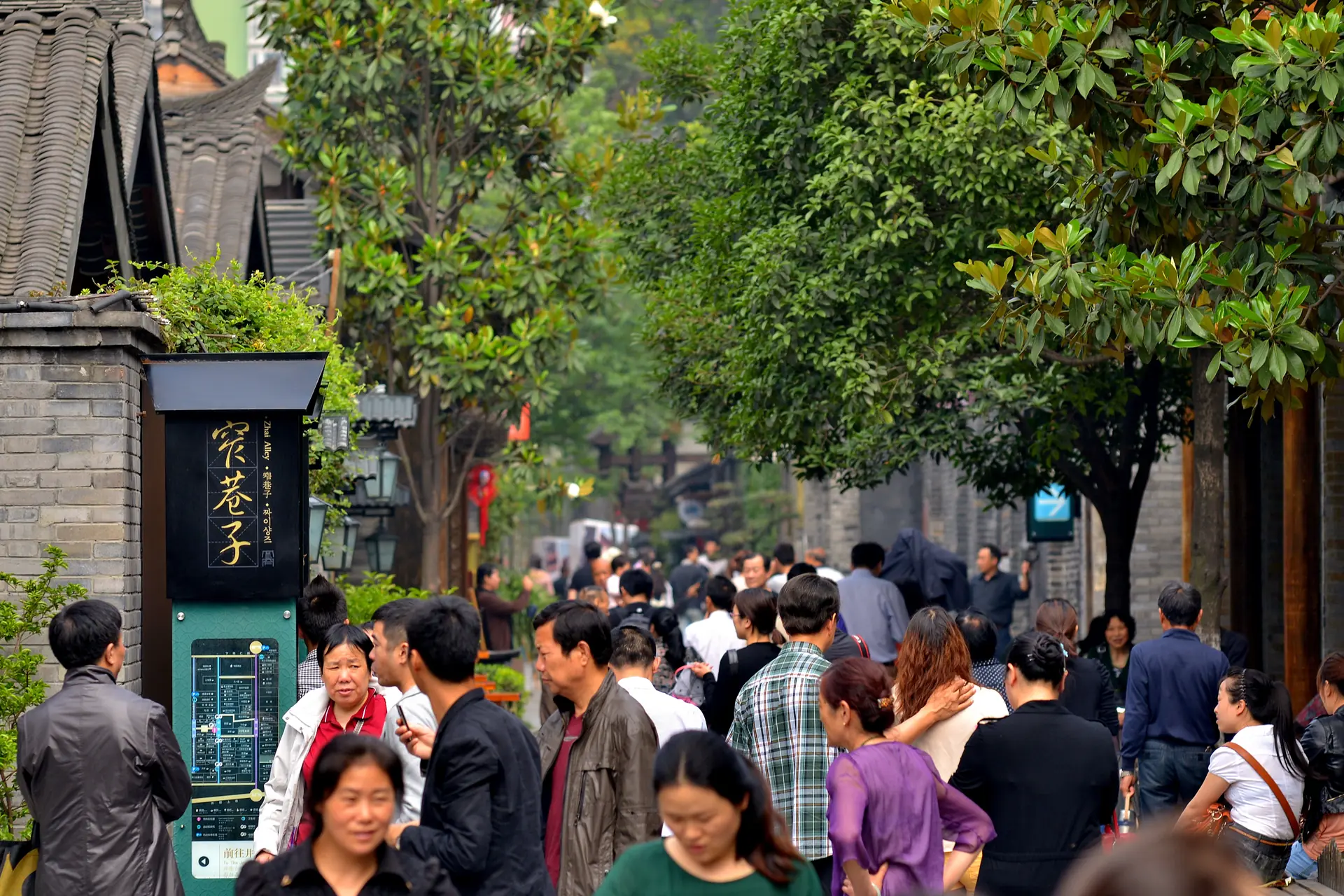
Choose the experience before the clock
The public open-air lanes are easiest to enjoy once you decide what matters: weekday morning around 8:30-10:30 for architecture, or early evening around 17:00-19:30 for lights and atmosphere.
Avoid weekend afternoons when possible. Entrances, Wide Alley, Narrow Alley and popular storefronts can slow into a moving queue.
Weekday morning · 8:30-10:30
Best for architecture
Grey walls, gates, windows and lane scale are easier to see, though some shops may not be fully open yet.
Early evening · 17:00-19:30
Best first-timer mood
Lights come on gradually and the walk can lead into dinner or Sichuan opera. Crowds rise fast on Fridays, Saturdays and holidays.
Weekend afternoon
Use only if needed
Do not line up for every snack. Keep the alleys, gates and courtyards as the main experience while the crowd moves around you.
Light rain can work
Light Chengdu rain deepens grey brick and lantern colors. Watch the paving underfoot and give yourself more time around bottlenecks.
Kuanzhai Alley Tickets and Transport
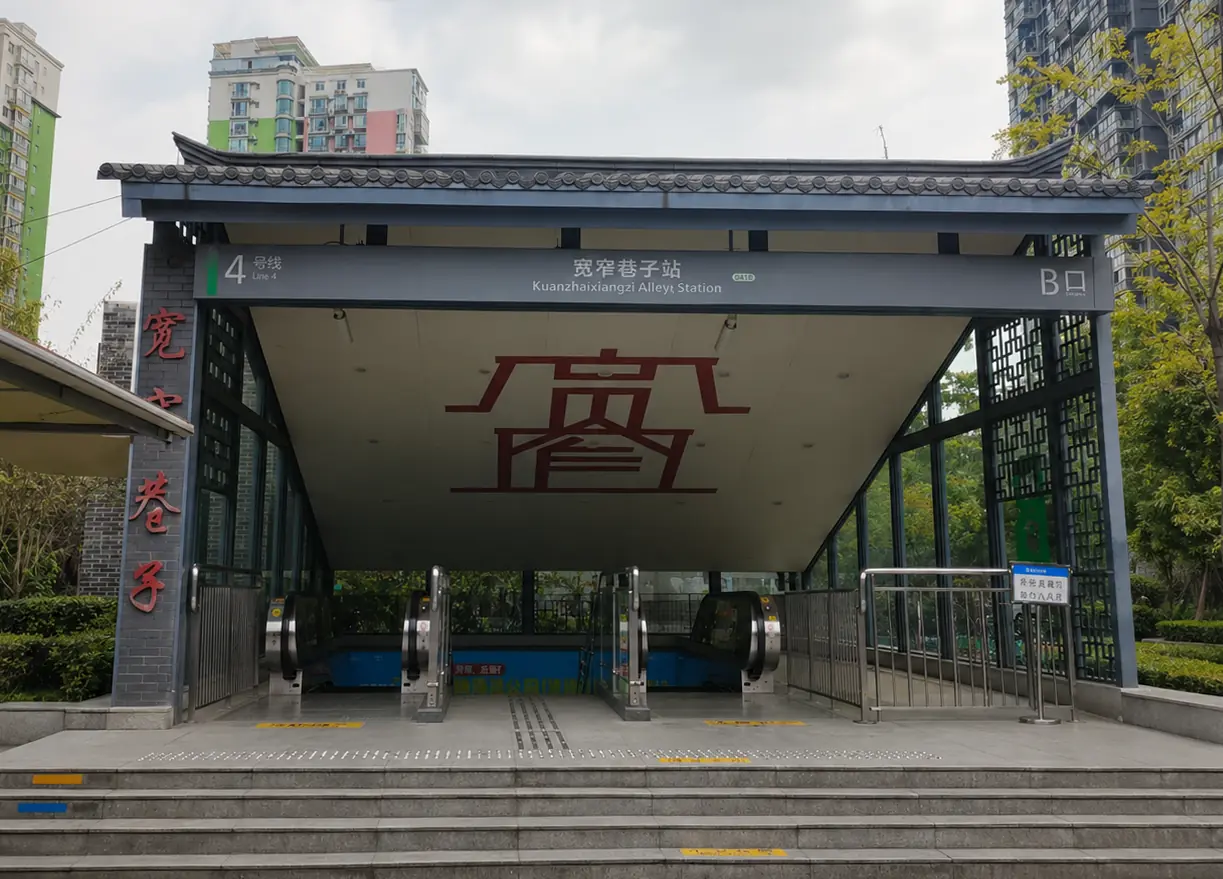
Free public lanes, separate venue hours
The Kuanzhai Alley public street area is free and normally has no reservation or ticket gate. Shops, restaurants, teahouses, bars, performances and paid experiences keep separate hours.
If one venue matters, check its same-day listing. Special events or crowd controls can also change how you enter the open-air district.
Access and transport scan
Public lanes
Free, with no routine reservation; confirm same-day notices for unusual event or crowd controls.
Individual venues
Times vary by shop, teahouse, restaurant, bar, performance and paid experience.
Metro
Take Line 4 to Kuanzhai Alley Station, then follow current station and street signs.
People's Park
Usually a 10-15 minute walk, depending on which park gate you use; verify the path in your map app.
Taxi and cross-city timing
A taxi from Chunxi Road (春熙路), Taikoo Li (太古里) or Tianfu Square (天府广场) is simple, but evening and weekend traffic can make the metro more predictable. Wuhou Shrine or Jinli also works by taxi or metro transfer; avoid overfilling one day with famous old-street stops.
Show this to your driver · 出示给司机看
请到宽窄巷子,靠近金河路入口或宽窄巷子地铁站。
Please take me to Kuanzhai Alley, near the Jinhe Road entrance or Kuanzhai Alley metro station.
Kuanzhai Alley Food and Tea
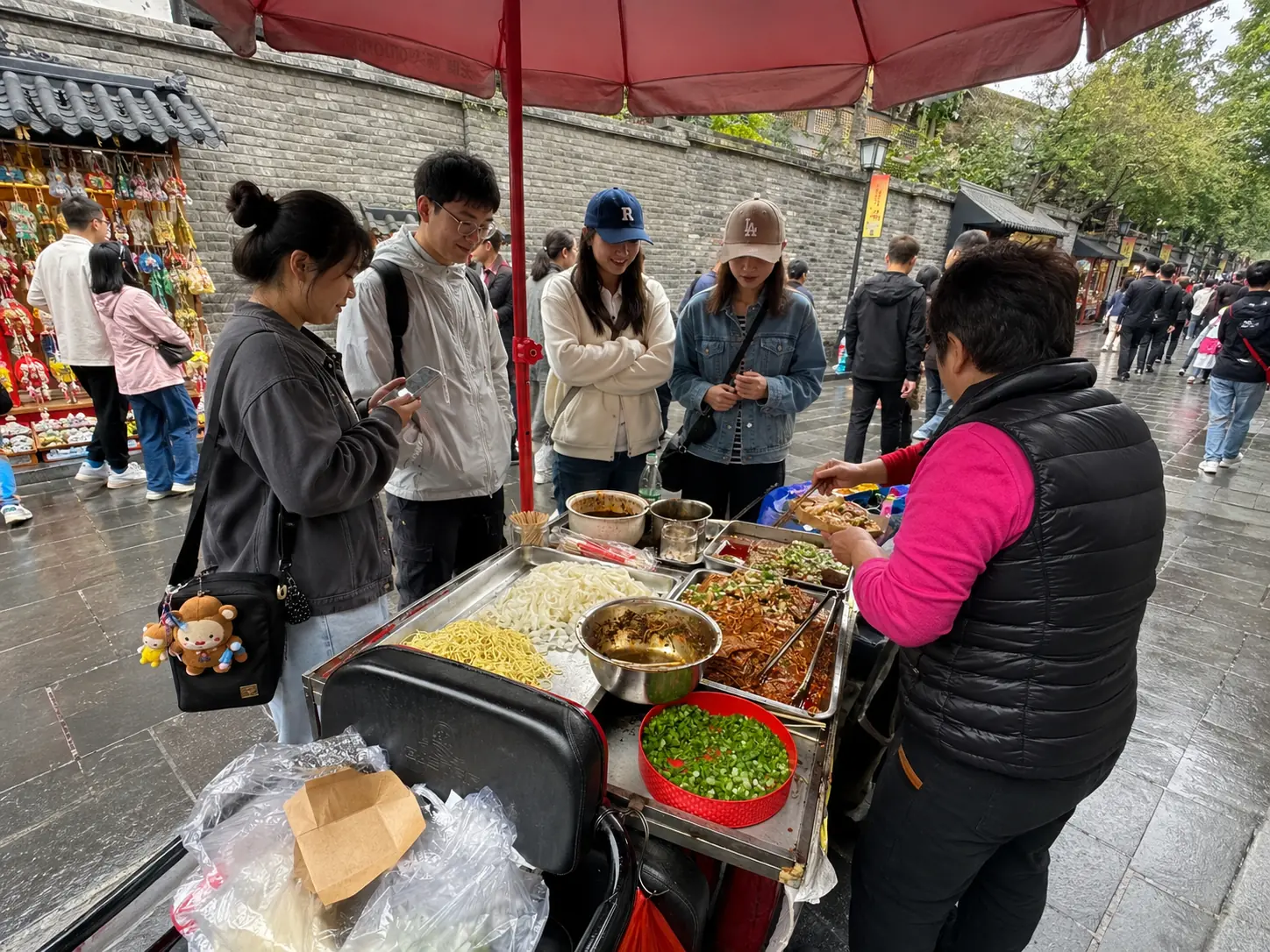
Taste a little, sit a little
Do not place your entire Chengdu food dream here. Tourist-area prices, queues and food consistency vary; the lanes are better for a tea break, a light snack or people-watching than for your most important meal.
For better-value Chengdu food, save the main meal for nearby residential streets, Yulin (玉林), Kuixinglou Street (奎星楼街), Jianshe Road (建设路) or a stronger local option near your hotel.
茶 · 30-60 minutes
Tea break
Choose a courtyard or street-side teahouse where the setting matters. Prices may be higher than neighborhood teahouses, but the location is convenient.
小 · One or two items
Snack stop
Try something small if it looks fresh and the queue moves. Do not turn the whole walk into a stall-to-stall eating mission.
饭 · Usually better elsewhere
Full dinner
Eat here for convenience or atmosphere if you want, but a more local Chengdu food district usually offers better value.
Ear cleaning or paid experiences
Ask the price, duration and hygiene details first.
Souvenirs
Compare a few shops before buying; many items repeat across the block.
Pair Kuanzhai Alley with Chengdu Sights
Kuanzhai Alley works best as a middle or evening segment, not as a standalone major attraction. Pair it with nearby Chengdu sights based on the mood you want.
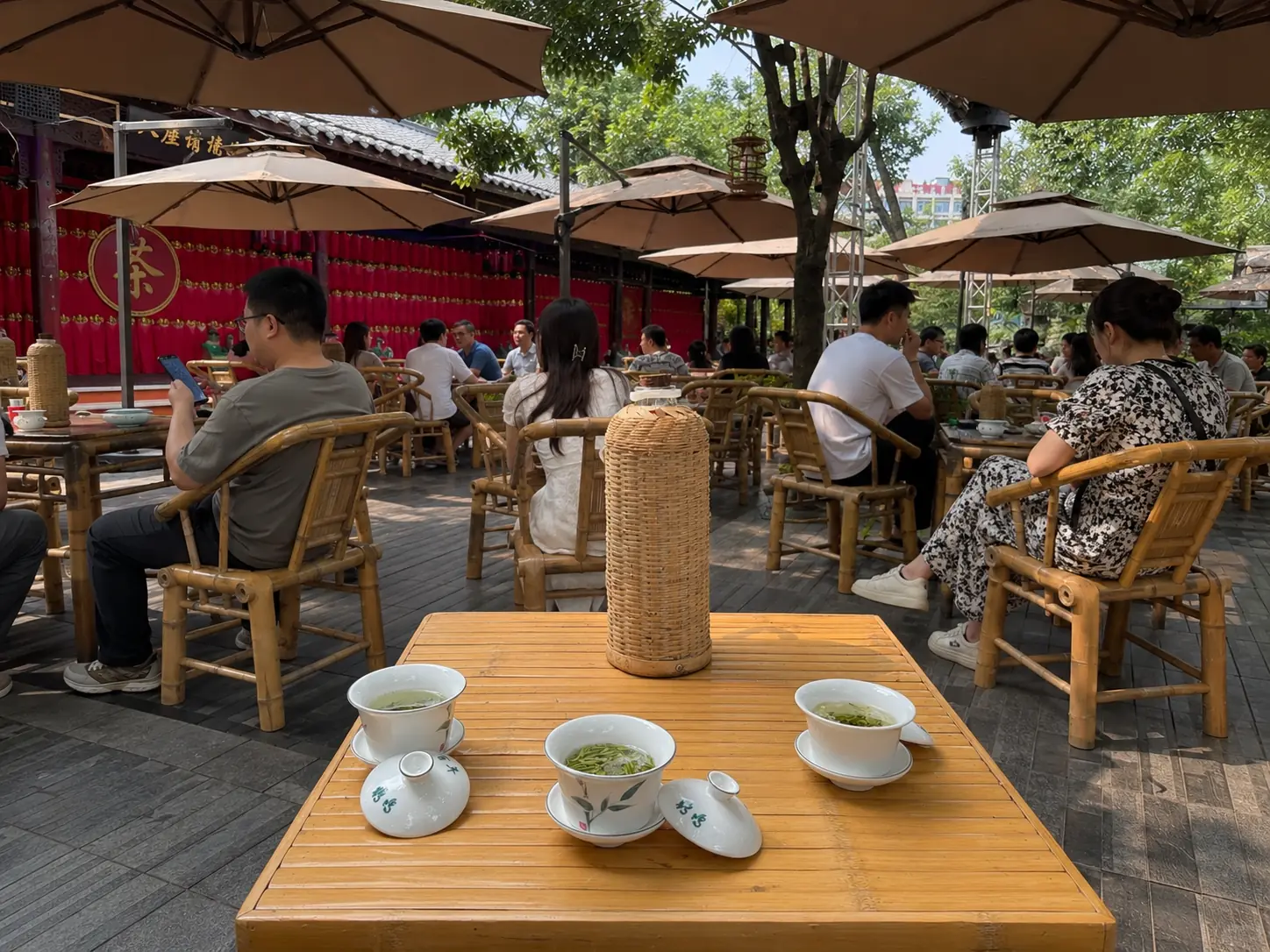
Drink tea at People's Park (人民公园), then walk to Kuanzhai Alley for courtyards, lanes, and evening lights. This is the easiest first-timer pairing.
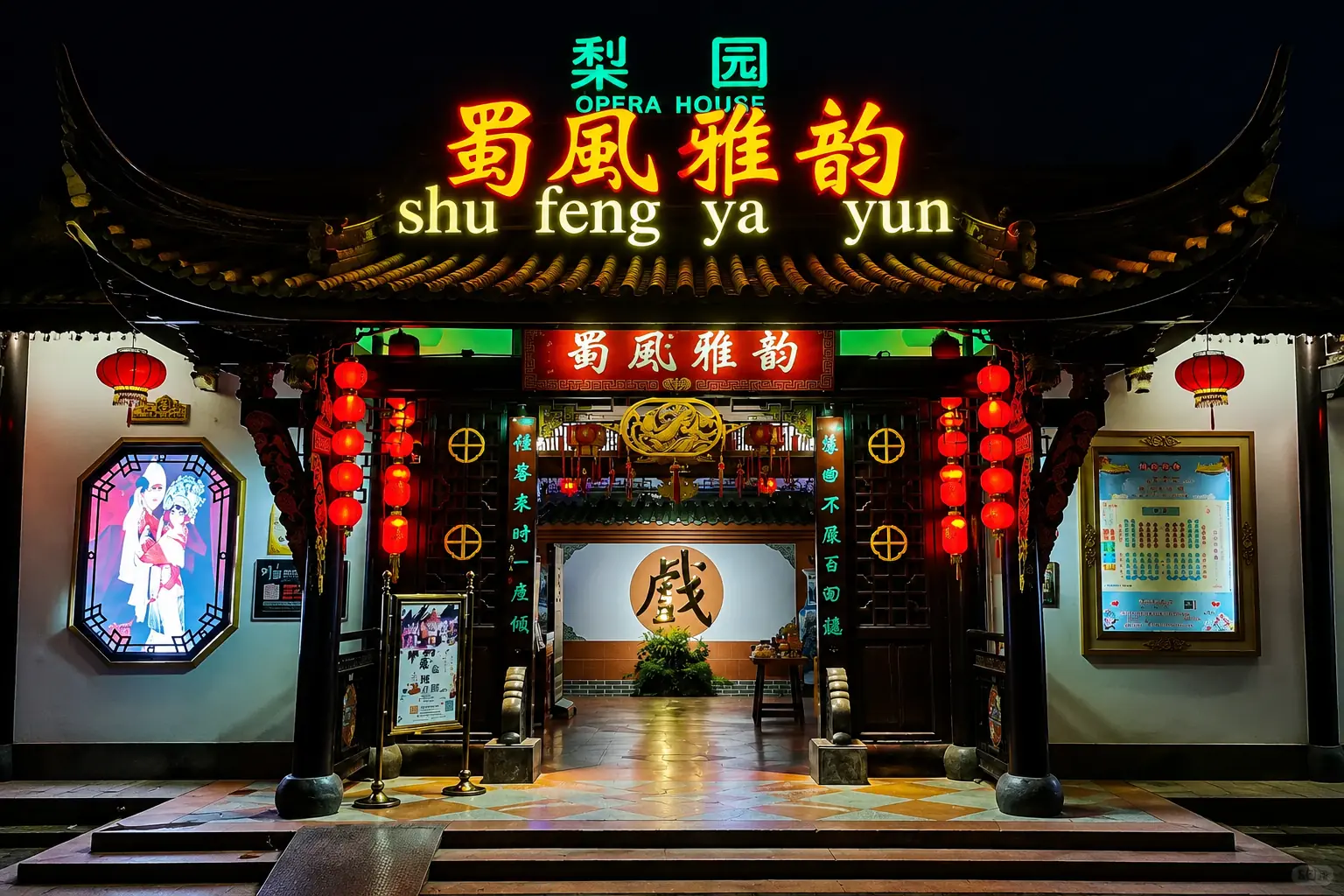
Walk Kuanzhai Alley around 17:00, then continue to Shufeng Yayun (蜀风雅韵) near Qintai Road (琴台路) for Sichuan opera and face-changing. Confirm current show times separately.
This combines Three Kingdoms history with two famous tourist streets. Keep each stop short, because both Jinli (锦里) and Kuanzhai Alley can feel commercial.
Wenshu Monastery (文殊院) and its nearby lanes feel more local and religious; Kuanzhai Alley shows the polished visitor version of old Chengdu.
Do not force it after a long day trip
After Dujiangyan (都江堰), Qingcheng Mountain (青城山) or Leshan (乐山), you may only have energy to push through crowds and take one gate photo. Save Kuanzhai Alley for a day when you can still notice the courtyards.
Frequently Asked Questions
Yes, if you treat it as a short courtyard-lane walk rather than a deep local-food district. Go for the gates, three-lane layout, tea atmosphere, and evening lights.
Sources checked for this guide
- Current operator statement checked for the open-style street-district identity, active 2026 programming and the June 14 opening anniversary: Chengdu Tourism Group: Kuanzhai · Boundless
- Operator-quoted reporting checked for year-round open-style district operation and the distinction between public streets and seasonal merchant hours: Red Star News: Kuanzhai Alley night economy
- Secondary local listing retained for free-entry, address and public contact cross-check; not treated as current first-party proof of 24-hour access: Chengdu Bendibao Kuanzhai Alley page
- Traveler-facing listing retained for address, current attraction status and the three-lane description: Ctrip Kuanzhai Alley page
- Government tourism page retained for recommended visit length, free-entry context and Metro Line 4 access; its older all-day wording is not used as a current operating promise: China Daily Kuanzhai Alley page
- Historical feature retained for the 1718 garrison context and June 14, 2008 reopening record: The Paper / We Chengdu historical photo feature
Beyond This Guide
Kuanzhai Alley is not Chengdu's quietest, most local, or cheapest neighborhood. It is useful because it gives first-time visitors one readable doorway into old Chengdu. Time it well, look past the snack queues, pay attention to gates and courtyards, then connect it with tea, Sichuan opera, or a better-chosen dinner, and the walk becomes much more than a tourist street.
© gochinafreely.com — Original guide by Go China Freely.