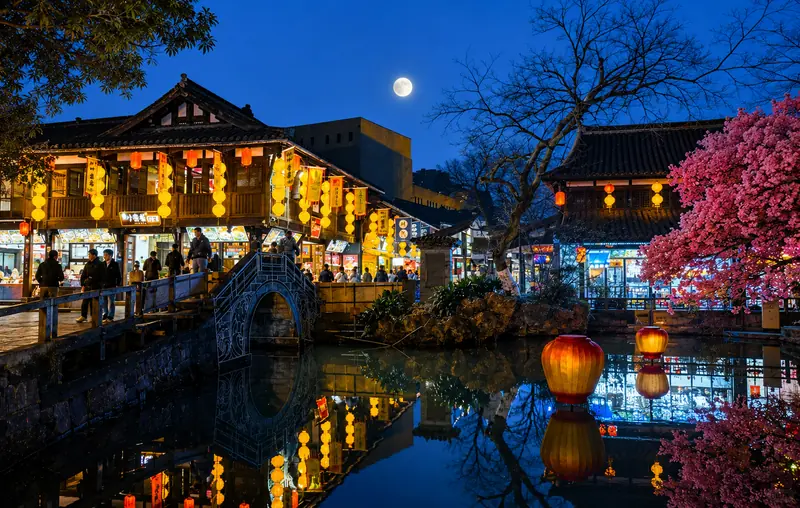
Night walk and access
Jinli is normally free to enter. Individual merchants and experiences set their own prices and hours.
Decision notes
Jinli After Dark: Lanterns, Snacks, Shu Brocade
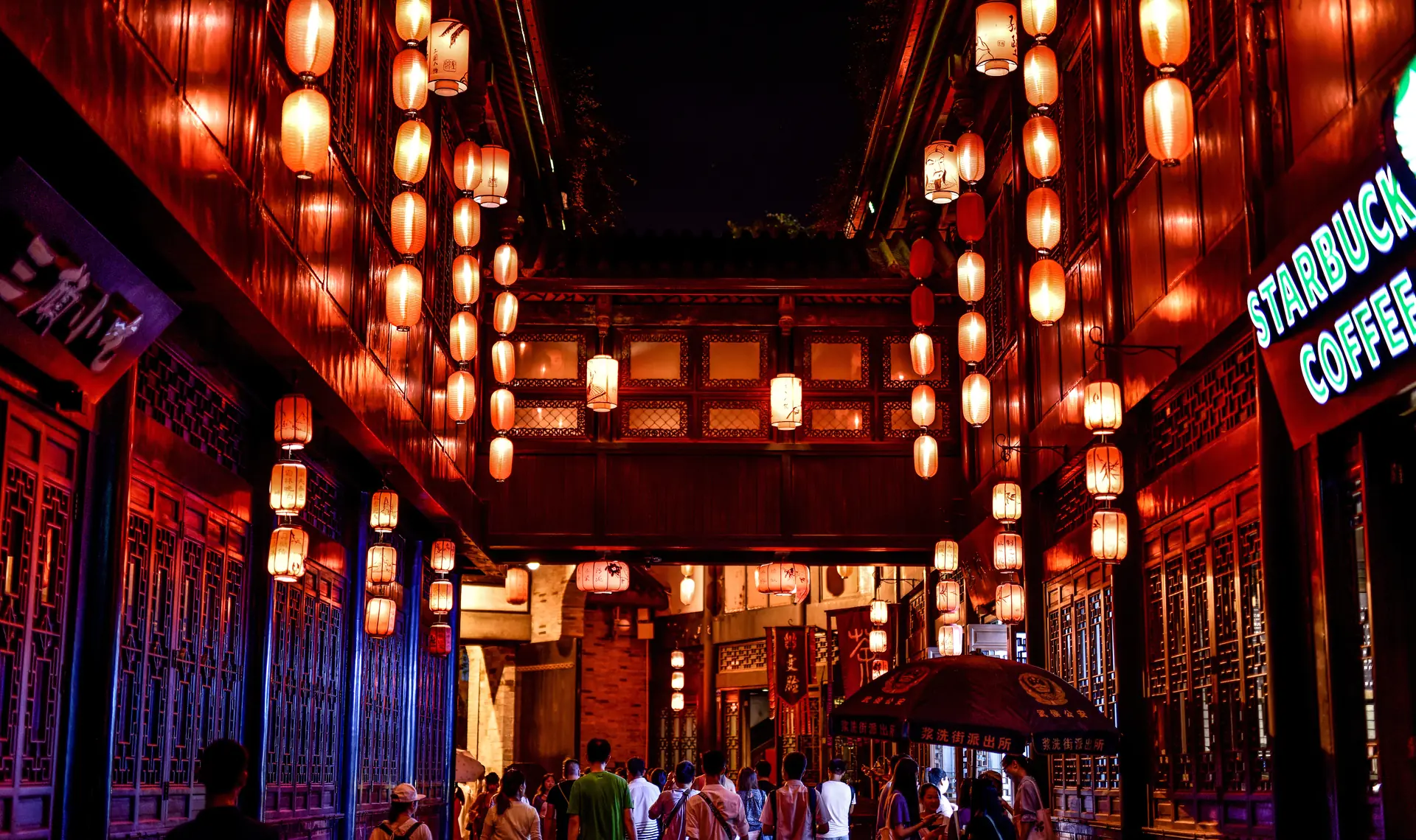
A polished Chengdu night street
Lanterns, snacks and Shu stories in one compact evening
Jinli Ancient Street (锦里古街) is not Chengdu's quietest, cheapest or most local night market. It is one of the easiest first-evening stops: bright, central, visually legible and next door to Wuhou Shrine.
1.5–2.5h
Night Walk
Free
Street Access
18:00 / 19:00
Typical Lights
Line 10
Closest Metro
Jinli's name is tied to Chengdu's old Shu brocade story. The official Jinli history page links the name to the Shu Han period, Jinguancheng (锦官城), Jinjiang (锦江), and the woven-brocade industry that helped give Chengdu one of its classic city images.
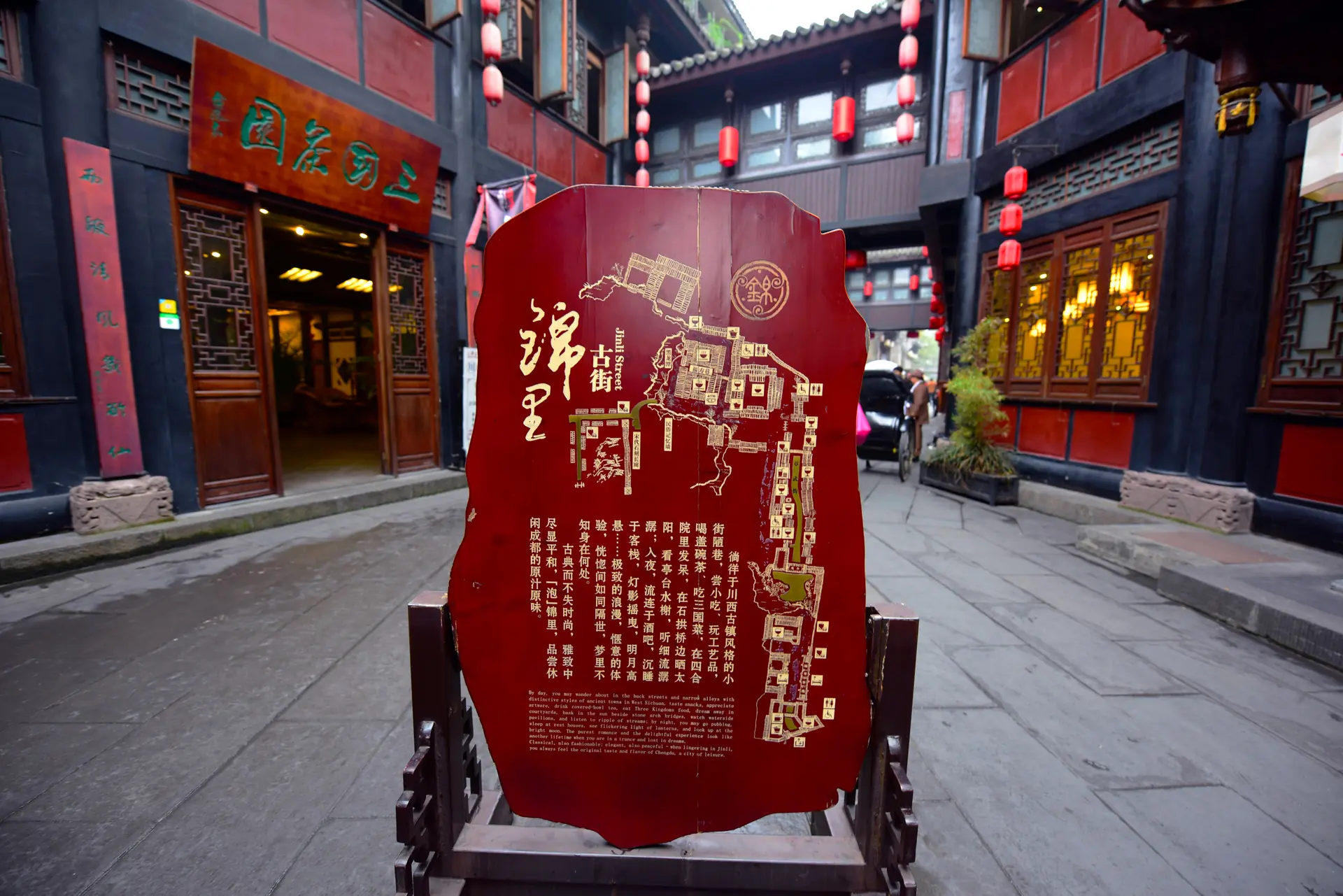
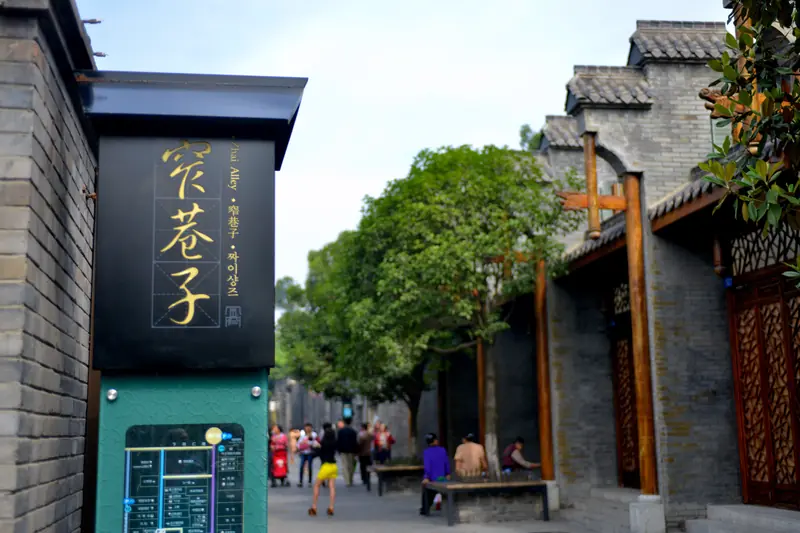
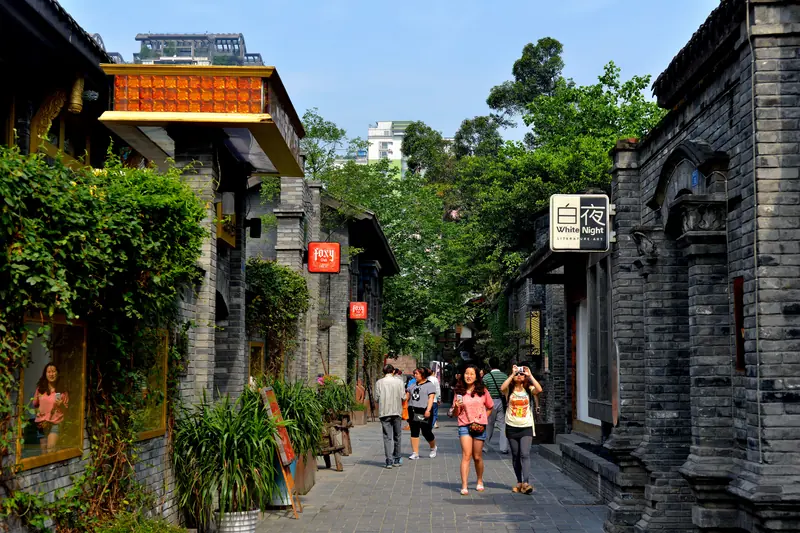
That does not mean today's Jinli is an untouched ancient street. Treat it as a modern cultural tourism street inside the Wuhou Shrine Museum area: old-style rooflines, red lanterns, small bridges, snack stalls, folk-craft counters, Three Kingdoms references and Sichuan opera signs in one compact block.
For independent travelers, that polish is useful. The street is a low-friction evening with clear visual cues even if you cannot read Chinese. Use it for atmosphere, photos, a few classic snacks and a soft Chengdu night out.
Atmosphere
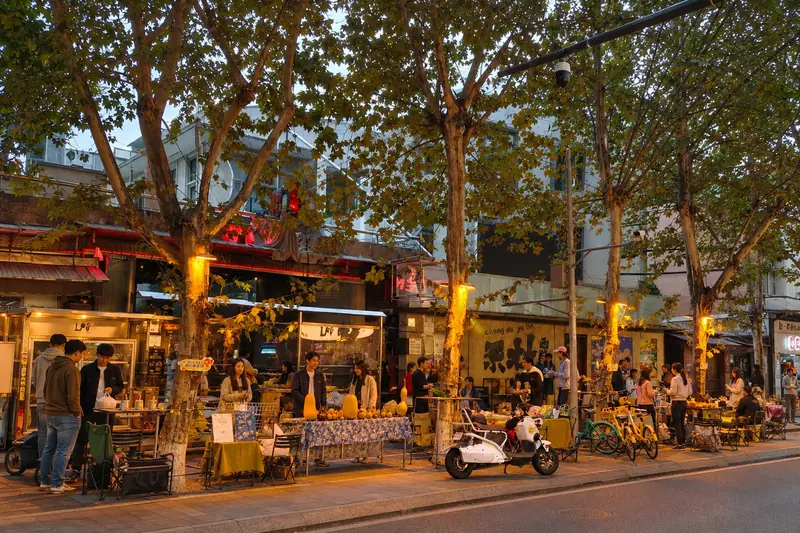
Red lanterns, grey walls, water reflections and a busy evening crowd.
Food role
Taste a few visual classics; choose your main Chengdu meal separately.
Historical lens
Look for Shu brocade, Three Kingdoms references and staged folk crafts.
Jinli is polished and commercial. That is not a reason to skip it; it is a reason to arrive with the right expectation and keep the evening focused.
A Simple Jinli Night Walking Route
Editorial night loop
For a first visit, keep the route simple. The six markers below are an editorial sequence for crowd flow, snacks and photos—not an official numbered scenic route.
- Jinli Main Gate(锦里正大门)- Pause before buying snacks; read the crowd flow first
- Lantern Main Street(主街灯笼段)- Best first impression after dark
- Snack Street(小吃街)- Choose two or three fresh, visible snacks to share
- Stage and Folk-Craft Stops(戏台与手作摊)- Look for live making, not just souvenir displays
- Waterfront Jinli(水岸锦里)- Lantern reflections and calmer night photos
- West Exit or Main Gate Return(西区出口或返回正门)- Choose one endpoint: use the west exit if the main lane is congested, or return to the main gate
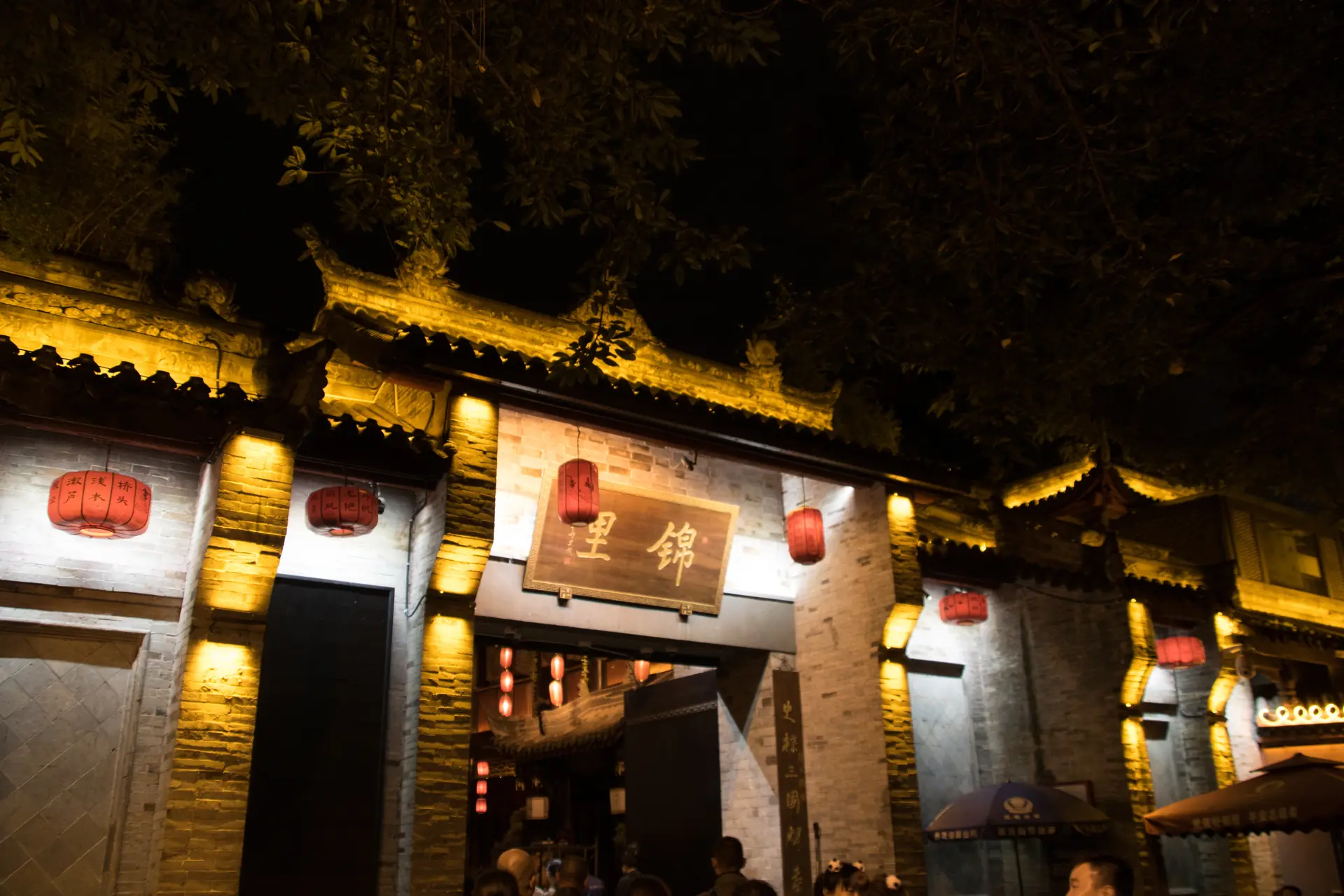
Do not start eating at the first stall you see. Walk 5-10 minutes first, check which snacks are being made fresh, where the crowd bottlenecks, and which lantern section has clean sightlines. Jinli is dense enough that the first 50 meters can trick you into buying too much too early.
Use the main street for atmosphere, the snack street for tasting and the waterfront for photos. Jinli is compact enough for a loop, so if the central lane feels like a moving queue, continue toward the wider edge streets or water section before choosing the west exit or a return to the main gate.
Red Lanterns and Water-Lane Photo Spots

Jinli works best as a sequence of light. Red lanterns hang above the lanes, shop signs glow under the eaves, water reflects the lamps, and rooflines, wooden doors, grey walls, and moving silhouettes layer together.
Think in three photo types before you lift the camera.
1 · Main-lane depth
Stand where the street widens and use lanterns plus rooflines to create a long frame.
2 · Water reflections
Use bridges, water and lamp reflections when the crowd thins near the waterfront.
3 · Snack theatre
Three Big Cannons, sugar-oil fruit, dough figurines and sugar blowing are more alive than shopfront signs.
The best light is often the first 30-60 minutes after the lanterns come on. Too early and the atmosphere is not there yet. Too late and the main lane can be dense, with harsh menu-board light flattening photos. Light rain can look beautiful on the stone paving, but watch your footing.
A cleaner, more considerate portrait
Stand slightly under the lanterns but away from bright menu boards. Let the lanterns form the background; do not place your subject directly in front of a queue or food counter.
Jinli Street Food: What to Try
Jinli is good for tasting. It is not where I would send you for Chengdu's best full dinner. Tourist-area snacks are convenient, visual, and concentrated, but prices are higher than neighborhood stalls and quality varies by vendor.
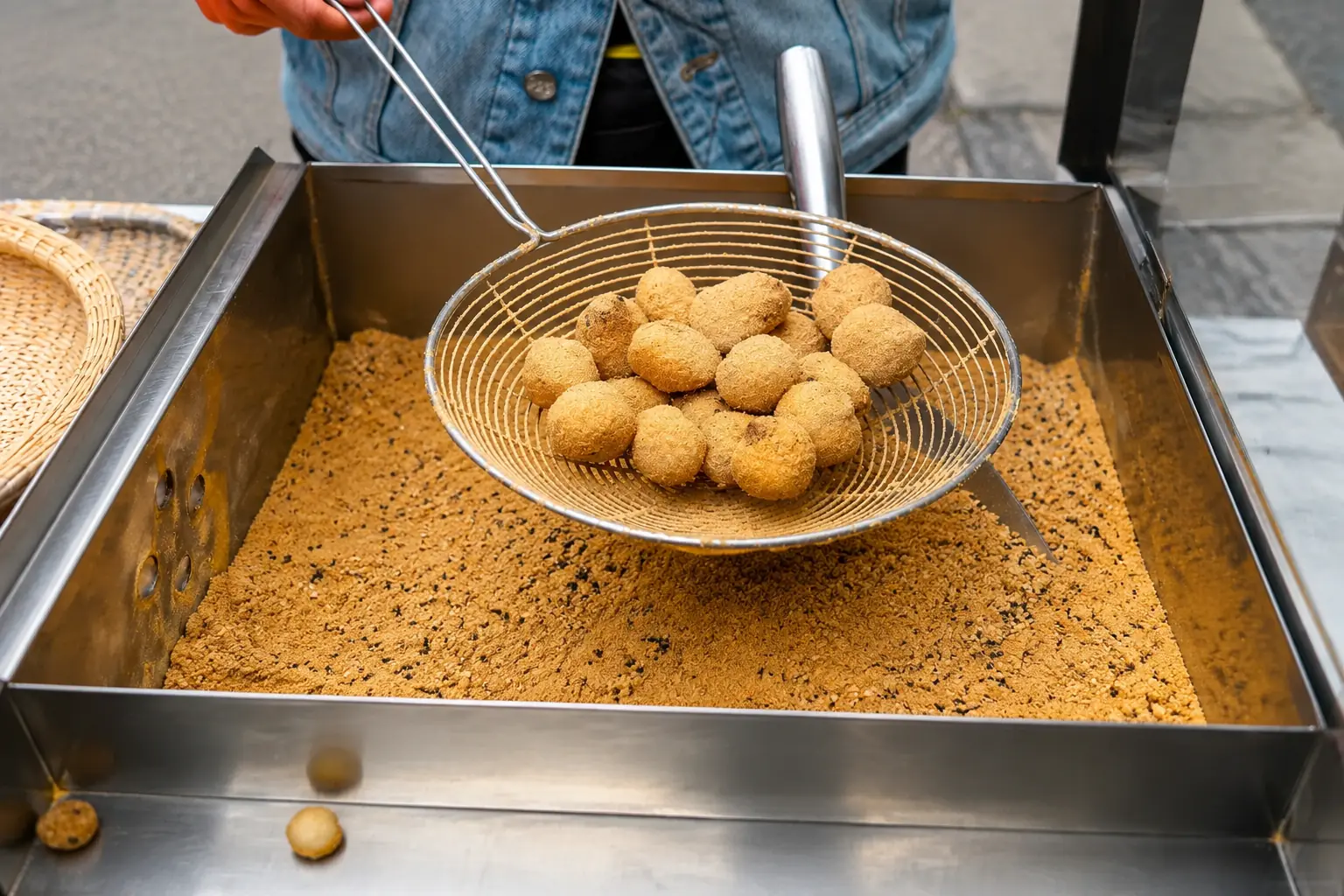
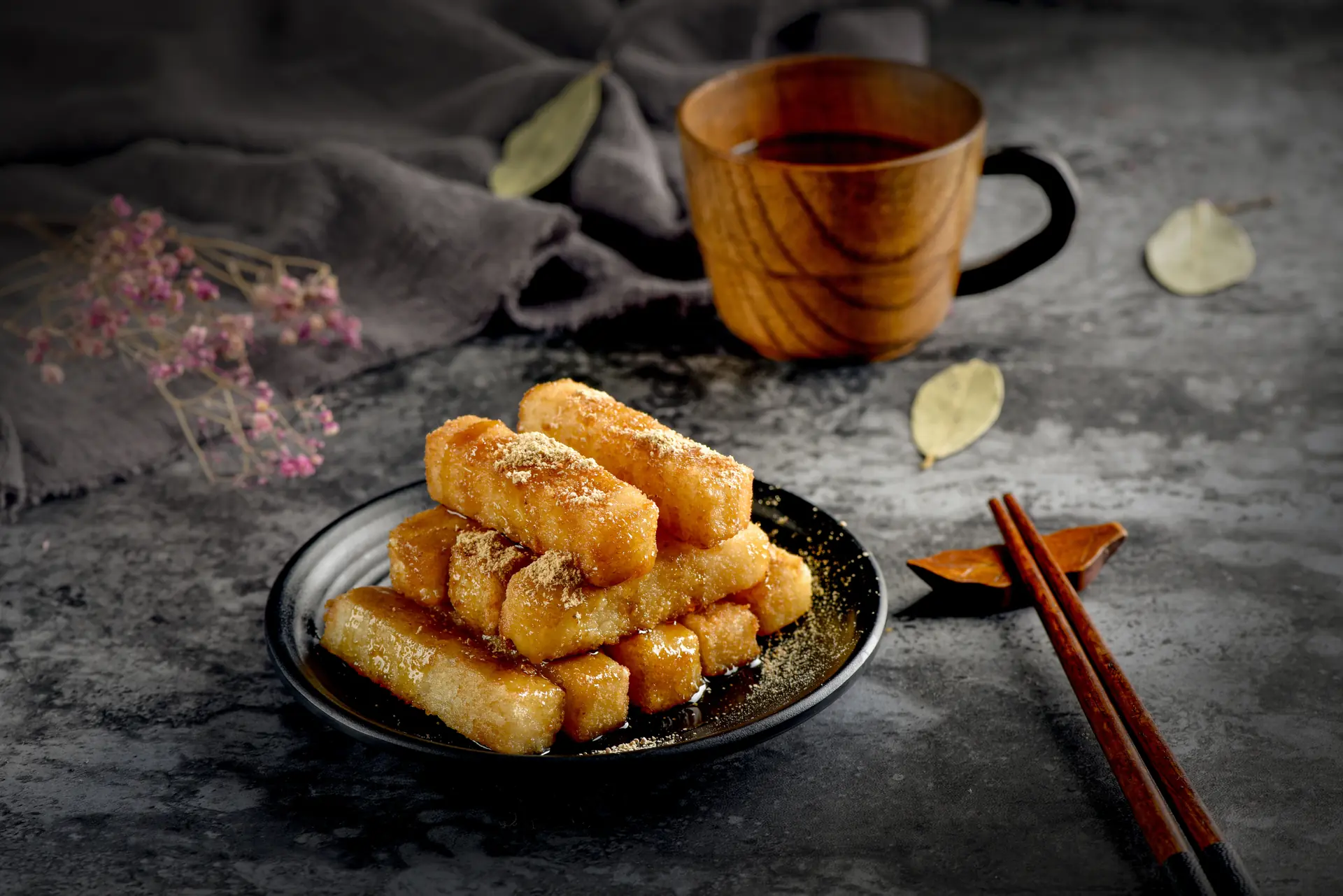
Start with snacks that have a strong sense of place or live preparation:
Three Big Cannons
三大炮
Sticky rice balls tossed through soybean powder and served with brown sugar syrup. The value is partly the sound and movement of the making process.
Sugar-Oil Fruit
糖油果子
Glutinous rice balls fried and glazed until glossy. Good for sharing; heavy if you eat a whole skewer alone before dinner.
Sad Jelly Noodles
伤心凉粉
Cold jelly noodles with chili oil. Ask for mild or no spice if you are heat-sensitive; the sauce can be stronger than it looks.
Ice Jelly
冰粉
A cooling sweet bowl with brown sugar syrup and toppings. Useful after spicy snacks, especially in Chengdu's humid summer evenings.
For two people, three or four shared items are enough. If you want a real meal, continue later to Yulin (玉林), Kuixinglou Street (奎星楼街), Jianshe Road (建设路), Chunxi Road and Taikoo Li, or a well-reviewed Sichuan restaurant near your hotel. For a deeper ordering strategy, see our Chengdu food guide.
Severe allergies need direct confirmation
Peanut, sesame, wheat, beef tallow, lard and chili oil can appear in sauces and toppings. Jinli's crowded snack-stall setting is not the easiest place for detailed ingredient conversations; if cross-contact could cause a serious reaction, do not rely on appearance or a generic ingredient list.
Pair Jinli Ancient Street with Wuhou Shrine
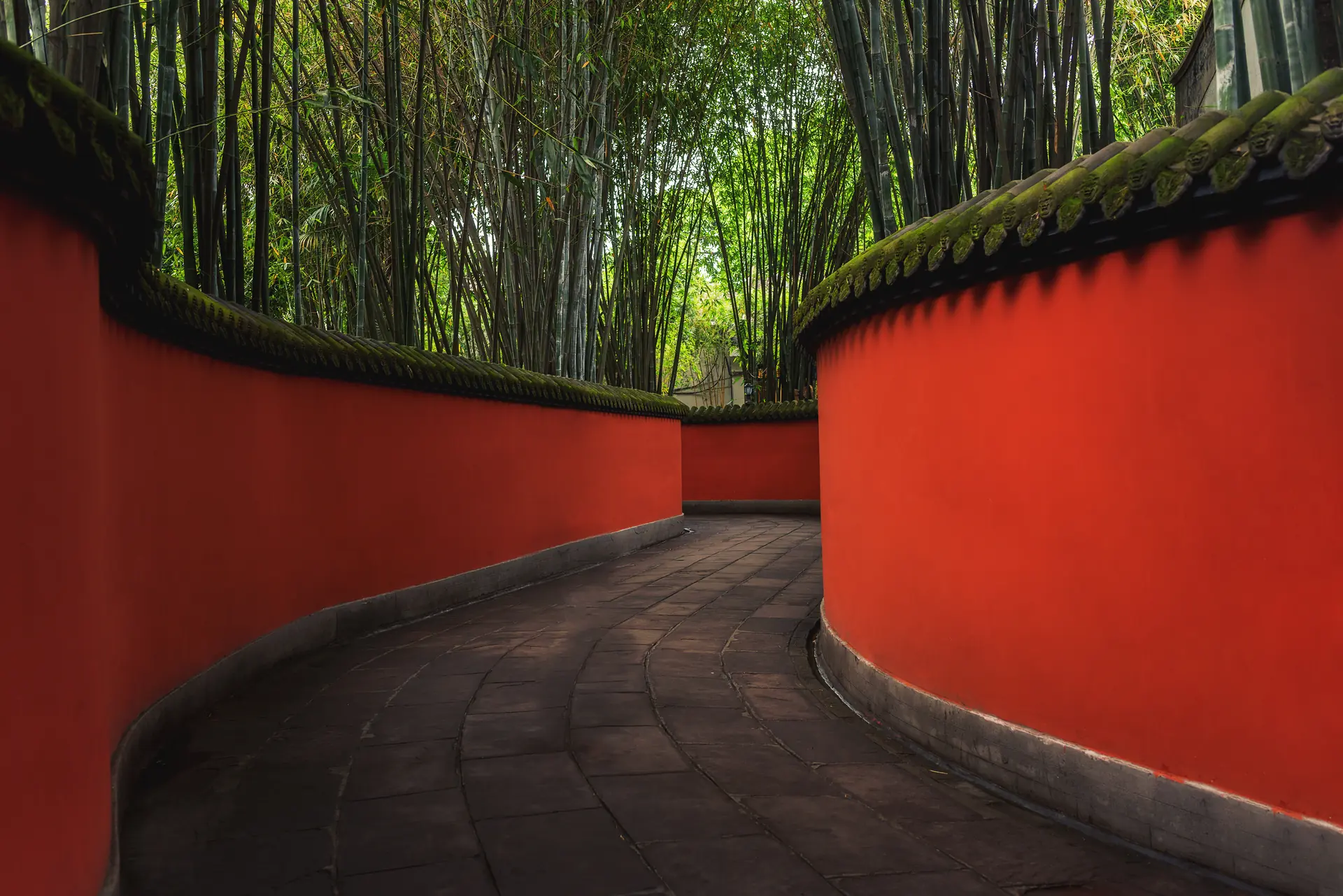
Jinli and Wuhou Shrine Museum (武侯祠博物馆) (Google | Amap) are best treated as one connected Chengdu plan: Three Kingdoms history and red-wall bamboo by day, lanterns and snacks after dark.
The current Wuhou Shrine official website lists regular ticket prices of RMB 50 full price, RMB 25 half price and a RMB 100 annual pass. Regular opening is 9:00-18:00, with admission stopping at 17:00. Temporary summer extensions and special cultural activities may use separate hours, so check the museum's current notice if the museum itself matters to your day.
Around 15:30
Enter Wuhou Shrine
Arrive well before the current 17:00 last-admission time.
By 18:00
Finish the museum
Use the red walls and bamboo before the regular closing time.
18:15–20:15
Walk Jinli after dark
Take a short break, then use the first lantern hours for photos and snacks.
If you care deeply about Three Kingdoms history, do not compress Wuhou Shrine into a 30-minute pre-dinner stop. If you do not care much about the history, Jinli alone still works as an evening walk.
Best Times, Crowds, and Temple Fair
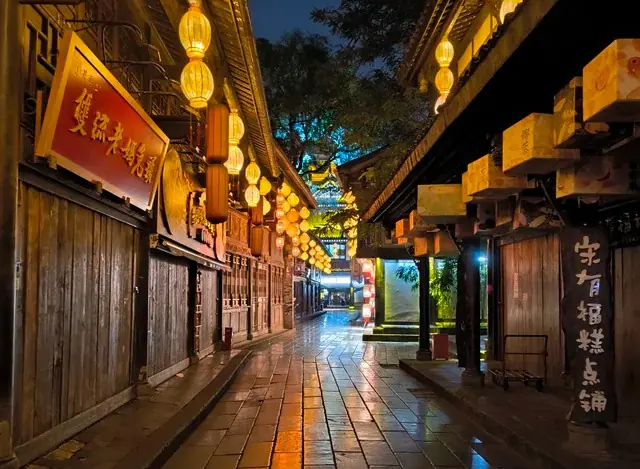
On an ordinary day, the best window is roughly 18:00-20:30. In winter, the official Jinli guide says lights usually come on around 18:00; in summer, around 19:00.
Weather and special events can shift that, so treat those as planning anchors, not guarantees.
Before the lights
Best for rooflines
Walk the quieter lane first, locate the waterfront and choose food before the main evening rush.
First light hour
Best all-round window
Use the first 30–60 minutes after lighting for lantern color, water reflections and a manageable dinner decision.
Weekend or holiday peak
Expect a moving queue
Friday and Saturday nights, school holidays and major festivals can make the main lane slow and dense.
Weekdays are much easier than weekends. Friday nights, Saturday nights, public holidays, summer vacation, National Day and Spring Festival periods can turn the main lane into a slow-moving crowd. On those days, do not force every famous snack queue. Walk toward the wider waterfront or west area first, then decide what is still worth returning for.
The 2026 Wuhou Shrine Chengdu Temple Fair is a useful dated example, not a standing annual rule. It ran from February 13 to March 3, 2026; the official notice said Jinli would have much heavier traffic and operate under event management, including one-way circulation. Future events may use different dates, entrances, prices and flow rules.
What the ended 2026 event showed
During a major Wuhou Shrine event, Jinli can become part of a managed event area. Check the notice for that specific event and follow on-site staff rather than reusing the 2026 dates or an old map screenshot.
Jinli Tickets, Hours, and Metro Access
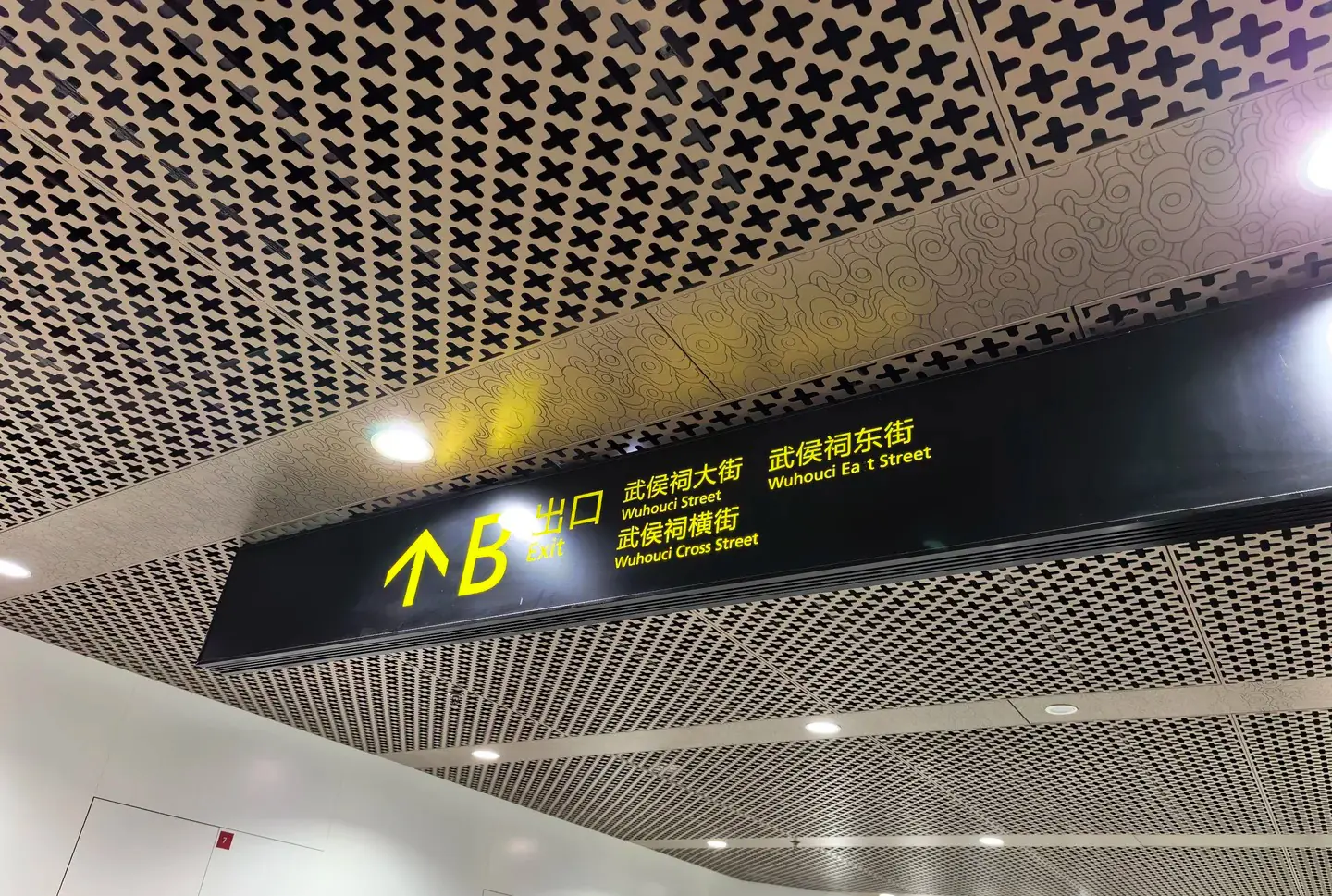
Jinli street access is normally free. The official Jinli guide lists 8:00-22:30 as the suggested visitor window and 9:00-22:00 as the merchant business period. Individual teahouses, bars, shops, snack vendors, shows, and craft experiences set their own paid terms.
The most useful public-transport options are Metro Line 10 for the closest approach, or Gaoshengqiao Station if Lines 3 or 5 fit your route better.
Street access
Normally free
No routine Jinli ticket gate outside special event management.
Guide window
8:00–22:30
A visitor-planning window from the current Jinli guide.
Merchant window
About 9:00–22:00
Individual shops, bars, teahouses and shows can differ.
Lantern anchor
18:00 / 19:00
Usually winter / summer, with weather-related adjustment possible.
- Metro Line 10: Wuhou Shrine (Jinli) Station, Exit A2, about a 3-minute walk according to Jinli's official guide.
- Metro Lines 3 and 5: Gaoshengqiao Station, Exit A, about a 10-minute walk.
Taxi and ride-hailing
A car is easy from central Chengdu, but Wuhouci Street can slow down on weekend evenings and holidays. When Line 10 fits your route, the metro is usually more predictable.
Show this to a taxi or ride-hailing driver:
Show this screen to your driver · 出示给司机看
师傅您好,请带我去锦里古街,靠近武侯祠大街231号正门,谢谢。
Please take me to Jinli Ancient Street, near the main entrance at 231 Wuhouci Street.
For metro, use Wuhou Shrine (Jinli) Station on Line 10 when convenient.
Jinli also sits well with several central Chengdu sights. The official Jinli guide gives approximate distances of about 4 km to Kuanzhai Alley (宽窄巷子), 3 km to Chengdu Museum (成都博物馆), 4 km to Du Fu Thatched Cottage (杜甫草堂), and 8 km to Jinsha Site Museum (金沙遗址博物馆).
Jinli Spending Traps and Street Etiquette
Do not make Jinli carry your whole Chengdu food dream. Taste two or three things, take the night photos, then eat a better-planned dinner elsewhere if food quality matters.
Most spending traps are not hidden; they come from deciding too quickly in a crowded lane. Pause, compare and ask before committing to a package or seat.
Food spending
Share two or three items
Snack combos add up fast; choose live preparation and stop before the walk becomes a full meal.
Paid experiences
Ask scope and duration
Ear cleaning, costume photos, handicrafts and shows may have different tiers.
Seats and souvenirs
Confirm before sitting
For tea seats, packages and souvenirs, ask what is included and compare a few nearby options.
If a future festival or major event introduces one-way crowd control, do not walk against it. The notice for that event and on-site staff beat your map app. If you are traveling with children or older parents, choose a meeting point before entering the snack area.
People are not part of the set
For photos of craft workers or stall owners, smile and gesture first. Close-up filming, live streaming or putting a camera into a worker's face is poor etiquette unless they clearly agree.
Frequently Asked Questions About Jinli Ancient Street
Yes, if you understand what it is: a commercial cultural tourism street, not an untouched ancient neighborhood. At night the lanterns, water reflections, snack stalls, and crowd energy make it a useful first-time Chengdu stop.
Sources checked for this guide
- Current operator page checked for normal free street access, the 8:00–22:30 guide window, roughly 9:00–22:00 merchant hours and usual 18:00 winter / 19:00 summer lantern timing: Official Jinli Cultural Tourism Street page
- Current operator map checked for Line 10 Wuhou Shrine (Jinli) Exit A2, Lines 3/5 Gaoshengqiao Exit A, walking times and nearby-distance notes: Official Jinli guide map and transport page
- Older Wuhou Shrine domain retained from the original guide for provenance; it is not used as the current owner for hours or ticket facts: Previous Wuhou Shrine Museum website
- Current museum site checked for regular 09:00–18:00 opening, 17:00 last admission, ¥50 full price, ¥25 half price, ¥100 annual pass and the temporary-extension caveat: Current Chengdu Wuhou Shrine Museum website
- Ended 2026 event notice retained as a dated example for the February 13–March 3 schedule, event-area management and one-way circulation; not treated as a future annual rule: 2026 Wuhou Shrine Chengdu Temple Fair notice
Beyond This Jinli Night Guide in Chengdu
Jinli works best as Chengdu's soft evening finish: lanterns, snacks, and a quick sense of staged local color after a more substantial daytime plan. Pair it with Wuhou Shrine, People's Park, Kuanzhai Alley, Sichuan opera, or a properly chosen dinner, and it becomes much more useful than a tourist-street checklist.
Exploring more of Chengdu? See our Kuanzhai Alley walking guide, Chengdu food guide, and Chengdu panda base guide. For city-wide planning, use the Chengdu destination hub.
© gochinafreely.com — Original guide by Go China Freely.