Visit basics
A 2025 public directory distinguished free museum admission with valid ID or passport from the separate Taoyangli district ticket. Check the live product and eligibility before you go.
Decision notes
Imperial Kiln Museum: A Kiln-Shaped Landmark
Architecture at a glance
Read the building before you read the collection.

Studio Zhu Pei’s eight vaults turn the traditional kiln profile into the museum’s main architectural experience.
Jingdezhen’s Imperial Kiln Museum is built around a simple idea: the museum should feel like it grew from the city’s kiln landscape. The building is not merely a container for the collection—architecture is part of the visit, so leave time to walk through the vaults rather than treating it as a quick collection stop. Jingdezhen’s imperial-kiln story runs from the Ming dynasty into the Qing, spanning more than five centuries. The Imperial Kiln Factory supplied court porcelain, and excavated rejected pieces now make the manufacturing process unusually visible: fragments, repairs, glaze tests, and finished forms all carry part of that history.
8
brick kiln vaults
2.8M
mixed new and reclaimed bricks
5
sunken courtyards
Eight Vaults and Skylights
Vault detail
Follow the daylight from the round skylights to the open vault ends.
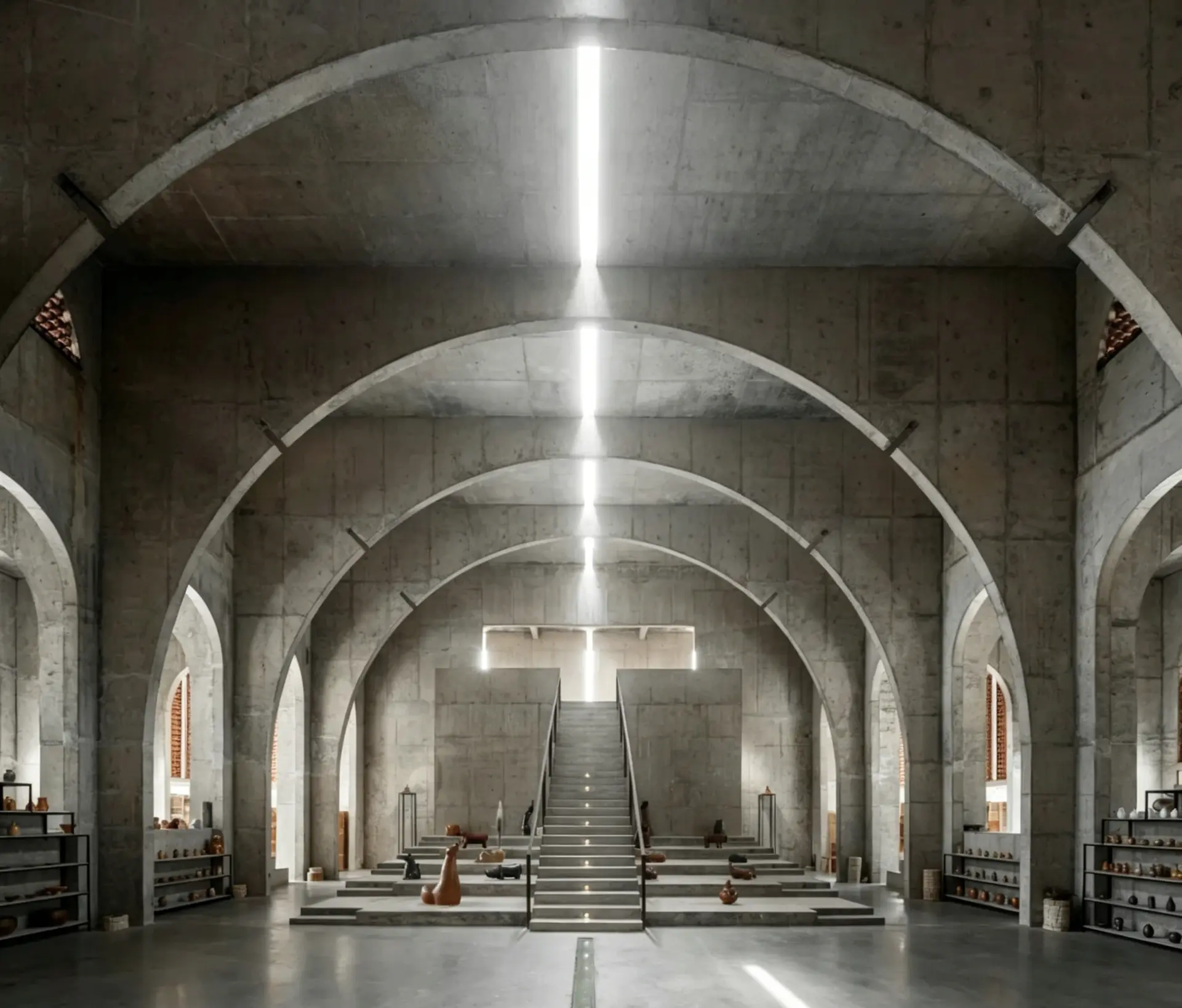
Skylights and open vault ends bring daylight into the curved galleries.
The eight brick vaults were designed by Zhu Pei and sit beside the Ming imperial-kiln ruins. Brick Award describes them as individually varied parabolic forms, modelled on traditional kilns; their double-shell brick walls are filled with concrete. The project used about 2.8 million bricks, mixing newly fired bricks with reclaimed kiln bricks. Look up for the round skylights, then look along the vault ends.
Five Sunken Courtyards
Courtyard sequence
Go down to the lower level before deciding you have seen the building.
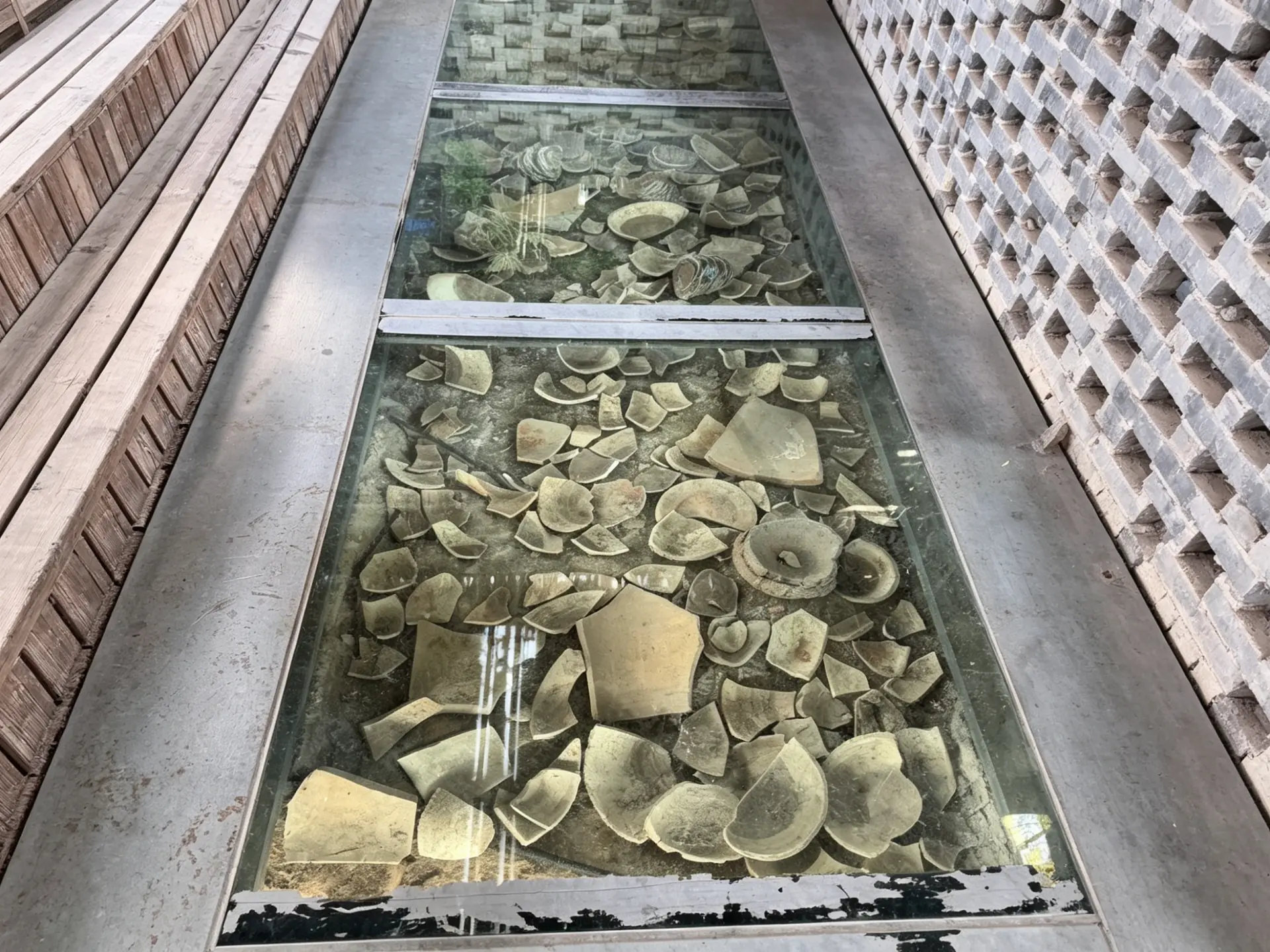
The courtyards provide a pause between underground galleries and connect the new building to preserved site archaeology.
Five sunken courtyards bring daylight, wind, and views into the lower level. During construction, previously unknown imperial-kiln remains were found on the site; the project was redesigned to preserve them as part of the complex. Take the stairs down instead of only photographing the roofline. The courtyard sequence is where the architecture, daylight, brick texture, and archaeological setting read together.
Info
Read the climate response as a design idea. The architect describes the museum’s north–south vault arrangement as shading the west side and encouraging summer airflow, while the porous courtyards were conceived to capture wind and daylight. Treat that as the design idea, not a guarantee that every gallery will feel cool on a hot day. It is a useful lens for reading the building: this is contemporary concrete-and-brick architecture that deliberately borrows the working logic of local kilns.
Key Exhibits: Kiln-Fire Fragments
How to read the cases
Start with the fragments, then use the named objects as examples.
The museum’s Ming–Qing collection context makes restored porcelain and shard specimens central to the story. They show the production, rejection, burial, excavation, restoration, and research trail behind imperial porcelain; the three examples below make that trail concrete without promising a particular live display.
Your scan path: production → rejection → burial → excavation → restoration → research.
Sancai Duck-Shaped Incense Burner
Named collection example · 01
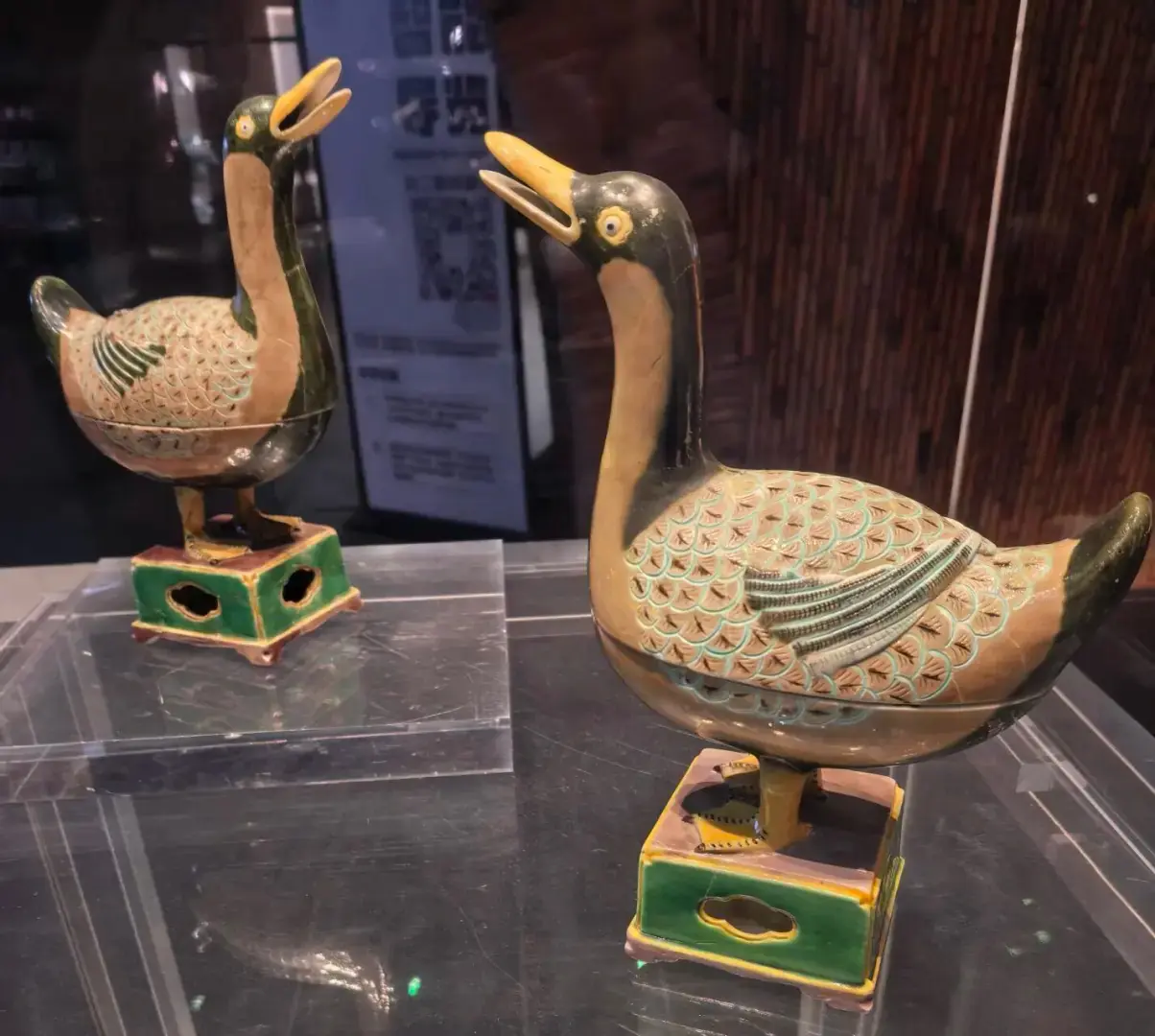
The Chenghua-era sancai duck-shaped incense burner is associated with the Jingdezhen imperial-kiln collection; confirm the live display list on arrival.
The duck-shaped incense burner is a strong example of the playful forms associated with Chenghua-era imperial ware. “Sancai” here refers to a low-temperature overglaze palette rather than a promise that this exact object will be on view on your date.
Blue-and-White Dragon Cricket Jar
Named collection example · 02
Collection context, not a display promise.
The Xuande-era blue-and-white dragon cricket jar is another imperial-kiln collection example. Its appeal is the odd specificity of court production: sophisticated porcelain made for a small, intensely personal pastime. Treat it as collection context unless the current gallery information confirms its display.
Porcelain Fragment Restoration Display
Named collection example · 03
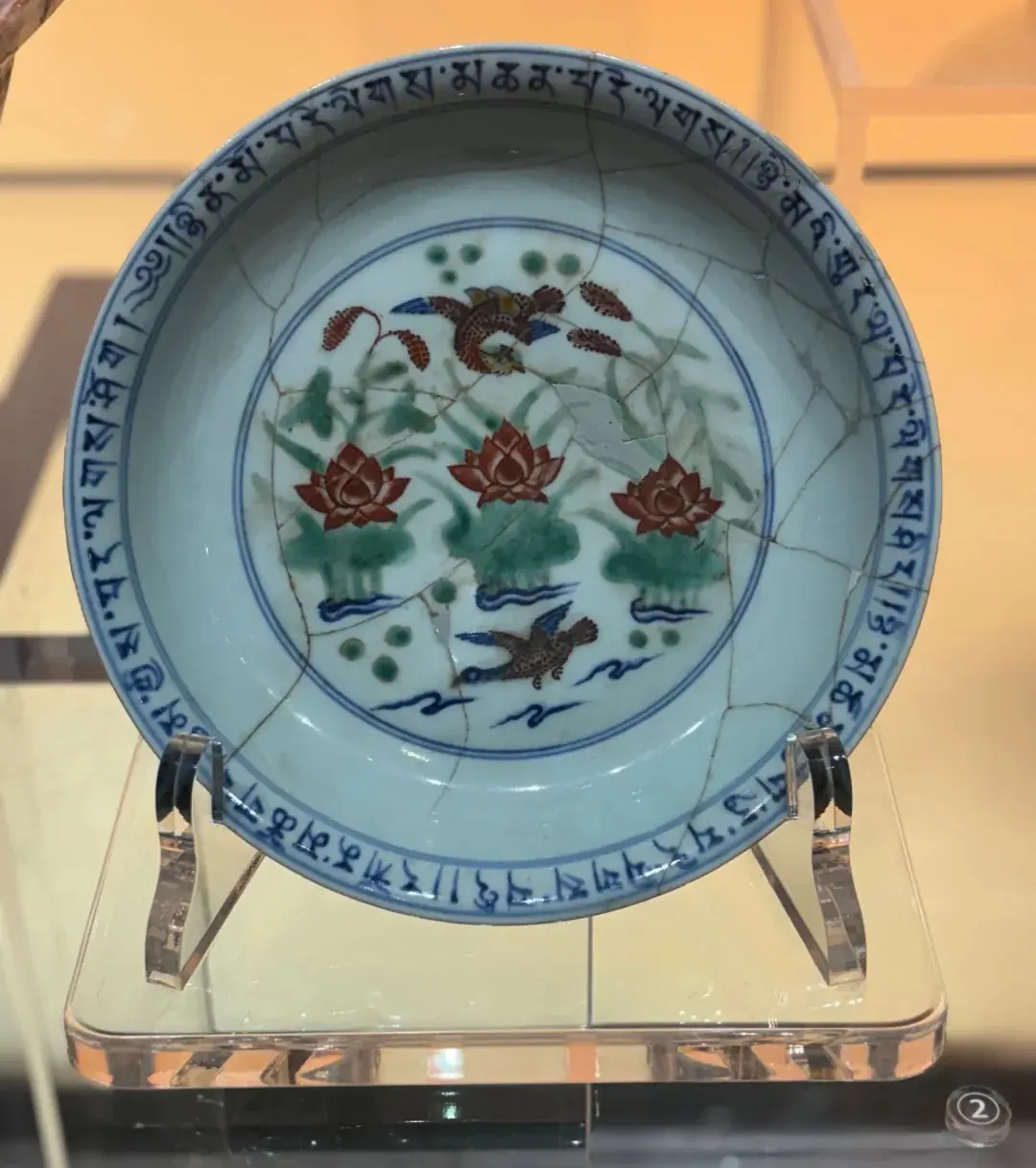
Restored pieces and shard specimens make the archaeological process legible without requiring a specialist background.
The restoration cases and specimen context give the visit a research-facing dimension. Do not assume that a live restoration demonstration will be running; use the cases and labels to understand how fragments become evidence.
From Kiln Ruins to Taoyangli
Museum to district
Use the ruins to complete the museum story before you build the route.
The museum is adjacent to the Imperial Kiln Factory ruins, within the wider Taoyangli Imperial Kiln Scenic Area (陶阳里御窑景区) (Google | Amap). The museum explains the objects and architecture; the ruins give the production landscape a physical scale.
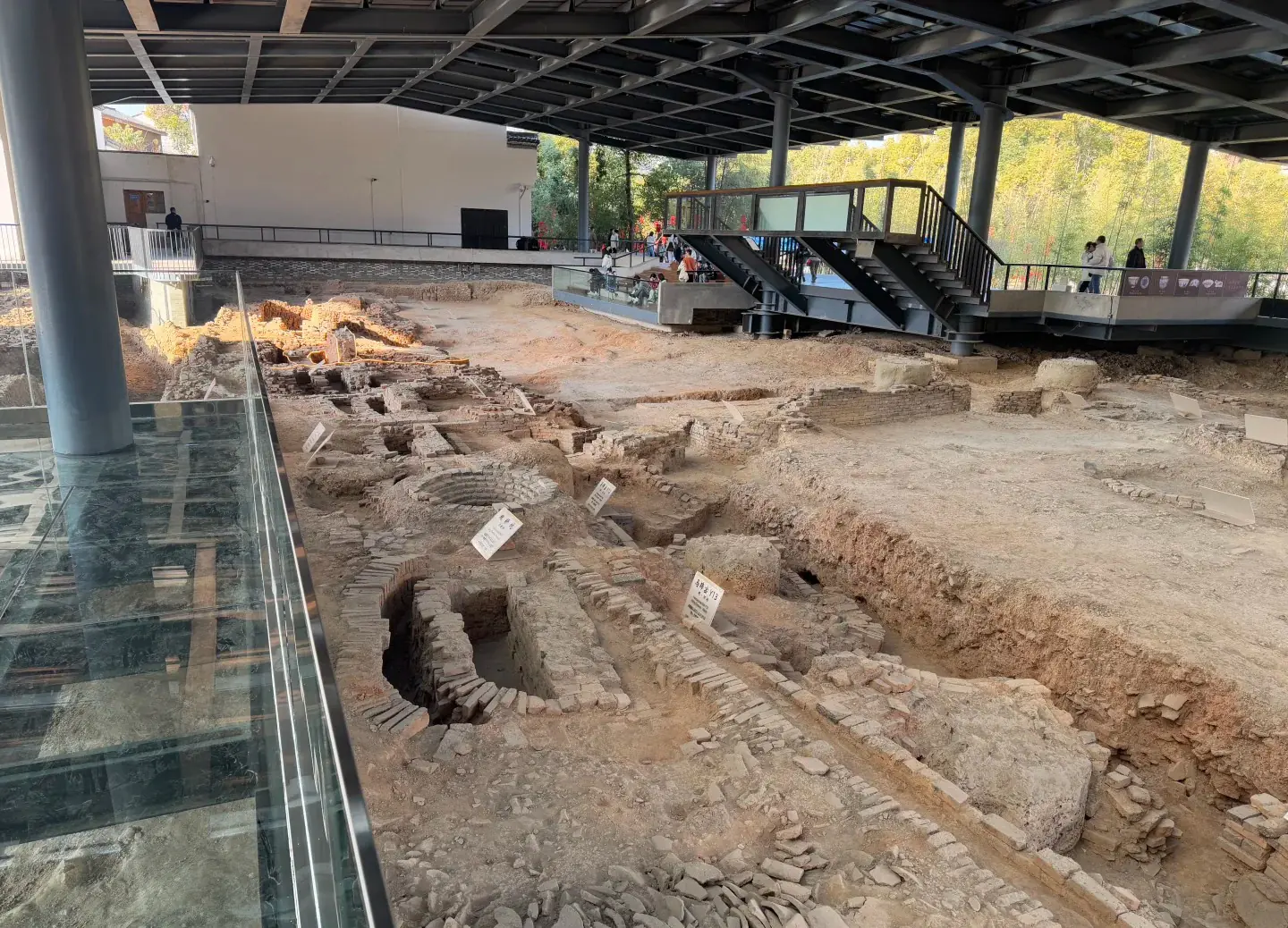
The adjacent ruins put the museum’s imperial porcelain story back into its original production landscape.
Use the ruins as a second half of the museum visit, not as an optional backdrop. The archaeological layers help explain why sherds and reconstructed vessels carry so much of the story here. Look for kiln foundations, layers of porcelain fragments, and any officially scheduled interpretation or craft activity; confirm the current access scope through the live Taoyangli product rather than assuming every area or activity is included.
Do not leave after the last gallery.
The overlooked details are the courtyard level, the preserved kiln context, and the framed views at the vault ends.
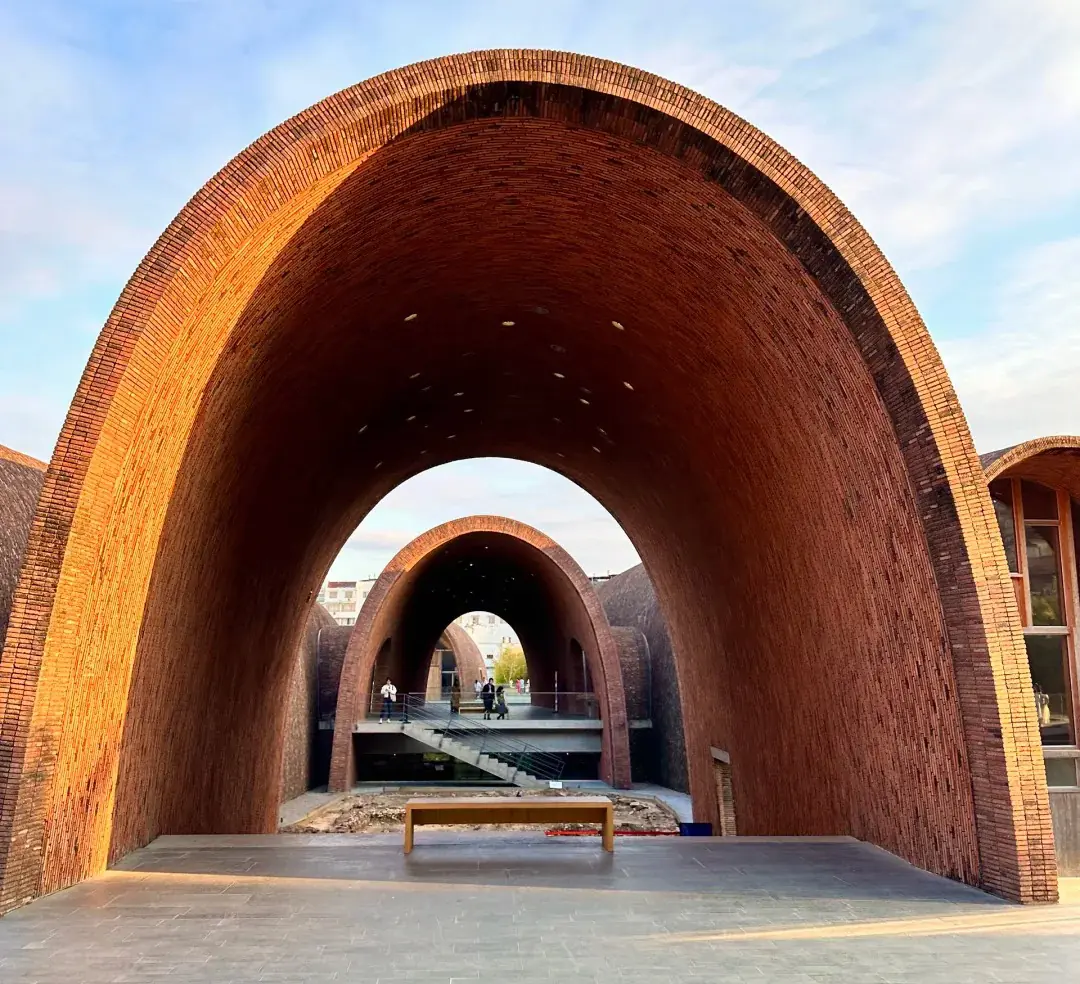
The vault ends frame the historic district and make a natural transition from museum interior to Taoyangli.
At a vault end, pause before heading out: the curve deliberately frames the surrounding historic district rather than sealing the museum off from it.
Route handoff. For a half-day cultural circuit, start at the museum, continue into Taoyangli’s lanes, take lunch nearby, then continue by taxi to Taoxichuan Creative District (陶溪川文创街区) (Google | Amap). Keep it flexible. Verify current opening hours and transport conditions on the day. This is an editor-curated sequence, not an official route, access order, opening guarantee, or time plan.
- Imperial Kiln Museum(御窑博物馆)- Start with the architecture and galleries.
- Imperial Kiln Factory ruins(御窑厂遗址)- Use the archaeological context to read the fragments.
- Taoyangli lanes(陶阳里御窑景区)- Pause for the historic-district transition and a flexible lunch stop.
- Optional Taoxichuan extension(陶溪川文创街区)- Continue only if the day and current conditions suit your plan.
Photography Guide
First frame to try
Start with the vault rhythm.
Walk the interior slowly as daylight changes. The strongest default frame is usually the curve, brick texture, and a small human figure for scale rather than a close portrait alone.
Cylindrical skylights
Use the round openings and their light pools as geometry. Their appearance changes with weather and time of day, so treat any exact shooting window as a personal preference.
Sunken courtyards
Shoot upward from the lower level to layer brick, stairs, vaults, and sky in one frame.
Old and new brick
Move close to the walls to read the contrast between reclaimed kiln brick and newer material.
Before you shoot: follow current staff photography instructions. A wide view works well for the vaults and a closer frame for brick texture; in low light, plan for handheld shooting rather than assuming a tripod will be permitted.
Two owned examples
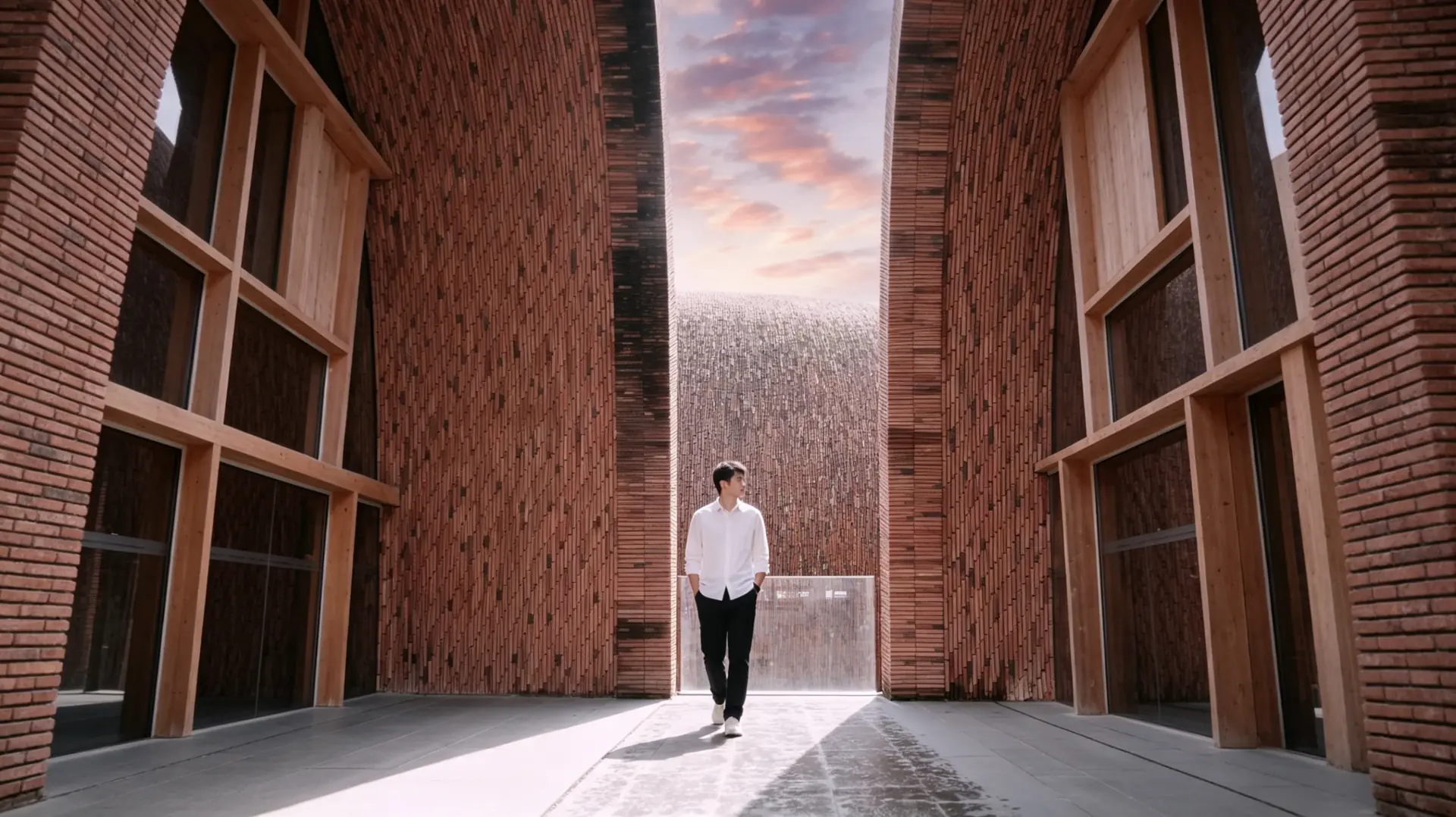
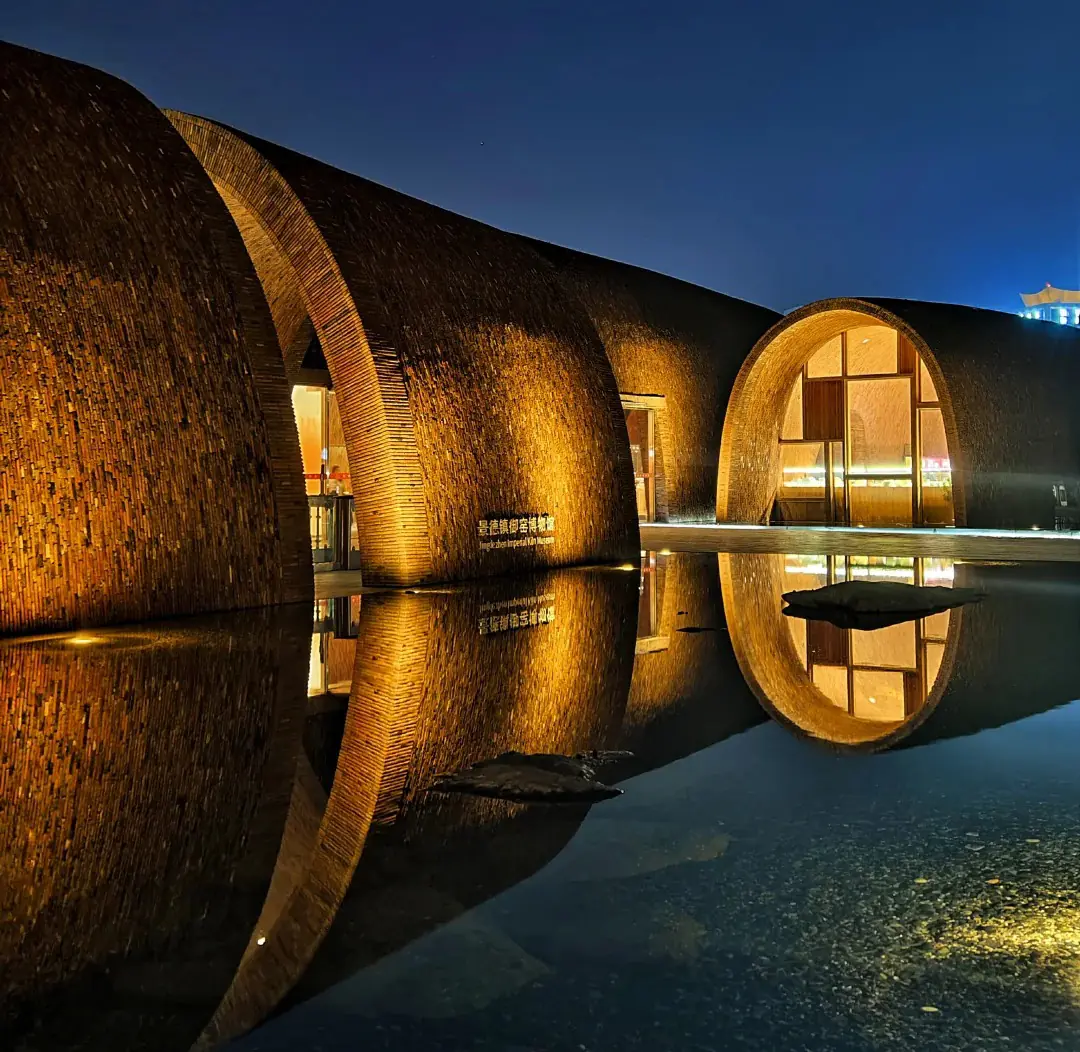
Tickets, Hours, and Night Show
Access decision
Museum and district access — start here.
A 2025 public directory listed museum admission as free with valid ID or passport, while requiring a separate Taoyangli district ticket. Confirm the live product, price, and eligibility.
📲 Reservations
Government guidance has directed visitors to the Changyou Jingdezhen WeChat mini-program or the museum’s official account. Check the current release window and identity requirements.
🕒 Opening hours
Published hours and Monday closures can change for holidays or events. Confirm your entry window in the live reservation flow.
🌙 Evening programme
Do not assume an included nightly light show. Check whether any after-dark access or special programme is announced for your date.
Getting There
Arrival handoff
Navigate to the mapped museum first.
Treat arrival as a simple handoff: navigate to the mapped museum, then use a current transport plan or the driver card below.
📍 Navigate to the pinned museum
Use the Imperial Kiln Museum pin (Google | Amap) rather than a copied street address: the attraction sits in the Taoyangli historic district and entrance details can vary by the current visitor product.
🚕 Keep arrival flexible
If your train arrives at Jingdezhen North Station, use a current map or ride-hailing app for the museum; do not rely on an old fixed fare, bus number, or journey time.
Show this screen to your driver · 出示给司机看
御窑博物馆,陶阳里景区
Imperial Kiln Museum, Taoyangli scenic area
Show this if a driver is unsure. Confirm the current visitor entrance in your map or booking page before you set off.
Eat Nearby and Plan Your Day
Core day plan
Keep the museum and Taoyangli as the core; add Taoxichuan only when the current programme suits your evening.
Lunch and coffee nearby
Taoyangli’s renovated lanes make an easy stop after the museum. For a local-food reset, look for alkaline rice cake (碱水粑), rice-flour dumplings (饺子粑), and chilled rice noodles (冷粉); prices and individual stalls change, so choose by current turnover and the queue rather than a fixed list.
Conditional evening extension
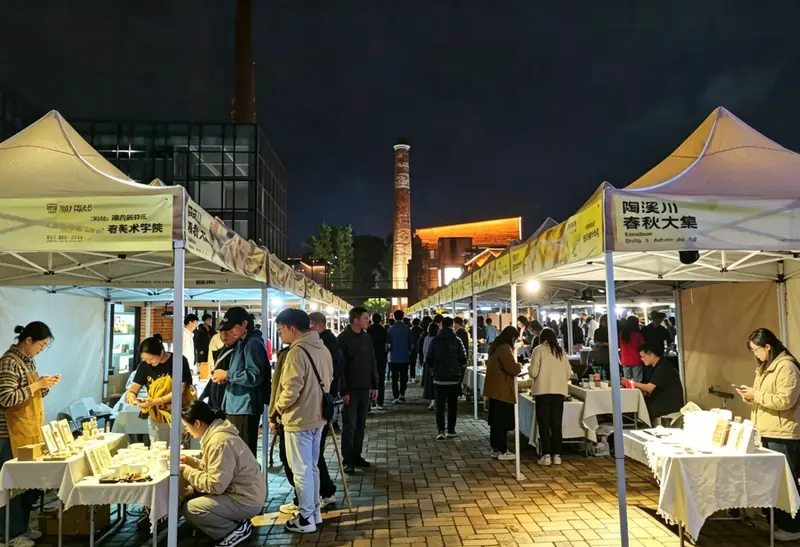
Taoxichuan is useful when its markets or events are operating, but current schedules vary. It works best as a flexible second stop after Taoyangli rather than a promise of a particular Friday–Saturday market.
Practical support
⏱️ Pacing
Use the museum and ruins as the core visit; add buffers for photography, Taoyangli lanes, food, or a second district stop.
👟 Footwear and surfaces
Wear comfortable shoes. Courtyards and historic lanes involve stairs and uneven brick or stone.
🌤️ Seasonal rhythm
Spring and autumn are often the easiest walking seasons; in summer or rain, make your timing more flexible and use the galleries as a break from the lanes.
Frequently Asked Questions
Use the answers below to resolve the practical questions, then check the source notes for current operating details.
No. The Imperial Kiln Museum sits in the old town beside the kiln ruins and focuses on imperial-kiln archaeology and architecture. The Jingdezhen China Ceramics Museum has a broader ancient-to-modern collection in another part of the city. Choose according to your interests, or allow time for both.
Sources checked for this guide
- Architecture, eight vaults, mixed brick construction, and Brick Award recognition: Brick Award 22
- Architect interview on courtyards, preserved ruins, recycled bricks, and climate-responsive design: Central Academy of Fine Arts, 2021
- Current museum/institute identity and named collection-object context: Jingdezhen Municipal Government, 2026 Supports collection context, not a current gallery display list.
- Imperial-kiln history and named collection examples: Prince Gong’s Mansion Museum, 2025 special exhibition
- Visitor-access, collection, and laboratory context: China Daily government directory, updated 2025-03-04 Time-qualified reference; confirm current ticket and entry details in the live official booking flow.
- Reservation-channel and event-period opening reference: Jingdezhen Municipal Government, 2025-10-15 Event-period notice, not a standing guarantee of today’s hours.
Beyond This Guide
Pair this stop with Taoxichuan’s ceramic market and art district for a different side of Jingdezhen, then leave room for food, studio time, and flexible transport around the rest of Jiangxi.
- Pottery Making in Jingdezhen — throw and glaze your own porcelain piece after touring the historic kilns
© gochinafreely.com — Original guide by Go China Freely.