Walk & Access
Good to Know
Baixiangju: A Residential Transit Machine
A vertical neighborhood, not a photo set
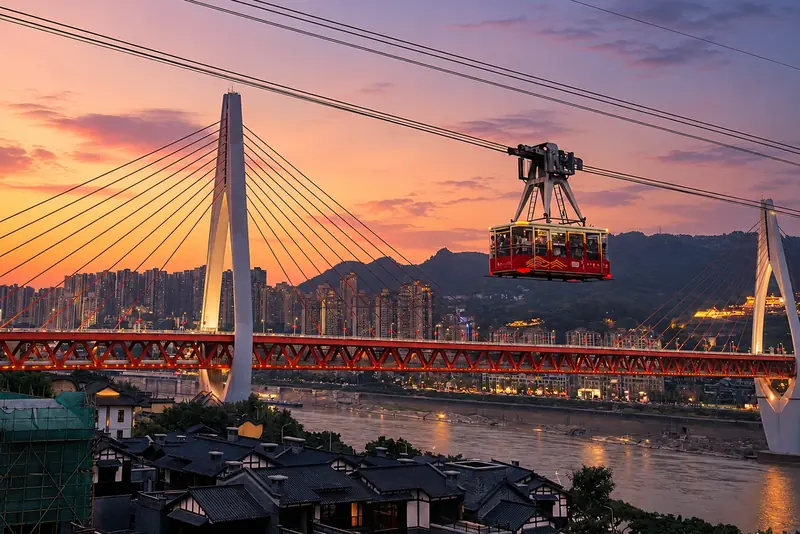
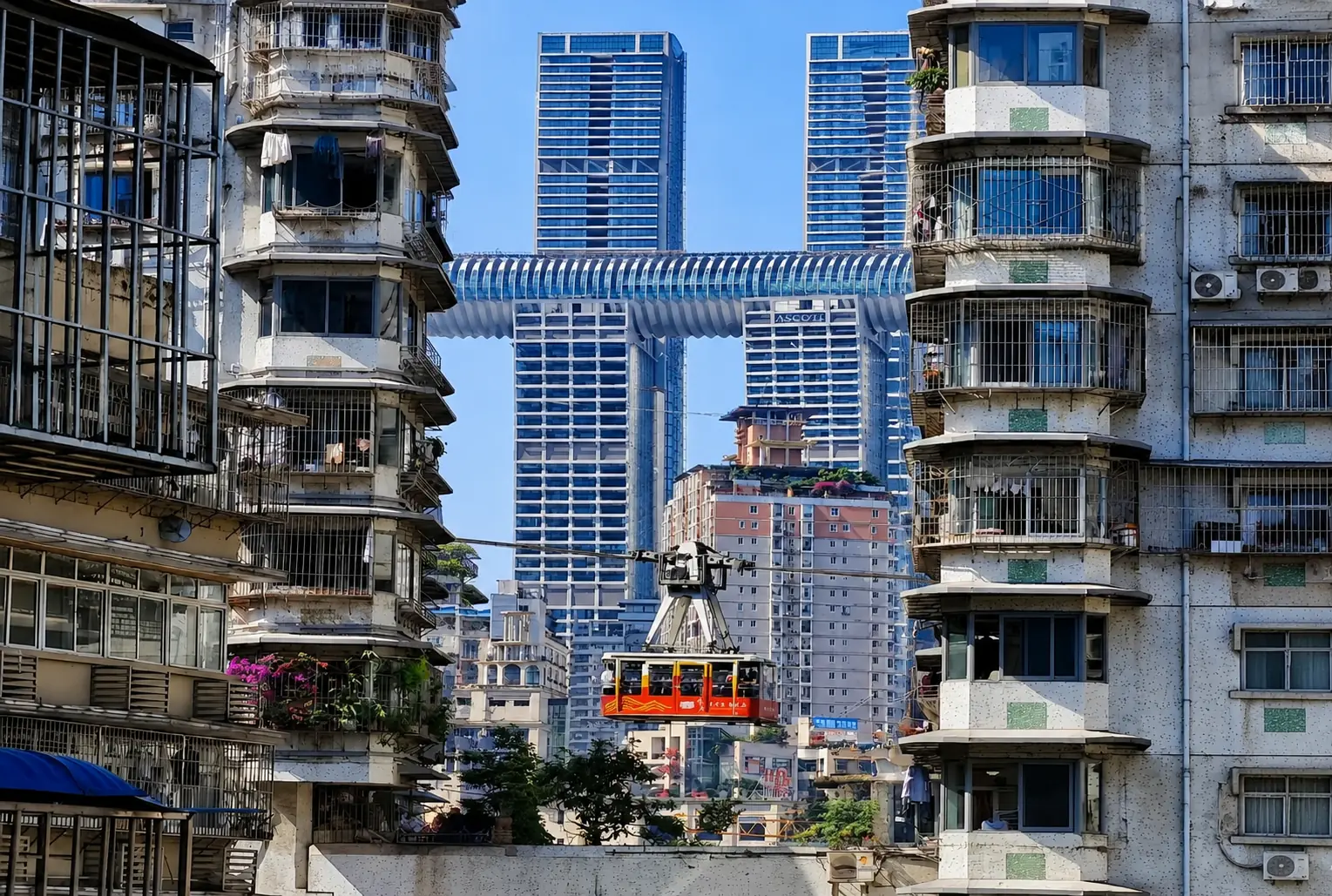
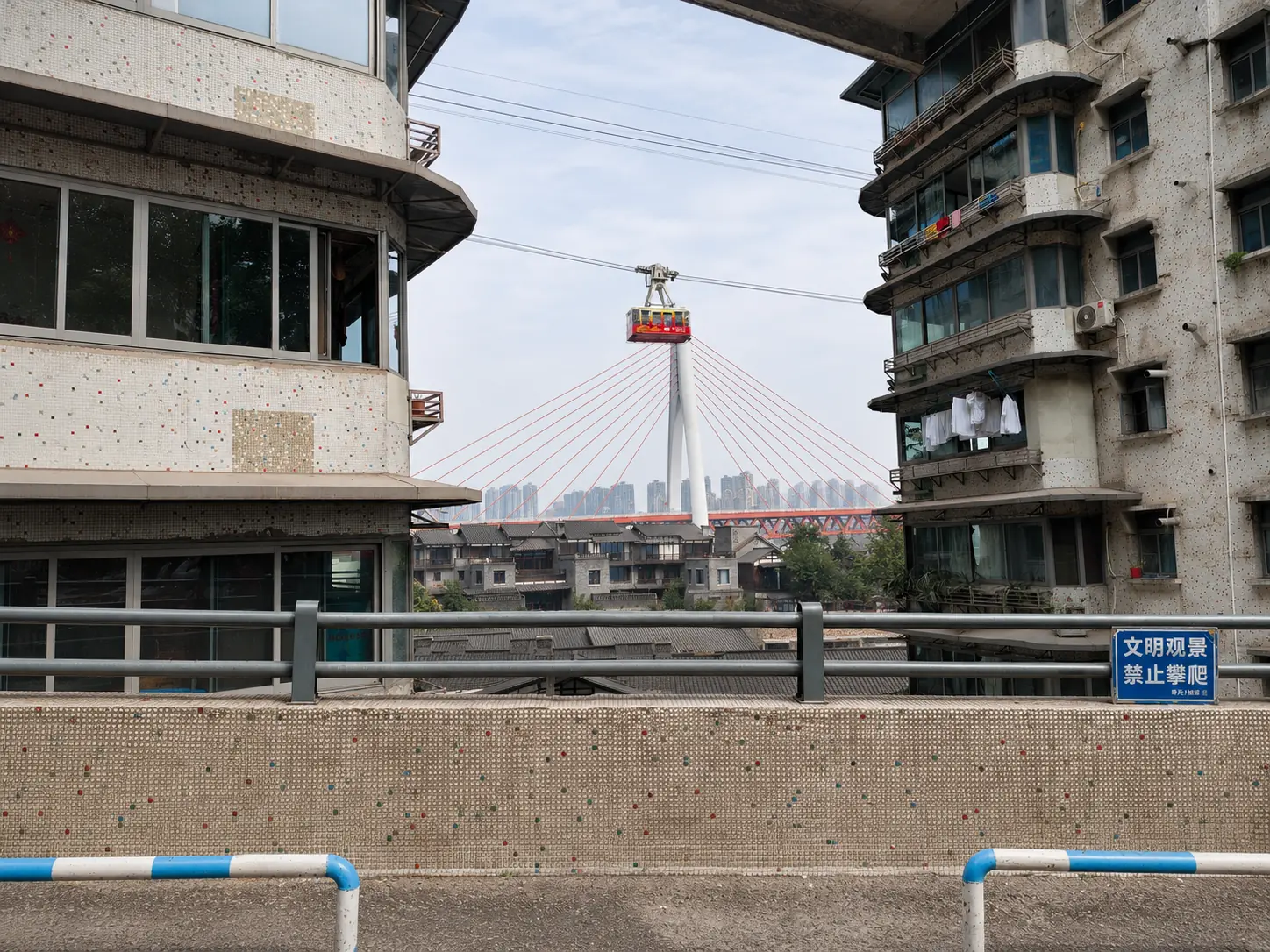
Baixiangju (白象居) is often reduced online to a "24-story building with no elevators." The better story is how one residential complex makes Chongqing's vertical city logic visible: streets meet at different heights, staircases work like neighborhood lanes, and an ordinary corridor can suddenly frame the Yangtze River Cableway.
Built for the slope
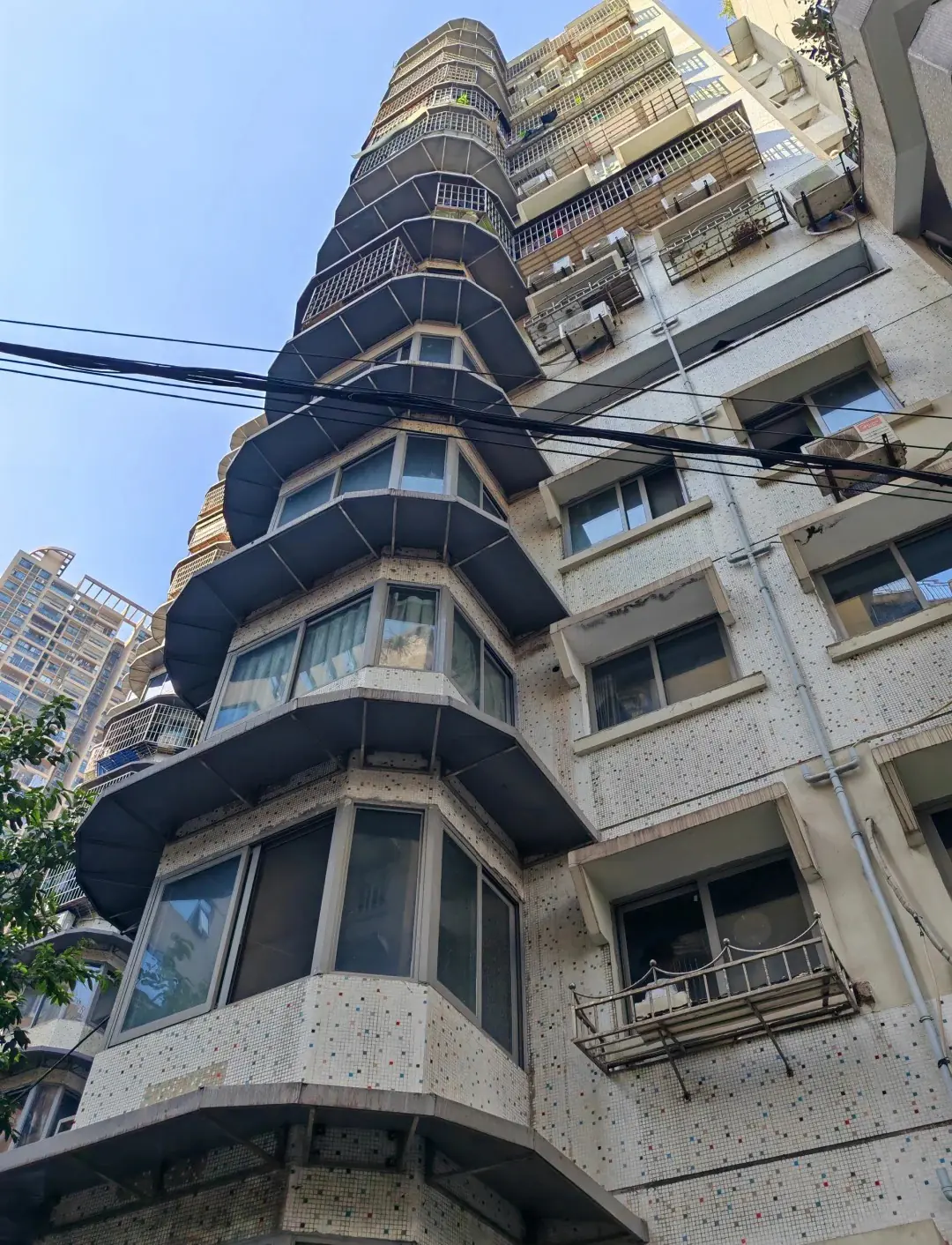
Baixiangju sits between Baixiang Street and Jiefang East Road in Yuzhong District. People's Daily describes the complex as built in 1992, with six 24-floor residential buildings and no elevators.
It is not a purpose-built tourist attraction. Its fame comes from turning a roughly 38-metre site height difference into layered entrances, corridors and stairs that meet roads at several elevations.
1992
Built
6 × 24 floors
No elevators
~38 m
Site height difference
Use Baixiang Street (白象街) (Google | Amap) as the map anchor, then read the building through its height changes. Residents do not necessarily climb from the lowest road to the 24th floor: a "middle" floor can also be a street-level threshold from another side.
Terrain first
The building makes sense only when you remember that Chongqing streets do not sit on one flat plane.
Stairs as transit
Corridors and staircases work like a vertical lane network, not just emergency circulation.
Homes, not sets
The same views that attract visitors also sit beside real doors, laundry, shops, and daily routes.
Read it as an architecture walk first, a photo stop second, and a lived-in neighborhood throughout.
Route: Xiaoshizi to Sky Corridor
This is an editorial walking sequence, not an official fixed scenic-area route. Keep the six anchors in order, but let current signs and on-site management decide the exact internal passages.
- Xiaoshizi Station(小什字站)- Arrive on CRT Line 1 or 6; use Exit 7 and confirm current signs
- Baixiang Street(白象街)- Approach through the historic lower-Yuzhong street grid
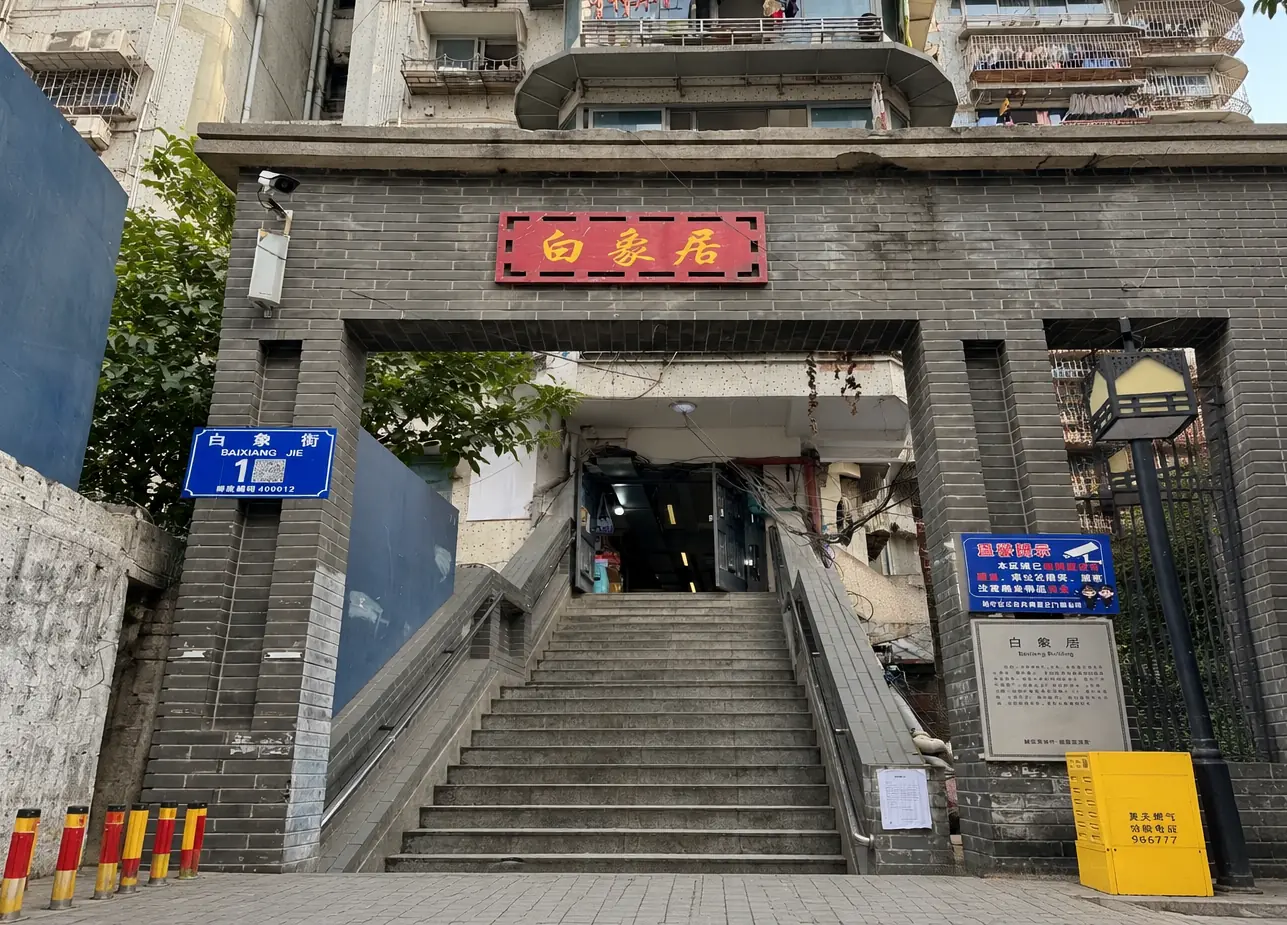
- Baixiangju Entrance(白象居入口)- Follow the clearly open visitor-facing route, not random stairwells
- Sky Corridor(空中连廊)- Read the complex as a vertical residential street
- Cableway Viewpoint(索道视角)- Watch for the Yangtze River Cableway and Dongshuimen Bridge
- Lower Yuzhong Exit(下半城出口)- Continue only by an open signed route, or return to the entrance
Start here
Xiaoshizi Station (小什字站)
Take CRT Line 1 or 6 to Xiaoshizi, use Exit 7, and walk about 460 metres toward Baixiang Street. This image shows the Baixiangju entrance you reach after leaving the station, not the station itself.
Do not hunt every private stairwell. Follow the clearly open public route through the entrance, corridor and cableway viewpoint, then use a signed lower-Yuzhong exit or return the way you came.
Read height before distance
Use Amap, Apple Maps or local signs once you are close. Google Maps can still help with broad orientation, but a flat map can show that two pins are near each other without showing that one sits several levels above the other.
A nearby point may be across a stair bridge or on a road that meets a different floor. Baixiangju is easier when you read height first and distance second.
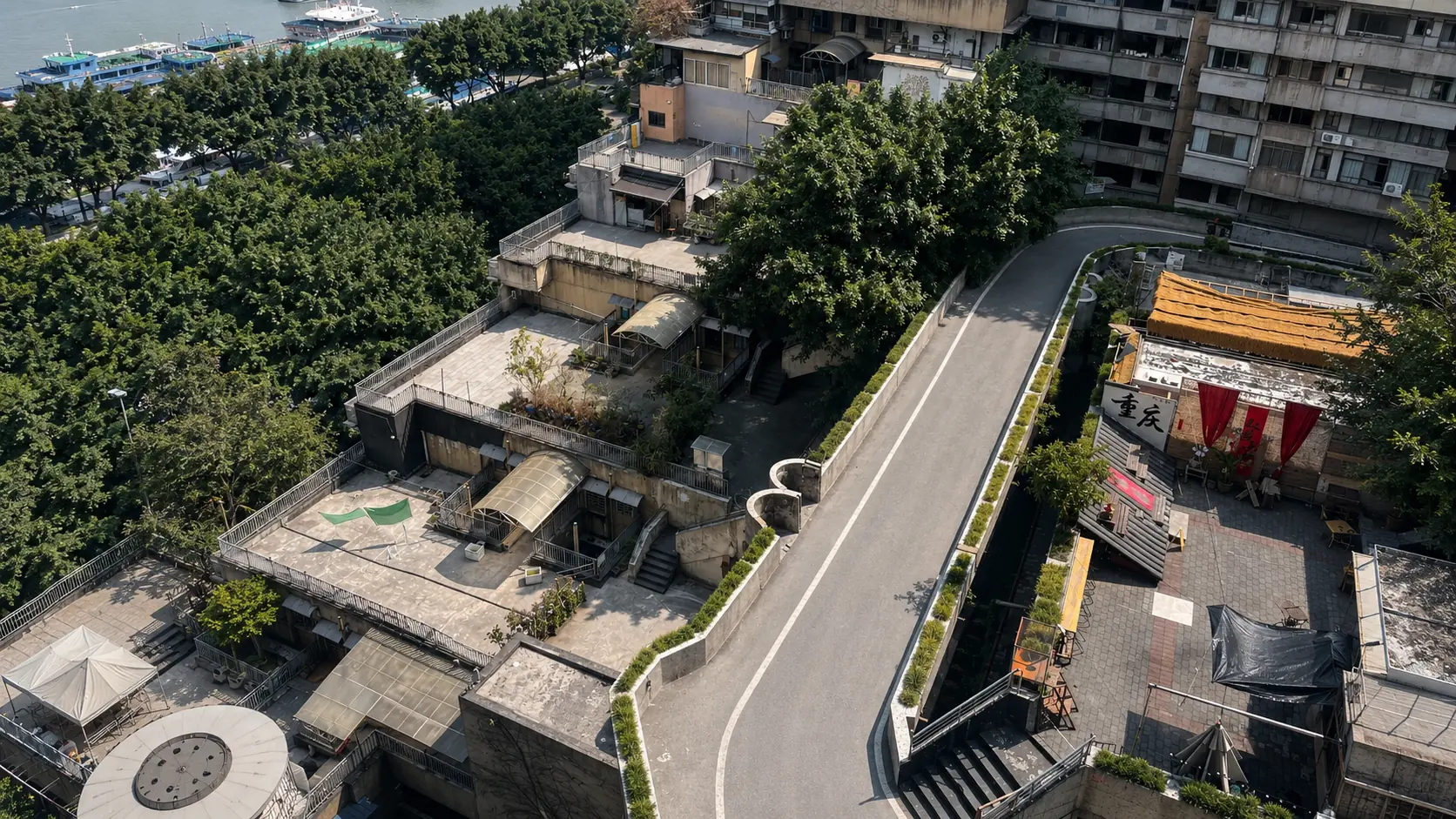
Do not turn this into urban exploration
If a stairwell, door, corridor or platform looks residential or restricted, skip it. The clearly open route already gives enough architecture and city views.
Three Exits Explain the 24 Floors
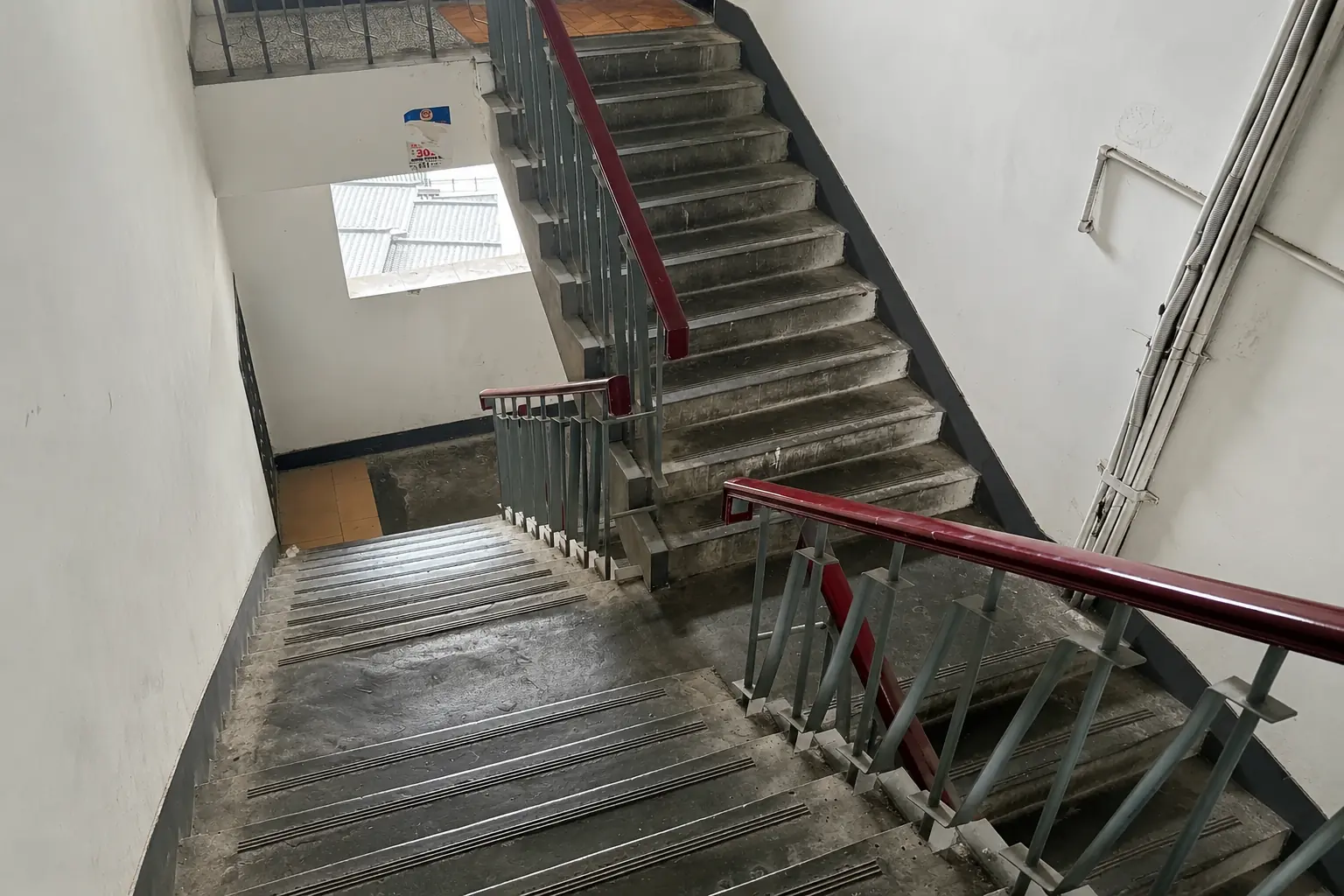
Ground can happen more than once
Most visitors arrive for the "24 floors without elevators" fact, then leave with a better question: what counts as the ground floor in Chongqing? Baixiangju's answer is that the ground can happen more than once.
The design uses a roughly 38-metre height difference, elevated corridors, layered entrances and slope-side circulation to make a high-rise work more like several stacked mid-rise buildings.
Four clues for reading the exits
Common complex-wide summary
Chongqing reports often describe street connections around floors 1, 10 and 15. This is the clearest way to understand the three-level idea before arriving.
A route-specific report uses 1 and 12
People's Daily followed a route with floor 1 opening to Shaanxi Road and a floor-12 platform level with Jiefang East Road, plus other exits.
Unit numbers can differ
Adjacent units start from different foundation heights, so the same corridor level may carry different floor numbers from one unit to the next.
On-site navigation wins
Use the floor numbers as an architectural clue, not a universal turn-by-turn sequence. Follow current signs, open passages and local guidance.
From one side, Baixiangju reads as a tall residential block; from another, a high floor meets a road or platform. Long horizontal corridors connect homes, shops, stairs and exits like neighborhood lanes; X-shaped stair runs distribute movement; river, cableway and bridge views help orient you on the slope. The building is compelling because it compresses a citywide Chongqing pattern into one structure: the terrain does not sit outside the architecture, it organizes it.
Sky Corridor Photo Spots
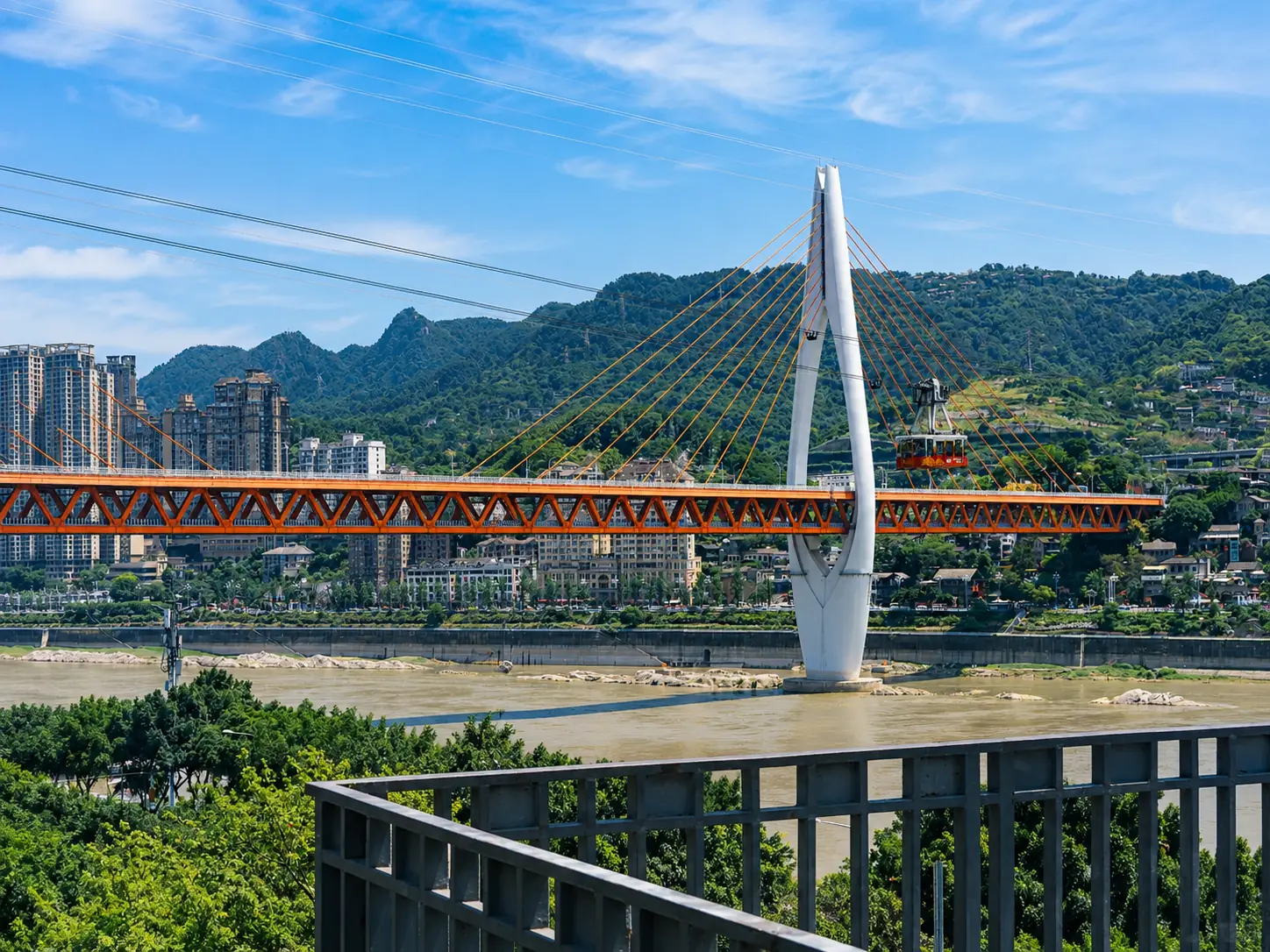
Build the frame in layers
The corridor gives you Baixiangju's building section in one glance: homes behind you, staircases beside you, and the city and river ahead.
On a clear day, the Yangtze River Cableway can cross the frame, with Dongshuimen Bridge and lower Yuzhong layered beyond it.
Dongshuimen Bridge (东水门大桥) (Google | Amap) is the main bridge in this view. Wait for the cable car to enter the frame, photograph the bridge and building geometry, then step aside. A strong composition usually holds three layers: corridor or stair foreground, residential facade in the middle, and river or skyline beyond.
Choose one light window
Morning
Quieter architecture study
Best for: softer light and usually fewer photo queues.
Light: soft on stairs, walls and railings.
Crowds: easier to keep the corridor clear.
Best frame: building texture over river drama.
Late Afternoon
Warmer river sequence
Best for: richer bridge light and usually more visitors.
Light: warmer on river, bridge and facade.
Crowds: wait away from the narrowest passage.
Best frame: cableway crossing the river view.
Choose one light window and keep the stop short; the corridor works best as a shared passage, not a private photo set.
Resident-First Etiquette
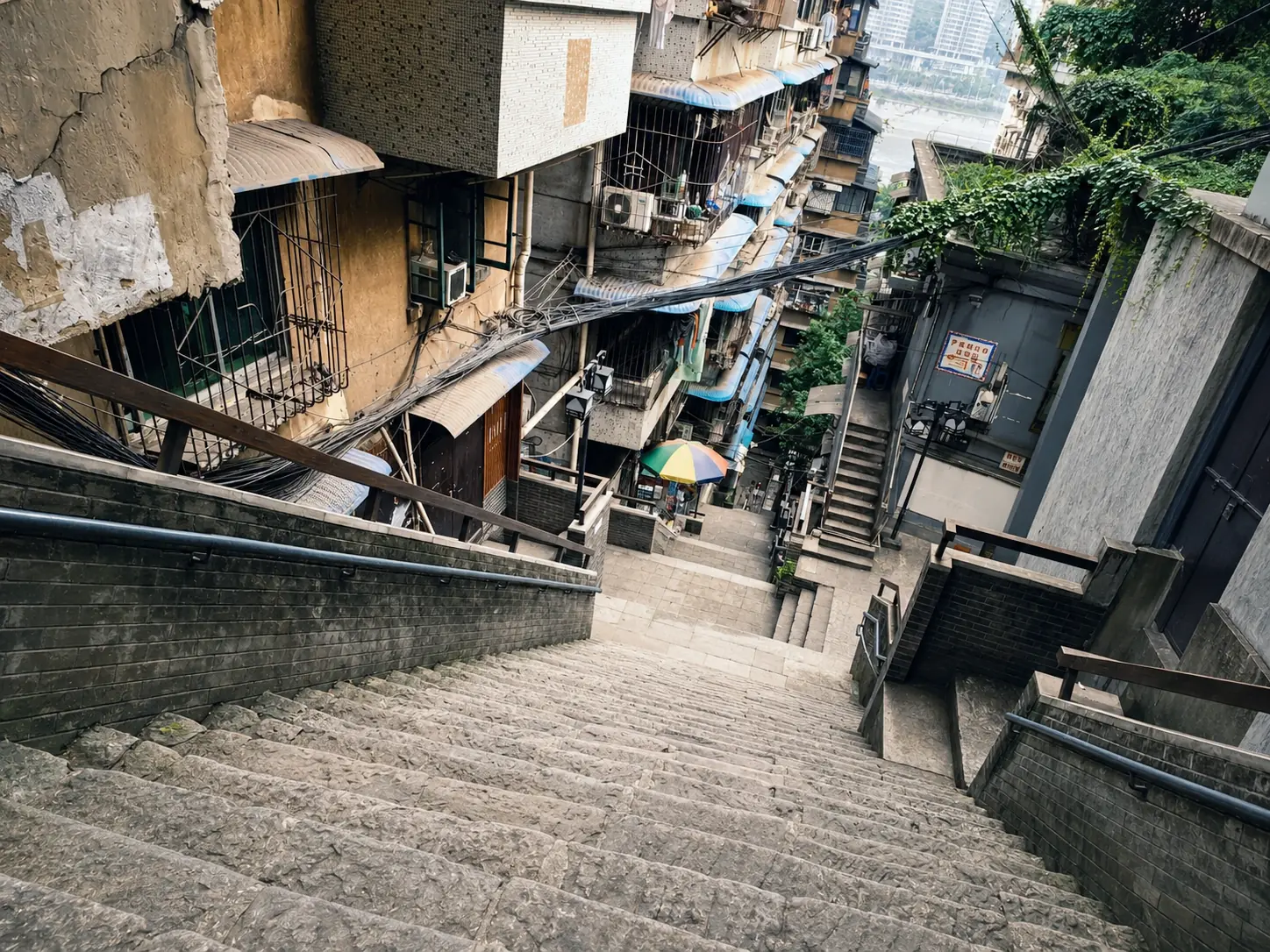
A home before a viewpoint
Baixiangju is not an open playground. Chongqing reporting describes the pressure that photo traffic has placed on narrow passages, residential doors and residents' routes home.
Community volunteers, signs, visitor guidance, public-benefit revenue and resident self-governance now help balance public interest with everyday life. Treat that management as part of the visit, not an obstacle to it.
Use these rules as part of the route, not as a footnote:
- Keep corridors clear. Do not stop in stair turns, narrow bridges, shop fronts, or residential doorways. Take the photo, then move.
- Photograph public layers. Buildings, stairs, bridges, signs, and wide street scenes are fair subjects. Close portraits and interiors are not.
- Follow local control. If volunteers, signs, or temporary barriers redirect visitors, accept it. Access has changed before during crowded periods.
Organized teams need a different plan
People's Daily's 2025 field report says team visits must reserve one day in advance. Independent visitors do not inherit that blanket booking rule, but everyone should check current signs and access before relying on a particular corridor. Holidays, crowd levels, safety needs and resident feedback can change on-site management; commercial shoots, large equipment and managed group activity may face additional restrictions.
Timing, Shoes, and Safety

Choose conditions, not just light
A weekday morning or late afternoon is the easiest first visit. Weekends, public holidays and school breaks can turn narrow passages into a stop-start queue.
Summer midday can be hot and airless in stair sections, while rain makes stone and concrete more slippery. Shorten the route before fatigue changes how carefully you move.
- Wear shoes with grip. Keep your hands free for stairs, railings, maps, and sudden crowd movement.
- Travel light. Dress shoes, rolling luggage, drones, long selfie sticks, tripods and large bags make narrow shared routes harder for everyone.
- Use the easiest public viewpoint when needed. Older parents, young children and anyone with mobility, knee or heat concerns do not need to complete the internal stair sequence.
A careful, unhurried loop here makes the rest of Yuzhong easier to read: short map distances can hide stairs, stacked roads and real physical effort.
Do Not Lean Out for Cableway Shots
Stay behind railings, keep stair landings open, and never climb onto ledges, pipes, walls or shop structures for a cableway photograph.
Pair Baixiangju with Lower Yuzhong
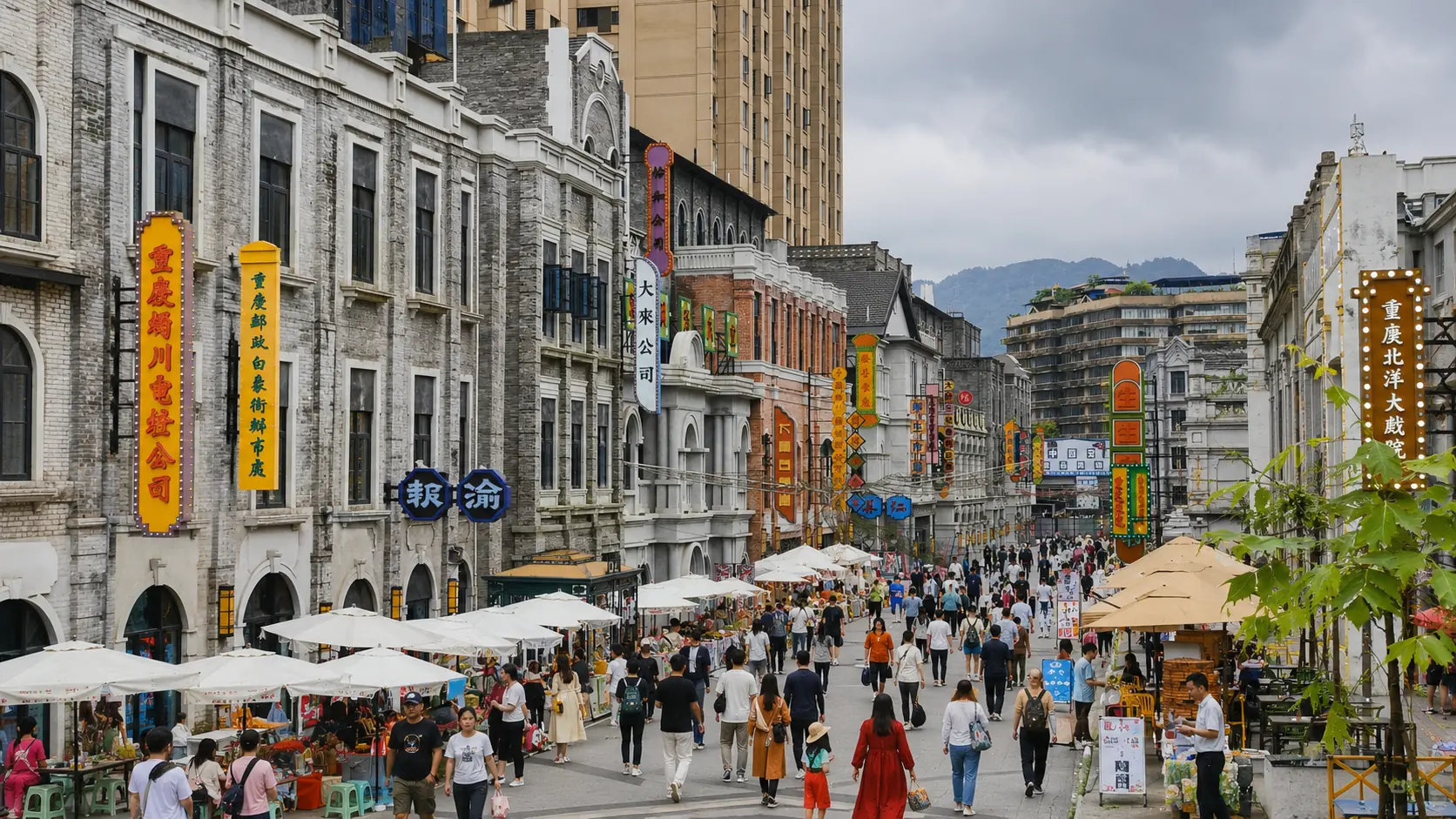
Baixiangju is too small to carry a full sightseeing day, but it works well as one layer in a lower-Yuzhong walk. Choose the next stop by what you want to understand rather than trying to collect every staircase:
Choose the next layer of Lower Yuzhong
Route fit: Pair residential verticality with older migration, guild, and river-trade history near the lower city.
Yangtze River Cableway (长江索道)
Best 3D-city finale
Route fit: After seeing the cableway from Baixiangju, ride it only if current operations and queues suit your day.
Route fit: Use Eighteen Steps to compare a restored slope district with Baixiangju's lived-in residential maze.
A compact half-day can look like this: Xiaoshizi Station → Baixiangju → Huguang Guild Hall → Yangtze River Cableway → Jiefangbei or Eighteen Steps. If you already plan to walk the Mountain City Trail, do not cram every stair district into one afternoon. Baixiangju is strongest when you still have energy to notice its everyday details.
Frequently Asked Questions
It is a residential complex, not a normal ticketed attraction. Independent visitors may use clearly open public routes, but access can change with crowd control, safety needs and resident guidance. Organized teams should reserve one day in advance, according to a 2025 People's Daily field report.
Sources checked for this guide
- 1992 construction, six 24-floor no-elevator buildings, route-specific floor-1/floor-12 access and organized-team reservation: People’s Daily 2025 Baixiangju field report
- Address, Xiaoshizi Exit 7 approach, roughly 460 m walk, 38 m height difference and common 1/10/15 entrance summary: CQNews 2025 film-location guide
- 1993 delivery, 24 floors, no elevators, six units, 140+ m horizontal length, three-level access and unit-dependent numbering: CQNews / Chongqing Evening News 2021 building report
- Crowd pressure, resident concerns, 500+ households, temporary access control and resident self-governance: CQNews 2023 resident-governance report
- 38 m elevation difference, old-community governance and visitor-pressure context: Chongqing Municipal City Management Bureau 2024 repost
- 1994 design-award context and sky-corridor design language: CQNews 2021 Baixiang Street feature
- Current CRT network identity for Xiaoshizi on Lines 1 and 6: Chongqing Rail Transit network
- Current government overview of Yangtze River Cableway operations and north-station access: Chongqing government cableway profile
- Current government-guided cableway maximum fares: CNY 30 one-way and CNY 50 return: Chongqing Development and Reform Commission price notice
Beyond This Guide
Use Baixiangju as Chongqing's vertical-living lesson, not just a cableway photo stop. Pair it with the Mountain City Trail, the one-day Chongqing route, or a lower-Yuzhong evening around Jiefangbei and hotpot.
© gochinafreely.com — Original guide by Go China Freely.