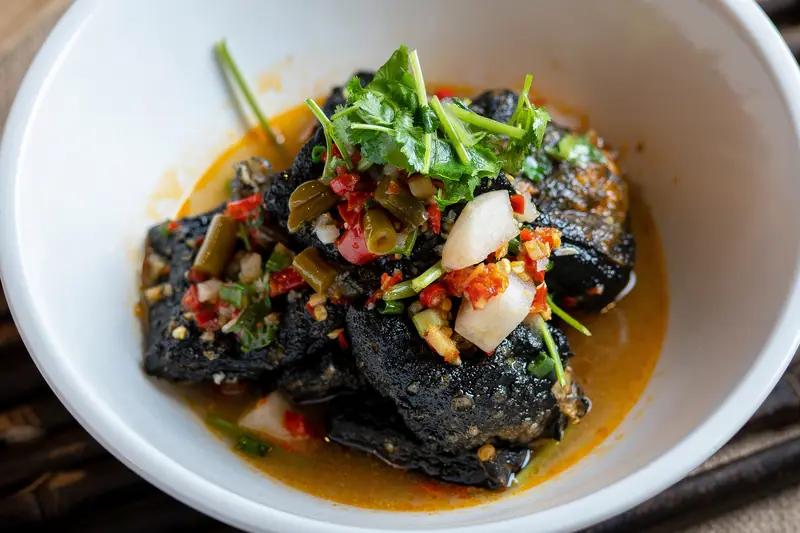
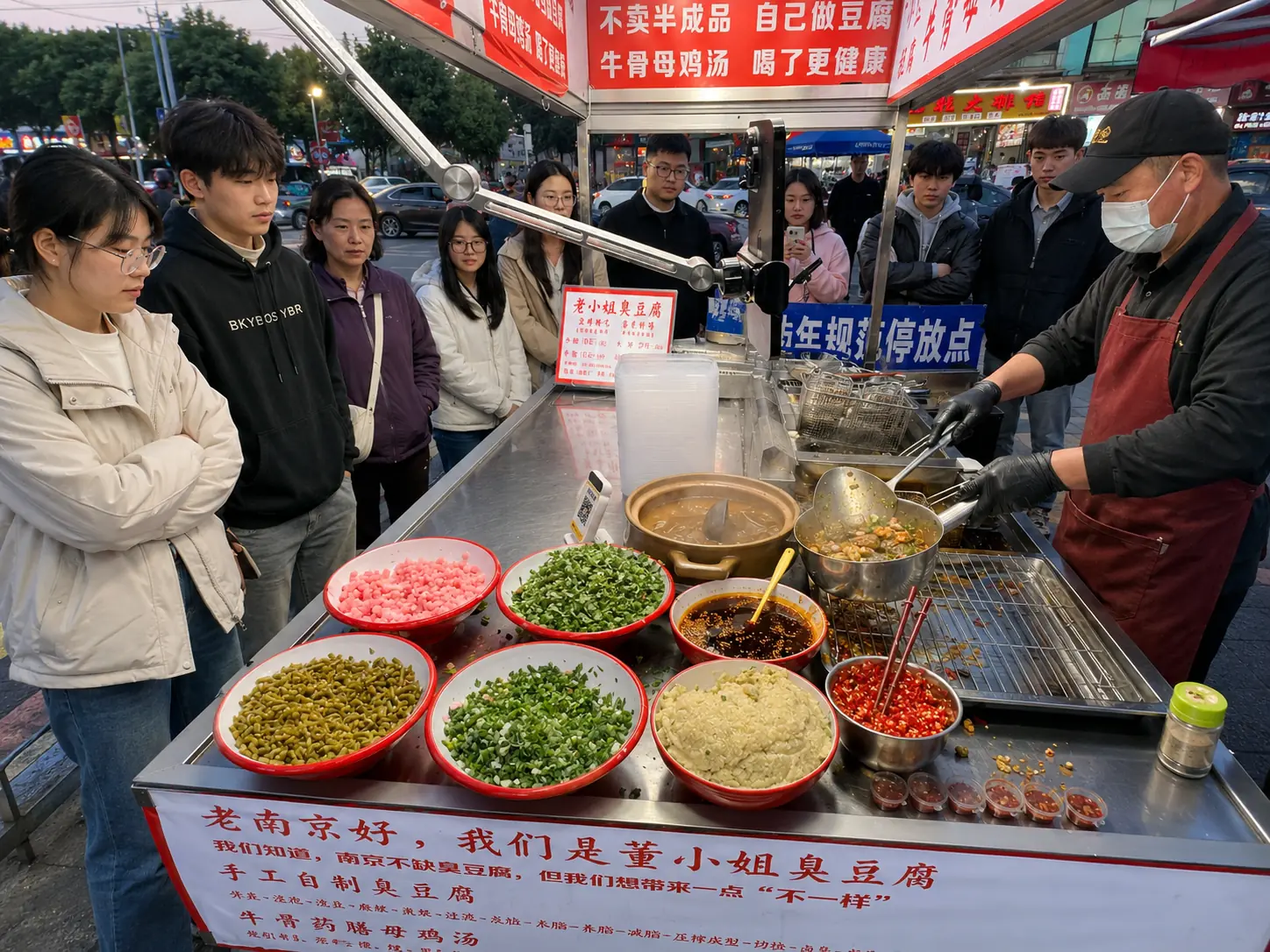
Stinky tofu (臭豆腐) is usually not the street food you see first. It is the one you smell first. A fryer hisses somewhere ahead, fermented tofu and hot oil drift through the street, and then you spot the dark or golden cubes: crisp outside, soft inside, covered with chili, garlic sauce, pickled radish, or cabbage. The smell is the dare. The first bite is often easier: salty, savory, hot, and much less frightening than the air around the stall suggests.
Executive Summary
What this guide covers
What stinky tofu is, why it smells strong, Changsha black stinky tofu, Shaoxing and Taiwan-style differences, how to order your first portion, and diet notes.
Best first order
Try a small portion of freshly fried stinky tofu, ask for mild chili, and eat it hot near the stall instead of carrying it around.
Main traveler trap
Do not use smell as a safety rule. Choose hot, fast-moving stalls with clean sauce areas and avoid lukewarm tofu sitting out too long.
Soy tofu
Core ingredient
Fermented
Main aroma
Hot fried
Easiest first style
Changsha
Strong city anchor
From Street Smell to Crisp First Bite
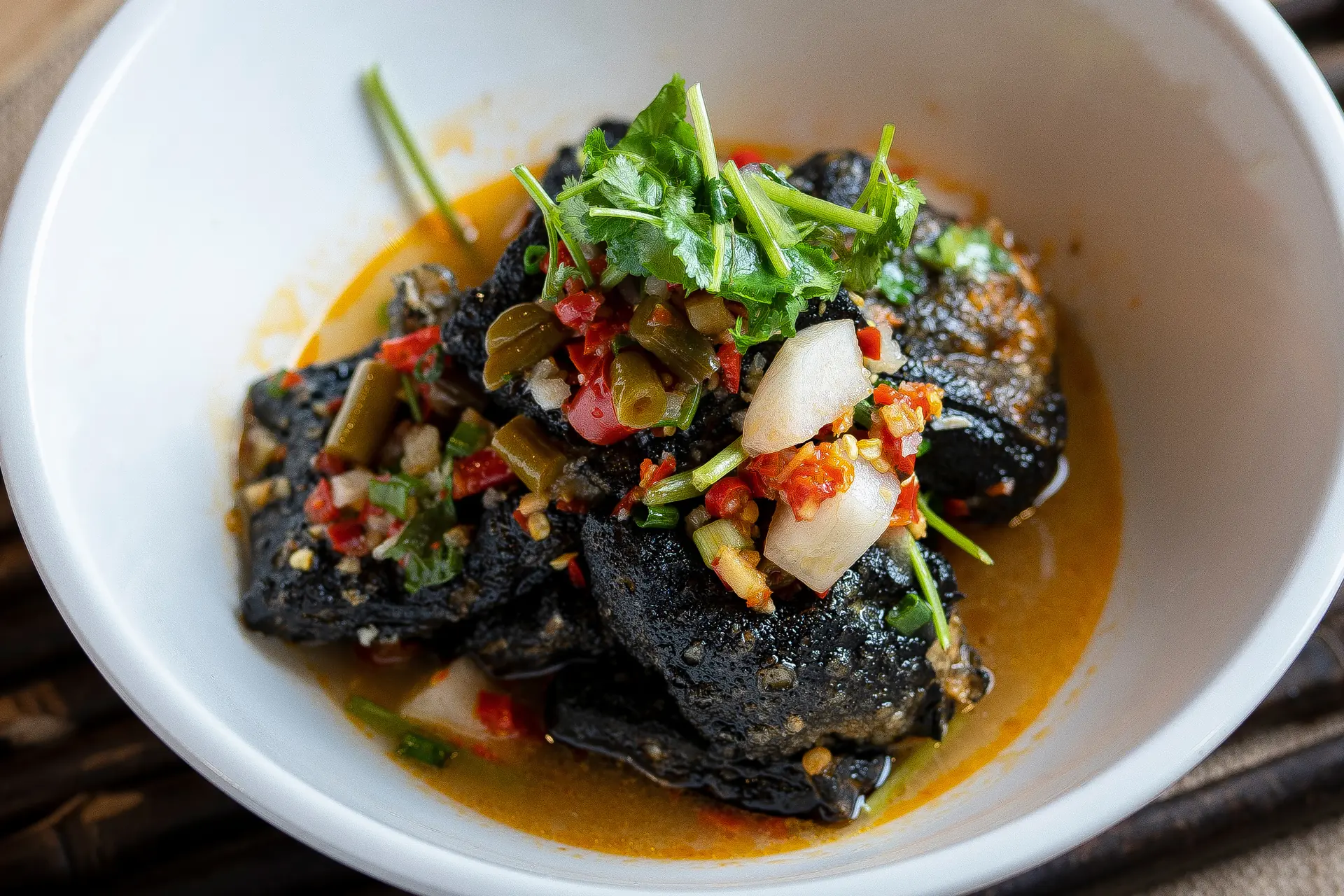
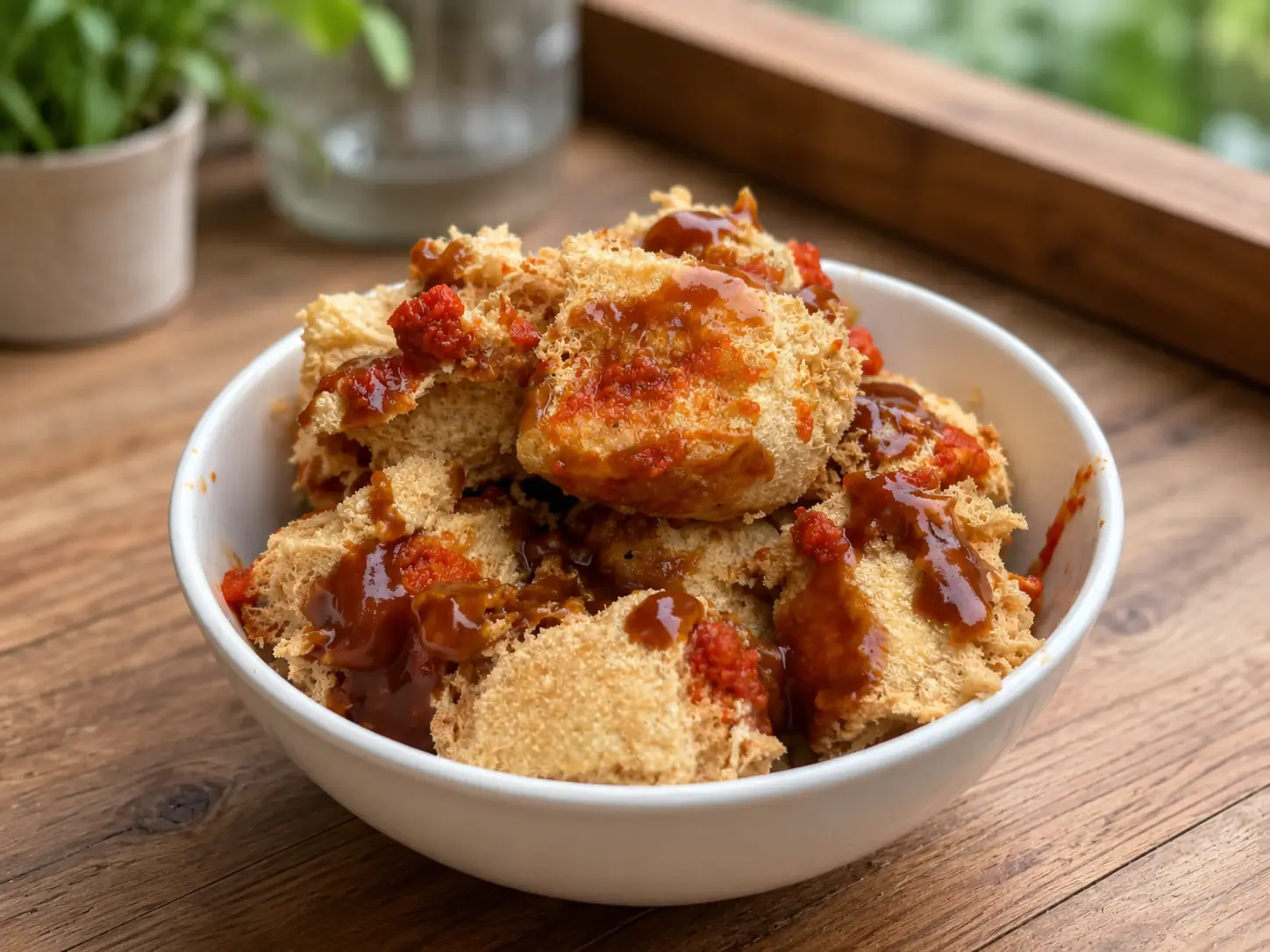
Stinky tofu wins because the gap between smell and taste is huge. The smell can feel aggressive from several steps away, but a good fried portion tastes more like hot tofu, chili, garlic, salt, and deep savory fermentation than the name suggests. The outside should crunch; the middle should stay soft.
The Hunan government English site puts the traveler experience neatly: stinky tofu is sold along streets in Changsha and smells pungent but tastes good. It also explains the basic process: soybeans become bean curd, the tofu is soaked in brine, and skilled vendors choose pieces by color, shape, scent, and texture before frying them.
Changsha (长沙) is the strongest city image for many travelers. The Hunan Provincial Department of Culture and Tourism calls stinky tofu a traditional and popular Changsha snack, known locally as "chou gan zi" (臭干子), with black appearance, spicy flavor, tender inside, and crispy crust.
Smell is not the whole story
If you can handle blue cheese, fermented pickles, strong fish sauce, or durian, stinky tofu may be easier than expected. Start with one small hot portion instead of treating it as a dare.
How Fermentation Turns Tofu Into Street Food
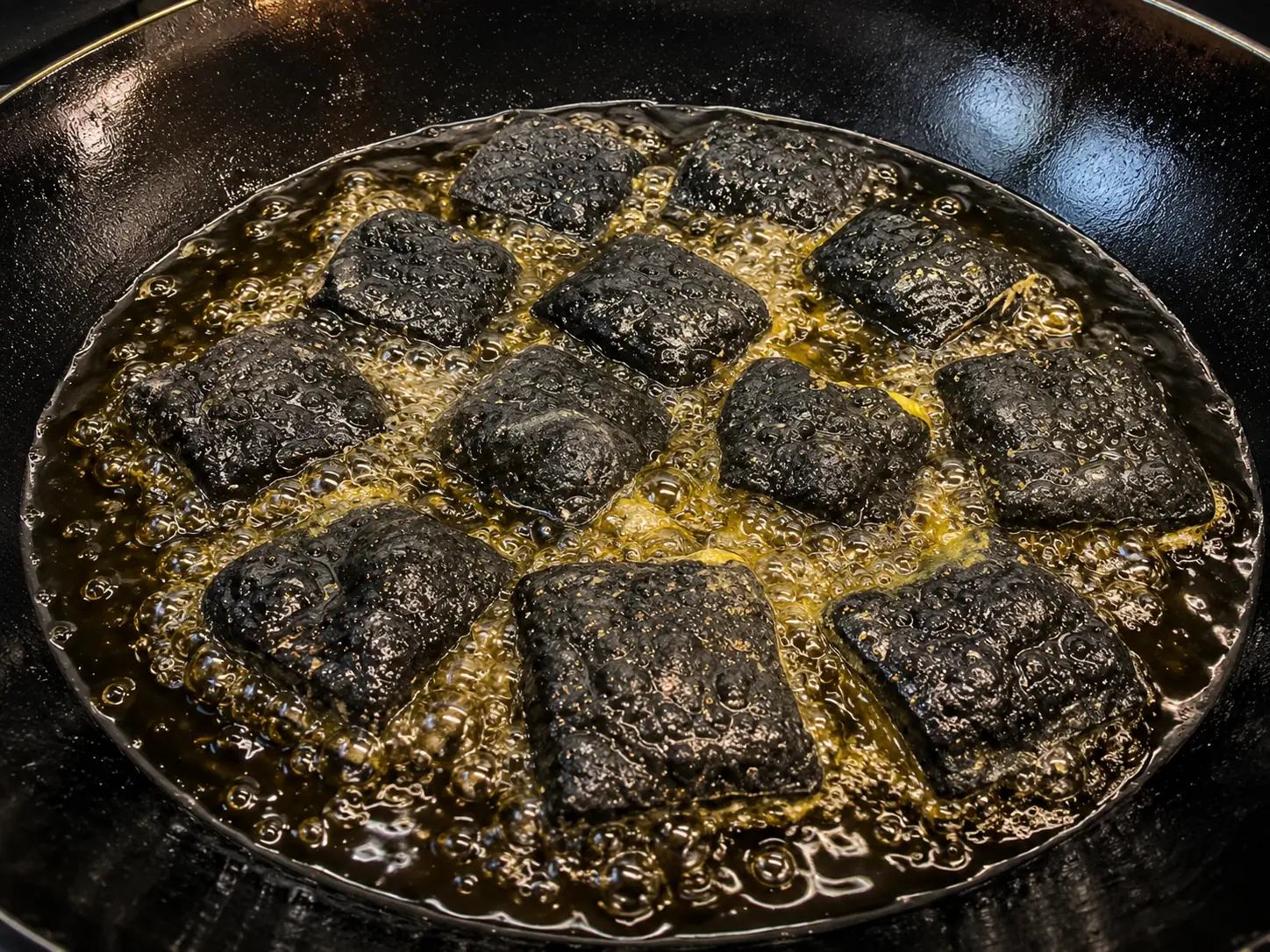
Stinky tofu is not ordinary tofu that has gone bad on a counter. The safer travel-guide explanation is simple: tofu is fermented in a brine or fermented liquid until it develops its signature aroma, then it is cooked. The exact brine varies by region and vendor, and many formulas are not public.
That variation matters. Some descriptions mention vegetable-based brines; others involve more complex fermented ingredients. For travelers, the practical result is what you taste: a stronger aroma, deeper savoriness, and tofu that can stand up to frying, chili, garlic, soy sauce, pickled vegetables, or braising liquid.
| Stage | What Changes | Traveler Takeaway |
|---|---|---|
| Fermentation | Tofu absorbs aroma and savory depth from brine | Recipes vary; do not assume one universal formula |
| Cooking | Frying, braising, steaming, or grilling changes texture | Fried is usually the easiest first version |
| Sauce | Chili, garlic, soy sauce, radish, or cabbage shapes the final bite | Ask for mild chili if you are nervous |
Do not use "the stinkier, the better" as a food-safety rule. Aroma is part of the dish, but quality still depends on fresh frying, clean oil, hot serving temperature, and a sauce area that looks cared for.
Changsha, Shaoxing, and Taiwan Stinky Tofu Styles
Stinky tofu is a family, not one fixed cube. The version you meet in Changsha, the one sold in Shaoxing (绍兴), and the one you may know from Taiwan night markets can look and taste different.
The China Daily Hunan food article describes the black fried tofu as one of Hunan's best-known street foods: fermented tofu with a strong odor, fried until dark gray or black, then seasoned with red chili peppers, salted radish cubes, or local spices. That is the classic Changsha picture.
Shaoxing gives you another branch. The In Zhejiang Shaoxing stinky tofu page calls it a must-try street food in Shaoxing, made by soaking tofu in a fermented vegetable brine, then usually deep-frying it and serving it with spicy or sweet sauce.
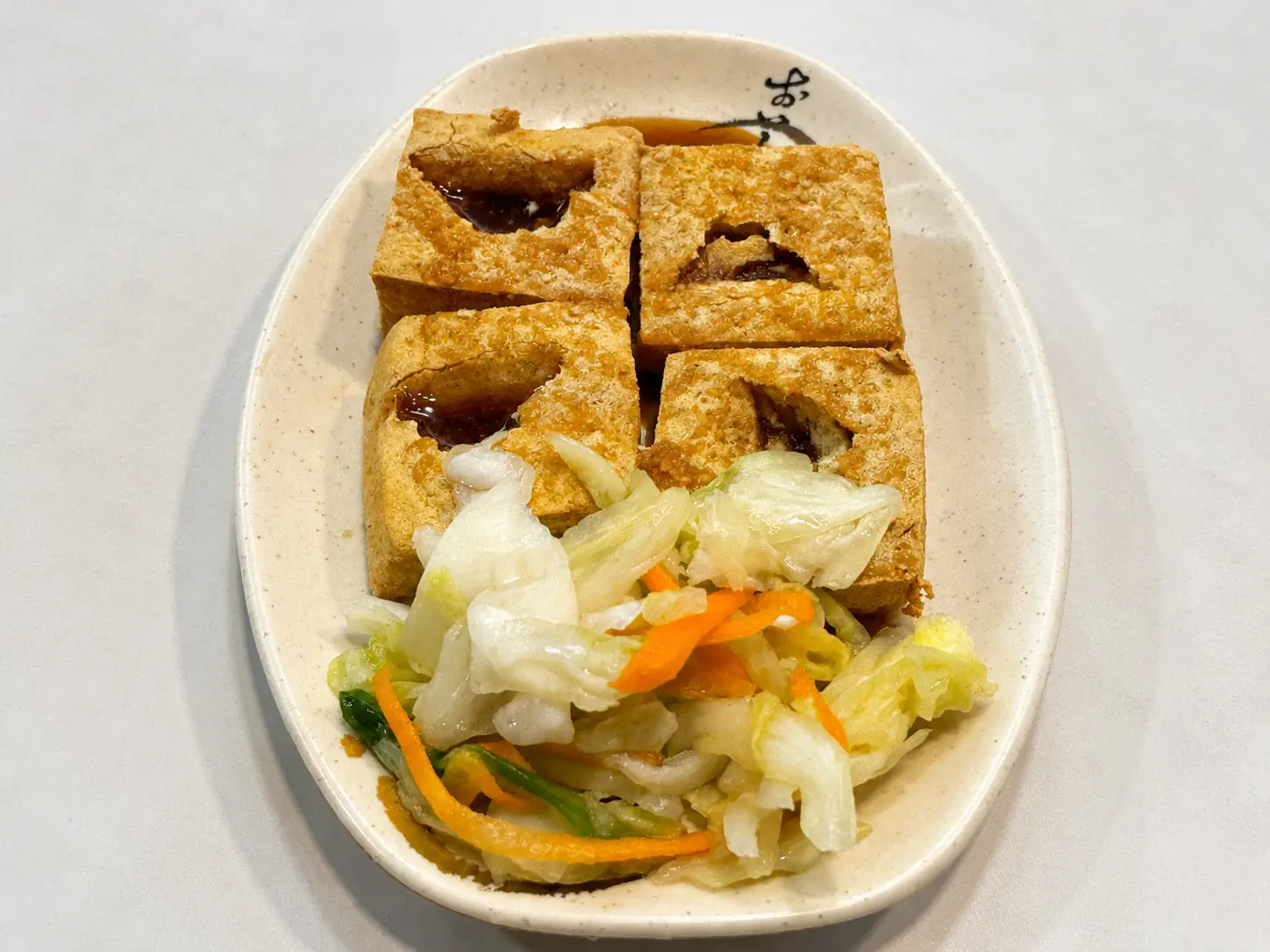
Taiwan night-market versions are another reference point for English-speaking travelers. A Taitung tourism page describes freshly fried stinky tofu as crisp outside and tender inside, paired with Taiwanese pickled cabbage and savory soy sauce.
← swipe to compare all options →
Changsha Style
长沙臭豆腐
- ✓Dark or black fried cubes with crisp shell and soft center.
- ✓Often dressed with chili, garlic sauce, scallion, and pickled radish.
- —Best eaten hot as a walking snack.
Black cubes + chili
Shaoxing Style
绍兴臭豆腐
- ✓Often lighter-colored or golden after frying.
- ✓Known in Zhejiang as a must-try street food.
- —May come with spicy or sweet sauce.
Golden fried tofu
Taiwan Night-Market Style
台湾夜市臭豆腐
- ✓Often fried until crisp and served with pickled cabbage.
- —Can also appear braised, stewed, or spicy.
- —Useful comparison if you know the dish from Taiwan.
Pickled cabbage
Regional labels are useful for travelers, but individual stalls vary. Use them as expectations, not rigid rules.
How to Order Your First Stinky Tofu Portion
For a first try, order fried stinky tofu, not the strongest braised or hotpot-style version. Ask for a small portion, mild chili, and eat it immediately. That gives you the crisp shell and soft center without committing to a large bowl of fermented broth.
- Choose a busy stall- Look for hot oil, fresh batches, and steady turnover.
- Order fried stinky tofu- Fried is usually the easiest introduction for first-timers.
- Control the chili- Ask for mild chili or no chili before the sauce goes on.
- Eat it hot nearby- The crisp shell and soft center fade quickly after cooling.
- Decide on round two- If you like the first bite, try a spicier or regional version later.
Start mild
Ask for mild chili before the sauce goes on; the vendor can usually add more later.
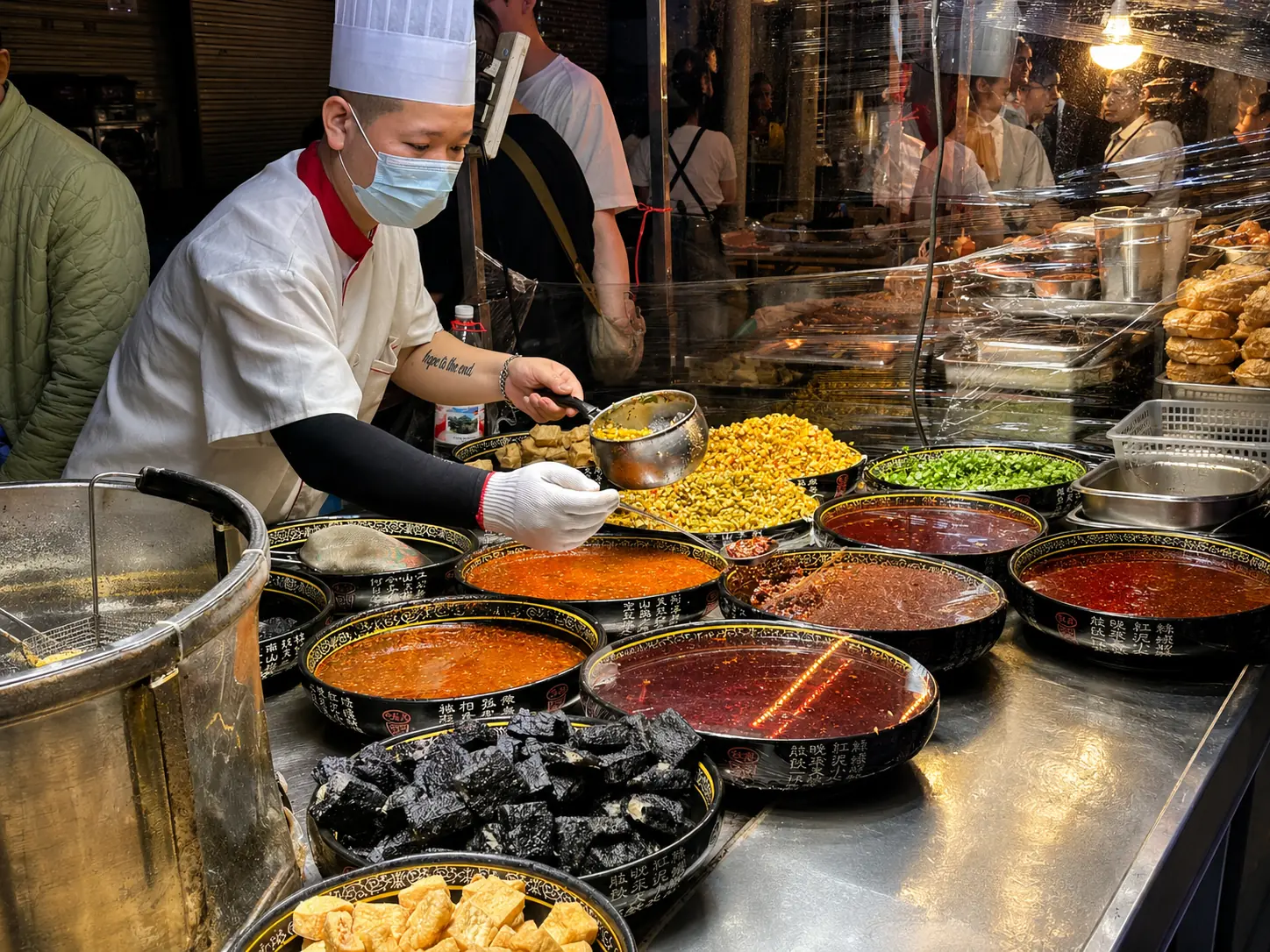
Watch the sauce area
Clean ladles, covered bowls, and fast turnover matter more than the strength of the smell.
Name diet limits early
Ask about soy, wheat-based sauce, shrimp, meat, and shared oil before ordering.
Decision shortcut
What should I order first?
I am nervous
Small fried portion, mild chili, no cilantro if you dislike it.
I like spicy food
Changsha-style fried tofu with chili, garlic sauce, and pickled radish.
I dislike strong smells
Share one portion outdoors and eat it hot. Cold leftovers smell stronger.
I have diet limits
Ask about soy, sauce, brine, and shared oil before ordering.
Where Travelers Can Try Stinky Tofu
You can meet stinky tofu across China, but Changsha is the most practical first city for a traveler-focused guide. The snack sits naturally beside rice noodles, Tangyou Baba (糖油粑粑), tea drinks, crayfish, and Hunan stir-fries.
Changsha Central Snack Streets (Google | Amap) (Google | Amap) (Google | Amap) (Google | Amap)
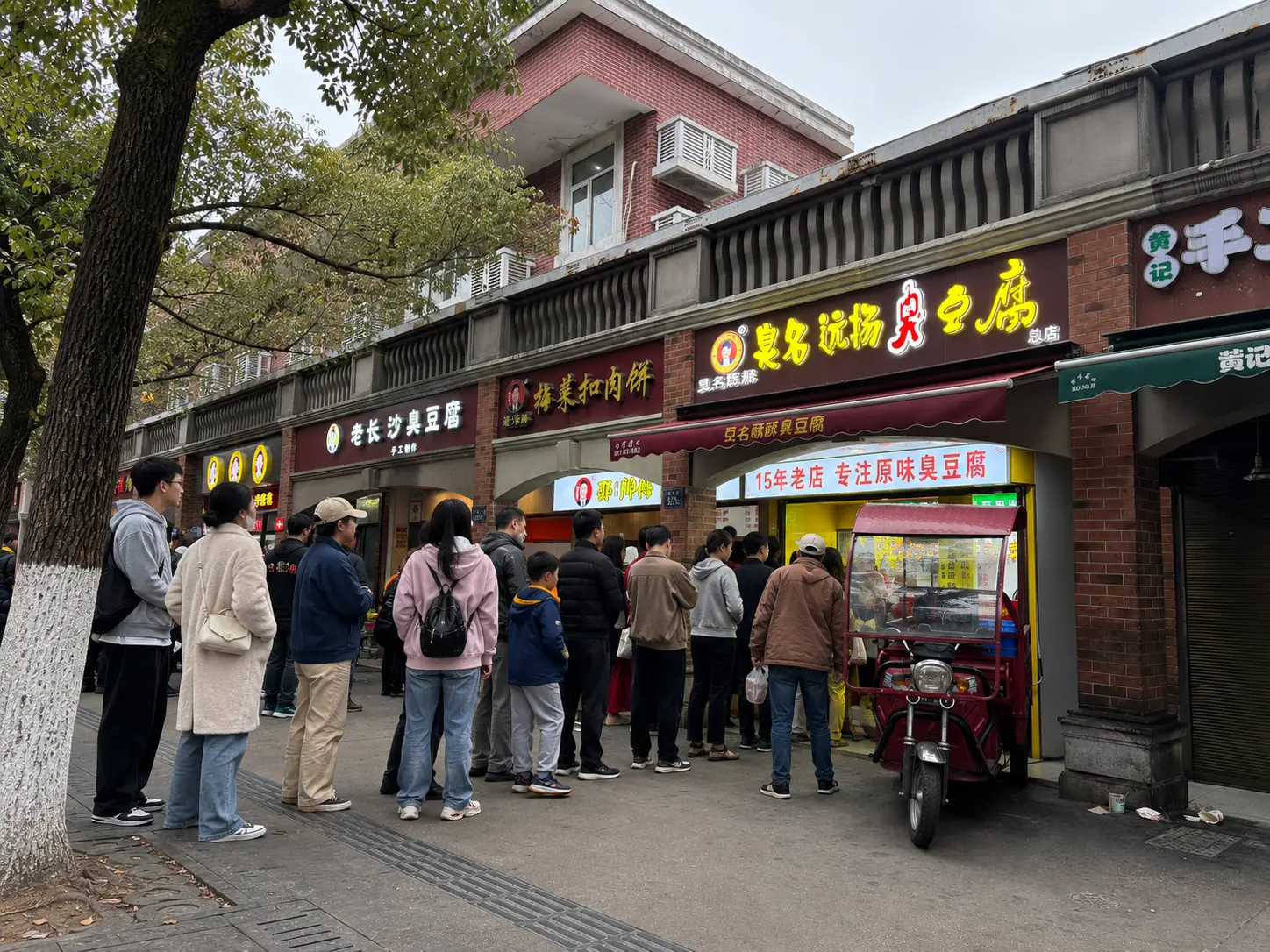
Taiping Old Street (太平老街), Pozi Street (坡子街), Huangxing Road Pedestrian Street (黄兴路步行街), and Wuyi Square (五一广场) are the easiest first-timer zones. They are crowded and commercial, but they make stinky tofu easy to fold into a metro-friendly snack walk.
A moving queue is useful here because it keeps fresh batches cycling through the fryer. Treat the line as a freshness cue, not as proof that one stall is the only correct answer.
Fire Palace Snack Context (Google | Amap)
Fire Palace (火宫殿) is more useful as a cultural anchor than as a single mandatory bite. The China Daily article notes Fire Palace as a well-known Changsha place for stinky tofu. Treat it as context for how deeply the snack sits in Changsha food memory, not as proof that one address is always the best.
Night Markets (Google | Amap) (Google | Amap)
Dongguashan Night Market (冬瓜山夜市) and Yangfan Night Market (扬帆夜市) make sense when you want stinky tofu as one stop in a larger night-food crawl. Night markets give you energy, noise, and choices, but also more crowd pressure. Buy small, eat hot, and keep moving.
Best when you want a central, walkable snack route with many fallback choices.
Best when you want stinky tofu inside the city's old snack story.
Best when you want stinky tofu with barbecue, tea drinks, fried snacks, and crowds.
How to Eat It Without Regret
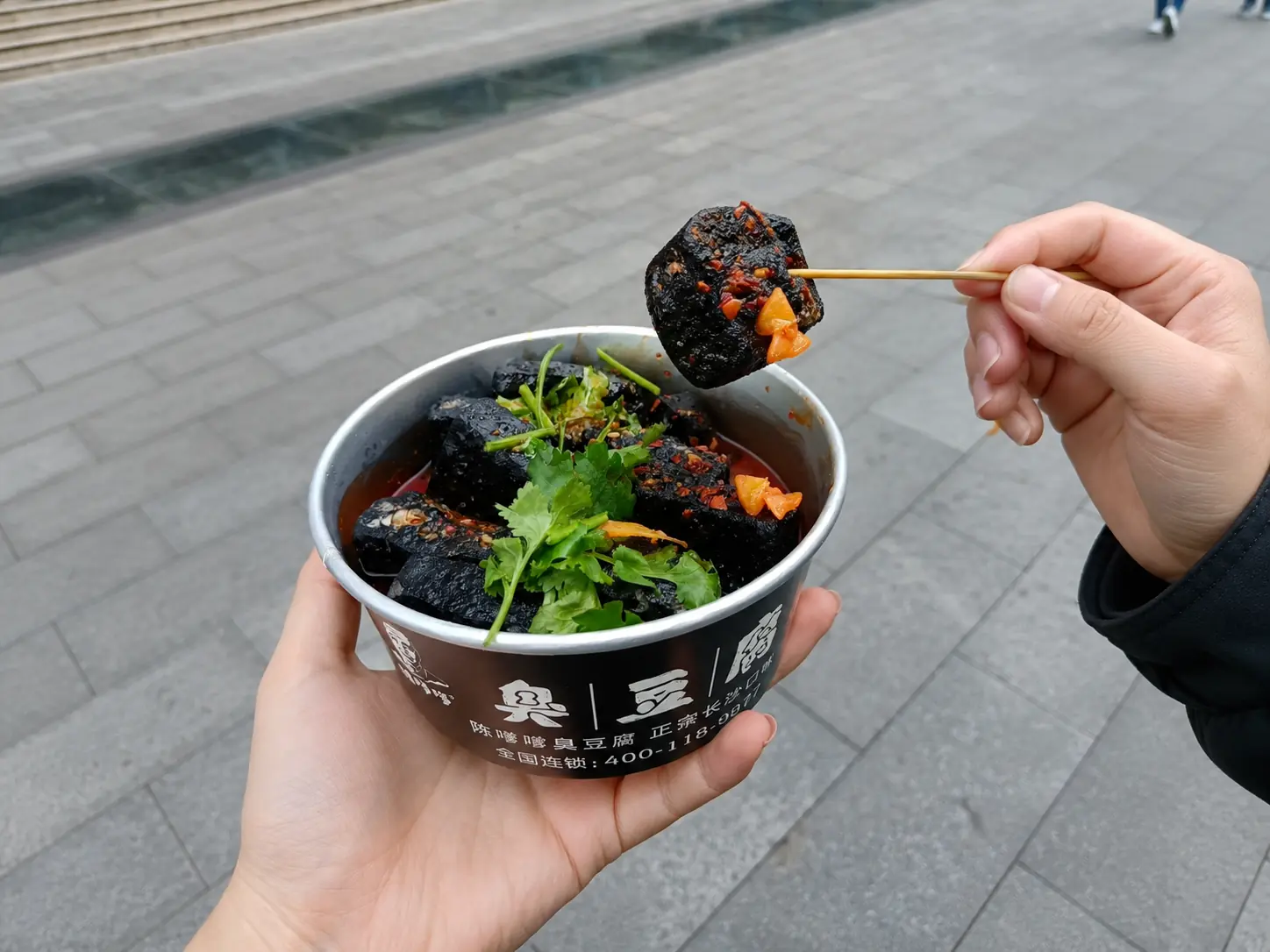
Eat stinky tofu hot and outdoors. The texture is best right after frying: crisp shell, soft tofu, sharp sauce, and enough heat to make the smell feel like flavor. Once it cools, the outside softens and the aroma can feel heavier.
Use the first bite as a texture test. If the shell is crisp and the sauce is balanced, keep going. If the oil tastes stale or the tofu is lukewarm, do not force yourself to finish just because it is famous.
Do not open takeaway stinky tofu in a taxi, hotel room, long-distance bus, or shared train compartment. This is outdoor street food with a public smell radius. Be kind to your future self and everyone nearby.
Share the first bowl
If you are curious but nervous, split one small portion with a friend. The first three bites tell you more than a giant order.
Diet and Food-Safety Notes for Stinky Tofu
Stinky tofu is made from soybeans, so soy allergy travelers should skip it entirely. Gluten-free travelers also need caution: soy sauce, sweet sauce, chili sauce, or seasoning powders may contain wheat. Even if the tofu itself looks simple, the sauce can change the answer.
Vegetarian and vegan travelers should not assume stinky tofu is safe. Some brines, sauces, or toppings may involve shrimp, fish, meat-based ingredients, lard, or shared frying oil. Halal travelers should be especially cautious around shared oil and unclear sauces.
Strong smell does not prove safe fermentation
The aroma is part of stinky tofu, but food safety still depends on clean handling, hot cooking, fresh oil, and fast turnover. Avoid lukewarm tofu, dirty sauce areas, and pieces sitting out for too long.
- Soy: tofu is made from soybeans.
- Gluten: sauces may contain wheat-based soy sauce or seasoning.
- Seafood: some brines or sauces may involve shrimp or fish-derived ingredients.
- Shared oil: stalls may fry meat, egg, seafood, or other snacks in the same setup.
- Spice: Changsha-style sauce can be chili-heavy. Ask for mild if needed.
Useful Stinky Tofu Phrases at Busy Stalls
Show the phrase if speaking feels awkward. At a busy snack stall, short requests work better than long explanations.
| English | Chinese | Pinyin | Say It Like… |
|---|---|---|---|
| Stinky tofu | 臭豆腐 | chou doufu | choh doh-foo |
| I want one portion of stinky tofu. | 我要一份臭豆腐。 | wo yao yi fen chou doufu | woh yow ee fun choh doh-foo |
| I want the fried one. | 要炸的。 | yao zha de | yow jah duh |
| Less chili. | 少辣。 | shao la | shaow lah |
| No chili. | 不要辣。 | bu yao la | boo yow lah |
| No cilantro. | 不要香菜。 | bu yao xiang cai | boo yow shyahng-tsai |
| Was this just fried? | 这是刚炸的吗? | zhe shi gang zha de ma? | juh shir gahng jah duh mah |
| Does it contain shrimp? | 里面有虾吗? | li mian you xia ma? | lee myen yo shyah mah |
| Does it contain meat? | 里面有肉吗? | li mian you rou ma? | lee myen yo roh mah |
Frequently Asked Questions About Stinky Tofu
Usually no. The smell is often stronger than the taste. Fried stinky tofu often tastes salty, savory, spicy, garlicky, and tofu-like, with the crisp shell doing a lot of the work.
Beyond This Stinky Tofu Street Snack
Stinky tofu makes more sense when it sits inside a larger food day, not as a solo dare. Use the Changsha Food Guide for the bigger city map, and pair one salty-fermented portion with Tangyou Baba, Changsha's sweet fried glutinous rice cake.
For other street-food textures, compare Shouzhua Bing, Jianbing, and Cong You Bing. If ingredients matter, read the China food allergies guide before building a snack route around fermented tofu, sauces, shared oil, soy, or seafood.
© gochinafreely.com — Original guide by Go China Freely.