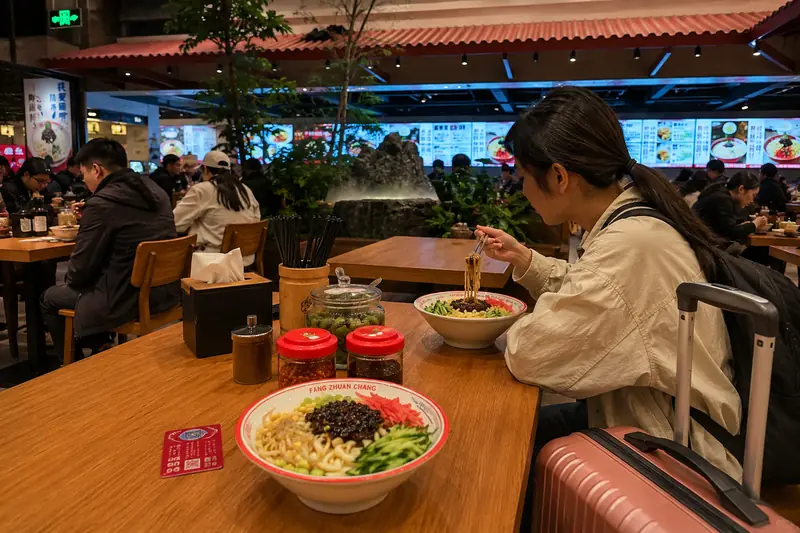
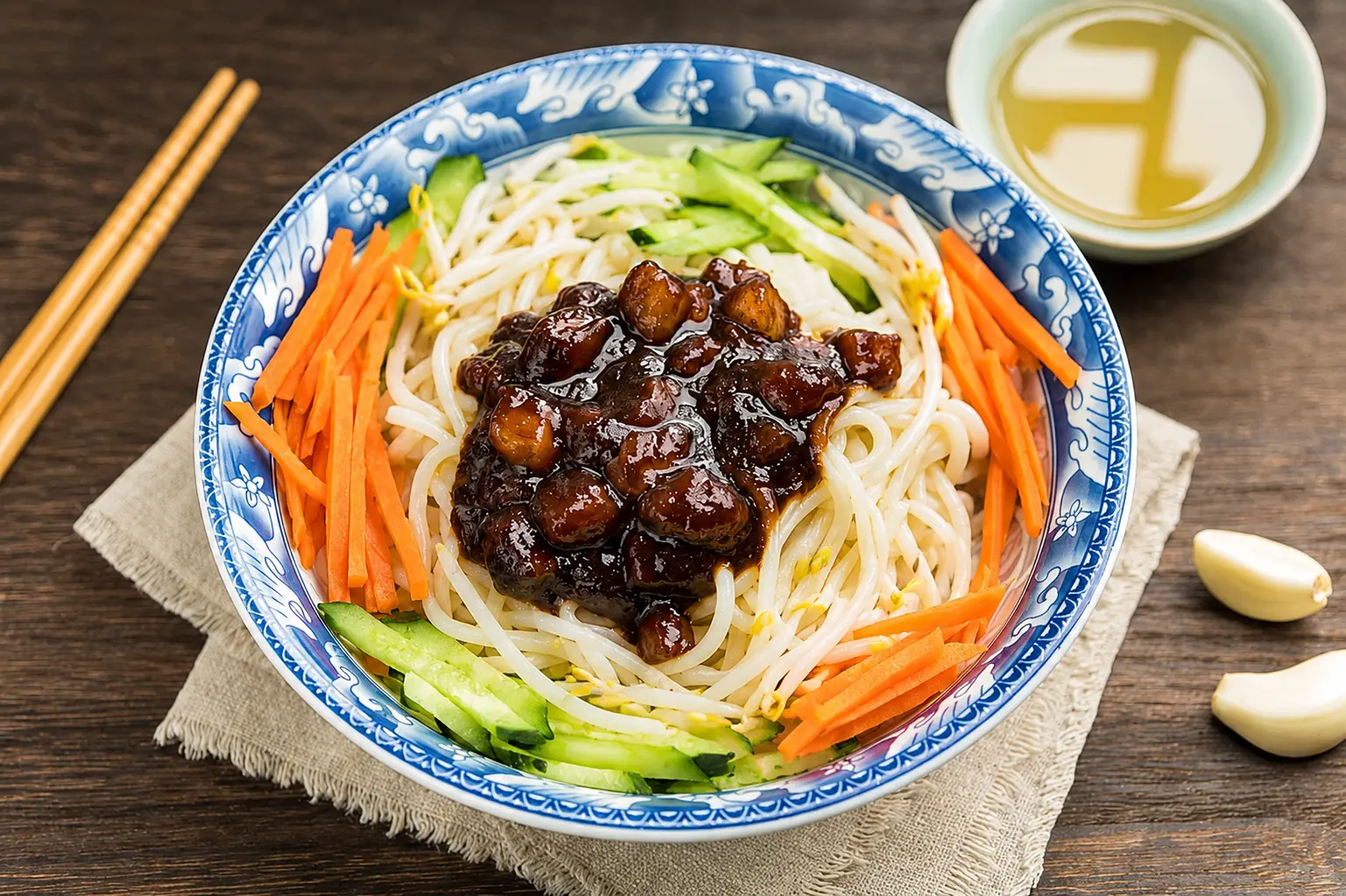
Zhajiangmian (炸酱面) is Beijing's everyday noodle answer: chewy wheat noodles, a salty soybean-pork sauce, and a cold pile of cucumber and other vegetables you stir together at the table, often for under ¥70. It is less ceremonial than Peking Duck and less fiery than Sichuan noodles, which is exactly why it belongs in a real Beijing day. This guide shows you what makes the Beijing version different, how to order it, and where to fit a bowl between hutong walks and big sights.
Executive Summary
What this guide covers
Beijing zhajiangmian basics: yellow soybean paste sauce, wheat noodles, fresh toppings, ordering phrases, restaurant types, and common pitfalls.
Best first bowl
Choose a busy Beijing noodle shop or old-Beijing restaurant, order one bowl of zhajiangmian, mix the sauce fully, and use the toppings to balance the salt and fat.
Key caution
Default zhajiangmian usually contains pork, wheat, fermented soybean paste, and often raw garlic. It is not automatically halal, vegetarian, or gluten-free.
¥25-70
Typical bowl range
10-25 min
Fast meal pace
Pork
Default sauce base
All year
Best season
Beijing's Everyday Noodle With a Loud Sauce
Zhajiangmian literally means fried sauce noodles, but do not picture fried noodles. The noodles are boiled; the "fried sauce" is the cooked-down sauce: fermented soybean paste, pork, aromatics, and enough time in the wok to become dark, glossy, and assertive. Visit Beijing describes zhajiangmian as a northern Chinese dish of thick wheat noodles topped with ground pork stir-fried with fermented soybean paste.
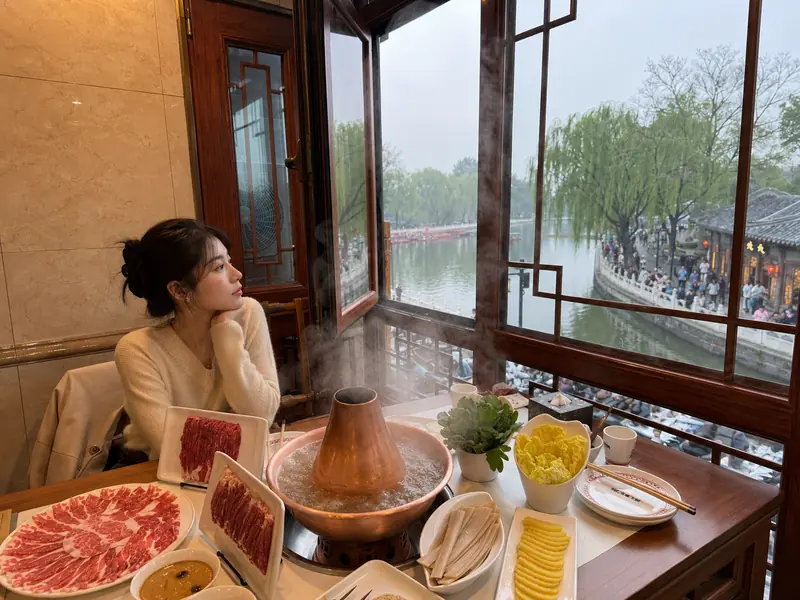
For travelers, the appeal is its ordinariness. Peking Duck is a planned dinner; copper-pot mutton hotpot is a sit-down group meal; zhajiangmian is the bowl you can fit between the Drum Tower (鼓楼), Shichahai (什刹海), Qianmen (前门), or Temple of Heaven (天坛). It feels local without requiring a long menu negotiation.
The first surprise is balance. The sauce alone is too salty and heavy; the noodles alone are plain; the vegetable toppings alone are just raw crunch. The dish only becomes itself after you mix everything together.
Think of it as a mixed noodle, not a sauce-on-top pasta
Do not eat the sauce in one salty clump. Turn the noodles from the bottom, fold in the cucumber and other toppings, and keep mixing until every bite has sauce and crunch.
What Makes Beijing Zhajiangmian Taste Different
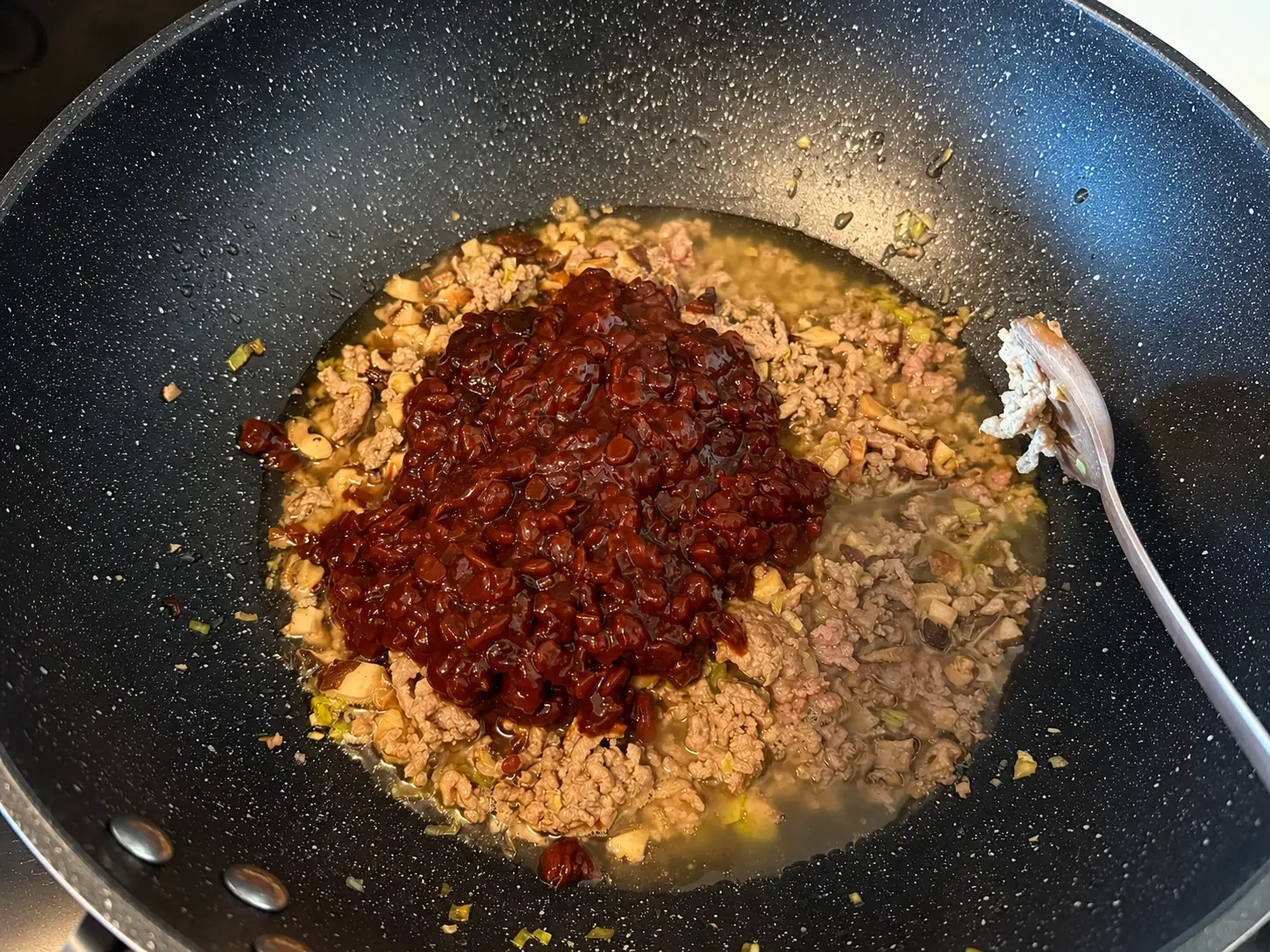
Beijing-style zhajiangmian is built around yellow soybean paste (干黄酱 / 黄酱). Many shops or households round it out with sweet bean paste (甜面酱), but the defining flavor is still a fermented soybean depth: salty, earthy, and meat-friendly rather than sweet first. Other northern or regional versions may use different bean pastes, sauces, or seasonings.
This is also why Beijing zhajiangmian is not the same experience as Korean jjajangmyeon. The Korean-Chinese version usually uses a different black bean sauce, often tastes sweeter and darker, and commonly includes onion-heavy sauce. Beijing zhajiangmian is more about yellow soybean paste, pork, wheat noodles, and fresh toppings that cut through the sauce.
Do not look for one rigid formula. Some Beijing bowls use pork belly dice; others use minced pork. Some sauce is dry and intense; some is looser and oilier. Some restaurants give a generous vegetable spread; others keep it simple. The useful traveler test is whether the bowl stays balanced after mixing.
Swipe to compare noodle styles
Beijing Zhajiangmian
炸酱面
- ✓Salty, soybean-forward sauce.
- ✓Fresh toppings are part of the balance.
- —Usually mild, unless you add chili.
Yellow soybean paste
pork
toppings
Korean Jjajangmyeon
韩式炸酱面
- ✓Darker, sweeter sauce profile.
- —Often onion-rich and saucier.
- ✗Not the same taste as a Beijing bowl.
Black bean sauce
sweeter profile
Generic Overseas Versions
varies by restaurant
- —May use substitute bean pastes.
- —Toppings and noodle texture vary widely.
- ✗Do not use it as your Beijing benchmark.
Adapted pastes
local pantry
The Sauce: Salty, Fatty, and Meant to Mix
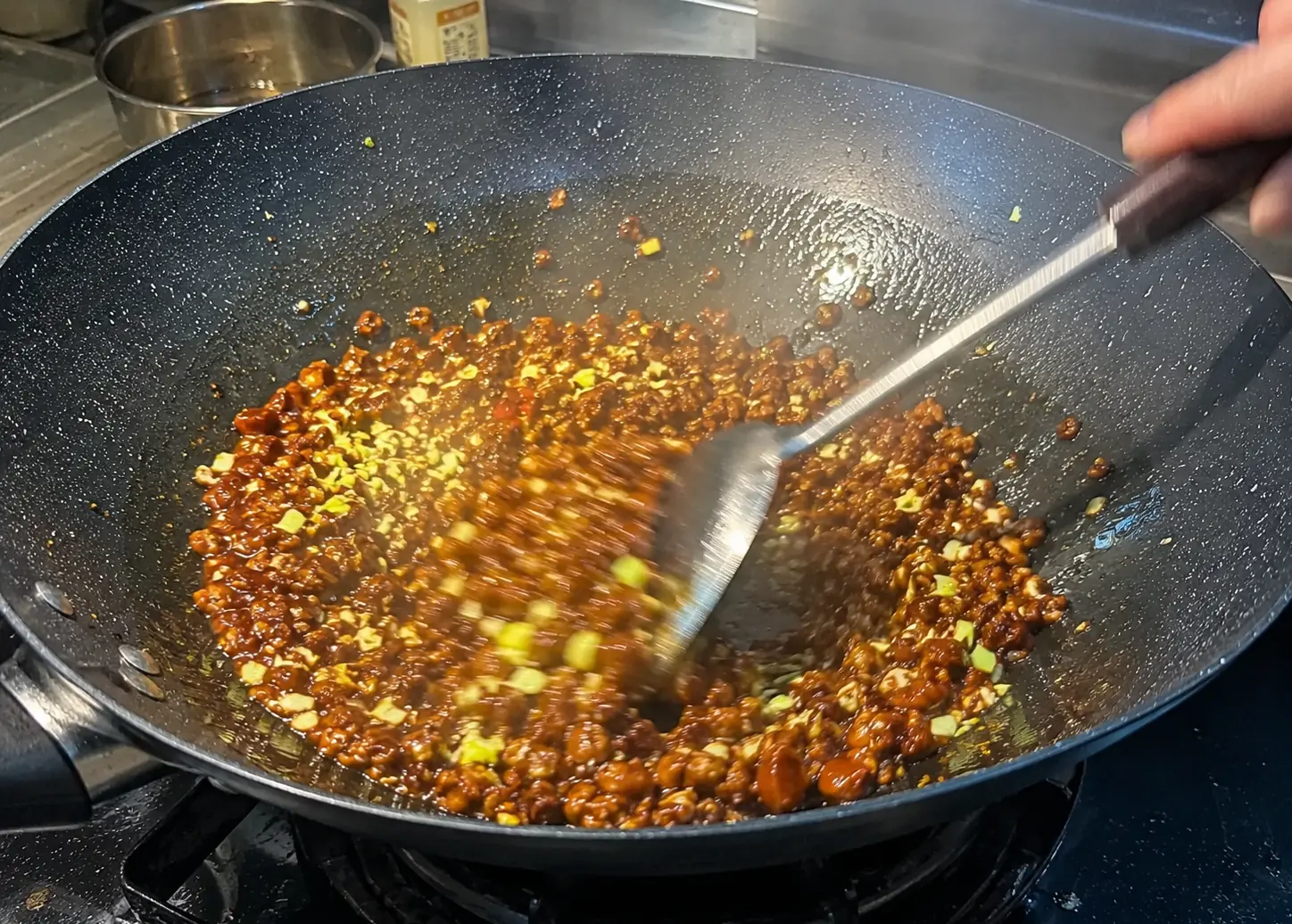
Good zhajiang sauce is not gentle. It should be salty, thick, and packed with fermented-bean and pork flavor. That intensity is intentional: the sauce has to season a full bowl of noodles plus a mound of cold vegetables.
The meat is usually pork, often fatty enough to give the sauce body. The paste is cooked with aromatics until the raw harshness fades and the sauce turns glossy. When it works, you taste soybean paste first, then pork richness, then a little sweetness or aroma from the supporting ingredients.
If your first bite tastes too salty, mix more before judging. A real problem is different: sauce that tastes flat after mixing, oil without aroma, or pork that feels greasy rather than savory. A good bowl should still make you want the next bite.
Decision shortcut
How to judge the sauce
Good sign
Deep soybean aroma, visible pork pieces, glossy texture, and enough salt to season the noodles after mixing.
Warning sign
Burnt bitterness, thin watery sauce, or oil that sits on top without carrying any paste aroma.
First-timer move
Add most of the sauce, mix, taste, then add the rest only if the bowl needs more flavor.
Noodles, Toppings, and the First Stir
Zhajiangmian uses wheat noodles. Hand-rolled, hand-pulled, and machine-made noodles can all appear; the key is chew. The noodle should hold sauce without collapsing into mush. It may arrive warm rather than steaming hot, especially in casual shops.
The toppings are easy to underestimate. Julienned cucumber is the most common freshness hit, but you may also see bean sprouts, radish, soybeans, green soybeans, cabbage, leafy greens, or other seasonal vegetables. Visit Beijing's Old Beijing Zhajiang Noodle King page describes a bowl with hand-pulled wheat noodles and toppings such as cucumber, bean sprouts, radish, and soybeans.
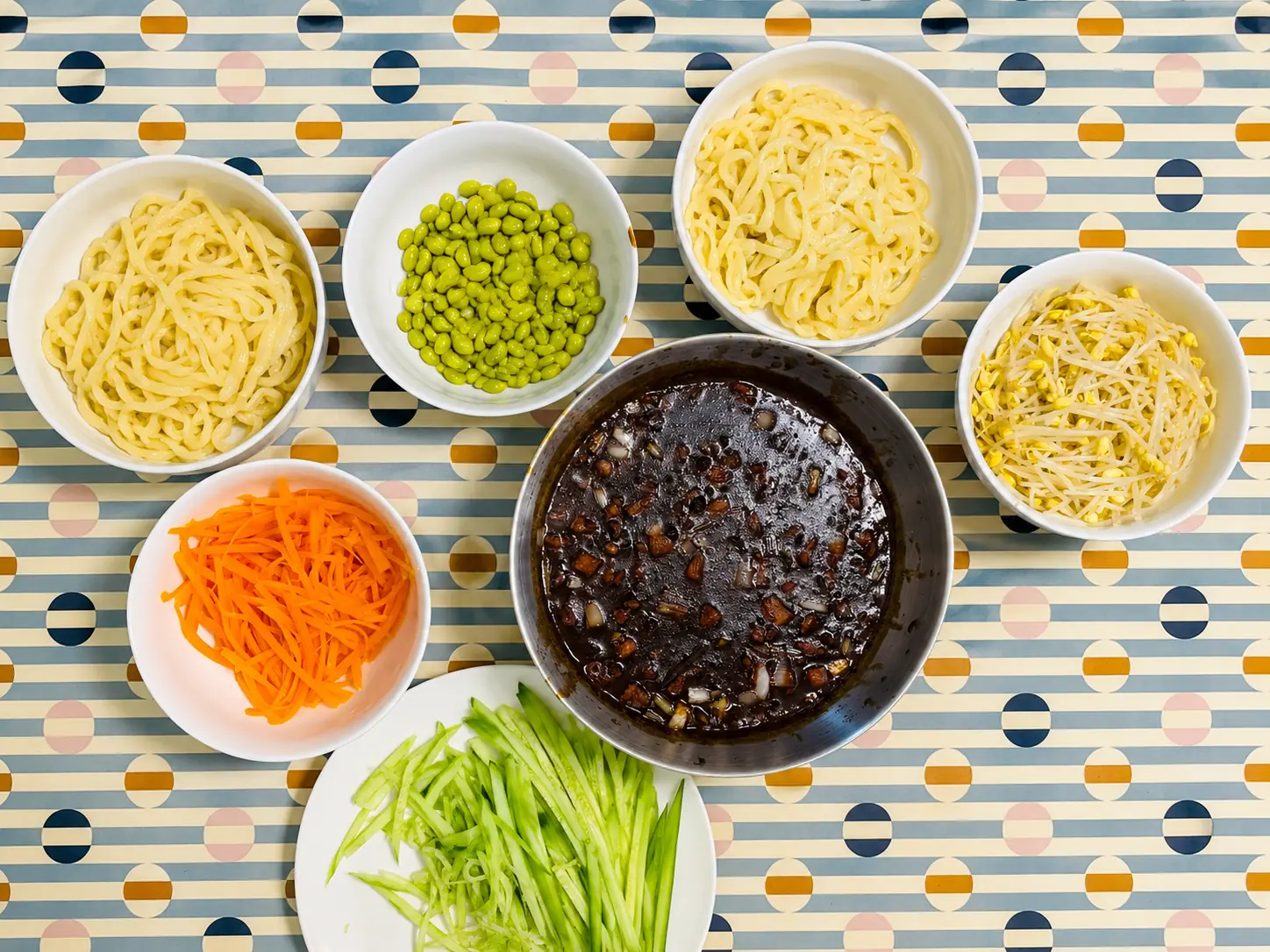
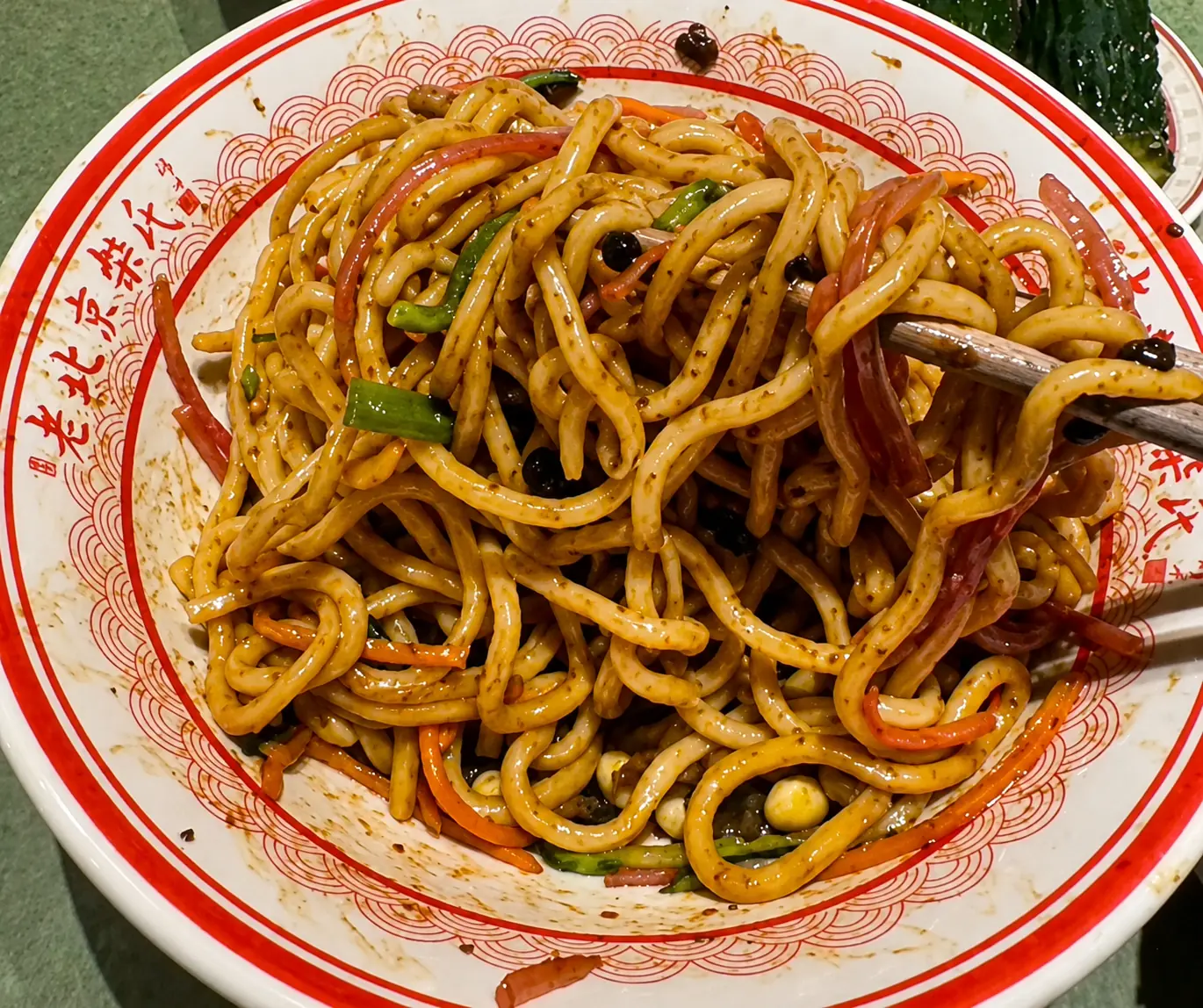
Once the bowl arrives, mix from the bottom. Pull noodles up through the sauce, fold the toppings into the middle, and keep turning until the bowl looks less photogenic and more edible. That is the point.
- Mix before judging. The sauce is designed to be diluted by noodles and toppings.
- Use the vegetables. Cucumber, sprouts, radish, and soybeans are balance, not garnish.
- Expect a room-temperature edge. Some bowls are warm rather than piping hot, especially when toppings are cold.
- Do not skip the stir. Sauce on top and plain noodles underneath is the worst version of the dish.
How to Order Zhajiangmian in Beijing
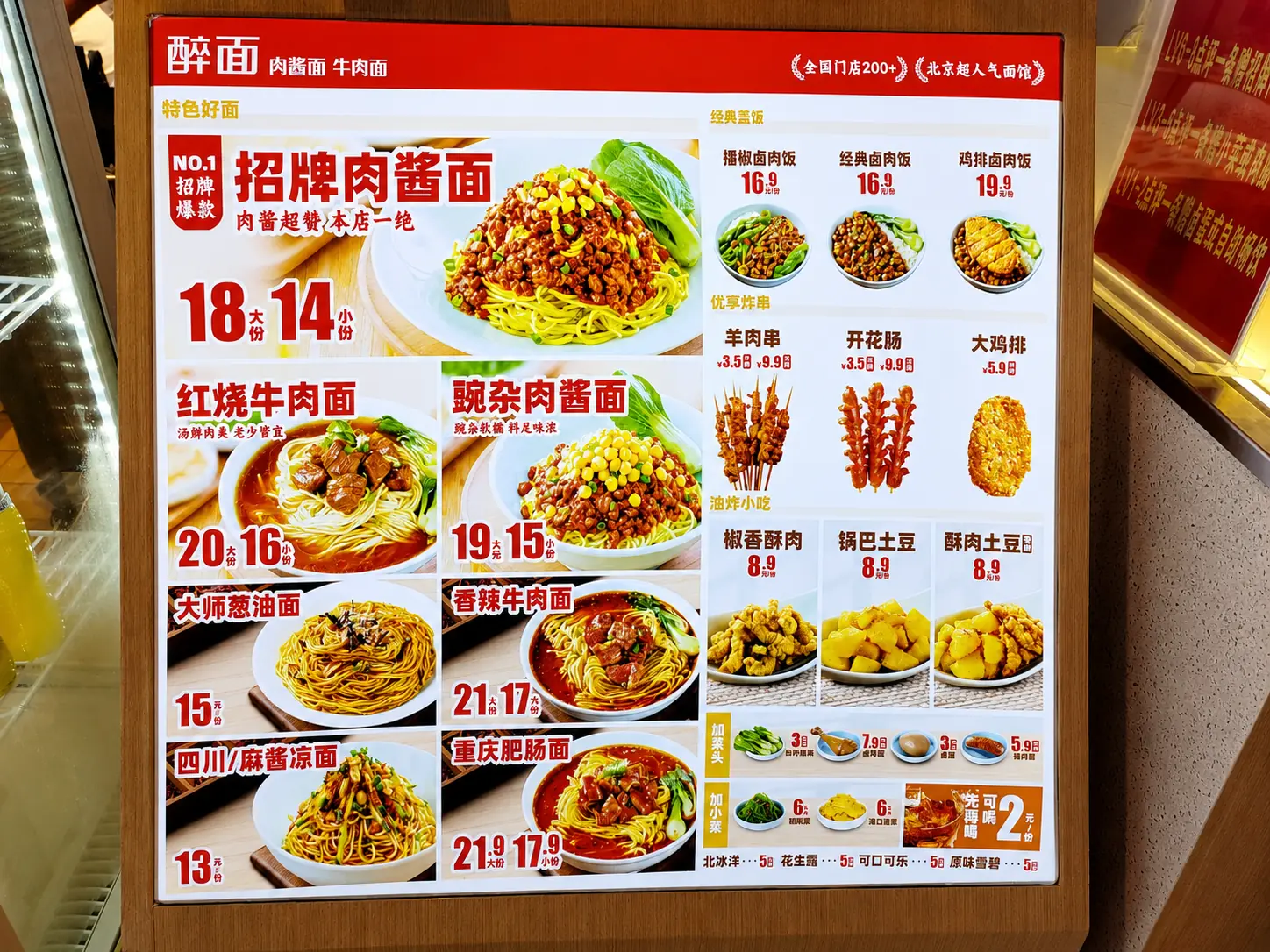
The simplest order is zhajiangmian (炸酱面), or old-Beijing zhajiangmian (老北京炸酱面) if the menu offers both. Many shops serve the noodles, sauce, and toppings separately; that is normal. A small bowl of dark sauce on the side is not a missing topping.
Default sauce usually contains pork. If you avoid pork, meat, wheat, fermented soy products, or raw garlic, ask before ordering. Serious dietary restrictions need a different restaurant strategy, not just a quick menu guess.
| English | Chinese | Pinyin | Say It Like… |
|---|---|---|---|
| Zhajiangmian / fried sauce noodles | 炸酱面 | zhà jiàng miàn | jah jyahng myen |
| Old Beijing-style zhajiangmian | 老北京炸酱面 | lǎo běi jīng zhà jiàng miàn | laow bay jing jah jyahng myen |
| One bowl of zhajiangmian | 一碗炸酱面 | yì wǎn zhà jiàng miàn | ee wahn jah jyahng myen |
| Less sauce | 少放酱 | shǎo fàng jiàng | shaow fahng jyahng |
| Please serve the sauce separately | 酱分开放 | jiàng fēn kāi fàng | jyahng fun kye fahng |
| No raw garlic | 不要生蒜 | bù yào shēng suàn | boo yow shung swahn |
| Does it contain pork? | 有猪肉吗? | yǒu zhū ròu ma? | yo joo roh mah |
| Can I take it to go? | 可以打包吗? | kě yǐ dǎ bāo ma? | kuh yee dah baow mah |
Use sauce control if salt worries you
Ask for the sauce separately, add about two-thirds, mix, and taste. You can always add more; you cannot make an over-salted bowl lighter once everything is coated.
Where to Eat Zhajiangmian in Beijing
Treat these as eating contexts, not a permanent ranking. Zhajiangmian is everyday food, so the best choice depends on your route, queue tolerance, and whether you want a quick hutong bowl or a seated old-Beijing meal.
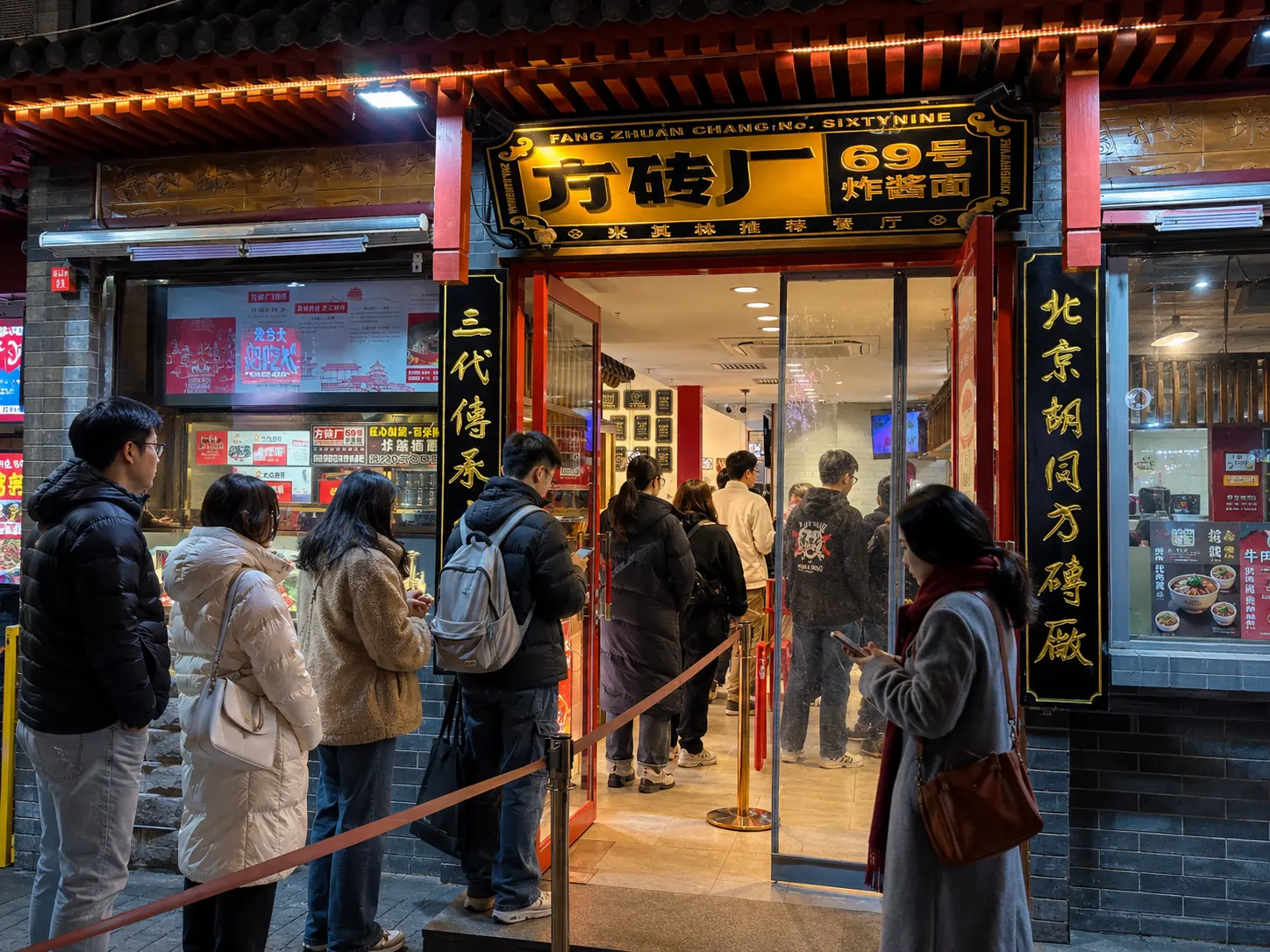
This is the clearest single-dish stop: a small hutong shop near the Nanluoguxiang (南锣鼓巷) and Shichahai (什刹海) area. The Michelin Guide listing describes it as a neighborhood joint focused on zhajiangmian, and a Beijing government English release lists it among the 2025 Bib Gourmand restaurants. Expect queues and check current status before detouring.
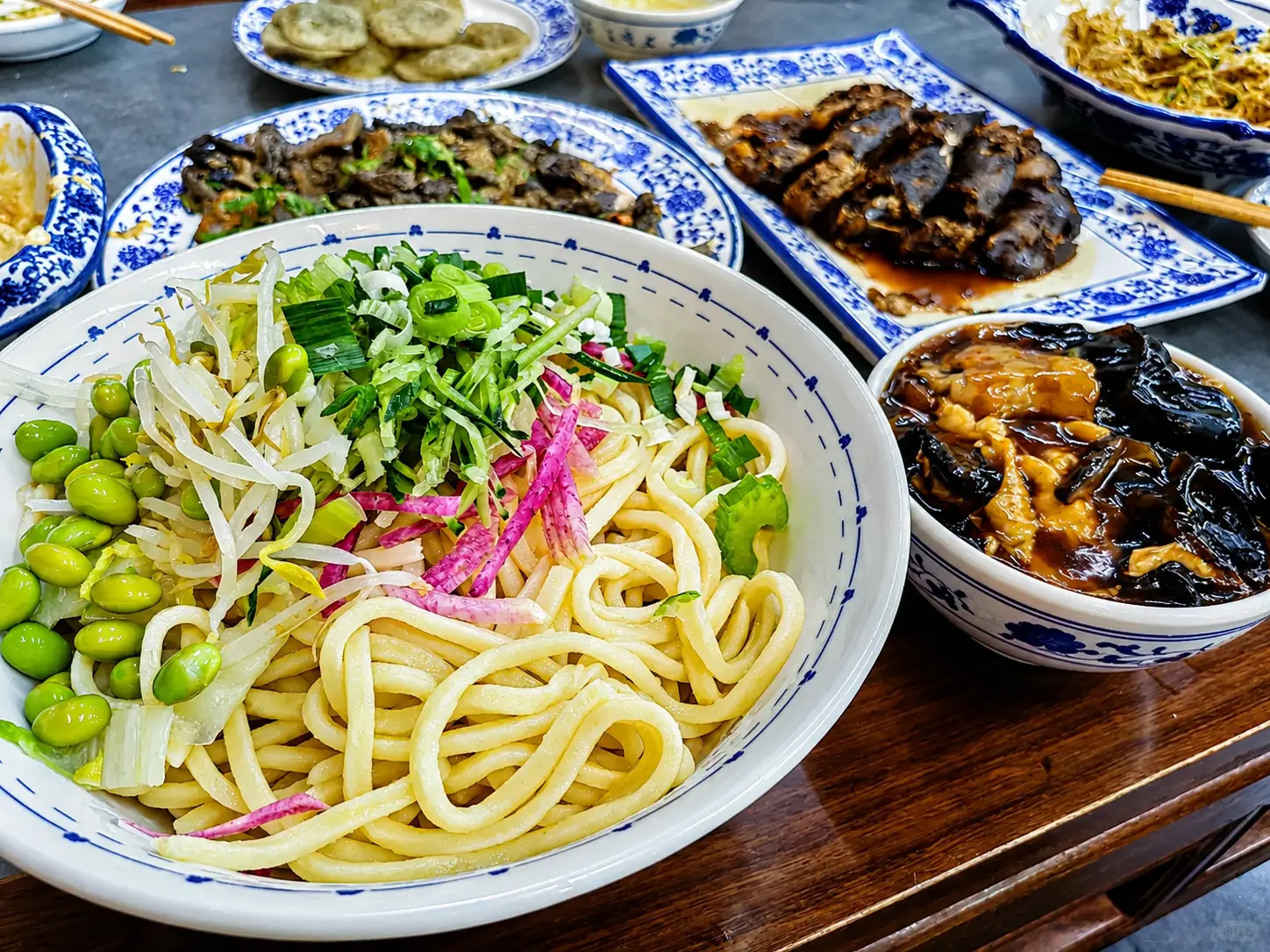
Haiwanju is better when you want to sit down, add Beijing snacks, and make the meal easier for a family or mixed group. A Beijing food listing describes it as a classic place for Beijing-style soybean paste noodles, but treat it as a comfortable old-Beijing restaurant rather than a one-bowl-only specialist.
Old Beijing Zhajiang Noodle King
老北京炸酱面大王 · noisy classic restaurant
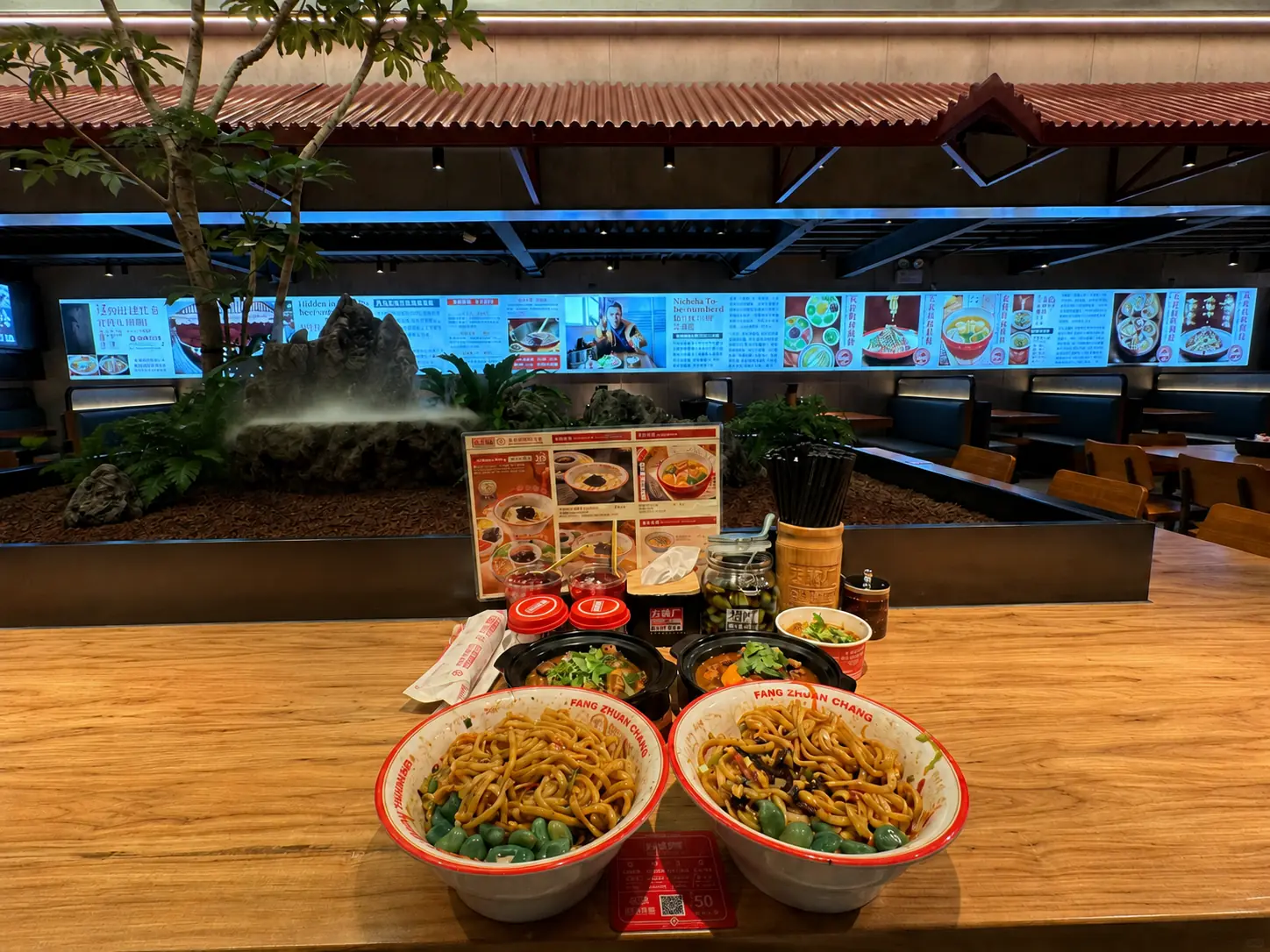
This is useful if you want a louder, more traditional restaurant setting. Visit Beijing notes its hand-pulled wheat noodles and vegetable toppings. Check current location, branch status, and hours before going; old restaurant names and branches can shift over time.
If a famous shop has a long line and your schedule is tight, do not force it. Search your map for zhajiangmian (炸酱面), choose a busy shop near your route, and check recent photos for visible sauce, toppings, and noodle texture.
How to Pair It With a Beijing Day

Zhajiangmian is a natural lunch. It is fast, filling, and cheaper than most destination meals, so it works well between walks rather than as the grand finale of your night.
A hutong-focused route is the easiest fit: Drum Tower, Bell Tower (钟楼), Shichahai, Nanluoguxiang, Wudaoying Hutong (五道营胡同), or Lama Temple (雍和宫), then noodles nearby. In the Qianmen and Dashilar (大栅栏) area, it also works after Temple of Heaven or before an afternoon central Beijing walk.
Avoid eating a heavy bowl one hour before a Peking Duck dinner. It looks simple, but wheat noodles plus dense sauce are serious fuel. A better rhythm is zhajiangmian at lunch, duck at dinner, or a noodle dinner after a lighter sightseeing day.
Best Route Fit
Hutong walks, Shichahai, Drum Tower, Nanluoguxiang, Wudaoying, Qianmen, Dashilar, and Temple of Heaven days.
Best Meal Slot
Lunch or an early casual dinner. It is fast enough for a tight day but filling enough to replace a full meal.
Best Pairing
Keep the rest of the day lighter: yogurt, fruit, tanghulu, tea, or a simple vegetable dish rather than another heavy starch meal.
Dietary Notes, Garlic, and Common Pitfalls
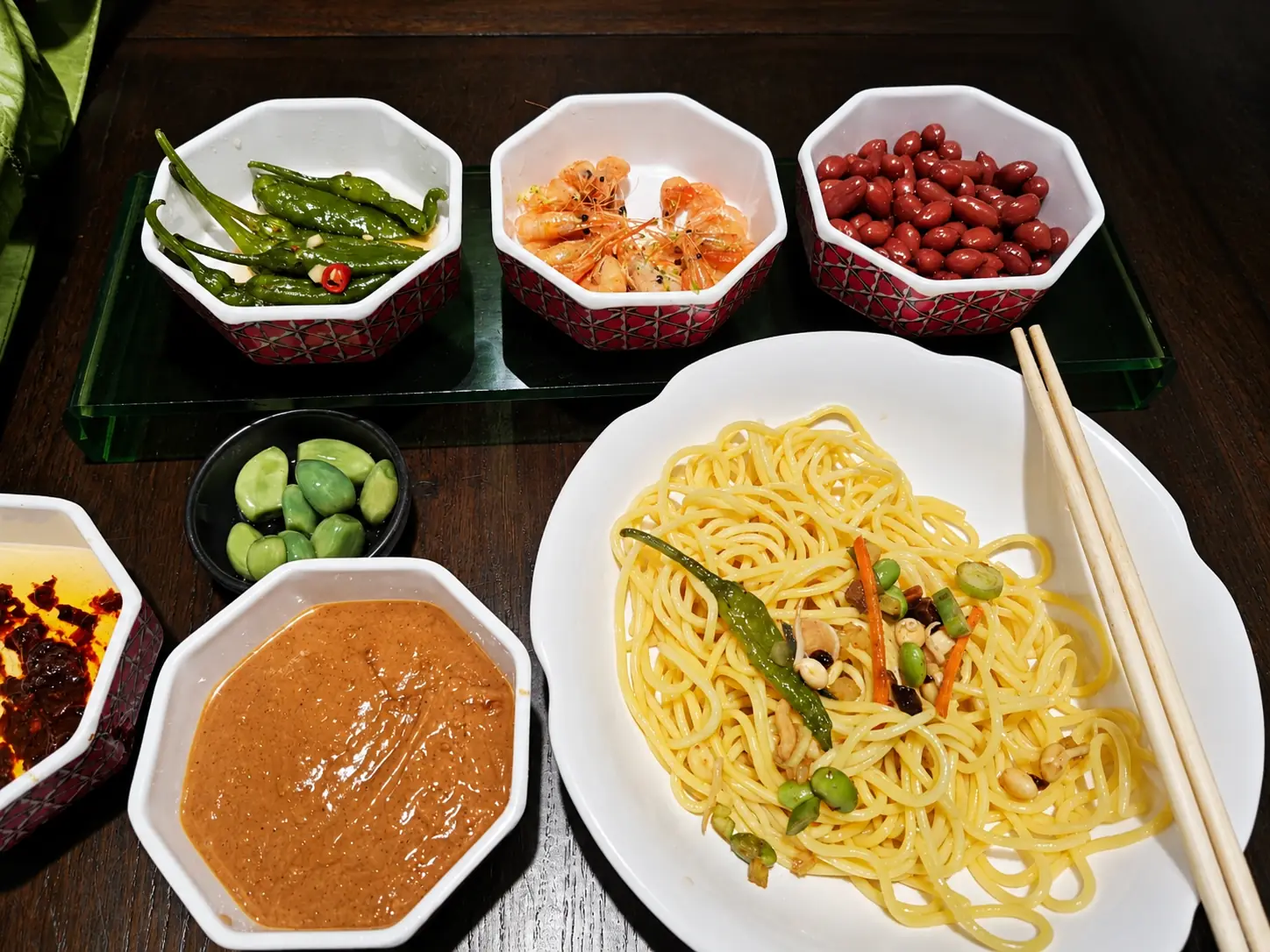
Zhajiangmian is not a safe default for strict diets. The sauce usually contains pork. The noodles are wheat. The soybean pastes may involve soy and wheat fermentation. Raw garlic, garlic water, pickled garlic, chili oil, or shared condiments may appear at the table.
Default zhajiangmian is not vegetarian or halal
If pork, meat, wheat, soy, or raw garlic matters for your diet, ask before ordering. Do not rely on the English phrase "fried sauce noodles" to tell you what is in the sauce.
- Do not confuse it with Korean jjajangmyeon. Related names do not mean the same sauce, sweetness, or restaurant context.
- Do mix thoroughly. The dish is designed to be tossed before eating.
- Do not chase one viral shop at all costs. A currently open, busy shop near your route may serve you better than a long detour.
- Go easy on raw garlic. It is delicious with the sauce, but it can be rough before a long sightseeing afternoon.
- Do not call it a light meal. The vegetables help, but the sauce is salty and the noodles are filling.
Frequently Asked Questions
No. Korean jjajangmyeon usually uses a different black bean sauce and often tastes sweeter, darker, and saucier. Beijing zhajiangmian centers on yellow soybean paste, pork, wheat noodles, and fresh vegetable toppings.
Beyond This Zhajiangmian Guide
Zhajiangmian is Beijing at street level: fast, salty, filling, and more useful to a real travel day than another famous-dish checklist. Pair it with the Beijing Food Guide, compare it with Peking Duck in Beijing, and use the Beijing Copper-Pot Mutton Hotpot Guide when you want the city's other classic comfort meal.
Useful next reads:
- Beijing Food Guide
- Peking Duck in Beijing
- Beijing Copper-Pot Mutton Hotpot Guide
- Beijing One-Day Itinerary
© gochinafreely.com — Original guide by Go China Freely.