Best current chances
No complete official 2026 Shoton program had been located by 22 July. Use current organizer, venue and access notices before committing a day. Read the official festival background
Access and health first
Two Arts, One Holy City
In Lhasa, two masked traditions can sit within one well-timed cultural trip, but they ask different things of the audience. Tibetan opera (藏戏) is a communal narrative art; Cham dance (羌姆) is monastery-specific sacred ritual. The useful comparison is not simply how the masks look, but where, why and under whose rules each performance happens.
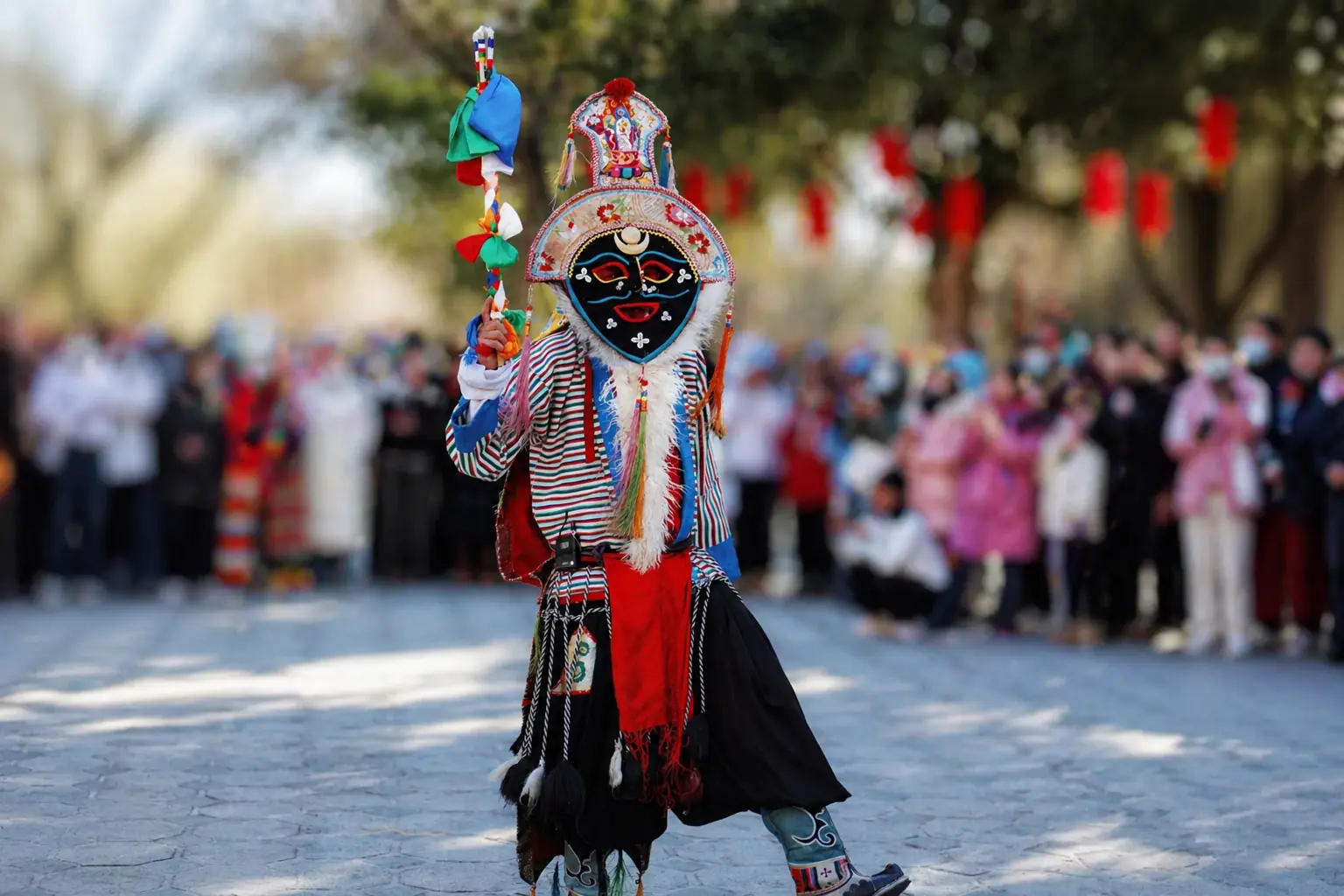
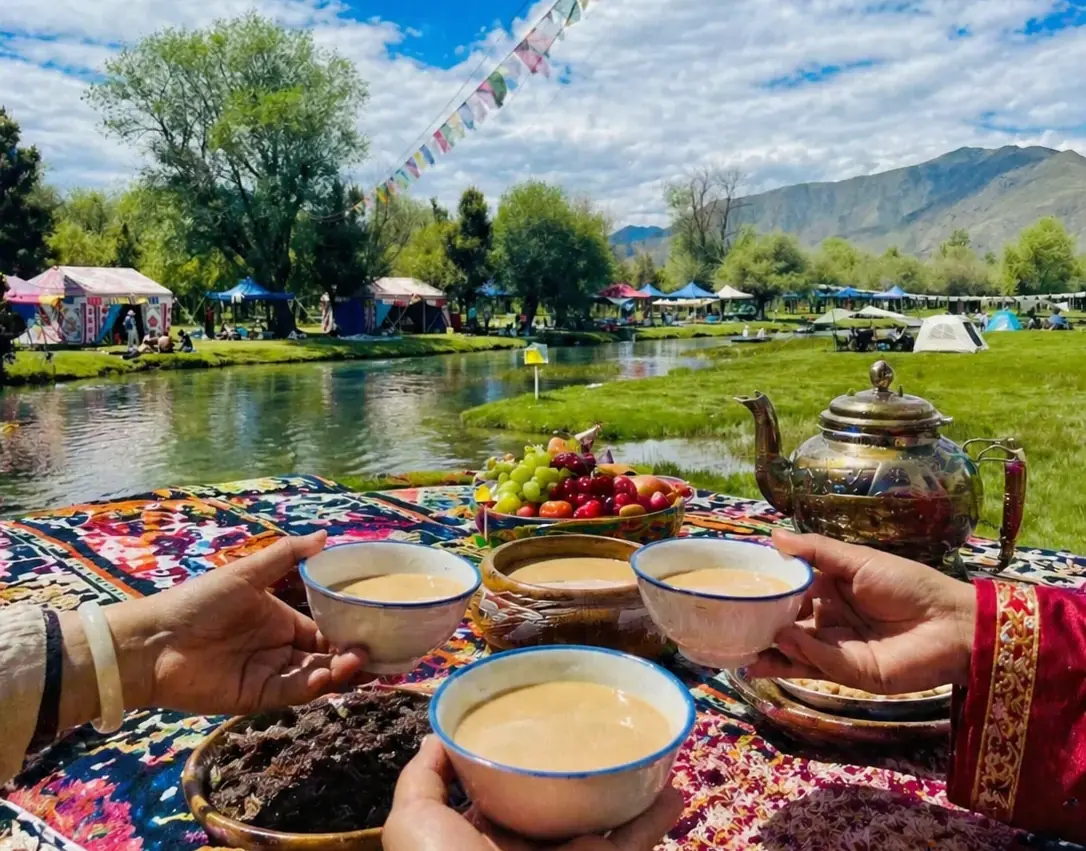
Tibetan opera often turns a lawn or public square into a stage shared by performers and picnicking audiences.
One city, two different encounters
Opera tells a story to a public audience. Cham carries a ritual purpose inside a living religious institution.
Tibetan opera · 藏戏
UNESCO inscribed the tradition in 2009. Song, chant, dance, narration and acrobatics carry Buddhist parables, historical journeys and moral drama. Tradition links its development to bridge-builder Thangtong Gyalpo (唐东杰布), although the form now belongs to many troupes and communities.
Cham dance · 羌姆
Monks perform masked ritual sequences for religious purposes tied to a particular monastery, lineage and festival. Visitors may be admitted to some public occasions, but the gestures and roles should not be reduced to a tourist show or one universal visual code.
Shoton Festival remains Lhasa's strongest traditional opera window, and public notices can also announce shorter opera seasons. It is not, however, a guaranteed one-week bundle of opera and Cham. To see both arts in one trip, match a current opera program with a separately confirmed monastery event and access plan.
Tibetan Opera — What You'll See
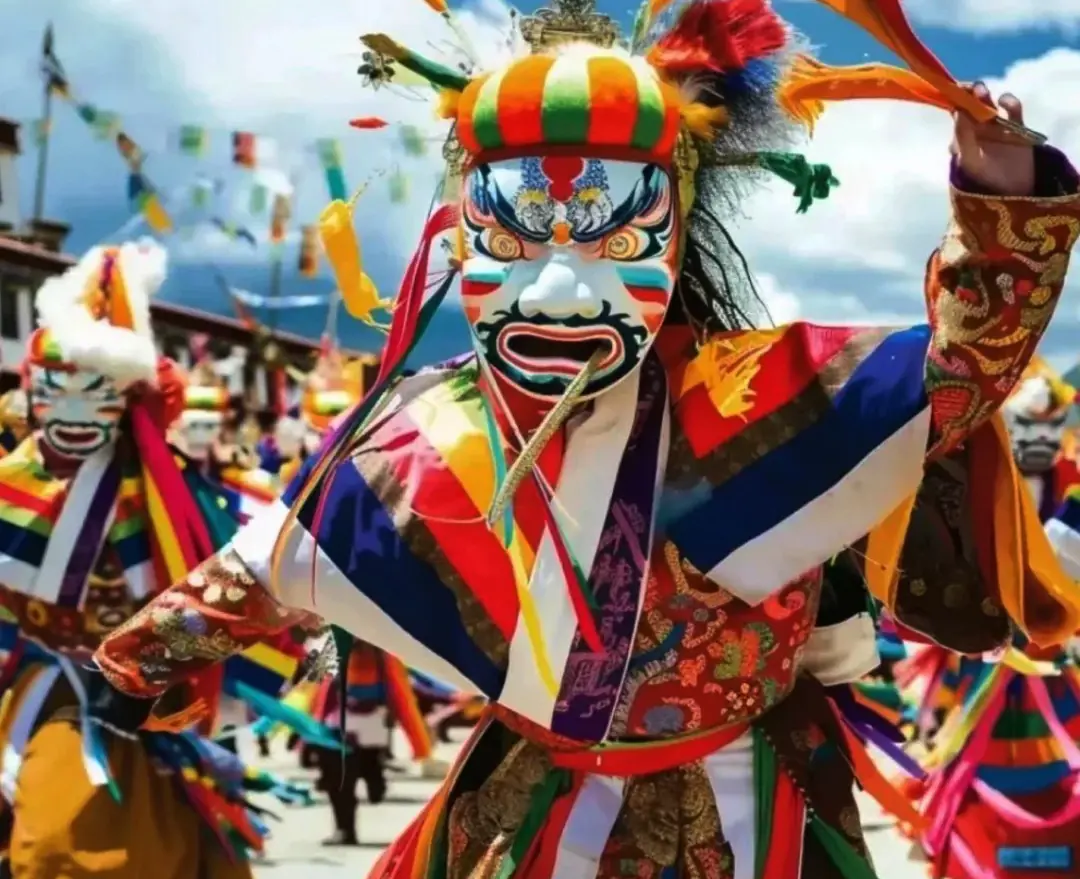
A traditional performance may unfold on a park lawn under open sky, with the audience arriving and leaving more freely than in a seated theater. Song, spoken dialogue, dance, narration, acrobatics and religious performance conventions work together rather than dividing neatly into Western-style scenes.
Masks and costume silhouettes give useful visual cues, but they are not a universal subtitle system. Read the program synopsis first, then use color, movement and the narrator's changes of pace to keep your place in the story.
The Eight Classic Plays
Official cultural sources commonly group the repertory as eight frequently performed traditional plays. English spellings vary, so the story cue is more useful than memorizing one transliteration.
- Story cue
- Historical journey
- What to recognize
- A Tang princess travels to Tibet for a royal marriage
- Story cue
- Prince and celestial maiden
- What to recognize
- Separation, search and reunion drive a fantastical romance
- Story cue
- Compassion and hardship
- What to recognize
- A woman's suffering, religious devotion and moral resolve
- Story cue
- Royal-family conflict
- What to recognize
- A virtuous heroine confronts jealousy and danger
- Story cue
- False accusation
- What to recognize
- Justice follows a queen's wrongful persecution
- Story cue
- Maritime adventure
- What to recognize
- A merchant's son journeys through the sea and a dragon palace
- Story cue
- Brothers and loyalty
- What to recognize
- Separation, sacrifice and reunion shape the drama
- Story cue
- Radical generosity
- What to recognize
- A prince gives away wealth and security in a Buddhist moral tale
A complete traditional work may stretch across a long session or more than one day. Contemporary festival and venue programs often present selected acts or shorter showcases, so use the current program—not a generic runtime—to plan transport and meals.
Tibetan Opera Today
A living performance calendar
Lhasa's troupes and cultural venues still stage public performances, professional productions and heritage exchanges. The official 2026 opera season, for example, announced six free productions across communities, parks and a shopping center from 13 to 17 June; Norbulingka hosted performances from 13 to 16 June.
Cham Dance — Sacred Dance Behind the Masks
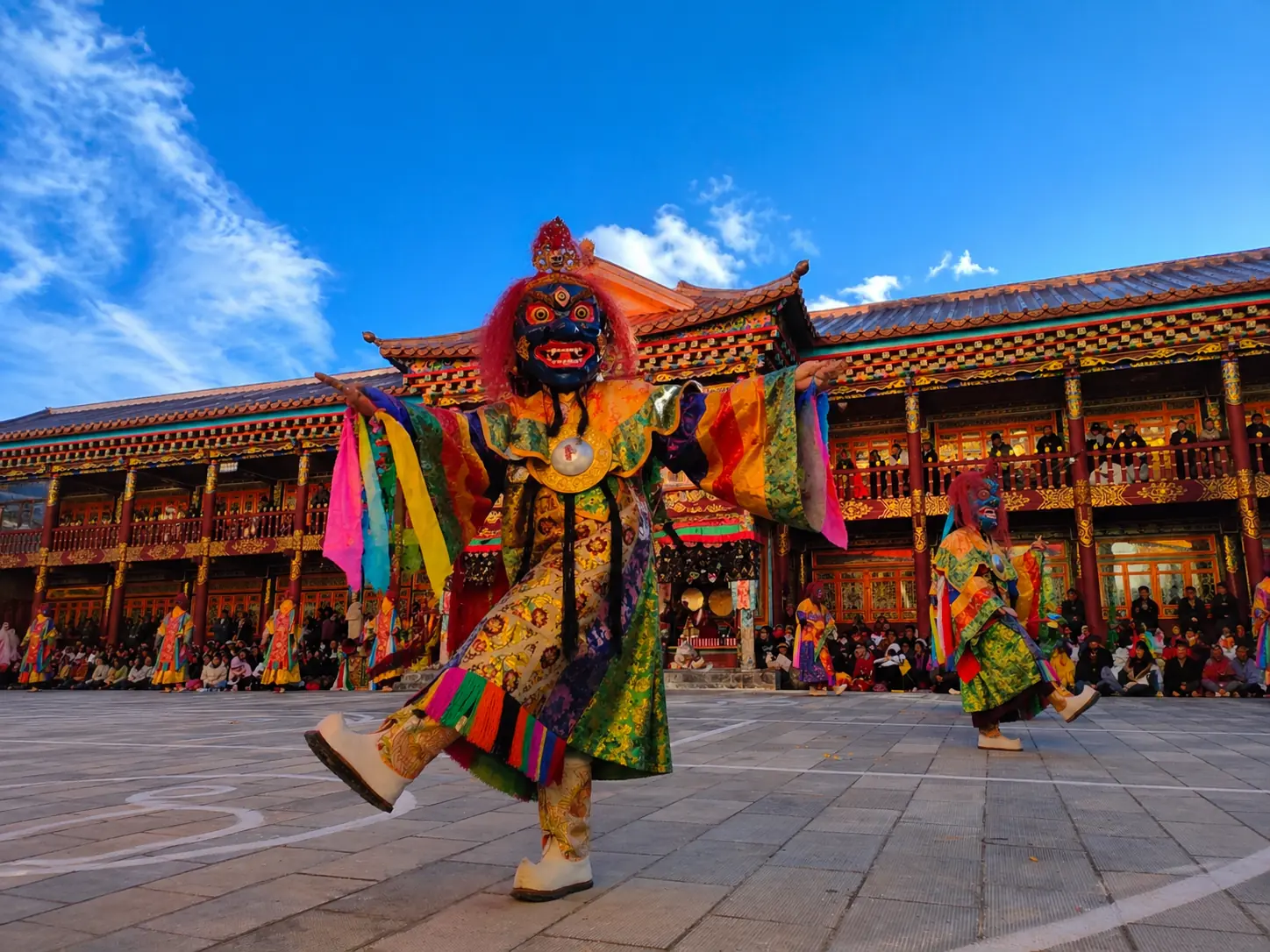
Cham is a sacred masked dance performed by monks within Tibetan Buddhist ritual life. A public-facing event may unfold in a monastery courtyard with robes, masks, cymbals, drums and long horns, but its religious purpose belongs to the host monastery rather than to a visitor itinerary.
Movements, instruments, roles and access vary by lineage and occasion. Watch the current event as a specific ritual context; do not assume that one monastery's sequence explains every Cham tradition.
Role families you may encounter
Names and functions differ by monastery. Treat these as recognition prompts, not a universal dictionary.
Protector deities
Wrathful faces can express protective or transformative power; a fierce appearance does not simply mean villain.
Skeleton figures
Skull imagery can evoke impermanence and death, with meaning determined by the ritual setting.
Animal or antlered figures
Animal forms may connect to protectors, local ritual traditions or a particular narrative role.
Black-hat dancers
Hat, costume and choreography carry ritual associations that should be read through the host monastery's explanation.
Cham does not need a theatrical plot to hold attention. Listen for the changing weight of horns, cymbals and drums, notice how the circle opens and closes, and leave space for worshippers whose participation is not part of a performance for visitors.
Masks — A Visual Dictionary

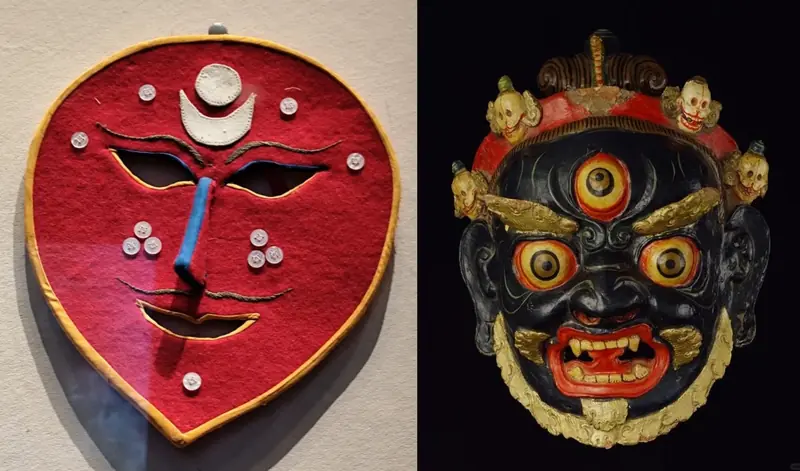
Masks offer an immediate visual entry point, but opera and Cham do not share one code. Opera colors can signal broad character types; Cham masks belong to the iconography and ritual logic of a particular monastery event.
Tibetan Opera Masks
Official Tibetan cultural explanations give the following practical color cues. Meanings can vary by troupe and role, so use the table as a first reading rather than a rigid decoder.
- Common cue
- Purity or kindness
- Typical role association
- Virtuous people and benevolent figures
- Common cue
- Authority or power
- Typical role association
- Kings and commanding characters
- Common cue
- Holiness or learning
- Typical role association
- Religious and learned figures
- Common cue
- Beauty or gentleness
- Typical role association
- Female roles in many troupes
- Common cue
- A distinct occupational or heroic cue
- Typical role association
- Hunters in some traditions; use the troupe's context
- Common cue
- Duplicity or a divided nature
- Typical role association
- Two-faced or witch-like characters
- Common cue
- Threat or severity
- Typical role association
- Dangerous or antagonistic figures, with context-dependent meaning
Opera masks are often made from cloth, papier-mâché or related lightweight materials suited to singing and movement outdoors.
Cham Masks
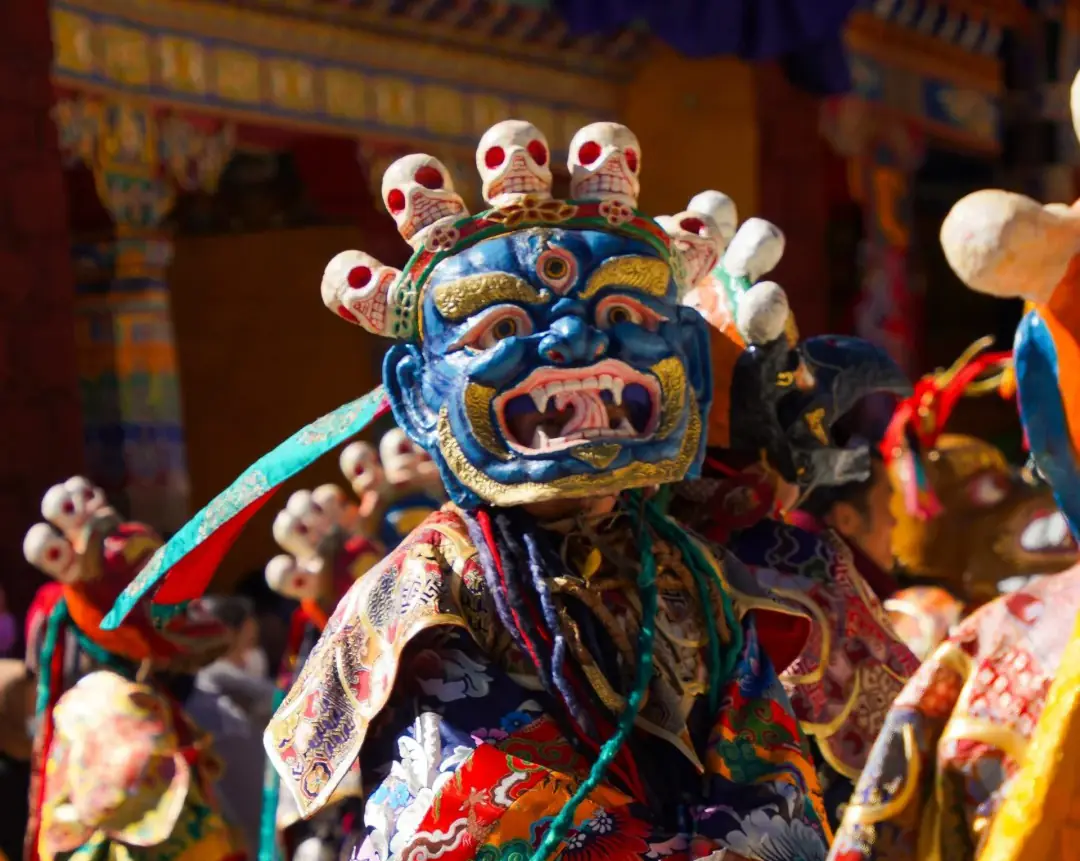
Cham masks are three-dimensional sacred objects associated with ritual roles rather than a public color chart. Materials, scale, adornment and handling differ across monasteries and traditions.
Wrathful forms
Fangs, crowns and multiple eyes may appear in protector imagery; fierce does not automatically mean evil.
Skeleton imagery
Skulls can speak to impermanence and death, but the host ritual determines the role.
Antlered figures
Antlers and animal-human forms can identify a specific protector or local ritual figure.
Animal figures
Lion, ox, bird and other forms may carry Buddhist or monastery-specific associations.
Do not infer religious rank from mask size or protection from how frightening a face appears. A current guide or monastery explanation is the responsible way to identify a role.
Where to Watch in Lhasa
Tibetan Opera
Public opera is easiest to plan when a dated cultural notice names the venue and troupe. Parks are part of the tradition, but none of them should be treated as a guaranteed daily stage.
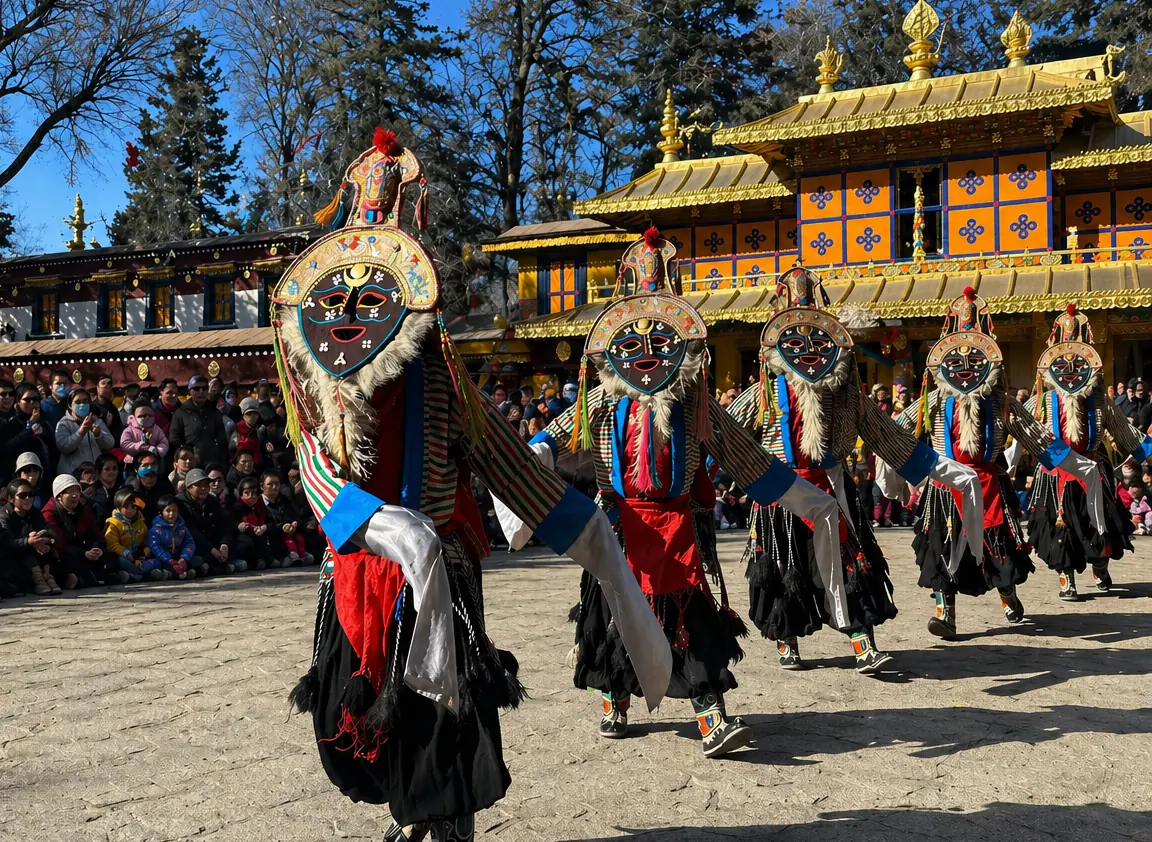
Choose by current program
Norbulingka has the strongest Shoton association, while public parks and professional venues can carry shorter seasons. Confirm the exact day, admission rule and runtime before building the evening around it.
This central park behind the Potala Palace can host public cultural performances. The confirmed 2026 opera season used several city venues rather than promising a fixed annual week here, so check the current organizer notice.
The palace park is closely associated with Shoton opera and hosted confirmed public performances from 13 to 16 June 2026. Park admission and the current festival program are separate questions; verify both.
Lhasa Tibetan Opera Art Center (拉萨藏戏艺术中心)
Indoor professional venue
This dedicated venue at 27 Beijing West Road appears in official opera programming. Check the current Tibet or Lhasa culture notice for public productions, showcases and entry arrangements.
Jibengang Art Center (吉本岗艺术中心)
Historic arts space
The adapted historic space on Xiaozhao Temple Road has hosted cultural exhibitions and occasional opera-related activity. Treat it as an event-dependent lead, not a dependable walk-in performance stop.
Cham Dance
Cham access depends on a specific monastery's religious calendar, visitor rules and the permits or route arrangements applying to your trip. Start with a credible event lead, then ask a licensed Tibet travel agency to confirm whether it is actually accessible to you.
A research lead, not a promise
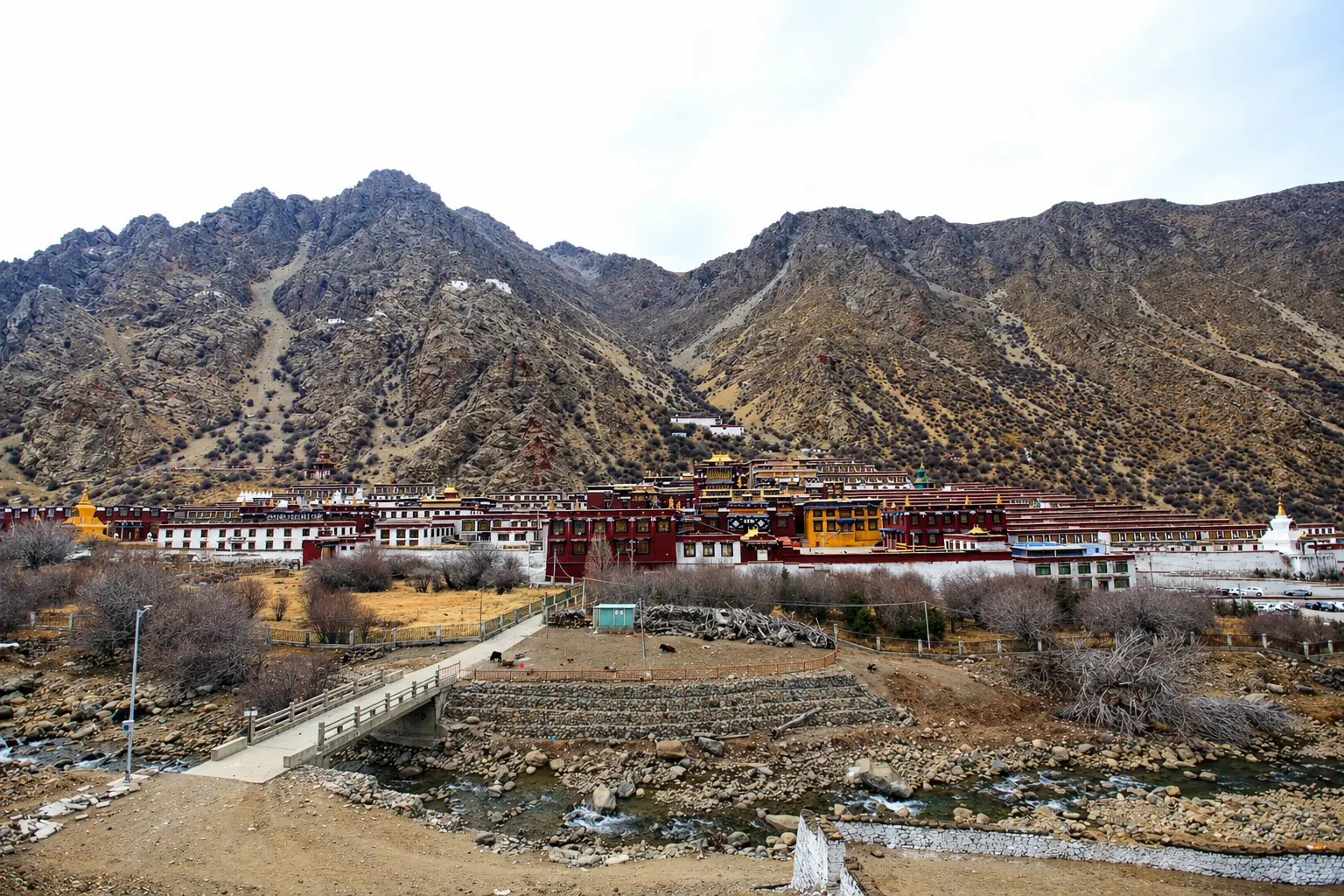
Tsurphu has a documented Gar Cham tradition. Drepung, Sera and Ganden are important religious settings, but their better-known festival rites must not be presented as automatic Cham performances.
Tsurphu Monastery (楚布寺)
Best documented Cham lead
Tsurphu, roughly 70 km west of Lhasa at around 4,300 m, has a documented Gar Cham tradition. A recurring Tibetan-calendar reference is not enough: confirm the current event, foreign-visitor access, transport and altitude suitability.
Drepung is strongly associated with Shoton's giant thangka display and festival ritual activity. That does not make Cham automatic; use the current official program for the exact ceremony and visitor arrangement.
Sera is best known to visitors for its monastery setting and debates. A religious festival, including the Sera Puje period, may change normal access; do not assume a public Cham event without a dated announcement.
Ganden Monastery (甘丹寺)
Lamp-festival setting, not a Cham guarantee
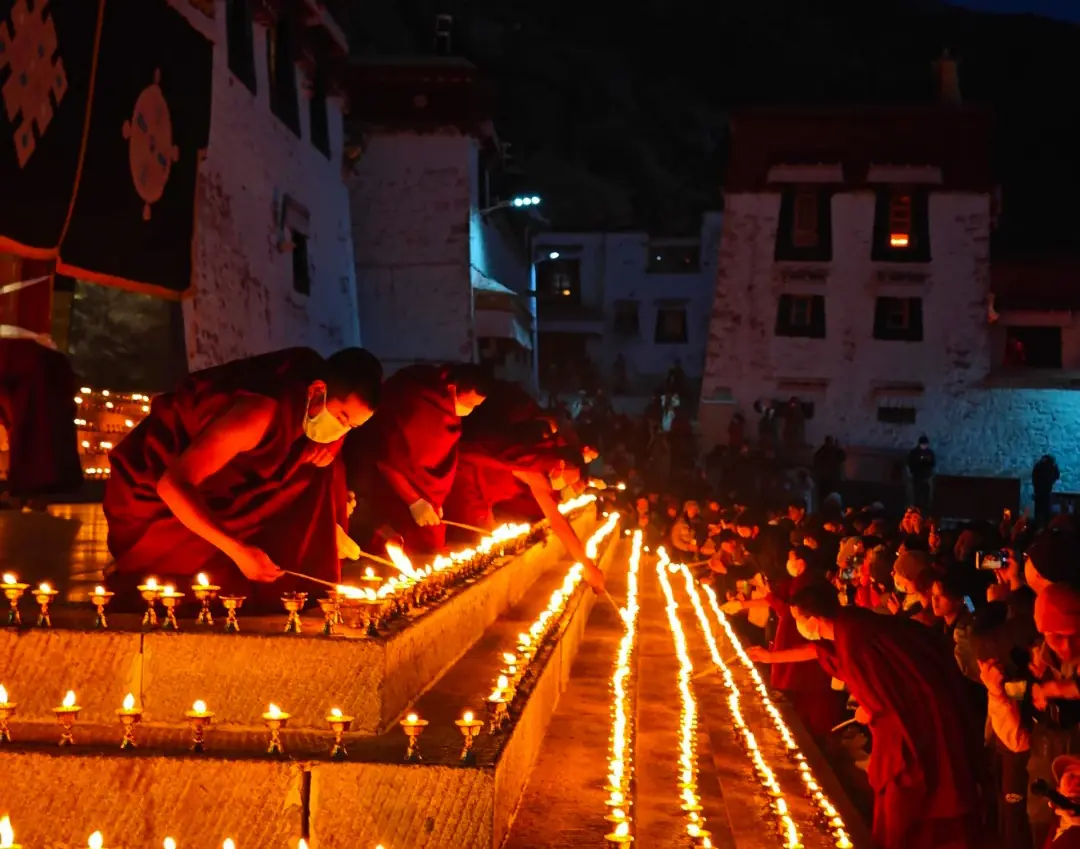
Ganden Ngamchoe (燃灯节) is associated with the 25th day of the 10th Tibetan month and butter-lamp observance. Confirm any performance claim separately; the festival name alone does not establish Cham access.
A calendar conversion does not confirm access.
Use the current monastery or cultural notice, then have the licensed Tibet travel agency responsible for your organized arrangements confirm whether the event, route and photography rules apply to your visit.
Shoton Festival — The Biggest Show of the Year
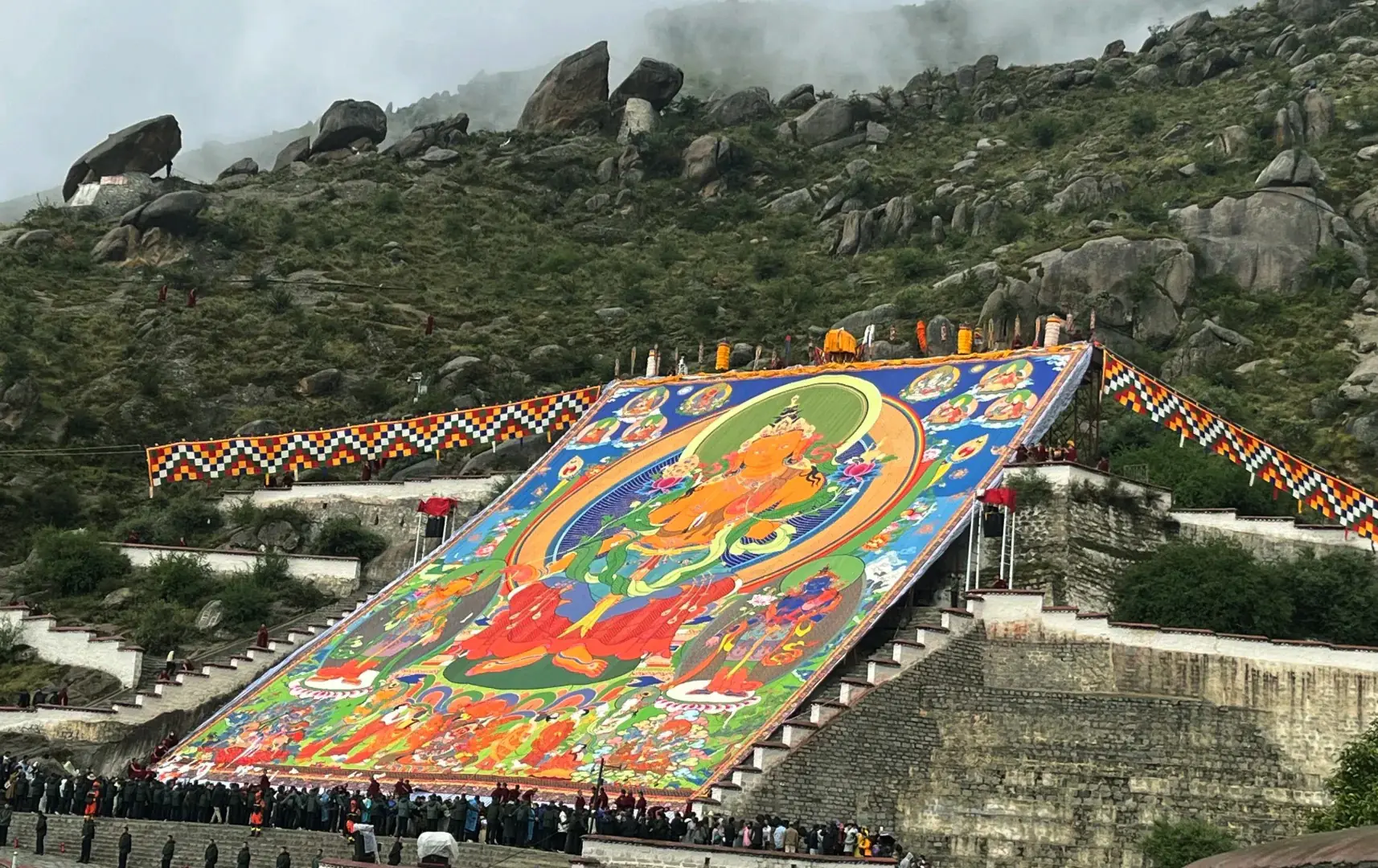
Shoton Festival (雪顿节) is Lhasa's strongest traditional-opera window, but the calendar marker and the public program are different pieces of information. Official background places the formal festival marker on the first day of the seventh Tibetan month; calendar conversion puts that marker around 12 August in 2026. As of 22 July, a complete official 2026 venue-and-time program had not been located.
The festival's history connects yogurt offerings after monastic summer retreat with public opera, giant thangka observance and lingka picnics. Expect a citywide cultural period rather than one fixed ticketed show, and wait for the current notices before deciding which morning or park day to use.
Highlights
Drepung's thangka display is the festival's best-known religious image. The current program should determine the day, arrival window, road controls and whether your organized visit can attend.
Norbulingka's lawns are closely associated with Shoton opera. Confirm which troupes and days appear in the current program, then check the park's admission and entry arrangements separately.
Sera and other monasteries may have their own religious calendars and access changes. Include a venue only when the current organizer or monastery notice names the event; do not infer a thangka or Cham program from Shoton alone.
Lingka Atmosphere
Picnics, yogurt, family gatherings
Much of Shoton's social atmosphere comes from park gatherings, yogurt and family picnics. Join with a light footprint and avoid treating private family space as a staged attraction.
How to Join
- Wait for the official program before fixing a Drepung or Norbulingka day; crowd controls and entry arrangements can change.
- Treat performance admission, park admission and monastery access as separate checks even when an event itself is announced as free.
- Bring sun protection, water and a light picnic layer if the current program places you outdoors for a long period.
- Reserve lodging early once official dates are published, but do not rely on an unsupported fixed lead time or price premium.
Year-Round Festival Calendar — Timing Your Trip
Performance planning needs two columns in your head: confirmed dated events and recurring research leads. A Tibetan-calendar tradition tells you when to start checking; only the current notice tells you what a visitor can actually attend.
- Status for 2026 planning
- Recurring cultural period
- Place
- Jokhang, Drepung and city venues
- Responsible planning use
- Losar and Monlam shape access and ceremony; do not assume a Cham program
- Status for 2026 planning
- Recurring event lead
- Place
- Tsurphu Monastery
- Responsible planning use
- Research Gar Cham, then require a current event and access confirmation
- Status for 2026 planning
- Confirmed and completed
- Place
- Six Lhasa venues
- Responsible planning use
- Official public opera season; Norbulingka performances ran 13–16 June
- Status for 2026 planning
- Calendar marker; full program pending on 22 July
- Place
- Drepung, Norbulingka and announced venues
- Responsible planning use
- Watch for Shoton thangka, opera, transport and admission notices
- Status for 2026 planning
- Historical opera-program lead
- Place
- Norbulingka or current venue
- Responsible planning use
- Do not assume a 2026 vocal competition without a dated announcement
- Status for 2026 planning
- Recurring religious observance
- Place
- Ganden Monastery
- Responsible planning use
- Ganden Ngamchoe is a lamp-festival lead, not a Cham guarantee
- Status for 2026 planning
- Recurring cultural period
- Place
- Jokhang and Barkhor
- Responsible planning use
- Palden Lhamo observance is culturally important but not a performance-first plan
Read the calendar by confidence level.
Build around a dated official performance first. Keep recurring monastery festivals as query leads until the event, visitor access and organized transport are all confirmed.
Practical Tips and Etiquette
Before the performance
Confirm access, protect your first 48 hours and learn only the story cues you need.
Permit and route
Foreign-passport visitors need the required Tibet travel approval and organized arrangements. A licensed Tibet travel agency—not Go China Freely—must handle that process and confirm current venue access.
Dress and photography
Cover shoulders and knees at monasteries, layer for rapid weather changes, ask before any photo and follow no-flash or no-camera instructions immediately.
Altitude pacing
Lhasa is about 3,700 m and Tsurphu is around 4,300 m. Keep exercise mild during the first 48 hours and do not schedule a remote high-altitude day before you know how you are responding.
Story preparation
Read a short opera synopsis, but approach Cham through the host monastery's explanation rather than trying to decode every mask from a generic chart.
Altitude symptoms can become urgent.
If breathlessness, cough, poor coordination, confusion or other symptoms worsen, stop ascending and seek medical care. Do not push through a monastery excursion or long outdoor performance.
The Princess Wencheng Live Show
Lhasa also has a commercial outdoor production, Princess Wencheng (文成公主), in the Culture and Tourism Creative Park. The official 2026 season opened on 22 March with a published 21:00 start and a runtime of about 90 minutes. Future dates, weather cancellations, seat classes and prices remain a live ticket check. It is a modern large-scale spectacle rather than Tibetan opera, so choose it for a produced evening show rather than as a substitute for the communal tradition. See the Princess Wencheng Live Show Guide for the planning distinction.
Frequently Asked Questions
Yes, if you use visual entry points without expecting a universal decoder. Read a short opera synopsis and watch changes in mask, costume, movement and narration. For Cham, focus on sound, spatial movement and the host monastery's explanation rather than assigning fixed meanings to every role.
Sources checked for this guide
- UNESCO Representative List entry checked for the 2009 inscription and the combined song, dance, storytelling, chant, acrobatics and religious-performance character of Tibetan opera: UNESCO Tibetan opera
- Official repertory coverage checked for the frequently performed eight traditional plays and current cultural framing: Tibet Culture and Tourism Department opera repertory report
- Independent official cross-check for the eight-play repertory and English-facing story identification: National Ethnic Affairs Commission Tibetan opera overview
- Confirmed six free public productions from 13 to 17 June 2026 and Norbulingka performances from 13 to 16 June: Tibet Culture and Tourism Department 2026 opera season notice
- Official history checked for the Shoton festival marker on the first day of the seventh Tibetan month and its opera and Norbulingka associations: Tibet Foreign Affairs Shoton background
- Monastery-specific tradition checked for Tsurphu Gar Cham without converting it into a guaranteed current public schedule: Lhasa Culture and Tourism Tsurphu Cham report
- Official mask-color explanations checked for the cautious Tibetan opera visual dictionary: Tibet Party media opera-mask explainer
- Government guidance checked for foreign-passport visitor approval and organized Tibet travel through a travel agency: Official Tibet travel approval guidance
- Lhasa elevation, gradual acclimatization, mild exercise during the first 48 hours and serious symptom guidance checked: CDC Yellow Book high-altitude guidance
- Confirmed 22 March 2026 season opening, published 21:00 start, approximately 90-minute runtime and Culture and Tourism Creative Park venue: Tibet Culture and Tourism Princess Wencheng 2026 notice
Beyond This Guide
Lhasa's living cultural landscape extends from the Potala Palace and Jokhang Temple to monastery courtyards, public parks and the high-altitude road beyond the city. A strong itinerary leaves room for current notices and acclimatization instead of forcing every performance lead into one crowded week.
The licensed Tibet travel agency responsible for your organized trip must handle mandatory permits and confirm current access.
© gochinafreely.com — Original guide by Go China Freely.