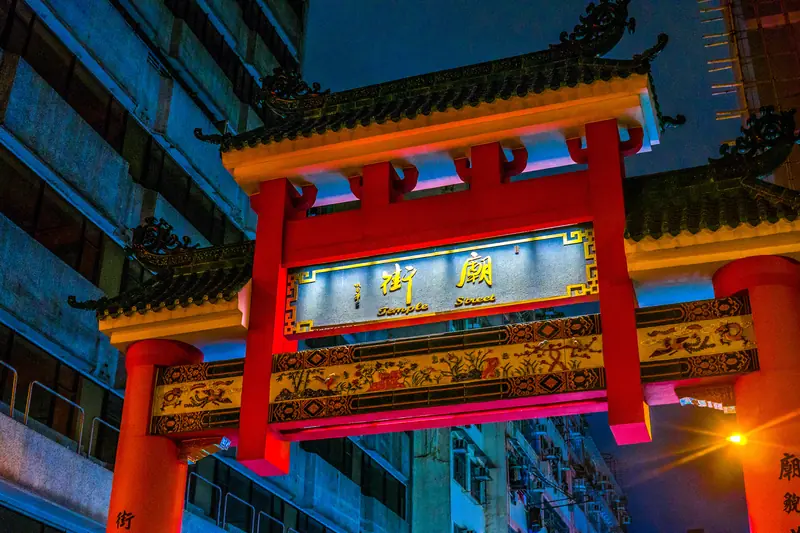
Visit basics
The hawker window is not a promise that every stall or restaurant is open for all nine hours. Plan your arrival
Decision notes
A Century-Old Market, Unfiltered Hong Kong
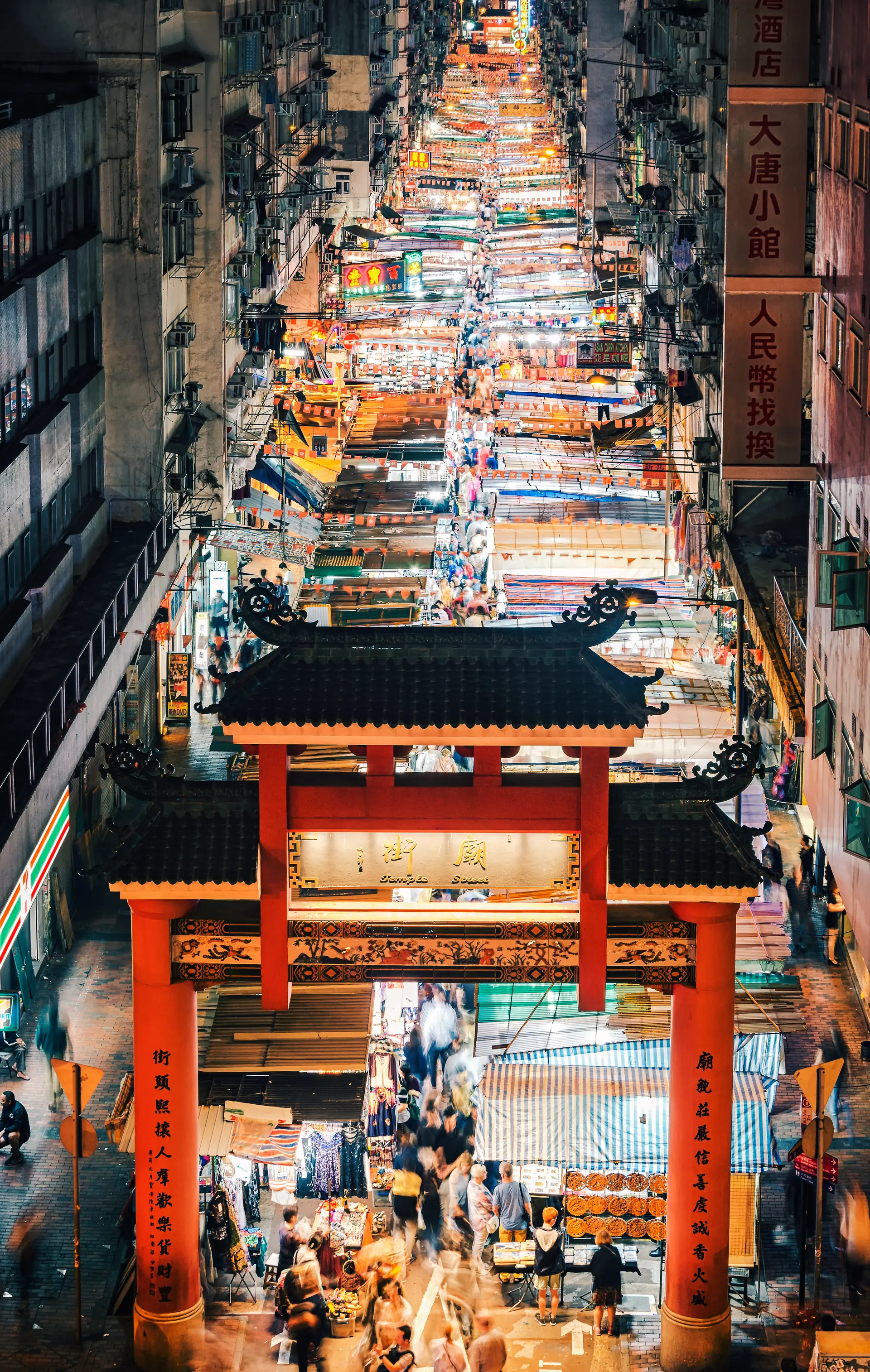
Temple Street after dark — tent stalls, overhead lights and supper tables turn the street into an evening corridor
What this street is
A long-running hawker market with food and culture around the edges
Temple Street in Yau Ma Tei (油麻地) is one of Hong Kong's best-known evening market streets. The formal Hawker Permitted Place was established in 1975 and runs through four street sections between Nanking Street and Kansu Street.
After dark, the mix broadens beyond shopping: seafood kitchens work behind street-facing displays, fortune tellers may set up near the temple area, and impromptu Cantonese opera or popular-song performances sometimes appear. It is lively and rough-edged, but no single performance, seller count or closing time is guaranteed.
Market framework
Established in 1975
The permitted hawker market is modern, even though the street and surrounding district are older.
Street rhythm
Best atmosphere after 19:00
Use the afternoon for a quieter look; come after dark for the denser market scene.
Temple anchor
Tin Hau Temple, about 1878
Temple Street takes its name from this five-building compound, normally open 08:00-17:00.
Temple Street's visual appeal comes from its close street scale: metal-frame stalls, bare lights, pavement tables and older shopfronts sit below Kowloon's apartment blocks. It is the cinematic “old Hong Kong” visitors often expect, but it remains a working district rather than a staged heritage set.
What to Buy, What to Skip
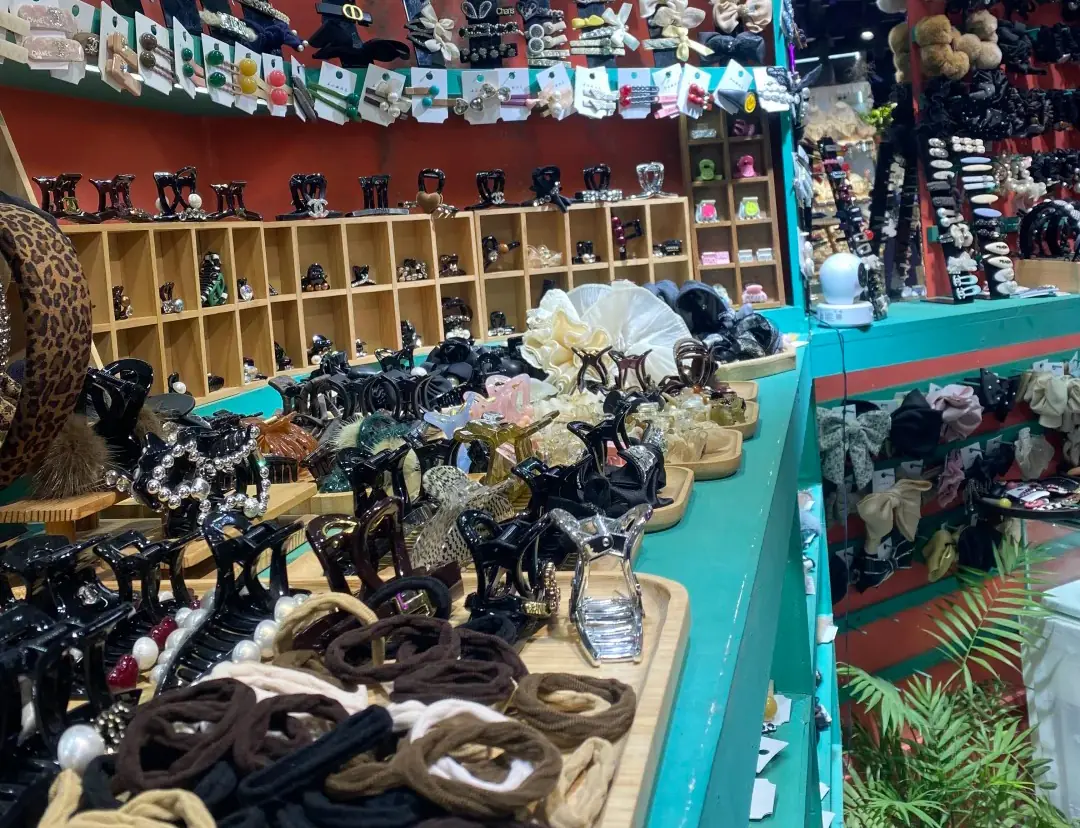
Small accessories and souvenirs are easier to compare than high-value or authenticity-sensitive goods
The decision
Buy for fun and portability, not investment value
The useful line is between inexpensive objects you can inspect on the spot and goods whose value depends on authenticity, warranty or expert appraisal. All ranges below are indicative seller ranges, not fixed tariffs.
Worth buying
Accessories and small jewelry
Bracelets, combs, hair clips and chains — HK$20-80.
Silk-look items
Robes, qipao and scarves — HK$100-300; inspect fabric and stitching because quality varies.
Tea and mahjong sets
Miniature or travel-size sets — HK$50-200.
Paintings and printed tees
Hong Kong harbour or junk-boat art — HK$100-500; printed/transfer T-shirts — HK$30-80.
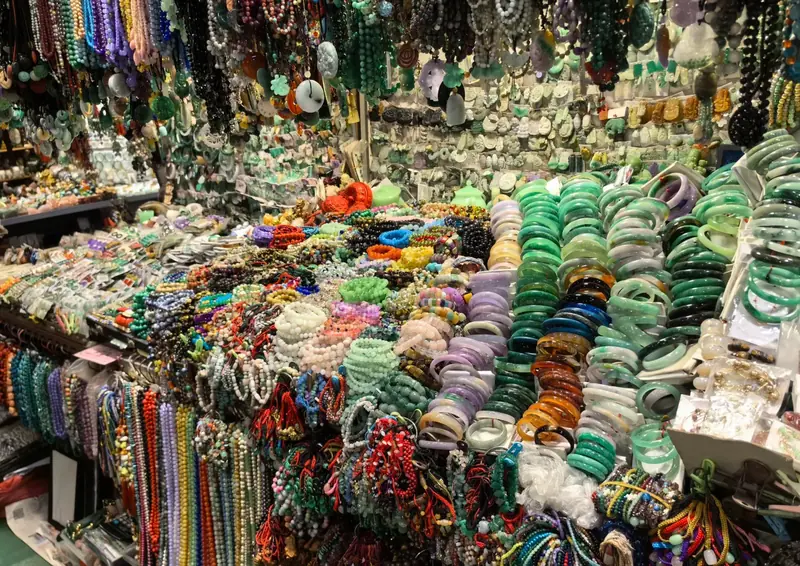
Decorative jade pieces
HK$50-300; treat these as souvenirs, not fine jewelry or certified jadeite.
Skip or verify elsewhere
Electronics
Warranty, compatibility and after-sales support are hard to verify at a temporary stall.
“Branded” copies
Hong Kong Customs enforces forged-trademark offences. Do not buy an imitation item because the seller calls it a harmless souvenir.
Expensive “antiques”
Without provenance or specialist knowledge, age, material and value are difficult to assess.
Before paying: inspect the exact item, agree on the total in HKD, and request a receipt for any meaningful purchase.
After-Dark Street Food
Choose one main meal, then add snacks
Seafood, claypot rice and street snacks solve different appetites
Temple Street's food scene ranges from full sit-down seafood meals to a single skewer. Prices below preserve the guide's planning ranges, but they are indicative: confirm the portion, weight basis, cooking charge and total before ordering.
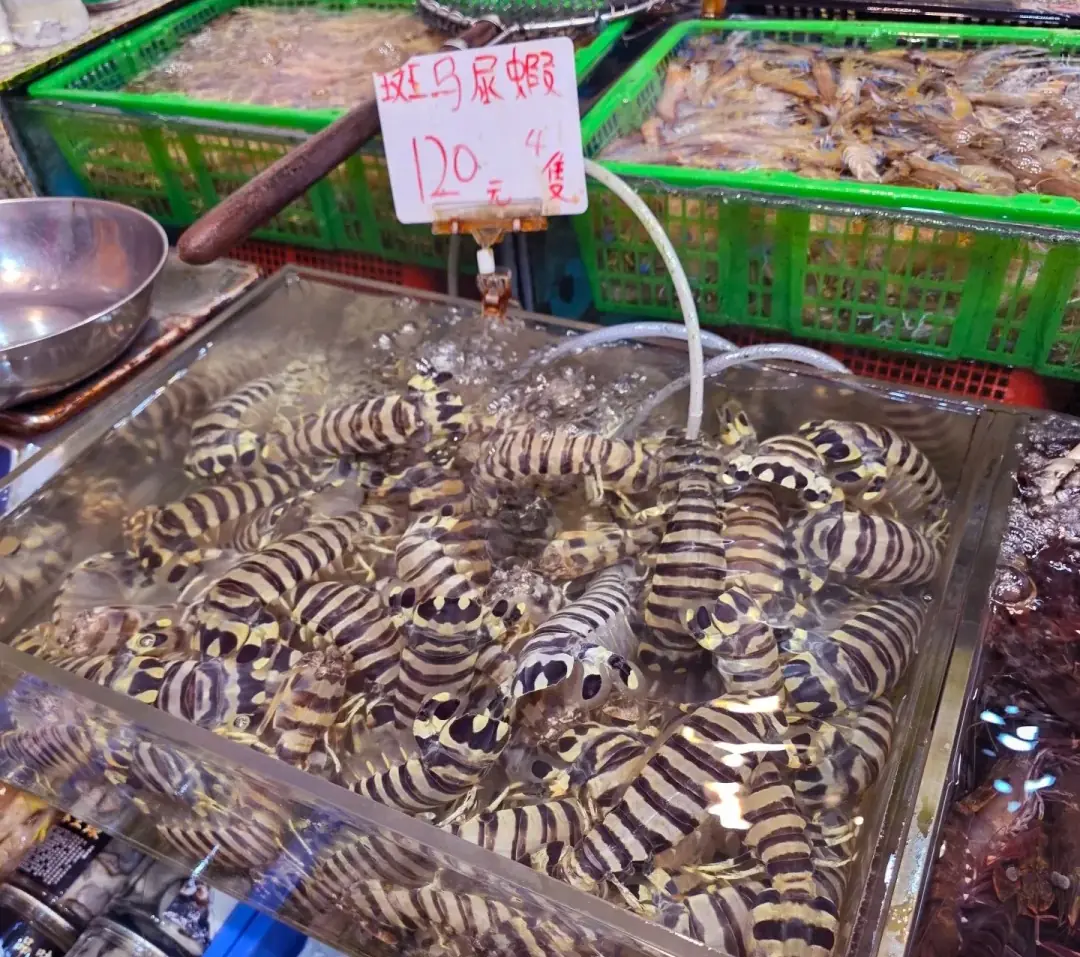
At seafood premises, confirm whether the displayed price is per piece, portion or weight
Dai Pai Dong Seafood
Best for a shared main meal
The northern stretch near Nanking Street (南京街) has street-facing seafood restaurants with tanks or ice displays. Pointing is easy; price units are the part that needs care.
Mantis shrimp (濑尿虾): salt-and-pepper or garlic-steamed; indicative HK$80-150 each.
Typhoon-shelter crab (避风塘炒蟹): garlic-chilli style; indicative HK$200-400 per crab.
Salt-and-pepper squid (椒盐鱿鱼): indicative HK$60-100 per listed portion.
Clay Pot Rice
Best for a slower, warming dinner
Clay pot rice (煲仔饭) is cooked over flame with cured meats, pork ribs or chicken, leaving a crisp rice crust at the bottom. The original planning allowance is 20-30 minutes after ordering.
Hing Kee (兴记煲仔饭) is the guide's named stop for cured-meat and beef-with-egg versions. Treat HK$45-85 per pot as an indicative range and check the current menu and branch queue.
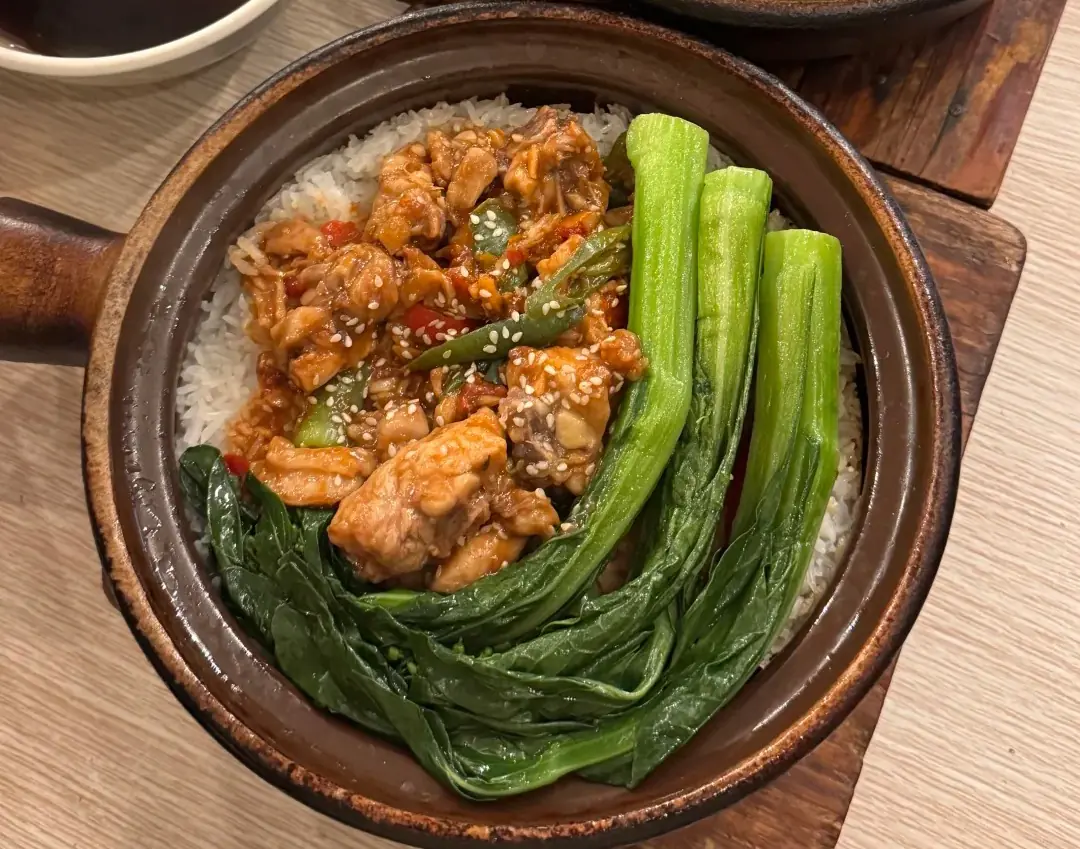
Claypot rice needs time for the crust to develop; do not plan it as a grab-and-go snack
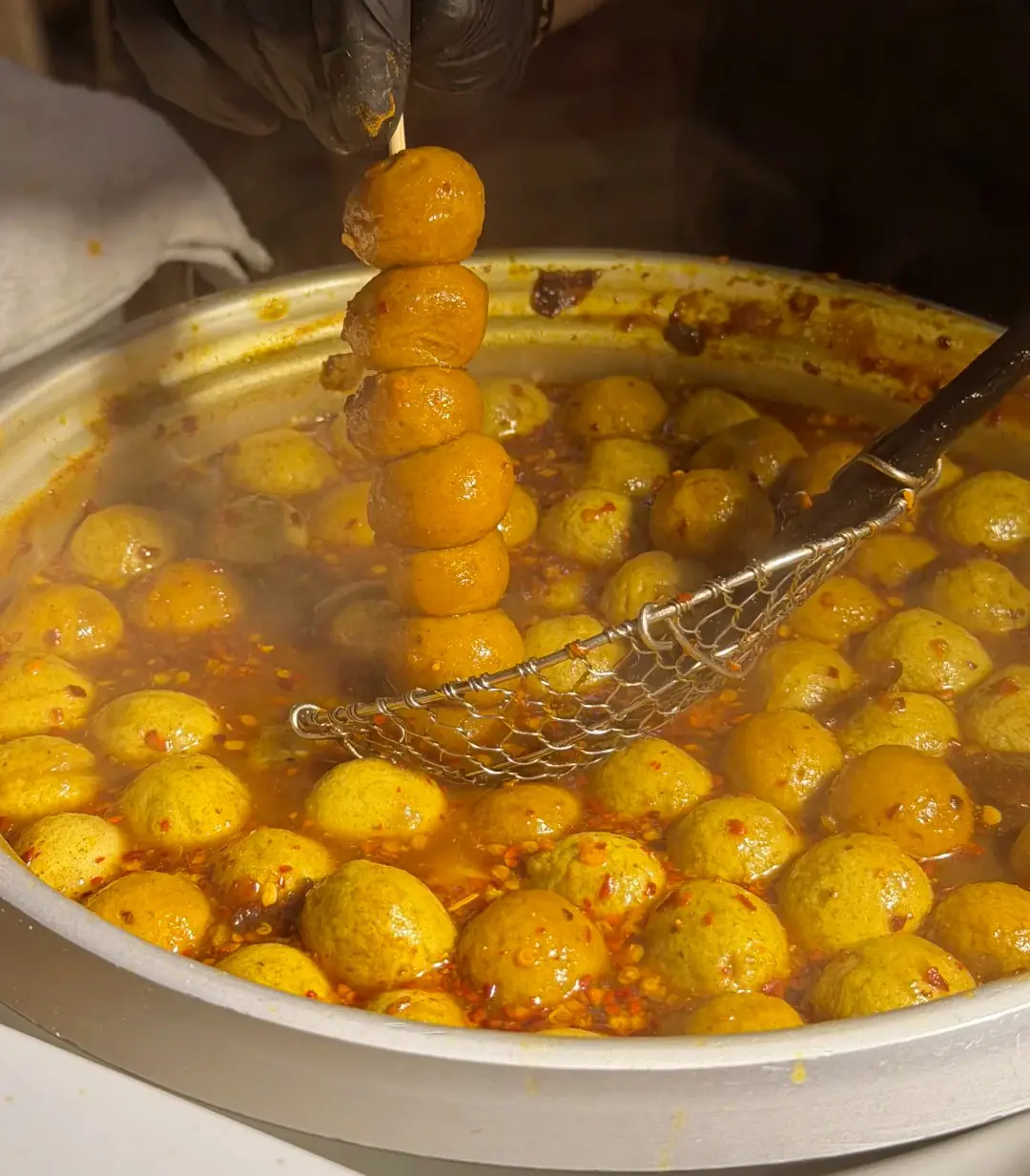
Street snacks work best as a tasting layer after the main market walk
Street Snacks
Curry fish balls (咖喱鱼蛋): HK$10-15 per skewer.
Braised offal (牛杂): HK$20-40.
Egg waffles (鸡蛋仔): HK$20-30.
Imitation shark-fin soup (碗仔翅): vermicelli-based; HK$15-25.
Snake soup (蛇羹): an old-school winter speciality; ask the current bowl price.
Late-Night Drinks
Silk-stocking milk tea (丝袜奶茶): indicative HK$15-25.
Iced lemon tea (冻柠茶): the classic cold finish.
Hand-smashed lemon tea: a newer stall option; compare cup size and sweetness.
Food-safety boundary: use FEHD's licensed-premises search for a named restaurant, and favour clean-looking kitchens with strong turnover. No street-food choice is risk-free.
Confirm before ordering: ask the vendor to enter the total on a calculator. Avoid any “market price” item until the unit, portion and cooking charge are explicit.
Fortune Telling and Cantonese Opera
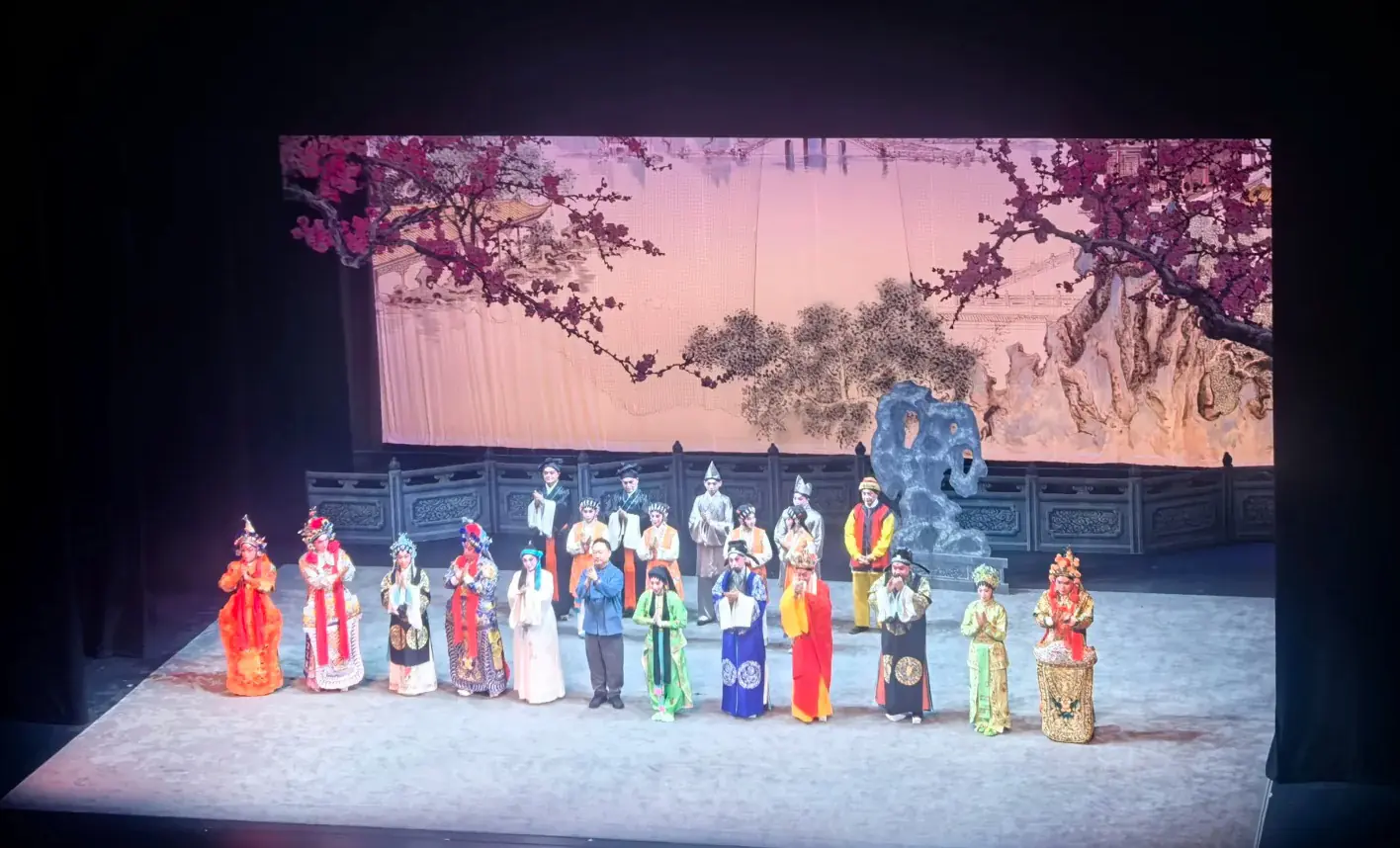
Fortune tellers and impromptu performances may appear around the temple and Yung Shue Tau area
Culture is an encounter, not a timetable
Choose a paid reading or pause for whatever performance is happening
HKTB describes fortune tellers and impromptu Cantonese opera as experiences that may appear on a given evening. Do not build the visit around a guaranteed 20:30 show or a promised free performance.
← swipe to compare all options →
Fortune Telling
A paid, one-to-one encounter
- ✓Ask the method, price and approximate duration before sitting down
- —English ability varies; a HK$100-200 session mentioned in the earlier guide is not a fixed tariff
- —Treat it as cultural entertainment, not professional life, medical or financial advice
Indicative HK$100-300
Palm, face or bird-fortune styles may be offered
Cantonese Opera
An impromptu community performance
- ✓The costumes, percussion and vocal style can be appreciated without Cantonese
- —A performance may be near Public Square Street or Yung Shue Tau
- ✗Do not rely on the old “8:30 PM nightly” or “donations appreciated” wording
No guaranteed ticket or fee
Timing and presence vary by evening
How to Bargain at Temple Street
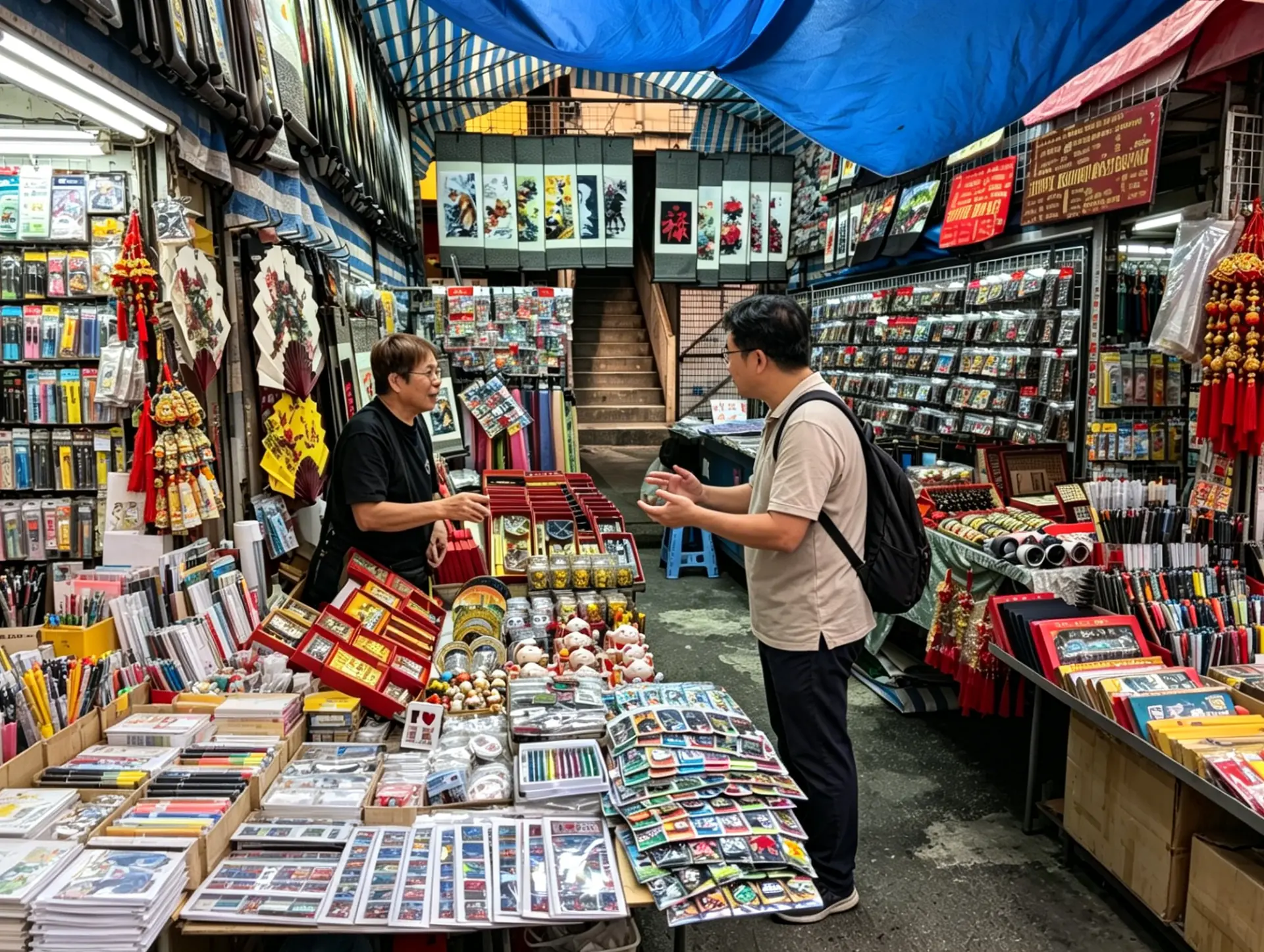
Compare the same type of item first, then make one clear offer you are willing to pay
Bargaining Tips
Use a sequence, not a percentage formula
01 · Compare
Check two or three similar items before deciding what the stall's opening price means.
02 · Inspect
Confirm colour, size, finish and quantity; do not negotiate against a different sample.
03 · Offer once
State a price you would genuinely pay. If buying 3+ items, ask for one clear bundle total.
04 · Leave politely
Walking away is a valid decision, not a trick. Return only if the final item and total still suit you.
Do not treat the old ratios as rules
The earlier guide described a 30-50% markup, opening at 50-60% and settling at 60-70%. Those figures cannot be verified as a current market-wide formula. Likewise, “after 22:30” does not guarantee a deal: the permitted hawker window ends at 23:00 and individual sellers may pack earlier.
Payment
Bring small HKD notes because payment acceptance varies, but avoid carrying more cash than the evening needs. The earlier HK$500-1,000 suggestion should be a personal dining-and-shopping budget ceiling, not a minimum amount to carry. Confirm Octopus, card or mobile-wallet acceptance before the item is packed.
Getting There and Best Times

The Jordan Road end is a practical starting point from MTR Jordan Station Exit A
Transport
Enter from Jordan for a simple north-to-south browse
Jordan Station
Tsuen Wan Line, Exit A; follow Jordan Road and turn into Temple Street.
Yau Ma Tei Station
Tsuen Wan / Kwun Tong lines, Exit A2; approach through Man Ming Lane.
From Hong Kong Island
The earlier 15-20 minute MTR estimate is only a broad planning range; use the journey planner from your actual station.
Best Times
14:00-18:00
Within the permitted hawker window, but many stalls may still be setting up and the atmosphere is quieter.
19:00-22:00
The guide's best visiting window: lights, shopping and supper overlap most reliably.
22:00-23:00
Crowds may thin and sellers may begin packing; do not assume this produces discounts.
After 23:00
The permitted hawker window has ended. Some licensed food premises may keep different hours.
Last-train check: do not rely on the earlier fixed 00:52 claim. MTR service depends on line, direction and date; use the current journey planner or station notice before a late meal.
Practical Tips for Visitors
Watch Your Belongings
Use normal crowded-market discipline
Hong Kong Police advise visitors to keep bags fastened, watch for pickpockets, avoid carrying large cash amounts, use reputable shops and retain receipts. There is no official basis for saying pickpockets become more active specifically after 20:00.
Keep your phone out of a back pocket, pause away from the walking line to check maps, and call 999 for an emergency.
Weather and What to Wear
May-Sep: hot, humid and rainy; use breathable clothing and carry a compact umbrella.
Dec-Feb: winter normals are milder than the old 10-18°C summary—mean maxima are roughly 18.7-20.4°C and minima roughly 14.6-16.2°C. Bring a light layer for breezy evenings.
Shoes: comfortable walking shoes help on busy, uneven pavement and when standing for food.
Temple Street vs. Ladies' Market
← swipe to compare all options →
Temple Street
Yau Ma Tei
- ✓Shopping plus seafood, claypot rice and street snacks
- ✓Fortune telling and impromptu performances may appear
- —Choose it for an evening market-and-supper mix
Best atmosphere: 19:00-22:00
Ladies' Market
Mong Kok
- ✓Clothes, accessories and phone-case shopping dominate
- —Restaurants are nearby, but the street itself is less food-led
- —Yau Ma Tei to Mong Kok is one MTR stop
Shopping-first alternative
One-evening sequence: visit Ladies' Market first if shopping is the priority, then continue one stop or walk south to Temple Street after dark.
Nearby Worth a Stop
Tin Hau Temple (天后庙)
The compound that gave Temple Street its name; normally 08:00-17:00, so visit before the night market reaches full pace.
Mido Cafe (美都餐室)
A nostalgic cha chaan teng at the head of Temple Street, known for its period interior and street view; check current opening status.
Jade Market (玉器市场)
A nearby Kansu Street shopping stop; apply the same decorative-souvenir versus certified-value distinction.
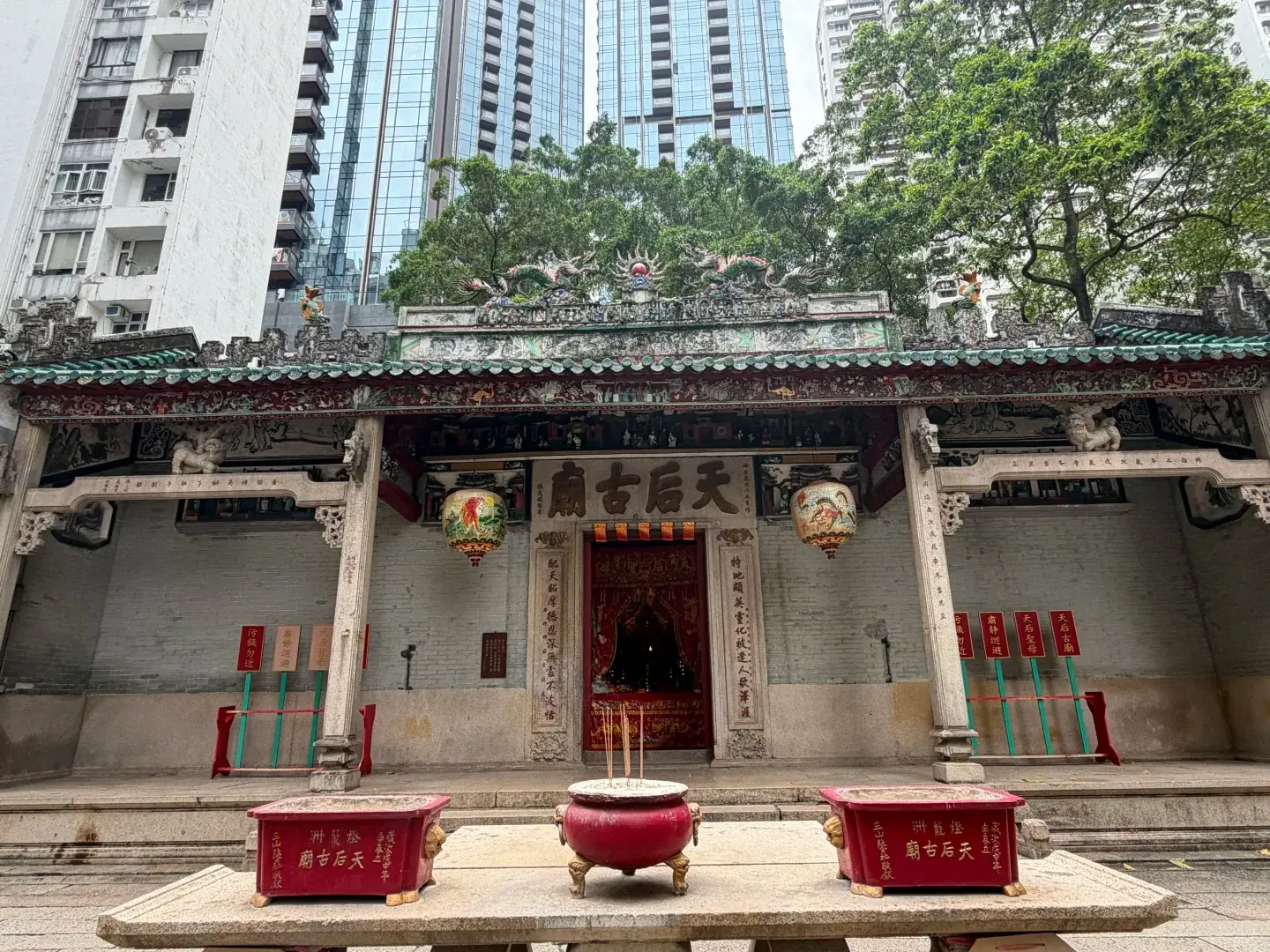
Tin Hau Temple — completed about 1878 and still the historical anchor for the street's name
FAQ
Use the same care you would in any dense market. Hong Kong Police advise visitors to keep bags fastened, watch for pickpockets, avoid carrying large cash amounts, use reputable shops and retain receipts. There is no verified after-8-PM risk threshold; call 999 in an emergency.
Sources checked for this guide
- Current visitor description of shopping, local foods, fortune telling, impromptu Cantonese opera, Mido Cafe and Tin Hau Temple: Hong Kong Tourism Board — Temple Street
- Temple completion date, five-building compound, naming relationship and current opening hours: Antiquities and Monuments Office — Tin Hau Temple and adjoining buildings
- 1975 establishment, four market sections and permitted hawker trading window: Hong Kong Legislative Council — Temple Street Hawker Permitted Place
- Official station and network orientation for Jordan and Yau Ma Tei: MTR — System and station maps
- Current search for licensed food premises: Food and Environmental Hygiene Department — Licensed premises search
- Visitor precautions covering bags, pickpockets, cash, reputable shops and receipts: Hong Kong Police — Crime prevention advice for tourists
- Passenger and forged-trademark enforcement context: Hong Kong Customs — Passenger clearance and enforcement information
- Subtropical climate description and 1991-2020 monthly normals: Hong Kong Observatory — Climate of Hong Kong
Beyond This Guide
Continue the evening without overloading it
Temple Street works best as one anchor in a Kowloon night
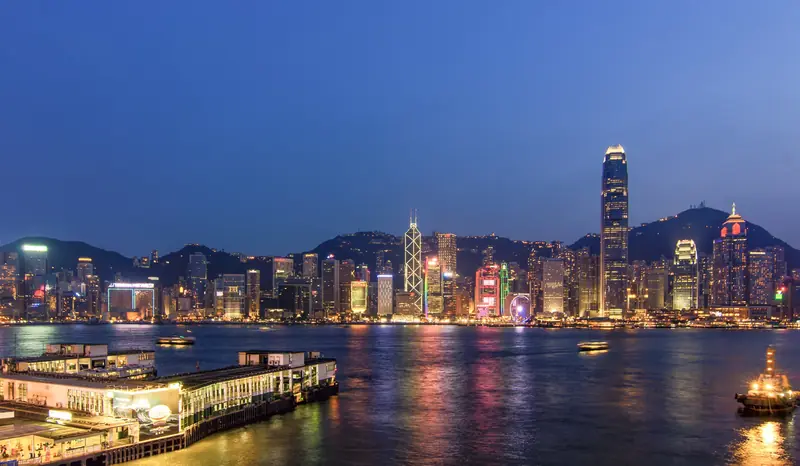
Mong Kok's shopping streets, the harbour edge in Tsim Sha Tsui and a focused local dinner can all fit around it, but the order should follow your actual priority: shopping, food or atmosphere.
© gochinafreely.com — Original guide by Go China Freely.