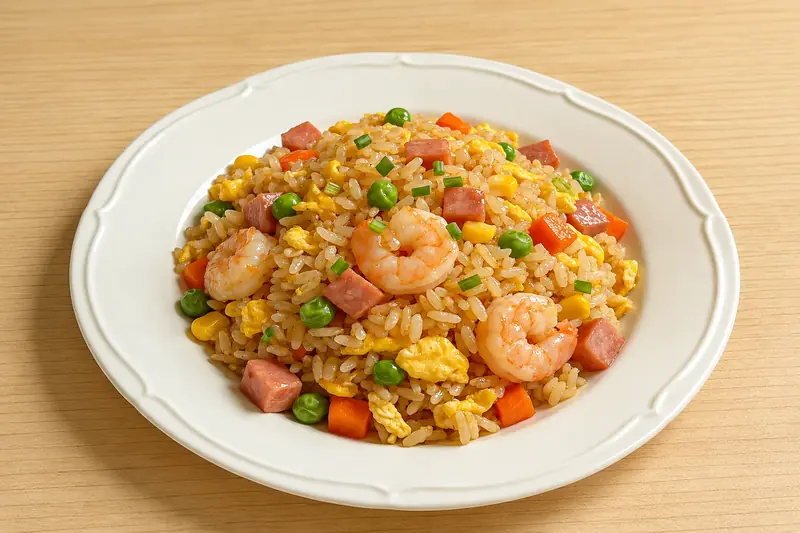
Yangzhou fried rice (扬州炒饭) is the Chinese dish many travelers think they already know: golden rice, egg, shrimp, ham, peas, and the English menu name "Yangzhou" or "Yeung Chow." The version worth eating in Yangzhou is not a leftover-rice free-for-all. It is Huaiyang cooking shrunk into one bowl: clean flavor, careful cuts, bright color, separate grains, and no heavy soy sauce hiding the rice.
Executive Summary
What this guide covers
Why Yangzhou fried rice matters, how it fits Huaiyang cuisine, common ingredients, rice and egg technique, overseas takeout differences, where to try it, and ordering risks.
Best first order
Order it inside a broader Huaiyang meal, not as the only dish: Lion’s Head meatballs, shredded tofu, greens, soup, and Yangzhou fried rice as the rice anchor.
Main traveler challenge
Overseas versions can be darker, oilier, and more Cantonese-takeout in style. A strong Yangzhou version should taste light, hot, fragrant, and clearly grained.
0 / 5
Typical spice level
Yangzhou
Best city context
2019
UNESCO gastronomy city
Light
Huaiyang flavor goal
Why Yangzhou Fried Rice Became the Benchmark
"Emperor of fried rice" is a title with some flourish, not an official ranking. Still, Yangzhou fried rice has a real claim to being the fried rice Chinese food travelers should understand first. Yangzhou tourism materials describe it as one of the city's most famous Huaiyang dishes, with special ingredients, refined cooking, pleasing colors, and a goal of preserving original flavors. Yangzhou Travel / China Daily
The traveler lesson is simple: this dish makes ordinary look difficult. Fried rice is everywhere, but a good Yangzhou version should not be wet, oily, dark, clumpy, scorched, or buried under soy sauce. Each grain should separate. Each diced ingredient should be visible. Egg aroma, rice aroma, shrimp sweetness, ham savor, and vegetable freshness should meet without one flavor flattening the rest.
If your only reference is a dark, greasy box of overseas Yeung Chow fried rice, the Yangzhou version can feel quieter. That quietness is the point. It belongs to a cuisine that often values precision over volume.
Do not judge it by takeout logic
In Yangzhou, the dish should feel clean and controlled. A huge portion with lots of dark soy sauce may be satisfying, but it is not the version this guide is helping you recognize.
Huaiyang Cuisine in One Rice Bowl
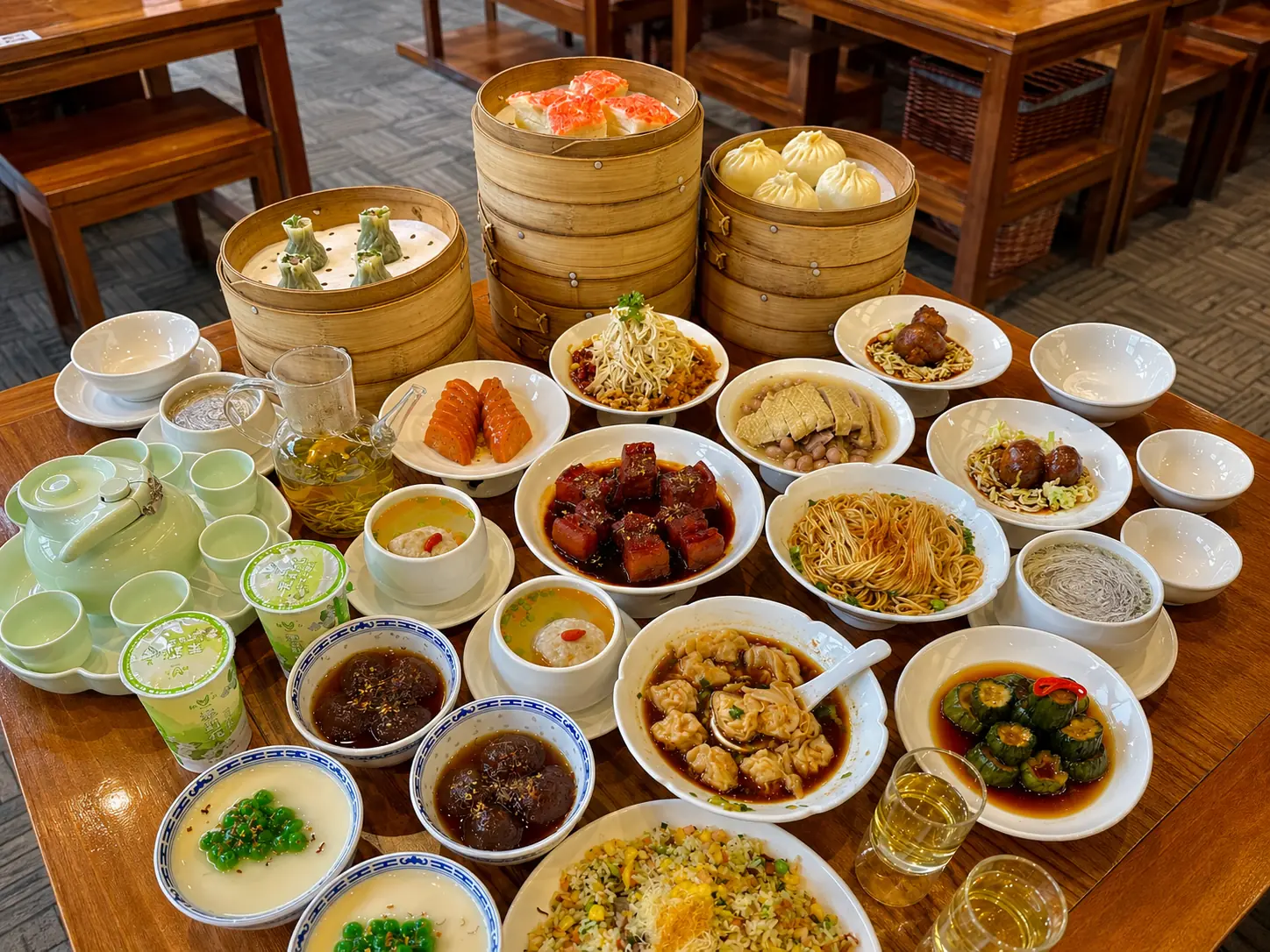
Yangzhou (扬州) is one of the core cities of Huaiyang cuisine (淮扬菜). UNESCO's Creative Cities Network page calls Yangzhou the cradle of Huaiyang cuisine and notes that it became a Creative City of Gastronomy in 2019. UNESCO Local travel writing also describes Huaiyang cuisine through light, fresh taste and exquisite cutting.
Yangzhou fried rice does not show knife work as dramatically as Wensi tofu (文思豆腐) or shredded dried tofu, but the logic is similar. Ingredients are cut small enough to distribute through the rice. The rice stays the center. Shrimp, egg, ham, chicken, mushrooms, peas, carrots, corn, bamboo shoots, or scallions add color, texture, and savory points without turning the bowl into a mixed stir-fry.
So do not ask only whether a bowl is "authentic." Ask better traveler questions: are the rice grains separate? Does the color look bright rather than muddy? Can you taste egg and shrimp clearly? Is the rice fragrant without being oily? Those clues tell you more than a strict ingredient checklist.
Treat origin stories as food lore
Local accounts connect Yangzhou fried rice to Sui-era stories and later Qing-era refinements. They are useful cultural context, but travelers do not need to treat them as a court record before ordering dinner.
What Belongs in Real Yangzhou Fried Rice
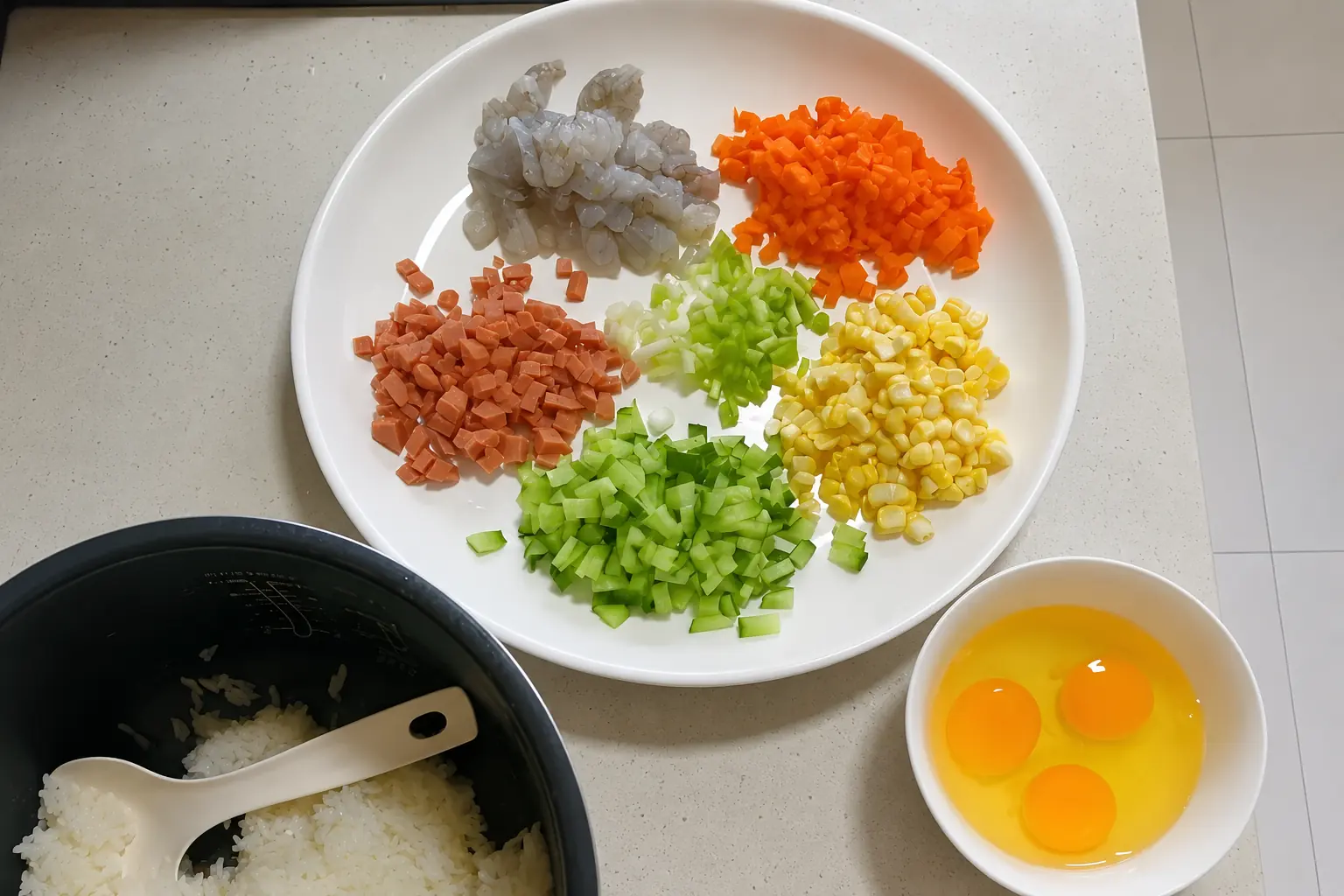
There is no single family version of Yangzhou fried rice. Yangzhou tourism pages note different versions: some with eggs, some with shrimp and eggs, some with ham and eggs. Another Yangzhou food overview describes the traditional image as a mix of ingredients such as egg, shrimp, corn, ham, mushroom, and carrot fried with rice. Yangzhou Travel / China Daily
Common cores include rice, egg, shrimp, ham or diced meat, peas, carrot, corn, mushrooms, bamboo shoots, and scallion. More elaborate restaurant versions may include sea cucumber, dried scallop, chicken, or other fine ingredients. Overseas versions often lean toward Cantonese-restaurant habits, with char siu, shrimp, peas, egg, and sometimes darker seasoning.
The ratio matters more than the bragging list. Rice remains the main subject. The ingredients should appear like small colored notes among the grains, not bury the bowl. A good version often aims for a lively red, green, yellow, white, and orange look, with a salty-fresh taste that stays light.
| Ingredient Role | Common Examples | What It Should Do |
|---|---|---|
| Rice base | Cooked rice, usually cooled before frying | Stay separate, hot, and lightly fragrant. |
| Egg aroma | Fresh egg, scrambled or coating grains | Add golden color and a soft egg fragrance. |
| Savory points | Shrimp, ham, chicken, dried scallop, sea cucumber | Add umami without taking over the rice. |
| Color and freshness | Peas, carrot, corn, mushroom, bamboo shoot, scallion | Keep each bite bright and varied. |
Rice Grains, Egg, and Wok Timing
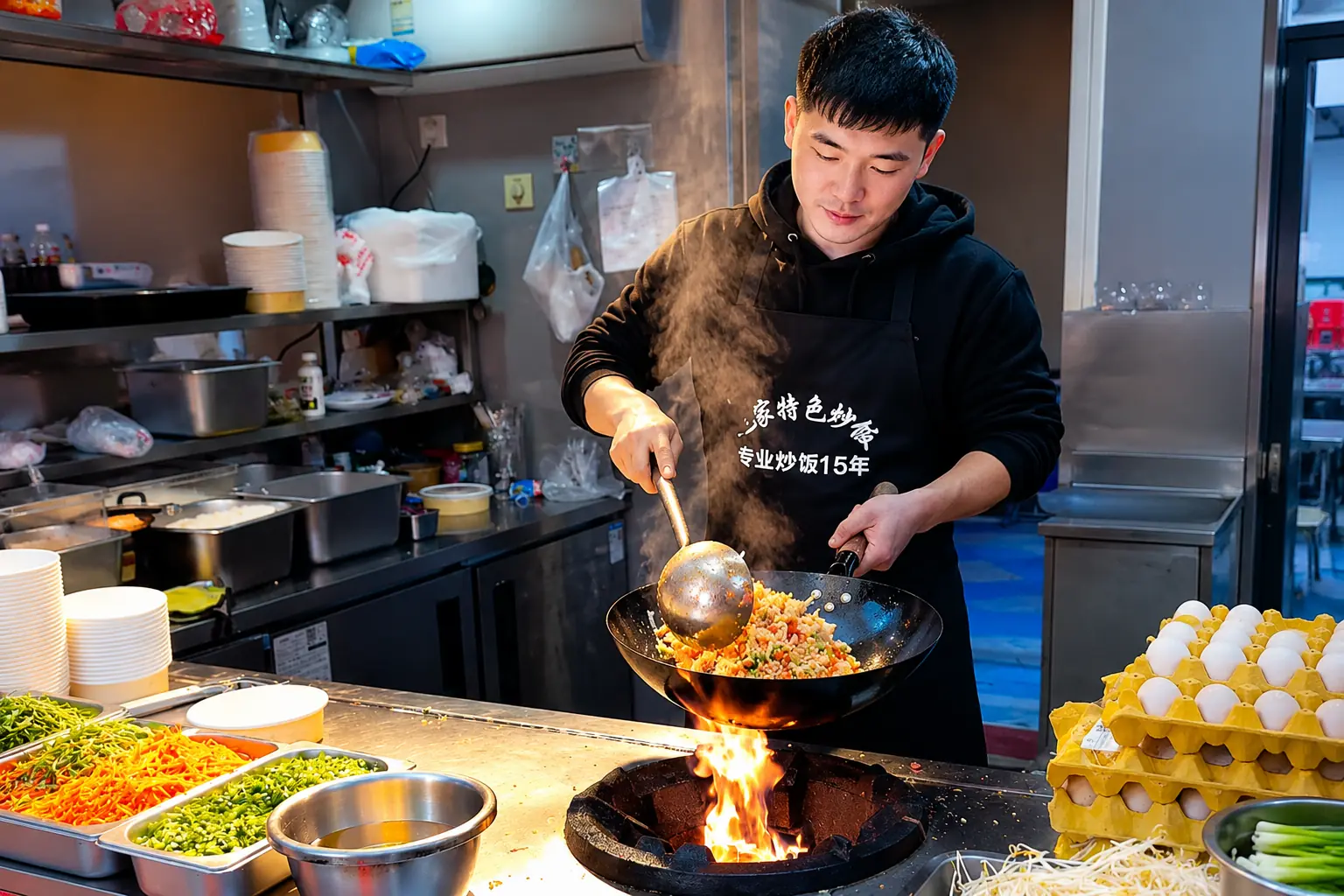
Good Yangzhou fried rice starts with rice that behaves. The grains should be cooked through but not mushy, dry enough to separate but not hard. Many cooks prefer cooled rice because the moisture is easier to control, but the useful travel rule is simpler: the finished bowl should not clump.
Egg can work in two ways. Some cooks coat the grains with egg so the rice looks softly golden. Others scramble the egg into small pieces distributed through the bowl. Either way, the egg should smell clean and fragrant, not fishy or rubbery.
Wok timing is the part you taste before you can explain it. If the pan is too cool, the rice turns greasy and dull. If the heat is high but the tossing is poor, the grains scorch and taste bitter. A good bowl arrives hot, loose, lightly aromatic, and dry enough that the plate does not finish with a puddle of oil.
- Separate grains: the rice should loosen easily under chopsticks or a spoon.
- Bright color: egg, shrimp, ham, and vegetables should stay visually clear.
- Light seasoning: salt and savory ingredients should lead more than dark soy sauce.
- No oil pool: a greasy plate bottom is a warning sign.
Yangzhou vs Overseas Takeout Fried Rice
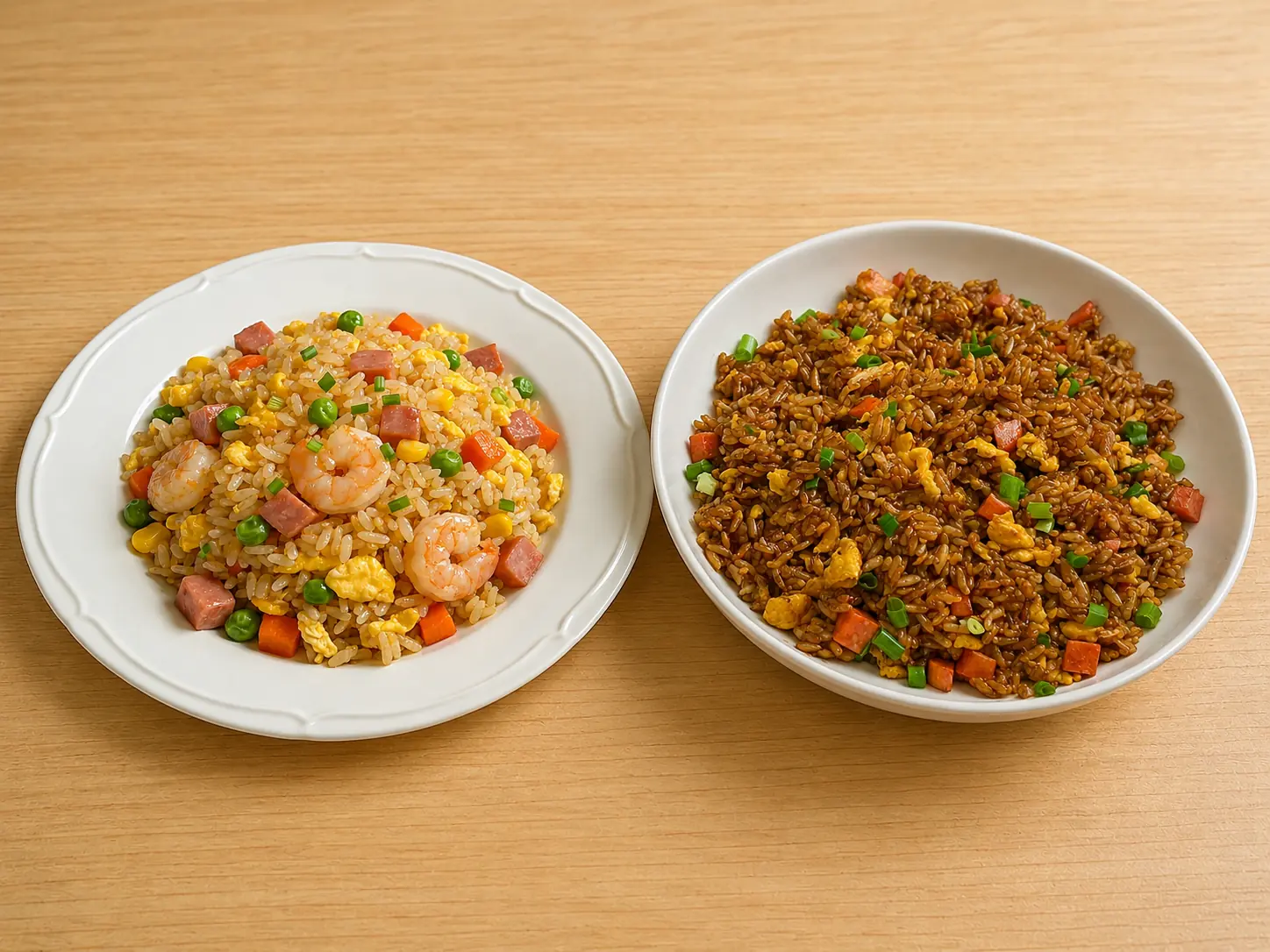
The overseas name "Yeung Chow fried rice" often comes through Cantonese-speaking restaurant culture, so many versions outside China follow a different logic: char siu, peas, shrimp, egg, darker color, stronger oil aroma, and takeout-box comfort. Those bowls can be good. They are just not always the Yangzhou city version travelers should expect in Jiangsu.
A Yangzhou bowl should not be blackened by dark soy sauce. Its color should come from egg, shrimp, ham, and vegetables. It should not taste mainly sweet, smoky, or thickly sauced. The best versions make you want a bite of another Huaiyang dish next, not a nap after one oily plate.
Use this distinction kindly. Do not scold a restaurant because it serves a local overseas style. Just understand that "Yangzhou" on an English menu is not always a passport back to Yangzhou.
← swipe to compare all options →
Yangzhou / Huaiyang style
Lighter and more controlled
- ✓Rice remains the main subject.
- ✓Color comes from egg, shrimp, ham, and small vegetables.
- —Best as part of a Huaiyang meal.
Bright grains
restrained seasoning
Overseas Yeung Chow style
Often Cantonese takeout-adjacent
- ✓Comforting and widely available outside China.
- —May be heavier, oilier, or darker than Yangzhou versions.
- ✗Do not use it as your only standard for the dish.
Char siu common
darker versions possible
Restaurant styles vary. This comparison helps with expectations, not gatekeeping.
Where to Try It in Yangzhou
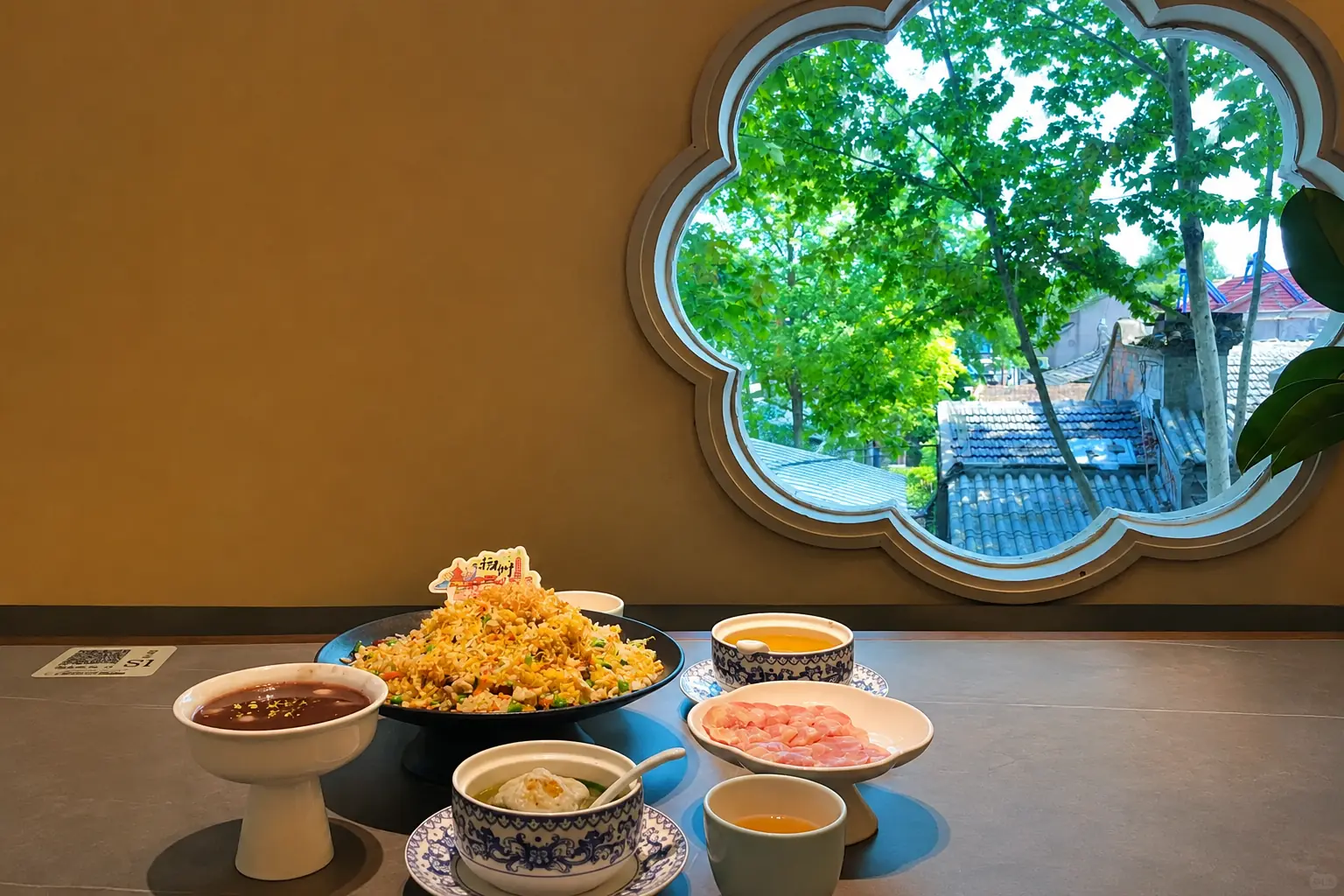
Yangzhou is the right place to take the dish seriously, not because every bowl is automatically excellent, but because the full Huaiyang food context is around it. Yangzhou travel writing says the dish can be eaten in many restaurants in the city, and China Daily travel coverage notes it is nearly impossible to miss because almost every restaurant has it on the menu. China Daily
Choose the restaurant first, then the fried rice. A serious Huaiyang restaurant, teahouse, hotel dining room, or well-reviewed local restaurant gives you a better chance than chasing a bowl from a random tourist-street counter. Yechun Teahouse (冶春茶社), Fuchun Teahouse (富春茶社), Quyuan (趣园), Yangzhou banquet-style restaurants, and food areas around Slender West Lake (瘦西湖) often appear in Yangzhou food planning. Treat them as research directions, not eternal rankings.
If you have only one Yangzhou day, put the fried rice at dinner. Walk Slender West Lake, Dongguan Street (东关街), the Grand Canal Museum, or a garden route during the day; then sit down for Huaiyang dishes and let the fried rice close the table.
Decision shortcut
Best way to fit it into a Yangzhou day
One meal only
Order Yangzhou fried rice as part of a Huaiyang dinner, not as a solo bowl.
Traveling with kids
Use it as a safe rice anchor, but ask about shrimp, egg, ham, and pork.
Already eating morning tea
Save fried rice for lunch or dinner; morning tea has its own bun, noodle, and dumpling rhythm.
How to Order a Balanced Meal
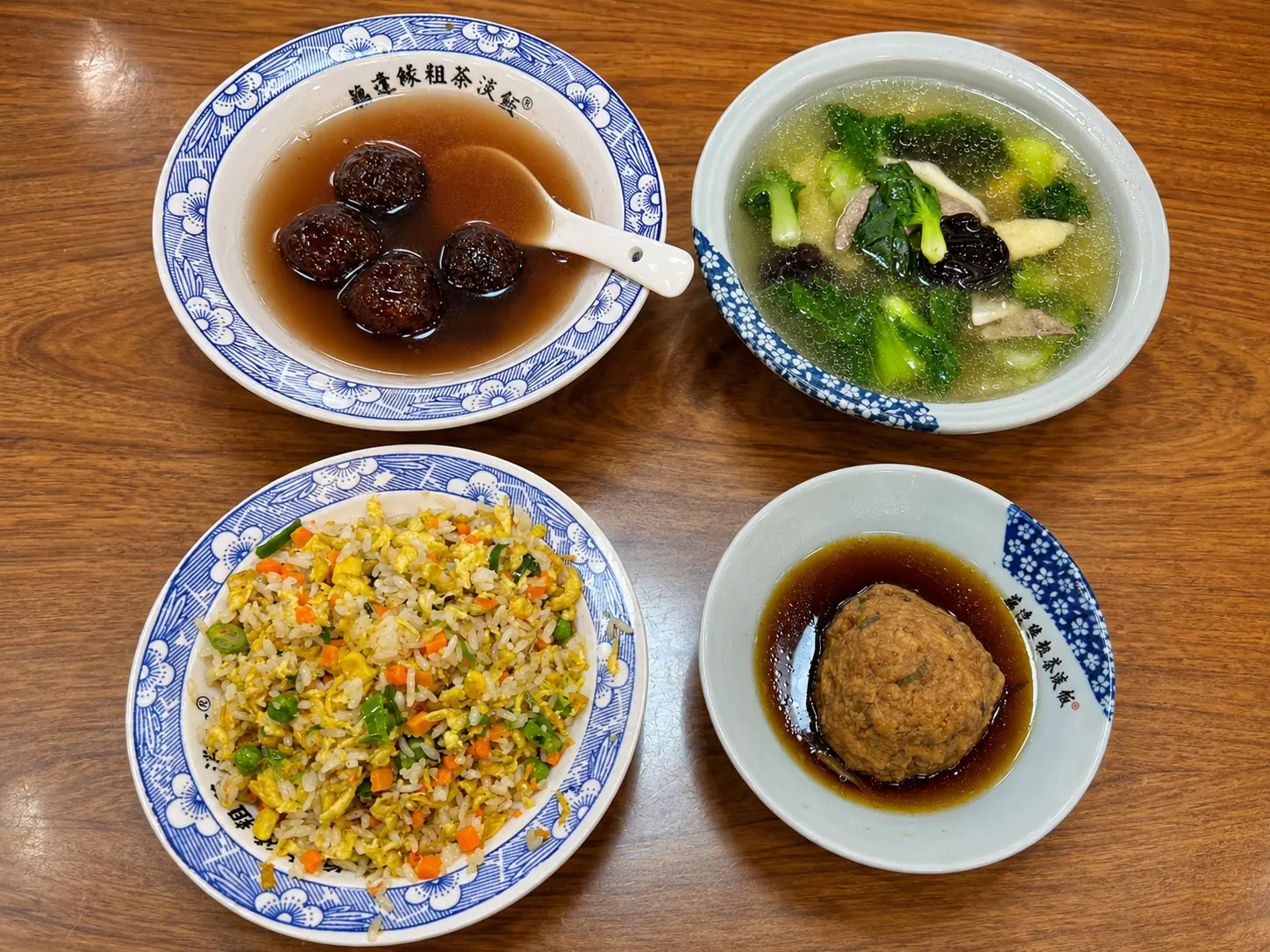
For two people, do not order one large fried rice and stop. A better Huaiyang table is one soft or brothy dish, one vegetable, one soup or tofu dish, and Yangzhou fried rice as the rice anchor. Lion's Head meatballs (狮子头), shredded dried tofu, Wensi tofu, river fish, seasonal greens, or a clear soup all work better than another heavy starch.
For four people, fried rice can share the table with Lion's Head meatballs, salted goose or duck, river shrimp, one seasonal vegetable, and a light soup. The point is balance. Yangzhou fried rice is famous, but it should not crowd out the dishes that explain why Huaiyang cuisine matters.
| Group | Smart Order | Why It Works |
|---|---|---|
| Solo | Small fried rice plus soup or one light dish | You get the classic without turning dinner into only starch. |
| Two people | Fried rice, one Huaiyang main, greens, soup or tofu | The rice supports the table instead of replacing it. |
| Four people | Fried rice, Lion's Head, river fish or shrimp, vegetable, soup | You can cover rice, broth, knife work, and seasonal ingredients. |
Dietary Notes and Ordering Mistakes to Avoid
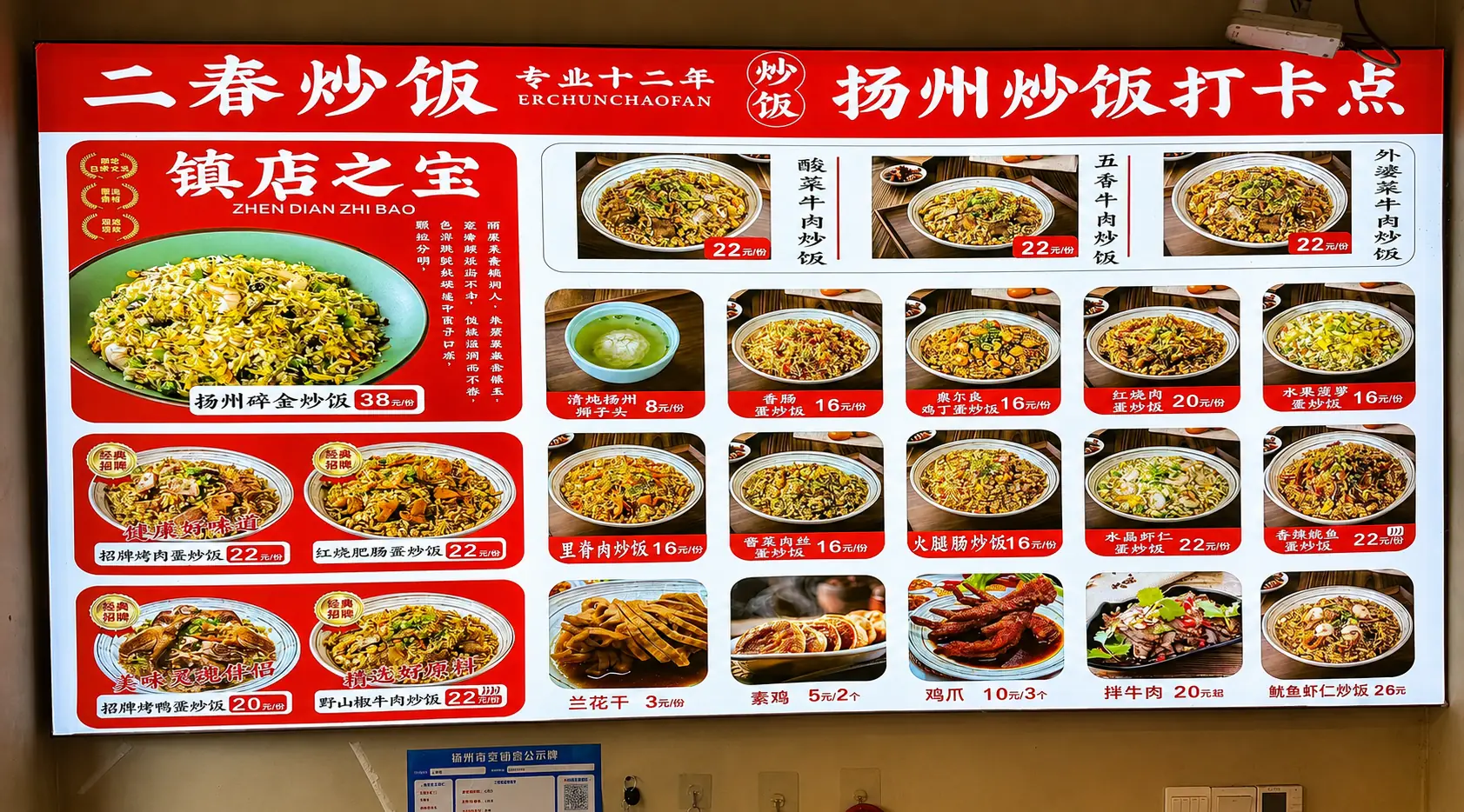
Yangzhou fried rice is friendly for spice-sensitive travelers, but it is not automatically safe for every diet. Common risks include shrimp, egg, ham, pork, chicken, sea cucumber, dried scallop, wheat in soy sauce, oyster sauce or other gluten-containing seasonings, sesame oil, chicken powder, MSG-style seasoning powder, stock, scallion, and shared-wok cross-contact. Strict vegetarians should not assume "no meat" solves the problem, because the wok, seasoning, or stock base may still contain animal products.
Useful phrases are worth having ready, especially if allergies are serious.
| English | Chinese | Pinyin | Say It Like… |
|---|---|---|---|
| Yangzhou fried rice | 扬州炒饭 | yang zhou chao fan | yahng-joh chaow-fahn |
| No shrimp | 不要虾仁 | bu yao xia ren | boo yow shyah-ren |
| No ham | 不要火腿 | bu yao huo tui | boo yow hwaw-tway |
| No pork | 不要猪肉 | bu yao zhu rou | boo yow joo-roh |
| I am allergic to eggs | 我对鸡蛋过敏 | wo dui ji dan guo min | woh dway jee-dan gwaw-min |
| Can you make it without meat? | 可以做不放肉的吗? | ke yi zuo bu fang rou de ma | kuh-yee dzaw boo fahng roh duh mah |
The three most common traveler mistakes are easy to avoid: expecting dark soy-sauce fried rice, assuming more ingredients means better quality, and ordering fried rice as the whole meal. In Yangzhou, the dish is best when it helps you read the whole table.
Allergy note for strict travelers
If shrimp, egg, pork, gluten, sesame, or shellfish are serious issues, do not rely only on an English menu. Show the Chinese phrase, ask staff directly, and remember that fried rice is usually cooked in a shared wok.
Frequently Asked Questions
They are related names, but restaurant styles vary widely. Overseas Yeung Chow fried rice often reflects Cantonese takeout habits, while a Yangzhou version in Jiangsu should be lighter, brighter, and less soy-heavy.
Beyond This Guide
Yangzhou fried rice is the easiest entry point into Huaiyang cooking, but it should lead you to the rest of the table. Pair this guide with Lion's Head meatballs, the Nanjing food guide, and the Grand Canal China guide to understand why Yangzhou's food story is bigger than one famous bowl.
© gochinafreely.com — Original guide by Go China Freely.