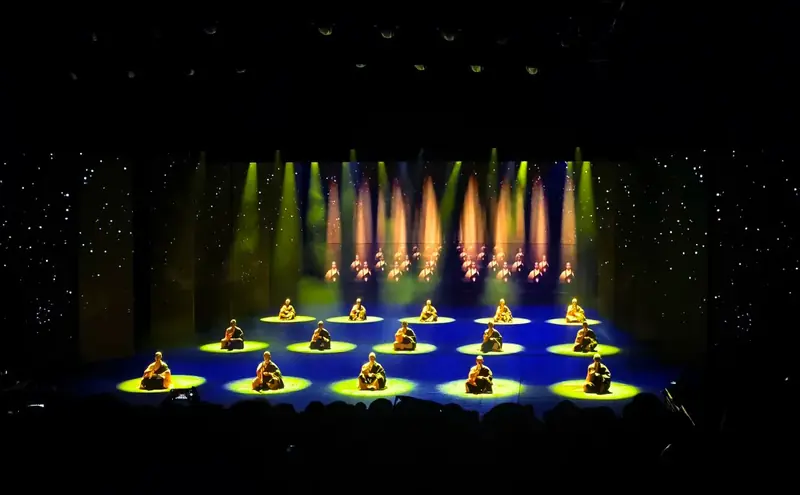
Current visit basics
The current Ctrip listing shows a 20:00-21:00 performance, venue hours of 09:00-22:00, and adult tickets from about ¥88. Treat those as access-date examples; the checkout page and venue notice control. Check the current venue listing
Set expectations
A Sound Disappearing in Real Time
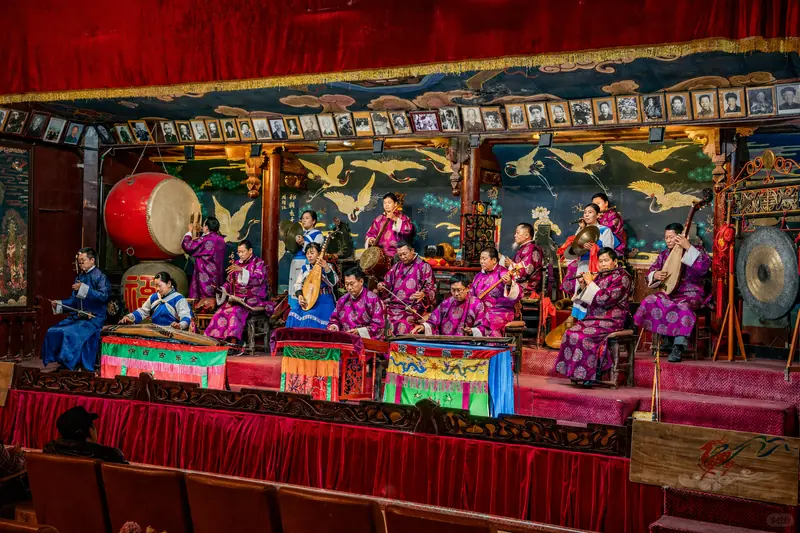
In a small theater inside Lijiang Old Town, musicians in purple robes play a repertory passed on through memory, teacher-led practice, and traditional notation. It is one of Lijiang's quieter evenings: an hour built around instruments, bilingual context, and the people still carrying the tradition.

Lijiang has mountain spectacles, bar-street singers, and staged folk shows. Naxi Ancient Music is different because its value is not scale.
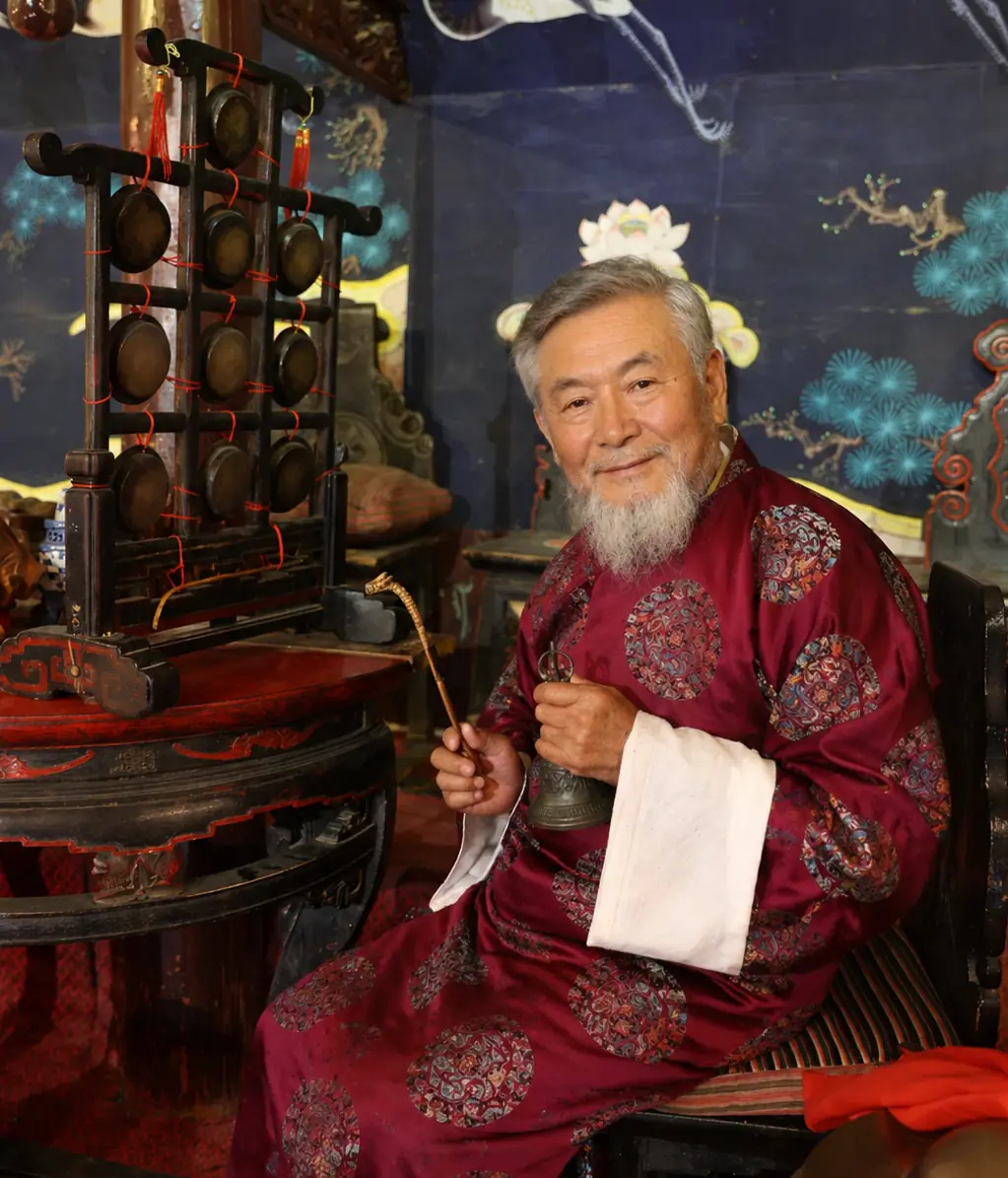
The current ensemble brings elder masters and younger players together in a memory-led performance practice.
When a musician leaves, small interpretive details can go with them: a tempo choice, a fingering habit, or a pause before the next phrase. The concert therefore feels less like spectacle and more like a cultural handover witnessed in public.
Set your expectations before you go
The concert is slow, seated, and meditative. Choose it for close listening and living heritage; choose Impression Lijiang when a large outdoor spectacle is the priority.
Six Centuries from Court to Mountain Valley
Song-Yuan
repertory transmission
Ming 1381
local chronology
600+ years
local continuity claim
Lijiang reporting traces some tunes from Sichuan and Guizhou, while current local and venue accounts use 1381 for the Dongjing tradition in Lijiang. The 600-plus-year figure describes continuity in local accounts, not an unchanged score.
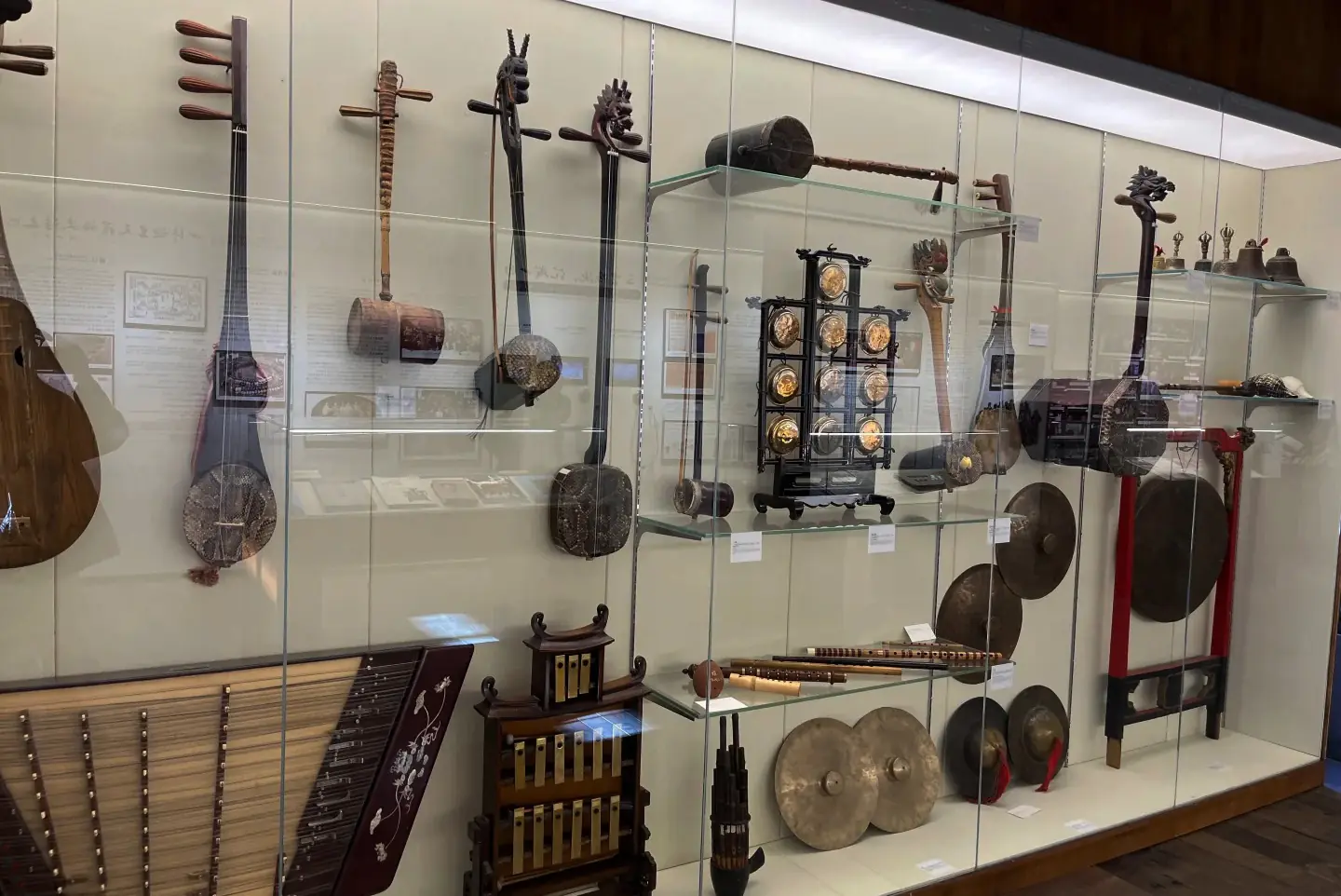
Naxi Ancient Music is a layered local tradition rather than a score lifted intact from one imperial court. Lijiang reporting traces part of the repertory to tunes that reached the region from Sichuan and Guizhou during the Song-Yuan period; Dongjing music (洞经音乐) later became a central ritual and ceremonial strand.
Naxi musicians absorbed those materials into local practice, adding instruments such as sugudou and straight flutes while transmitting pieces through teachers, memory, and gongche notation. Huangjing music (皇经音乐) is better understood as a related ritual strand than as proof of one unbroken court lineage.
Local and promotional accounts often call the tradition a “living fossil.” Treat that as a metaphor for surviving repertory, instrument forms, and performance habits—not as a claim that every note has remained frozen for six centuries.
What You'll Hear in One Hour
The concert runs for about one hour at Dayan Naxi Ancient Music Hall inside Lijiang Old Town. Expect a formal seated ensemble, short introductions, and long instrumental pieces rather than dramatic plot or dance.
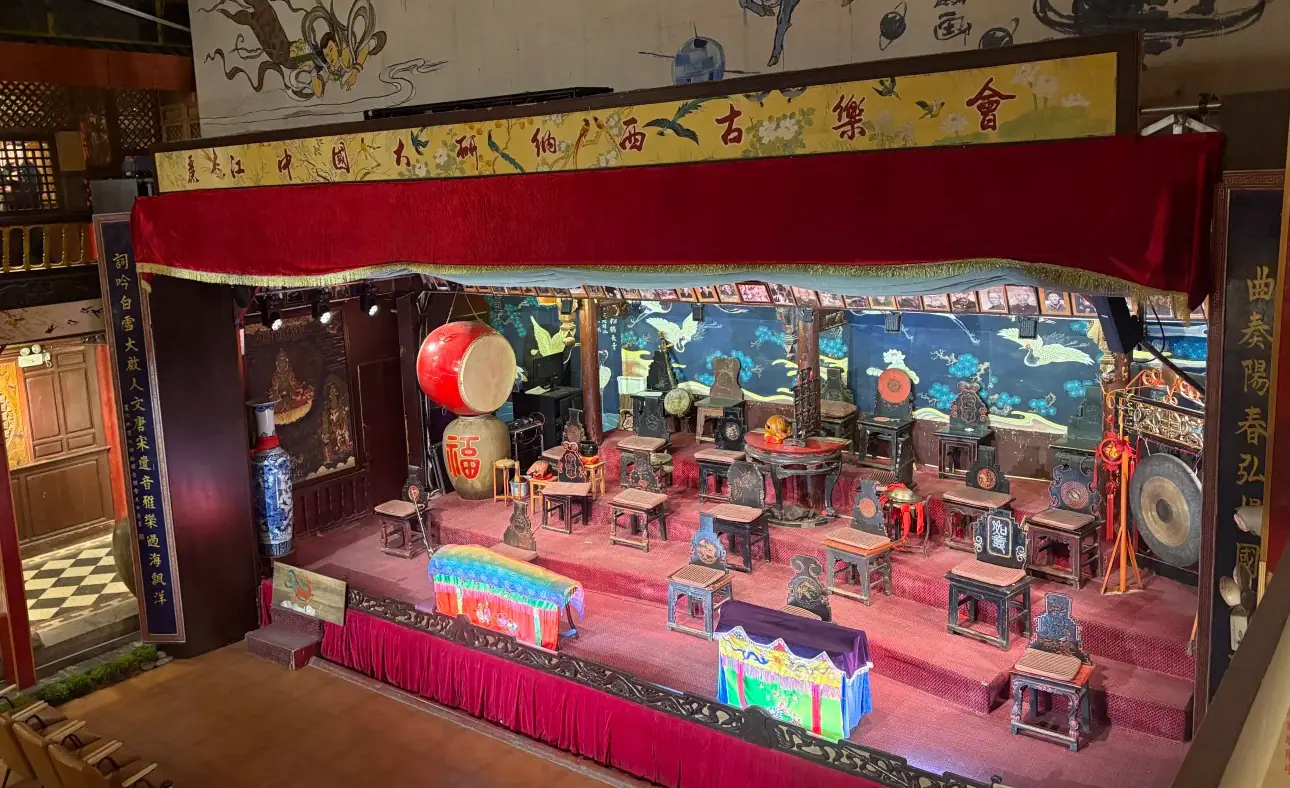
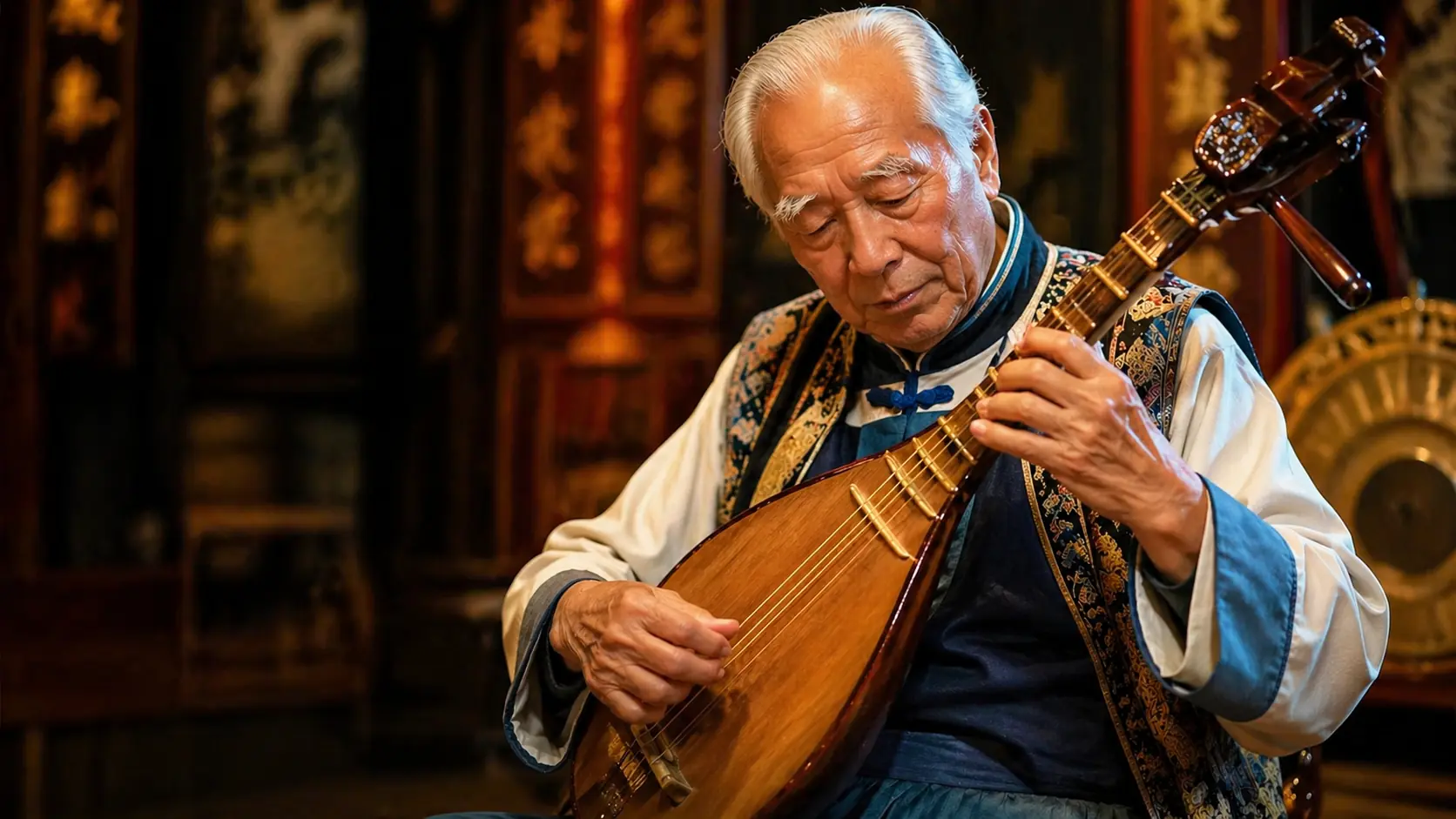
Bent-neck pipa
曲项琵琶
A pear-shaped lute whose Lijiang form preserves older construction and playing features. Listen for its bright plucked attack in the string texture.
Naxi plucked lute
苏古笃
A distinctive Naxi string instrument with Central Asian connections in scholarly accounts. Its compact, dry tone sits inside slower ensemble passages.
Cloud gongs
云锣
A frame of small suspended gongs adds high, clear accents above strings and drums. The exact percussion setup can change by programme.
Panpipes
排箫
Rows of vertical pipes create an airy color distinct from the sharper transverse flute. The display and current programme decide what appears.
Bamboo flute
笛子
The flute carries clear melodic lines and gives first-time listeners an easy anchor inside a long instrumental piece.
Large drum
大鼓
The drum gives ceremonial passages pulse and weight within a broader percussion texture that can include gongs and cymbals.
🕯️Ritual and court-derived layer
Slow Dongjing and related ceremonial material gives the concert its formal, processional character. Older repertory fragments survive through a Lijiang performance tradition rather than a museum reconstruction.
🌐Naxi adaptation and bilingual bridge
Local instruments and melodic habits give the imported layers a Lijiang identity. Recent programmes add Chinese and English explanations so first-time listeners can place the quieter passages.
What it feels like: the pace is slow, the melodies are long, and the timbres may feel unfamiliar at first. Follow one flute, lute, or gong line for a few minutes; the larger texture becomes easier to hear without turning the section into an instrument checklist.
Xuan Ke and the Orchestra He Rebuilt
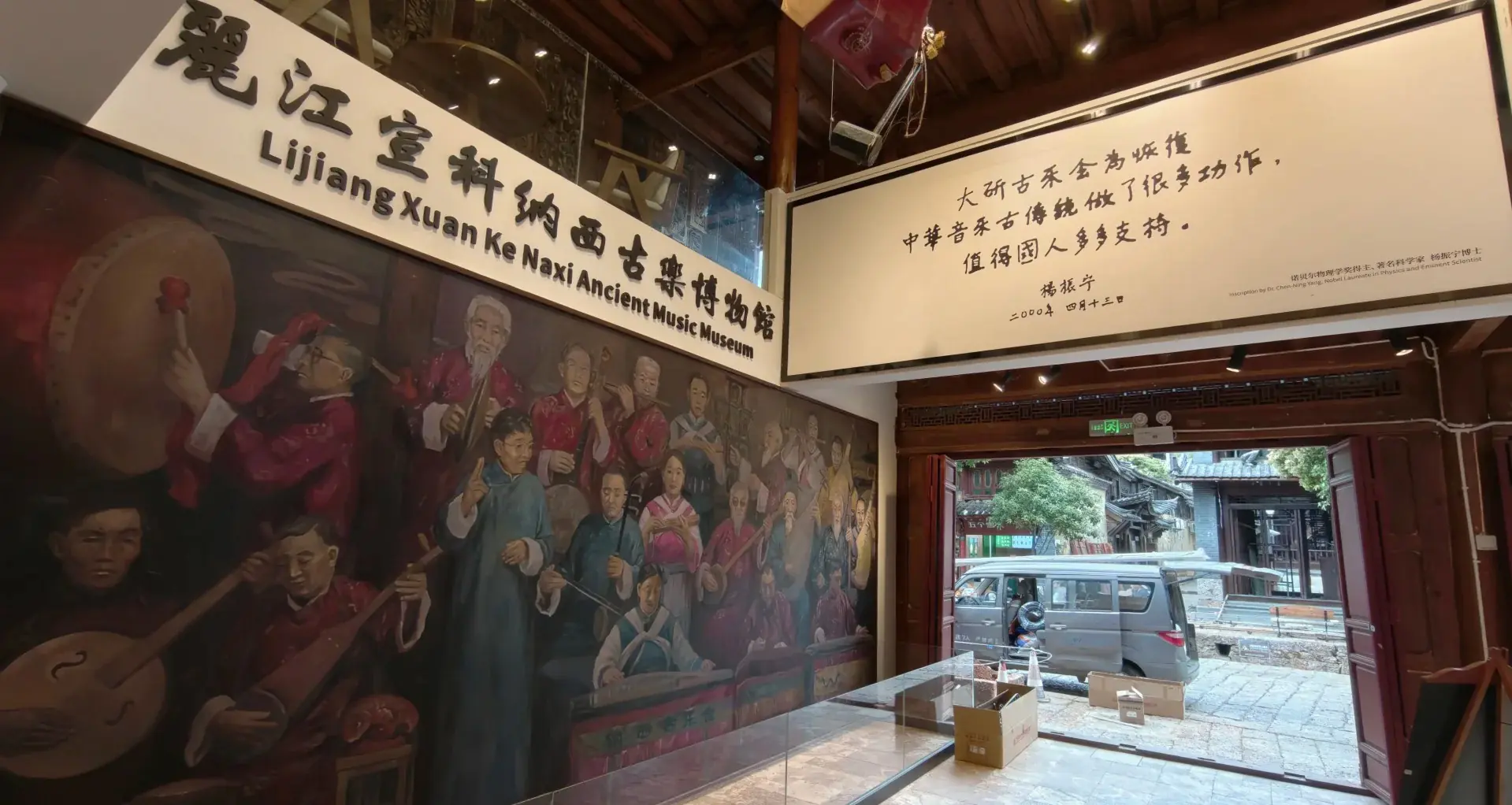
You cannot discuss Naxi Ancient Music without Xuan Ke (宣科, 1930-2023). The musician, narrator, organizer, and cultural translator helped rebuild a public ensemble and bring its Lijiang repertory to audiences in China and abroad.
His bridge was also linguistic. Obituaries and retrospectives document his English explanations for foreign audiences, a practice that helped make an unfamiliar musical system more accessible and shaped the bilingual context visitors still encounter.
Xuan Ke's role in the revival
- 1
Lijiang beginnings
1930s-1950sBorn in Lijiang in 1930, Xuan Ke developed an enduring interest in local music and in explaining culture across languages.
- 2
A difficult middle period
Mid-20th centuryOfficial retrospectives describe years of hardship and an interruption to public cultural work without turning that period into a performance legend.
- 3
Rebuilding public performance
1980s-1990sXuan Ke worked with surviving musicians to restore public performances and introduced the ensemble to wider Chinese and international audiences.
- 4
Study, library, and succession
2021-2024The Xuan Ke Study opened upstairs in 2021 and became a Lijiang Library Naxi Ancient Music branch in 2024; after Xuan Ke died in 2023, Xuan Zhilian and the ensemble continued the work.
Succession remains the practical challenge. Official 2024 coverage described 17 performers with an average age above 60 and several members in their 90s, while newer reports also show young students and musicians learning the repertory. The concert sits inside that handover rather than outside it.
Naxi Music Showtimes and Ticket Options
20:00
current start
~60 min
listed runtime
from ¥88
adult live example
09:00-22:00
listed venue hours
These are access-date listing details: recheck the selected date, price, and checkout terms. Listed venue hours do not mean every room is open throughout the day.
Current adult listing
from ¥88 · 20:00-21:00
Accessed 20 July 2026. Same-day online ordering may be offered, but cancellation and seat terms vary; check the dated checkout page before paying.
Current child rule
height decides the category
The current listing uses a child ticket for 1.2-1.4 m, free entry under 1.2 m, and an adult ticket over 1.4 m. Recheck before payment.
Legacy draft figures
unverified: ¥58 and ¥398+
The pre-optimization draft recorded a child amount around ¥58 and an add-on amount of ¥398+ without a recoverable source. They are preserved for audit continuity only; do not use them for planning.
The earlier draft also referenced A/B/C seat classes without a recoverable source. Do not treat those classes or legacy figures as planning prices; the dated listing and checkout terms control now.
Use the Lijiang things-to-do guide to decide which experiences deserve daylight and whether this concert is worth one of your limited Old Town evenings.
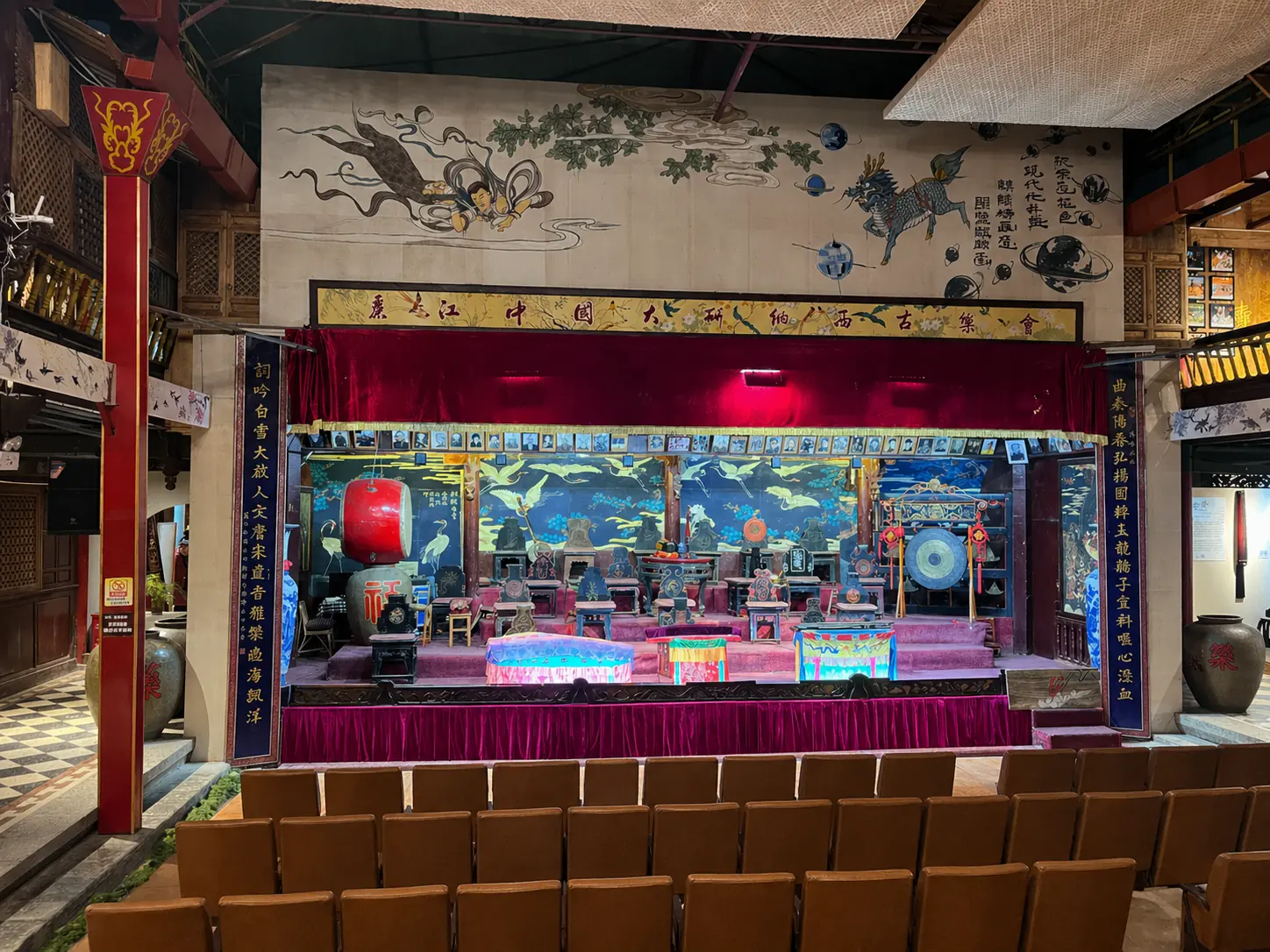
The venue is Dayan Naxi Ancient Music Hall at No. 86 Mishi Lane, East Street (东大街密士巷86号), near the Big Water Wheel (大水车) inside Lijiang Old Town.
The current Ctrip listing may accept same-day online orders, but that is not a walk-in guarantee. Check the selected date and holiday demand before going. If a seller offers seat choice, front-center is the clearest angle for hands, faces, and instrument details; you still choose, book, and pay the venue or seller directly.
Getting to Dayan Music Hall
Dayan Naxi Ancient Music Hall (大研纳西古乐会)No. 86 Mishi Lane, East Street(Google | Amap)
The hall sits inside the old-town lanes, and drivers do not take visitors to its door. Plan to walk the final stretch and leave a buffer for crowds or a wrong turn.
- Start from Sifang Street(四方街)- Allow roughly 10 minutes; crowds and navigation can stretch the estimate.
- Or get dropped near Big Water Wheel(大水车)- A practical outside-old-town reference point for the final walk.
- Follow East Street into Mishi Lane(东大街密士巷)- Allow roughly 3 minutes from the water-wheel area, plus crowd time.
- Enter the concert hall(大研纳西古乐会)- An editorial 19:45 target leaves 15 minutes before the current 20:00 start.
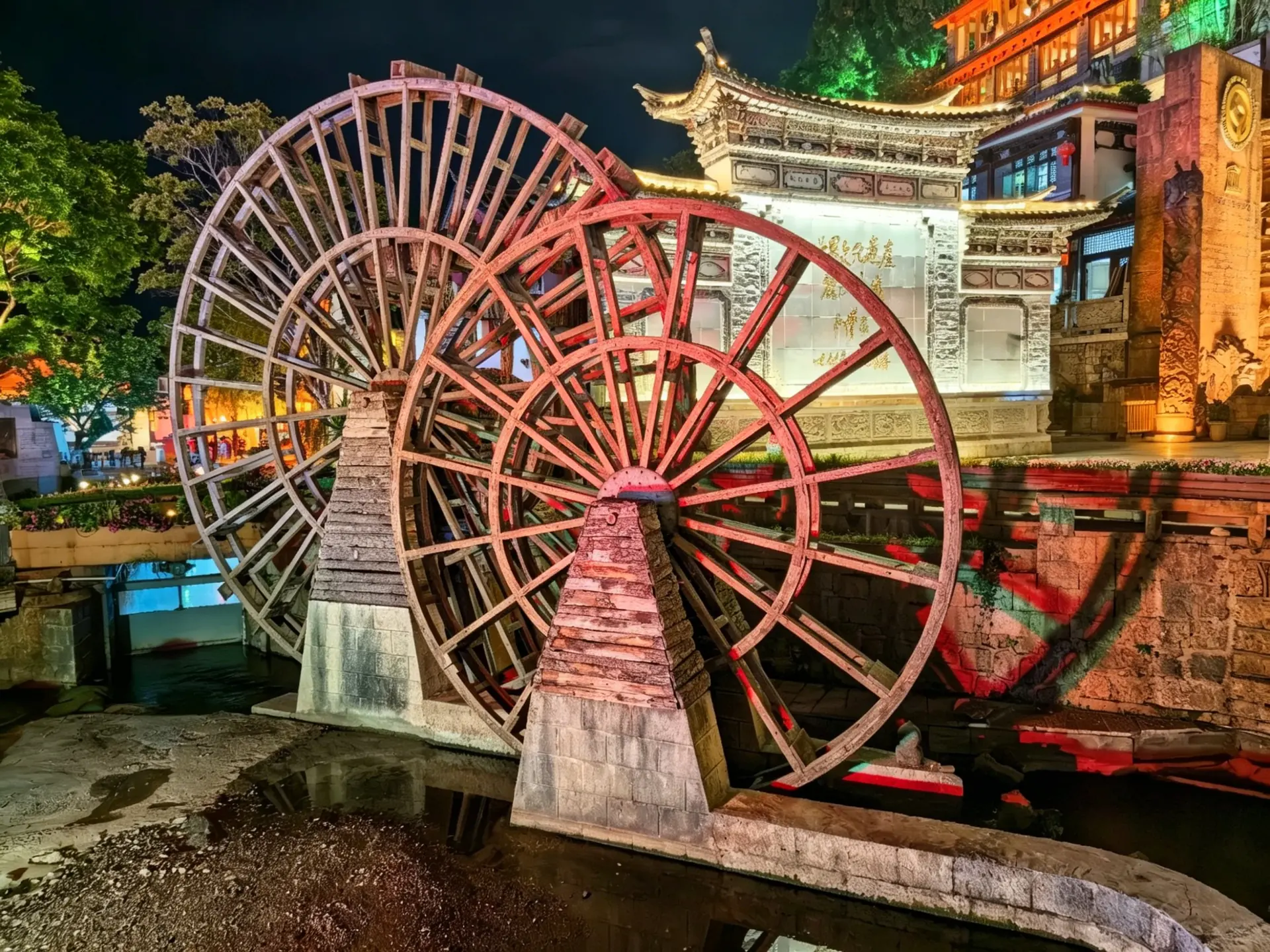
If you are staying in Dayan Old Town, walk from your guesthouse and allow extra time in the lanes. From outside the old town, use the Big Water Wheel (大水车) as a practical drop-off reference, then continue inward on foot.
The short walk can become part of the evening: dinner near Sifang Street, the current 20:00 concert, then a lantern-lit stroll. Recheck the show before fixing the meal time.
Tips Most Visitors Learn Too Late
🎭What the concert rewards
Choose it for close listening, not stage spectacle. Official 2024 coverage counted 17 performers with an average age above 60 and several in their 90s; memory-led learning, notation, and teacher practice all matter to the handover.
Recent programmes use Chinese and English explanations, but the exact host and amount of context can change. Ask before photographing, keep flash off, and avoid recording over other guests.
↔️This concert or Impression Lijiang?
Impression Lijiang is a large daytime outdoor spectacle at Jade Dragon Snow Mountain. Naxi Ancient Music is an evening indoor ensemble in the old town. They answer different travel moods and can fit the same stay when weather, altitude, and transfer time allow.
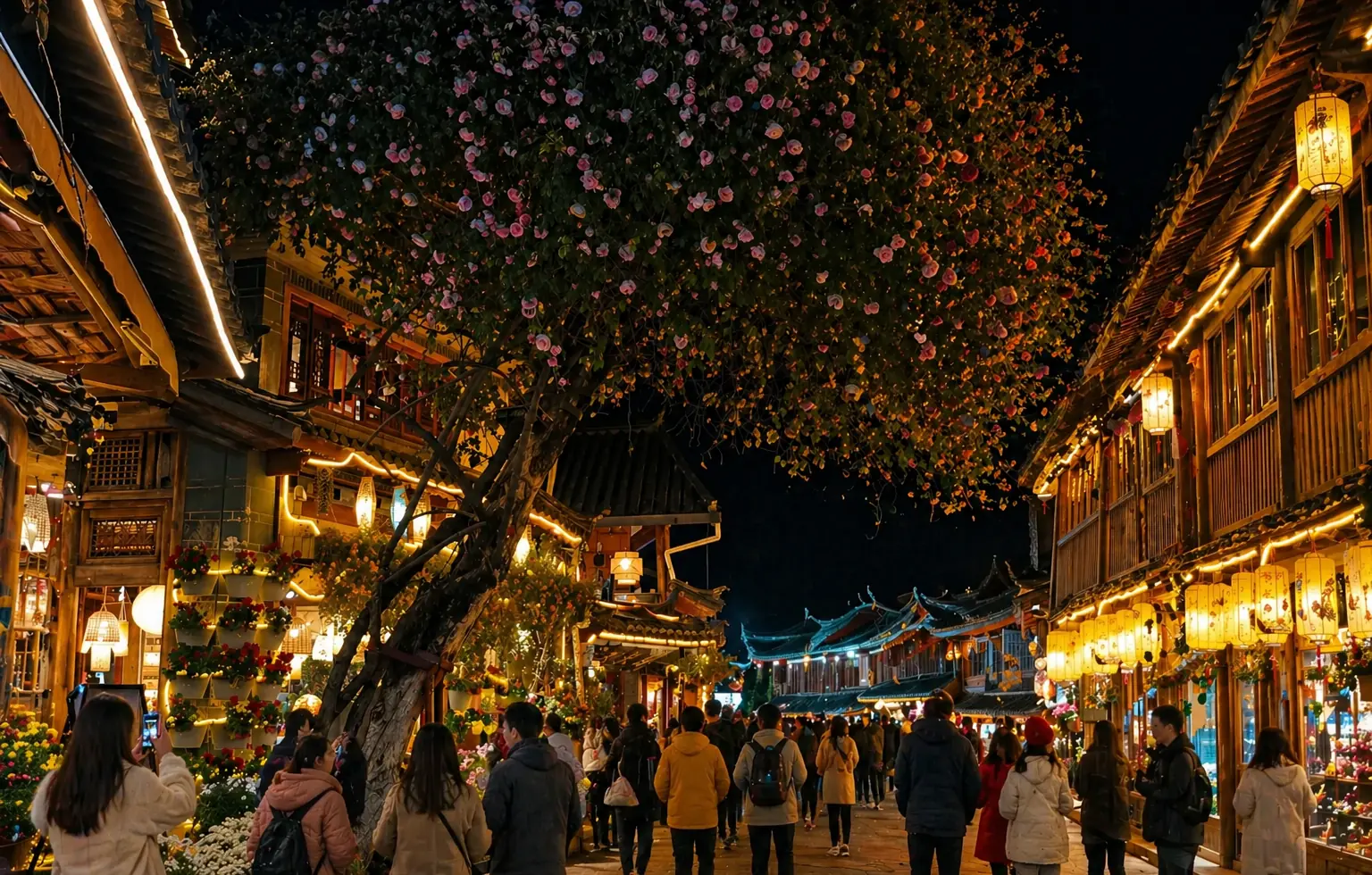
An editorial 19:45 arrival target gives you 15 minutes before the current listed start. It is a calm-entry buffer, not a promise of walk-in tickets or last-minute seat choice.
Pair a rechecked concert time with dinner near Sifang Street and a slow walk afterward. Keeping the sequence to one compact old-town evening protects the atmosphere without turning the night into another transfer plan.
Frequently Asked Questions
Recent reporting documents Chinese and English explanations, though the host and amount of context can change by programme. The concert is primarily instrumental, so a first-time listener can also follow one flute, lute, or gong line without understanding every spoken introduction.
Sources checked for this guide
- Ctrip · Xuan Ke Naxi Ancient Music current listing: current address, listed hours, show window, adult starting-price example, same-day ordering, and child-height policy
- Yunnan Ethnic Affairs · Iranian musician and Naxi Ancient Music: 20:00 performance, memorization practice, and current transmission
- Yunnan official culture coverage · Lijiang Ancient Town: current ensemble size, age profile, Xuan Zhilian succession, and continuing performance
- Xinhua Yunnan · Naxi Ancient Music reporting: current 20:00 performance, ensemble instruments, and living-transmission context
- Zhejiang Daily · Naxi Ancient Music feature: 20:00-21:00 performance window and current Chinese-English introductions
- Lijiang Media · history of the Dayan ensemble: Song-Yuan transmission and local additions including sugudou, bobo, and straight flute
- Lijiang Media · bent-neck pipa craft: instrument form, construction, and current preservation practice
- Lijiang Media · Xuan Ke Study: November 2021 opening, second-floor location, and cultural-reading role
- National Reading · Lijiang Library music branch: 2024 branch-library upgrade and continuing public cultural activity
- Yunnan Daily · Xuan Ke obituary: 1930-2023 dates, revival work, English explanation, and international presentation
Beyond This Guide
Lijiang's evenings are only one part of the region: Jade Dragon Snow Mountain, Shuhe Ancient Town, Tiger Leaping Gorge, and Shangri-La all change how you should pace your stay. Use this concert as the quiet old-town anchor, then compare the surrounding days against weather, altitude, and transfer time before fixing the sequence.
Explore more in Lijiang and Yunnan:
- Impression Lijiang: The Snow Mountain Show at 3,100 Meters — Zhang Yimou's open-air spectacle with Jade Dragon Snow Mountain
- The Song of Everlasting Sorrow: Xi'an's Epic Night Show at Huaqing Palace — Tang Dynasty love tragedy
© gochinafreely.com — Original guide by Go China Freely.