Current visit basics
The official service page lists the current performance schedule, 30-minute duration, ¥50 adult ticket and ¥30 eligible discount ticket. See current rules
Reserve and verify
A 2,400-Year-Old Bronze Orchestra in Wuhan
In 433 BC, Marquis Yi of Zeng (曾侯乙) was buried with 65 bronze bells. More than 2,400 years later, the originals are held by Hubei Provincial Museum (湖北省博物馆), while a replica set brings their sound into a 30-minute concert. This guide explains what the bells record, how to hear them, and how to fit the museum into a Wuhan day.
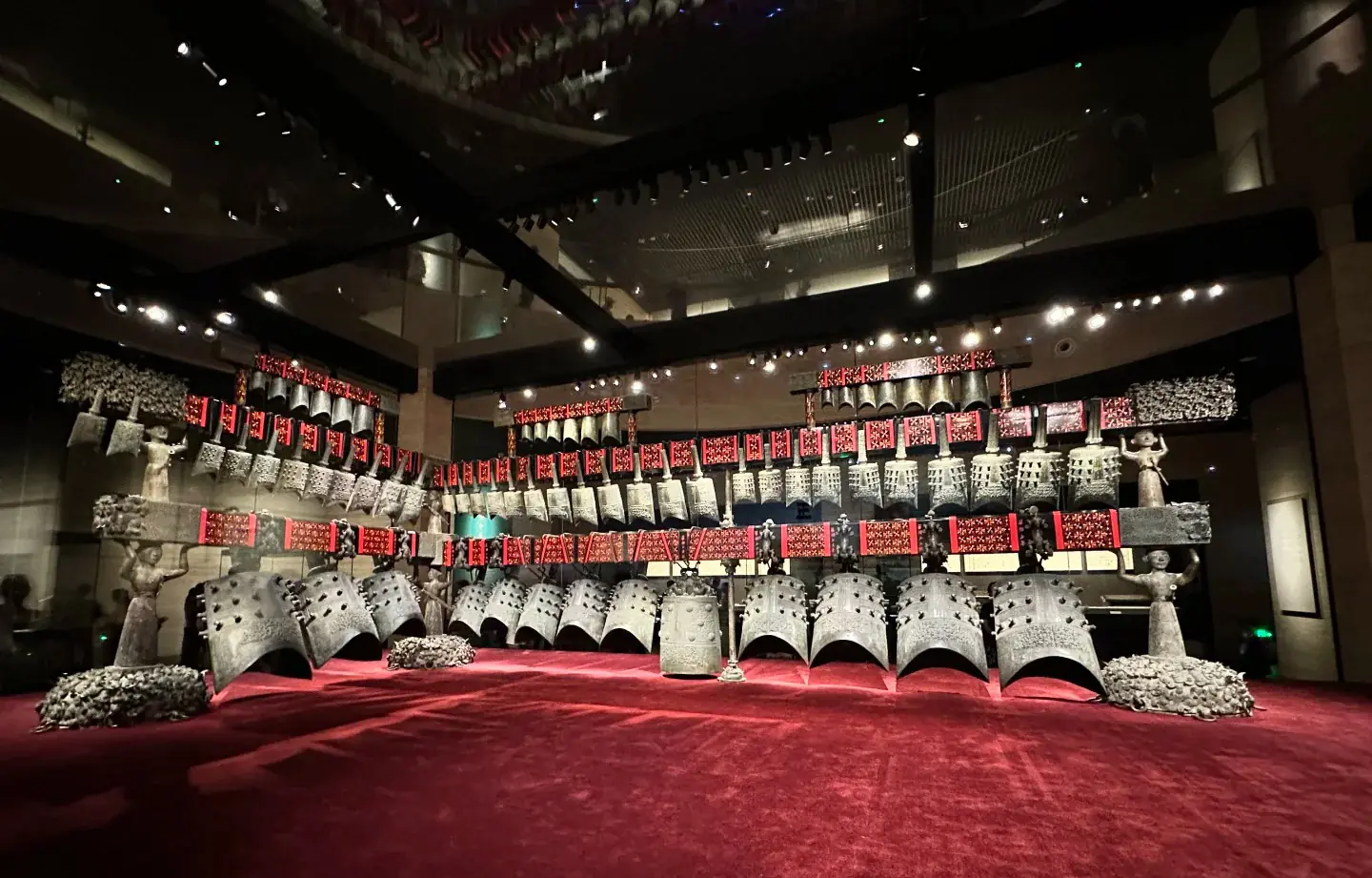
Marquis Yi ruled the state of Zeng in what is now Hubei Province. His tomb held more than 15,000 burial objects, including a complete set of 65 bronze bells arranged as a playable orchestra.
When archaeologists excavated the tomb in Suizhou (随州) in 1978, the bells still preserved their musical sound. The originals are now museum objects; the concert uses a replica set so visitors can hear the musical system without risking the archaeological bells.
Buried in 433 BC
The complete set belonged to Marquis Yi of Zeng and survived in his tomb for more than two millennia.
Excavated in 1978
The discovery in Suizhou preserved both physical inscriptions and playable pitch information.
UNESCO Register, 2025
UNESCO recognized the bells as documentary heritage because their inscriptions and sounds record a 5th-century BC musical theory and tuning system.
The important shift is from looking to listening: study the archaeological set first, then use the replica concert to understand what the inscriptions and carefully cast bell shapes made possible.
65 Bells, Five and a Half Octaves
The bianzhong is not simply "a row of bells." It is a precision-engineered instrument system where casting shape, strike point, and written inscriptions all matter.
Structure and scale
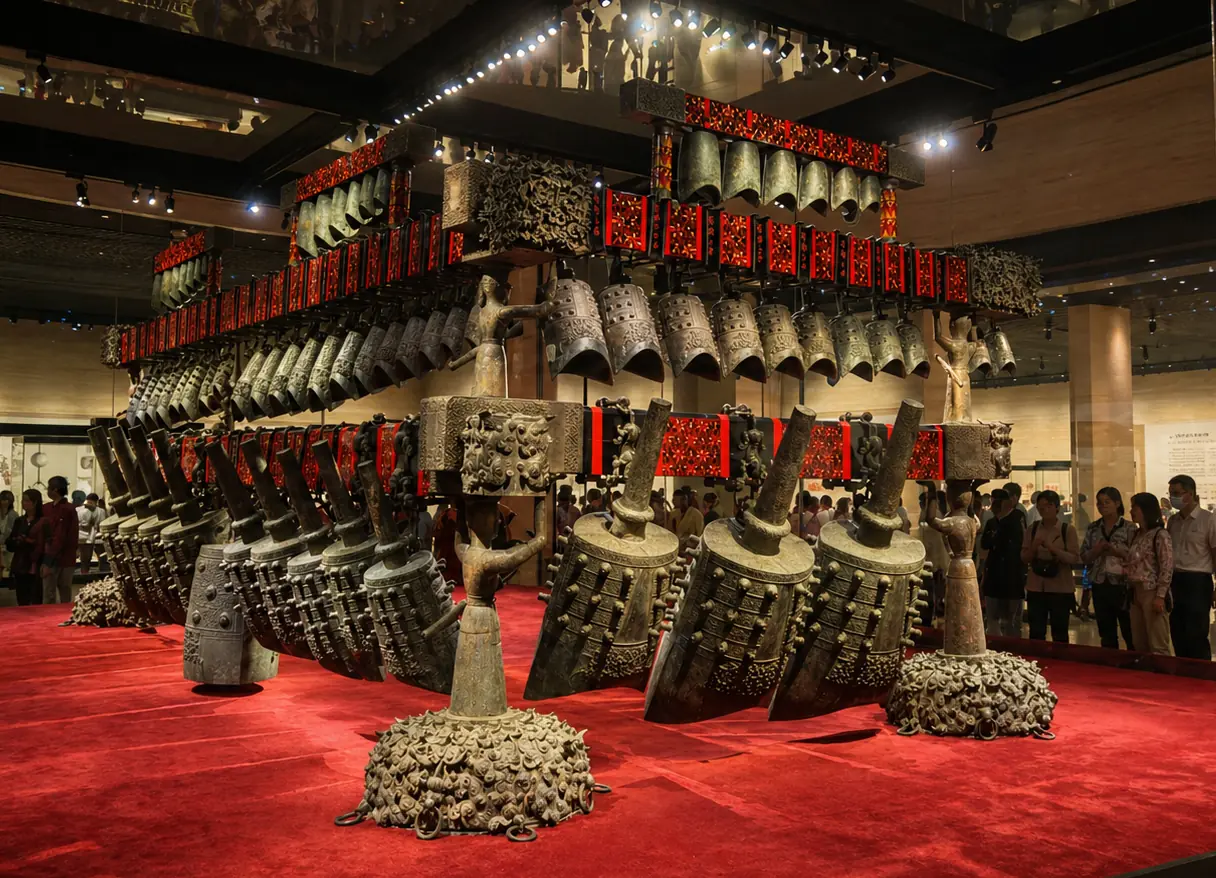
The set has 65 bells in three tiers and eight groups. Its L-shaped bronze-and-wood rack is 7.48 m long and 2.65 m high; the largest bell stands 152.3 cm tall and weighs 203.6 kg.
Sound and inscriptions
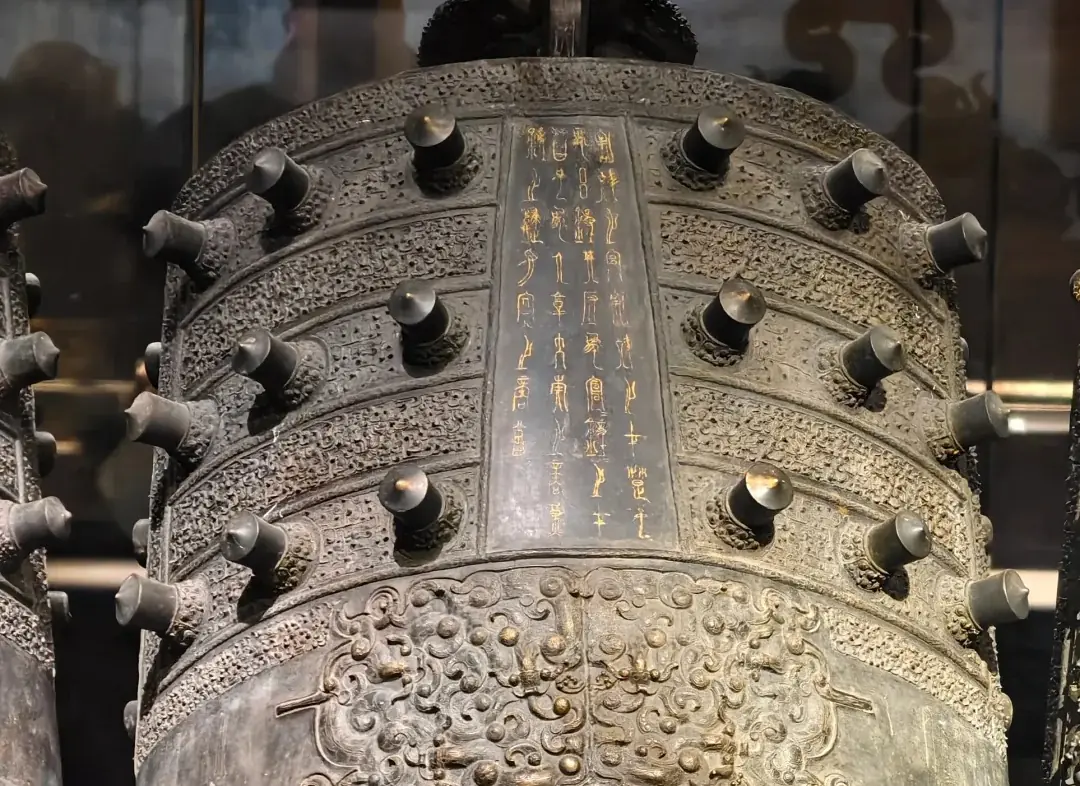
The bells and frame carry 3,755 characters about numbering, events, pitch notation, and music theory. Each bell produces two pitches when struck at different points; the almond-shaped cross-section (合瓦形) supports that dual-tone behavior. Together, the bells cover five and a half octaves, with a fully chromatic central register.
What You'll Hear in 30 Minutes

The concert takes place in the Bianzhong Concert Hall on the B1 level of the museum's South Wing. The original bells are too precious to play, so the performance uses replica bells tuned to match the archaeological set.
Each show runs about 30 minutes. Museum musicians combine the replica bells with other reconstructed instruments and, on some programs, dance.
Ancient sound world
Bells, court music and dance
A program may include pieces such as "High Mountains, Flowing Water" (高山流水), a bell solo that demonstrates two tones from one instrument, and court-style music or dance.
Familiar reference points
Adaptations and reconstructed instruments
Adaptations such as "Ode to Joy" or "Jasmine Flower" (茉莉花) can make the bronze range easier to hear. Stone chimes (编磬), zither (瑟), panpipes (排箫), and other reconstructed instruments may also join the ensemble.
The exact selection and order can change. Treat these as examples of the program's range, then check the performance notice on your date.
See the Originals, Then Hear Them Play
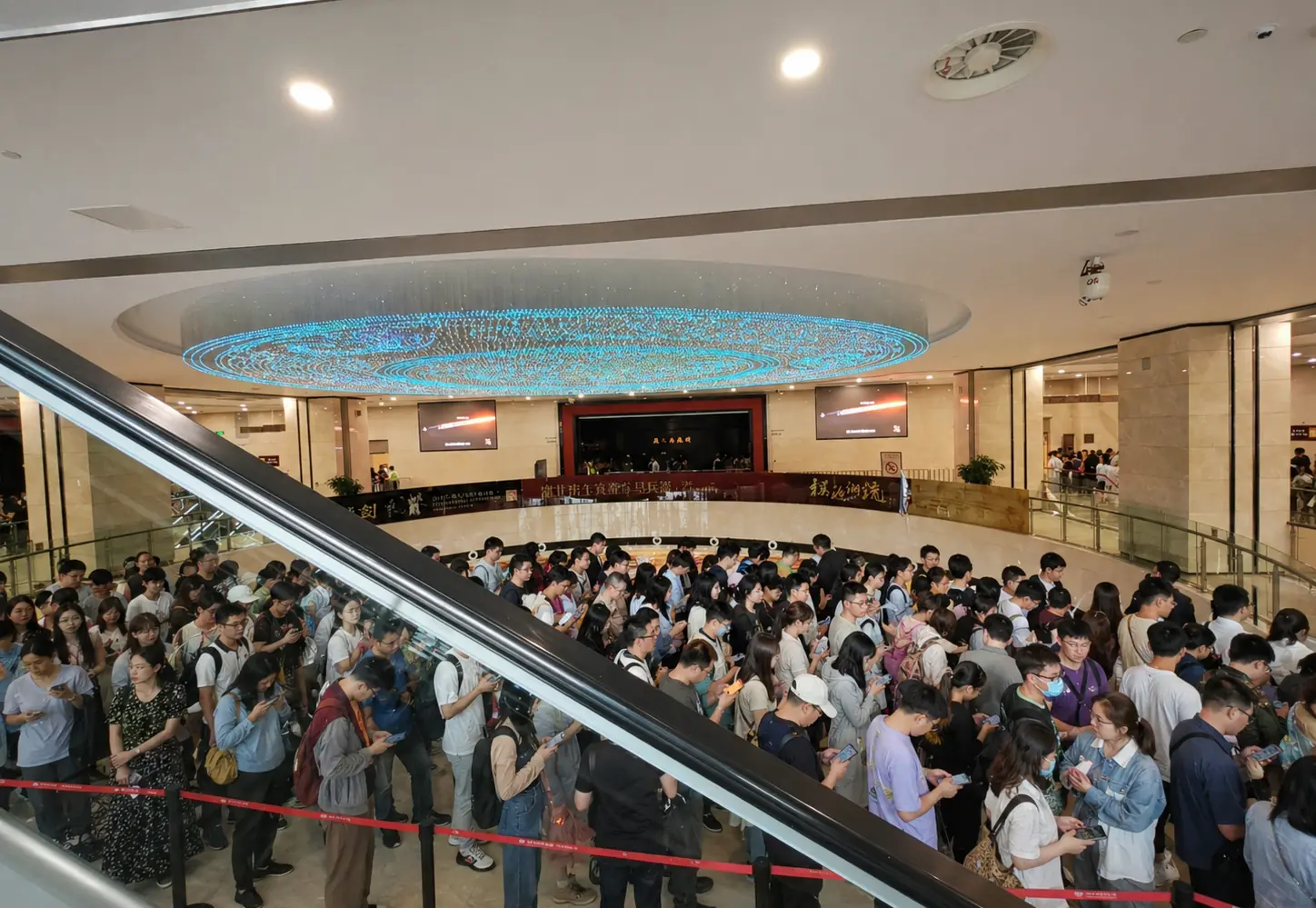
Seeing the concert before the original bells still works, but reversing the order makes the experience much stronger. First you study the scale of the archaeological set; then you hear what its replica can do.
The concert hall is on B1 of the South Wing. Confirm the original bells' gallery location in the museum's current map or on-site navigation, then keep this part of the visit compact before moving to other wings.
Keep the first loop in the South Wing. Check the day's gallery location on the museum map, then allow 30–45 minutes with the originals before moving downstairs for the 30-minute concert.
Recommended sequence: originals first, replica concert second, then a short return to the exhibition if time allows.
- Original bells exhibition(曾侯乙展厅)- Confirm the current gallery; allow 30-45 min
- Bianzhong Concert Hall(编钟演奏厅)- South Wing, B1; about 30 min
- Second look at the bells- Notice inscriptions, cross-sections, and strike points
Showtimes, Tickets, and Museum Booking Rules
Venue: Bianzhong Concert Hall, B1 level, west side of the South Wing.
Current posted schedule
Pick the season first, then the day of week
March–October
Busier season
Tuesday–Friday
11:30 / 14:00 / 15:00
Saturday–Sunday
10:30 / 11:30 / 14:00 / 15:00
November–February
Shorter timetable
Tuesday–Friday
11:30 / 15:00
Saturday–Sunday
11:30 / 14:00 / 15:00
Adult · ¥50
Standard concert seat.
Eligible discount · ¥30
Students, active military personnel, disabled visitors, and ages 65–69 with qualifying documents.
Eligible free ticket
Ages 70+, Chucai Card holders, and children under 1.4 m without a seat; process it at the staffed counter.
Step 1
Reserve museum entry
Museum admission is free but requires a timed reservation through the "湖北省博物馆" WeChat account or the official reservation page. The current service page allows booking up to five days ahead, subject to availability.
Step 2
Buy the concert seat
After entering, choose a dated performance and seat at the B1 self-service kiosk, the on-site mini-program QR code, or the staffed counter. Adult tickets bought at the kiosk are non-refundable; concession and free tickets require the staffed counter and qualifying documents.
Normal museum hours are 09:00-17:00 Tuesday-Sunday, with last entry at 16:00; Monday is closed except certain public holidays. The current service page displays a summer extension to 08:30-17:30 before August 31. Recheck the exact date because holiday and seasonal notices can override normal hours.
Passport and other non-mainland-ID users should bring the original document used for the reservation and the booking QR code. Choose a concert that leaves time to see the originals first; do not plan around a 10:30 performance unless it appears for your day and season.
Don't Miss These While You're Here
Since you are already at Hubei Provincial Museum, several other objects deserve time beyond the bells.
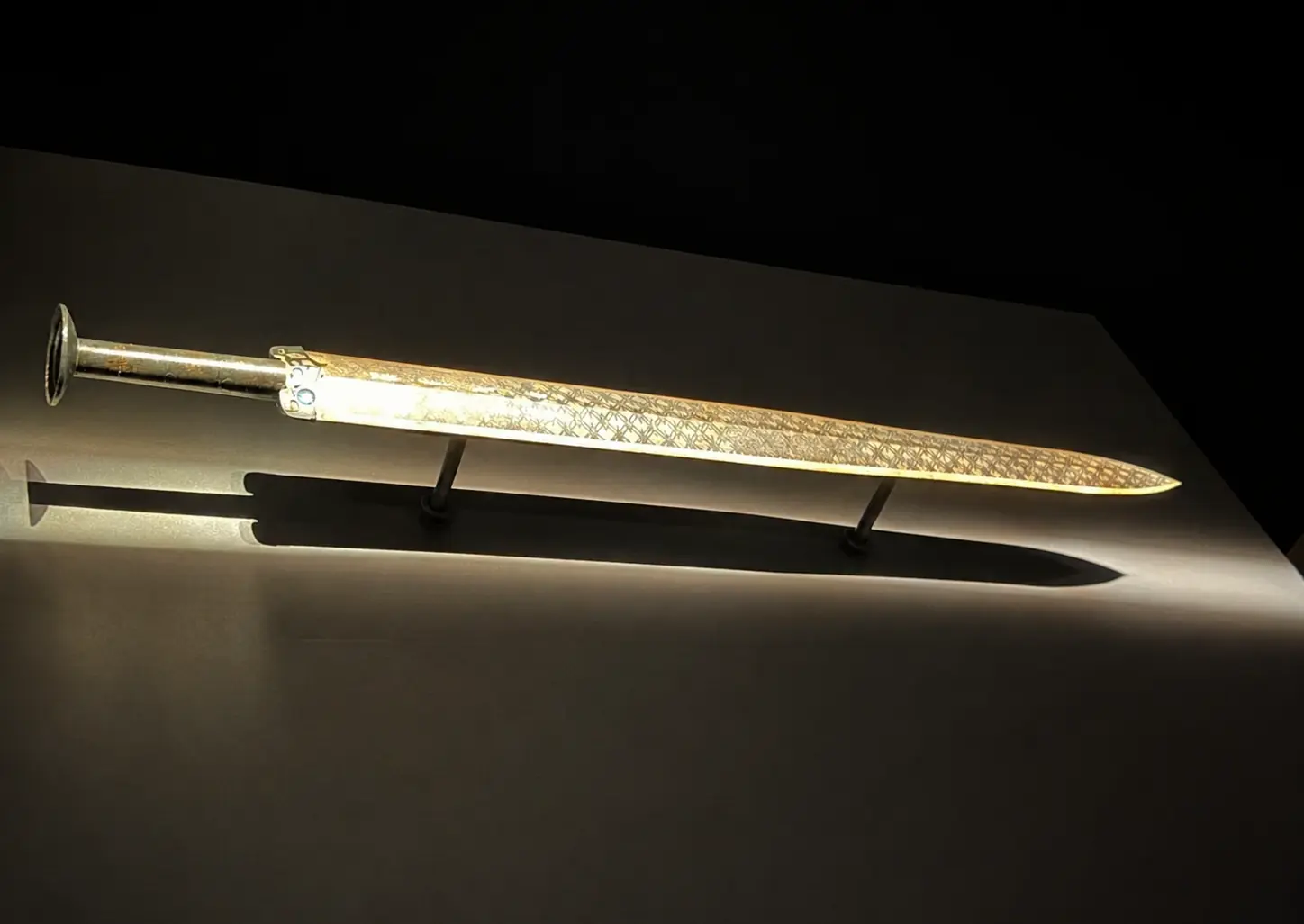
Sword of King Goujian
越王勾践剑
A 2,500-year-old bronze sword whose decoration and polished blade remain exceptionally well preserved, with an inscription identifying King Goujian of Yue.
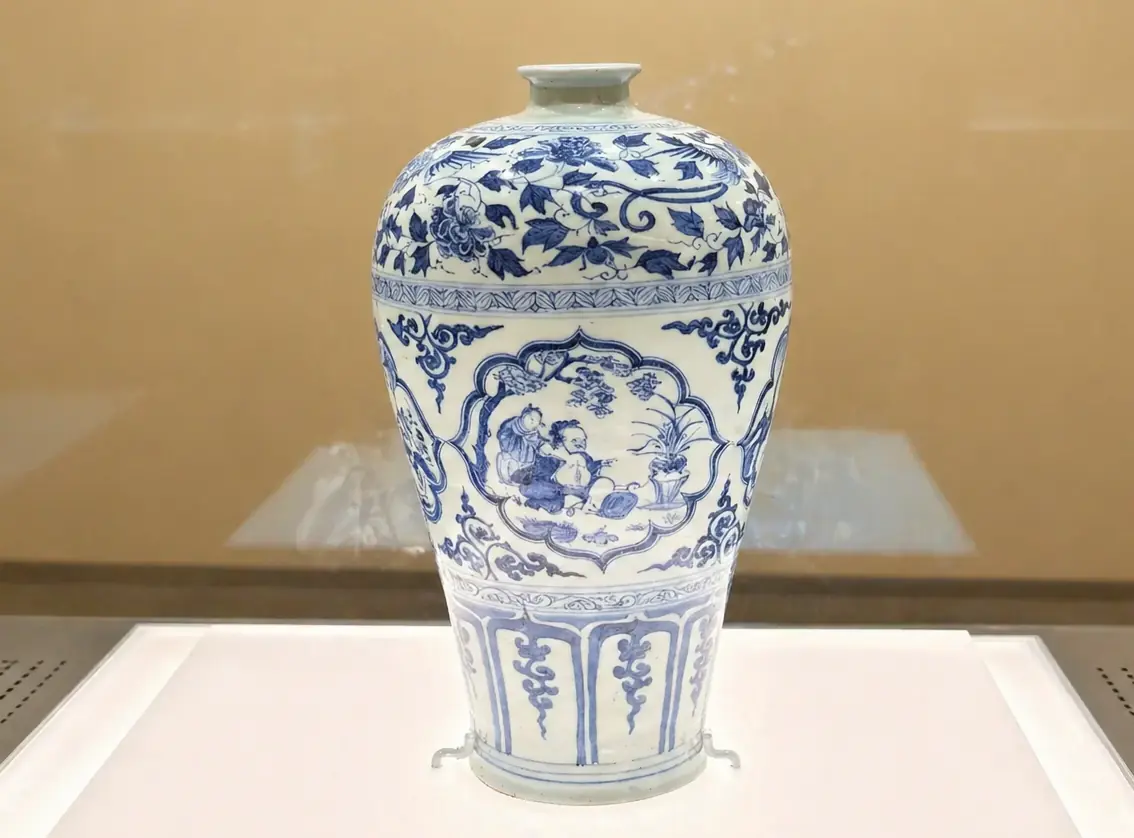
Yuan Blue-and-White Meiping
元青花四爱图梅瓶
A Yuan Dynasty prunus vase excavated in 2006 from the Tomb of Prince Yingjing in Zhongxiang, with four panels showing celebrated scholar-literati devotions.
Zun-Pan of Marquis Yi
曾侯乙尊盘
A bronze ritual vessel from the same tomb as the bells, famous for dense openwork dragons and serpents.
Check the day's gallery map before crossing the museum: temporary exhibitions and object locations can change. Allow at least 2.5–3 hours for the bells, concert, and these highlights; archaeology-focused visitors can comfortably use half a day.
Getting There and Museum Entry Essentials
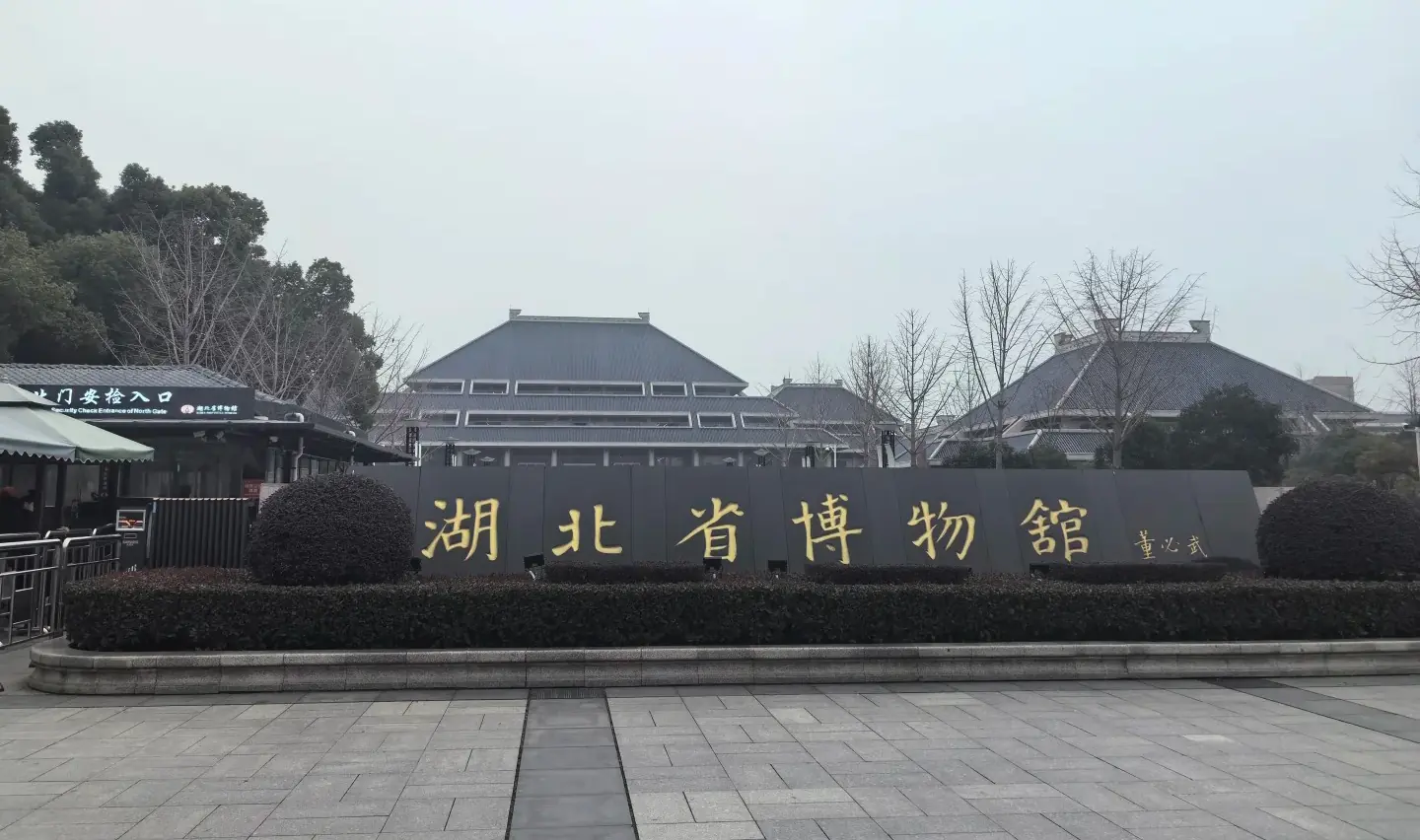
Address: No. 160 Donghu Road, Wuchang District, Wuhan. The museum is on the East Lake side of Wuchang, close enough to combine with other central Wuhan sights if you start early.
Arrival: Individual visitors can use the South or North Gate. Check the live map for your final gate and walking line, especially during holiday traffic controls.
Entry layer: carry the original passport or ID document used to reserve, plus the QR code when the booking system generates one. Normal admission ends at 16:00; the current service page shows later summer timing before August 31, but your dated reservation and museum notice control.
Transport layer: metro is the simplest default. Taxi and bus estimates depend on traffic, your starting point, and current route operations.
Metro Line 8
Best default choice
Hubei Provincial Museum & Hubei Daily Station · Exit A; about a 700 m walk toward the South Gate.
Avoids Wuhan road traffic. The Huangli Road pedestrian passage may also suit your approach.
Taxi or ride-hailing
Best with luggage or family
Direct door-to-door arrival; typical rides from central rail areas run about ¥15–50.
Can slow down around East Lake on busy days. Recheck time and fare in your map app.
Bus
Useful but less simple
Nearby lines include 14, 402, 411, 578, 709 and 810; several routes stop near the museum.
Works best if you can read live map directions; it is not the easiest first-time option.
Tips Most Visitors Learn Too Late
Build the day around the museum calendar before choosing transport: Monday is normally closed except for certain public holidays. Bring the same passport or ID document used for the reservation, and keep the booking QR code ready.
Check before paying. Tickets are seat-specific, and the museum can adjust performances for holidays or special circumstances. Confirm the day's show, seat, eligibility documents and refund rule in the mini-program, kiosk or staffed counter before paying.
Choose for view and sound. Front rows make it easier to see the players and feel the low-register bells, but choose the seat you prefer from the live plan. Once inside, follow staff instructions for photography and recording.
Frequently Asked Questions
Replicas. The original 65 bells from Marquis Yi of Zeng's tomb are held and displayed by Hubei Provincial Museum; check the day's gallery map for their current location. The concert uses a replica set so the archaeological bells are not played.
Sources checked for this guide
- Current museum hours, seasonal weekday and weekend concert schedule, 30-minute duration, ticket prices and eligibility, reservation window, passport entry process and posted summer-hours rule: Hubei Provincial Museum — visitor services
- Set composition, frame dimensions, 3,755-character inscription count, dual-tone behavior and five-and-a-half-octave range: Hubei Provincial Museum — Marquis Yi of Zeng chime bells
- 2025 registration year and the documentary significance of the bells, inscriptions and tuning system: UNESCO Memory of the World — Suizhou Bianzhong of Marquis Yi of Zeng
Beyond This Guide
Wuhan's cultural layer runs deep: Yellow Crane Tower, the Yangtze River bridge walk, Hubu Alley street food, and Wuhan's breakfast ritual (过早) can easily fill two or three days.
Explore more in Wuhan & Central China:
- The Song of Everlasting Sorrow: Xi'an's Epic Night Show at Huaqing Palace — Tang Dynasty love tragedy
- Dream of the Eastern Capital: Kaifeng's Song Dynasty Night Spectacle — Song Dynasty water show
© gochinafreely.com — Original guide by Go China Freely.