Visit Basics
Free entry is usually before ticket checks and in selected evening windows; holiday rules can change. Check ticket rules
Good to Know
Xitang Water Town: Corridor Life

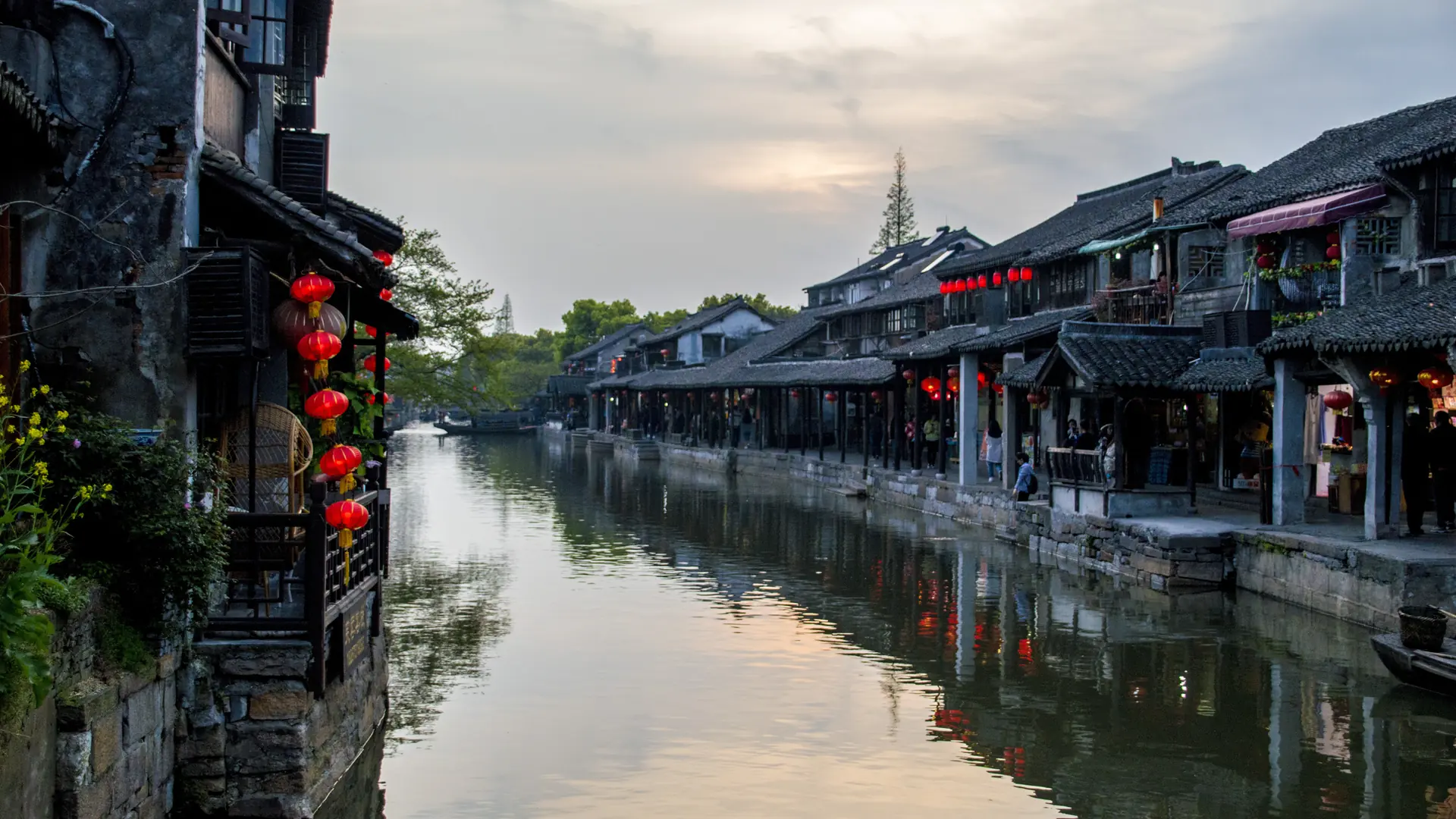
Classic Xitang angle · white walls, covered corridors, and canal traffic in one frame
Corridor life
Hollywood picked a working Jiangnan water town
China has over a hundred "water towns," but Xitang (西塘) might be the only one Hollywood picked. In 2006, Tom Cruise leaped across its rooftops in Mission: Impossible III — 9 rivers, 104 bridges, and a kilometre-long covered corridor hitting the big screen for the first time.
Unlike more polished Wuzhen (乌镇) or more iconic Zhouzhuang (周庄) next door, Xitang still runs on everyday life: push open your guesthouse door at six in the morning and the lady next door is already boiling wontons under the corridor eaves.
9
Rivers
104
Bridges
1 km
Covered walkway
2006
MI3 filming fame
Why Xitang feels different
The six great Jiangnan water towns — Zhouzhuang (周庄), Tongli (同里), Luzhi (甪直), Xitang (西塘), Wuzhen (乌镇), and Nanxun (南浔) — each have their own personality. Xitang has three things none of the others do.
Misty Rain Corridor
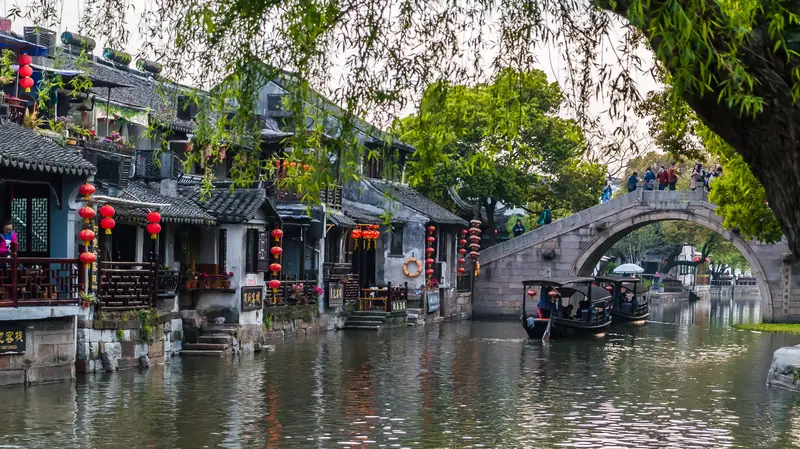
Roofed shopfronts sit beside the canal, so the main walking route still works on rainy days.
Misty Rain Corridor · roofed shopfronts beside the canal, useful even on rainy days
🌧️The Covered Corridor
Over 1,000 metres of continuous roofed walkway run beside the river. You can walk half the town in the rain without opening an umbrella; no other Jiangnan water town preserves covered corridors on this scale.
🎬Hollywood Pedigree
Mission: Impossible III (2006) filmed here, with Ethan Hunt threading through narrow lanes and over rooftops. For many Western viewers, that sequence was their first glimpse of a Chinese water town.
🍜Street-Food Density
Among the six towns, Xitang is the snack-heavy one: lotus-leaf steamed pork, foxnut cakes, stinky tofu, duck wontons, and Jiashan rice wine appear every few steps along the corridor.
Xitang Tickets & Free Entry
The old town itself never really shuts, but ticket checks and indoor sights follow daytime rules. The practical question is not "is Xitang open?" but "when will someone ask for a ticket?"
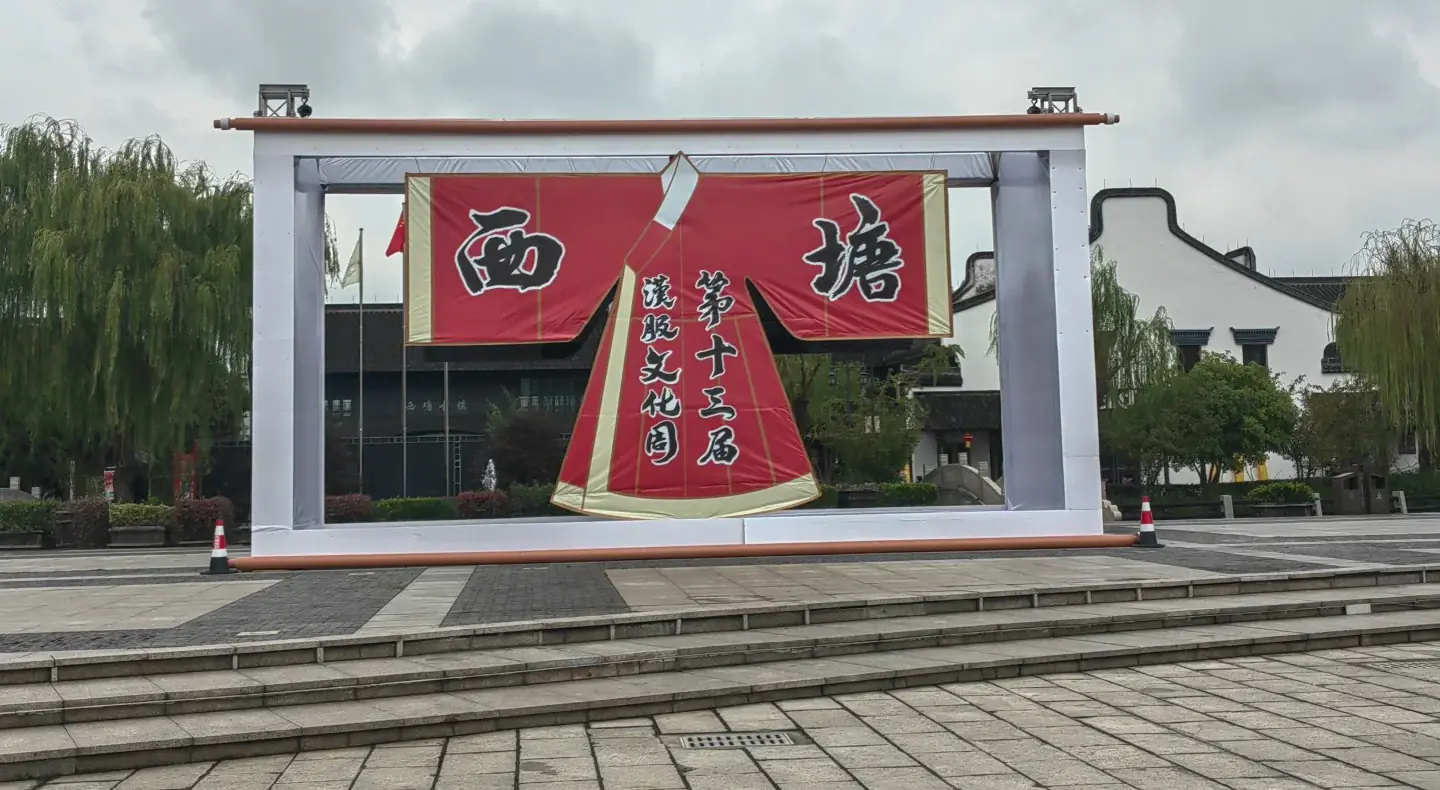
Best budget move
Your best budget move is still an evening arrival: after 17:00 Monday-Wednesday, or after 21:00 Thursday-Sunday. On Thursday through Sunday, the 17:00-21:00 window is still ticketed for most visitors, so do not assume "after five" means free every day.
Recheck Free-Entry Rules Before Holidays
The weekday pattern above is useful for planning, but Xitang can adjust ticket checks during public holidays, festivals, and crowd-control periods. Check the official ticket channel or your guesthouse before building a whole day around free entry.
Getting to Xitang
For most independent travelers, the easiest arrival is high-speed rail to Jiashan South Station (嘉善南站) (Google | Amap), then a taxi or ride-hail to Xitang Ancient Town (西塘古镇) (Google | Amap).
Show this screen to your driver · 出示给司机看
请送我到西塘古镇景区大门
Please take me to the main entrance of Xitang Ancient Town.
Use this for taxi or DiDi rides from Jiashan South Station.
Misty Rain Corridor Walk
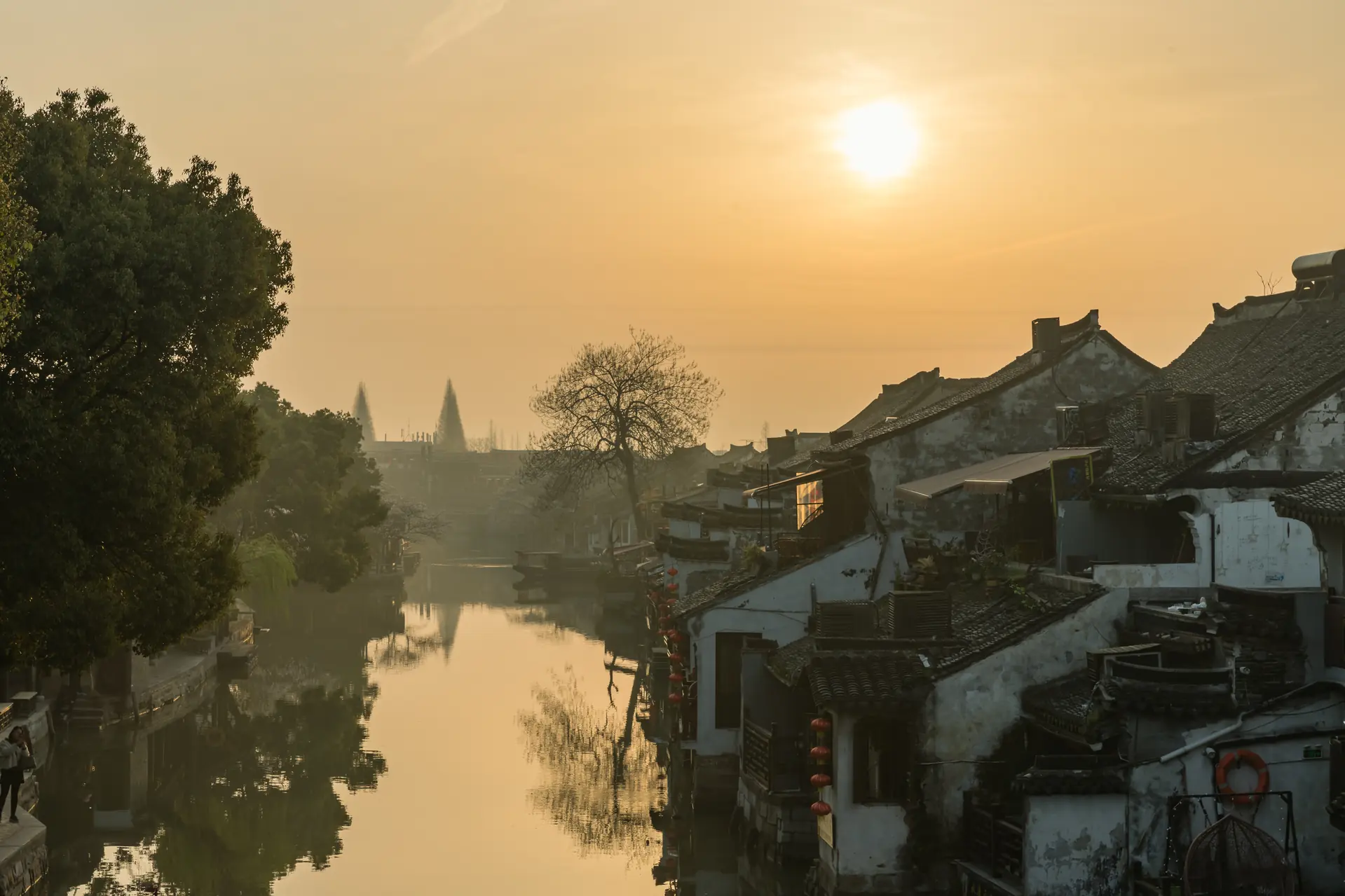
The Misty Rain Corridor (烟雨长廊) is the soul of Xitang. This riverside covered walkway stretches over 1,000 metres (some sources say 1,300 m), built one shopfront at a time — each household extending its eave until the roofs merged into one continuous sheltered passage.
Walking beneath it, the canal and white-walled houses line one side; teahouses, snack stalls, and craft workshops pack the other. It is both the main sightseeing route and the town's everyday porch.
🌫️Dawn, 6:00-7:30
Mist hovers on the water and almost no tourists are out. This is the reason to sleep inside the town: you get the corridor to yourself before the tour buses arrive.
🏮Dusk, 17:00-19:00
Red lanterns switch on and their glow ripples across the water surface. It is the most atmospheric hour, especially if you plan to stay for dinner or a boat ride.
🌧️Rainy Days
The corridor earns its name: no umbrella needed, just the sound of rain on roof tiles and raindrops pocking the canal. This is what "misty rain" actually means.
Pause
Traditional teahouse
Order local green tea, usually about ¥10-20, and take a riverside bench break halfway down the corridor.
Snack stop
Songzilaifeng Bridge (送子来凤桥)
Look for fresh foxnut cake (芡实糕) and Eight Treasures cake (八珍糕) from the pastry stalls nearby.
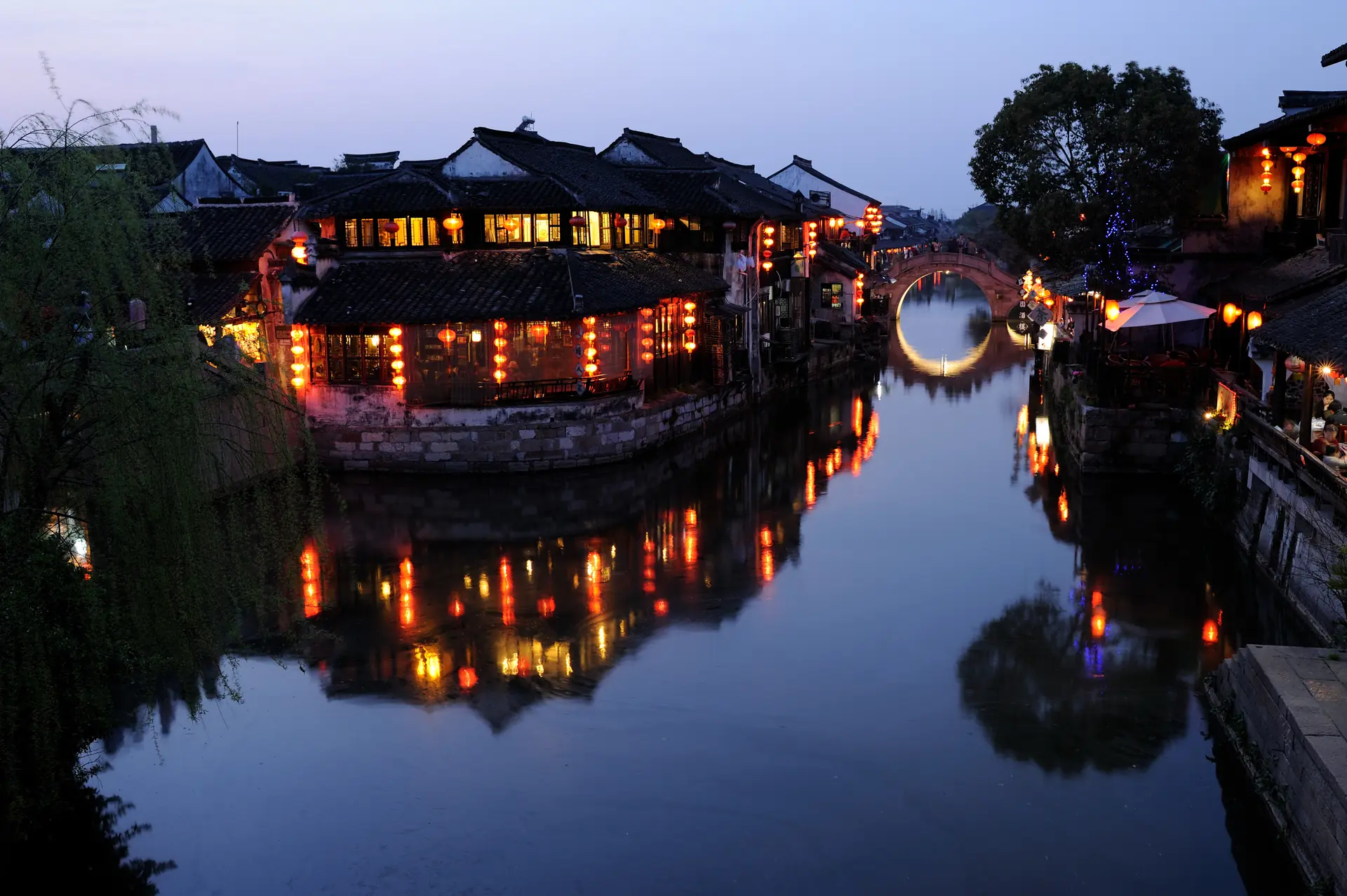
Photo angle
Wolong Bridge stretch
Photo tip: from the Wolong Bridge stretch you can line up corridor, flowing water, and a passing gondola in one frame — the classic composition every Jiangnan calendar uses.
Sights, Bridges, and Boat Rides
Xitang is small enough to cover on foot, but it rewards choosing a few anchors rather than trying to tick every lane. Use the corridor as your spine, then dip into these stops.
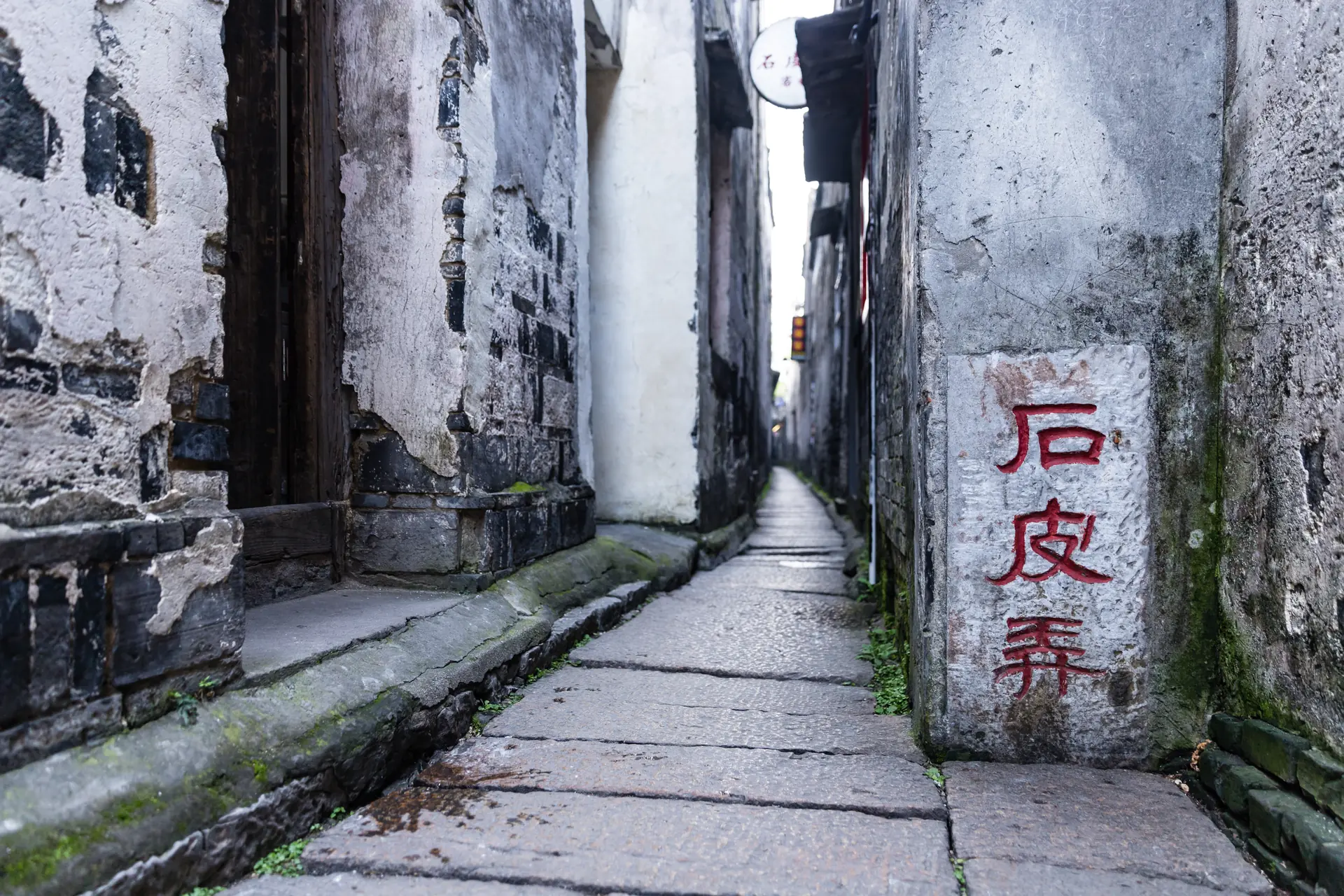
Xitang's most famous alley narrows to just 80 centimetres at its tightest point. Two people can barely squeeze past each other sideways. The lane is paved with flagstones thin as leather, hence the name "stone skin lane." Come at dawn or dusk to dodge crowds and catch light spilling in from the lane's mouth.
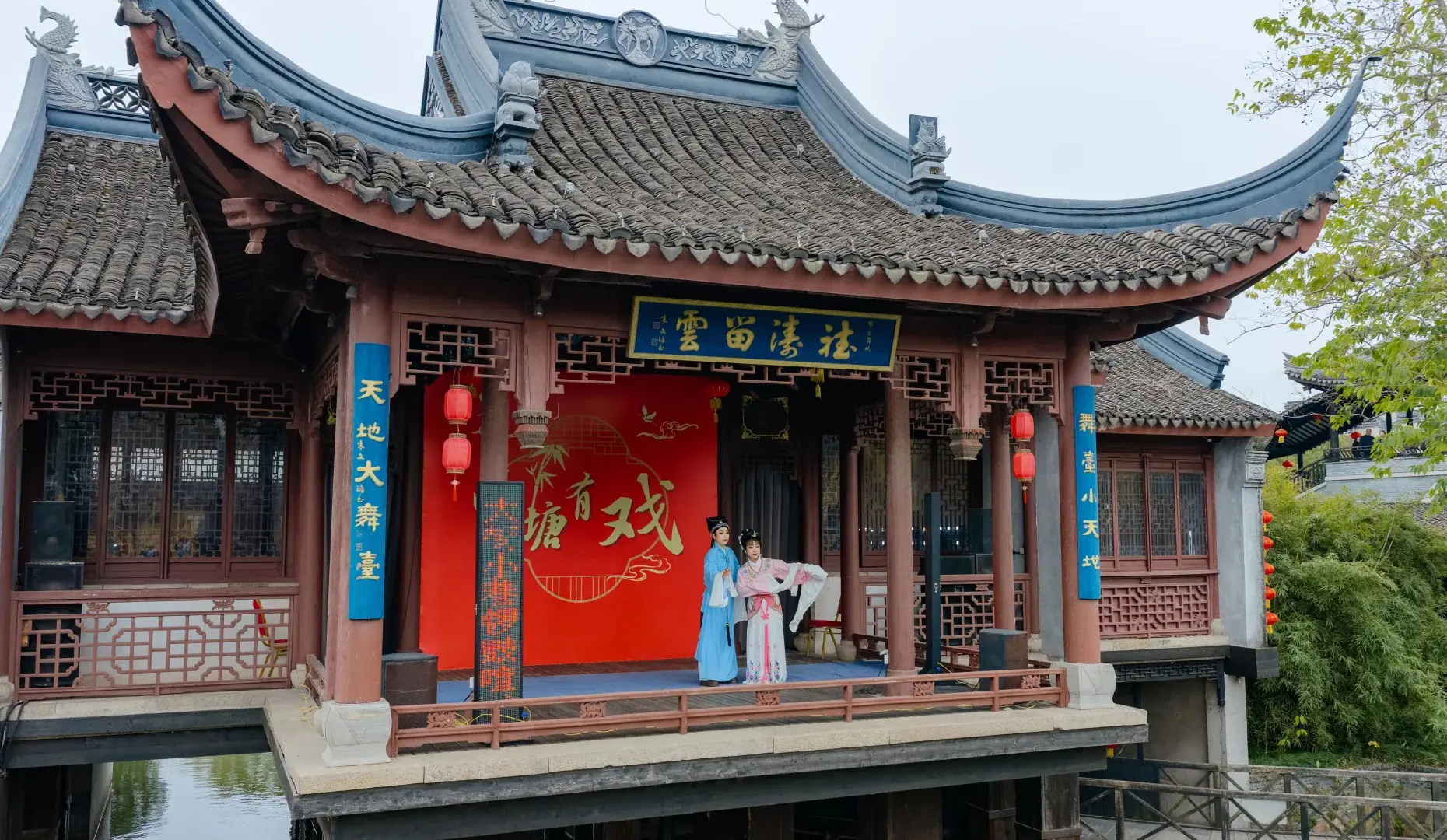
A Ming-dynasty private garden later converted into a public park. Inside are rockeries, a lotus pond, covered walkways, and a performance stage. On lucky mornings you might catch Suzhou-style storytelling (评弹) sung in the Wu dialect. You may not understand the words, but the melody is the point.
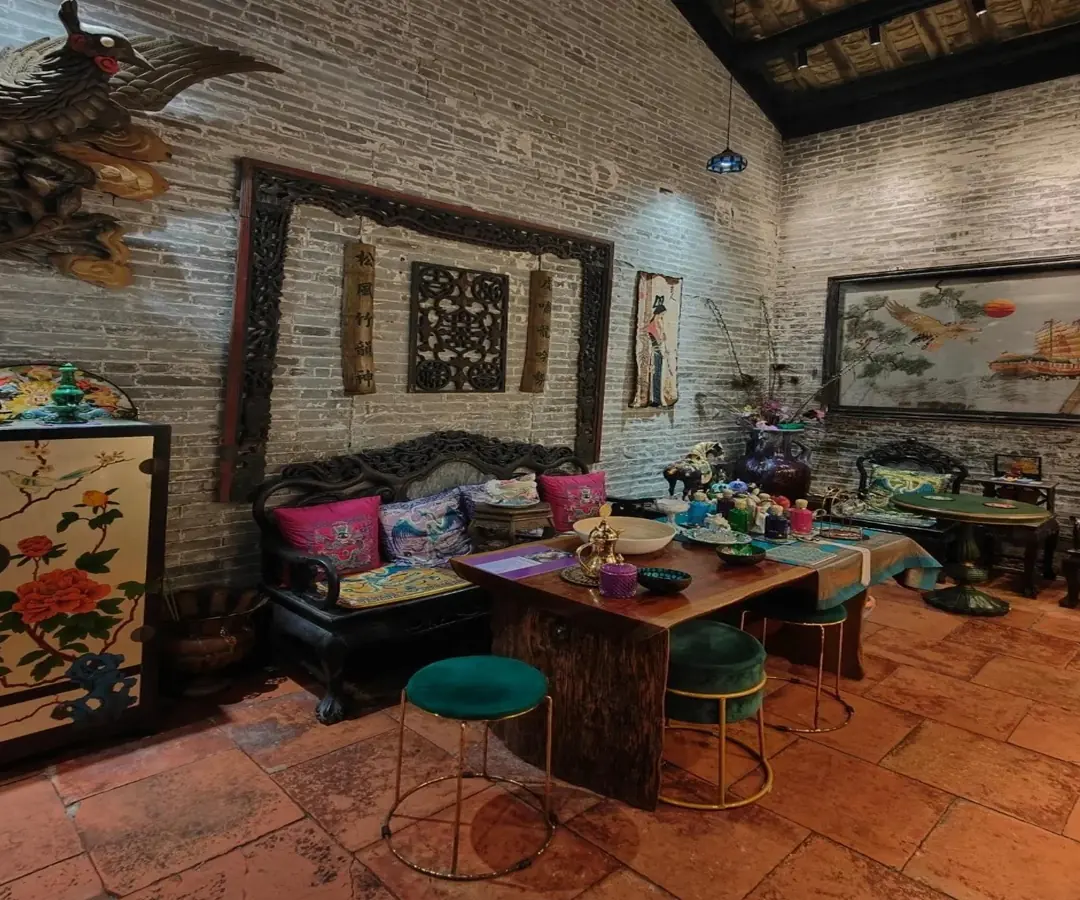
Jiashan County (嘉善) is China's largest button manufacturing base; roughly half the world's buttons come from this area. The museum displays 3,000+ buttons, including a 1.8-metre, 420-kilogram rosewood "Button King." Upstairs, a traditional knotted-button (盘扣) workshop takes about 20 minutes, and you keep what you make. Open 9:00-17:00.

The 2006 opening chase sends Tom Cruise's character through narrow lanes, over rooftops, and past white walls, stone bridges, and canals. The canal-and-building cluster near Yongning Bridge (永宁桥), sections of the Misty Rain Corridor, and the old-town rooftops are the usual reference points. There are no official trail markers, but guesthouse owners usually know the approximate spots.
Bridges Worth Crossing
104 bridges · four standouts
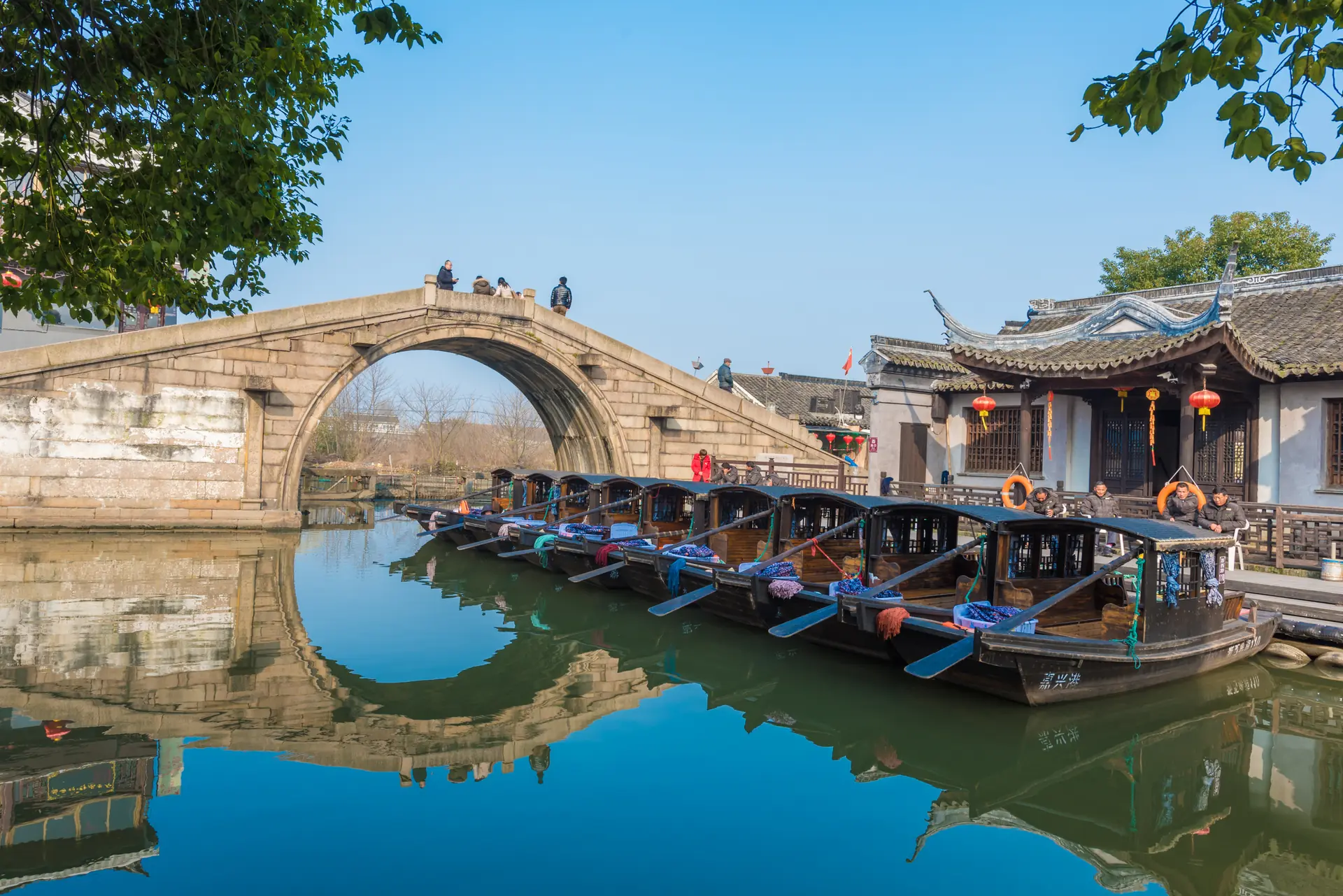
Huanxiu Bridge (环秀桥): one of the best symmetrical views of corridors and waterways. Wufu Bridge (五福桥): narrow crossing, wide-open view. Wolong Bridge (卧龙桥) (Google | Amap) is the tallest stone arch and main gondola boarding point. Songzilaifeng Bridge (送子来凤桥): covered bridge with uneven steps and local lore.
Framing: shoot from the banks at water level so the arch doubles in the canal — the classic Xitang postcard.
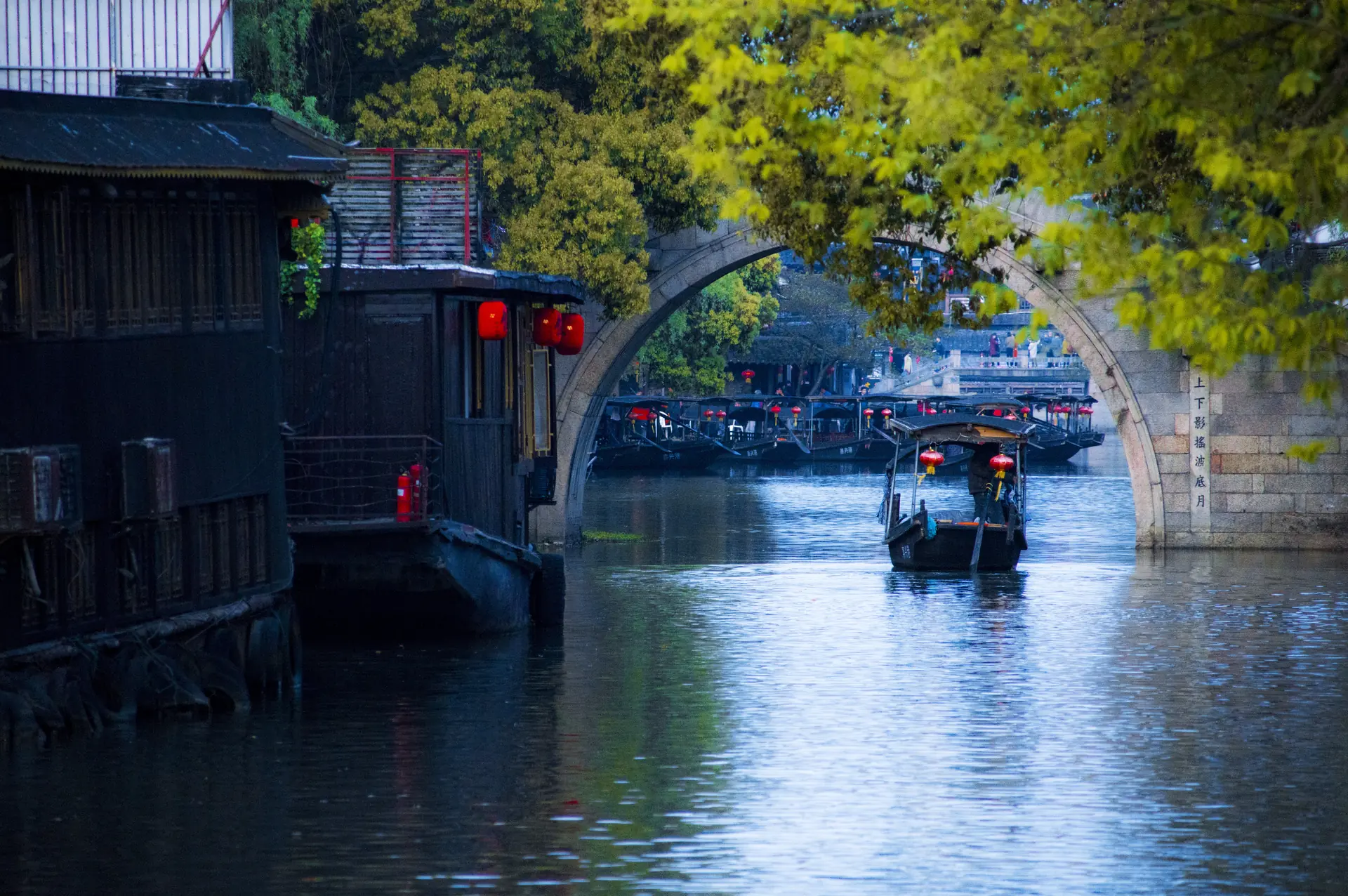
The black-canopied gondola (乌篷船) is the emblem of every Jiangnan water town. Board at Wolong Bridge wharf; a hand-rowed boat glides along the main canal, passing under several stone bridges for a water-level view of the town. Price is about ¥45/person shared or ¥320/boat private for up to six passengers. Dusk is best.
What to Eat in Xitang
Forget sit-down restaurants — the sheer density of street stalls along the corridor makes it impossible to walk fast. Here is the must-eat list:
Lotus Leaf Steamed Pork
荷叶粉蒸肉
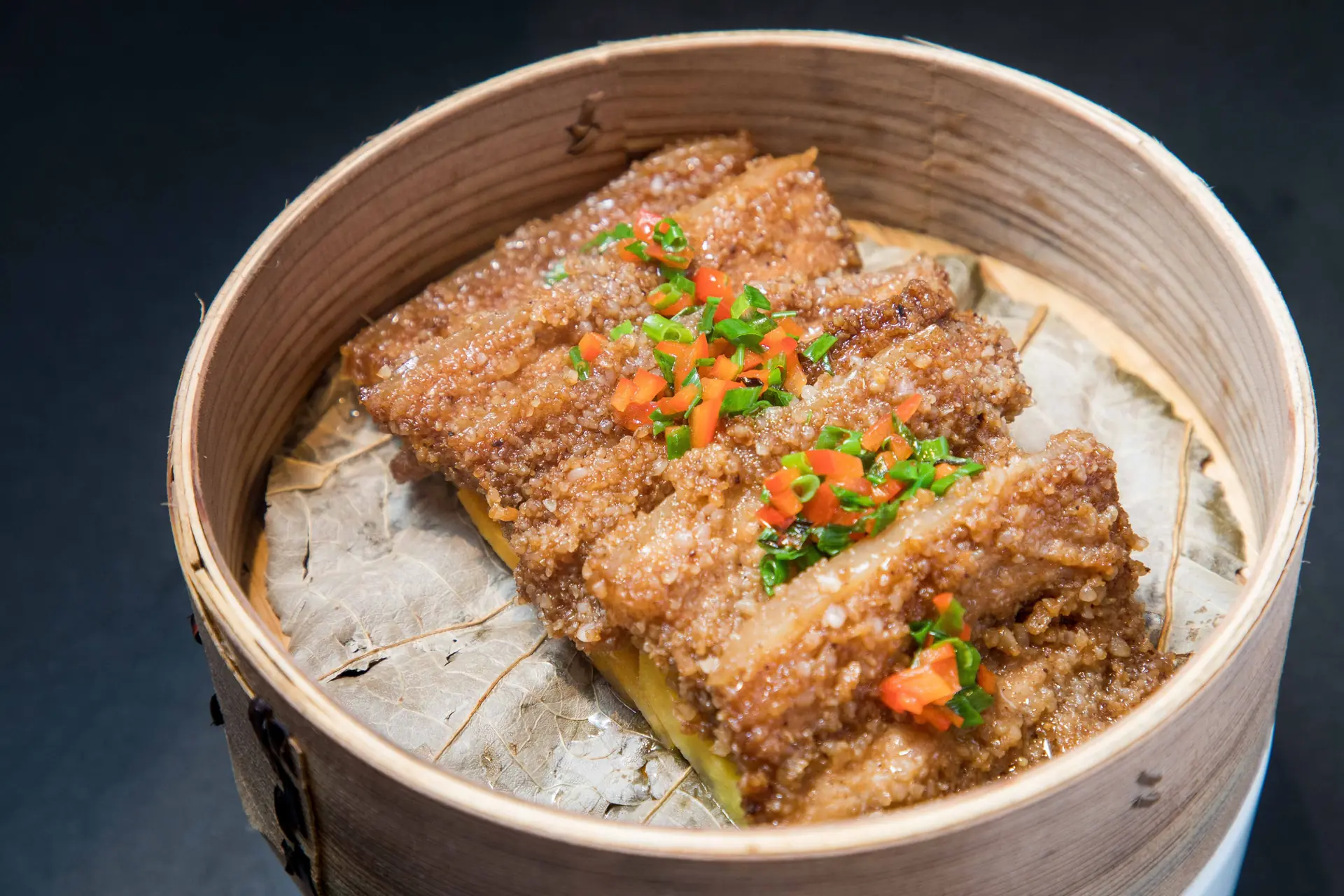
Xitang's signature dish. Pork belly coated in rice flour, wrapped in a fresh lotus leaf, and steamed. The lotus fragrance seeps into the meat and rice powder; the pork falls apart, rich but not greasy. Sold everywhere along the corridor, ¥8–15 a portion — grab one and keep walking.
Stinky Tofu
臭豆腐
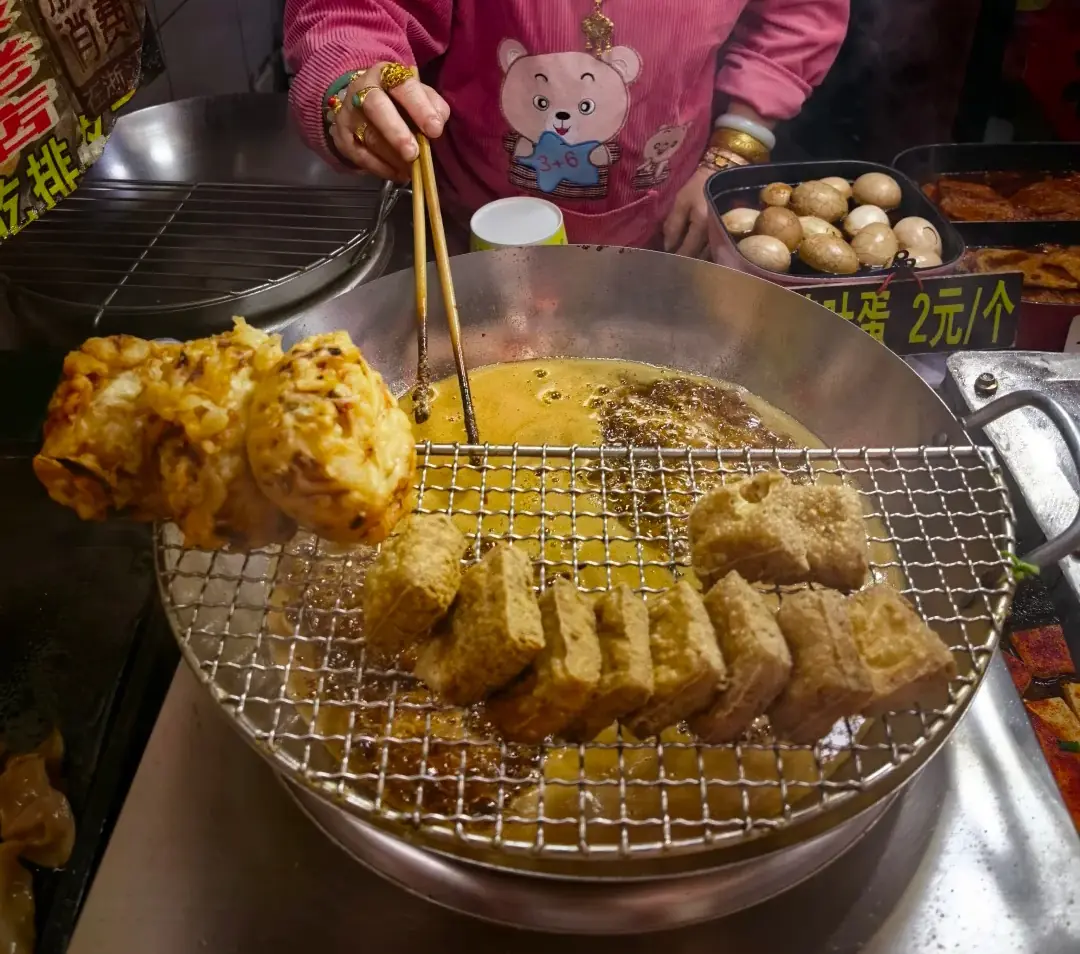
Xitang's version differs from Changsha or Shaoxing: crispier on the outside, golden and crunchy with a silky centre. Dip in chilli sauce or sweet sauce. ¥5–10 a serving. The smell is aggressive, but the taste is worth it.
Foxnut & Eight Treasures Cakes
芡实糕 · 八珍糕
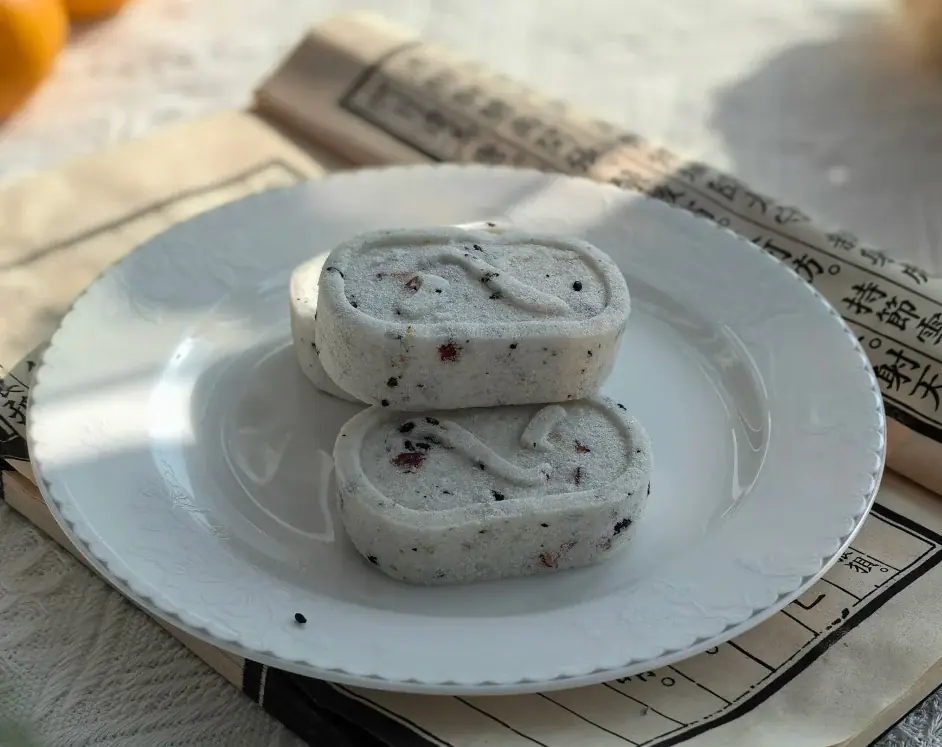
芡实糕 (foxnut cake) — made from ground foxnut (a water plant seed), this soft cake is dense and mildly sweet. 八珍糕 (Eight Treasures cake) — made from eight types of medicinal herbs and grains, a traditional health snack. Both are Xitang's most popular souvenirs; pastry shops along the corridor offer free samples.
Duck Wonton Soup
老鸭馄饨汤
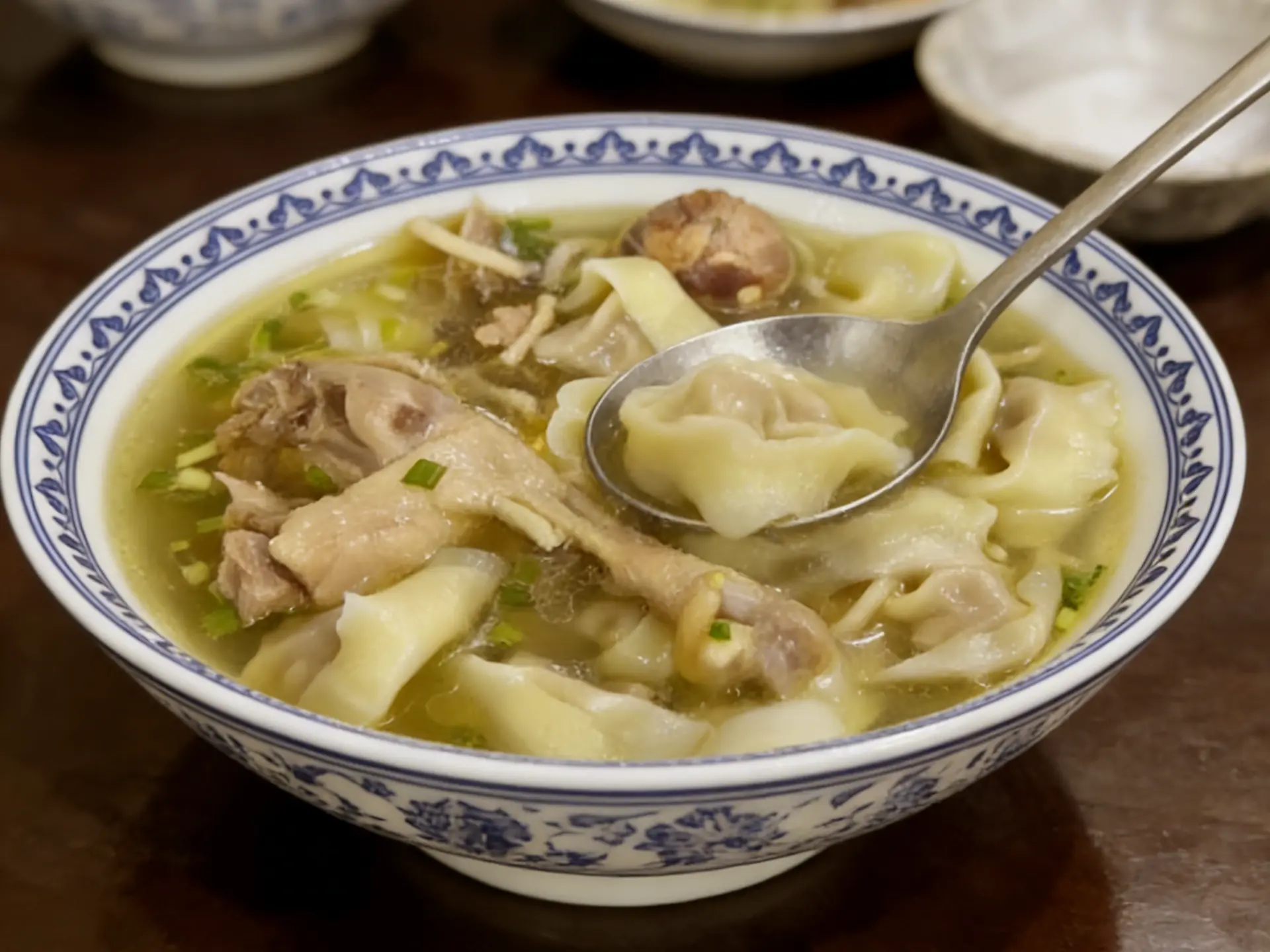
Slow-simmered duck broth with hand-wrapped wontons. Rich, savoury, and deeply comforting. Find a noodle shop and sit down after a long walk. ¥15–25 a bowl.
Jiashan Rice Wine
黄酒 · yellow rice wine

Jiashan is one of Zhejiang's rice wine regions, and Xitang is dotted with small breweries. 黄酒 is a low-alcohol yellow rice wine — mellow, slightly sweet, and smoother than the better-known Shaoxing variety. Order a bowl at a riverside tavern or take a bottle home. ¥5–10 a bowl.
Eating tips
Grazing is the local way
The Misty Rain Corridor and Beizha Street have the highest snack concentration.
For a sit-down meal
Head to the restaurants along Shaoxiang Gang (烧香港) — a canal-side dining lane (not Hong Kong), serving home-style local dishes.
Entrance restaurants
Avoid the large restaurants near the main entrance — overpriced and unremarkable.
Breakfast
Find a morning stall under the corridor: soy milk, fried dough sticks, wontons.
Xitang After Dark
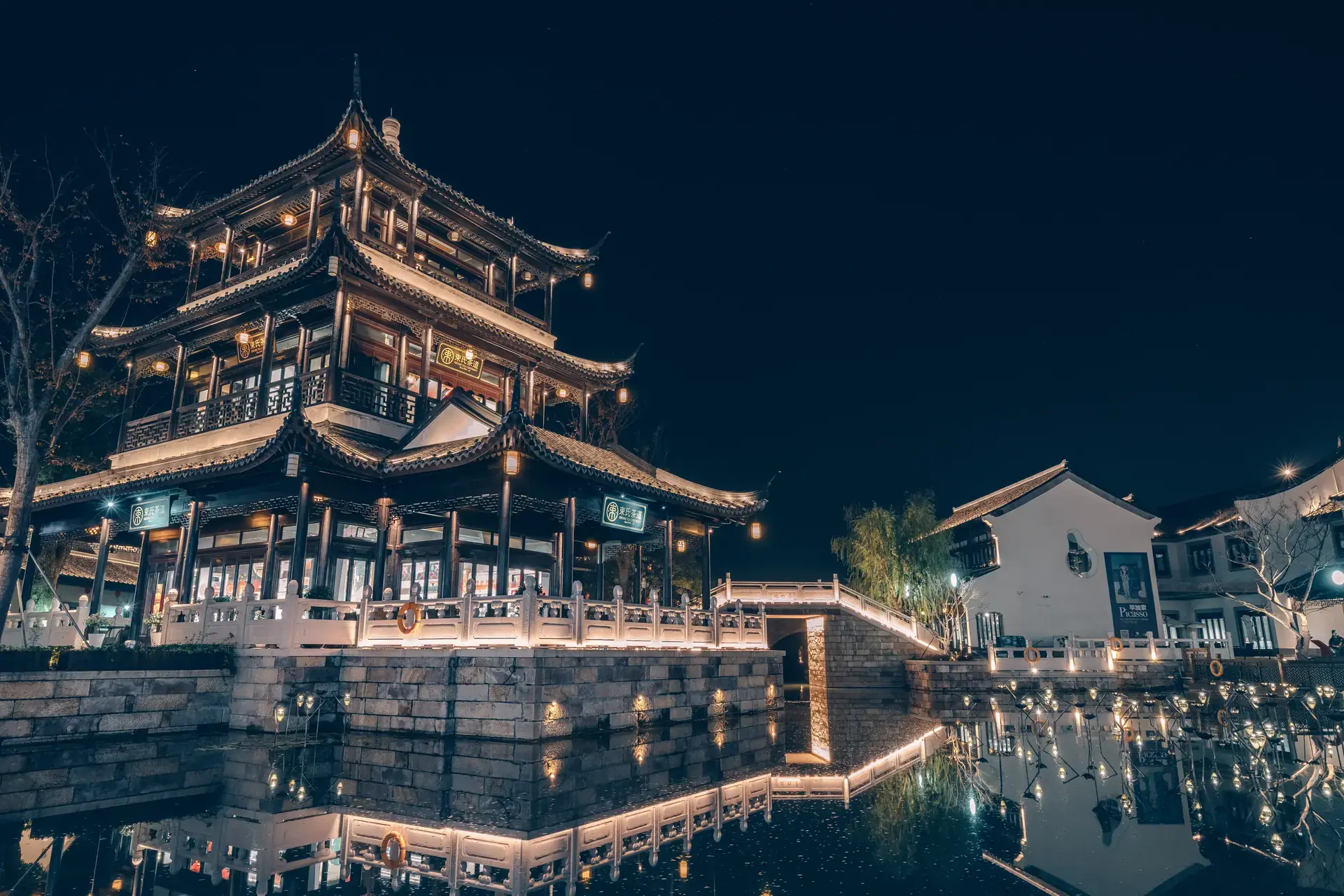
Night canal mood
Lanterns first, bars second
Xitang by day is an "ancient town." Xitang at night is an ink-and-lantern painting. After dark, red lanterns along the canal switch on and their reflections ripple across the water, turning the entire town into a warm-toned canvas.
Best use: walk the canal first, then decide whether you want music, drinks, or a quiet lane back to your guesthouse.
Timing: ticketed indoor sights shut at 17:00, but the night atmosphere belongs to the open lanes and waterfront.
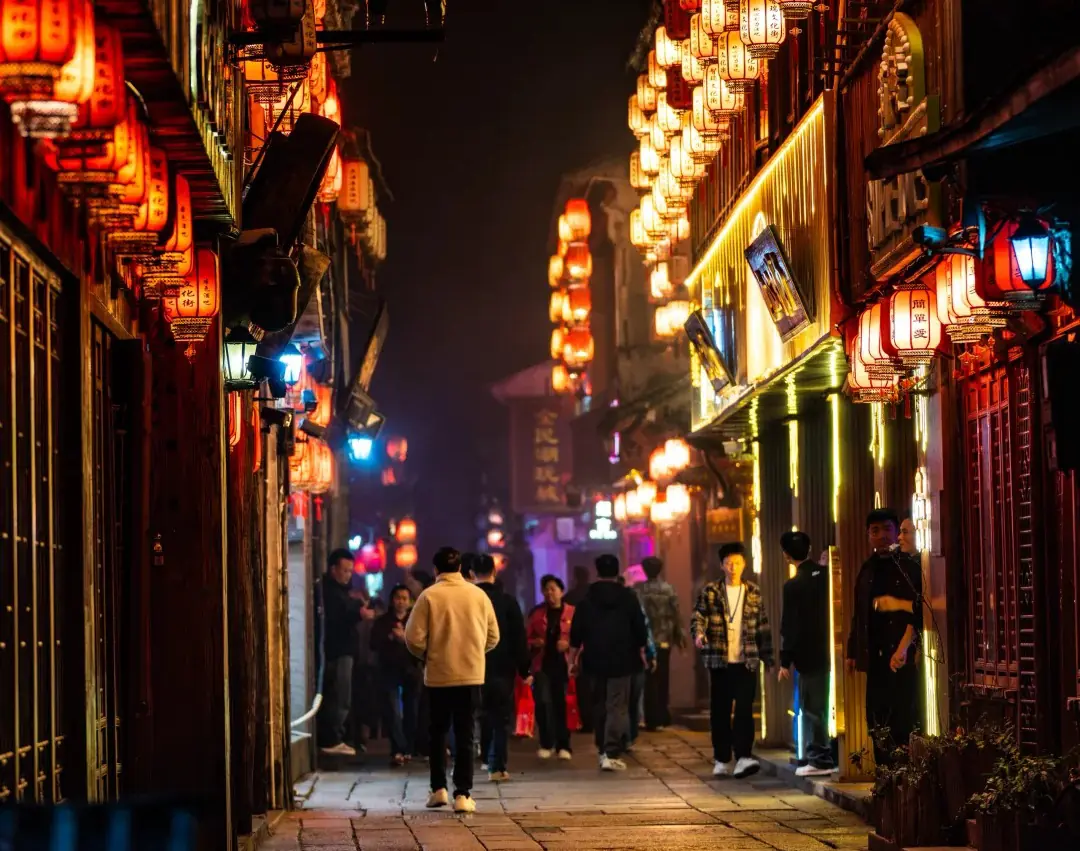
Lively option
Tangdong Street (塘东街)
Tangdong Street is Xitang's "bar street": a row of riverside bars and pubs with live singers, similar to the bar strips in Lijiang or Yangshuo but much smaller. If you enjoy nightlife, this is where to spend the evening.
Quiet alternative: avoid Tangdong and walk to the western or northern side of town, where the old lanes settle down after 22:00.
The neon-and-live-music strip is concentrated along Tangdong; the rest of the old town stays comparatively hushed after 22:00.
Use the Free-Entry Window for Atmosphere
Free evening entry, on the weekday rules in the tickets section above, still lets you enjoy the lantern-lit canals without paying the daytime fare. Just remember that ticketed indoor sights close at 17:00.
Day Trip or Overnight?
← swipe to compare all options →
Day trip
Tight schedule
- ✓Best for: quick visits and packed itineraries
- ✓Timing: arrive morning, leave afternoon (about 4–6 hours on site)
- —What you see: daytime lanes, main sights, street food — but you skip the full lantern scene and dawn mist
- ✓Cost: ticket ¥95 + transport + food (no guesthouse)
Overnight
Full experience
- ✓Best for: photographers and anyone who wants the town without tour-bus hours
- ✓Timing: arrive afternoon, leave next morning
- ✓What you see: day + lantern reflections + empty dawn corridors
- ✓Cost: guesthouse ¥200–500; you can often skip the day ticket if you time free-entry windows
Practical verdict
Stay overnight if you can.
The two most photogenic moments in Xitang — lanterns flickering on at dusk and mist rolling across the water at dawn — are exactly what a day trip misses. Staying inside the town also sidesteps daytime ticket checks.
Guesthouses inside the town
Old canal-side houses converted into inns, ¥200–500/night (higher on weekends and holidays). The advantage: step out and you are already in the scene, and morning/evening entry is never checked. When booking, ask for a "river-facing room" (临水房) — it costs more than an alley room, but the experience is completely different.
Hotels outside the scenic area
Modern facilities, better amenities, but you lose the canal-town atmosphere. Suited for travelers who prioritize comfort.
Best Time & Insider Tips
Xitang is easiest in mild weather, but the best-looking conditions are more specific: light rain, early mist, and weekday evenings all help the town feel less staged.
Best Season
🌸Spring & Autumn Peaks
March–April and October–November — comfortable temperatures (about 15–25°C), relatively fewer visitors. The best overall window.
🌧️Plum Rain Season
May–June — frequent rain, but the covered corridors turn this into an advantage. The true "misty rain" experience. Downside: humidity can feel extreme.
☀️High Summer
July–August — often above 35°C. Fine for short visits, but not ideal for hours of outdoor walking.
❄️Winter Quiet
December–February — cold and fewest tourists. Rare snow on the roofs is extremely photogenic — bring layers.
Dates to Skip
National Day (1–7 Oct), Labour Day (early May), Chinese New Year — crowds can overwhelm the narrow lanes.
Insider Tips
- Entering before 8:00 AM is Xitang's cheat code: ticket staff have not arrived and the town belongs to locals only. Staying inside the town is easiest; from outside, side entrances also work.
- Tuesday to Thursday are the best days. Weekend and holiday visitor numbers can double, and the lanes are too narrow to absorb the surge gracefully.
- Carry ¥50-100 in small bills. Most stalls accept WeChat Pay or Alipay, but some older vendors still prefer cash.
- There are 122 ancient lanes. Besides Shipi Lane, duck into unnamed alleys for the quietest corners and the most genuine slices of daily life.
Frequently Asked Questions
Yes — on different weekday rules. Monday to Wednesday, walk in free after 17:00 (and before 8:00). Thursday to Sunday, free entry is after 21:00 (and before 8:00). Indoor attractions close at 17:00 regardless. Policies may shift during major holidays — check before your visit.
Sources checked for this guide
- Official Xitang visitor and booking portal used for attraction identity, ticket-channel context, and same-day recheck path: Xitang Ancient Town official site
- Live ticket listing cross-check for current Xitang entry pricing and operating notes: Qunar Xitang Ancient Town ticket listing
- Station and onward-transfer cross-check for Jiashan South access toward Xitang: TravelChinaGuide Jiashan South Railway Station guide
Beyond This Guide
Before you build the wider Jiangnan plan:
- Suzhou day trip from Shanghai: gardens and water towns — compare a garden-first day with a canal-town day
- China high-speed rail guide — useful for Shanghai, Hangzhou, Jiaxing, and Suzhou transfers
- China mobile payments: Alipay & WeChat Pay — set up QR payments before snack stalls, taxis, and guesthouses
- Wuzhen Water Town — the most English-friendly, best night lighting
- Zhouzhuang Water Town — the most iconic, lifetime re-entry ticket
Xitang works beautifully as part of a wider Jiangnan water-town loop or a longer Zhejiang itinerary, but the best pairing depends on train times, overnight timing, and how much canal-town repetition you actually want. We can design a route that fits your dates, pace, and interests.
© gochinafreely.com — Original guide by Go China Freely.