Show basics
Ticket inventory, discounts and exact times change by date; use the ticket section for the current listed zones and booking checks. See ticket guidance
Before you go
An Oscar-Winning Score for a Mountain Cast
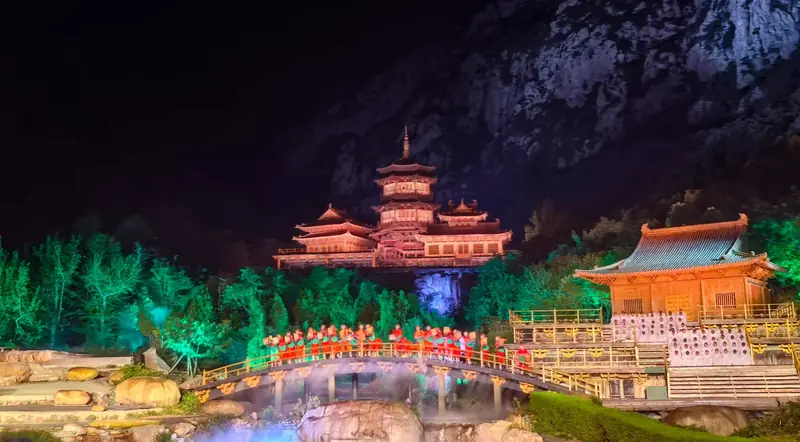
Nearly 600 performers move across a mountainside after dark while Tan Dun's Zen score carries through a real Songshan canyon. The Shaolin Zen Music Ritual (禅宗少林·音乐大典) is a roughly 65-minute outdoor production built around five musical movements, rush-cushion seating, water, wind, martial-arts choreography, and large-scale lighting. Current 2026 listings run from March 13 through December 31, but the exact start time belongs to the ticket you book.

The production spreads its five movements across the natural Songshan canyon
Tan Dun (谭盾), who won the Academy Award for Best Original Score for Crouching Tiger, Hidden Dragon, created the musical language for this canyon production. The creative team also brought together landscape-show producer Mei Shuaiyuan (梅帅元), choreographer Huang Doudou (黄豆豆), and scholar Yi Zhongtian (易中天). Their shared task was to make the mountain, streams, martial arts, and music read as one performance rather than as a conventional theatre set.
The stage is Songshan itself. Production and tourism materials describe a performance zone extending across nearly 3 square kilometers, with the mountain rising dramatically behind the audience. Treat those scale figures as the production's own description; what matters from a seat is the visible sweep of real slopes, water, trees, and massed martial-arts movement.
Why it earns the evening: Shaolin Temple gives you the historic and religious setting by day. The night show reframes the same cultural vocabulary through music, choreography, light, and the canyon's natural sound. Pairing the two reveals both the place and its modern stage interpretation without treating the performance as a monastic demonstration.
Five Movements — Zen, Martial Arts, and Stone
The roughly 65-minute show is arranged as five self-contained musical movements rather than a linear story. Read them as an emotional sequence: water opens the senses, wood slows the pace, wind releases the martial-arts energy, light turns toward impermanence, and stone closes the arc.
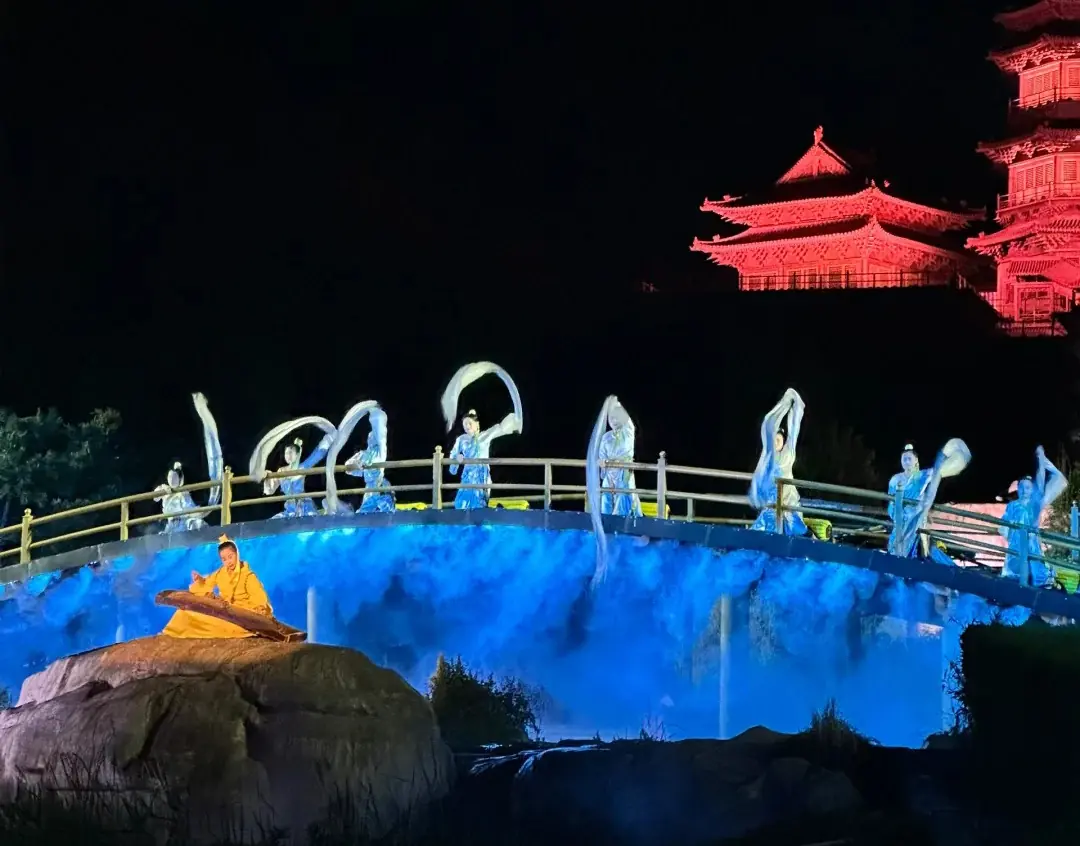
Movement I — guzheng and flowing water open the five-part sequence
Movement I · Water Music
Zen 境 (Meditation)
The production describes 88 guzheng players striking their strings beside illuminated canyon water. White-robed performers move through the stream while the instrument line blends with the natural soundscape. It is intentionally the quietest opening, asking the audience to settle before the larger movement arrives.
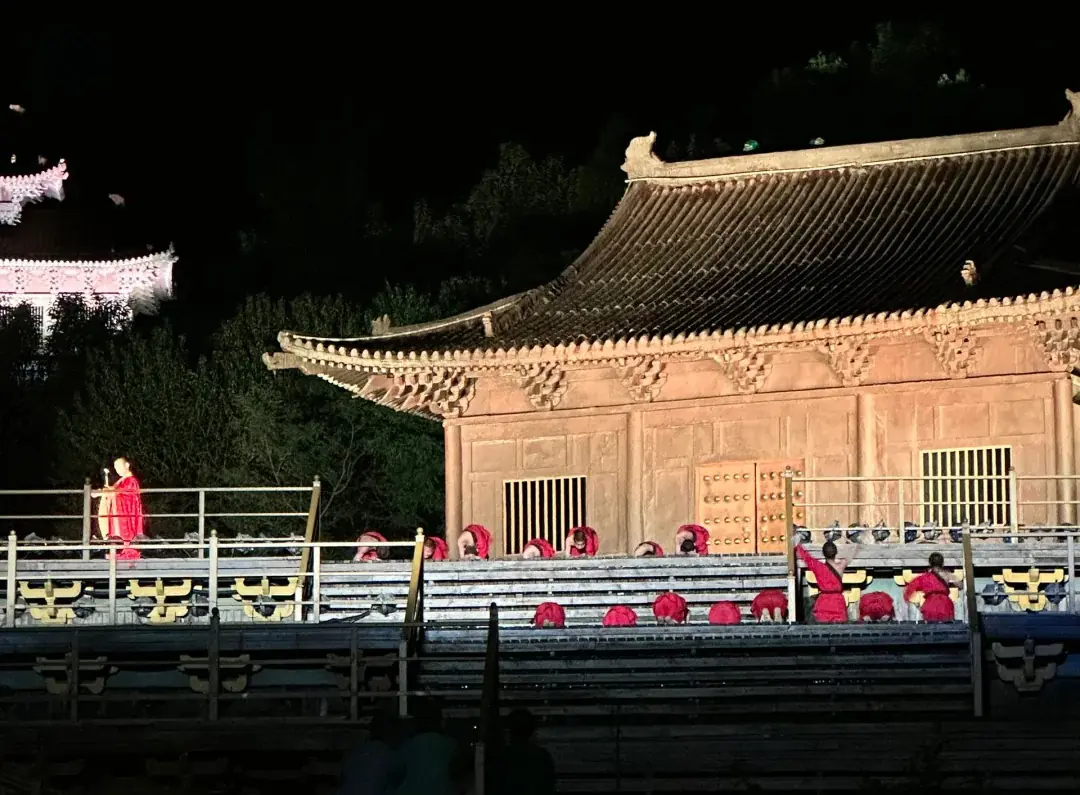
Movement II — the rhythmic pulse of wooden fish traces a monk's journey from ordination to practice
Movement II · Wood Music
Zen 定 (Stillness)
Wooden-fish percussion, bells, drums, chanting, and seated meditation trace the rhythm of monastic practice. The lighting moves from warm amber toward moonlit blue. This is the deliberately slow section: its stillness creates the contrast that makes the next movement feel much larger.
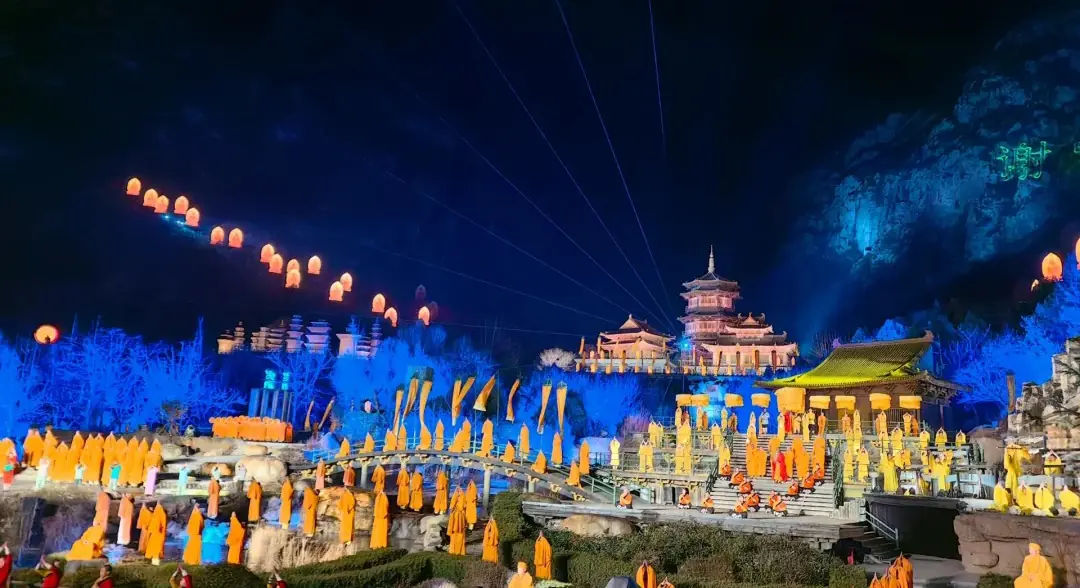
Movement III — the massed martial-arts cast spreads across the hillside
Movement III · Wind Music
Zen 武 (Martial Arts)
The climax. The massed cast punches, kicks, and leaps across the slope as drums, guzheng themes, wind chimes, and shouted rhythms build together. The scale separates this from the compact daytime demonstration: the eye follows choreography across a mountain rather than a small indoor stage.
Movement IV · Light Music
Zen 悟 (Enlightenment)
Light carries the valley through spring, summer, autumn, and winter while pagoda silhouettes appear and fade. Distant drums accelerate and then stop. Without dialogue, the movement turns the sequence toward impermanence, memory, and the transition into the finale.
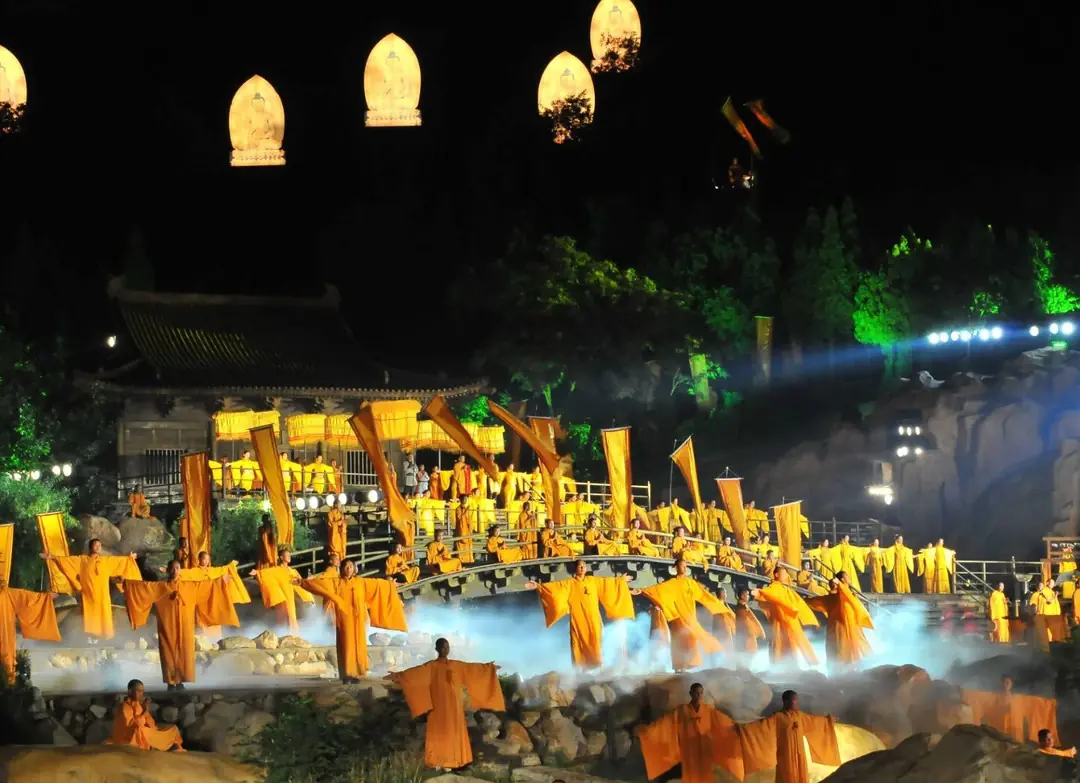
Movement V — 3.6-billion-year-old Songshan bluestone carved into percussion instruments
Movement V · Stone Music
Zen 颂 (Hymn)
The production describes percussion instruments fashioned from Songshan stone approximately 3.6 billion years old. Their bright, struck tone introduces the choral finale as light spreads across the valley and the full sequence resolves.
Don't leave during Movement II
The first two movements are deliberately slow and quiet — that contrast is what gives Movement III its impact when the massed martial-arts cast spreads across the slope. Trust the rhythm rather than treating the opening as a delay.
Rush Cushions in a Canyon — The Zen Experience
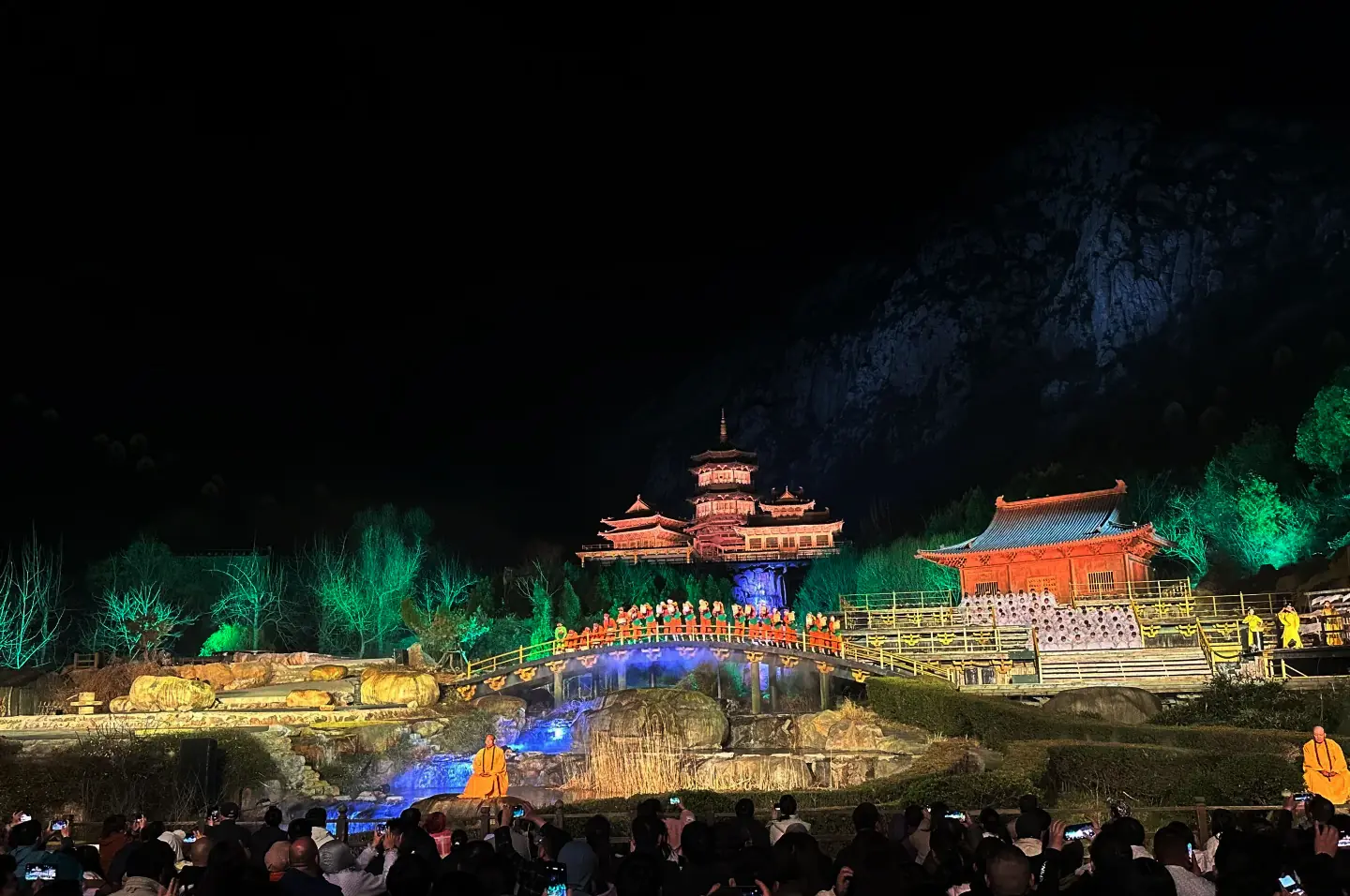
You sit on rush cushions in temple-style corridors — part of the Zen experience
You don't sit in conventional theatre chairs — you sit on rush cushions in wooden, temple-style corridors terraced along the canyon. Current production listings describe capacity for around 3,000 spectators.
The feel: The low seat tilts your gaze toward the valley and is part of the staging, but a rush cushion can still feel firm over about 65 minutes. Wear long trousers or bring a thin seat pad if your knees or hips dislike floor-level seating.
Listen before you look for spectacle
The canyon is part of the score
Current attraction descriptions explicitly combine flowing water, wind, and insect sound with the amplified music. Movement I makes that relationship easiest to hear: the stream and guzheng line overlap before the show expands into the martial-arts sequence.
How it compares to other outdoor shows:
← swipe to compare all options →
Zen Music Ritual
Dengfeng
- ✓Mountain canyon + natural sounds as part of the score
- ✓Massed martial-arts choreography across the slope
- —Rush-cushion seating feels immersive but firm
Canyon soundscape and martial arts
Impression Liu Sanjie
Yangshuo
- ✓Li River and karst peaks form the backdrop
- ✓Folk-dance staging carries the visual scale
- ✓Conventional outdoor auditorium seating
River landscape and folk staging
Impression Da Hong Pao
Wuyishan
- ✓A rotating audience platform changes the viewpoint
- —Tea culture is the central theme
- ✓Chair seating on the rotating platform
Rotating auditorium and tea culture
Enduring Memories
Hangzhou
- ✓West Lake becomes the performance surface
- ✓Orchestral music and dance shape the programme
- ✓Lakeside auditorium seating
West Lake, orchestra and dance
Tickets, Prices, and Seats
- Price
- ¥269 listed
- Notes
- Standard area; online offers may be lower
- Price
- ¥299 listed
- Notes
- Closer to the central action
- Price
- ¥499 listed
- Notes
- Center-front area
- Price
- ¥1,699 listed
- Notes
- Premium front area; seller discounts vary
Children: Current 2026 listings state that children under 1.3 m enter free without a dedicated seat. For taller children, check the exact product rather than assuming an automatic half-price ticket.
Best-value decision
Choose B for the broad canyon composition; move to A or VIP for greater proximity to the martial-arts cast. Paying more changes closeness more than it changes the basic view of the mountain.
Where to buy:
- Trip.com Shaolin Zen Music Ritual(affiliate link · may earn commission, no extra cost) — English-language discovery and current product cross-check.
- Ctrip / Meituan / Damai — Chinese-language booking paths; interface and accepted payment methods depend on the app and account.
- On-site ticket office — same-day inventory may be available, but do not rely on it in peak season.
Ticket inquiry phones: 0371-62809111 and 0371-62809222.
Check the dated ticket before you travel
Inventory, discounts, entry time, and refund rules vary by product. During weekends and holiday periods, book before the travel day where possible and use the cutoff printed on the selected ticket rather than relying on a fixed five-hour rule.
Showtimes and Seasons
🕗Showtime
Current main 2026 listing: 20:00–21:05, about 65 minutes. Some dated products display 20:15–21:20, so the booked ticket is the final authority. Arrive 20–30 minutes early for entry and seat finding.
📅Best Months
April–May brings green slopes and mild evenings; September–October brings cooler air and autumn colour. The current 2026 listing runs March 13–December 31; future seasons should be rechecked before travel.
Weather: Severe rain, wind, thunderstorms, cold, geological conditions, or technical disruption may stop the outdoor performance. Refund and change terms belong to the ticket seller, so check them before payment and recheck the forecast on the day.
Making the Most of Your Evening
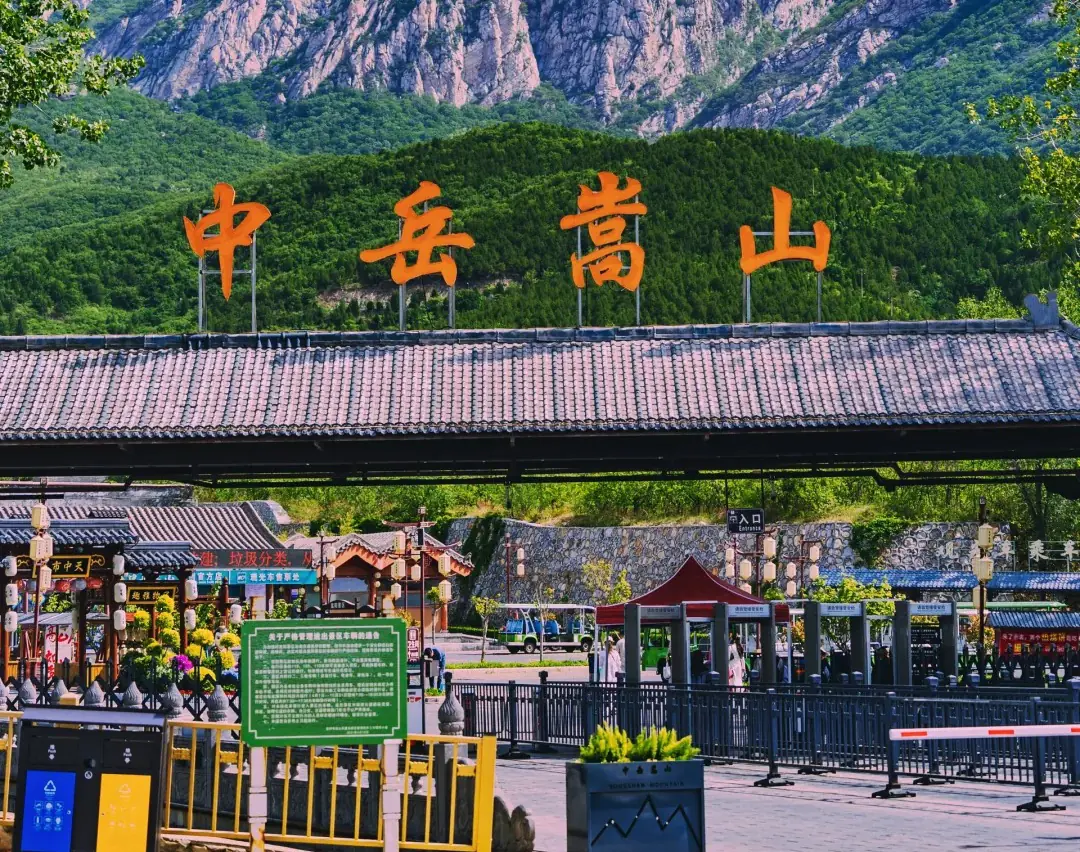
The theatre entrance sets the tone — arrive 30 minutes early to browse the traditional street
Before the show: Visit Shaolin Temple during the day, then allow roughly 15–25 minutes by car for the approximately 7 km transfer to the theatre. The temple, Pagoda Forest, and compact daytime martial-arts demonstration establish the historic setting; the night show then presents a modern landscape interpretation. Reach the entrance 30 minutes early, and carry insect repellent in warm weather if you are sensitive to bites.
During the show
Let the quiet Water and Wood movements establish the soundscape before judging the pace. Movement III is the large martial-arts release, while Movement V is the strongest finale moment.
Listen deliberately
Try to separate stream, wind, insects, percussion, and guzheng before they merge again.
Photograph quietly
Follow the current on-site policy and avoid flash. Phone night mode is most useful during the massed martial-arts scene and stone finale.
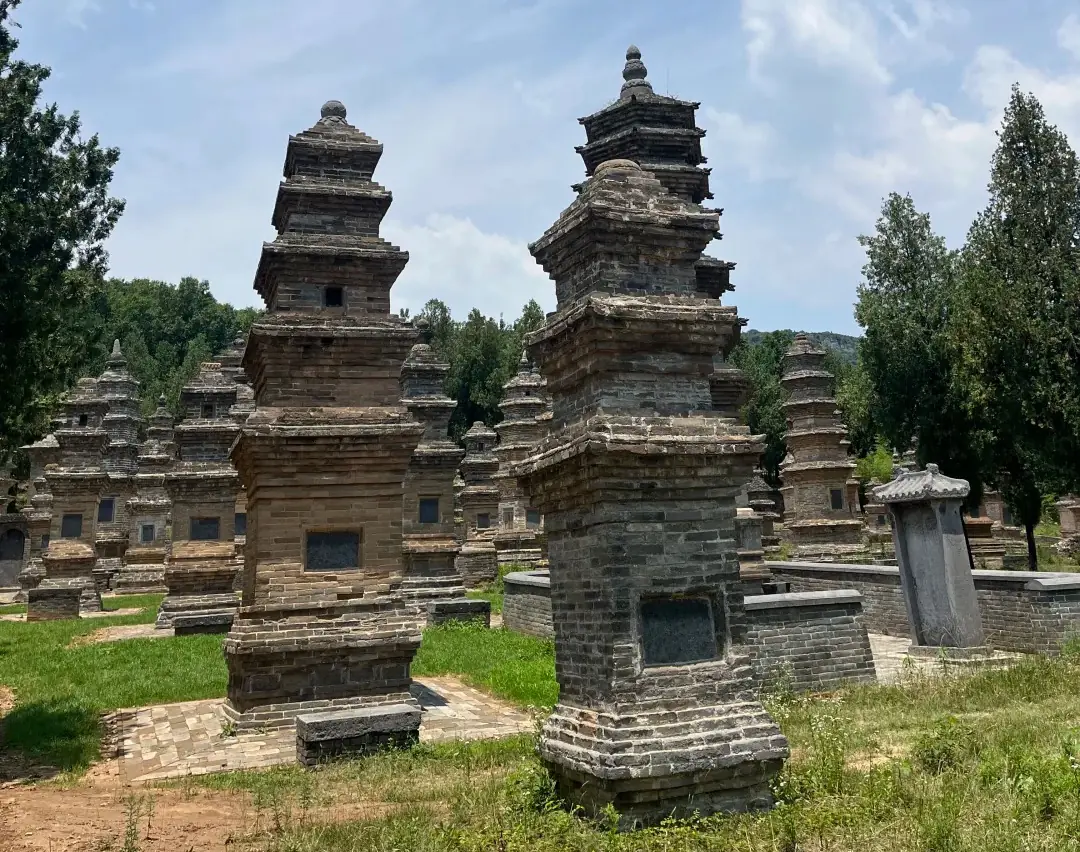
Visit the Pagoda Forest during the day, then head to the nearby Zen Music Ritual at night
Dress: Wear long trousers for the rush cushions and bring a light outer layer. Mountain-canyon evenings can feel cooler than Dengfeng city after sunset, especially in spring and autumn.
Getting There
Address: Daixian Gorge Scenic Area, 10 km west of Dengfeng City, Zhengzhou, Henan (河南省郑州市登封市待仙沟景区) — 7 km from Shaolin Temple.
Shaolin Zen Music Ritual Theatre (Google | Amap)Choose your starting point
The theatre is outside Dengfeng, so the return matters as much as the arrival
Times below are planning ranges. Check the live map, coach timetable, and booked-ticket start time on your travel date.
From Shaolin Temple
The closest pairing: about 7 km away and roughly 15–25 minutes by car. Check the live app fare before leaving the temple.
From Dengfeng city
Taxi or ride-hailing is simplest. Allow roughly 20–30 minutes depending on the pickup point and evening traffic.
From Zhengzhou
Take a current intercity coach to Dengfeng and continue by taxi, or arrange a direct car. Terminals, departures, and fares change, so confirm the same-day timetable.
From Luoyang
Use a current coach to Dengfeng plus taxi, or arrange a direct car. Verify the operating terminal and last departure for your date.
After the show: arrange the ride before entry
The current performance ends around 21:05, later than normal public transport. Pre-book a driver or ride, confirm pickup instructions, or stay near the venue rather than assuming vehicles will be waiting.
Show this screen to your driver · 出示给司机看
师傅你好,去禅宗少林音乐大典剧场,谢谢。
Hello, please take me to the Shaolin Zen Music Ritual theatre, thank you.
From Shaolin Temple: roughly 15–25 minutes. From Dengfeng city: roughly 20–30 minutes. Check the live app fare and confirm the return before entry.
Frequently Asked Questions
Because this is an outdoor canyon show, severe rain, wind, thunderstorms, cold, geological conditions, or technical disruption may stop a performance. Check the forecast and the dated ticket. Cancellation and refund terms depend on the seller rather than one universal full-refund rule.
Sources checked for this guide
- Current 2026 opening window, main listed performance time, duration, child-height policy, official ticket phones, five-movement structure, and natural soundscape cross-check: Trip.com/Ctrip Shaolin Zen Music Ritual attraction listing
- Current listed ticket zones, QR entry notes, child threshold, schedule variability, and severe-weather stoppage conditions: Current local Shaolin Zen Music Ritual ticket listing
- Government cultural report checked for the approximately 7 km Shaolin Temple distance and nearly 600-person cast scale: Zhengzhou Cultural Heritage Bureau report
- Current government report confirming the upgraded real-scene production remains active in 2026: Zhengzhou Municipal Government Dengfeng tourism update
- Official Academy record confirming Tan Dun's Original Score Oscar for Crouching Tiger, Hidden Dragon: Academy Awards 2001 ceremony record
Beyond This Guide
Dengfeng sits at the foot of Songshan, one of China's Five Great Mountains — pair the evening show with Shaolin Temple by day, a Songshan hike, or the UNESCO-listed Historic Monuments of Dengfeng.
More things to do in China:
- Impression Liu Sanjie: Yangshuo's Epic Outdoor Show Guide — Zhang Yimou's original landscape spectacular
- Impression Da Hong Pao: Wuyishan's Rotating Tea Show Guide — a rotating outdoor theatre built around tea culture
© gochinafreely.com — Original guide by Go China Freely.