Current visit basics
The current ordinary schedule lists 10:00-10:40, 14:15-14:55 and 15:30-16:10, weather permitting. See current rules
Check before you go
Real Lion Dance, Not Movie Props
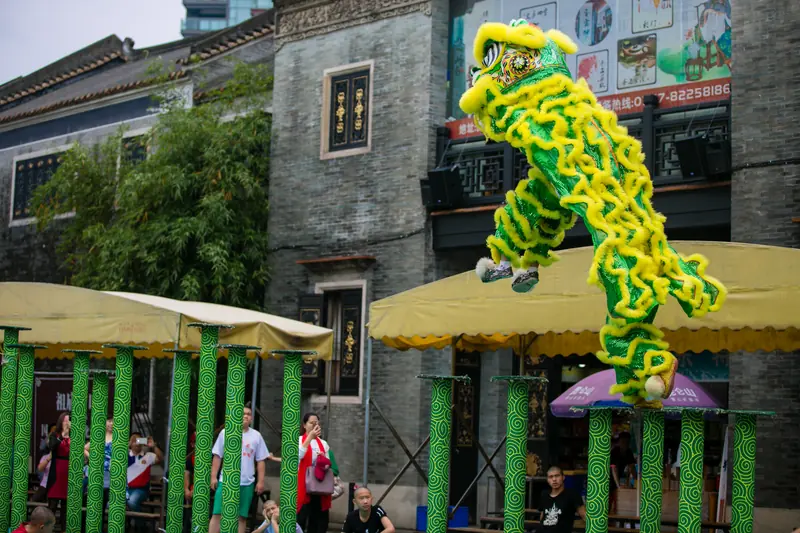
The loud drums, blinking lion heads and high-pole jumps at Foshan Ancestral Temple (佛山祖庙) belong to a living Southern lion tradition, not a movie set. The outdoor performance beside Huang Feihong Memorial Hall (黄飞鸿纪念馆) combines lion mimicry, demanding partner acrobatics and Southern martial arts in a compact public show.
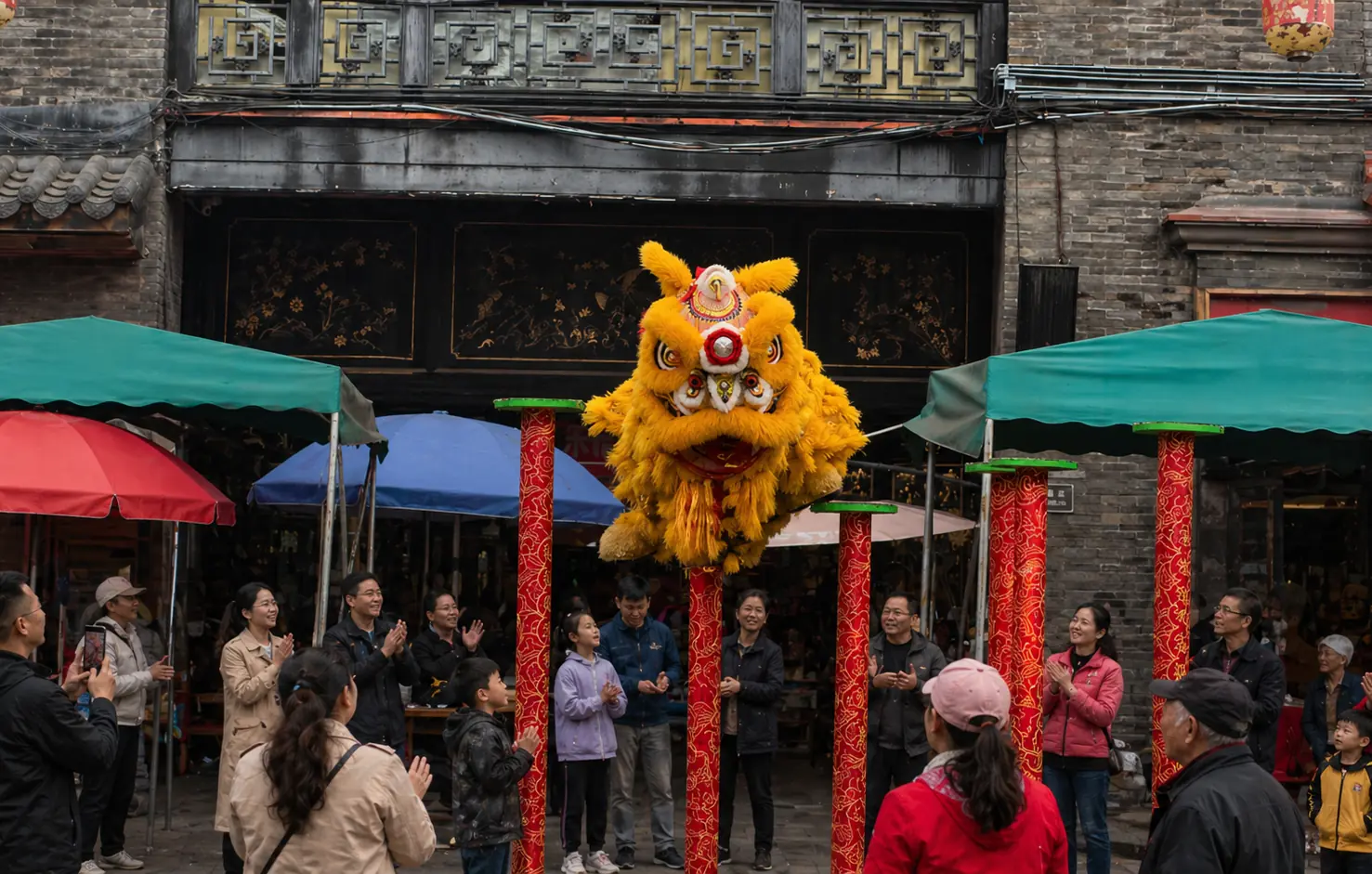
Watch the whole lion rather than waiting only for jumps. The performers use head control, footwork and drum cues to make it wake, test the space, turn playful and gather the symbolic greens (采青).
Huang Feihong is remembered as a Hung Gar master, traditional-medicine doctor and lion-dance figure. Film made him internationally familiar; the live skill here is rooted in Foshan practice.
Expressive Southern lion
Ears, eyelids, mouth and body angle create character before the high-pole sequence begins.
Drum-led technique
The drum cues changes of mood and timing; on the poles, the rear performer also follows the front performer through body signals.
Recognized heritage
China's national intangible cultural heritage database lists Guangdong Xingshi (广东醒狮), with Foshan among the applying regions.
Read the courtyard as one continuous performance: folk ritual, martial training and the film associations around Huang Feihong meet in the same place.
Three Shows a Day: Drums, Lions, and Southern Fists
The current ordinary schedule lists three weather-permitting outdoor sessions. Use these as planning anchors, then confirm the entrance or courtyard notice on your date.
- Morning show- Listed to 10:40; arrive around 09:40 for standing space
- First afternoon show- Listed to 14:55; useful after an early Foshan lunch
- Final ordinary show- Listed to 16:10; leave a backup plan if weather is uncertain

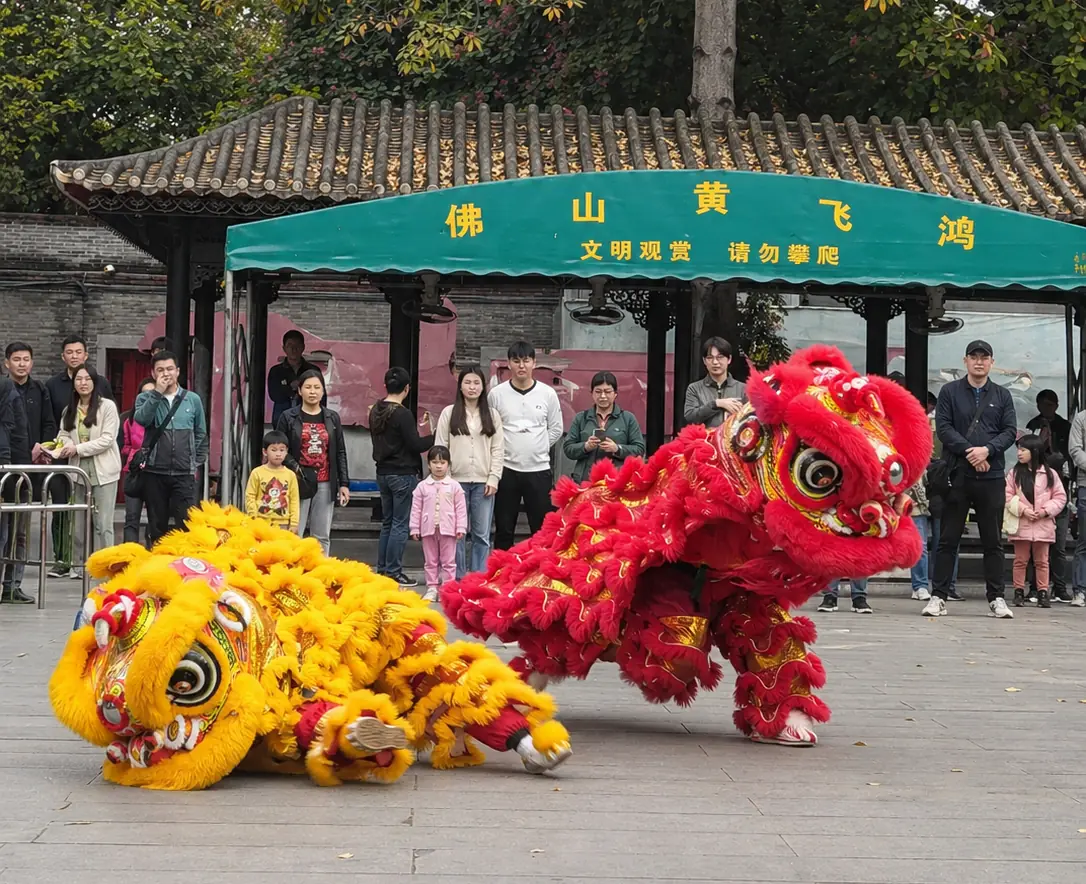
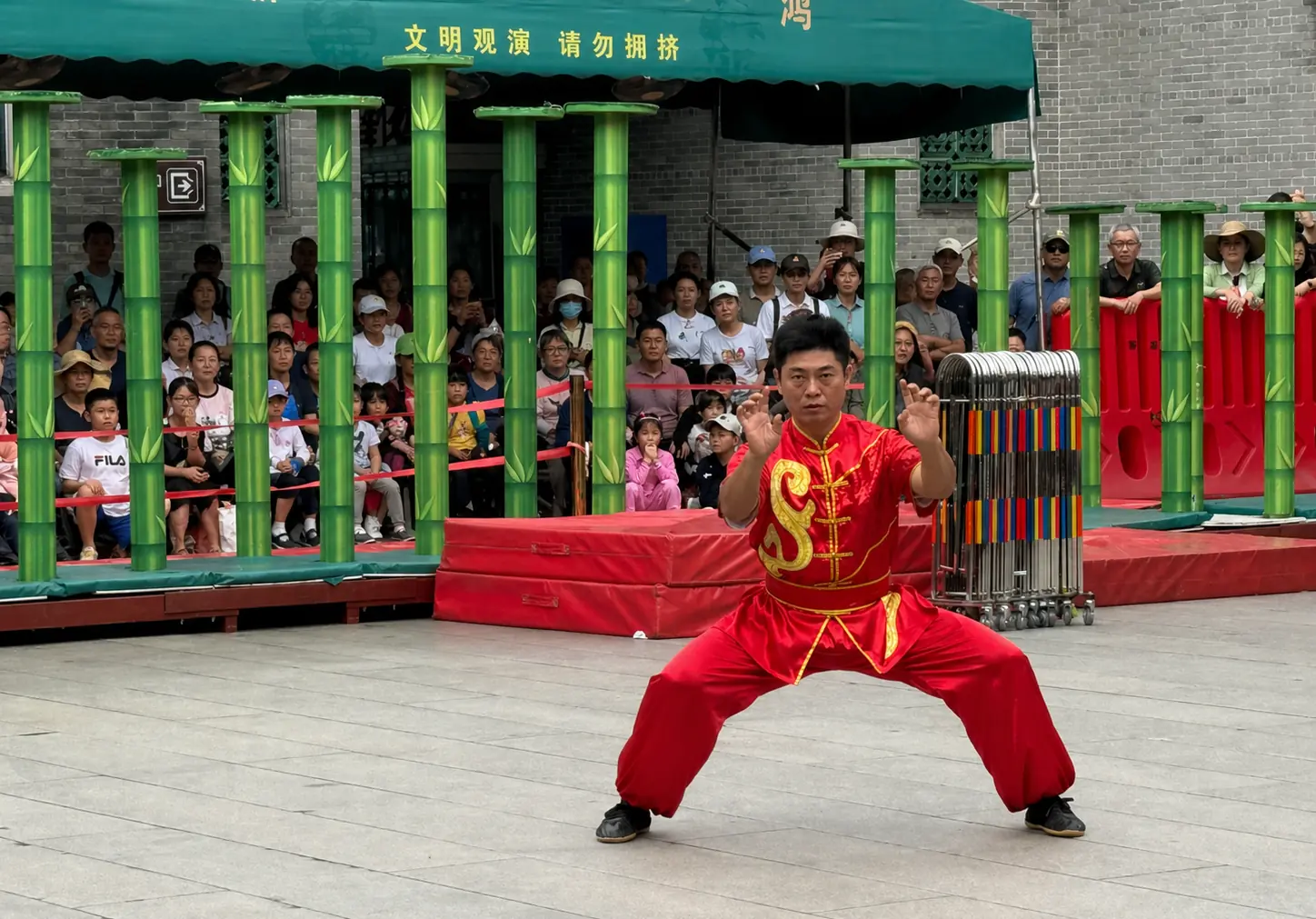
Inside the 40 minutes
Ground character, pole work, Southern fists
The lion usually moves from a readable ground routine into the more athletic pole work, followed by a shorter martial-arts segment. Look for rooted Hung Gar stances and heavy hand forms rather than movie-style flying choreography.
Children often find the ground routine easiest to read; photographers should keep burst mode ready for the pause before a jump without blocking other visitors.
Inside the Memorial Hall
Check whether the indoor hall has reopened. A notice announced an air-conditioning renovation from May 26, 2026, with the reopening date to be confirmed. Before you travel, check the latest official venue notice. This temporary indoor-hall status is separate from the outdoor lion-dance schedule and the rest of the Ancestral Temple complex.
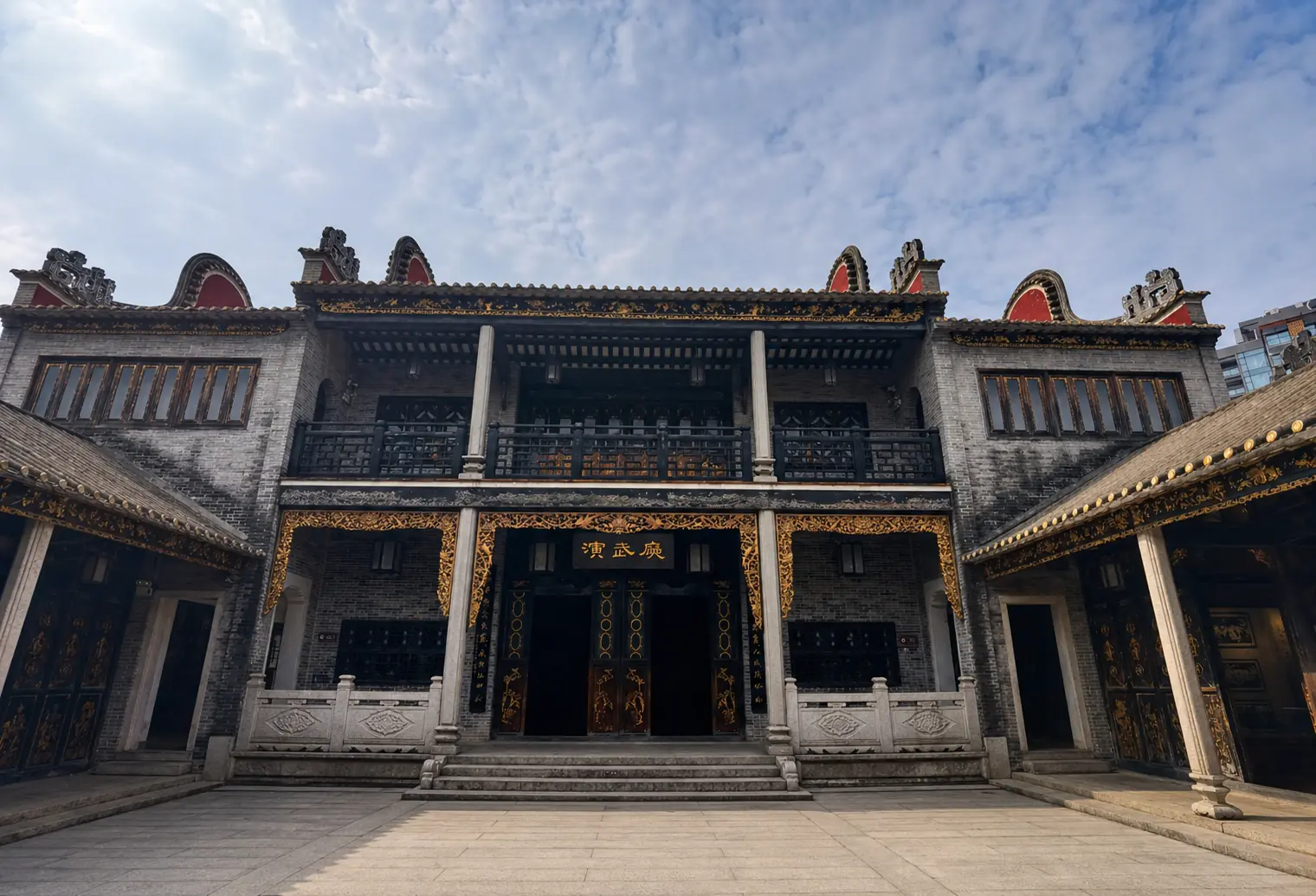
When the hall is open, allow about 15-20 minutes for a compact two-story exhibition linking Huang Feihong's documented life, traditional-medicine work and martial image with the cinema legend that followed.
The weapons displays make the live demonstration easier to interpret; the biographical material helps separate the historical person from later film characters.
Historical Huang Feihong
Portrait and biographical displays introduce the martial artist behind the later screen character.
Baozhilin Clinic
The Baozhilin (宝芝林) reconstruction connects his martial reputation with his work as a traditional-medicine doctor.
Southern Weapons
Butterfly swords, tiger forks, staffs and broadswords give practical context to the live weapon routines.
Movie Legacy
Posters trace how Huang Feihong became one of Chinese cinema's most enduring martial heroes.
If the hall has not reopened on your date, consider the outdoor show, Ip Man Hall and main temple architecture separately rather than assuming the entire complex is unavailable.
Next Door: Ip Man Hall
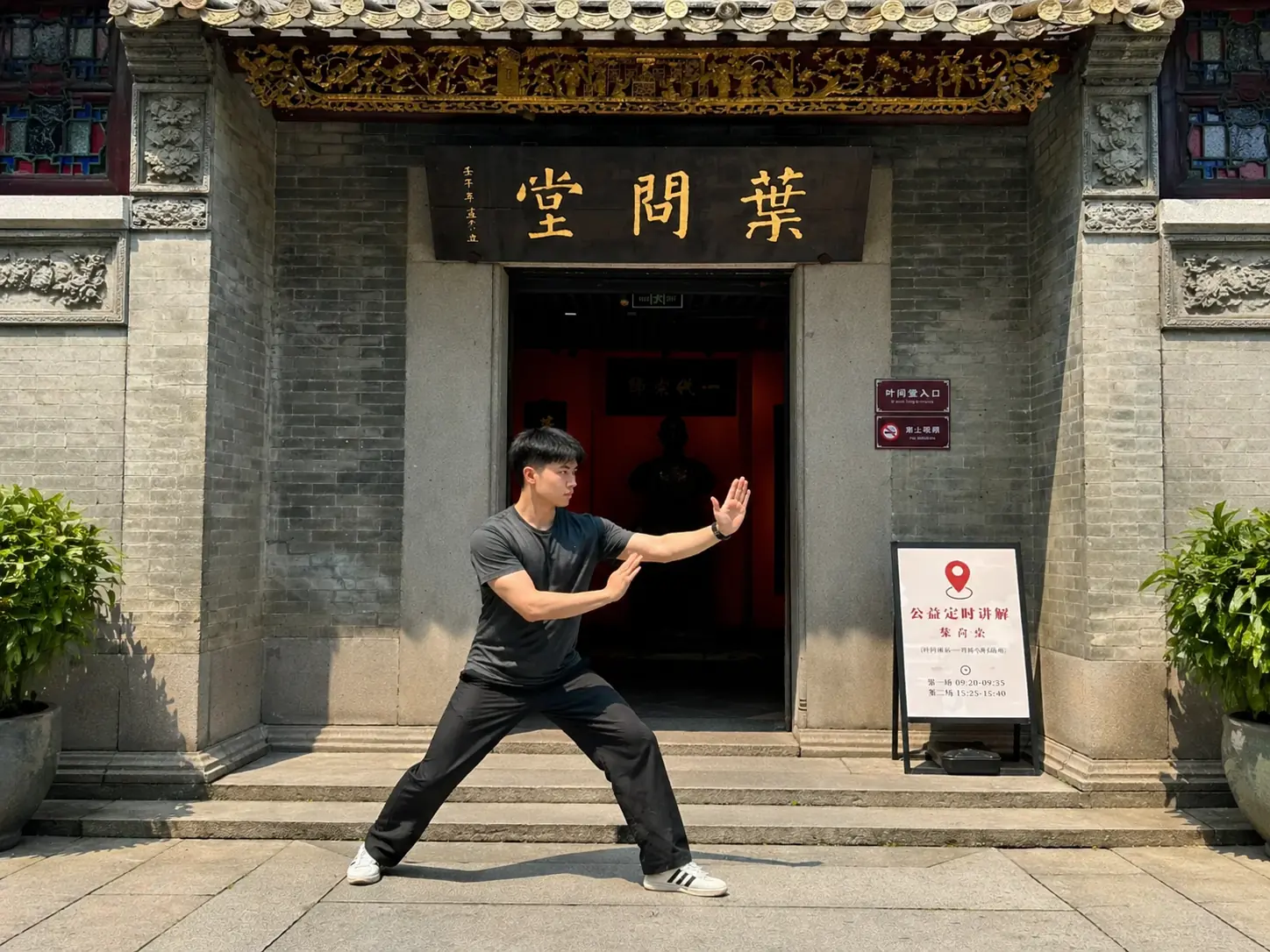
Ip Man Hall (叶问堂) is a separate compact exhibition inside the same Ancestral Temple complex. It is the clearest indoor alternative if the Huang Feihong hall has not yet reopened, but check the day's open-area notice before relying on any one room.
The exhibition follows Ip Man's life, Wing Chun (咏春), the wooden dummy and his connection to Bruce Lee. Visitors who know the Donnie Yen films will recognize the story, but the hall is small enough to add without taking over the day.
Keep it for martial-arts history
Allow about 15 minutes for the biographical displays, Wing Chun context and wooden dummy.
Move on for architecture
Go directly to the main temple halls if ritual space and historic buildings matter more than another martial-arts biography.
A simple inside-the-complex order: keep the live performance and martial-arts stops together, then move into the main temple architecture.
- Lion dance and kung fu show(黄飞鸿纪念馆醒狮场)- About 40 min; arrive around 20 min early
- Huang Feihong Memorial Hall(黄飞鸿纪念馆)- If reopened; allow 15-20 min
- Ip Man Hall(叶问堂)- About 15 min; check the day's open areas
- Main Ancestral Temple halls- Allow 30-45 min for architecture and courtyards
Who Should Visit
Best fit
Go if this sounds like you
✓You enjoy kung fu films, lion dance, Cantonese culture or live folk performance.
✓You are building an easy Guangzhou-to-Foshan day trip.
✓Your children respond well to colour, drums and movement.
—You want a cultural stop that works with little Chinese-language context.
Think twice
Adjust expectations first
!You expect assigned seats, indoor lighting and a large stage production.
—You cannot align the day with a current showtime.
—You are sensitive to loud drums, heat, rain or dense standing crowds.
✓You can still enjoy the temple and open halls if weather changes the show.
This is a compact outdoor courtyard performance, not a seated indoor theater. Your comfort with drums, standing and crowds matters more than prior martial-arts knowledge.
Children, comfort, and access: the short duration helps families, but the drums are loud and views come from standing space. Arrive early, keep small children close in a dense courtyard, and follow staff directions. If step-free access or another specific facility matters, confirm the current route with the venue before travel.
Tickets, Hours, and Practical Tips
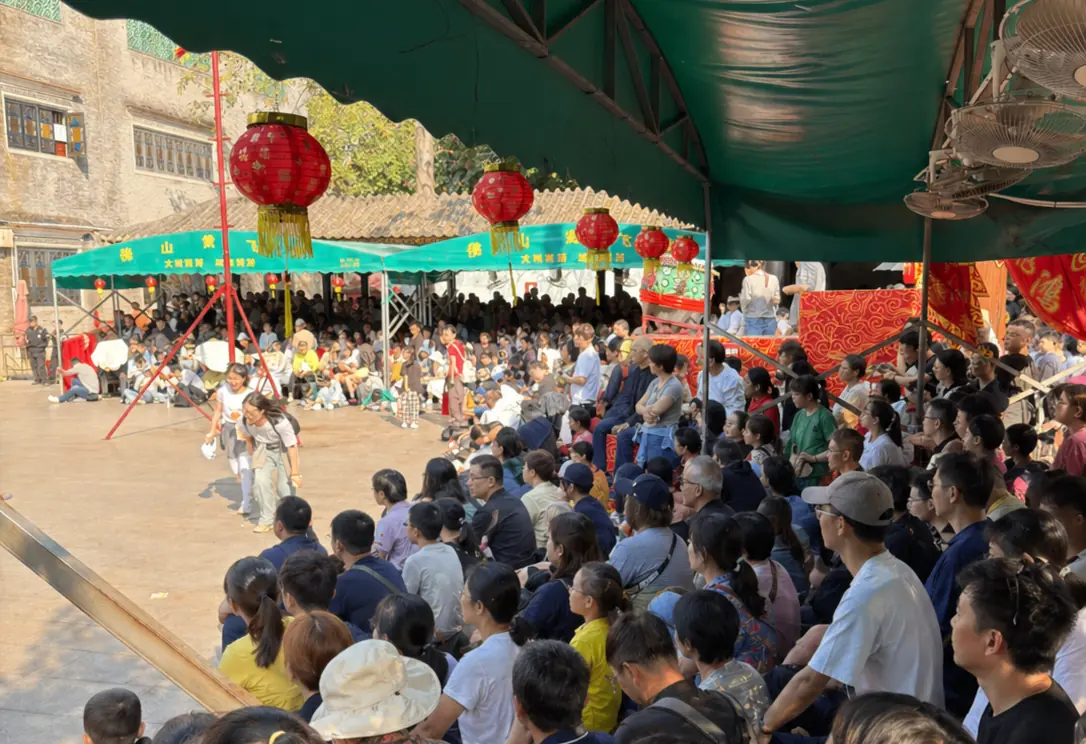
The performance area is an open-air standing courtyard. Arriving early matters more than choosing a ticket category: views depend on crowd depth, and staff may limit entry when the area reaches capacity.
Standard admission is currently listed at ¥20 and normally covers the main temple, open memorial halls and the free outdoor performance. Concession rules depend on the current gate notice and eligible ID.
Planning baseline checked July 20, 2026
Admission, hours, and ordinary showtimes
Standard admission
¥20
Normally covers the main temple, open memorial halls and the outdoor show. Check current concession rules and eligible ID.
Museum hours
08:30–18:00
Last entry is usually 17:30; a dated venue or entrance notice takes priority.
Show format
About 40 min
Outdoor, standing-room and included after temple admission, subject to weather and capacity.
Ordinary weather-permitting sessions
10:00–10:40
Longest window afterward
14:15–14:55
Works after an early lunch
15:30–16:10
Least recovery time if plans slip
The English-facing government directory page for Foshan Ancestral Temple Museum supports the standard hours, ¥20 admission and three weather-permitting daily shows. Current official notices and the entrance notice control for your date.
For a clear view, stand opposite the drummer if you want the lion facing you and use burst mode for the jump or the reach for the greens. Do not block circulation or step into a staff-controlled area.
Bring water and sun protection in hot months; the courtyard can feel cool in winter. If the show is your priority, the 10:00 session leaves the most time to recover from weather or capacity changes, while the 15:30 session leaves the least. Holiday additions are useful only when confirmed for your exact date.
Getting There
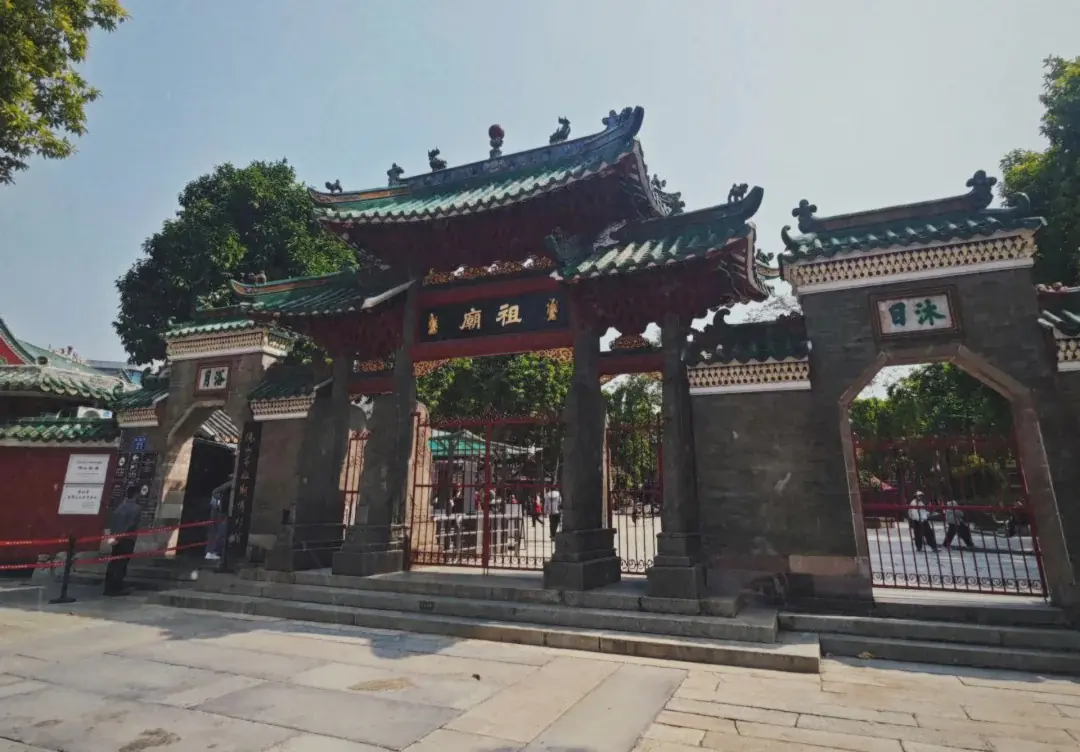
Address: No. 21 Zumiao Road, Chancheng District, Foshan, Guangdong. Enter through Foshan Ancestral Temple Museum, then follow the day's signs toward the outdoor Huang Feihong performance courtyard. (Google | Amap)
From Guangzhou, the Guangfo Metro is usually the simplest default. Ride to Zumiao (祖庙) station and allow about five minutes to walk from the station area to the museum entrance.
Guangfo Metro
Best default from Guangzhou
Zumiao station
Usually 30–40 minutes once you are on the Guangfo Line.
More predictable than a cross-city taxi in peak traffic, although central Guangzhou may require a transfer before the Guangfo Line.
Taxi or ride-hailing
Door-to-door convenience
Useful with luggage
Simpler with tired children or a difficult transfer.
Past Tianhe estimates have often been roughly 60–80 minutes and ¥100–150, but traffic can make the ride slower than rail.
Central Foshan
Easy local arrival
Zumiao area
Walk from the station to the temple entrance.
Lingnan Tiandi remains walkable after the show, though nearby streets can be busy on weekends and holidays.
Door-to-door time and taxi cost depend on your exact starting point, transfers, road traffic and live app pricing. Recheck the route, station exit, time and fare on the day.
Meaning
To the Ancestral Temple Museum
Chinese
去祖庙博物馆
Pinyin
qù Zǔmiào Bówùguǎn
Say it like
Choo zoo-mee-ow baw-woo-gwan
Meaning
To the Huang Feihong Memorial Hall
Chinese
去黄飞鸿纪念馆
Pinyin
qù Huáng Fēihóng Jìniànguǎn
Say it like
Choo Hwang Fay-hong jee-nee-en-gwan
After the Show: Lingnan Tiandi
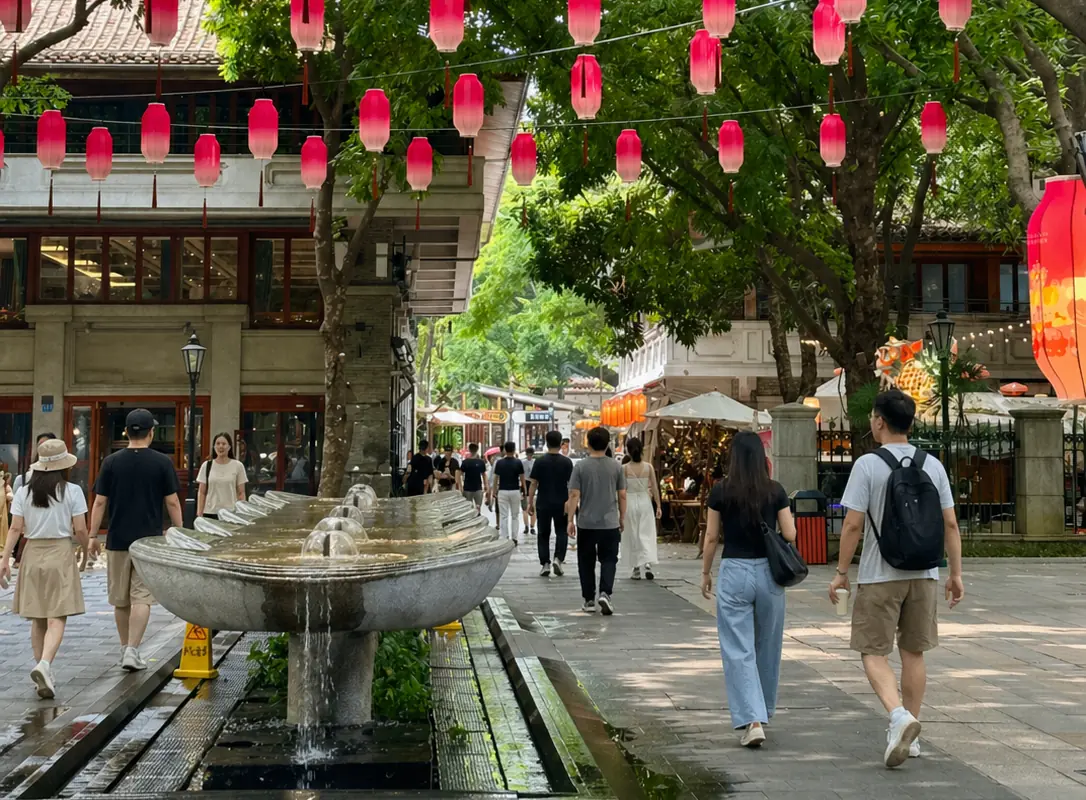
Lingnan Tiandi (岭南天地) is a short walk from the Ancestral Temple area, with restored Lingnan-style lanes, old-house details, restaurants, cafes and dessert shops. (Google | Amap)
Leave the temple through the central Zumiao area and follow the pedestrian signs toward the historic lanes. The walk is easy to combine with the show without committing the rest of the day to another attraction.
Compact half day
Use the 10:00 show, check which memorial halls are open, see the main temple, then walk to Lingnan Tiandi for lunch or dessert.
Slower visit
Keep another hour for the lanes and choose one Foshan staple—beef offal (牛杂), double-skin milk pudding (双皮奶), or Chencun rice noodles (陈村粉)—instead of turning the stop into a rushed food checklist.
Frequently Asked Questions
The outdoor show is currently provided without a separate performance charge after Ancestral Temple admission. The current ordinary sessions are weather-permitting and capacity-controlled, so confirm the day's notice after entry; missing a free performance because the area is full does not create a separate show refund or rescheduling promise.
Sources checked for this guide
- Current public listing cross-check for ¥20 standard admission, ordinary martial-arts/lion-dance times, rain cancellation, capacity control and the dated notice announcing a temporary Huang Feihong Memorial Hall renovation from May 26, 2026; the latest official venue notice controls: Qunar attraction listing — current cross-check
- Standard 08:30-18:00 hours, 17:30 last entry, ¥20 admission and the three weather-permitting daily show windows: Government directory — Foshan Ancestral Temple Museum
- National intangible cultural heritage listing for Lion Dance (Guangdong Xingshi), including Foshan as an applying region: China Intangible Cultural Heritage database — Guangdong Xingshi
Beyond This Guide
Foshan combines martial-arts history, Cantonese food, restored Lingnan streets and straightforward metro access from Guangzhou.
Explore more in South China:
- Nanyue King Museum Guangzhou Guide - ancient Guangzhou history
- Kaiping Diaolou Watchtowers Guide - heritage towers and village scenery
© gochinafreely.com — Original guide by Go China Freely.